

Do Sneakers Need Shoe Trees? Which Pairs Benefit and Which Do Not
Sneaker Shoe Trees, in Brief
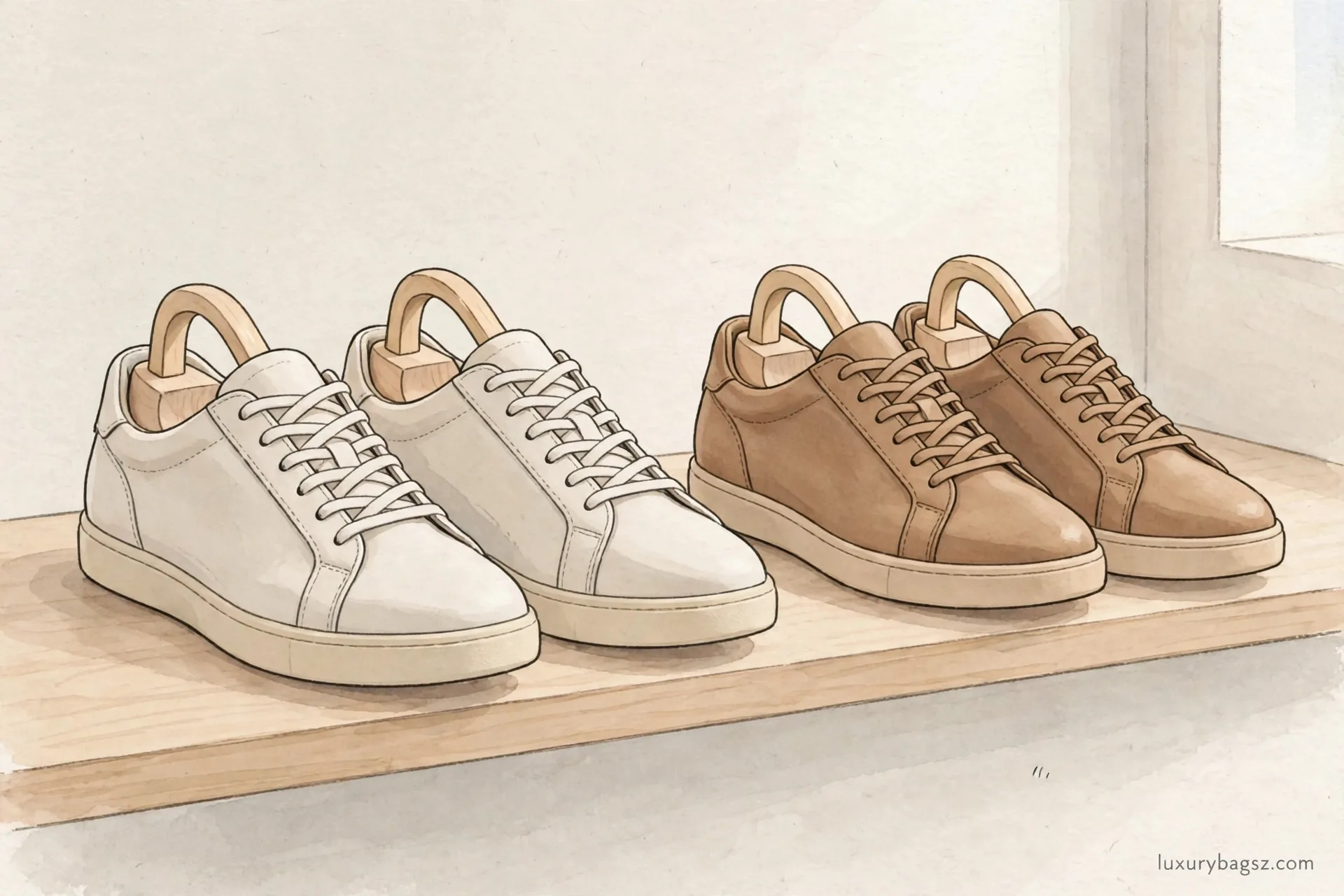
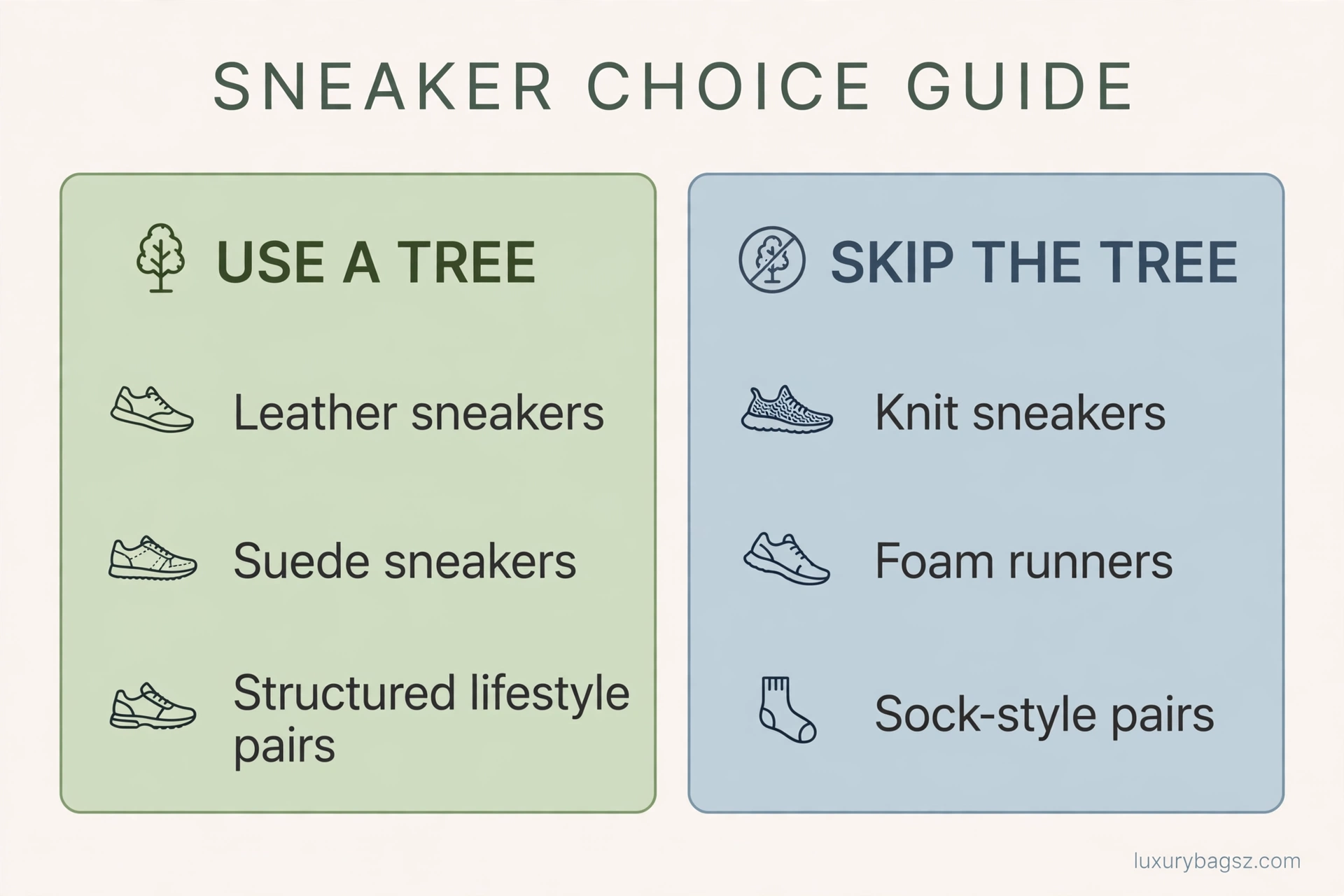
Some sneakers genuinely benefit from shoe trees, and some do not need them at all. Leather sneakers with a firm toe box and a structured upper gain the most, because a tree holds the shape while the leather dries and softens creases across the vamp. Suede and nubuck sneakers benefit too, since a tree gives a firm surface for brushing.
Knit, mesh and foam-heavy running sneakers are a different story. Their uppers are soft and springy by design, and a hard tree can stretch the knit or press the foam out of shape. For those pairs, gentle stuffing or simply air drying is usually the safer choice.
The rule is simple: if the sneaker has structure worth holding, support it. If it is built to flex and bounce back on its own, leave it alone. A tree will not rescue a collapsed pair, and the wrong tree can do more harm than no tree at all.
Key Takeaways
- Leather, suede and structured lifestyle sneakers benefit most from shoe trees.
- Knit, mesh and foam-heavy runners usually do not need a hard tree.
- Cedar absorbs moisture and odour; plastic holds shape but absorbs nothing.
- A tree that is too large stretches the upper and can crack leather over time.
- Insert trees right after wear, while the sneaker is still slightly damp.
- Never force a tree into a tight or delicate pair; stuff gently instead.
- Trees reduce creases but cannot remove deep creases that are already set.
- For travel, light plastic trees or stuffing beat heavy wooden trees.
Which Sneakers Benefit Most
Leather lifestyle sneakers are the clearest winners. Full-grain and smooth leather creases across the vamp every time you walk, and those creases deepen as the leather dries in a collapsed shape. A tree inserted after wear holds the vamp flat while the leather dries, so creases stay shallow and the toe box keeps its shape.
Soft leather needs the same care, with a lighter touch. Nappa leather is famously soft and supple, which makes it comfortable but also quick to wrinkle. A correctly sized tree supports it without stretching, and it makes cleaning and conditioning far easier because the surface stays taut.
Suede and nubuck sneakers also benefit, for a practical reason. Brushing a collapsed suede sneaker pushes the nap around unevenly, while a tree gives you a firm shape to brush against. The tree does not change the suede itself, but it makes every cleaning session more even and less likely to flatten one spot.
High-top sneakers are a special case worth a note. A standard tree supports the foot, but the ankle collar can still flop and crease. For high-tops you love, pair the tree with a rolled cloth inside the ankle, or choose a boot-style tree with a higher heel piece if one fits without strain.
Structured canvas sneakers sit in the middle. A sturdy canvas pair with a firm toe cap holds its shape well with a light plastic tree or even firm stuffing. Thin, floppy canvas pairs gain little, since there is no rigid shape to preserve in the first place.
Which Sneakers Do Not Need Them
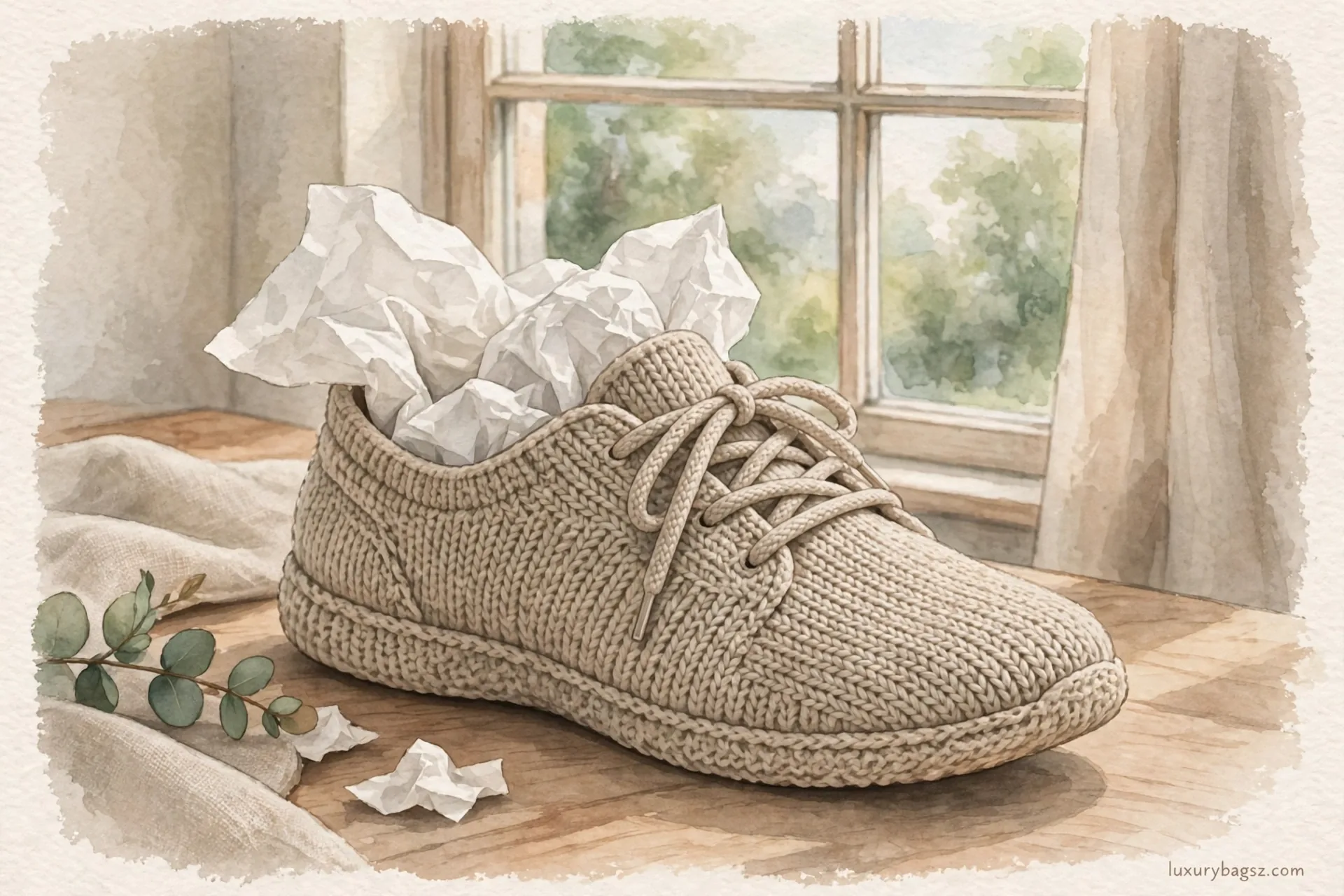
Knit sneakers should usually skip the hard tree. Flyknit-style uppers are woven to stretch and move with the foot, and a rigid wooden tree can press the knit out of shape or leave pressure marks. Gentle tissue stuffing holds the toe shape while the knit relaxes back on its own.
Foam-heavy running and training sneakers are the second skip. Their cushioning comes from soft foam midsoles and unstructured uppers, and the shoe is designed to rebound rather than hold a rigid form. A hard tree adds nothing here, and an oversized one can distort the collar or press dents into soft foam around the ankle.
Delicate constructions deserve caution too. Sneakers with thin linings, bonded panels, glued overlays or very soft lambskin can be damaged by a tight tree pulling at seams. If the upper feels papery or the lining feels loose, stuffing is kinder than any rigid insert.
Slip-ons and sock-style sneakers also gain little. With no laces and no firm toe box, there is no structure for a tree to support, and the elastic collar can be stretched by a tree that is even slightly too wide. Air drying on a rack is enough for these pairs.
What Type of Shoe Tree Suits Sneakers
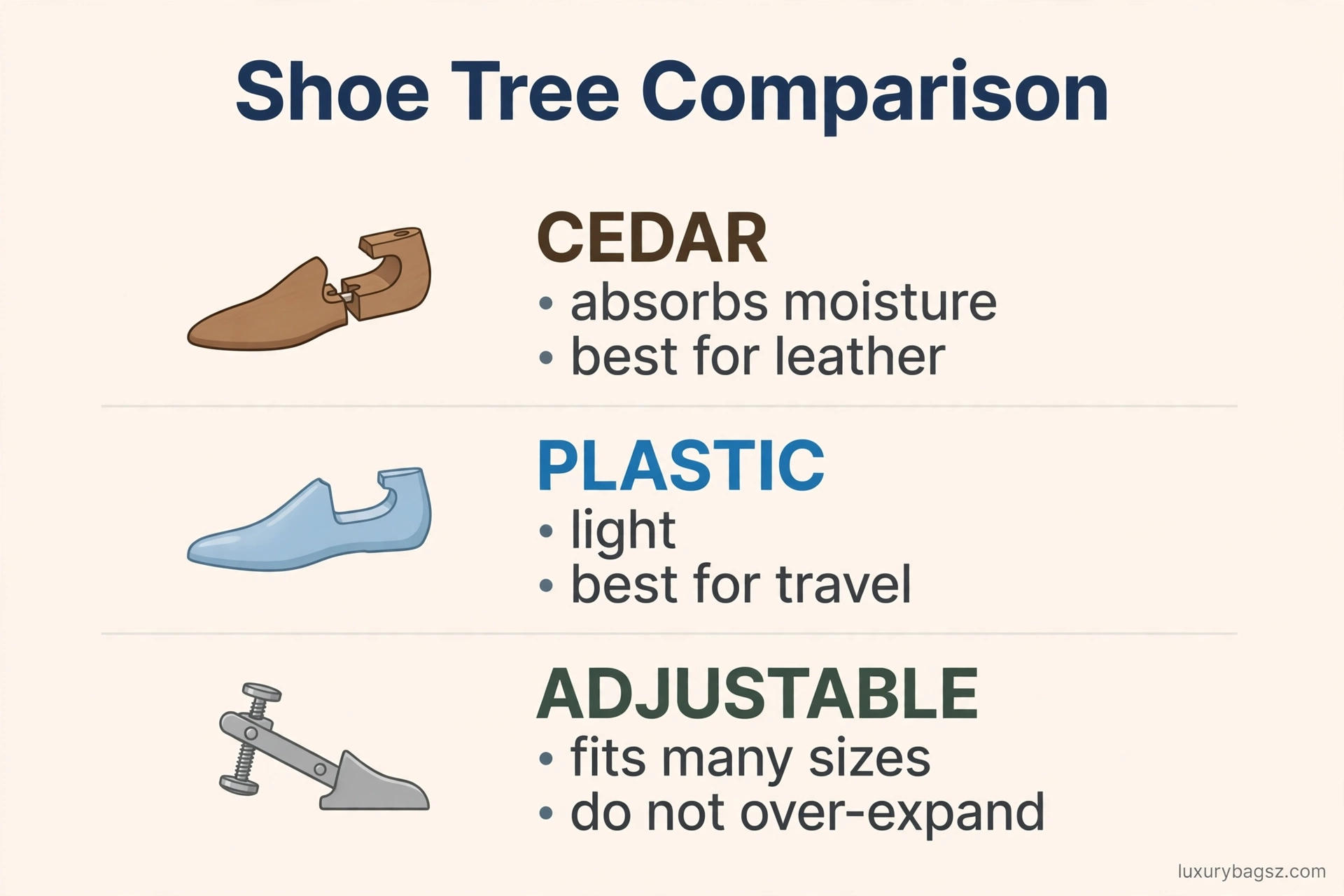
Cedar trees are the classic choice for leather sneakers. Cedar absorbs moisture and helps with odour, which matters because sneakers are worn without socks more often than dress shoes. Choose a split-toe cedar tree in your sneaker size, not a dress-shoe tree with a narrow, pointed toe.
Plastic trees suit travel and everyday pairs. They are light, cheap and easy to wipe clean, and they hold a basic shape well. They absorb no moisture, so they are best for pairs that are already dry, or for short storage between wears rather than overnight drying.
Adjustable trees with a spring or screw mechanism need care. They can fit several sizes, which sounds convenient, but it is easy to over-expand them and stretch the sneaker. If you use one, expand it only until the upper feels supported, never until it feels tight.
Sneaker-specific trees with a wide, rounded toe are worth considering for prized pairs. They fill the broader toe box of a sneaker better than a dress-shoe tree, which can leave the sides unsupported. For most collections, though, a well-sized cedar tree does the same job for less money.
How and When to Use Them
Insert the tree right after you take the sneakers off. This is when the upper is warm and slightly damp from wear, so it dries in the shape the tree holds. Waiting until the next day lets creases set, and a tree inserted later mostly preserves the creased shape.
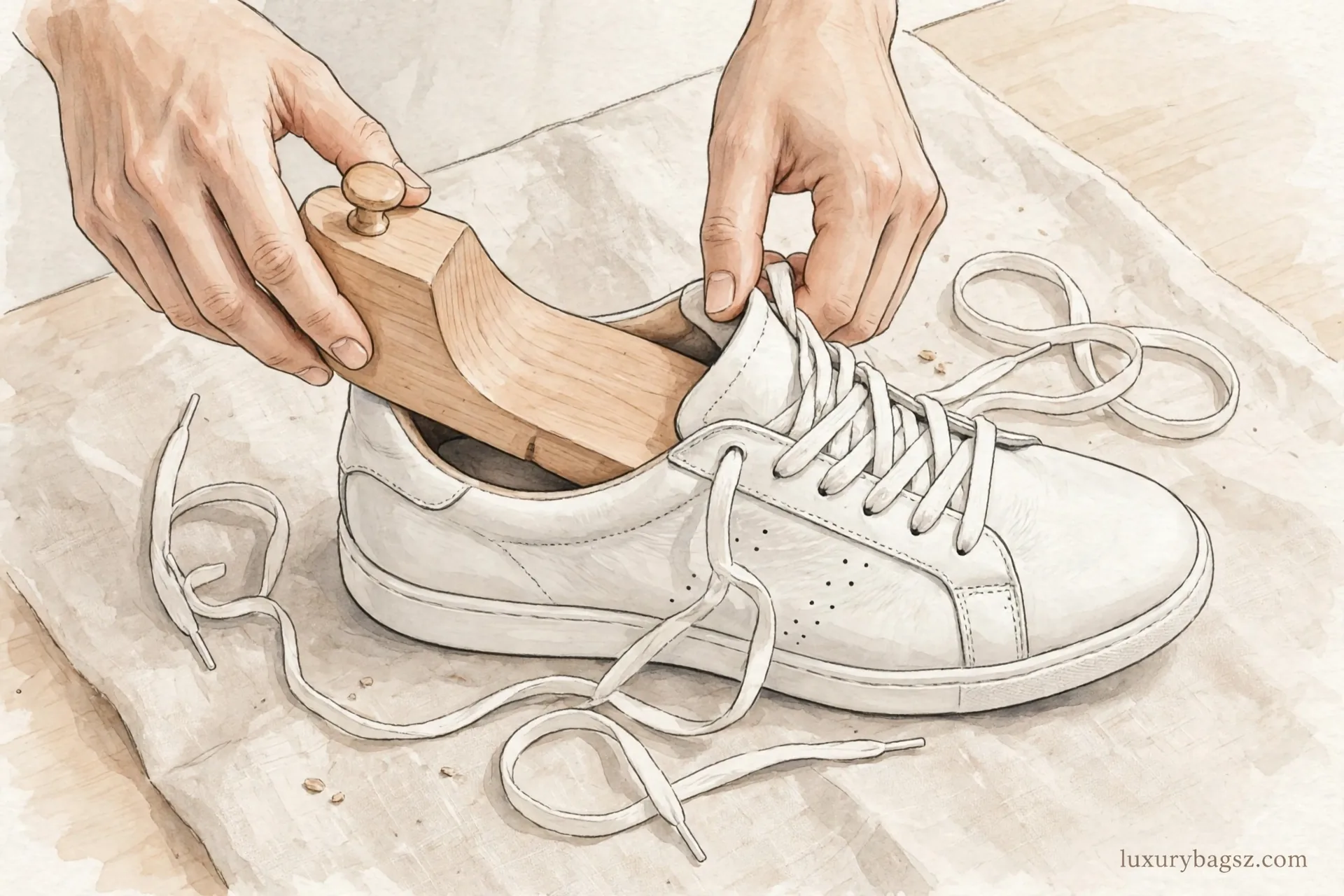
Loosen the laces first, then slide the tree in toe-first. The tree should fill the toe box fully without forcing the sides outward. You should feel gentle resistance, not a struggle, and the heel of the tree should sit flat against the heel counter.
Use trees for drying and storage, not for wearing or for stretching. Trees are not a stretching tool, and leaving an over-expanded tree in a pair for weeks can permanently widen it. For long storage, trees are ideal, but check the fit once in a while and ease off if the leather looks strained.
Trees also help during cleaning. A firm sneaker is easier to brush and wipe, and the toe box will not collapse under the brush. Follow the material guide for cleaning sneakers and leave the trees in while the pair air dries, away from heat and direct sun.
Sizing and Fitting Checks
Match the tree to your sneaker size, not your dress-shoe size. Sneaker sizing runs roomier in the toe, so a tree sized for a dress shoe can be too narrow and leave the sides unsupported. Most brands sell trees in size ranges, so pick the range that covers your usual sneaker size.
Check the width as well as the length. A tree that is too long presses against the toe and can distort the toe cap, while one that is too short leaves the front of the shoe empty. The tree should reach the end of the toe box without pushing it outward or lifting the sole.
Watch for pressure points after a few hours. Remove the tree and look for stretched seams, shiny spots on leather, or dents in foam. Any of those signs means the tree is too large or too aggressive for that pair, and you should size down or switch to stuffing.
Wide feet need wide trees, or a split-toe design that expands sideways. A narrow tree in a wide sneaker supports only the centre and lets the sides collapse, which defeats the purpose. If you cannot find a good width match, firm stuffing shaped to the toe box is better than a poor tree.
Risks of the Wrong Tree
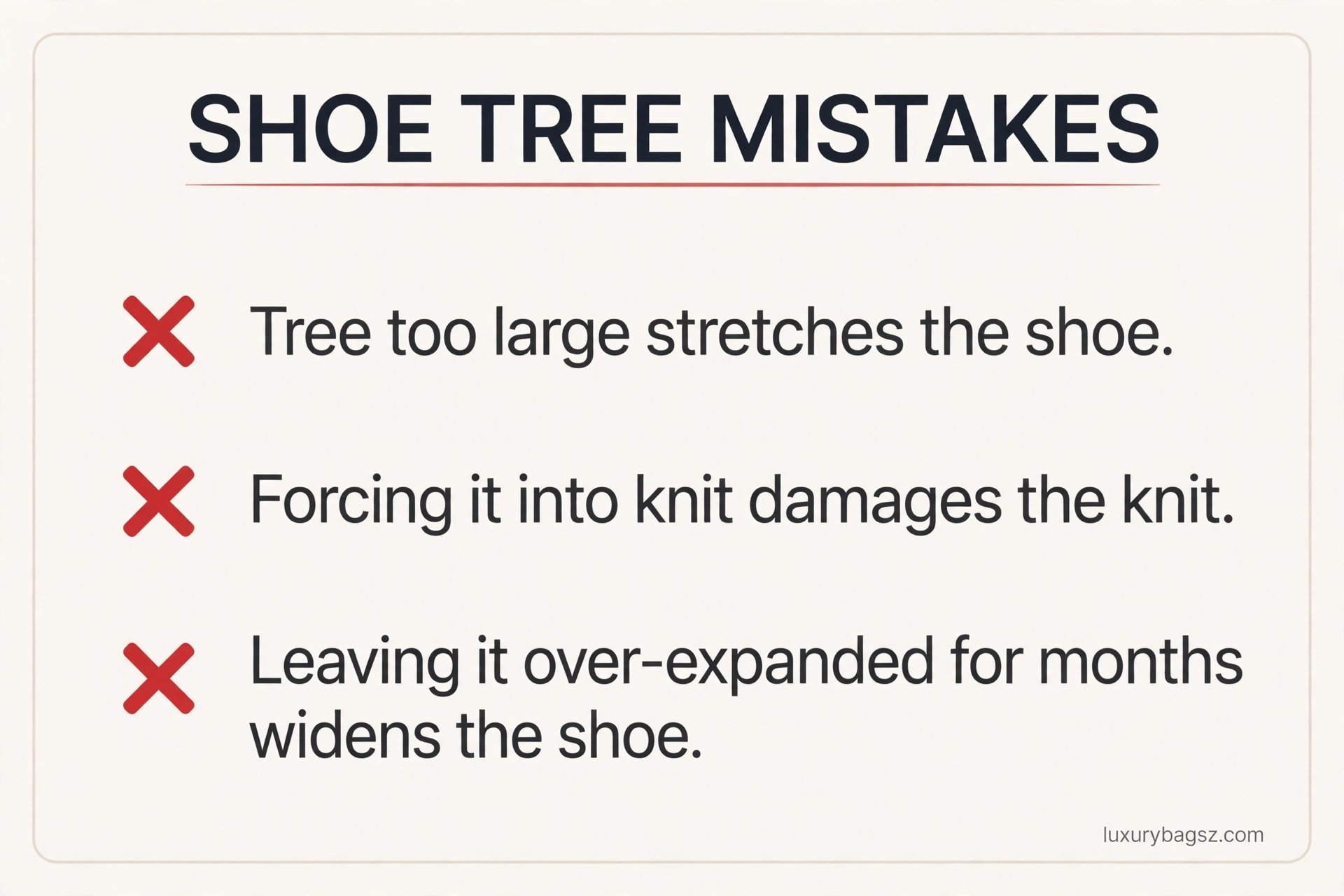
Overstretching is the most common damage. A tree that is too big, or an adjustable tree expanded too far, slowly widens the upper and loosens the fit. This is worst in soft leather and knit, where the stretch does not spring back, and it can make a well-fitting pair feel sloppy.
Cracked leather follows from repeated strain. Leather that is constantly held under tension dries in a stretched state, and the finish can crack along crease lines. This risk rises if the sneaker is stored for months with an over-tight tree, especially in dry indoor air.
Damage to linings and seams is easy to miss. A metal spring mechanism or a rough plastic edge can catch a thin lining, and repeated insertion can pull at glued overlays. Check inside the sneaker now and then, and smooth any rough edges on cheap trees before use.
Foam and knit distortion is the sneaker-specific risk. Hard trees can leave dents in soft foam collars and press knit yarns flat, changing how the shoe looks and feels. Sources disagree on how much this matters for cheap runners, but for knit and foam pairs the safe advice is consistent: skip the hard tree.
Alternatives That Work
Tissue paper and acid-free stuffing are the gentlest option. Crumple tissue loosely into the toe box until it holds the shape, without packing it hard. This supports knit, mesh and delicate pairs without stretching them, and it costs almost nothing.
Old socks and soft cloths work just as well for everyday pairs. Roll a pair of clean socks into each toe box, and add a second roll if the shoe is deep. This is ideal for travel, since socks are already in your bag and add no weight.
Shoe trees for cleaning only are a useful compromise. Insert a tree while you brush or wipe the sneaker, then remove it for storage. You get the firm surface for using a suede brush or applying conditioner, without the long-term stretch risk.
Air drying properly matters more than any insert. Always dry sneakers at room temperature, away from radiators and direct sun, and never in a tumble dryer. Stuffed or treed, a pair dried too fast can warp, so patience is the real shape-saver.
For travel, skip heavy cedar and pack light plastic trees or stuffing instead. Cedar trees add noticeable weight to a bag, while plastic trees or rolled socks protect the toe box in a suitcase just as well for a few days. Never pack sneakers loose under heavy items, treed or not.
For leather sneakers, finish the routine with conditioner. A light coat of Saphir Renovateur after cleaning keeps the leather supple, so it resists cracking along crease lines. Condition first, let it absorb, then insert the tree while the leather dries.
Finally, remember that trees are storage care, not repair. If a sole is worn through or the midsole foam is dead, no tree will fix it. For worn pairs, read the guide to whether you can resole sneakers before deciding whether the pair is worth the shelf space.
How Many Trees Do You Actually Need
You do not need a tree for every pair you own. Start with your most-worn leather sneakers and your most prized pairs, since those are the ones where shape loss shows first. Everyday beaters and foam runners can live happily with socks or tissue stuffing.
Rotation changes the maths. If you rotate five pairs, each pair rests for days between wears, so a few trees can be shared. Move the trees into the pair you just took off, and let the rested pairs sit stuffed. This keeps costs down without losing the benefit.
Budget is straightforward. A decent cedar pair costs far less than replacing a good leather sneaker, and one pair of trees can serve a small rotation for years. Plastic trees are cheaper still, so a mixed set works well: cedar for leather, plastic for travel and canvas.
For collectors, trees also protect resale presentation. A pair stored with its shape intact photographs better and looks cared for, which matters if you ever sell. Keep the original box, keep the trees inside, and store the pair out of sunlight so the leather does not fade unevenly.
One last check: trees are not a substitute for rest. Wearing the same pair every day, even with trees overnight, wears the foam and sole faster than any insert can offset. Rotation plus trees beats trees alone, every time.

Frequently Asked Questions
Do all sneakers need shoe trees?
No. Leather, suede and structured lifestyle sneakers benefit most. Knit, mesh, foam runners and sock-style pairs usually do not need a hard tree, and gentle stuffing is enough for them.
Will shoe trees remove creases from my sneakers?
They reduce new creases and keep existing ones shallow, but they cannot erase deep creases that are already set. Creases form where the foot bends, and no tree can undo that wear completely.
Are cedar shoe trees better than plastic ones for sneakers?
Cedar absorbs moisture and odour, which helps sneakers worn without socks. Plastic is lighter and cheaper and holds shape well, but absorbs nothing, so it suits dry pairs and travel better.
Can shoe trees stretch my sneakers?
Yes, if they are too large or over-expanded. A correctly sized tree supports without stretching, but an oversized or adjustable tree left in for weeks can permanently widen a soft upper.
Should I put shoe trees in wet sneakers?
Insert them after wear while the sneaker is slightly damp, then air dry at room temperature. Never put trees in soaking-wet sneakers and dry them near heat, as fast drying can warp the shape.
Do knit sneakers like Flyknit need shoe trees?
Usually not. Knit uppers are designed to stretch and rebound, and a hard tree can press the knit out of shape. Loose tissue stuffing holds the toe shape more gently.
Can I use dress-shoe trees in sneakers?
You can, but sneaker-specific or wide rounded trees fit better. Dress-shoe trees are narrower and may leave the sides of a broad sneaker toe box unsupported.
How long should shoe trees stay in sneakers?
Leave them in between wears and during storage. Remove them before wearing, and check the fit now and then during long storage so a tight tree does not strain the leather.
Are shoe trees worth it for cheap everyday sneakers?
Usually not. For inexpensive pairs you replace often, stuffing with socks or tissue gives most of the benefit for free. Save trees for leather, prized or limited pairs.
What is the best alternative if I do not want shoe trees?
Loosely crumpled tissue paper or rolled clean socks, plus air drying away from heat. This holds the toe shape gently and works for knit, mesh and delicate pairs alike.
Final Verdict
Shoe trees earn their place for leather and structured sneakers, and they are optional for everything else. Buy a well-sized cedar pair for your best leather sneakers, use light stuffing for knit and foam pairs, and never force a tree that fights the shoe.
The habit matters more than the material. Trees inserted after every wear, sized right and checked now and then, keep good sneakers looking good far longer. For soft and delicate pairs, a gentle hand beats a hard insert every time.






