

How to Grade Designer Shoe Condition
The Short Version: Grade the Shoe, Not the Photograph
Grading designer shoe condition means judging, honestly and in detail, how much life a pair has left and how much wear it already shows. A grade is not a marketing label. It is a summary of evidence from the soles, uppers, insoles, heels, and toe areas, plus the pair's structure, fastenings, and completeness.
That evidence matters because shoes wear differently from other luxury items. A handbag can sit on a shelf for years without changing. A shoe changes every time it is worn, through pressure, flexing, moisture, and contact with the ground. Two pairs of the same design, bought on the same day, can therefore end up in very different condition, depending on how often, where, and how carefully they were worn.
This guide gives you a shoe-specific grading method you can use as a buyer, a seller, or a collector. It covers each wear area in turn, explains a clear grade scale, and shows how to photograph and describe a pair so that the grade can be trusted.
Key Takeaways
- No industry-wide shoe grading standard exists, so always read a seller's definitions and check the photographs, not just the grade label.
- Soles, uppers, insoles, heels, and toe wear are the five core areas. A pair's overall grade follows its weakest area, not its best one.
- Heel tips, sole edges, and toe boxes show wear first and are the most reliable clues to how much a pair was actually worn.
- Repairs, resoling, and replaced heel tips must be disclosed, because they change originality and future repair options.
- Photograph both shoes, from every angle, in daylight. A grade without photographs of flaws is an opinion, not evidence.
- A lower grade is not a bad pair. It is a cheaper pair with a clearer price, and for daily wear it is often the smarter buy.
Part 1: Why Shoe Grading Needs Its Own Method
Shoe grading cannot simply borrow the method used for bags or clothing, because shoes have moving parts, ground contact, and structural stresses that other items do not. A bag's corner wear is visible and slow. A shoe's sole wear is functional: once a sole is worn through, the shoe needs repair before it can be worn safely, and that repair costs money and changes the shoe.
Shoes also wear asymmetrically. Most people wear one shoe slightly differently from the other, through gait, foot shape, and habit. A pair may therefore show heavier wear on the right heel than the left, or more creasing on one toe box than the other. Grading a pair means grading both shoes, noting differences, and letting the weaker shoe set the overall grade where the difference matters.
Materials add another layer. Leather soles wear differently from rubber soles. Suede uppers mark differently from patent leather. Heel tips wear differently from block heels. A grading method that treats all shoes the same will miss these differences, so this guide breaks grading down by area and by material, rather than offering a single vague label.
Finally, shoes carry hygiene and fit factors that other luxury items do not. Insoles absorb moisture and odour, linings wear against feet, and a shoe moulded to one owner's foot may fit the next owner differently. Those factors belong in a condition assessment, even when they are uncomfortable to discuss, because a buyer who discovers them after purchase will feel misled, however beautiful the shoe looks in a photograph.
Part 2: The Five Core Areas — An Overview
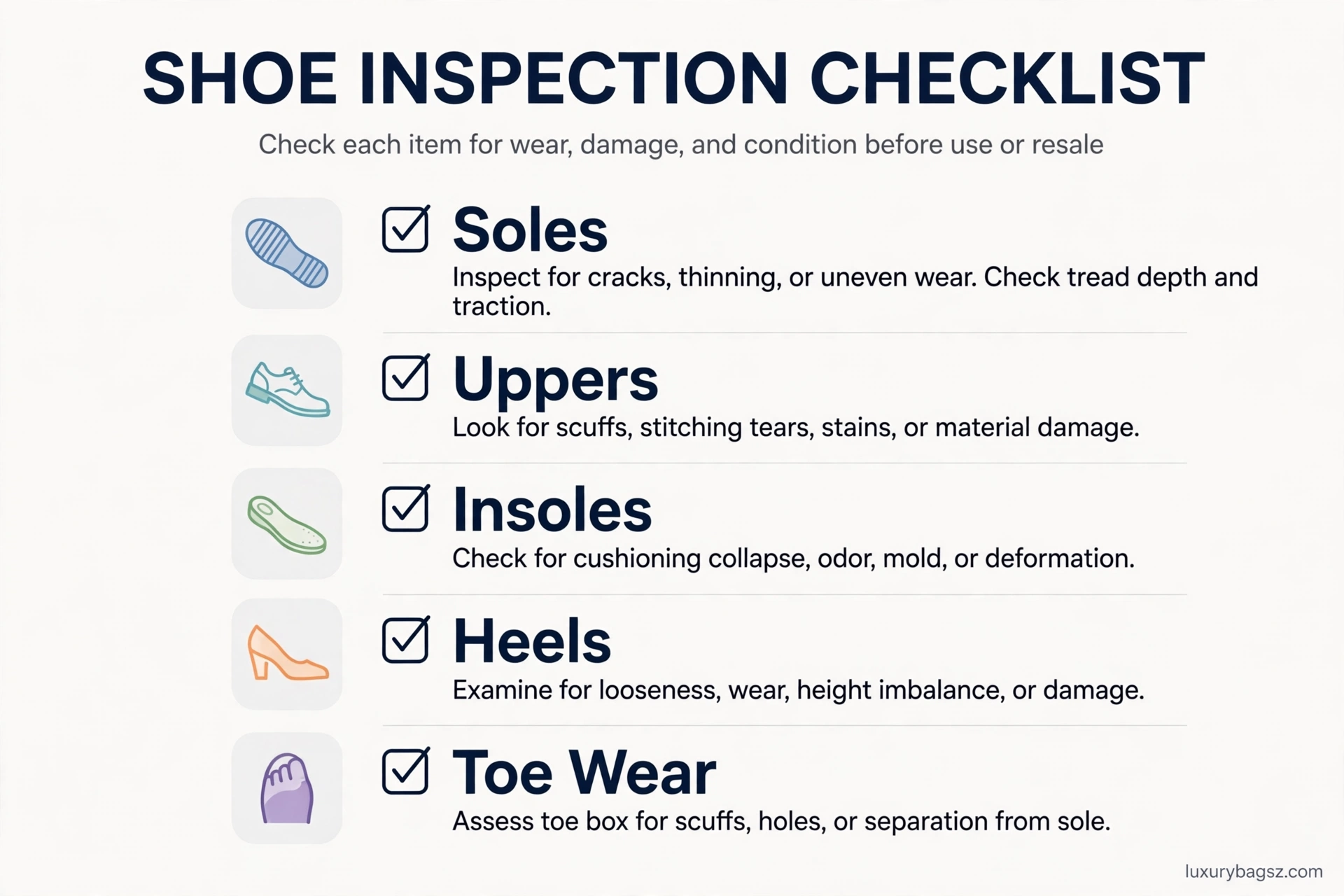
Every shoe grade should rest on five core areas, checked in the same order each time so nothing is missed. Soles show ground contact and overall mileage. Uppers show material wear, creasing, scuffing, and staining. Insoles show interior wear, foot imprint, and odour. Heels show tip wear, counter wear, and stability. Toe areas show creasing, scuffing, and structural change from flexing.
Start with the pair as a whole, standing on a flat surface, viewed from the front, back, sides, and above. Do the shoes sit evenly, or does one lean, twist, or collapse? Does the shape hold, or has the toe box flattened, the heel counter bent, or the arch support softened? A pair that cannot stand straight is telling you about structural wear before you examine any single area in detail.
Then work through the five areas one by one, noting what you find for each shoe separately. Use daylight, not flash alone, because flash can hide scuffs and exaggerate shine. Handle the shoes, flex them gently, and check fastenings, zips, buckles, and laces as you go. A grade built from handling, rather than from looking alone, is far more reliable.
Record your findings in plain language as you go, with photographs to match. A note such as "right heel tip worn to metal, left heel tip light wear, soles light scuffing, uppers clean" is more useful than any single grade label on its own. The grade summarises those notes. It does not replace them.
Part 3: Soles — Reading Mileage From the Ground Up
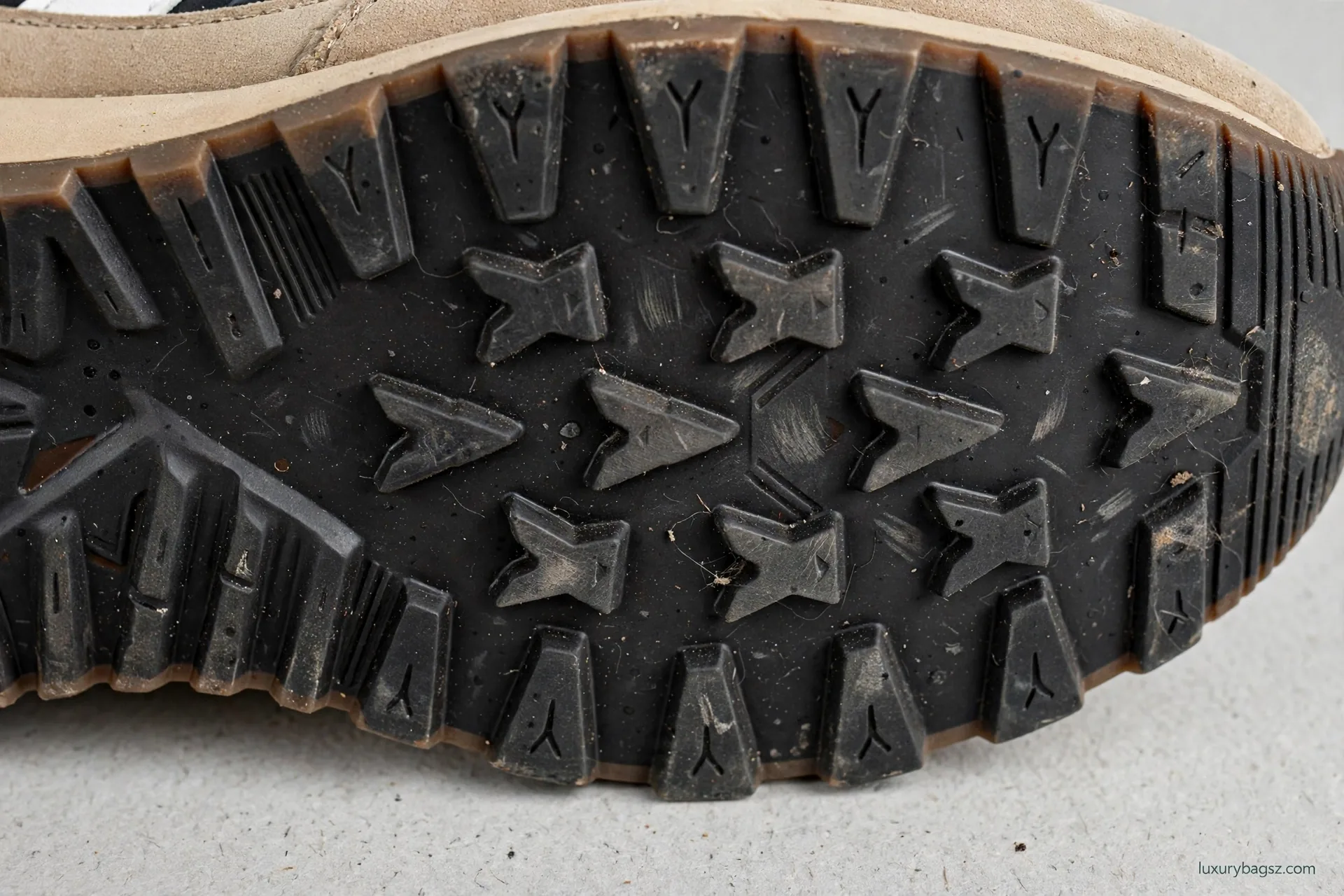
Soles are the most honest record of how much a pair was worn. Leather soles show wear as smoothing, thinning, and darkening, especially at the ball of the foot and the heel strike area. Rubber soles show wear as flattening of tread, smoothing of texture, and edge rounding. A sole that still shows crisp tread or original texture has seen little use. A sole worn smooth, thin, or through to another layer has seen a great deal.
Check the sole edge as well as the sole surface. Edge scuffing, chipping, and separation from the upper all indicate wear and, in the case of separation, a repair need. Press gently along the edge to feel for gaps or movement. A sole that is separating, even slightly, needs attention before the shoe can be worn reliably, and that repair should be priced into any sale or purchase decision.
Look for resoling evidence. A resoled shoe may have a new sole that looks excellent, while the upper tells a different story about age. Resoling is a legitimate repair, and for quality shoes it can extend life greatly, but it must be disclosed, because it changes originality and because a resole of poor quality can affect fit and balance.
Check whether the sole matches the original style, whether stitching is even, and whether any maker's marks on the original sole have been lost.
Also check for protective soles, often called sole guards, which some owners add to leather soles. A sole guard can preserve the original sole underneath, which is a benefit, but it also hides the original sole from inspection. Note its presence plainly, and, where possible, note the condition of the original sole beneath it if that information is available.
A buyer who expects an original leather sole and finds a guard instead may feel misled, even when the guard was added with good intentions.
Part 4: The Grade Scale — From New to Well Worn
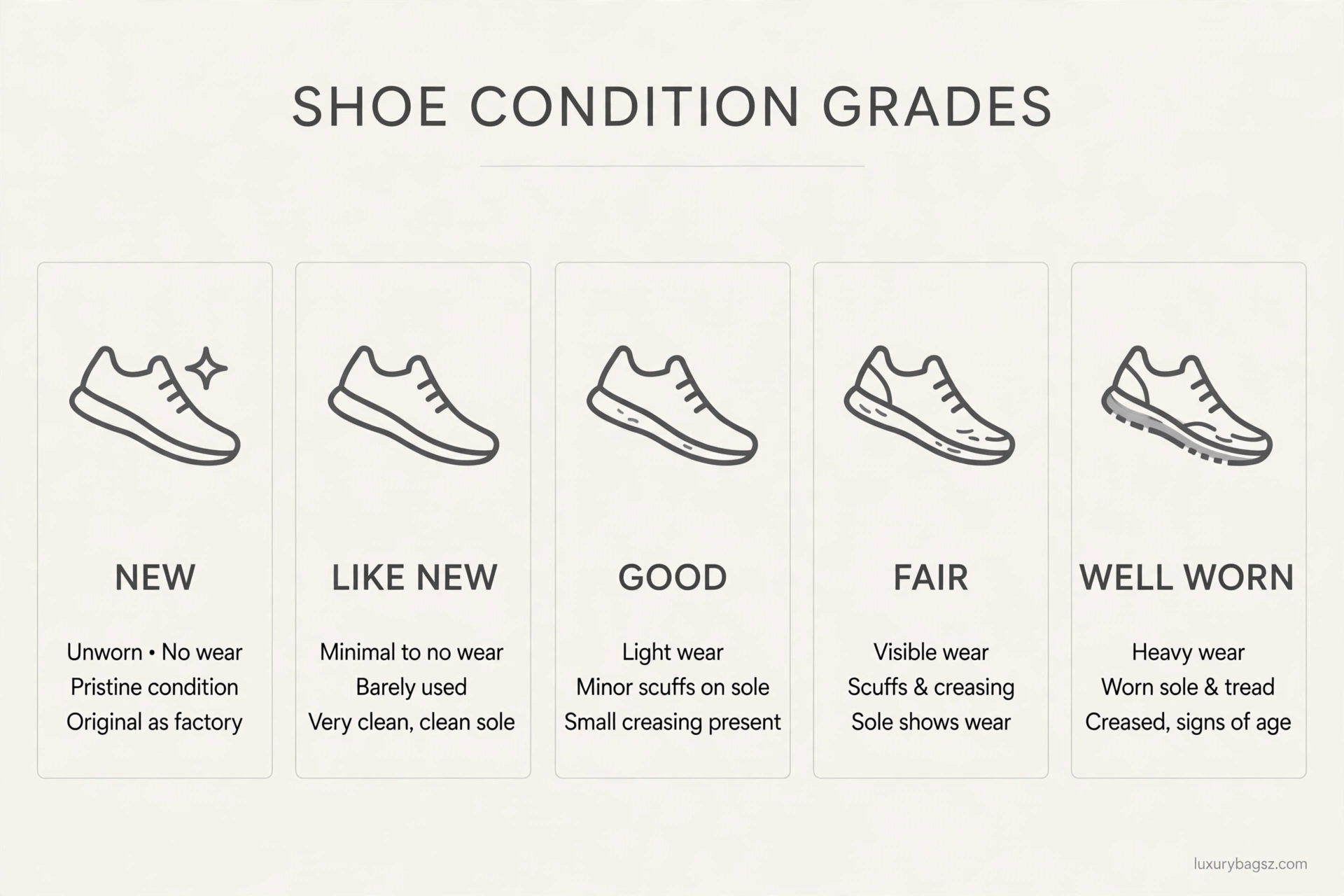
A useful shoe grade scale needs clear definitions, applied consistently, with photographs to support each grade. The scale below is the one used in this guide, and sellers who use different labels should map their labels to these definitions in their listings, so buyers can compare fairly.
New, unworn, means the pair has never been worn outside, shows no sole wear, no creasing from walking, and no foot imprint, and comes with its original box and accessories where applicable. A pair tried on indoors, briefly, with no marks, may still qualify, but that try-on should be stated. A pair worn once outdoors, however briefly, is no longer new.
Excellent, lightly worn, means the pair shows only minimal signs of wear: light sole scuffing, faint creasing, and no visible damage to uppers, heels, or insoles. The pair looks nearly new in photographs and in hand, and any wear is found only on close inspection. This grade suits pairs worn a handful of times, carefully, on clean surfaces.
Very good means light, honest wear consistent with occasional use: visible but light sole wear, light creasing at the toe box, minor heel tip wear, and light insole imprint. No structural damage, no deep scuffs, and no repairs needed for normal wear. This is a common grade for well-kept pairs that were worn regularly but carefully.
Good means visible wear consistent with regular use: moderate sole wear, clear creasing, heel tip wear, insole imprint, and minor scuffs or marks on uppers. The pair remains fully wearable and structurally sound, but its wear is obvious on inspection. Good pairs are often the best value for daily wear, because their price reflects wear that does not affect function.
Fair, or well worn, means heavy wear, possible damage, or repairs needed: worn-through soles or heel tips, deep scuffs, stained or damaged uppers, collapsed structure, or strong odour. Fair pairs suit buyers who want a rare design, a restoration project, or a pair for occasional use at a low price, provided the faults are priced in and disclosed fully.
Part 5: Uppers — Leather, Suede, Patent, and Fabric
Uppers show wear in material-specific ways, and a grader must know what to look for in each material. Smooth leather shows creasing at flex points, scuffs from contact, colour transfer, and darkening at handles of wear, though shoes have no handles, so the equivalent wear points are the toe box, the sides at the widest part of the foot, and the heel counter.
Deep scratches, cuts, or cracked finish are more serious than light scuffs, because they may not clean or polish out.
Suede and nubuck show wear as flattening, shining, staining, and water marks, and they are harder to restore than smooth leather. A suede shoe that has been brushed and protected regularly will look far better than one that was worn in rain without protection. Check suede in daylight, from several angles, because nap changes appearance with light direction, and a photograph taken from one angle can hide wear visible from another.
Patent leather shows wear as scuffs, clouding, cracking, and colour transfer, especially where the shoe flexes or rubs against the other shoe. Patent is also sensitive to heat and to contact with certain materials in storage, which can cause sticking or marking. Check patent shoes for fine cracks at flex points, which indicate age or heat exposure, and for marks where the shoes touched each other in storage.
Fabric uppers, including canvas, satin, and embellished fabrics, show wear as staining, fraying, pulled threads, and loosened embellishment. Satin, in particular, marks easily and shows water spots, while embellished uppers can lose beads, sequins, or crystals with wear.
Check embellishment by running a hand gently over the surface, feeling for missing pieces or loose threads, and photograph any gaps closely, because a buyer will notice them on first wear.
Part 6: Heels — Tips, Counters, and Stability
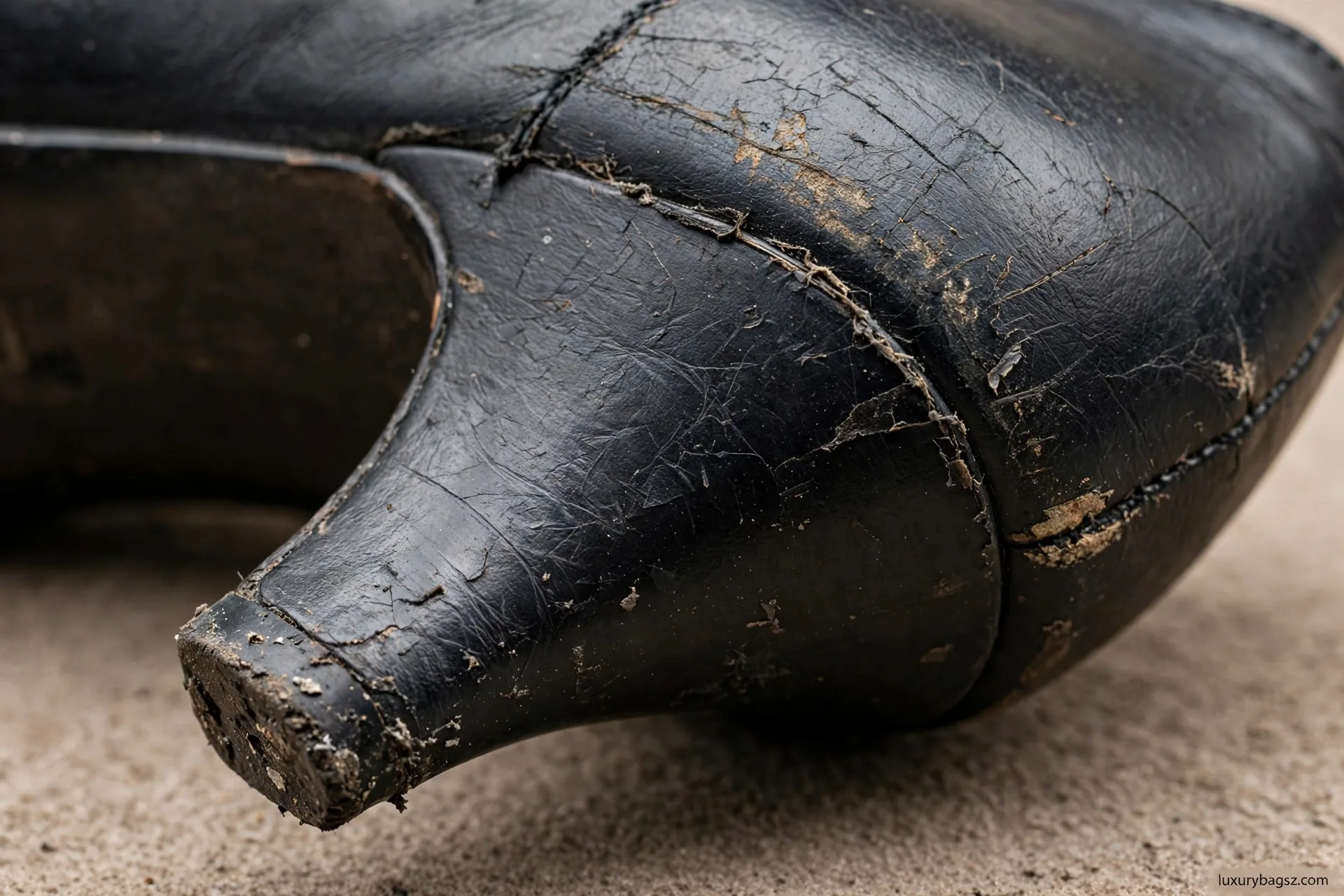
Heels deserve separate attention, because heel wear affects both appearance and safety. Heel tips, the small replaceable caps at the bottom of a heel, wear fastest, and their condition is a reliable mileage indicator. A tip worn flat, worn to metal, or missing entirely indicates heavy wear and an immediate repair need. A tip with light wear indicates light use.
Replacement tips are a normal, low-cost repair, but a heel with a missing or badly replaced tip should be graded down until it is fixed.
Heel counters, the stiffened back of the shoe that holds the heel in place, show wear as bending, collapsing, or softening, especially in shoes worn without proper support or stored carelessly. A collapsed counter changes fit and stability, and it is harder to repair invisibly than a tip. Press the counter gently and note whether it holds shape or gives way.
A pair with collapsed counters may still be wearable, but it should not be graded as excellent or very good, whatever the uppers look like.
Stability is the functional test. Place the pair on a flat surface and check whether each shoe sits level, without rocking or leaning. Rocking can indicate uneven heel wear, a bent heel, or sole damage. A shoe that rocks is uncomfortable and potentially unsafe, and it needs a cobbler's assessment before it can be graded as wearable without qualification.
Note stability plainly, because a buyer who discovers rocking after purchase will rightly feel the grade was incomplete.
For block heels, wedges, and platform shoes, check the heel block itself for scuffs, chips, and separation from the sole, and check platform edges for wear. For stilettos, check the heel shaft for scratches and bending, which can indicate stress. Heel height does not change the grading method, but it changes which faults matter most, because a fault in a tall, narrow heel affects stability more than the same fault in a low, wide heel.
Part 7: Toe Wear — Creasing, Scuffing, and Shape Change
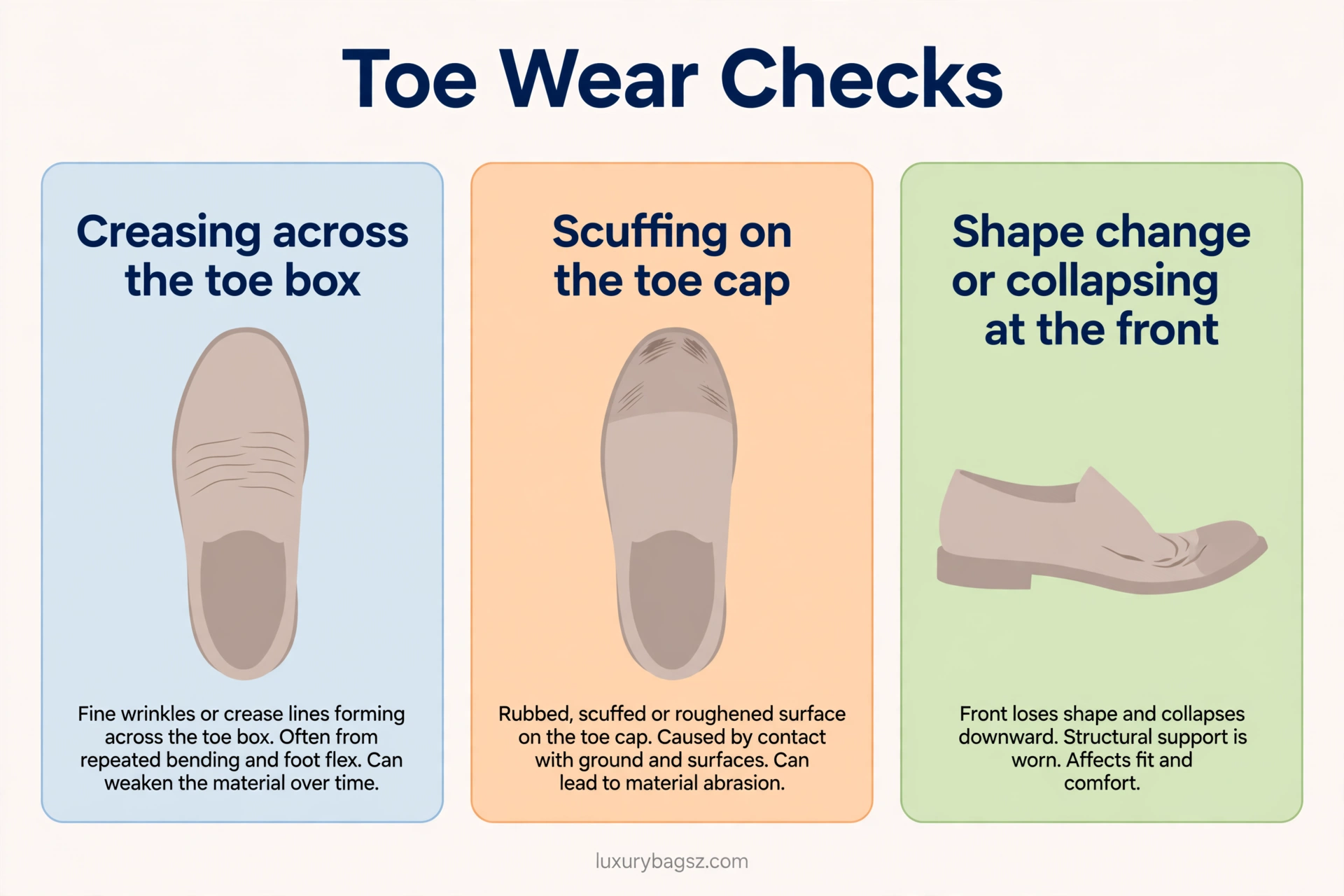
Toe areas wear through flexing, contact, and pressure, and they are often the first place a buyer looks, because toe wear is visible in every photograph of a pair worn or displayed. Creasing at the toe box is normal for leather shoes, and light creasing from a few wears is expected. Deep creasing, cracking at crease lines, or creasing that has broken the finish indicates heavier wear and, for some materials, a limit on future life.
Scuffing at the toe cap, the very front of the shoe, comes from kicking, stairs, and ground contact, and it is especially visible on light colours and patent finishes. Light scuffs may polish out on smooth leather, but deep scuffs, cuts, or missing finish will remain. Photograph toe caps straight on and from the side, in daylight, so buyers can judge scuffing for themselves rather than relying on a description.
Shape change is the deeper toe issue. A toe box that has flattened, widened, or lost its original profile indicates either heavy wear or poor storage, such as shoes stored without trees or stuffing, under weight. A flattened toe box changes appearance and fit, and it is hard to restore fully. Compare both shoes: if one toe box holds shape and the other has flattened, note the difference, because it affects the pair's overall grade and its price.
For pointed toes, check the very tip for wear, bending, and damage, because pointed tips are vulnerable and expensive to repair invisibly. For open toes, check straps and edges for wear and stretching. For boots, the toe area extends to the front of the boot shaft's base, and the same creasing and scuffing logic applies, with the added factor of shaft wear covered in the next part of this guide.
Part 8: Insoles, Linings, and the Inside Story
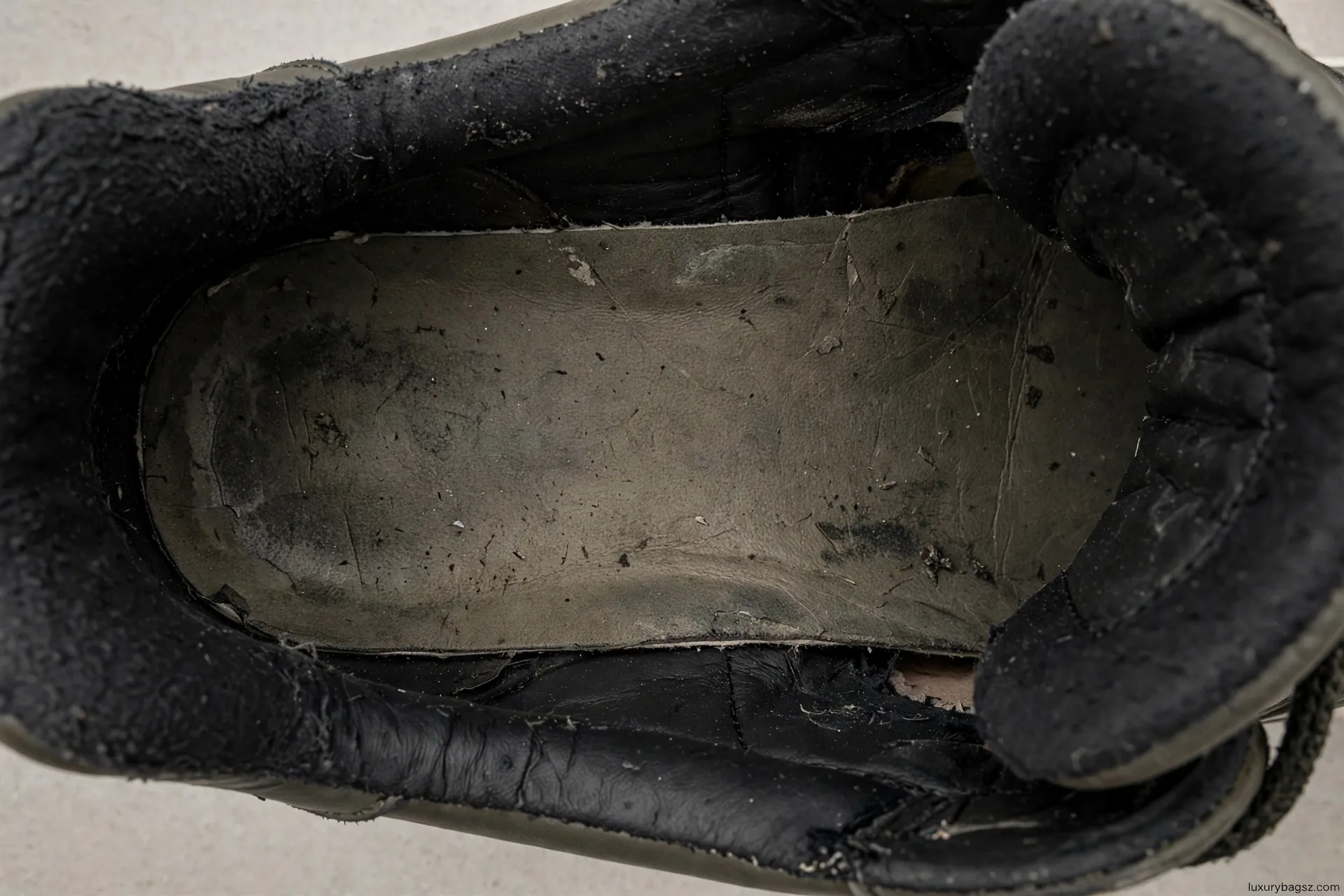
Insoles tell the inside story of a pair, and they are often neglected in listings, which is a mistake. A new insole is clean, flat, and free of foot imprint. A lightly worn insole shows a faint imprint and light colour change. A heavily worn insole shows a deep imprint, worn or torn covering, staining, and sometimes odour. Insole wear correlates closely with total wear, which is why it is such a useful grading clue.
Check whether insoles are original, replaced, or glued down. Replaced insoles are a legitimate repair, but they hide the original insole's story and may change fit, so they should be disclosed. Insoles that lift, bubble, or peel indicate moisture damage or poor repair, and they affect comfort directly. Photograph insoles with the shoe held open, in daylight, so buyers can see imprint and condition without guessing.
Linings wear where they contact the foot and the ankle: at the heel, the sides, and the tongue or collar area. Check for tearing, thinning, staining, and separation from the upper. Lining damage is more than cosmetic, because a torn lining can rub, bunch, and make a shoe uncomfortable, and lining repair is rarely invisible.
For boots, check the full shaft lining, which can wear, crease, and stain along its length, especially at the ankle flex point.
Odour belongs in a condition assessment, stated factually and without embarrassment. Shoes absorb moisture, and pairs worn without socks, in heat, or without drying time can develop odour that cleaning may reduce but not always remove. A seller who states "light odour, stored with cedar" gives a buyer useful information.
A seller who says nothing, and a buyer who discovers strong odour on arrival, will face a return dispute that honest disclosure would have prevented.
Part 9: Structure, Fastenings, and Completeness
Structure is what holds a shoe together and holds its shape, and it should be checked after the five core areas. Check the shank and arch support by flexing the shoe gently: it should flex at the ball of the foot, not in the middle, and it should return to shape. A shoe that flexes in the wrong place, or that stays bent, has structural wear that affects comfort and longevity.
Check fastenings as part of structure. Buckles should close securely, without bent prongs or loose stitching. Zips should run smoothly, without catching or missing teeth, and should close fully. Laces should be original where possible, or matching replacements stated as such. Elastic, straps, and Velcro should hold firmly, without stretching or fraying that lets the shoe slip.
A fastening that fails in use makes a beautiful shoe unwearable, so its condition belongs in the grade.
Completeness includes the box, dust bags, extra laces, heel protectors, and any designer extras that came with the pair. A complete pair commands a higher price, especially for collectors, while a pair missing its box or accessories sells for less. State exactly what is included, and photograph the box label, because the label confirms size, style, and colour, and a mismatched box label is a warning sign for any buyer.
For boots, structure extends to the shaft: check for slouching, creasing, zip function along the full length, and top edge wear. For sandals, check straps, toe posts, and sole flexibility, because sandal structure depends on fewer components and each one matters more. The grading method stays the same across shoe types, but the wear points shift, and a grader who knows the type will check the right places.
Part 10: Photographing and Describing a Grade Honestly
A grade is only as trustworthy as the photographs and description behind it. Photograph both shoes, together and separately, from the front, back, sides, above, and below. Include close-ups of soles, heel tips, toe boxes, insoles, and any flaw, however small. Use daylight, a plain background, and no filters that change colour or hide wear.
A photograph that flatters a flaw into invisibility helps no one, because the buyer will find the flaw on arrival.
Write the description from your inspection notes, not from the grade label. Start with the overall grade, then list each area with its finding, including the weaker shoe where shoes differ. State repairs, replacements, and missing accessories plainly. State odour factually if present. State the pair's history where known, including how often it was worn and how it was stored, without exaggerating certainty about details you do not know.
As a buyer, use the same method in reverse. Read the description area by area, check each photograph against the description, and ask for any missing angle or close-up before paying. A seller who provides a missing photograph promptly is a good sign. A seller who refuses, delays, or offers only a single glamour photograph is a warning sign, however attractive the price.
As a seller, remember that an honest lower grade often sells faster than a hopeful higher grade. Buyers trust sellers who show flaws, because they know what they will receive. A pair graded good, with clear flaw photographs, will attract buyers who want a wearable pair at a fair price. A pair graded excellent, with hidden flaws, will attract a return, a dispute, and a damaged reputation that costs far more than the price difference.
Part 11: Grading by Shoe Type — Boots, Sandals, and Sneakers
The five-area method works for every shoe, but each shoe type has wear points that deserve extra attention, and a grader who checks only the generic areas will miss them. Boots, for example, add shaft wear to the assessment. Check the shaft for creasing at the ankle, slouching, zip function along the full length, and wear at the top edge where the shaft meets the leg.
A boot shaft that has collapsed or a zip that catches halfway changes the grade, even when the foot part of the boot looks excellent, because the shaft is a large, visible part of the boot.
Sandals add strap wear. Check every strap for stretching, thinning, and stitching failure, and check the footbed for imprint and staining, which show more clearly on open shoes than on closed ones. A sandal strap that has stretched will slip in wear, and a footbed with a deep imprint will feel moulded to the previous owner.
Both faults lower the grade, and both are easy to miss in a single front photograph, so photograph sandals from above, with straps lifted where possible, to show the footbed clearly.
Designer sneakers, distinct from the luxury sneaker resale market's deadstock focus, still grade by the same areas, but with attention to midsole yellowing, toe cap scuffing, and lace condition. Midsole yellowing from age or light exposure is common and should be stated plainly, because buyers notice it at once.
Laces that are frayed, mismatched, or replaced should be noted, because original laces form part of a complete pair for collectors, even when replacement laces function perfectly well.
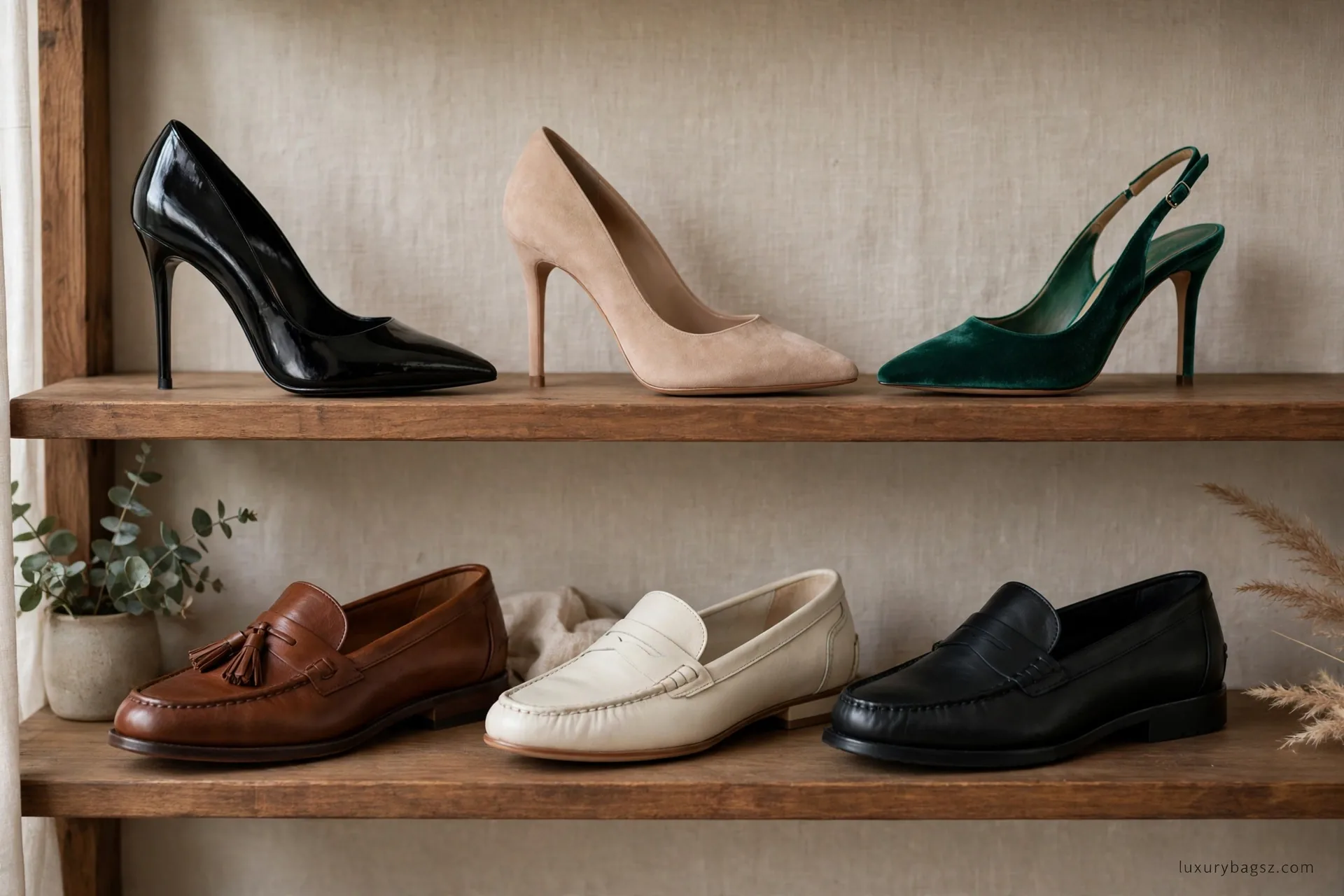
Ballet flats and loafers add their own points: heel counter collapse from slipping on without a shoehorn, toe box stretching, and sole wear at the very front from dragging. A flat that has lost its shape at the heel will slip off the next owner's foot, however good its uppers look.
Check flats by holding them up and looking at the heel profile, which reveals collapse far more clearly than a top-down photograph.
Across all types, the principle stays the same: grade the shoe in front of you, in its own type, with its own wear points, rather than forcing it into a generic template. When you are unsure about a type you rarely handle, such as a heavily embellished evening shoe or a technical hiking-style designer boot, take extra photographs, describe what you can see rather than guessing at what you cannot, and say plainly where your knowledge ends.
Buyers respect a grader who admits a limit far more than one who invents certainty, and a cautious grade with clear photographs will always outsell a confident grade that falls apart on inspection. A grader who knows boots check shafts, sandals check straps, and flats check heel profiles will produce grades that buyers trust, because those grades reflect the shoes buyers will actually wear.

Frequently Asked Questions
How do you grade designer shoe condition?
Check soles, uppers, insoles, heels, and toe wear, plus structure, fastenings, and completeness, for both shoes separately. Let the weakest area set the overall grade, and support the grade with daylight photographs of every flaw.
What are the standard shoe condition grades?
There is no single industry standard, so definitions vary by seller. This guide uses new, excellent, very good, good, and fair, with clear definitions for each. Always read a seller's own definitions and check photographs, rather than trusting a label alone.
What matters most when grading shoes?
Soles and heel tips matter most as mileage indicators, because they show ground contact directly. Toe creasing, insole imprint, and upper scuffs add detail, while structure and fastenings decide whether a pair is wearable without repair.
How can you tell if designer shoes were worn a lot?
Look for smooth or thin soles, worn heel tips, deep toe creasing, strong insole imprint, and collapsed heel counters. A pair worn a lot usually shows wear in several areas at once, not in just one place.
Does resoling affect a shoe's grade?
Resoling is a legitimate repair that can extend life, but it must be disclosed, because it changes originality and hides the original sole's wear. A well-resoled pair can still grade highly for wearability, but its collector value differs from an original-soled pair.
How do you grade suede designer shoes?
Check suede for flattening, shining, staining, and water marks, viewed from several angles in daylight, because nap changes appearance with light. Suede wear is harder to restore than smooth leather wear, so grade suede conservatively where marks are visible.
Should heel tip wear lower a shoe's grade?
Yes, if the tip is worn flat, worn to metal, or missing, because that indicates mileage and needs repair before wear. Light tip wear, normal for a lightly worn pair, lowers the grade only slightly, from new to excellent or very good.
What should a shoe listing photograph include?
Both shoes from front, back, sides, above, and below, plus close-ups of soles, heel tips, toe boxes, insoles, and every flaw. Include the box label and accessories, and use daylight with no filters that hide wear or change colour.
Is a lower-grade designer shoe worth buying?
Often, yes. A good-grade pair, honestly described, offers designer quality and style at a lower price, and its wear may not affect function. A fair-grade pair suits rare designs, restoration projects, or occasional wear, provided faults are priced in.
How does shoe condition affect resale price?
Condition is one of the strongest price drivers. A new or excellent pair commands a premium, while visible sole, heel, or upper wear reduces price step by step. The weakest area usually drives the discount, because buyers price for the repair or wear they can see.
Conclusion
Grading designer shoe condition is a practical skill, not a matter of taste. Work through soles, uppers, insoles, heels, and toe wear, check structure and fastenings, and let the evidence, not the photograph's glamour, set the grade.
Buyers who grade before they buy avoid returns, disputes, and disappointment. Sellers who grade honestly sell faster, keep their reputation, and build buyers who return. In a market where a single hidden flaw can undo a sale, honest grading is not just good practice. It is the practice that makes the whole market work.
Keep your inspection notes and photographs with every pair you buy or sell, revisit them before you list or pay, and let the weakest area, honestly stated, set the grade. A market built on grades that can be checked is a market where good shoes, at fair prices, find the buyers who will wear them well. That trust, earned one honest grade at a time, is worth more than any single sale.






