Designer Handbag Trends Guide: The Shapes, Colours and Textures to Know
Trends in Brief: What Is Actually Worth Your Money
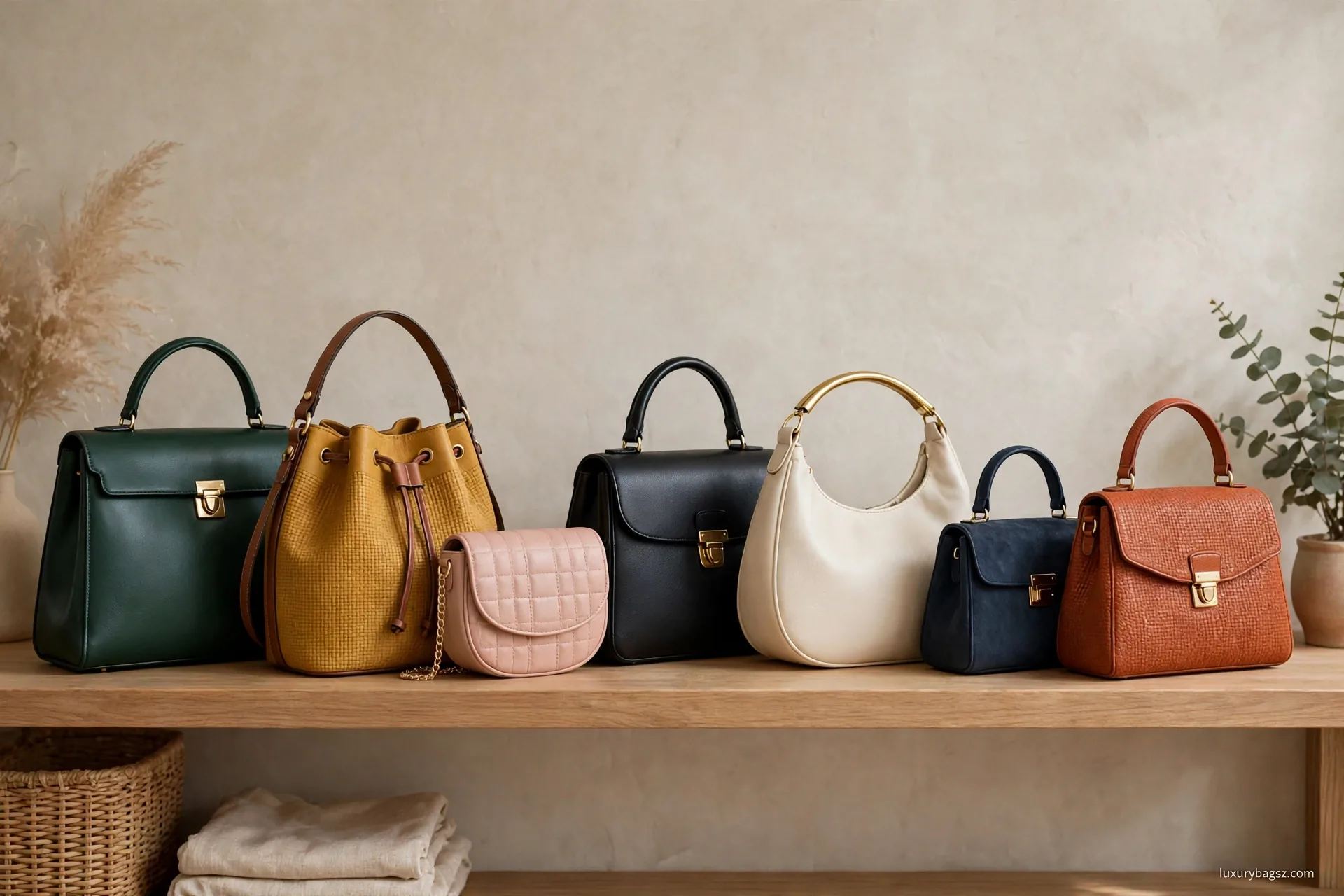
The designer handbag trends that matter most right now are wearable ones: slouchy soft shapes, elongated east-west silhouettes, suede and woven textures, and a colour story led by chocolate, burgundy and butter yellow with cobalt for courage.
Archival revivals run alongside the new: houses keep reissuing their 2000s icons, which means the smartest trend buy is often a revived classic with a proven shape rather than a one-season novelty.
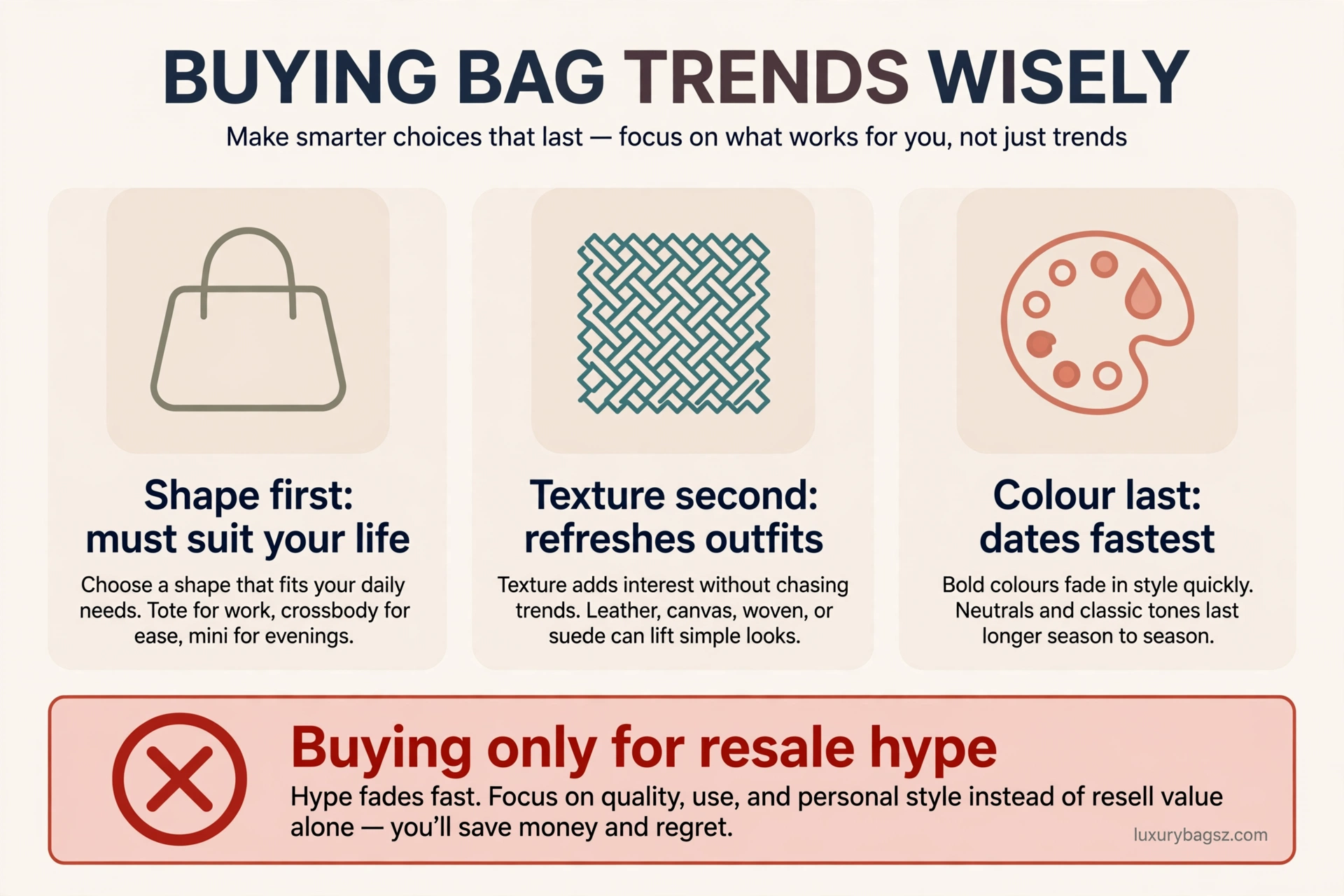
Buy trends in this order: shape first, because it must suit your life; texture second, because it refreshes outfits cheaply; colour last and smallest, because it dates fastest.
Key Takeaways
- Slouchy, soft bags and east-west elongated shapes lead the silhouette story.
- Suede, woven leather and raffia textures matter more than logos this cycle.
- Chocolate, burgundy and butter yellow lead colours, with cobalt as the bold accent.
- Archival revivals of 2000s icons offer trends with proven staying power.
- Oversized totes and daytime clutches show practicality driving design.
- Buy shape first, texture second, colour last to make trends last.
The Silhouette Story: Slouch and East-West
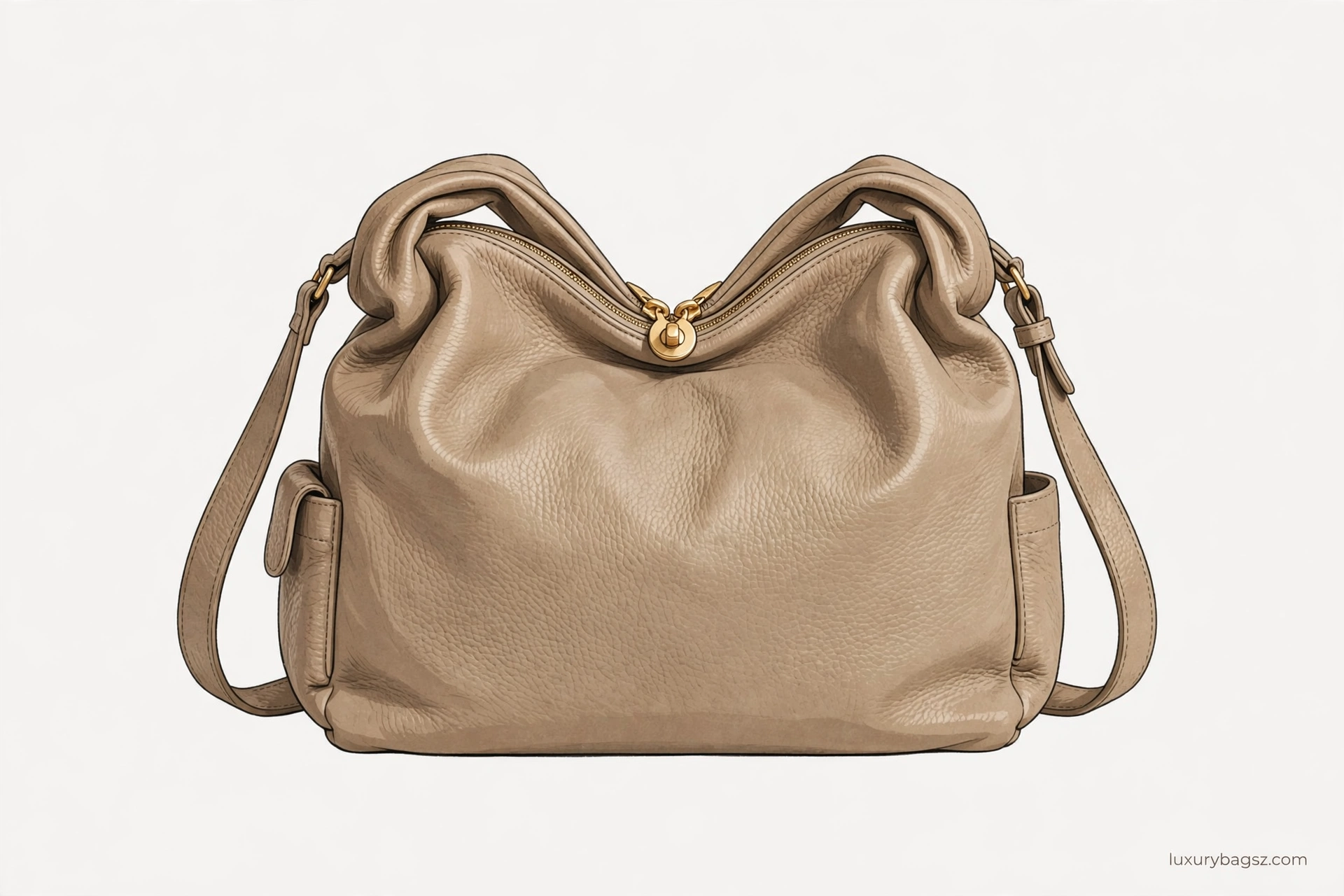
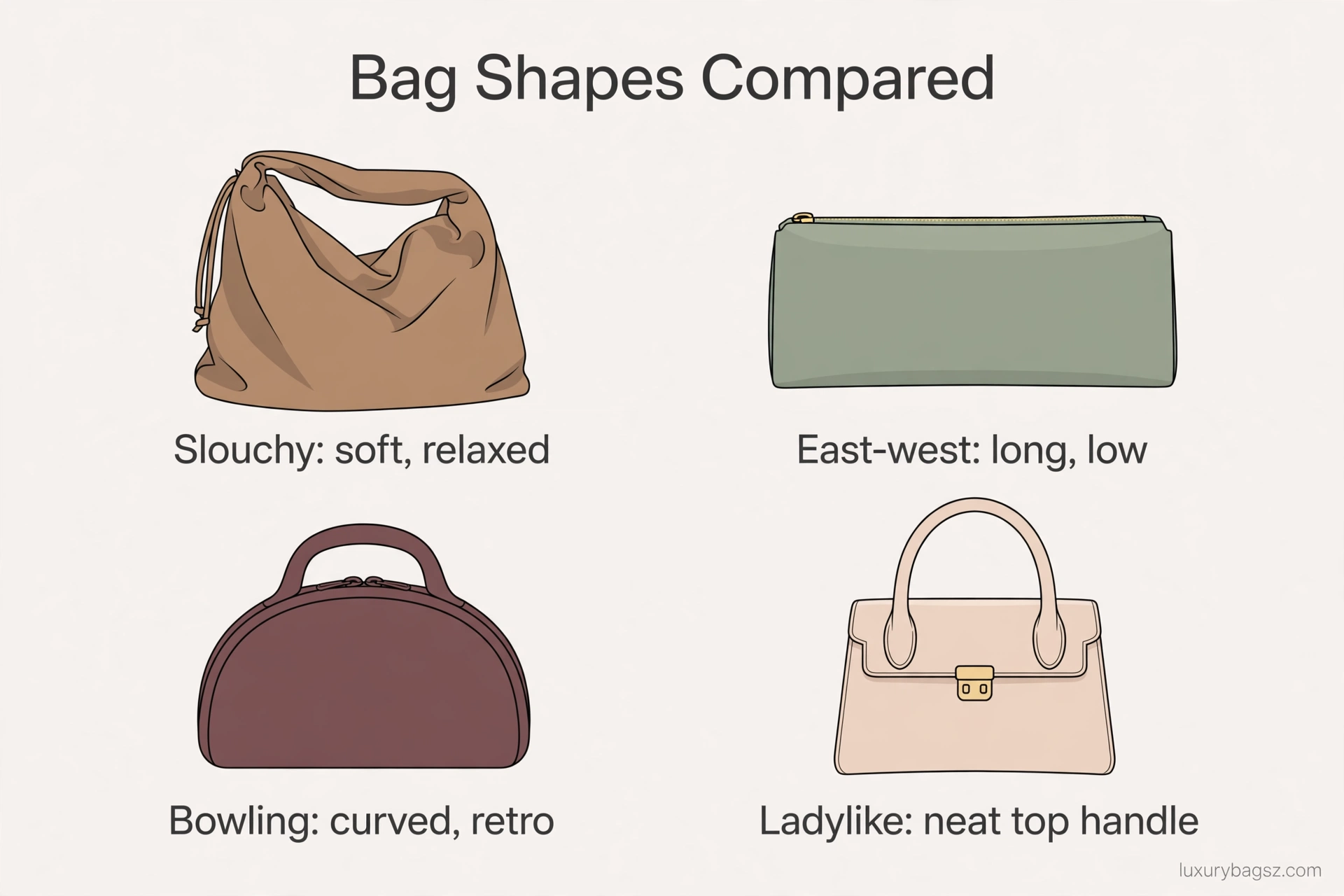
Softness defines the current silhouette mood. Relaxed hobos, unstructured shoulder bags and gently collapsing totes have replaced the rigid, boxy shapes that dominated earlier in the decade.
East-west bags, wider than they are tall, are the shape story of the moment, stretching classic flaps, pouches and top-handles into elongated forms that sit neatly under the arm.
Bowling and barrel shapes add a retro curve, borrowed from sports bags and 2000s archives. They carry more than their size suggests and suit both leather and canvas.
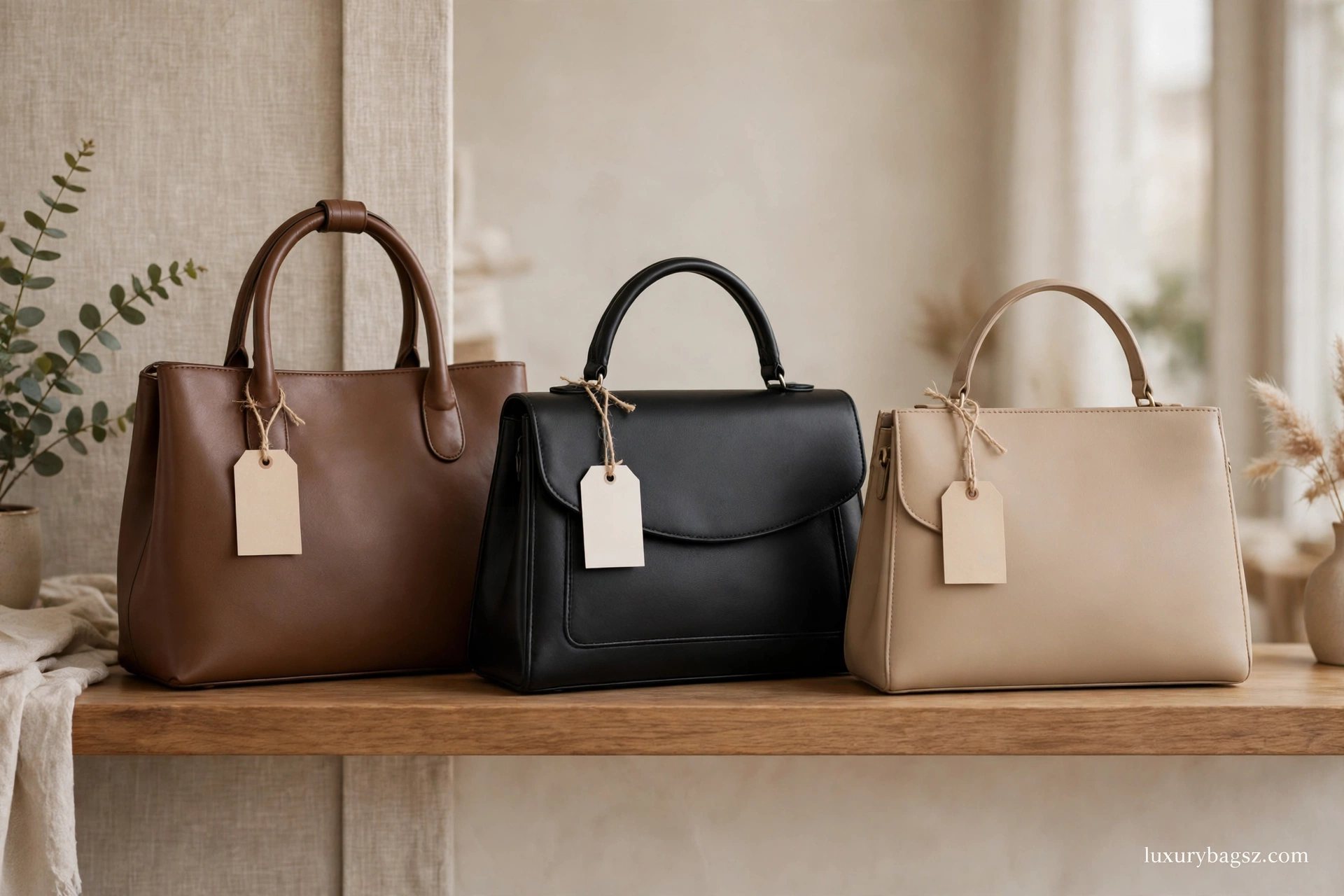
Ladylike structure has not vanished; it has softened. Top-handle bags now come with relaxed bodies and longer straps, acknowledging that polish must still commute.
A quieter silhouette shift sits underneath both: bags are being designed to be touched and carried close, with softer bodies that mould to the wearer. It is a rejection of the shelf-display bag, and it shows in sales as much as styling.
Proportion play is the stylist's version of the silhouette trend: one oversized piece, bag or coat, balanced by everything else staying neat. The slouchy bag works because outfits around it have grown cleaner.
Size Trends: Oversized Totes and the Daytime Clutch
At one extreme, oversized totes have returned as laptop life reasserted itself, with designers offering slouchy carriers that swallow a working day without looking like luggage.
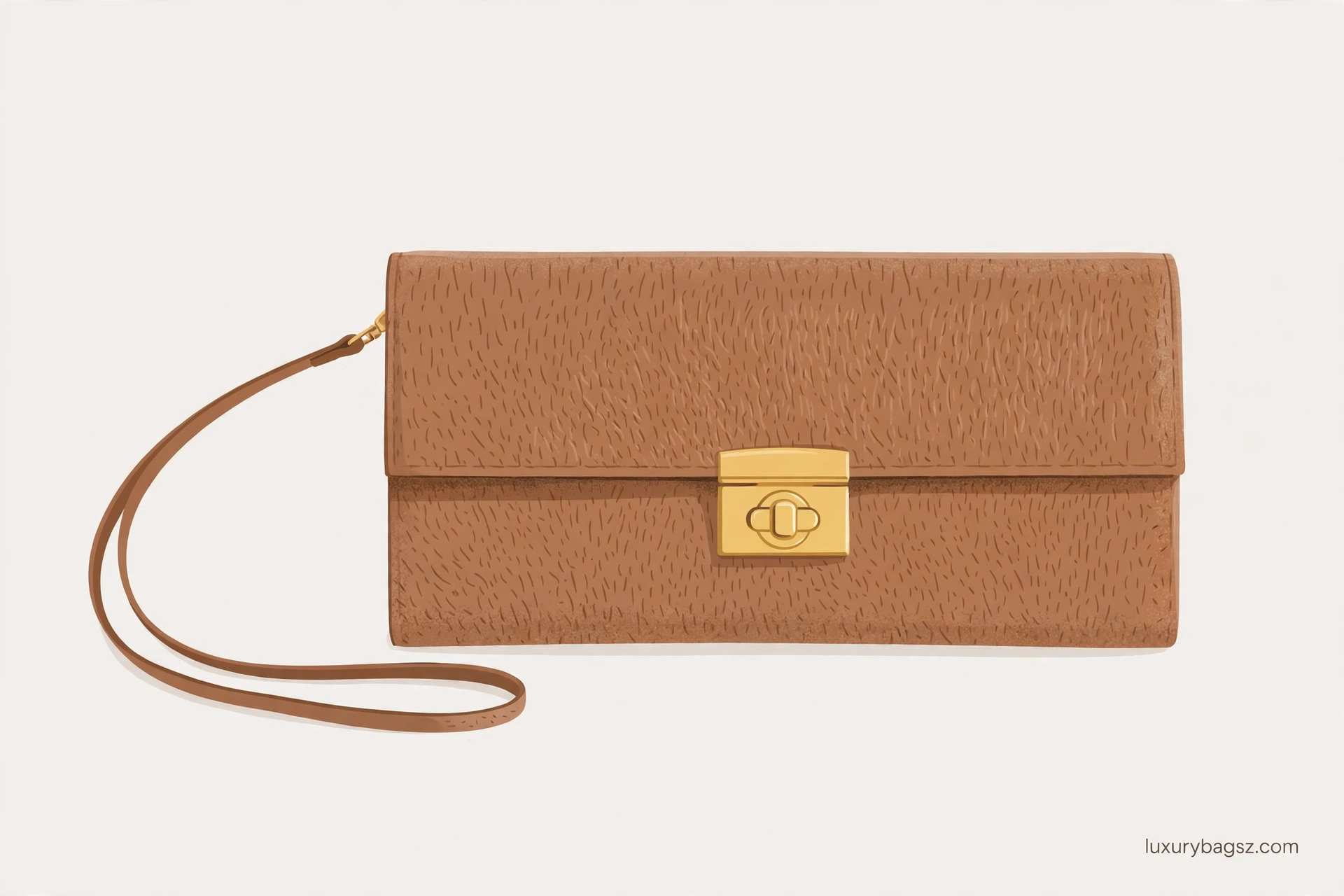
At the other, the daytime clutch has gone mainstream: pouches and envelopes carried with tailoring and knitwear, sized for phones and essentials rather than evening minimalism.
Micro bags have quietened. They survive as charms and second bags rather than main carriers, a demotion most owners' shoulders quietly welcome.
The practical middle, medium shoulder bags with real capacity, is where most trend money is best spent. It is also where the strongest resale demand consistently sits.
Capacity honesty is part of the size story: brands now publish what fits, phone, laptop and bottle, because buyers punished the beautiful but useless bags of the micro era. Trend reporting increasingly treats function as a feature, not a footnote.
Travel has shaped sizes too: bags sized to airline personal-item limits, with sleeves for laptops and straps that slide over suitcase handles, are a design category now, and their clean lines suit offices as well.

Textures: Suede, Weave, Raffia and Shine
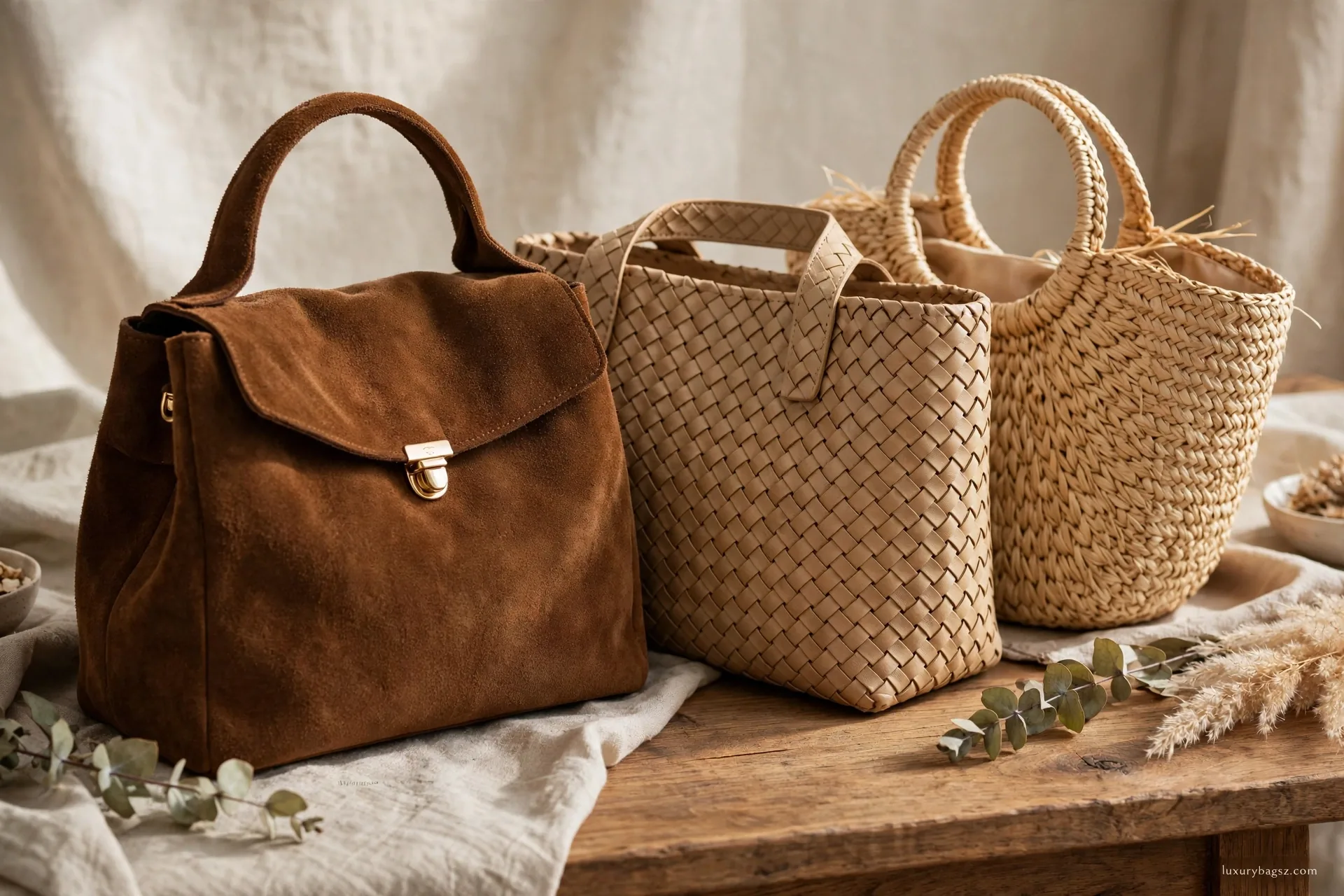
Suede is the texture headline, especially in chocolate and espresso, bringing warmth to totes and hobos. Its care demands are real, and the trend rewards owners who brush and spray.
Woven leather continues its long run, from intrecciato-style weaves to simpler basket patterns at contemporary level. Weave reads as craftsmanship, which is why it outlasts logo cycles.
Raffia and crochet return each summer with more polish, leather trims and city shapes, while patent and metallic finishes supply the shine for evenings and festive months.
Fringe and tactile trims appear in waves, fun on smaller bags. As with all texture trends, one tactile piece per outfit keeps the effect rich rather than busy.
Shine deserves its own line in the texture story: polished patent and brushed metallics have returned for day as well as evening, used on whole bags rather than trims. They are high-maintenance finishes, so the trend suits smaller styles best.
Haircalf, shearling trims and brushed wools appear each winter as the cold-weather texture rotation, reminding buyers that texture trends are seasonal by nature. Buy them as winter pieces, not as year-round foundations.
Texture is also where contemporary labels compete hardest with heritage houses, since a beautiful weave or suede needs no famous name to register across a room.
Colour Trends: Chocolate, Burgundy and Butter
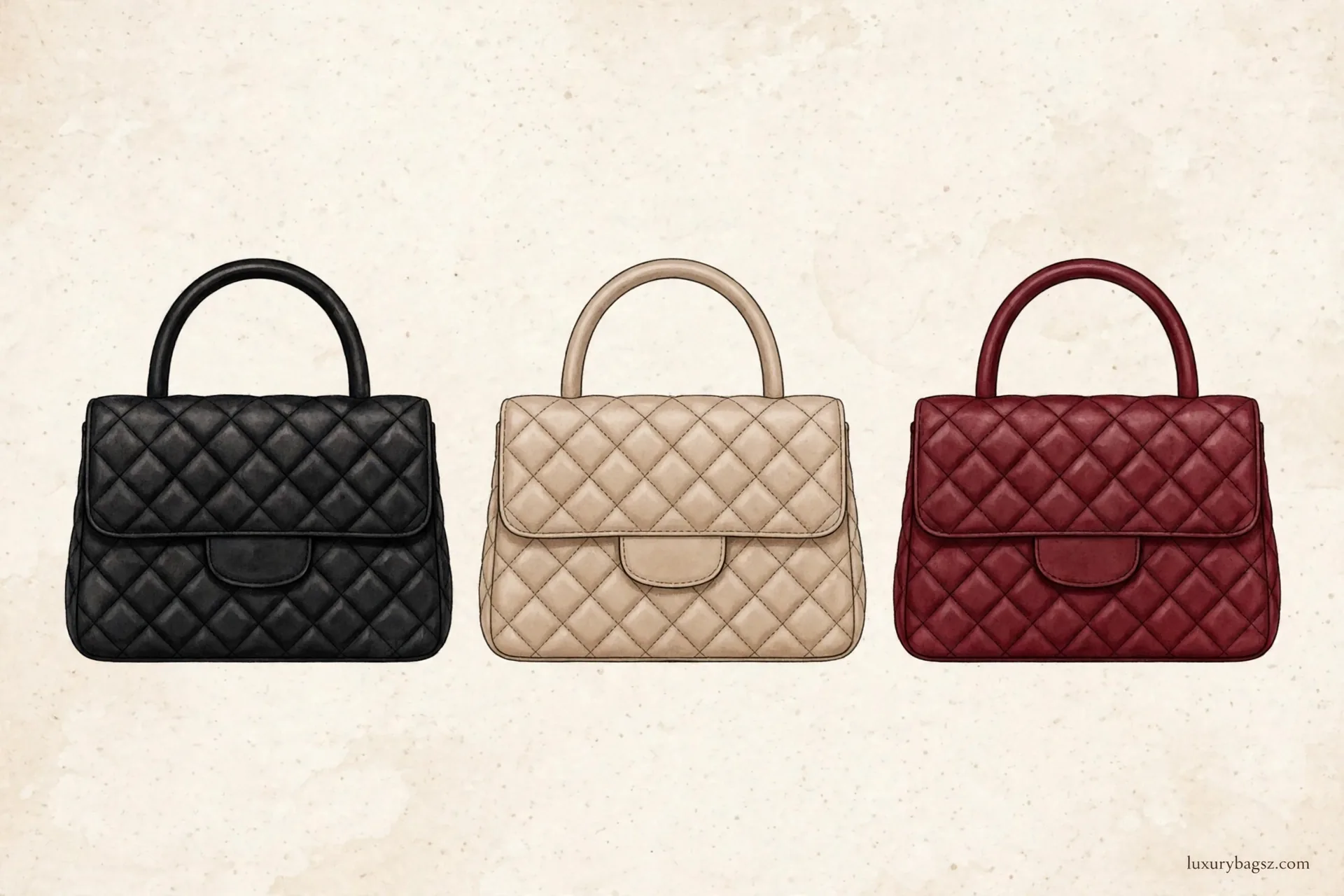
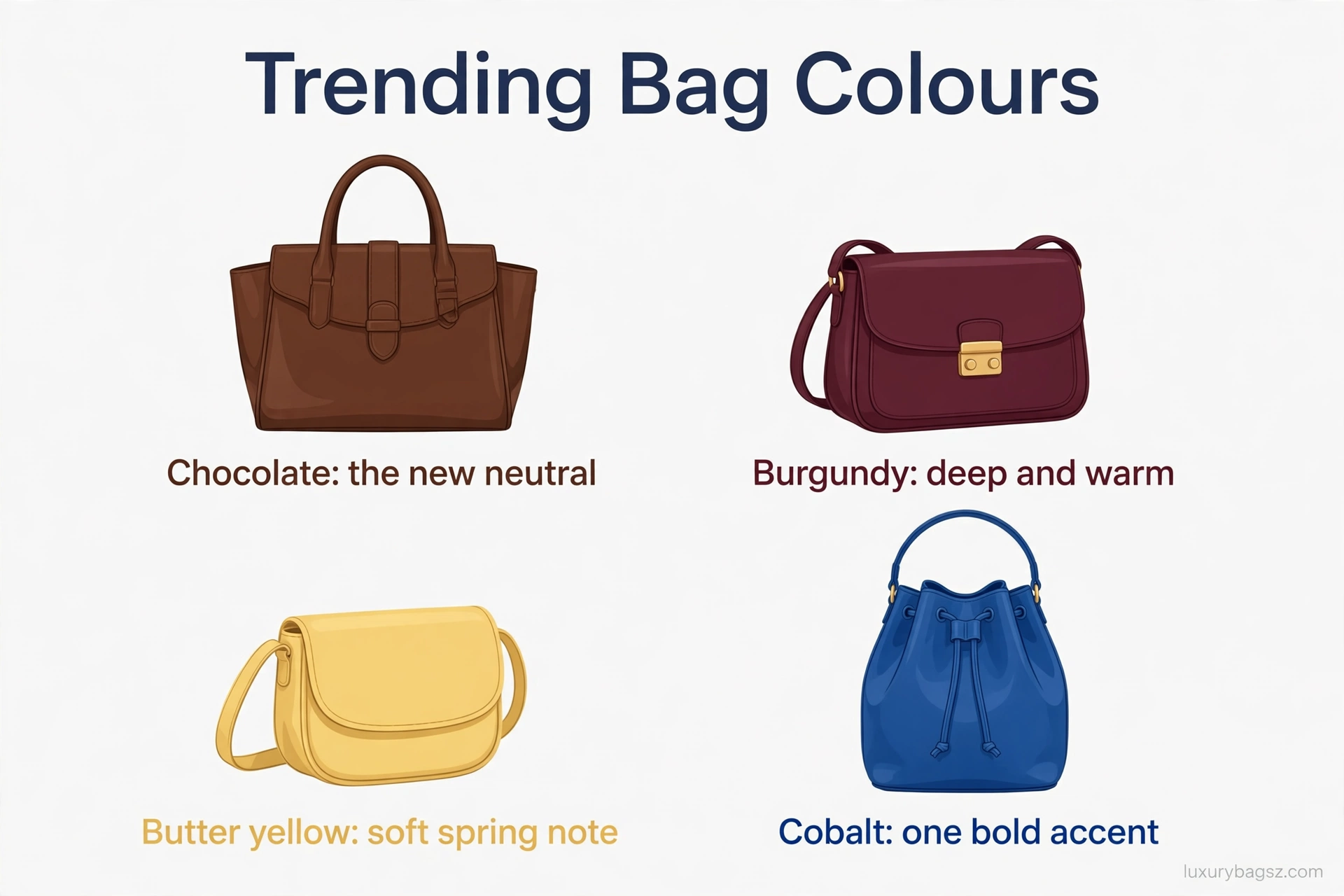
Chocolate brown has become the new black for bags: softer against winter coats, rich with cream and denim, and available across every house and price level.
Burgundy and oxblood run beside it as the deep colour of choice, flattering navy, grey and black wardrobes while feeling more personal than black.
Butter yellow and soft pastels bring the spring note, easiest in small bags and clutches. Cobalt blue is the courage colour, used by stylists as a single jolt in neutral outfits.
Colour is where trends date fastest, so the disciplined approach is a classic bag in a trending colour only if you already own the neutrals it will rotate with.
Green has settled as the thinking person's colour trend: forest and olive shades behave like neutrals with wardrobes built on black, navy and brown, and they have outlasted several louder colour moments of recent years.
Monochrome dressing drives much of the colour story: a bag in the same family as the outfit, a shade deeper or lighter, is the current stylist's trick, and it makes even bold colours feel calm and expensive.
Details: Chains, Charms and Hardware Moods
Chains have evolved from decoration to engineering: smarter clasps, convertible lengths and mixed-metal links that let one bag swing between shoulder and crossbody.
Bag charms and personalisation continue their run, with houses selling the add-ons as eagerly as the bags. A charm updates a classic bag for a season at a fraction of a new bag's cost.
Hardware moods split between brushed, quiet metals on minimalist bags and bold, polished statements on revived icons. Both are current; mixing them in one outfit is fine.
Logos have turned down the volume on many new designs, with texture and shape carrying recognition instead. Loud logo pieces persist, but they are no longer the default designer language.
Personalisation has a practical edge as well as a playful one: initials, straps and charms make a bag identifiably yours, which helps in cloakrooms and, prosaically, reduces the chance of mix-ups with identical popular styles.
Convertible straps are the detail trend with the longest future, because they multiply one bag across outfits and bodies. A bag that wears three ways earns trend status in a wardrobe long after its launch season ends.
Archival Revivals: The Trend That Insures Itself
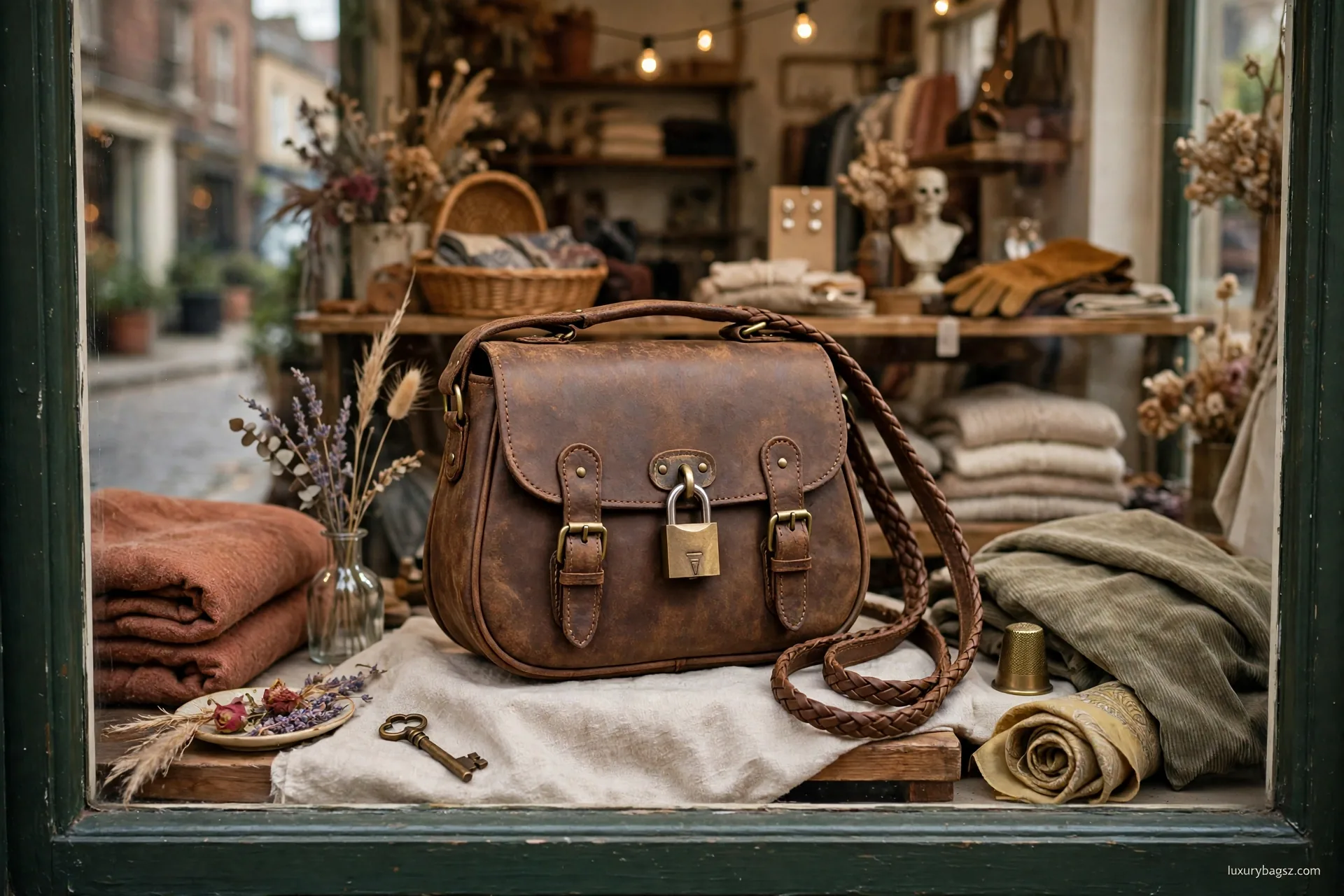
Houses keep mining their archives: 2000s shoulder bags, padlock designs and slouchy icons return with updated interiors and straps, and buyers get a trend with a track record.
Our guide on investing in vintage designer bags explains why originals often rise when a revival launches, since the reissue advertises the vintage version.
The quiet luxury guide frames the other pole of the moment: logo-free, texture-led bags whose trend is really an anti-trend, and which age the most gracefully of all.
Revivals are the safest trend buys because the shape has already survived one full cycle. If it worked for a decade before, its second life rarely ends in a single season.
The revival cycle is speeding up, with shapes returning after fifteen years rather than thirty. That rewards buyers who keep good bags: the piece you stored carefully may be the next season's headline without spending a penny.
Some revivals fail, quietly, when the original's charm depended on a vanished context. The lesson for buyers is to judge the revived bag as a new product that must earn its place today, not as a guaranteed classic.
How to Buy Trends Without Regret
Start from your wardrobe, not the runway: a trend earns its place if it finishes at least five outfits you already own. Our guide on what affects a designer bag's resale value shows why wearability protects value.
Spend designer money on shape and texture, and experiment with colour at contemporary level. A cobalt mini from a mid-priced label delivers the trend's joy without its risk.
For one-season curiosities, our rent or buy designer bags guide makes the rental case honestly: some bags are for a wedding month, not a wardrobe decade.
Finally, keep one foot classic. A wardrobe of proven bags plus one or two trend pieces always looks current, while a wardrobe of pure trends looks dated by the following year.
Second-hand first is the trend-era habit worth adopting permanently: check resale listings for last season's headline bag before paying boutique prices for this season's, since the two are often near-identical in use and far apart in cost.
Patience is a buying strategy the trend cycle rewards: headline bags are routinely discounted or resold within a year, and the buyer who waits keeps the trend and loses only the queue.
Trends With Staying Power Versus One-Season Wonders
Likely to stay: slouchy medium shoulder bags, east-west shapes in classic styles, suede in dark shades, woven textures and chocolate as a core neutral. These solve real dressing problems.
Likely to pass: extreme novelty shapes, single-season prints, fragile embellishments on daily bags and colours tied to one runway moment. Enjoy them cheaply or not at all.
The test is historical: if a trend appeared before and returned, it has a cycle you can ride. If it appears from nowhere with heavy marketing, assume a short life until proven otherwise.
Your own history is the best data. The bags you still reach for after three years share traits, usually capacity, comfort and colour harmony. Buy trends that share those traits.
Geography tempers every trend: what dominates in one fashion capital may barely register in another's climate and commute. The trends that travel are the ones tied to function, slouch, capacity and weather-friendly textures among them.
Your climate grades trends too: suede in a rainy city, raffia in a cold one and white leather on a muddy commute all fight their environment. The trends that last locally are the ones your weather votes for.
Readers in a hurry can use that single historical test on any new headline bag and reach a sound decision in under a minute.
Frequently Asked Questions
What is the biggest handbag trend right now?
Soft, slouchy shapes lead, especially medium shoulder bags and hobos in suede or supple leather, alongside elongated east-west silhouettes and a chocolate-led colour palette.
Are oversized bags back in fashion?
Yes. Slouchy oversized totes have returned for working life, balanced at the other extreme by daytime clutches and pouches. Medium bags remain the most bought middle ground.
Which bag colours are trending?
Chocolate, burgundy and black anchor the palette, with butter yellow and pastels for spring and cobalt blue as the bold accent colour.
Are logo bags still in fashion?
Logos have quietened on many new designs, with texture and shape leading. Logo classics remain popular, but they are no longer the only designer language.
What is an east-west bag?
A bag wider than it is tall, stretching familiar styles into elongated shapes that sit neatly under the arm. The shape has been applied to flaps, pouches and top-handles.
Should I buy a trendy bag or a classic?
Build on classics and add trends in shape or texture at prices you can justify by wear. Colour trends are best tested in smaller, less costly bags.
Why do designers keep reviving old bags?
Archival revivals carry proven shapes, instant recognition and a vintage market that rises alongside. They are lower-risk launches for houses and safer buys for customers.
Are suede bags worth buying while they trend?
Dark suede in classic shapes outlasts its trend moment, provided you brush it and use protector spray. Pale suede novelty shapes are the risky end of the trend.
How can I update my bags without buying new?
Add a charm, swap in a trending-colour strap or small pouch, or carry an existing bag in the current way, such as a pouch as a daytime clutch.
Do trendy bags hold resale value?
Revived classics and wearable shapes hold value best. One-season novelties and extreme colours resell softly, so buy those for wear, not return.
Summary: Shape First, Texture Second, Colour Last
The trends worth following are the wearable ones: slouch, east-west lines, suede and weave, chocolate and burgundy. They refresh a wardrobe without expiring by next season.
Let classics carry the investment, trends carry the joy, and every new bag earn its place against five outfits you already own. That is the whole strategy, and it works every cycle.