

Designer Straw Bags Guide: Raffia, Wicker and Basket Styles, Prices and Care
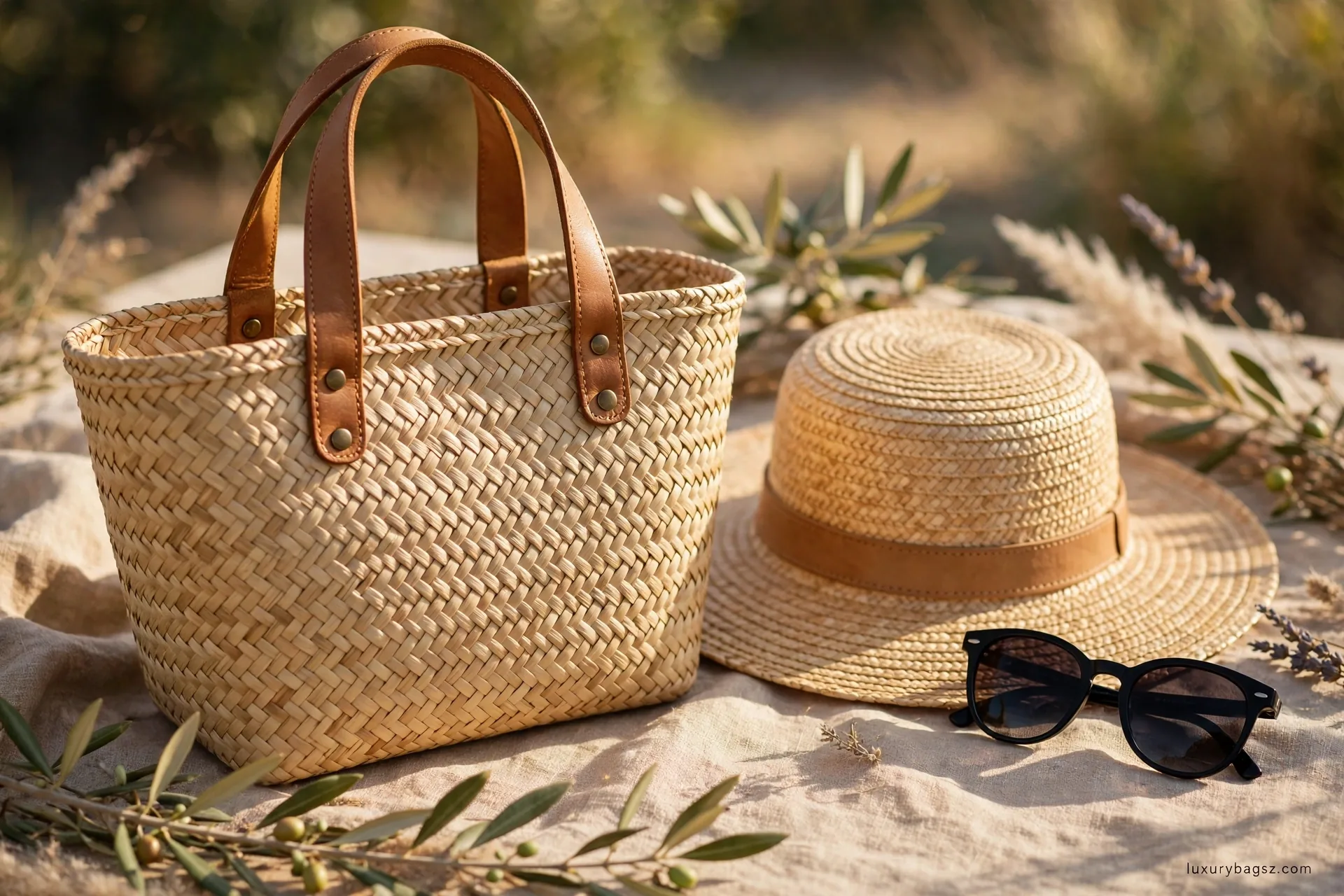
Straw Bags in Brief: Not Just for the Beach Any More
The best designer straw bags now work far beyond the beach: a structured raffia tote or woven crossbody lifts city outfits all summer, while the classic basket still owns the holiday wardrobe.
Expect to pay from around £150 for contemporary woven labels to well over £1,000 for heritage houses, with the money going on hand-finishing, leather trim and linings rather than the fibre itself.
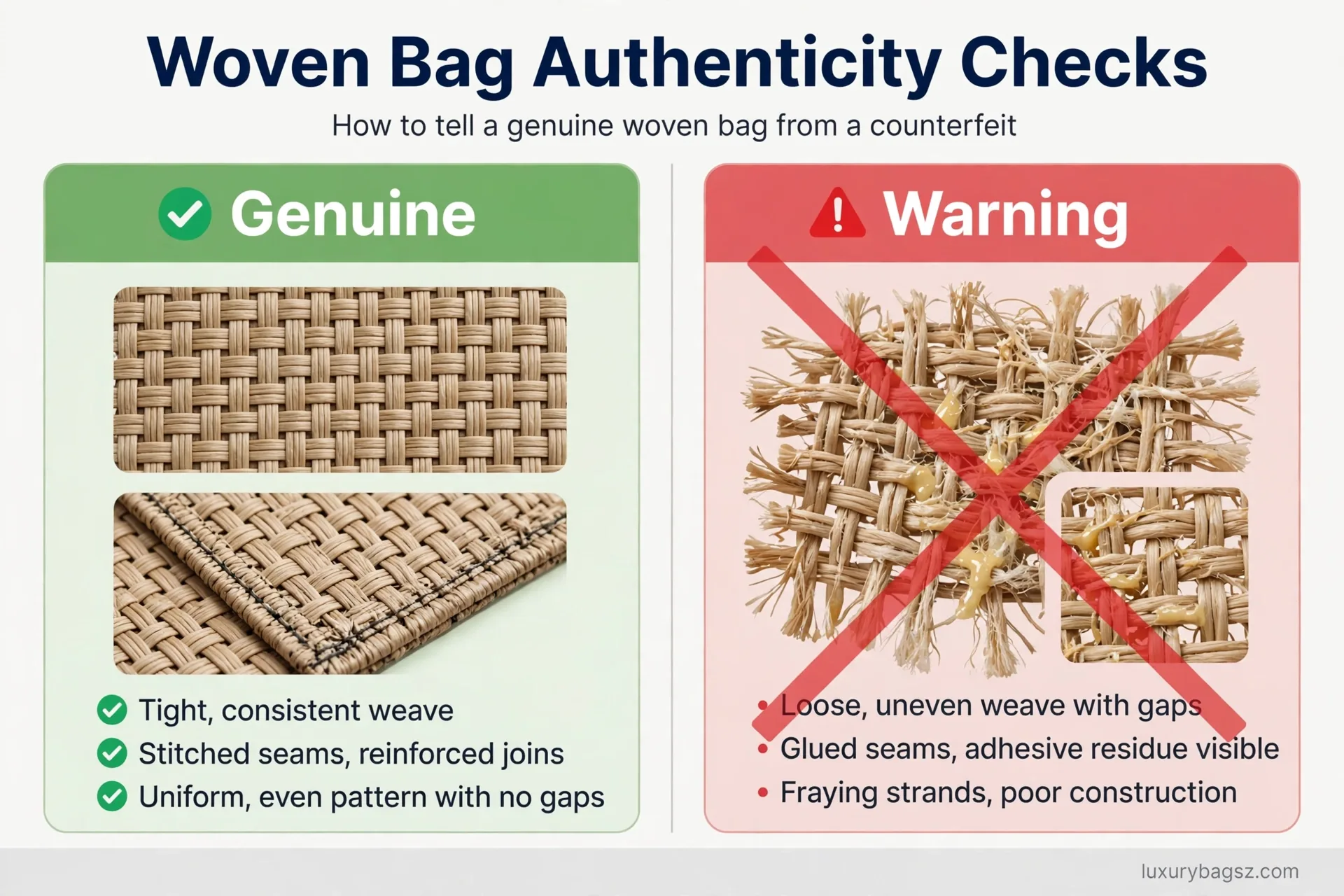
Buy for weave quality first. Tight, even weaving, stitched rather than glued joins and lined interiors separate a bag that lasts five summers from one that lasts one.
Key Takeaways
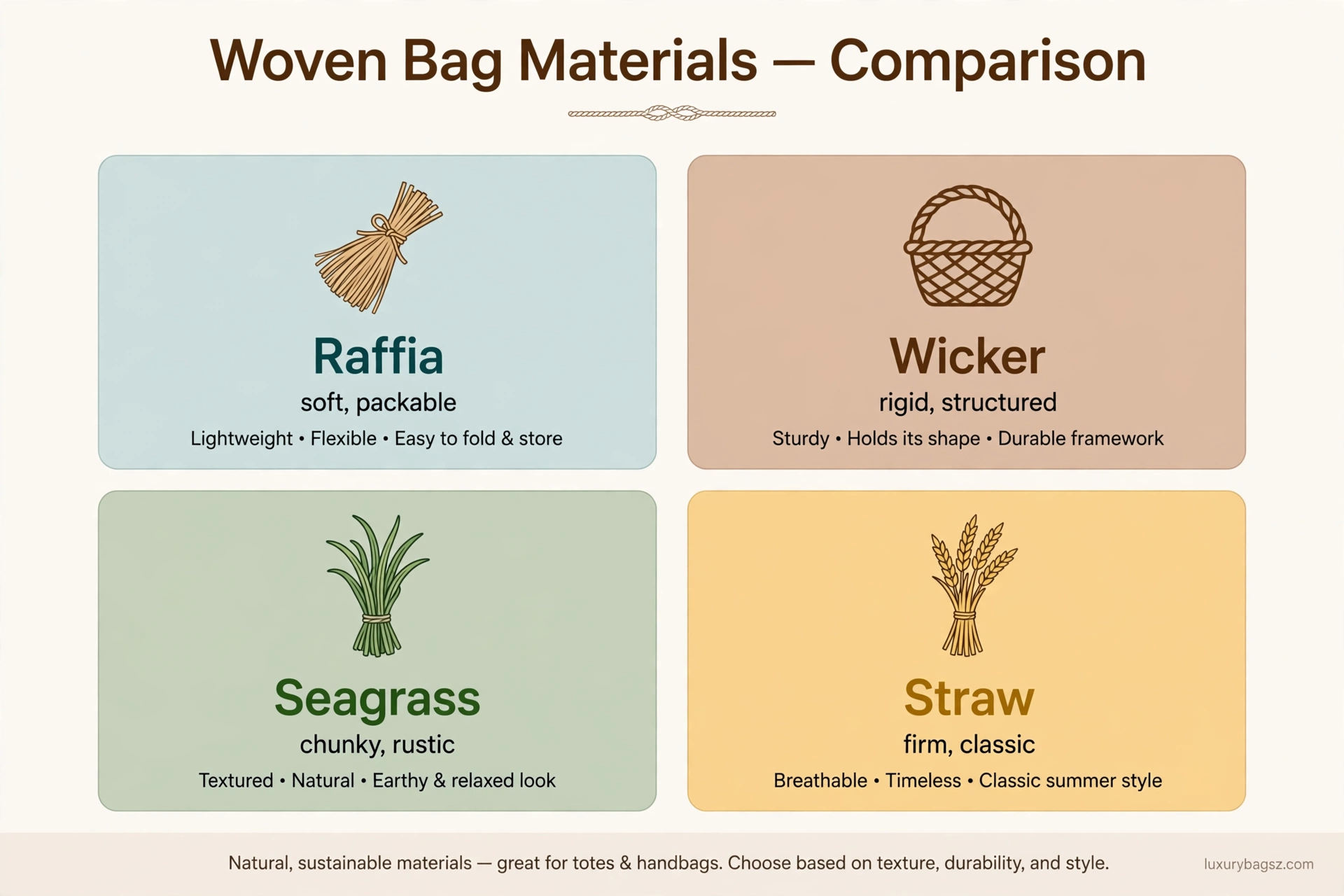
- Raffia is soft and packable; wicker and cane are rigid and structured; seagrass sits between the two.
- Designer prices typically run from around £150 to over £1,000, driven by finishing and trim.
- Leather handles, feet and linings are the details that make a straw bag city-ready.
- Check weave evenness, join stitching and edge finishing before paying designer money.
- Keep straw dry, store it stuffed out of season, and never hang it by its handles.
- Pre-owned woven bags need extra checks for snags, stains and musty storage smells.
The Styles Worth Knowing
Start with the basket: a rigid, open or lidded woven shape carried by hand or in the crook of the arm. It is the holiday icon, and in smaller sizes it works for summer evenings in the city too.
The raffia tote is the workhorse. Soft, roomy and often lined, it carries a laptop or a beach towel with equal ease, and leather handles keep it looking polished rather than picnic-ready.
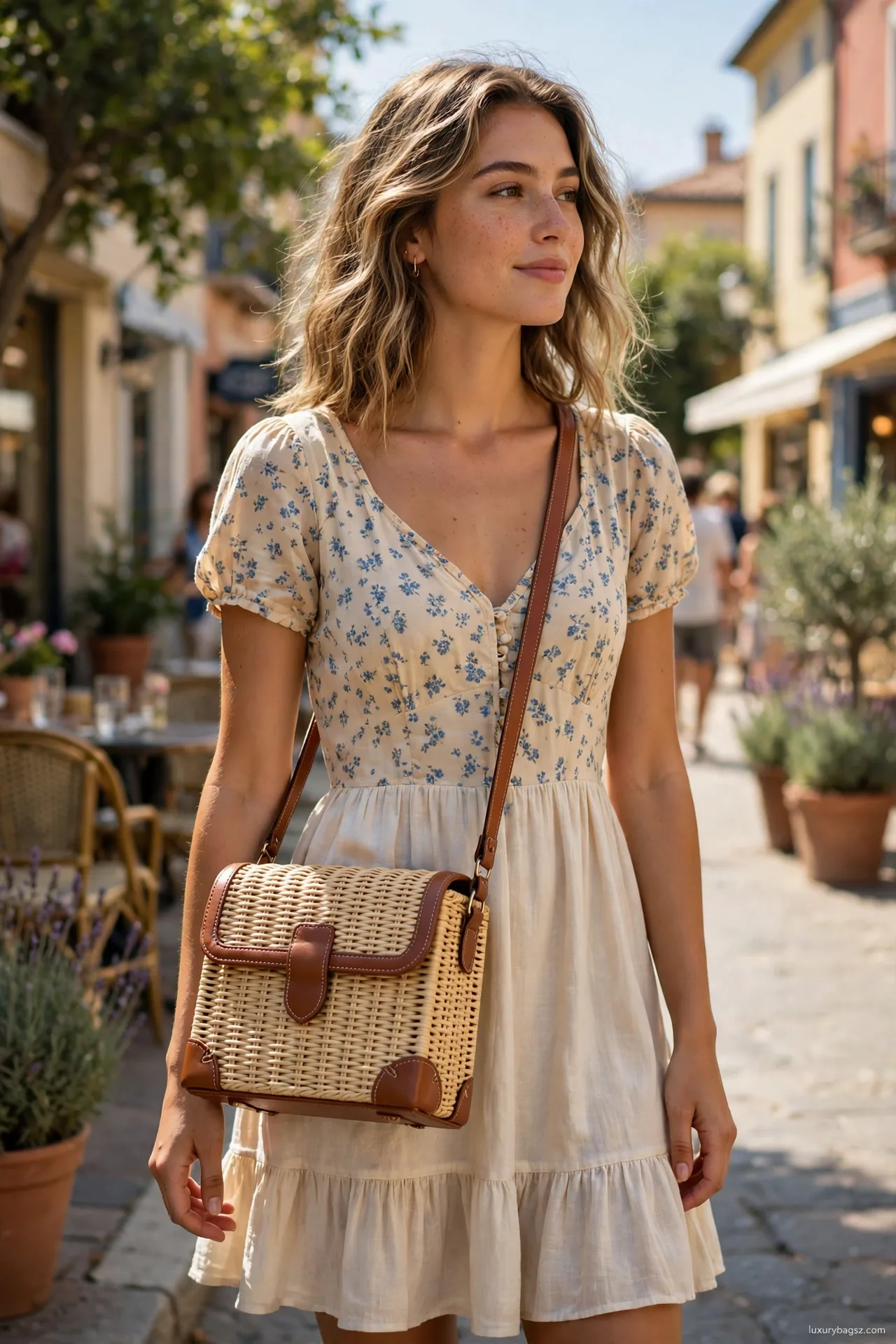
Woven crossbodies and shoulder bags are the city option. A tighter weave, a zip or flap closure and a leather strap turn summer texture into a bag you can wear with tailoring.
Clutches and minaudière-style woven boxes finish the family, made for weddings and warm evenings. Our designer handbag styles guide shows where these shapes sit in the wider bag wardrobe.
Woven bucket shapes deserve a mention of their own: a raffia bucket carries like a small tote, suits markets and lunches, and has become a summer regular at several houses. Choose one with a drawstring or lined top if you carry small items.
Raffia, Wicker, Seagrass and Straw: What Is the Difference?
Raffia comes from palm leaves and gives a soft, flexible fibre that can be crocheted or woven into slouchy shapes. It packs flat, forgives bumps and suits totes and shoulder bags.
Wicker describes a weaving method rather than one fibre, usually over cane or rattan frames. The result is rigid and structured, ideal for baskets, but it cannot be folded and cracks if crushed.
Seagrass and water hyacinth give a chunkier, more rustic weave at lower prices. They look wonderful on holiday and age faster than raffia, so they suit trend-led buys rather than investment pieces.
Whatever the fibre, the leather trim does the heavy lifting for durability. Our leather types guide explains the trims and handles you will meet, from smooth calfskin to vachetta that darkens with sun.
Price follows fibre less than finish, which surprises many buyers. Two bags in identical raffia can differ by hundreds of pounds because one is crocheted by hand over days and the other is machine-woven in hours, and the hand-made one drapes and lasts noticeably better.
The Designer Names to Look For
Loewe's basket and raffia totes, made with artisan weavers, are the modern benchmark for the category, with prices typically from the mid hundreds of pounds upward depending on size.
Prada's raffia and crochet styles bring a logo-led, city edge, while Jacquemus turns woven textures into sculptural mini and shoulder shapes at lower designer prices.
Chloé and Saint Laurent offer raffia totes with strong leather trim, and heritage basket makers and contemporary labels fill the £150 to £400 range with excellent hand-finished options.
Treat brand as a finishing guarantee, not a fibre upgrade. The same natural materials appear at every level; what changes is weave density, lining quality and hardware.
Do not overlook the specialist basket makers and resort labels, whose entire craft is weaving. Their bags often out-finish fashion-house sidelines at half the price, and their repair services tend to be excellent because the product is their whole business.
Sizes within one style vary more than buyers expect, since hand weaving cannot hold machine tolerances. If you order unseen, ask for the actual measurements of the piece that will ship, especially for baskets.
Sizes and What Fits
Mini woven bags hold a phone, card holder and lipstick, and suit evenings. They are charming but honest about their limits, so test your phone size before buying.
Medium totes and baskets are the sweet spot, fitting a purse, sunglasses case, paperback, water bottle and a light layer. Look for an interior pocket so small items do not vanish into the weave.
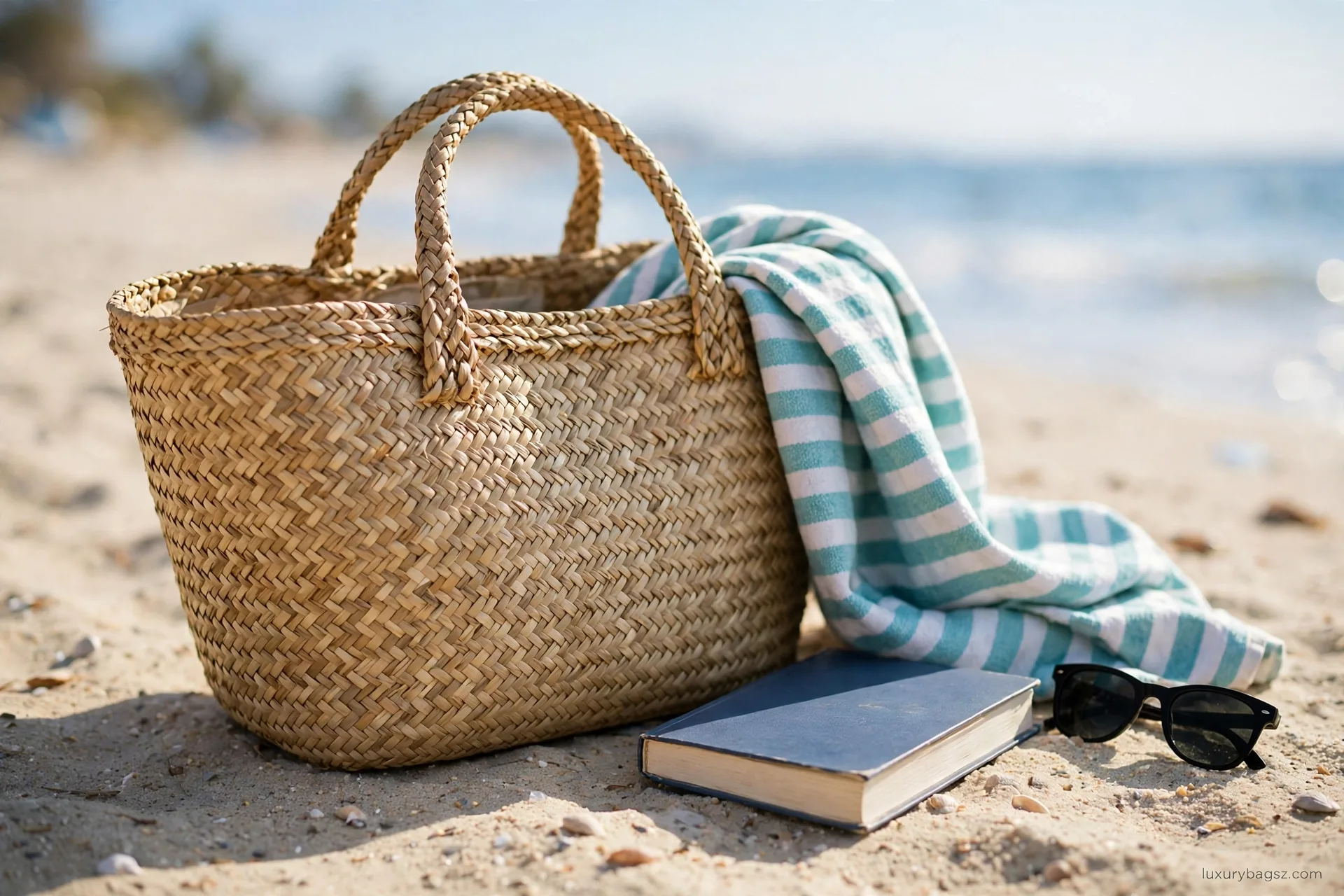
Large beach totes swallow towels and changes of clothes, but an unlined large weave can snag swimwear and scratch sunglasses. A drawstring pouch inside solves both problems cheaply.
Always check the drop of the handles. A basket that only works hand-held becomes tiring on a long market morning, so shoulder-friendly straps widen a bag's real use.
Straps and closures decide real-world capacity as much as dimensions. A zip or drawstring top keeps contents secure on trains and in car boots, while open baskets invite a scarf or pouch as a lid on busy days out.
How to Style Straw Beyond the Beach
In the city, pair a structured raffia tote with linen tailoring, a white shirt and loafers. The texture softens formal lines without making the outfit feel like holiday dress-up.
For evenings, a small woven clutch or basket with a slip dress and gold jewellery reads deliberate and warm. Keep the weave fine and the colours natural for the most grown-up effect.
On holiday, let a big basket do the work with swimwear, kaftans and sandals, then switch to the crossbody weave for markets and dinners so the tote can dry and rest.
Avoid wearing delicate silk against coarse, open weaves, which can catch threads. A lined bag or a smoother raffia finish protects fine fabrics on dressed-up days.
Colour widens the styling range usefully. Black raffia reads almost like leather and works from spring to autumn, while dyed raffia in red, green or navy turns a simple dress into an outfit, provided the dye is even and colourfast.

Prices, Value and Pre-Owned Checks
Contemporary woven bags typically cost around £150 to £400, mid-level designer raffia around £400 to £900, and heritage-house pieces can pass £1,000 to £2,000 for special finishes.
Resale values are modest compared with leather icons, because fibres age visibly and seasons matter. Buy to wear every summer, not to flip, and judge cost per wear instead.
Pre-owned checks start with the weave: look for snags, pulled strands, sun fading on one side and stains near the base. Smell the interior, since stored natural fibres can hold mustiness.
Our pre-owned designer bag buying guide covers receipts, returns and authentication habits that apply just as much to woven bags as to leather ones.
Condition grading on woven bags is unforgiving about odour and stains, since fibres cannot be polished clean like leather. A slightly faded but clean and sweet-smelling bag is always the better buy over a brighter one with a musty interior.
One more value point: because woven bags are seasonal stock, end-of-summer sales discount them deeply, and a classic natural raffia bought in September serves the following June unchanged. Timing is the easiest saving in this category.
Care: Keeping Weave Fresh Season After Season
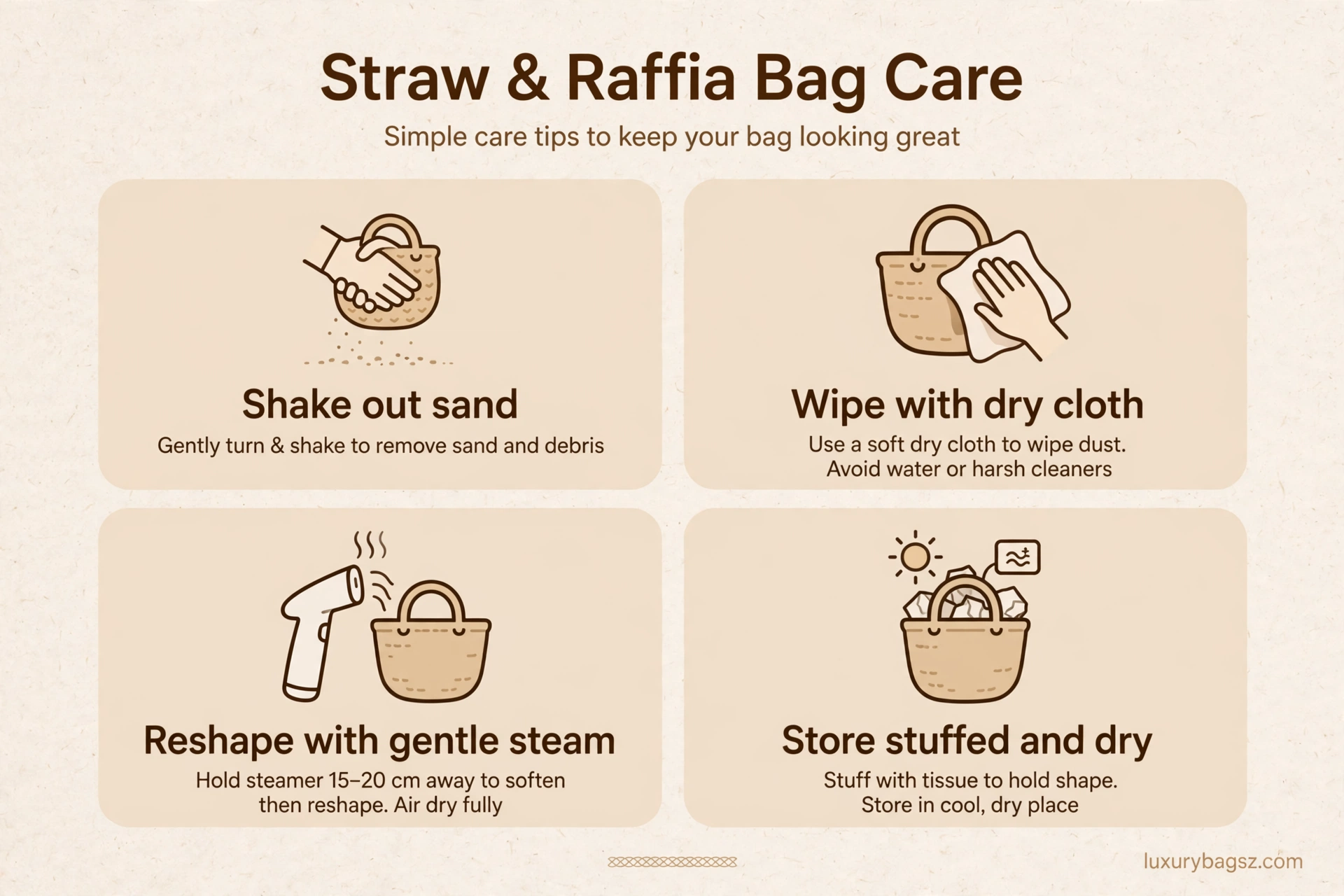
Shake out sand and crumbs after every use, and wipe the weave with a dry or barely damp cloth. Never soak a straw bag, and let it air-dry away from direct heat if it gets splashed.
Store the bag stuffed with tissue in a dust bag, standing upright, so the shape sets correctly. Hanging by the handles stretches both weave and leather over a winter in storage.
Leather handles and trim can be conditioned lightly, following the habits in our leather care guide, but keep oils off the fibre, which stains easily and darkens unevenly.
Small snags can be trimmed carefully with fine scissors, never pulled. A pulled strand unravels a weave quickly, and professional repair is better than home stitching on designer pieces.
Travelling with straw needs one habit: pack it last, stuffed, at the top of the case, or carry it as your personal item. A crushed basket can sometimes be steamed back to shape, but crushed wicker frames rarely recover fully.
Which Straw Bag Should You Buy?
Buy one great raffia tote first if you want maximum use: it covers work, weekends and holidays, and in natural or black it pairs with almost everything you own for summer.
Add a small structured basket or woven clutch second if your summers include weddings and evenings out. That pairing covers nearly every warm-weather occasion between them.
Choose rigid wicker for shape and ceremony, soft raffia for travel and daily wear, and seagrass for fun, lower-cost experiments with colour and oversized shapes.
Whichever you pick, judge it in daylight with your real belongings inside. Weave flaws, handle drops and capacity limits are all obvious in two honest minutes of testing.
If budget allows only one purchase this year, spend it where your summers actually happen. City dwellers should weight the tote; holiday-led lives should weight the basket. The right bag is the one that leaves the house, not the one that photographs best.
Natural raffia also tans gently with sun over seasons, deepening from pale straw to honey. Owners who love that evolution buy pale; owners who want constancy should choose dyed or darker weaves from the start.
Frequently Asked Questions
Are designer straw bags worth the money?
They can be, when the premium buys tighter weaving, stitched joins, lining and leather trim. If a costly bag is glued and unlined, a well-made contemporary option is the smarter buy.
What is the difference between raffia and straw?
Straw is a general term for woven plant fibres, while raffia is a specific soft fibre from palm leaves. Raffia is more flexible and packable; classic straw weaves are often firmer.
Can you wear a straw bag in the city?
Yes. Structured raffia totes and woven crossbodies with leather trim look polished with linen tailoring and dresses. Save open beach baskets for holidays and weekends.
How much do designer straw bags cost?
Typically around £150 to £400 for contemporary labels, £400 to £900 for mid-level designers, and over £1,000 for heritage houses and special finishes.
Do straw bags last?
Good raffia and wicker bags last many summers with dry storage and gentle use. Coarse seagrass ages faster, and any weave suffers if soaked, crushed or stored hanging.
Can a straw bag get wet?
A splash is fine if the bag airs dry naturally. Soaking warps fibres and can stain leather trim, so keep woven bags out of heavy rain and never dry them on a radiator.
What fits in a raffia tote?
Most medium raffia totes fit a purse, sunglasses, paperback, water bottle and a light layer, and larger ones take a laptop or beach towel. Check for an interior pocket.
How do you clean a straw bag?
Shake out debris, wipe with a dry or barely damp cloth, and air it fully before storing. Avoid soaking, harsh cleaners and oils, which stain natural fibres.
Are woven bags good for weddings?
Small structured baskets and woven clutches work beautifully for summer weddings. Choose fine weaves in natural, white or metallic tones and check the bag does not snag your outfit.
What should I check when buying a pre-owned straw bag?
Check weave evenness, snags, sun fading, base stains, handle stitching and interior smell, and confirm the lining and any leather trim are clean and intact.
Final Verdict: One Great Raffia Tote, Then a Basket for Fun
Designer straw bags earn their place when the finishing matches the price: dense weave, stitched joins, lining and leather trim. Start with a raffia tote you will carry all summer, then add a basket or clutch for holidays and evenings.
Treat the fibre gently, store it dry and stuffed, and a good woven bag will return every year looking like summer feels: light, warm and easy.






