

Patina on Vachetta Leather: Stages, Even Colour and Care for Louis Vuitton Trim
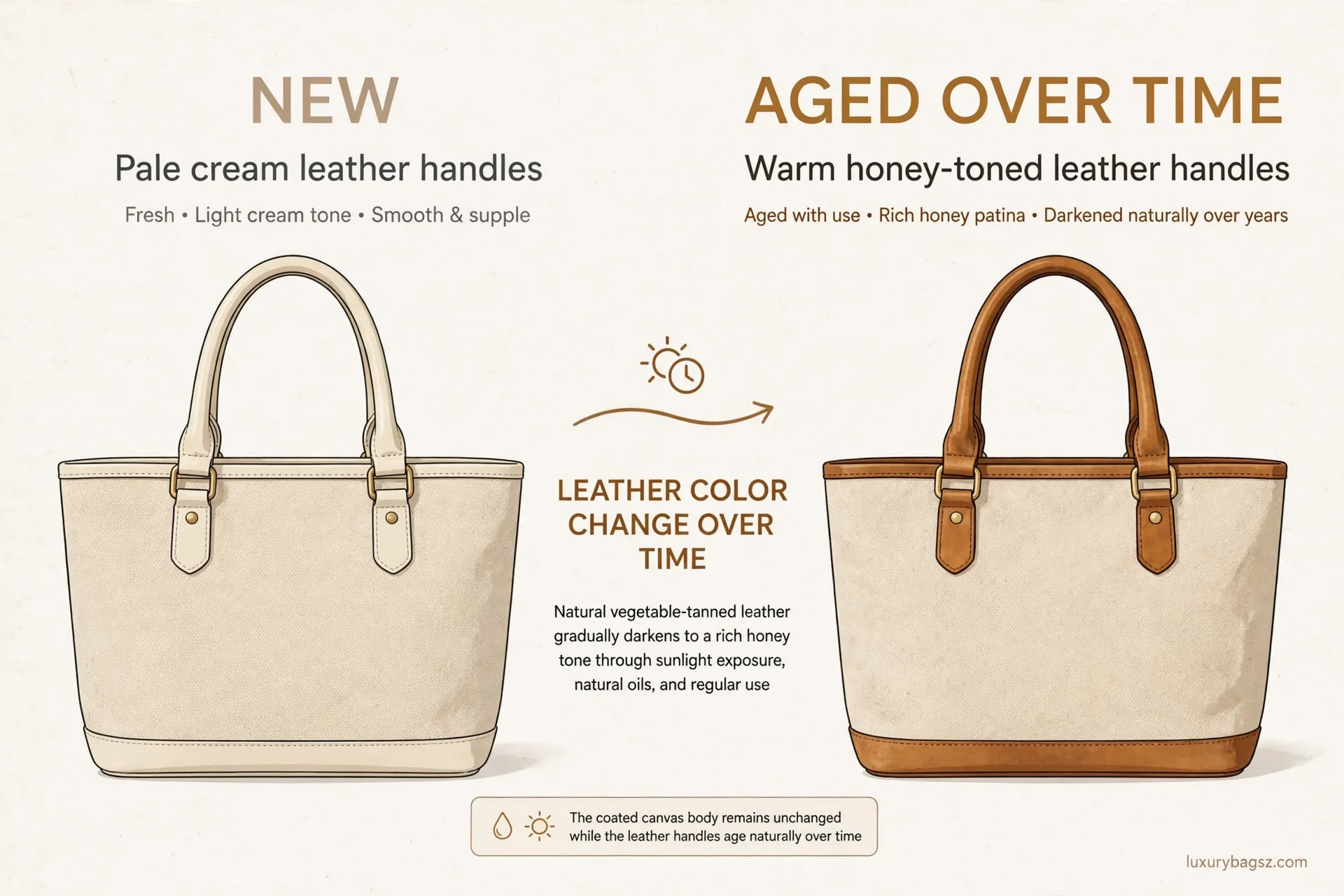
Patina in Brief: Pale Trim That Earns Its Honey Colour
Patina on vachetta leather is the gradual darkening of untreated, vegetable-tanned cowhide from pale cream to honey, then caramel, caused by sunlight, air and the oils from your hands. It cannot be stopped, only guided. Clean, dry hands, care in rain and even sun exposure keep it golden and even, while water spots and dirty handles turn it blotchy and grey.
Key Takeaways
- Vachetta is left undyed and uncoated, so it darkens naturally with light, air and handling.
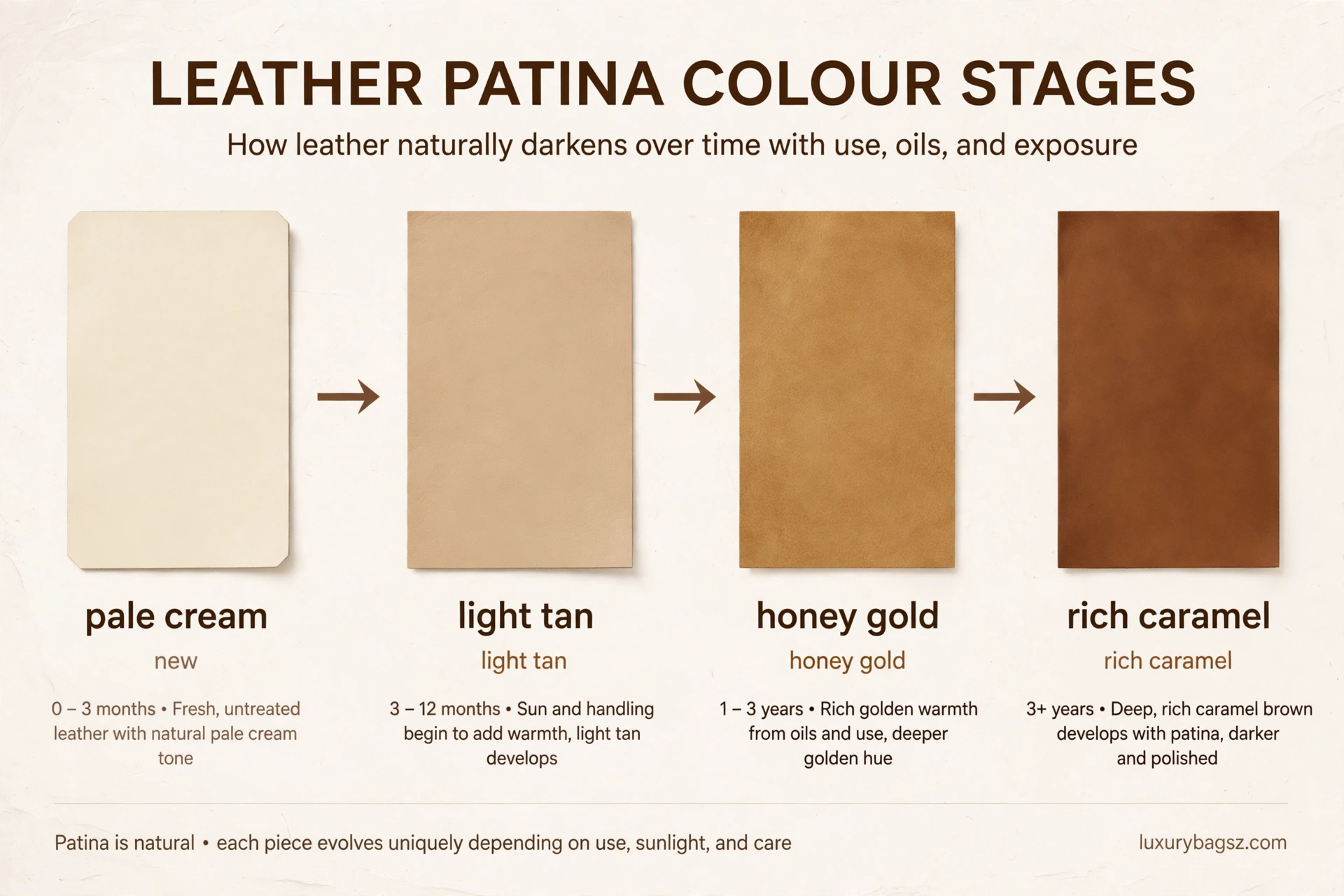
- Typical stages run pale cream, light tan, honey gold, then rich caramel over years.
- New vachetta is at its most fragile: one rainstorm can spot it permanently.
- Even patina comes from even exposure; rotate handles and avoid gripping one spot.
- Water spots and dirty handles are the main risks, not patina itself.
- Conditioners can darken vachetta and change its finish, so test first or skip them.
What Vachetta Is and Why It Changes
Vachetta is natural cowhide tanned with vegetable materials and left unfinished: no dye, no sealant and no protective coating on most classic Louis Vuitton trim. Our leather types guide explains how unfinished leather differs from coated leathers. With nothing shielding the surface, everything touches the leather directly. Sunlight and air oxidise the surface, while hand oils feed and darken it where you grip. The result is a colour that records how the bag has actually been carried. Louis Vuitton has used vachetta on Monogram canvas classics for generations, on handles, straps, tabs and trim. Its changing colour is considered part of the design, not a defect.
Photographing a new bag in the same light every month is a satisfying way to watch the change. Owners are often surprised how quickly the first warm tone arrives once a bag enters daily use.
The Stages: Cream, Tan, Honey, Caramel
New vachetta is pale cream, almost blush-toned, and very easily marked. In the first weeks it begins to warm to a light tan wherever light and hands reach it. Over the following months, typically described as around six to twelve months of regular use, the colour deepens to the honey gold most owners aim for: warm, even and glossy. With years of use it can reach rich caramel and, on heavily handled areas such as handles, deeper brown tones. Handles almost always lead, since they receive the most oil and friction. These timings are typical, not promised. Climate, how often the bag is carried, and whether it lives in sun or in a cupboard can speed or slow every stage considerably.
Where Patina Shows First
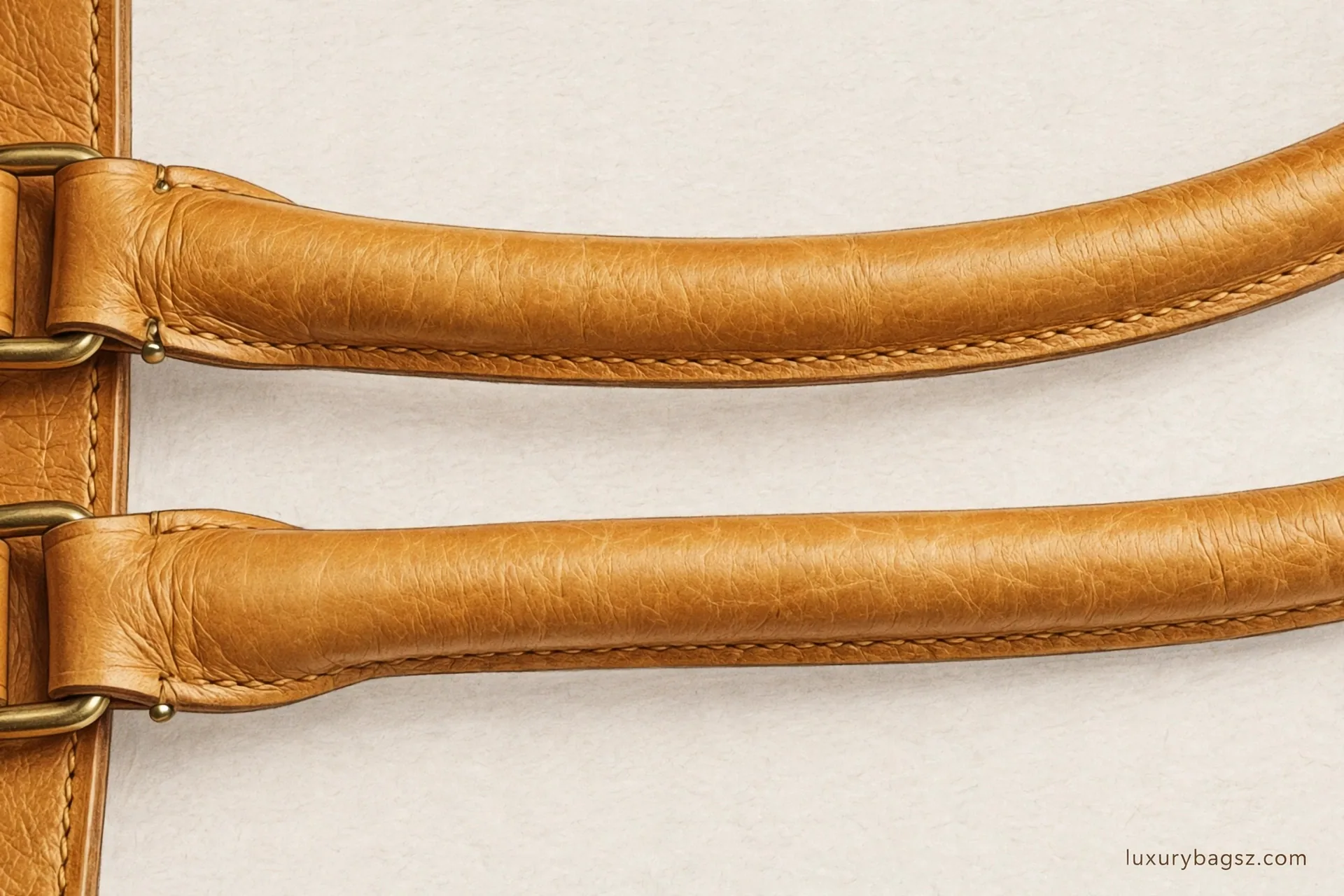
Handles darken first and fastest, followed by strap attachments, zip pulls and the trim handled when opening and closing the bag. Protected areas, such as under flaps, stay pale longest. This contrast is normal, but a sharp pale patch beside deep caramel can look untidy. Our Louis Vuitton Speedy sizes guide shows how much vachetta each classic carries. Base trim and corners darken more slowly but collect scuffs and dirt. Corners also pick up colour transfer from clothing, which is dirt, not patina, and should be wiped away. If one handle is much darker than the other, the bag has been carried on one side or gripped unevenly. Rotating how you carry it helps the pair catch up with each other.
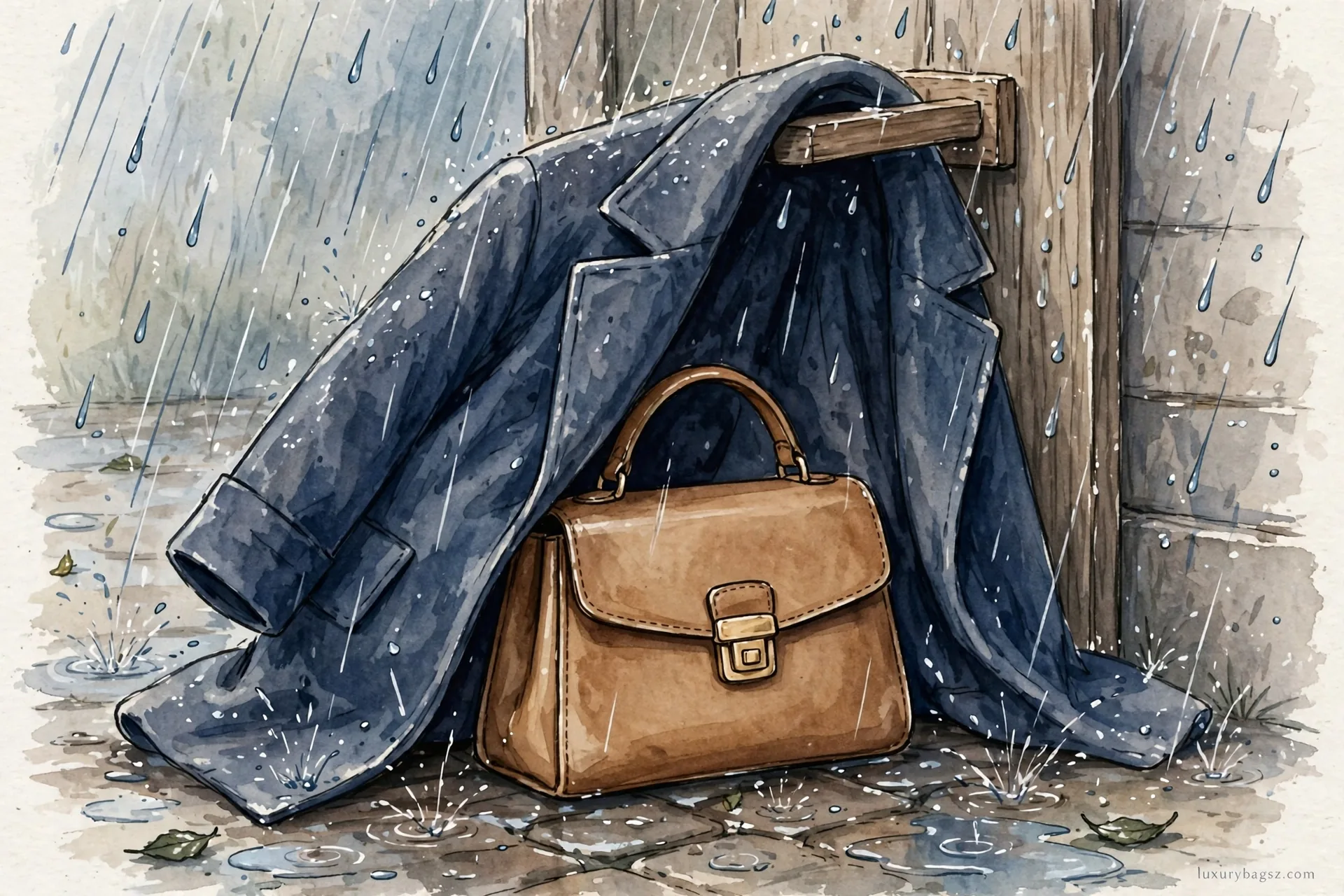
Rain covers and a simple habit help too: carry the bag on the side away from the weather, and move it under a coat or umbrella at the first sign of rain while the leather is still pale.
How to Keep Patina Even
Handle the bag with clean, dry hands, free of lotion and sanitiser where possible. Fresh creams soak straight into new vachetta and leave dark patches that never quite blend. Give the bag gentle, even light exposure rather than leaving one side facing a window. Brief, regular daylight outings even the colour better than one long sunbathing session. Some owners deliberately sun a new bag lightly to start the process. Do this cautiously, in short spells, turning the bag often, since uneven sun creates uneven colour faster than use does. Twillies or handle wraps slow handle darkening and protect from oils. Remove them now and then so the leather beneath still ages, or you will uncover pale stripes later.

Water Spots, Rain and Stains
Rain is vachetta's main enemy when it is young. Drops sit on the unprotected surface and dry as rings or spots, which are far harder to blend than gradual darkening. If the bag is caught in rain, blot gently and let it dry naturally and fully. Our Louis Vuitton canvas cleaning guide covers safe cleaning for the canvas parts alongside the trim. Light, even dampening of the whole area sometimes softens a spot's edge, but it is risky on valuable bags. For strong spotting, a leather specialist is the safer route. As patina deepens, spots matter less: honey and caramel hide marks that screamed on pale cream. Time genuinely is one of the best treatments for early water spotting.
Also compare stitching and edges with the patina story. Bright new-looking trim with heavily aged stitching, or the reverse, can point to replacement work that should be priced and disclosed as such.
Judging Vachetta on a Pre-Owned Bag
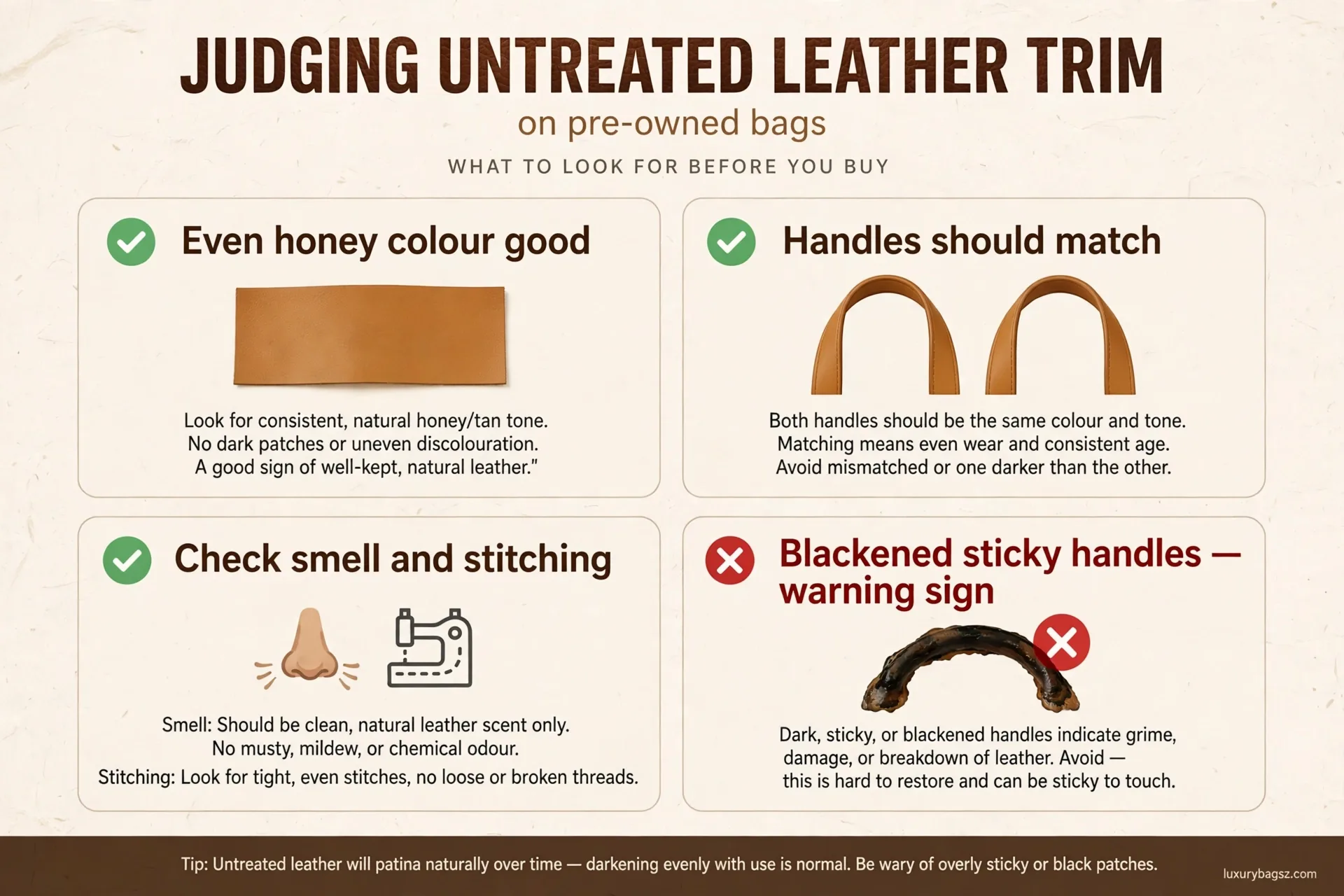
Even honey patina with clean handles usually signals a cared-for bag. Blackened, sticky or cracked handles signal heavy use, hand cream build-up or poor storage, and lower value. Check that both handles match each other and that tabs and trim sit at a similar stage. Wildly mixed colours can mean replaced parts, which a seller should disclose. Smell matters too: vachetta absorbs odours, and smoke or perfume smells are very hard to remove. Our fake Louis Vuitton bag checks pair well with these condition checks. Replaced vachetta is available through repair services for a cost, and it restarts the patina clock at pale cream. Factor that mismatch into the price of any older bag.
Daily Care That Protects the Process
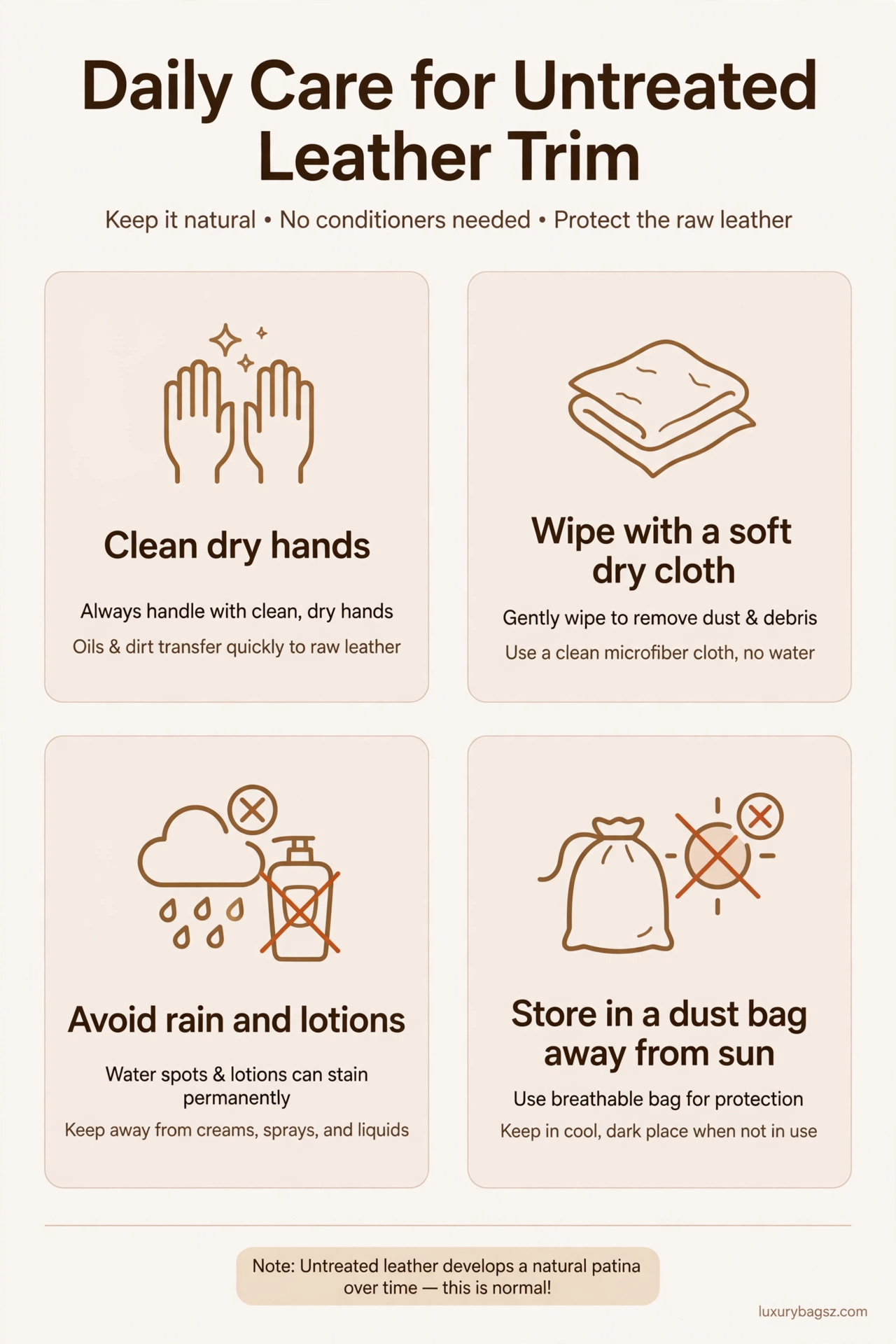
Wipe vachetta with a soft, dry cloth after use. That simple habit lifts surface dirt before it grinds into the grain and greys the colour. Store the bag in its dust bag, away from direct sun, so patina pauses while the bag rests. Our Louis Vuitton bag storage guide covers full storage practice. Be cautious with conditioners and protective sprays on vachetta. Many darken it at once or leave it blotchy, and opinions among owners differ sharply, so test hidden areas first. Louis Vuitton's own guidance for this leather is essentially gentle handling and keeping it from water and grease. When a product promises to stop patina entirely, be sceptical.
There is a middle path for the cautious: buy a pre-owned bag whose patina is already at the honey stage. You skip the fragile pale months and inherit a colour someone else guided well.
Love It or Avoid It: Choosing Your Finish
Choose vachetta if you enjoy a bag that changes with you. Its honey stage is beautiful, personal and, on classic canvas bags, a visible mark of genuine, well-kept age. Avoid it if you want a bag that looks identical in five years, or if your climate is very wet. Treated leathers, dark trim and coated finishes give a stable colour instead. Some newer Louis Vuitton pieces use treated or darkened leather that resists spotting. They trade the patina story for practicality, and neither choice is wrong. Second-hand buyers can use patina as a shortcut: even honey means even care, in most cases. It is one of the quickest honest signals a pre-owned bag can give you.
Frequently Asked Questions
What is patina on vachetta leather, and how long does it take to turn honey?
It is the natural darkening of untreated vegetable-tanned cowhide with sunlight, air and hand oils, moving from pale cream through honey to caramel over months and years of use.
Typically several months of regular use, often described as around six to twelve months to a clear honey tone. Sunlight, climate and handling speed it up or slow it down.
Can I stop vachetta from darkening?
No. You can slow it by keeping the bag from sun, handling it less and using handle wraps, but untreated vachetta will always darken eventually with light and air.
How do I remove water spots from vachetta, and what products should you avoid?
Let the bag dry fully first; many light spots fade as patina deepens. Do not scrub. For strong spotting on a valuable bag, consult a leather specialist rather than experimenting.
Avoid heavy oils, dark balms, household cleaners and anything not tested first on a hidden spot. Products that darken or grease unfinished leather can change it permanently in minutes.
Should I condition vachetta leather, and is it safe to sun a new bag to speed patina?
Only with great caution. Many conditioners darken vachetta immediately or unevenly. A soft, dry cloth is the safe daily routine, and any product should be tested on a hidden area first.
Only in short, careful spells with frequent turning, and it carries risk of uneven colour. Most owners get a better result from normal use and patience.
Why are the handles darker than the rest of the trim?
Handles receive the most hand oil, warmth and friction, so they patina first and deepest. Rotating how you carry the bag and using clean, dry hands keeps the difference smaller.
Does patina affect resale value?
Even honey patina in clean condition is usually viewed positively, as a sign of genuine age and care. Blackened, cracked or badly spotted vachetta lowers value significantly.
Can vachetta be replaced?
Yes, repair services can replace handles and trim, at a cost. New vachetta starts pale cream again, so replaced parts will contrast with older trim until their patina catches up.
Final Verdict: Guide the Colour, Do Not Fight It
Patina is vachetta keeping a diary: sun, hands and years written in honey and caramel. Guided with clean hands and care in rain, it becomes the most beautiful part of the bag. Fight it with sprays and scrubbing, and you usually make it worse. Buy vachetta because you want that journey, keep the early months gentle, and let time do the finishing work.






