

Limited Edition Watches to Love: Numbered Runs, Anniversaries and How to Buy Well
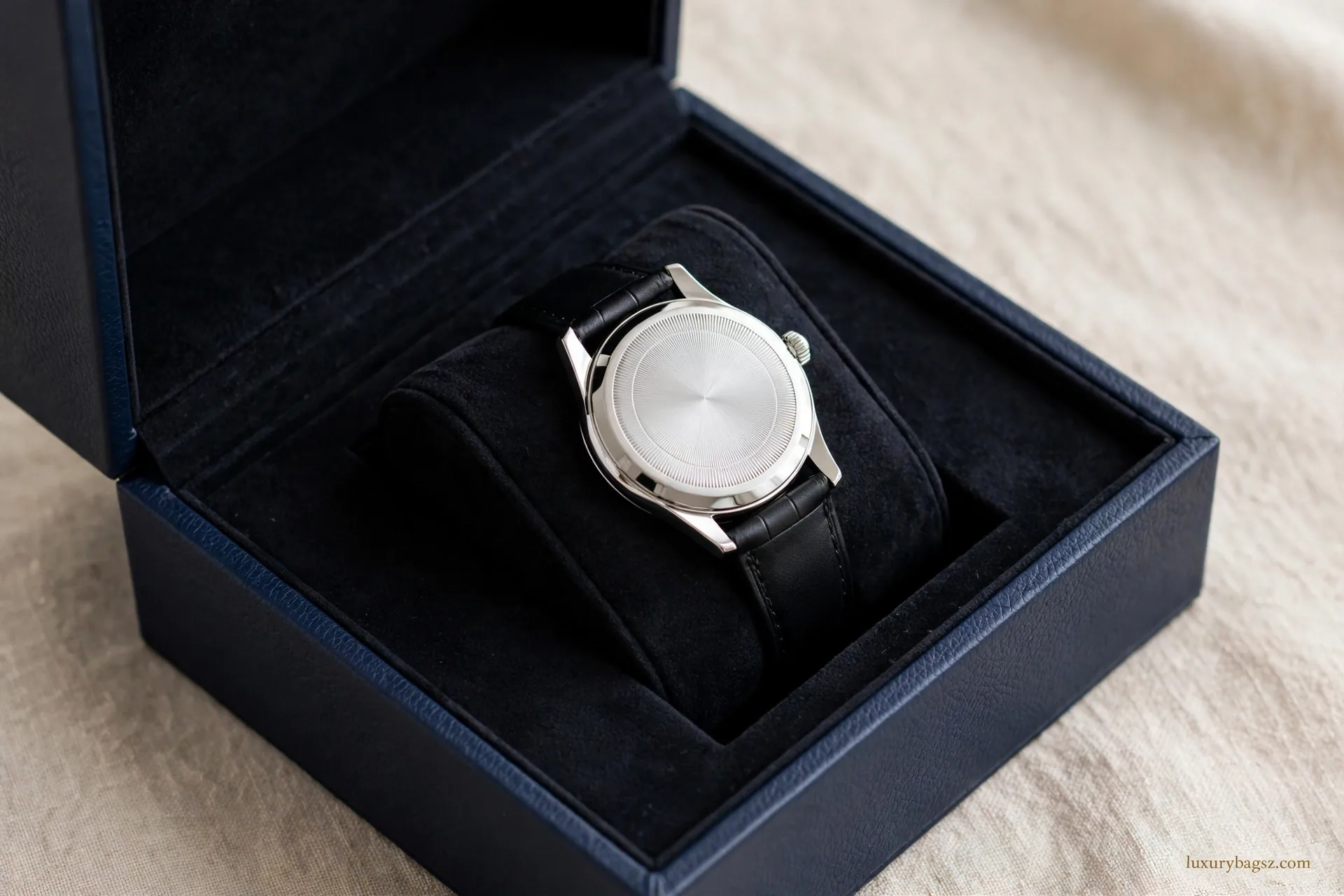
Love the Design First, the Edition Number Second
An edition is worth buying only when you would want the watch without any scarcity attached. Look for a genuine change in design or craft, an honest stated limit and a story rooted in the maker’s history. Anniversary, collaboration and charity formats are the ones you will meet most often, alongside retailer and regional versions.
Makers known for serious small runs include independent names such as F. P. Journe, where output stays tiny by design, and historic houses such as Vacheron Constantin and Girard-Perregaux, which revisit real archive designs. Always check that the number on the watch matches its papers, and judge value by lasting demand and a complete set, never by rarity alone.
Key Takeaways
- Limited can mean a numbered run, a time-limited production, or a special series; always ask which.
- Anniversary, collaboration and charity editions are the most common limited formats.
- The best limited editions add a meaningful design change, not just a new dial colour alone.
- Value depends on lasting demand, completeness and condition, never on rarity alone.
- Matching papers matter more on limited editions, since the edition number should correspond.
- Buy to wear and keep; quick resale profits are the exception, not the plan.
Some brands prefer the term special edition for unnumbered runs, which is a useful honesty signal. When a maker states the format plainly, you can judge the watch on clearer terms from the start.
What Limited Actually Means
The term covers several different things. A numbered edition has a stated total, with each watch carrying its own number. A limited production may simply run for a set period, unnumbered. Special series and boutique editions sit in between: made for one retailer, region or event, sometimes in small numbers, sometimes merely in a colour unavailable elsewhere. Because the word is unregulated, the honest question is always: limited to what, stated where, and by whom? A brand's own stated production figure carries far more weight than a seller's claim. This guide deliberately avoids quoting precise production figures for specific models. Where a number matters to a purchase, verify it in the brand's own documentation for that watch.
The Main Formats You Will Meet
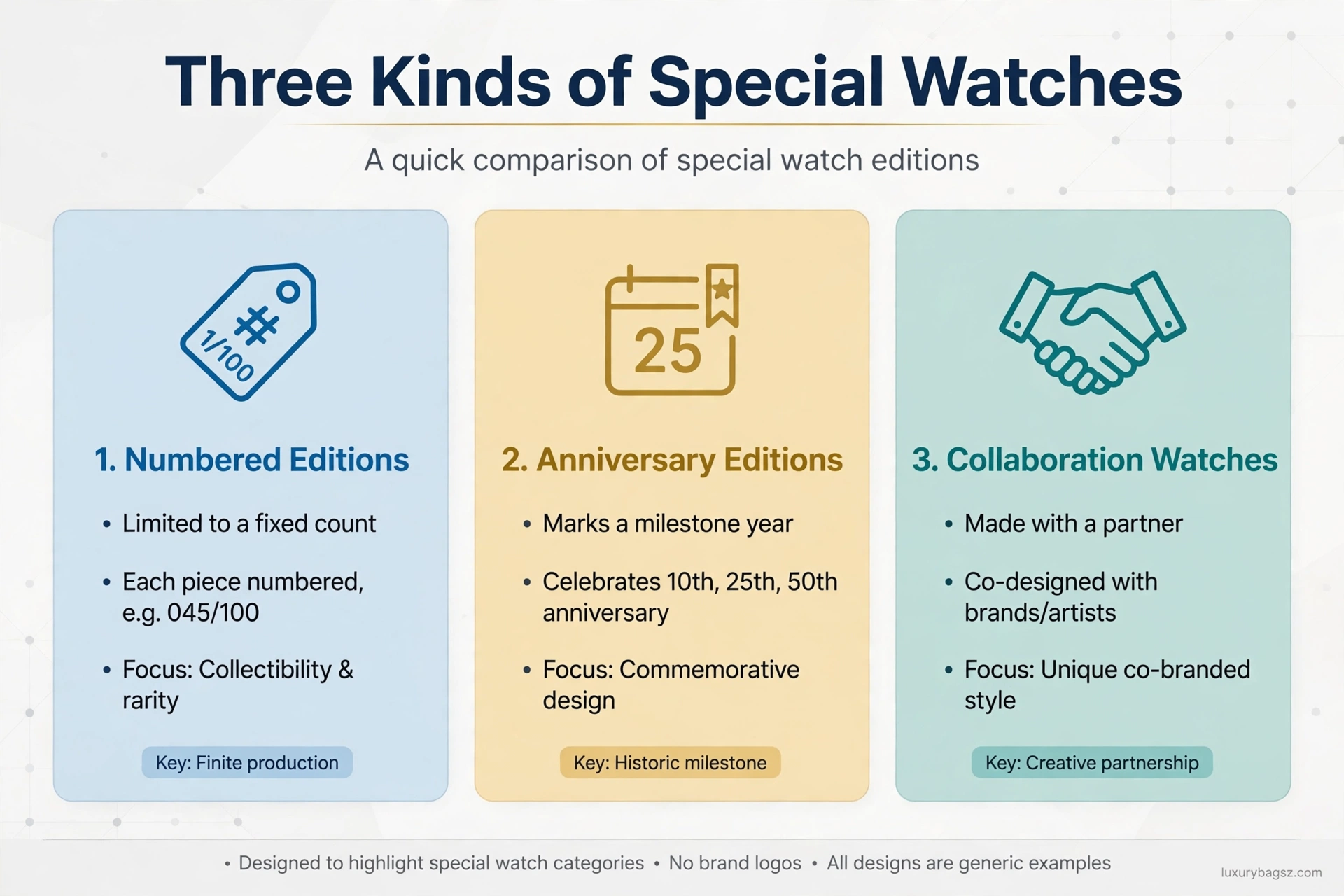
Anniversary editions mark a model or brand milestone and usually reinterpret a historical design. They tend to attract both existing collectors and buyers drawn by the story. Collaboration editions pair a watch brand with an artist, a fashion house, a car maker or a cultural institution. The best feel like a genuine meeting; the weakest feel like a logo exercise. Charity and commemorative editions support a cause or mark an event, and often carry distinctive dials or engravings. Their appeal is personal, which suits buying to love rather than to trade. Retailer and regional editions offer colour or material twists. Our format comparison in the visual guide below summarises how the three main types differ in numbering and intent.
Dial craft is where editions often justify themselves: enamel, stone, lacquer and hand-guilloché dials take time that standard production cannot spare, and a limited run is how a maker makes that time viable.
Design-Led Editions Worth the Name
The strongest limited editions change something you can see and feel: a new dial craft, a historical case size, a hand-finished detail or a movement variation made for the occasion. Fashion-house watches offer a different route into editions. Our Louis Vuitton watch designer guide shows how design-led houses build collectible watch lines. Ceramic icons such as the watch in our Chanel J12 watch guide have appeared in special versions over the years, where a colour or material change genuinely alters the character of a familiar design. Be suspicious of editions where the only change is packaging and a certificate. A special box is pleasant, but it is the watch on the wrist that must carry the idea for decades.
Makers Who Do Small Runs Seriously
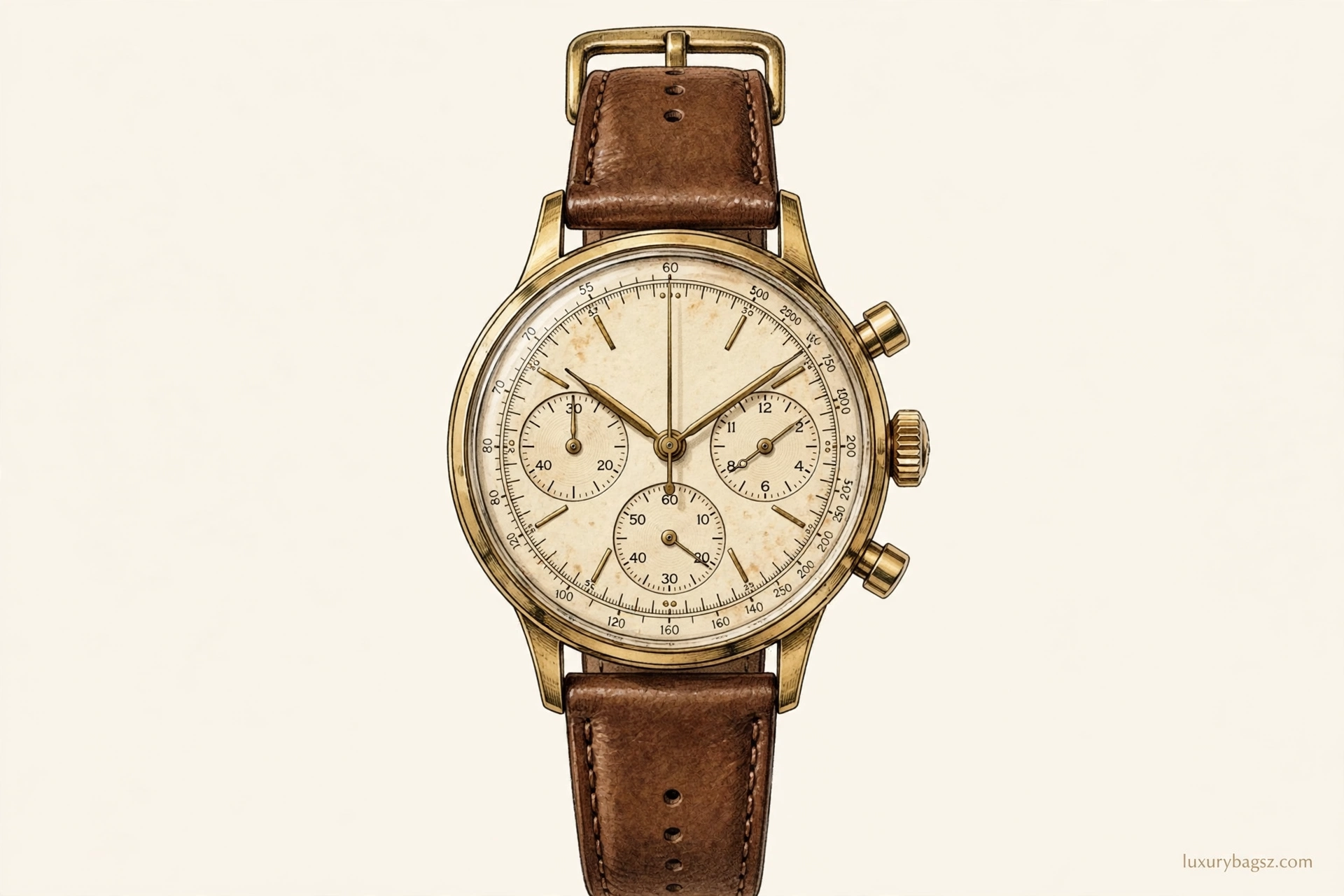
Independent makers built their reputations on genuinely small production. Our F.P. Journe collecting guide explores a maker whose total output is small by design. Historic houses use limited editions to revisit their archives. Our what to know about Vacheron Constantin guide covers one of the oldest names in that tradition. Our Girard-Perregaux history guide shows another long-running house where heritage reissues draw naturally on real back-catalogue designs. With these makers, limited often means limited by capacity and craft, not by marketing calendar. That distinction shows in finishing, and collectors notice it.
Community matters in a quieter way: editions that owners' clubs and long-term collectors keep discussing years later tend to hold interest, while editions remembered only for their launch queues tend not to.

What Supports Value, and What Does Not
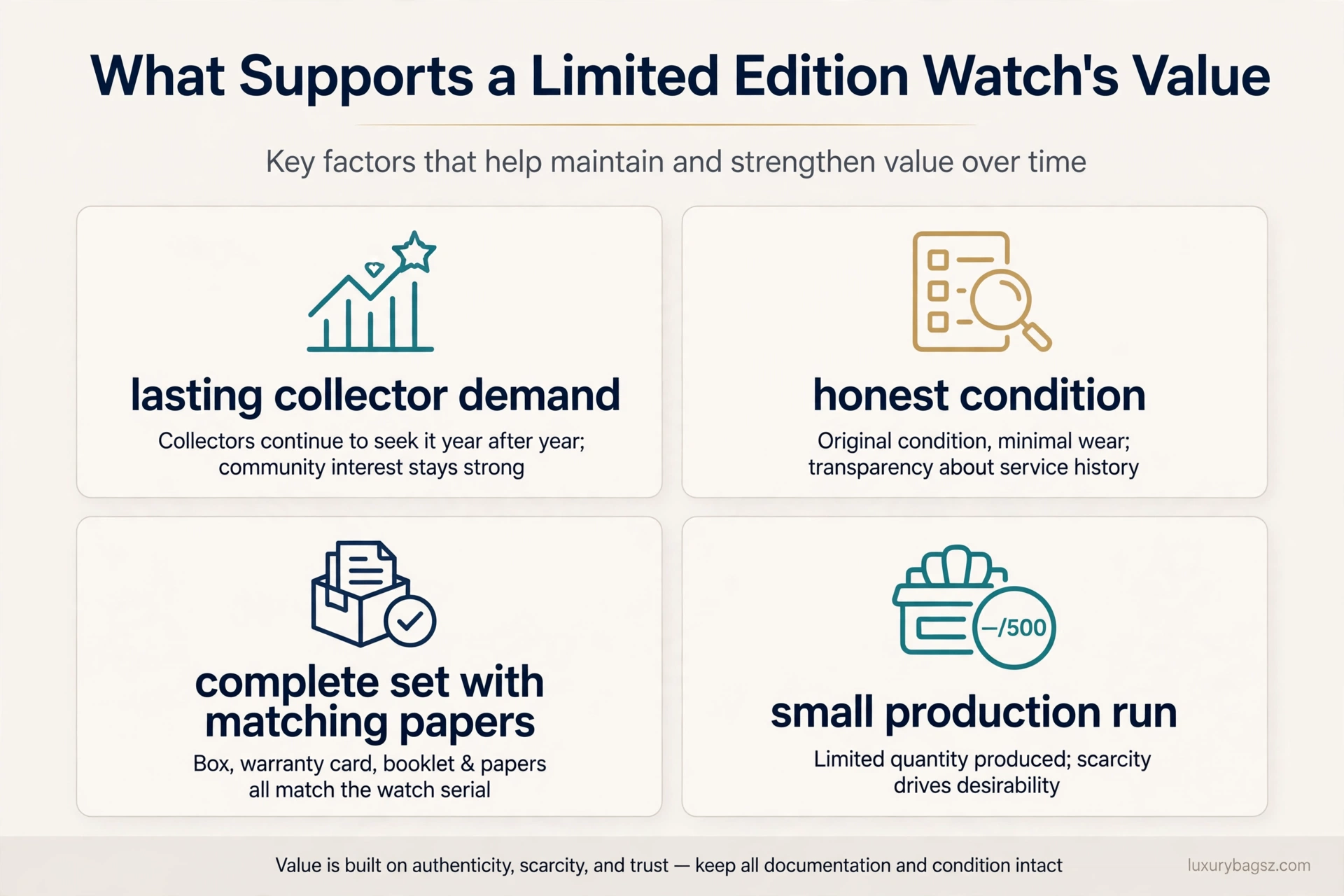
Lasting demand is the whole story. A limited edition from a model line collectors already love starts ahead; an edition of an unwanted model stays unwanted, only rarer. Completeness matters more here than on standard models: box, papers showing the edition number, accessories and any special packaging all form part of what a future buyer expects. Condition rules apply with full force. A worn limited edition with missing papers competes against complete examples, and the discount for incompleteness is usually severe. Waiting-list heat at launch is the weakest signal of all. Many editions are easiest to buy a few years later, once launch attention has moved on and prices reflect real demand.
Numbering, Engraving and Papers
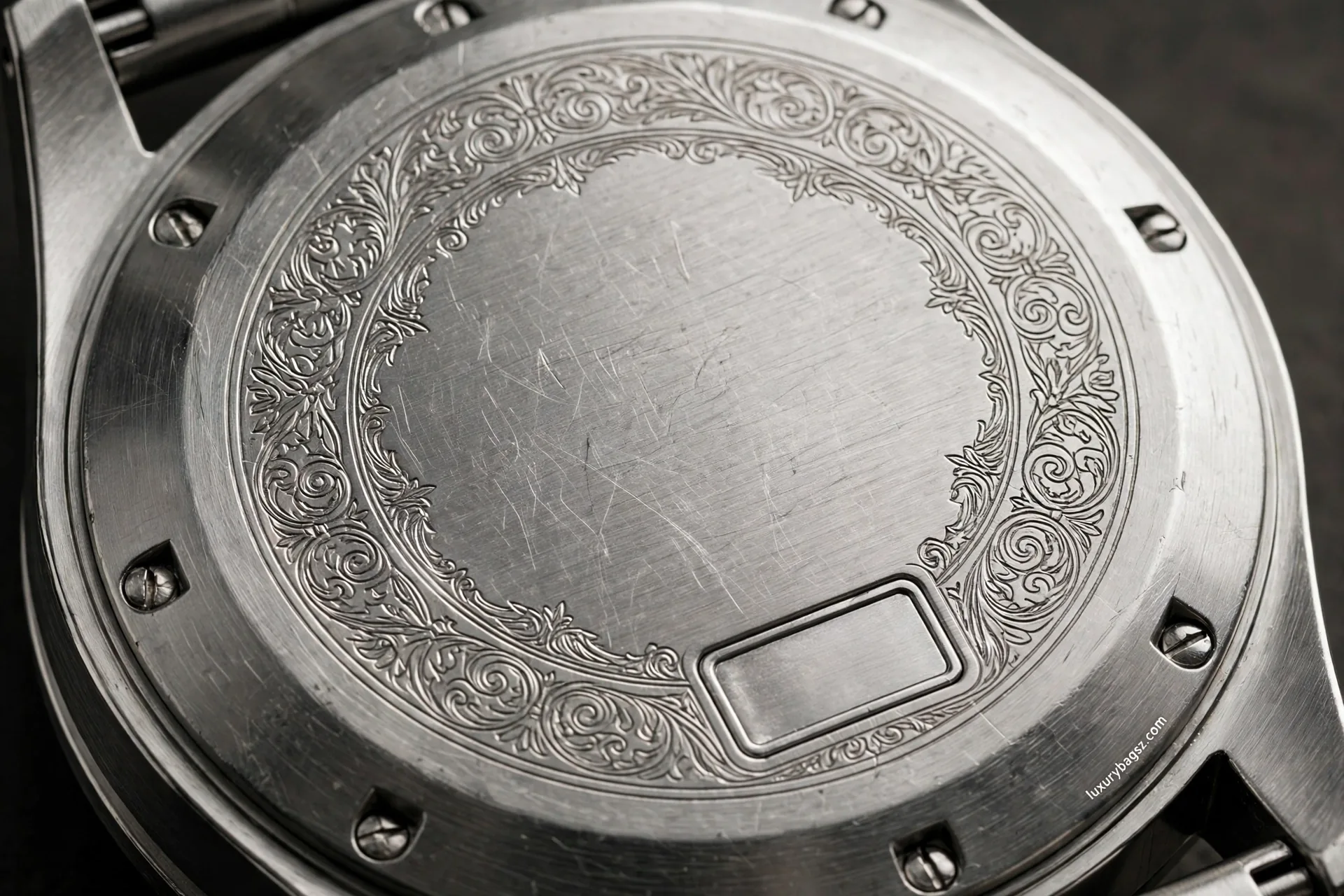
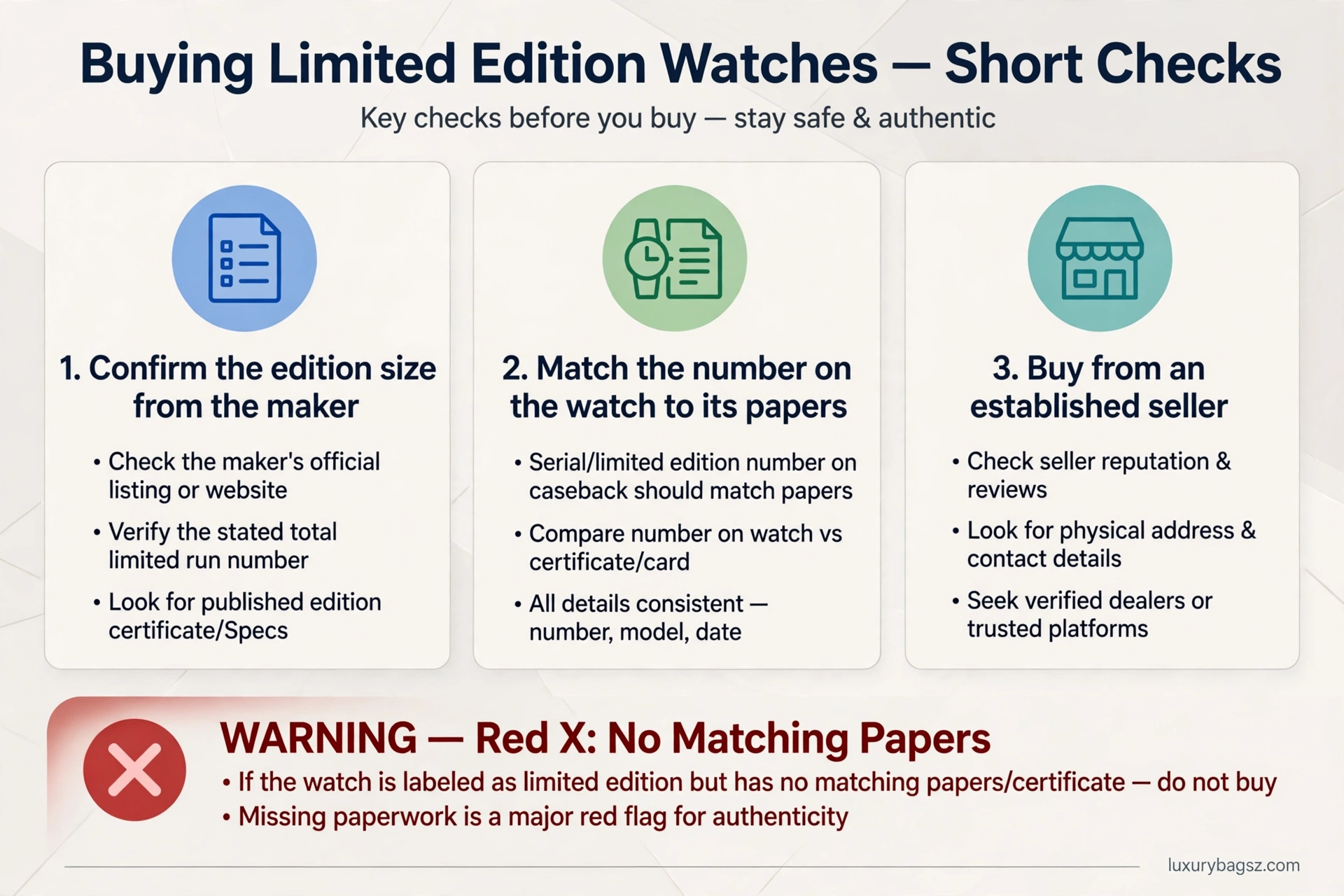
Numbered editions usually carry the number on the caseback or case side, sometimes with an engraved motif for the occasion. Photograph it: that number is part of the watch's identity. The edition number on the papers should match the watch. A mismatch is a serious problem, since the premium for a limited edition rests heavily on documented identity. Certificates, letters and special accessories vary by brand and era. Missing items do not make a watch fake, but they must change the price you are willing to pay. For older editions, records can be incomplete through honest loss. Buy those on the watch's merits and condition, priced as incomplete, never on a seller's story alone.
If two editions compete for the same money, choose the one you would still pick with the certificate hidden. That small thought experiment separates design appeal from paperwork appeal very reliably.
How to Buy a Limited Edition Well
Research the standard model first. If you would not buy the regular version at its price, the edition premium needs a design reason, not just a number, to justify itself. Compare against completed sales of the same edition in similar completeness. Launch prices and asking prices both flatter; completed sales tell you what buyers actually paid. Buy from sellers who show the caseback number, the matching papers and the full set in photographs. Our pre-owned guidance on seller vetting applies with extra force here. Finally, decide your horizon before paying. Bought to wear for years, a good limited edition is a pleasure with a story. Bought to flip in months, it is a speculation with fees attached.
Loving One Long Term
Wear it. A limited edition kept unworn for resale lives in a safe while its seals age and its story stays unwritten. Servicing still falls due, worn or not. Service with the brand or a trusted watchmaker, and keep every invoice with the papers. Documented care is part of an edition's completeness for the next owner. Insure it at a realistic replacement basis and store it dry, away from magnets and damp, in its box or a watch case. Photographs of the full set help any claim. If you sell one day, sell the story honestly: number, papers, condition and history, all shown. That transparency is exactly what you wanted as a buyer, and it is what good sellers do.
Frequently Asked Questions
What counts as a limited edition watch?
Any watch made in a stated, restricted quantity or for a restricted period, including numbered runs, anniversary editions and collaborations. Always verify what the limit actually is and who states it.
Are limited edition watches a good investment?
Not reliably. Lasting demand decides value, and many editions trade below their launch prices later. Buy one because you love and will wear it, and treat any value retention as a bonus.
Does the edition number affect value?
It can, modestly: very low numbers and numbers matching a year or date sometimes attract collectors. Completeness and condition matter far more than the specific number in most cases.
Should the papers match the edition number?
Yes. On a numbered edition, the papers or certificate should correspond to the watch's number. A mismatch undermines the documented identity that much of the edition premium rests on.
Are anniversary editions usually worth it?
They can be excellent buys when they reinterpret a real historical design with care. Judge the watch itself: design, size and finishing, rather than the anniversary label alone.
How can I verify a limited edition is genuine?
Check the caseback number, matching papers, correct dial and case details for that edition, and buy from a reputable seller. For valuable pieces, an independent watchmaker's inspection is worthwhile.
Do limited editions cost more to service?
Usually they service like their standard counterparts, unless the edition uses a special movement or materials. Confirm parts availability with the brand for older or unusual editions before buying.
Is it bad to wear a limited edition watch?
No. Watches are made to be worn, and honest wear with good care is normal. Keep the set complete and serviced, and enjoy the watch rather than storing it unworn indefinitely.
Why do some limited editions lose value quickly?
Because launch attention fades and the underlying model lacks lasting demand. Scarcity alone does not create buyers, and sellers then compete on price for a small pool of interest.
What should a full limited edition set include?
Typically the watch, its box, papers or certificate showing the edition number, booklets and any edition-specific accessories. Contents vary by brand, so compare with documented examples of the same edition.
Summary: A Number Is a Frame, Not the Picture
The limited editions worth loving earn it as watches first: real design ideas, honest production limits and stories rooted in a maker's history, not in a launch-week queue. Buy the watch, verify the number and papers, keep the set complete, and wear it for years. Chosen that way, a limited edition is a personal landmark, whatever the market later decides.






