

Mulberry Brand History: From a Somerset Kitchen Table to the Bayswater
Mulberry in Brief: Britain's Leather House, Made in Somerset
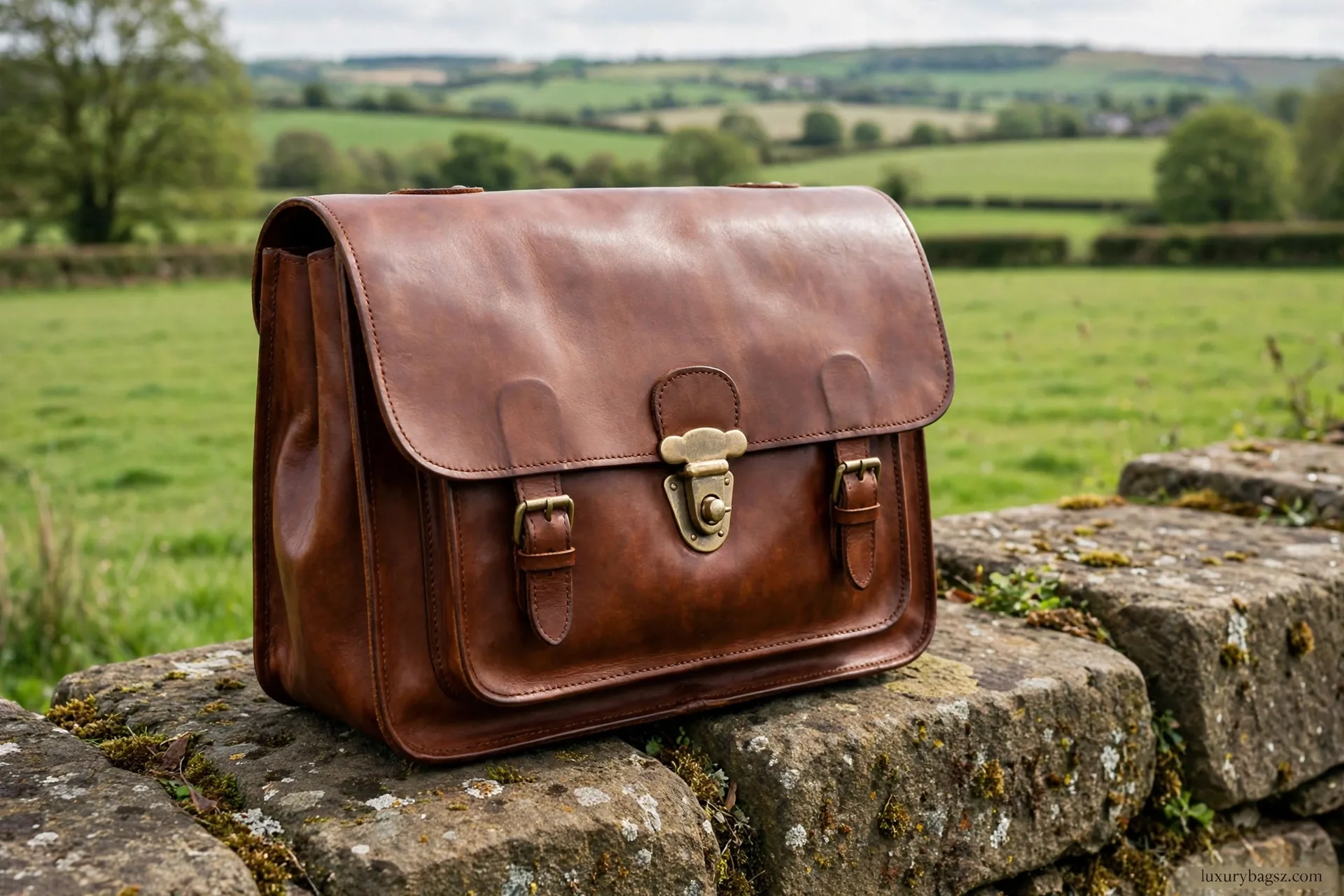
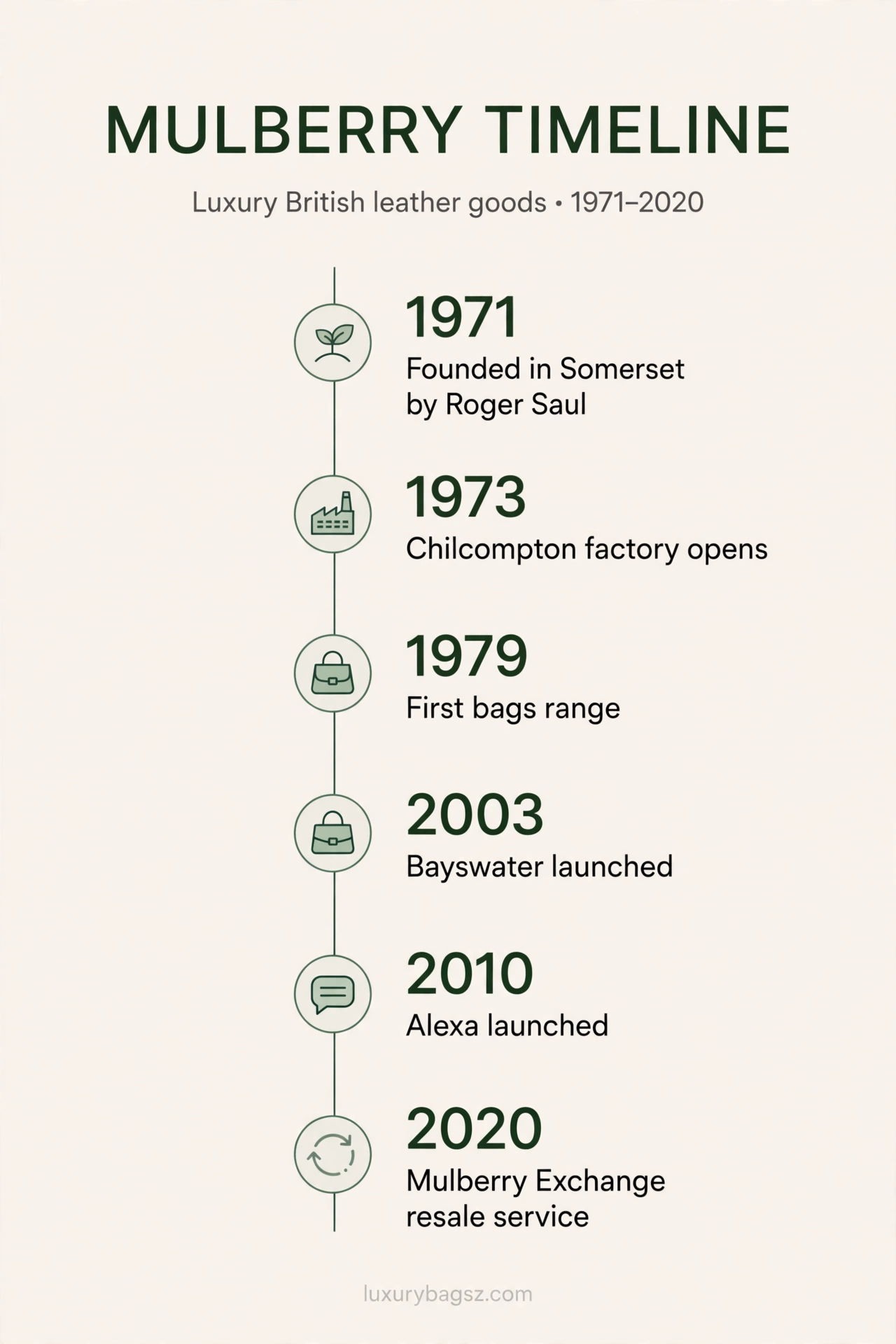
Mulberry is the most British story in luxury leather goods. It began in 1971, when Roger Saul started making buckled leather belts at his kitchen table in Somerset, backed by £500 from his mother. His sister designed the mulberry tree logo, named for the trees he passed on his way to school. Fifty years on, Mulberry remains the largest maker of luxury leather goods in Britain, with two Somerset factories producing more than half its bags.
The house's fame rests on a handful of bags: the Bayswater, the Alexa, the Lily and the Amberley. They are not flashy, and that is the point. Mulberry sells sturdy, handsome leather goods with a town-and-country spirit, made to be carried daily for years. If you remember one thing, remember this: Mulberry is a Somerset factory that became a fashion name without leaving Somerset behind.
Key Takeaways

- Founded in Somerset in 1971 by Roger Saul and his mother Joan, with £500.
- The Chilcompton factory opened in 1973; the Rookery and Willows factories still make bags today.
- Early fame came from leather poacher, dispatch and binocular bags.
- The Bayswater launched in 2003 and became Mulberry's first true It bag.
- The Alexa, named for Alexa Chung, followed at the end of the decade.
- The Mulberry Exchange, launched in 2020, buys back and resells pre-owned bags.
- Pre-owned buyers should check the postman's lock, corners, handles and serial disc.
A Kitchen Table in Somerset: 1971
Roger Saul's start sounds like a folk tale because it nearly is one. In 1971, aged 21, he began making leather belts from offcuts at his kitchen table in Somerset, financed by £500 from his mother Joan. His father worked in leather for Clarks shoes, so the smell and feel of good leather were familiar from childhood.
The name came from memory. Walking to school, Saul passed rows of mulberry trees, and his sister turned that memory into the tree logo the brand still uses. It was a family business in the literal sense: mother, son and sister each supplied something the others lacked, money, craft and identity.
Early sales came from London markets such as Portobello, where buckled belts and chokers found buyers who liked their rustic, handmade character. The business was small, but the formula was already set: English materials, honest construction and a look that mixed countryside pursuits with London energy.
Belts, Dispatch Bags and the Country Look
Success with belts funded a move into bags and womenswear, and by the mid-1970s Mulberry had found its voice. Leather poacher bags, binocular bags and dispatch bags, drawn from hunting, shooting and fishing, became its signature. They were practical shapes in tough, grainy leather, with brass hardware and a lived-in charm.
The look was dubbed Le Style Anglais, and it captured a very English idea: clothes and bags that move between town and country without changing. A Mulberry bag was supposed to look right on a shoot and on a city street, and that dual life remains the brand's core promise.
By 1979, the first full bag range had arrived, and the factory that made it possible was already running. Mulberry was no longer a market stall business; it was a manufacturer with a growing reputation for leather goods that lasted.
The Somerset Factories and Made in England
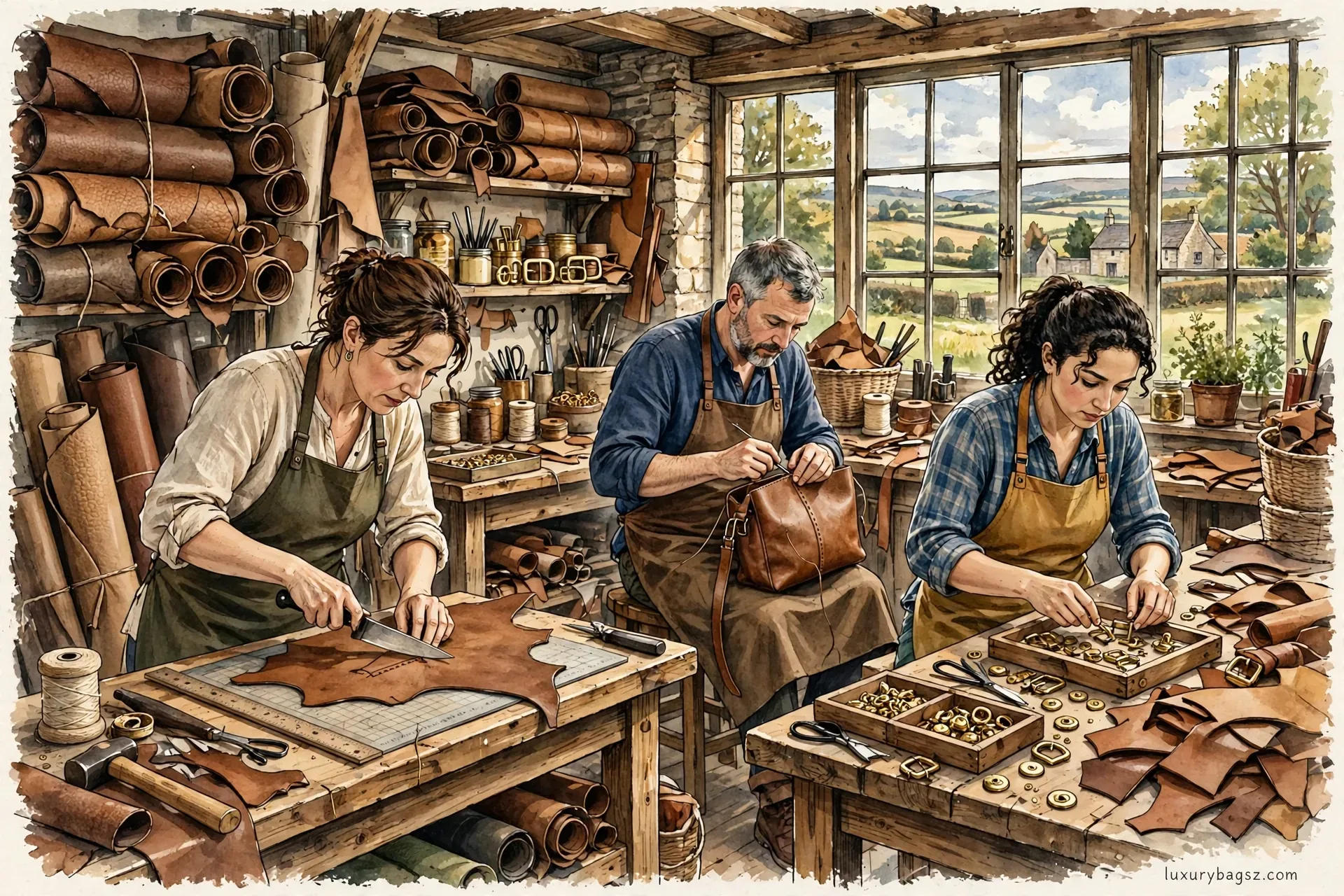
In 1973, Roger Saul and Joan opened a factory in Chilcompton, Somerset, an area already famous for leather work through Clarks. That factory, now known as the Rookery, still makes Mulberry bags today, alongside the Willows factory. Together they produce more than half of the brand's bags and employ hundreds of craftspeople, many trained through the house's apprenticeship programme.
Made in England is not a slogan for Mulberry; it is a production fact and a selling point. A single Bayswater passes through dozens of pairs of hands, and the brand has long claimed that three generations of one family can touch a single bag. For buyers, the practical meaning is repair: Mulberry bags can be serviced and restored through the house's workshops, which keeps older pieces in circulation.
The factories also underpin the brand's sustainability claims. Both Somerset sites run on carbon-neutral operations, and the house reports sending zero waste to landfill from its UK locations. Whether those claims sway you or not, the factories themselves are the reason Mulberry feels different from brands that design in one country and make everywhere else.
The It-Bag Years: Gisele, Bayswater and Alexa
Mulberry's quiet decades ended in the 2000s with a run of It bags. The first came through designer Luella Bartley, who in 2001 fell for a 1975 Saul design in the archive and carried it at her New York show, where Gisele Bündchen reportedly walked off the runway saying it was hers. The bag became the Gisele, and Mulberry had its first fashion moment.
The Bayswater followed in 2003, designed by Nicholas Knightly and named for the west London neighbourhood. A structured, top-handle satchel with a postman's lock, it became the bag of the decade for a generation of British women, spotted on Kate Moss and countless commuters alike. At £495 at launch, it was aspirational but reachable, and that balance made it a first-paycheque purchase for many.
Then came the Alexa, inspired by Alexa Chung's habit of carrying a vintage Mulberry men's briefcase. Designed under creative director Emma Hill, it mixed satchel, briefcase and handbag into a slouchy, buckled shape. Reports of 380 Alexas selling in a single week at £750 each show how fierce demand became. A plain note: sources differ on whether the Alexa launched in 2009 or 2010, so treat either year as approximate rather than exact.
Designers and Reinvention
Mulberry's creative leadership changed with fashion's tides. Emma Hill, who joined as creative director in 2007, gave the house its It-bag peak and a warm, wearable sensibility. Johnny Coca, recruited from Céline in 2015, brought a sleeker, more structured eye, with the Amberley and Iris bags, while keeping the Bayswater as the heritage anchor in updated forms such as zipped and mini versions.
Ownership changed too. Singaporean entrepreneur Christina Ong's company became the major shareholder in the early 2000s, and a boardroom struggle ended Roger Saul's chairmanship, a painful episode for a founder who had built the brand from his kitchen. The house survived the transition and returned to profitability in 2003, opening its first American store the following year.
The lesson of these years is that Mulberry's identity sits in its bags more than in any single designer. Creative directors come and go, but the Bayswater, the grain leather and the Somerset factories remain. For a comparison with another British heritage house's reinvention, see our Burberry guide.
Mulberry Today: Exchange, Sustainability and Classics
Today Mulberry is a global brand with more than a hundred stores, yet its centre of gravity is still Somerset. The most important recent move is the Mulberry Exchange, launched in 2020, through which customers trade in old bags for credit towards new or pre-loved styles. The service suits a brand whose bags are built to last: a used Mulberry is a product, not a problem.
Sustainability has become central to the house's pitch. The Portobello tote was launched as its first fully sustainable leather bag, and the Sustainable Icons collection remade classics such as the Alexa in leather from gold-rated tanneries. Buyers should read such claims critically, but the direction is consistent with a maker that already repairs and resells its own goods.
The current range balances heritage and novelty: the Bayswater in many sizes and colours, the Alexa revived for the 2000s revival, the Amberley and Iris for a more structured look, and the Lily for evenings. Prices for classic styles sit in the four-figure range in pounds, with smaller and mini versions offering lower entry points. Seasonal colours and limited finishes cost more and resell less predictably than black, oak and tan, which remain the safest choices for a first Mulberry.
For daily care, keep grain leather clean with a soft cloth, condition it sparingly, and store bags stuffed and upright in their dust bags. Mulberry's sturdy leathers forgive a lot, but water marks and scuffed corners still reduce resale value, so a rain cover on wet days is money well spent.
The Iconic Bags Compared
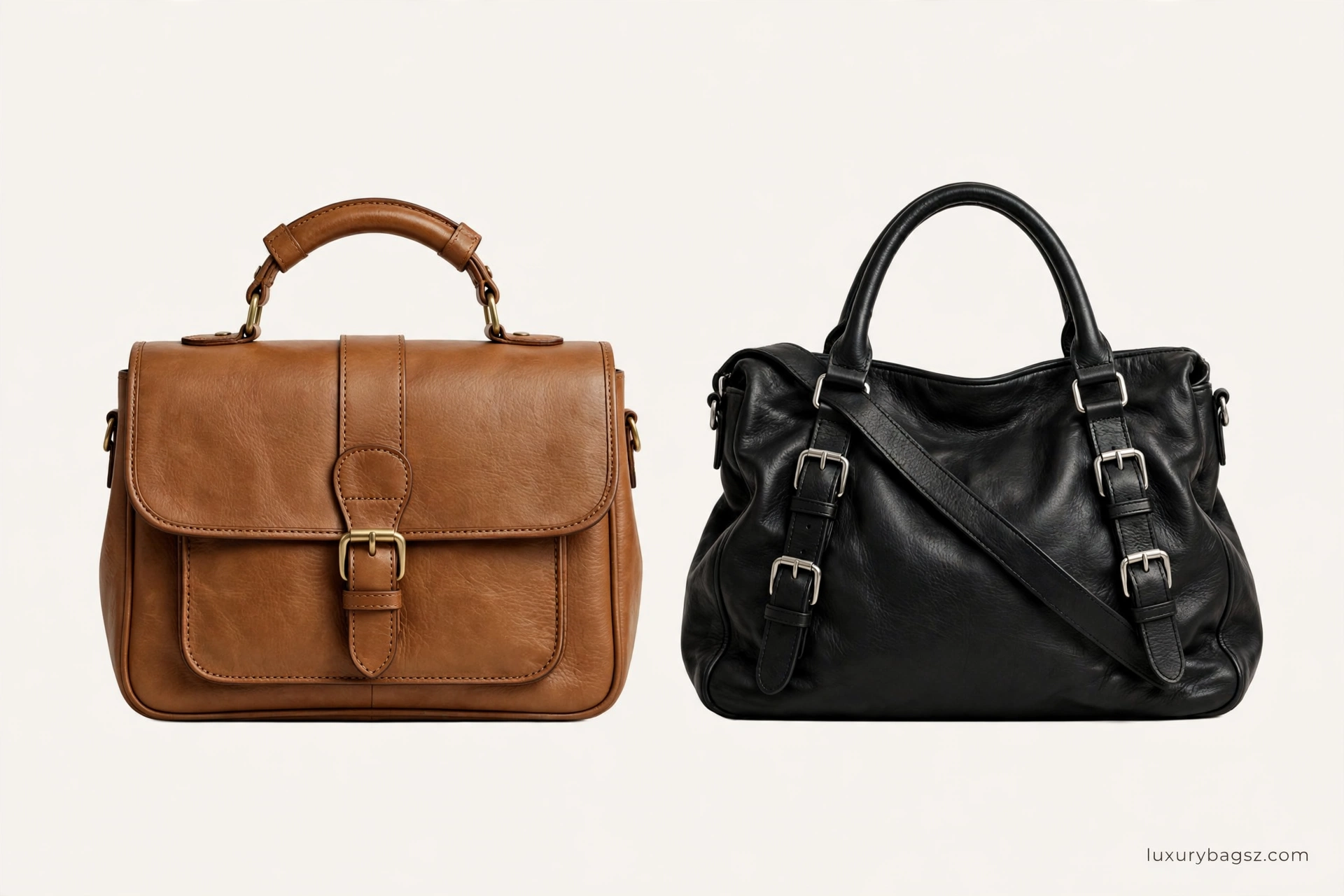
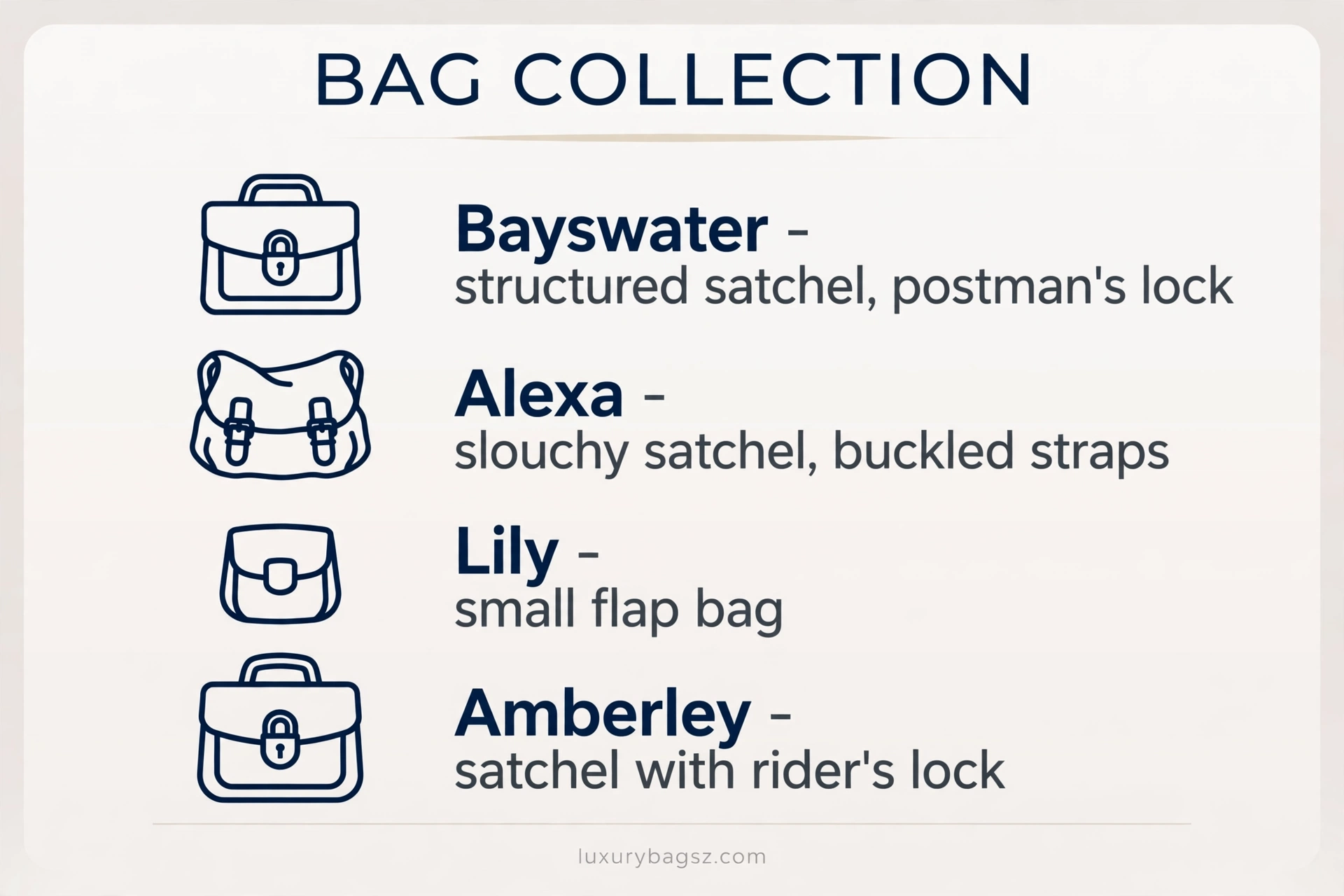
Choosing between Mulberry's icons comes down to how you carry. The Bayswater is the structured workhorse: a top-handle satchel with a postman's lock, a roomy interior and a shape that holds its form. It suits work, travel and anyone who wants one bag for everything. The Small and Mini versions keep the look with less bulk.
The Alexa is the relaxed alternative: slouchier, softer and worn with a shoulder strap, with buckled straps and a briefcase echo. It suits casual days and crossbody wear, but it will not hold its shape like a Bayswater. The Lily is the evening option, a small flap bag with a chain strap, while the Amberley offers a satchel with a rider's lock for buyers who want structure with a slightly equestrian feel.
Leather choice matters as much as shape. Classic grain leather is the safest bet for daily use: it resists scratches and ages with a patina. Smooth or suede finishes look dressier but mark more easily. Whatever you choose, try the bag loaded, not empty, since Mulberry's sturdy leathers feel different with weight in them.
Buying Mulberry Pre-Owned: What to Check
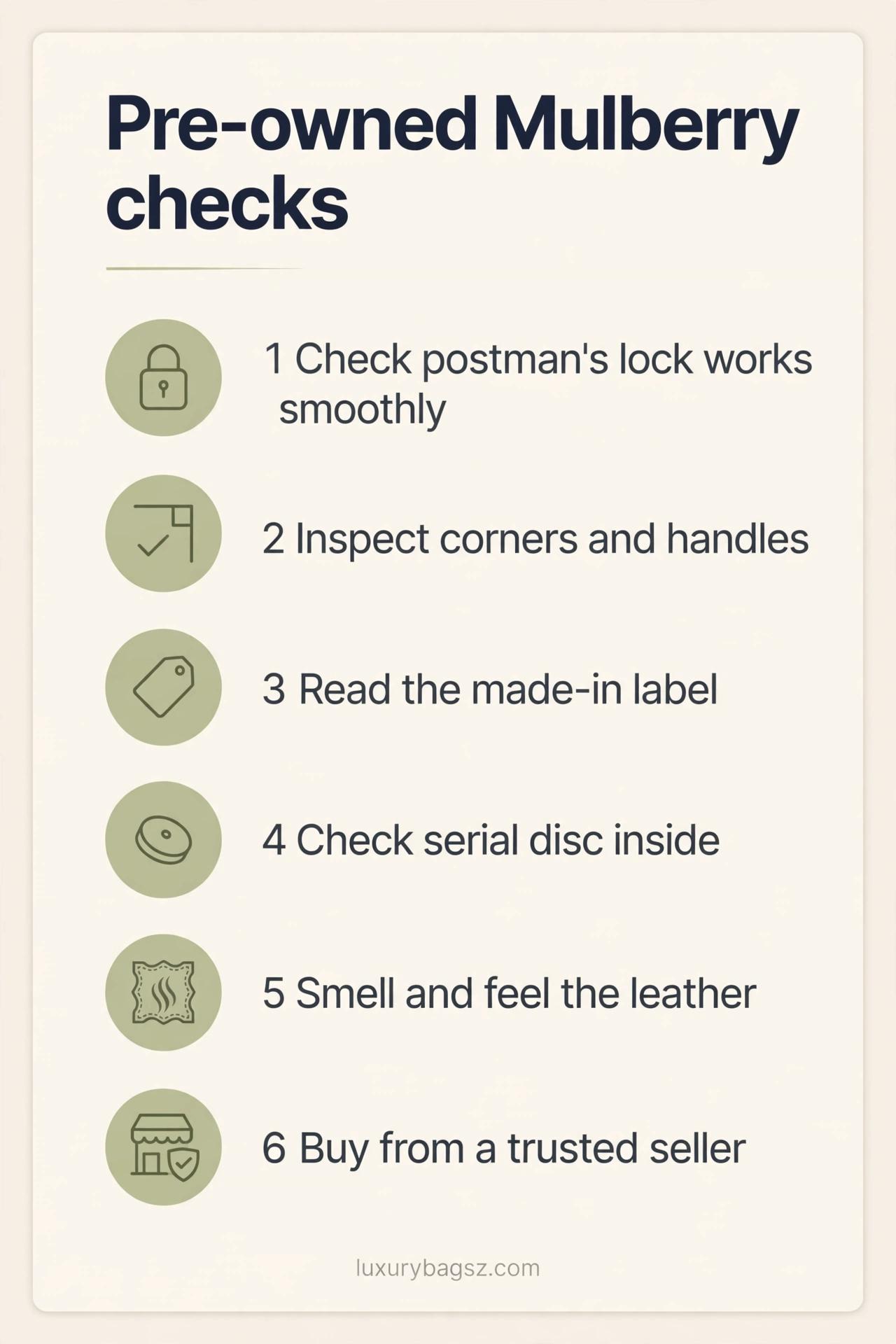
Mulberry is one of the best pre-owned buys in British luxury, because the bags are common, repairable and well documented. Start with the postman's lock: it should turn smoothly and close firmly. Then inspect corners, handles and base edges, where daily wear shows first, and check the interior for stains, pen marks and a readable serial disc.
Read the made-in label and compare it with the style's era, since production moved between Somerset and other sites over the years. Smell and feel the leather: genuine Mulberry grain leather feels thick and supple, while fakes often feel plasticky or thin. Our pre-owned authentication guide explains the wider checks, and our safe pre-owned buying guide covers sellers, returns and payment safety.
Condition language matters too. Our condition grades guide decodes what pristine, excellent and fair really mean, and our resale value factors guide explains why completeness and colour move prices. For care after purchase, our leather bags and shoes care guide covers cleaning and storage. If you are deciding between used and new, our vintage vs new bags guide weighs the trade-offs honestly.
Three mistakes deserve special attention. First, trusting a single photograph: corners, handles and the base carry the wear, so ask for close images of all three before paying. Second, ignoring the lock: a postman's lock that sticks or wobbles may need workshop attention, and that cost belongs in your offer. Third, buying a seasonal colour at a classic price: bright and limited colours resell more slowly than black, oak and tan, so a fashion colour should cost less pre-owned, not the same.
Mulberry vs Its Rivals: The Case for British Restraint
Mulberry's rivals clarify its appeal. Against the great French houses, Mulberry offers value and understatement. A Bayswater costs far less than a comparable Hermès or Chanel bag, and it carries none of their waiting-list theatre. What you give up is status signalling: no one crosses a room to admire a Mulberry, but no one mistakes it for a trend purchase either. For buyers who want a bag for life rather than a bag for attention, that trade is attractive.
Against Aspinal of London, its closest British rival, Mulberry wins on heritage and factory story. Aspinal makes handsome, well-priced bags, but it cannot match Mulberry's Somerset factories, apprenticeship programme or fifty-year archive. Against Coach and other accessible luxury names, Mulberry wins on leather quality and repairability, though it loses on price breadth and American scale.
Against Burberry, the contrast is identity. Burberry sells a global British fantasy built on trench coats and check; Mulberry sells a smaller, more rural British reality built on grain leather and country pursuits. Burberry's bags often follow fashion's lead, while Mulberry's classics deliberately ignore it. That stubbornness is why a ten-year-old Bayswater still looks right and a ten-year-old fashion bag often does not.
Mulberry also deserves credit for its resale infrastructure. Few houses run their own trade-in service as the Exchange does, and that service supports pre-owned prices in a way that benefits original buyers. When you buy a Mulberry, you are buying into a system that wants the bag back, repairs it and sells it again. That circular habit is both sustainable and financially sensible.
So what should you buy first? For a workhorse, a medium Bayswater in oak or black grain leather is the default answer, and it has been for twenty years. For a softer daily bag, the Alexa suits crossbody wear and casual style. For evenings, the Lily is the obvious choice. In every case, choose classic colours, check the lock, and carry it hard: Mulberry bags look better with a little wear, and their story is written in patina, not in pristine storage.
Repair deserves a final word, because it is where Mulberry's factory heritage pays off most directly. The house's workshops can restore scuffed corners, replace worn handles, repair postman's locks and refresh edges, often for less than buyers expect. Before replacing a damaged bag, ask what a repair would cost and how long it would take, since a restored classic in a popular colour can look and feel close to new. Keep the dust bag and any paperwork with the bag, since completeness helps both repair identification and resale. A Mulberry that has been repaired well is not a compromised bag; it is a bag with a longer story, and in this brand, a longer story is a selling point.
Prices, Sizes and What to Expect to Pay
Mulberry pricing has risen steadily since the Bayswater launched at £495 in 2003, and classic styles now sell in four figures in pounds. The Small Bayswater and Mini versions offer lower entry points than the regular satchel, while the Zipped Bayswater and North South tote suit buyers who want shoulder carry or extra capacity. The Alexa sits in a similar range, with smaller versions below the full satchel, and the Lily and Amberley give evening and structured alternatives at comparable levels.
Size choice should follow your daily load. A regular Bayswater swallows a laptop, book and pouch with room to spare, while the Small suits a tablet and essentials and the Mini suits evenings and light days. Try the bag loaded in store, since Mulberry's sturdy grain leather feels different with weight, and check the shoulder strap drop if you plan to wear it crossbody.
Pre-owned prices reward classic colours and full sets. Black, oak and tan Bayswaters in good condition with dust bags and paperwork sell fastest, while bright seasonal colours and heavily worn corners sell for less. The Mulberry Exchange gives a useful price anchor: if a private seller asks far more than the Exchange would credit for a similar bag, the listing deserves scrutiny.
Frequently Asked Questions
When was Mulberry founded?
Mulberry was founded in Somerset, England, in 1971 by Roger Saul and his mother Joan, starting with buckled leather belts.
Who designed the Mulberry tree logo?
Roger Saul's sister designed the mulberry tree logo, inspired by the mulberry trees Roger passed on his way to school.
What is the Mulberry Bayswater?
The Bayswater, launched in 2003, is Mulberry's structured top-handle satchel with a postman's lock, named for the west London neighbourhood.
What is the Mulberry Alexa?
The Alexa is a slouchy satchel with buckled straps, inspired by Alexa Chung's vintage Mulberry briefcase and designed under Emma Hill around 2009–2010.
Are Mulberry bags made in England?
More than half of Mulberry's bags are made in its two Somerset factories, the Rookery and the Willows, and the house is Britain's largest maker of luxury leather goods.
What is the Mulberry Exchange?
The Mulberry Exchange, launched in 2020, lets customers trade in old Mulberry bags for credit towards new or pre-loved styles.
How much does a Bayswater cost?
Classic Bayswater styles now sell in four figures in pounds, with smaller and mini versions lower. Launch pricing in 2003 was £495, showing how far the market has moved.
How do I spot a fake Mulberry bag?
Check the postman's lock action, corner and handle wear, made-in label, serial disc, leather smell and feel, and stitching quality. Doubtful bags deserve expert checks.
Is Mulberry a luxury brand?
Yes. Mulberry is a British luxury leather goods house, positioned below the most expensive French and Italian names but firmly in the luxury market on price and craft.
Does Mulberry hold its value pre-owned?
Classic styles in popular colours with full sets resell well, especially Bayswater and Alexa, though condition and completeness matter more than the name alone.
Final Verdict: The Bag That Outlasted the Trend Cycle
Mulberry's triumph is that it never tried to be Paris or Milan. A kitchen-table belt business became a Somerset factory, a factory became an It-bag phenomenon, and the It bags became classics because they were built to be carried, not just photographed. Buy a classic grain-leather style, check the lock and corners, and you will own a piece of British luxury that earns its keep every day. Choose oak, black or tan for your first bag, carry it hard, and let the patina write the next chapter. Mulberry bags are not meant to be admired from a shelf; they are meant to be taken to work, to town and to the countryside, which is exactly where their story began.






