

Messika High Jewellery Brand: The Move Diamonds, History and Buying Guide
Messika in Brief: Diamonds Meant to Move, and to Be Worn Daily
Messika is a Paris jewellery maison founded in 2005 by Valérie Messika, daughter of renowned diamantaire André Messika. In two decades it has grown from a new name on the Paris scene into a modern high jewellery house, known above all for one idea: diamonds that move.
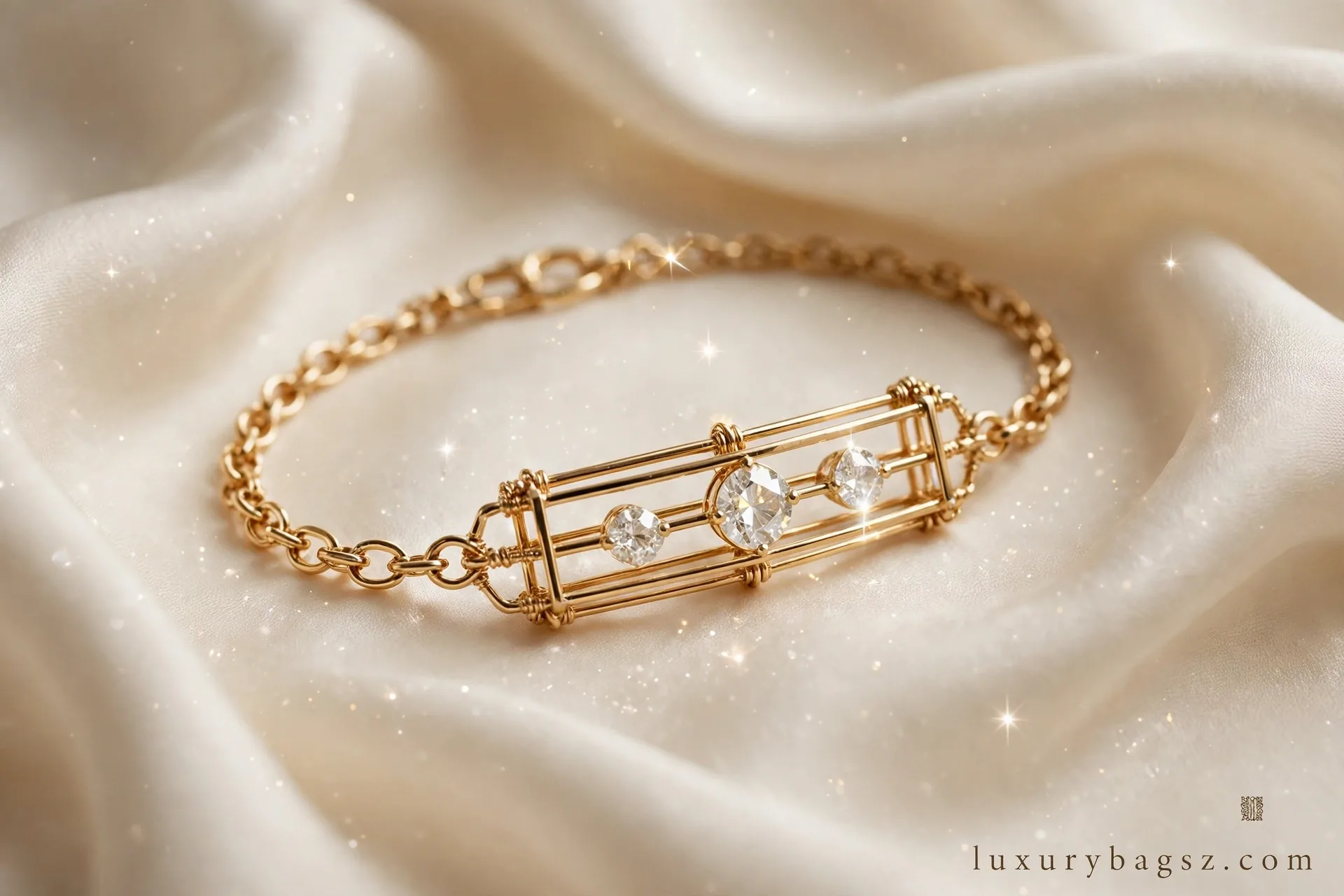
The direct answer is simple. If you want diamonds that feel light, modern, and wearable every day, rather than locked away for special occasions, Messika is one of the first houses to consider. Its signature Move design places diamonds in a gold cage so they slide freely, a small mechanical idea that changed how a diamond bracelet or necklace feels on the body.
This guide covers the family story, the Move concept, the main collections, the high jewellery runway shows, prices, care, and buying checks. Where sources differ, for example on store counts across years, we note the range rather than presenting one figure as timeless.
Key Takeaways
- Messika was founded in Paris in 2005 by Valérie Messika, daughter of diamantaire André Messika.
- The Move collection, launched in 2007, features diamonds that slide inside a gold cage.
- The three moving diamonds are said to symbolise yesterday, today, and tomorrow.
- The first Paris boutique opened in 2013, the same year as the first high jewellery collection.
- Messika presents high jewellery during Paris Fashion Week, as the only high jewellery maison on the official fashion calendar, according to the house.
- Smaller pieces start at accessible fine-jewellery prices, while high jewellery pieces reach into the millions.
A Diamond Childhood in Paris
Valérie Messika grew up surrounded by diamonds. Her father, André Messika, was a highly respected diamond trader from the 1970s, and as a child she played with loose stones on the kitchen table and travelled with him to learn the trade. That upbringing gave her an instinct for stone quality that most designers learn only later, if at all.
She did not go straight into jewellery design. After studying marketing and communications, she worked in marketing at Chanel in 1999, where she learned the importance of a house's identity and story. When her father encouraged her to join the diamond business, she learned from a master, then began sketching her own designs in 2003, when her father became a sightholder in Israel.
Her aim was deliberate. She did not want to copy the heavy, formal diamond jewellery of traditional Place Vendôme houses, nor to make cheap fashion jewellery. She wanted edgy, light pieces that a woman would wear day and night, with diamonds as an everyday companion rather than a vault item. That idea, formed before the brand launched, still defines Messika today.
Move: The Idea That Built the House
Move, created in 2007, is Messika's signature. Diamonds sit in closed settings inside a gold capsule or cage, and they drift from one side to the other as you move. The effect is subtle but unmistakable: light catches the stones differently with every gesture, and the piece feels alive rather than fixed.
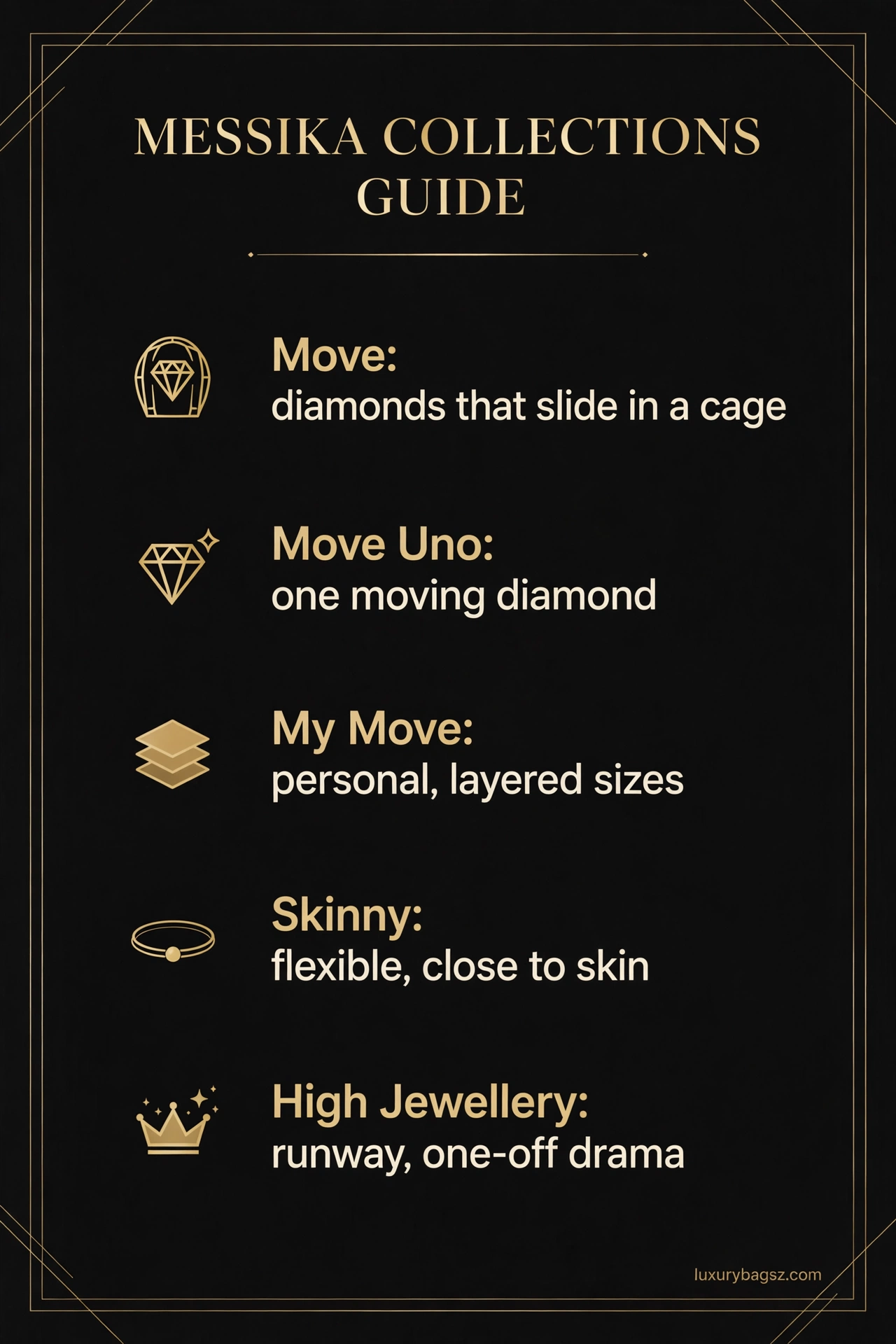
The symbolism is part of the appeal. The classic Move design uses three diamonds, said to represent who you were, who you are, and who you are going to be. That story makes Move a natural gift for milestones: graduations, birthdays, anniversaries, and weddings. It also explains why Move has grown into more than 270 pieces across many variations, including Move Classic, Move Uno, My Move, and So Move.
For everyday wear, Move works because it is light. Traditional diamond jewellery can feel heavy and formal, but Messika's fine jewellery lines are designed to sit close to the skin and move with you. Our guide to everyday diamond jewellery covers the same principle more broadly: the best daily diamond piece is the one you forget you are wearing until it catches the light.
Skinny, My Twin and the Everyday Collections
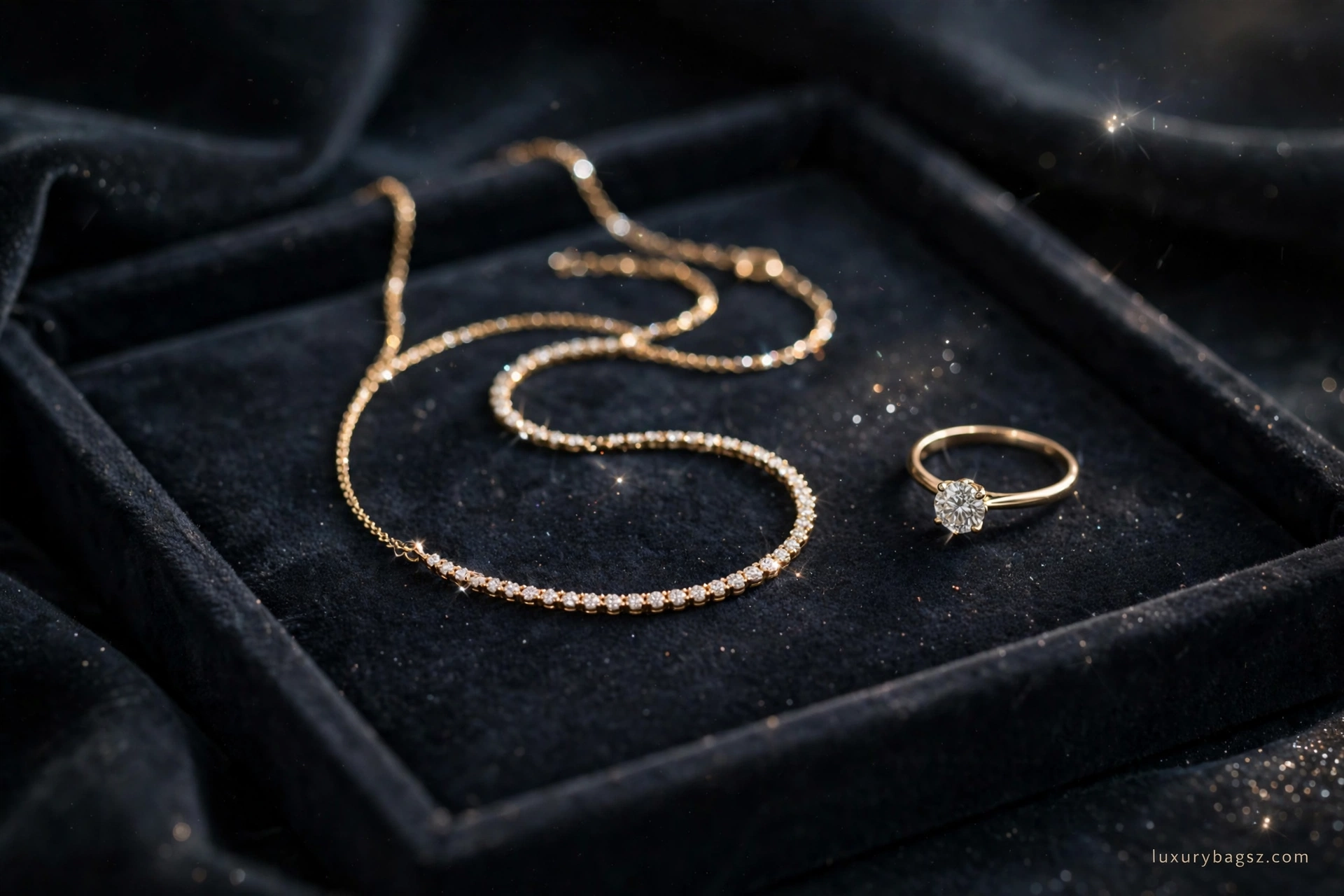
Before Move became a high jewellery icon, Messika built its name on comfort. The Skinny line, one of its earliest successes, uses a flexible structure, sometimes described as elastic gold, so a bracelet slips on like a hair tie and sits softly on the wrist. Tiny diamonds are threaded on a flexible base, giving sparkle without stiffness.
My Twin combines an emerald-cut diamond with an oval-cut diamond, pairing depth with radiance in a single design. Move Romane, named for one of Valérie Messika's daughters, revisits Move with openwork lines, parallel gold and diamond pavé, and a bangle that has become a house staple. Move Link takes the sliding diamond into chain jewellery, with hoops, pendants, bracelets, and necklaces that feel more urban and gender-free.
Together, these collections show Messika's range. You can start with a small Move Uno pendant or bracelet, layer My Move pieces in different sizes, and later add a bolder So Move or Move Link piece. The house designs for layering, so mixed sizes and gold colours are intentional, not a mistake.

High Jewellery on the Runway
Messika's high jewellery work is where the house shows its ambition. The Paris atelier was set up in 2015, and each year during Paris Fashion Week the maison presents a bold high jewellery collection on the runway. The house describes itself as the only high jewellery maison on the official fashion calendar, a claim that underlines its fashion-world approach to a traditionally quiet trade.
High jewellery pieces are one-off or very limited creations, often built around exceptional stones. In 2020 and 2021 Valérie Messika co-created high jewellery collections with Kate Moss, and in 2017 Gigi Hadid designed two collections for the brand. For the twentieth anniversary in 2025, the house launched Terres d'Instinct, inspired by travels in Namibia, alongside Move Ciselé, which reworks Move designs in hand-chiselled gold.
For most buyers, high jewellery is inspiration rather than a purchase. Its value is that it shows what the atelier can do with scale, colour, and movement, and those ideas filter down into fine jewellery lines. If you attend a runway show or view a high jewellery piece, look for movement, lightness, and wearability, the same qualities that define the smaller Move pieces.

The Timeline and the Business
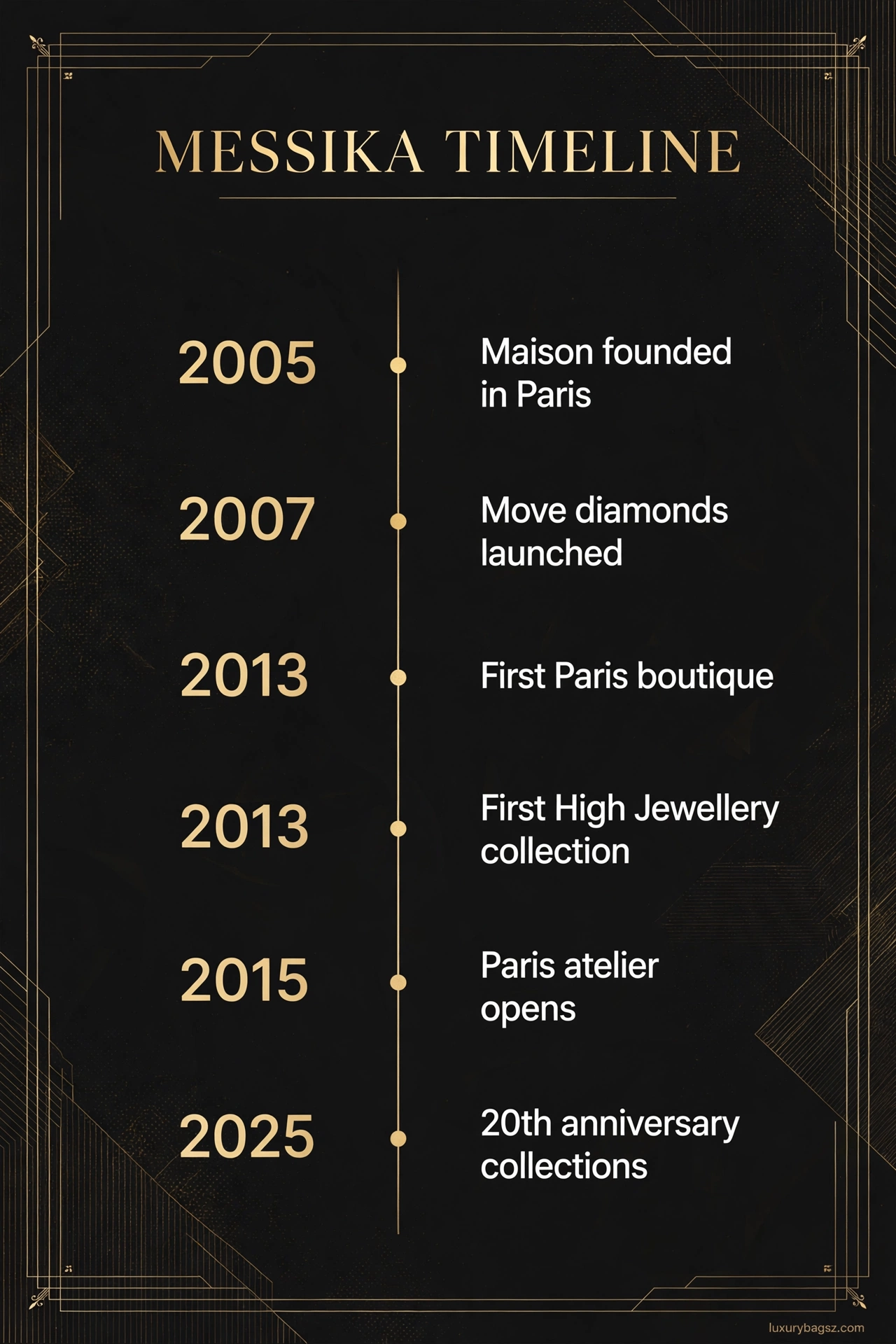
Messika's growth has been fast by high jewellery standards. Founded in 2005, it launched Move in 2007, opened its first Paris boutique on Rue du Faubourg Saint-Honoré in 2013, and launched its first high jewellery collection the same year. The Paris atelier followed in 2015, and international expansion brought boutiques to New York, London, Dubai, and beyond.
Store counts vary by source and year, so treat them as a snapshot, not a fixed fact. The house has described itself as present in more than seventy countries, with more than 570 points of sale in eighty-five countries in some materials. The difference reflects boutiques versus wholesale points of sale, and counts change as new stores open. What matters for buyers is simpler: Messika is now a global maison with flagship stores in major cities, not a small Paris workshop.
Messika remains an independent, family-run maison, which the founder presents as a source of creative freedom. That independence is unusual among large jewellery houses, many of which belong to luxury groups, and it helps explain the house's willingness to experiment with runway shows, celebrity collaborations, and modern, lighter designs.
Choosing a Messika Piece: Gold, Size and Occasion
Start with gold colour. Messika works in yellow, white, and rose gold, and the right choice depends on your skin tone, your existing jewellery, and how often you will wear the piece. White gold reads cooler and more discreet, yellow gold reads warmer and more classic, and rose gold sits between them with a softer, modern feel.
Size matters more than carat weight for daily wear. A small Move Uno bracelet or pendant is easier to wear every day than a large So Move piece, which makes a stronger statement but needs a simpler outfit around it. Try pieces on in a boutique where possible, and check how the diamonds move when you walk and gesture. A Move piece that looks still in a photograph should come alive on the wrist.
For gifts, Move is the safest starting point, because its symbolism is clear and its sizes range from delicate to bold. For a personal purchase, consider what you already own. If you wear mostly small, fine jewellery, a Skinny or My Move piece will layer naturally. If you want one hero piece, a Move Romane bangle or a larger Move pendant may serve you better than several small ones.
Care, Cleaning and Storage
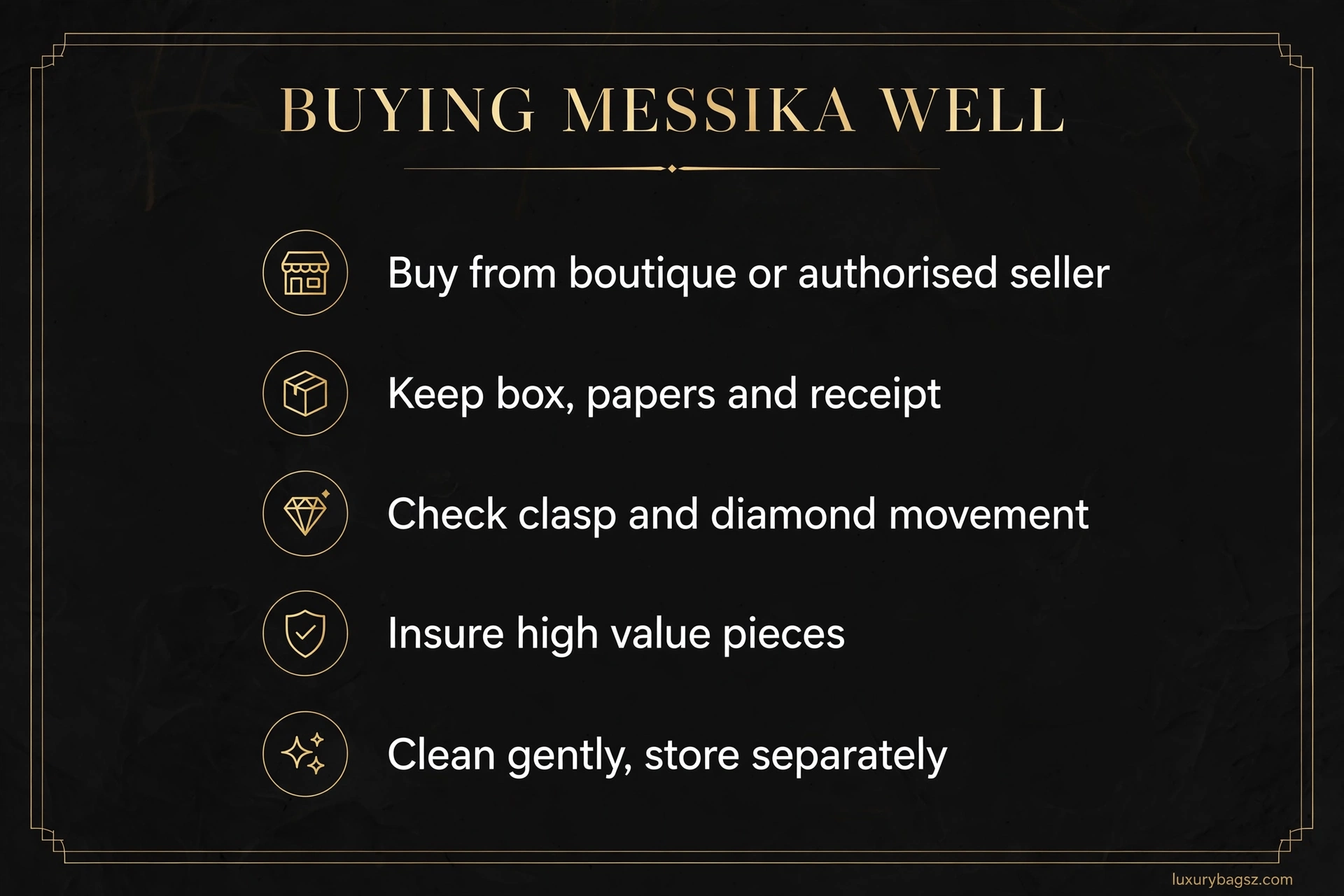
Messika fine jewellery needs gentle care. Clean gold and diamond pieces with warm water, mild soap, and a soft brush, then dry with a soft cloth. Our guide on how to clean gold and diamond rings covers the same method, and our guide to care for gemstone jewellery explains which stones should never be soaked or exposed to harsh chemicals.
Store pieces separately, in their pouches or boxes, so diamonds do not scratch other jewellery or each other. Diamonds are hard, but gold is soft, and a diamond can scratch a gold bracelet in the same box. Check clasps and the Move cage regularly, especially for bracelets worn daily, and have a jeweller inspect prongs and settings once a year for high-value pieces.
Avoid wearing fine diamond jewellery for heavy manual work, gardening, or swimming in chlorinated water, which can affect gold alloys over time. Insure valuable pieces, keep receipts and certificates, and photograph your collection for insurance records. Small care habits protect both beauty and resale value.
Prices, Value and Pre-Owned Buying
Messika prices span a wide range. Smaller fine jewellery pieces have been reported from around £640 upwards, mid-range Move pieces sit in the low thousands, and high jewellery pieces sell for very large sums, sometimes millions for exceptional stones. Always check current boutique prices, because gold and diamond prices move, and collections change.
Resale for modern fine jewellery rarely matches retail, and Messika is no exception. Classic Move pieces in good condition, with box and papers, hold up better than trend-led or heavily personalised pieces. Before selling, read our guides on how to price designer jewellery for resale and how to resell luxury jewellery, which cover condition, completeness, and realistic pricing.
When buying pre-owned, buy from a boutique, authorised seller, or reputable reseller. Check the hallmarks, the smoothness of the Move mechanism, the clasp, and the overall finish. Ask for box, papers, and receipt, and compare against current boutique photos. If a high-value piece lacks paperwork or the price is far below market, seek an independent appraisal before paying.
Frequently Asked Questions
1. Who founded Messika? Valérie Messika founded the maison in Paris in 2005. She is the daughter of diamantaire André Messika.
2. What is Messika known for? The Move collection, whose diamonds slide freely inside a gold cage, and light, modern diamond jewellery designed for everyday wear.
3. When was Move launched? Move was created in 2007 and has since grown into more than 270 pieces across many variations.
4. What do the three Move diamonds mean? They are said to symbolise yesterday, today, and tomorrow, making Move a popular milestone gift.
5. Is Messika a high jewellery house? Yes. Messika makes fine jewellery and high jewellery, presenting high jewellery collections during Paris Fashion Week from its Paris atelier.
6. Where is the first Messika boutique? The first Paris boutique opened in 2013 on Rue du Faubourg Saint-Honoré, the same year as the first high jewellery collection.
7. How much does Messika jewellery cost? Smaller pieces start in the high hundreds of pounds, mid-range Move pieces run into the thousands, and high jewellery pieces can reach millions.
8. Can you wear Messika diamonds every day? Yes. The house designs Move, Skinny, and My Move pieces to be light, flexible, and comfortable for daily wear.
9. How do you clean Messika jewellery? Use warm water, mild soap, and a soft brush, dry with a soft cloth, and store pieces separately so diamonds do not scratch other jewellery.
10. Is pre-owned Messika worth buying? It can be, if the piece is a classic Move design in excellent condition with box and papers. Check the mechanism, clasp, and seller reputation first.
Conclusion: Diamonds That Move With You
Messika succeeded by asking a simple question: why should diamonds sit still? From a childhood among loose stones to a Paris maison in 2005, Valérie Messika built a house where diamonds slide, sparkle, and fit into real life. Move made that idea famous, Skinny made it comfortable, and high jewellery gave it drama.
Buy Messika when you want diamonds you will actually wear, not admire from a box. Start with a Move piece that suits your daily life, care for it gently, keep its papers, and let its movement do what no static stone can: catch the light every time you move.






