

Loro Piana Brand Guide: Cashmere, Vicuña and the Summer Charms Walk Loafers
Loro Piana in Brief: The Quietest Luxury, Felt Before It Is Seen
Loro Piana is an Italian luxury house built on rare natural fibres, not logos. Founded as a textile business in the early twentieth century, with family wool trading reaching back to the early 1800s in northern Italy, it became famous for cashmere, vicuña, and exquisitely soft knitwear, coats, and shoes.
The direct answer to the question most shoppers ask is this: Loro Piana is worth considering when you care more about how a garment feels and lasts than how loudly it announces itself. Its Summer Walk loafers, including the Summer Charms Walk version with small charm details, have become the most visible symbol of that idea, even though the house built its name on fabric long before footwear.
This guide explains the history, the fibres, the key products, sizing, styling, care, and the pre-owned checks that matter. Where sources disagree, for example on whether a Summer Walk is lined or unlined, we flag it, because the answer varies by version and year.
Key Takeaways
- Loro Piana traces its textile roots to northern Italy, with the modern company associated with 1924 and family wool trading from the early 1800s.
- Cashmere and vicuña are the house's signature fibres, prized for softness, warmth, and lightness.
- The Summer Walk is a soft suede slip-on loafer with a pale rubber sole, made in Italy.
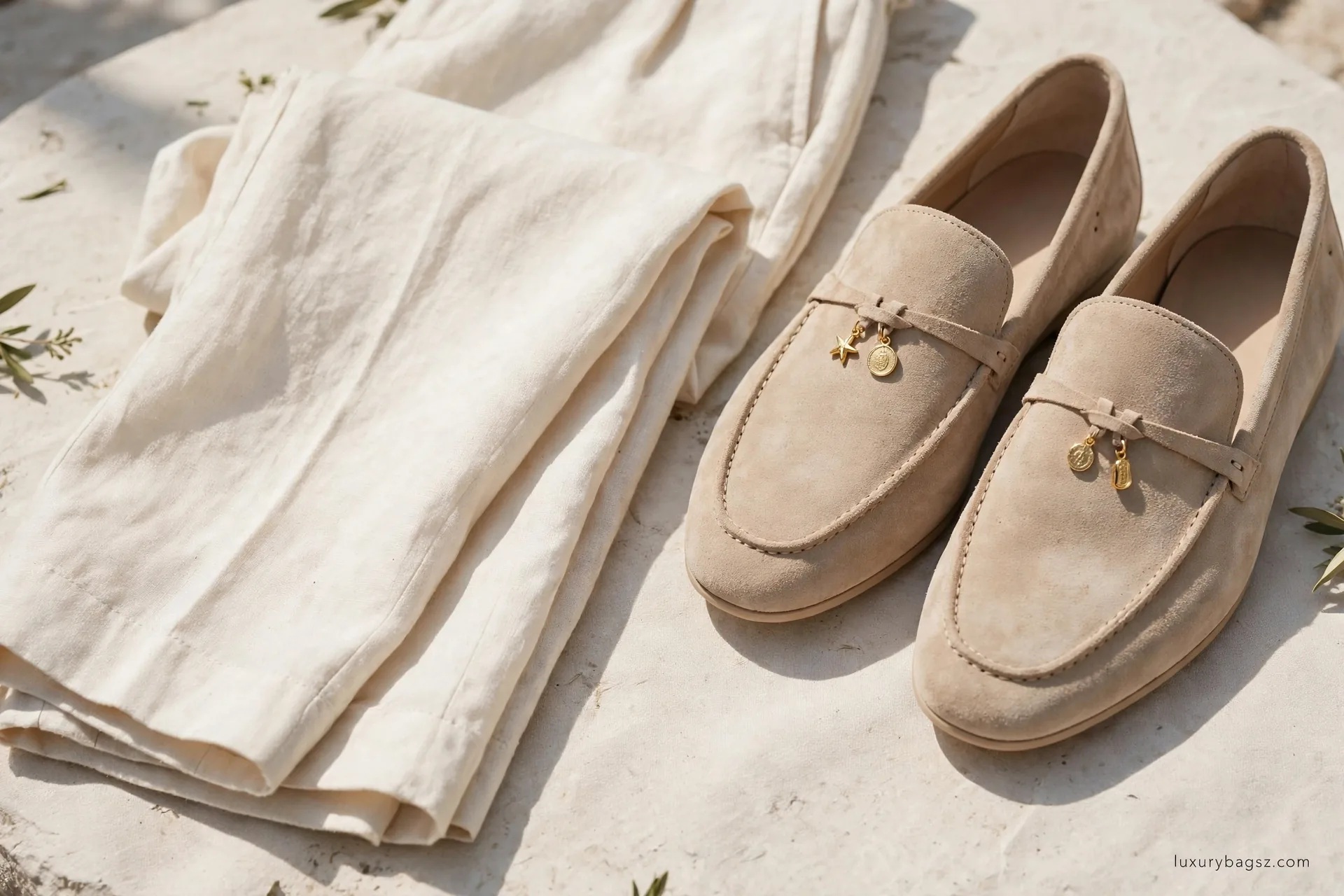
- The Summer Charms Walk adds knot details and small charm pendants to the same easy loafer idea.
- Prices for Summer Walk loafers sit around the thousand-dollar mark, with the Charms version listed by retailers around $1,025.
- Fit is often snug at first, suede softens with wear, and wide feet may need a size up.
From Wool Merchants to a Luxury House
The Loro Piana family traded wool in northern Italy from the early 1800s, and the company as a modern textile house is commonly dated to 1924. That long apprenticeship in fibre matters. Most fashion houses buy fabric; Loro Piana began by understanding it at source, from the animals and landscapes that produce the finest fleeces to the mills that turn them into cloth.
Under Pier Luigi Loro Piana and his brother Sergio, the house moved from supplying fine textiles to making its own clothing. Knitwear, outerwear, and tailored pieces followed, all carrying the same promise: no visible logo, no loud print, just material quality you notice when you touch it. That restraint is why the brand became shorthand for quiet luxury long before that phrase became a trend.
Today Loro Piana sells through its own boutiques, its official website, and a small number of luxury retailers. It is part of the LVMH group, which bought a majority stake in 2013, but the house has kept its low-key, fabric-first identity. If a Loro Piana piece shouts, it is probably not Loro Piana.
The Summer Walk and Summer Charms Walk, Explained
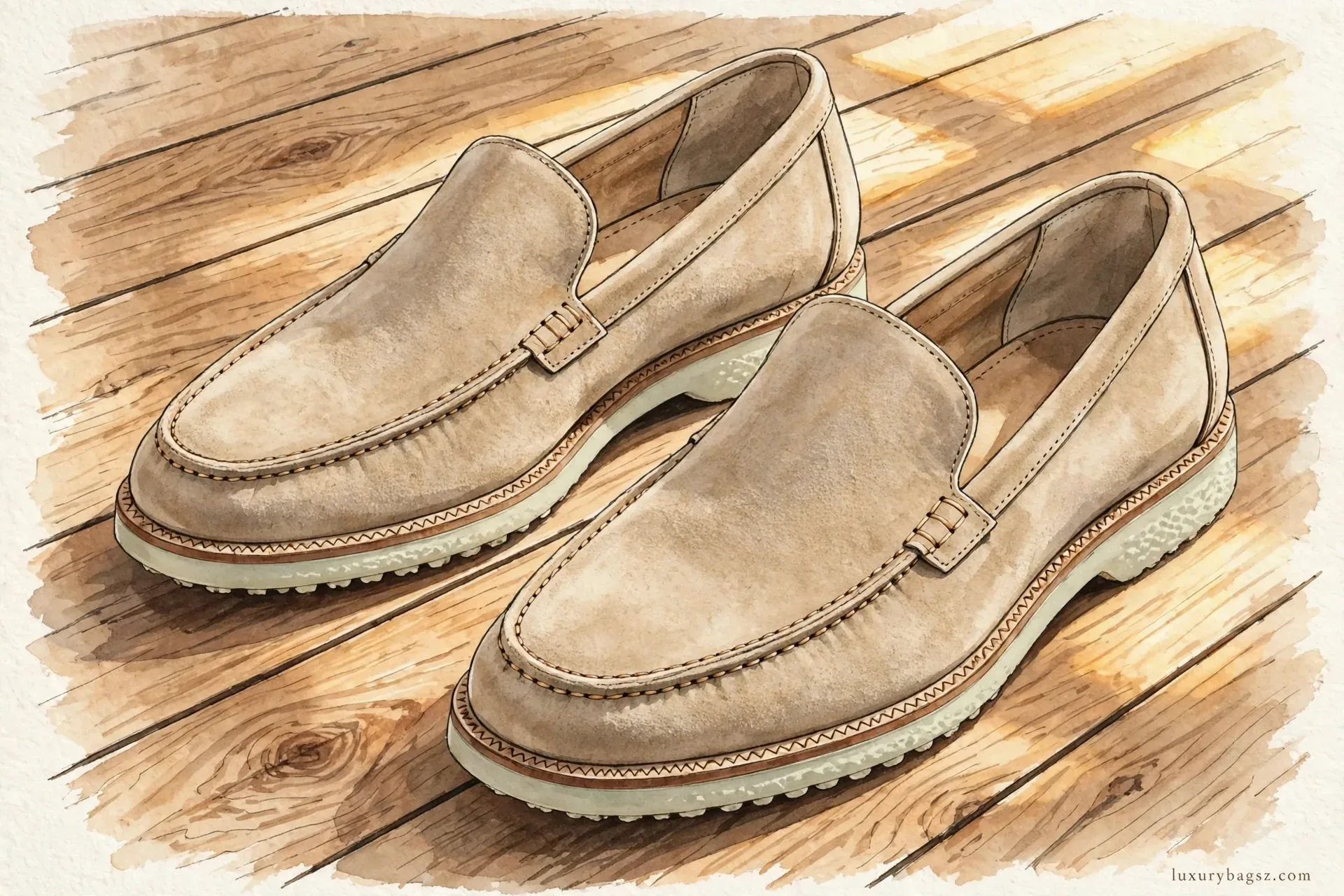
The Summer Walk is the house's most famous shoe: a soft suede slip-on loafer with moc stitching, a pale rubber sole, and almost no visible branding. It was designed for warm-weather ease, the kind of shoe you slip on for a coastal walk, a lunch, or a long day in a city where you still want to look polished. Reviewers consistently praise its softness and lightness, while also warning that it offers little arch support for very long walks.
The Summer Charms Walk builds on that base with playful details: a tapered apron toe, a notched vamp, knot accents, and small My Charms pendants. Retailer listings describe it in soft calf suede, with a cushioned footbed and a non-slip rubber sole carrying the house initials in relief. One retailer listing priced it at $1,025, while the plain Lady Summer Walk has been listed around $980. Prices vary by market, colour, and season, so treat any single figure as a guide, not a fixed retail price.
Do not confuse the two names. Summer Walk is the plain loafer family. Summer Charms Walk is the charmed, more decorative version. Open Walk, by contrast, is the boot and shoe family with a different, more structured character. Knowing which family you want saves you from paying a Charms premium for a plain shoe, or vice versa.
The Fibres: Cashmere, Vicuña, Wool and Linen
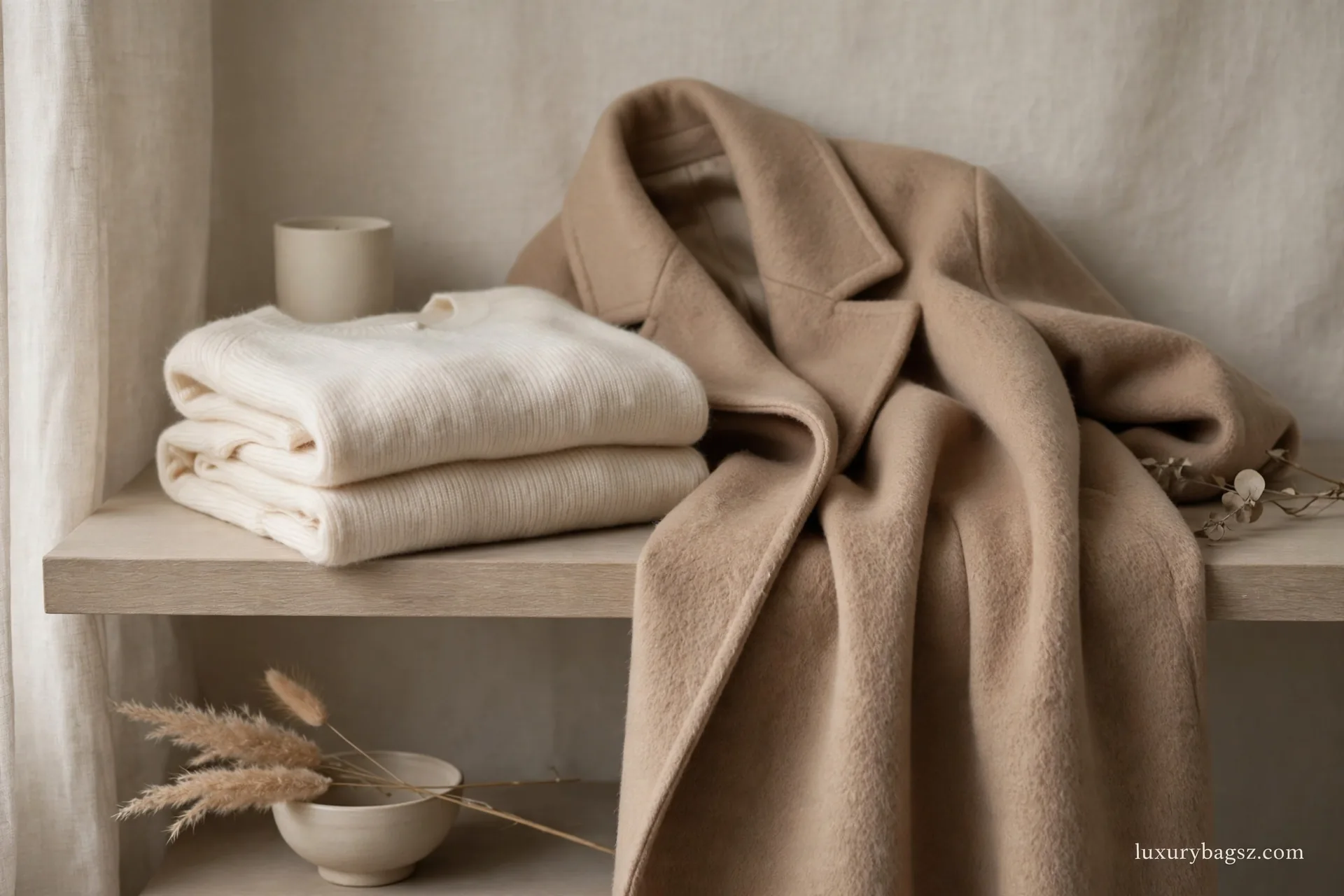
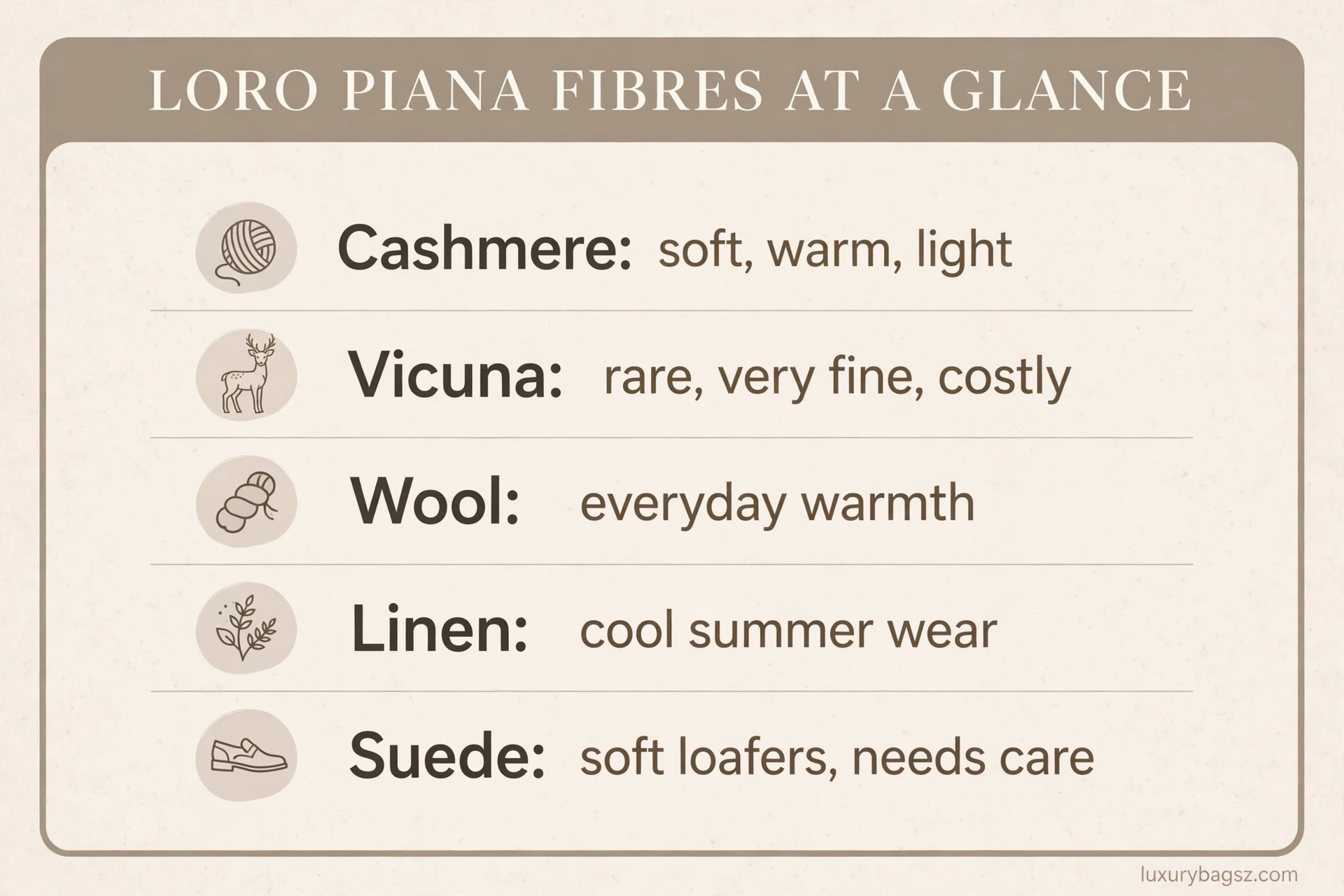
Loro Piana's reputation rests on fibre selection. Cashmere, from the soft undercoat of cashmere goats, gives warmth without weight, which is why a Loro Piana cashmere sweater feels lighter than it looks. The house is also famous for baby cashmere, taken from the first shearing of young goats, which is finer and rarer still.
Vicuña is the rarest fibre in the range. The vicuña is a small South American camelid whose fleece is exceptionally fine and warm, and whose numbers were once endangered. Vicuña garments are therefore very costly, sometimes several thousand dollars for a sweater, and they demand gentle care. If a vicuña price looks ordinary, be suspicious.
Everyday Loro Piana wool, linen, and cotton pieces follow the same logic: natural fibres, careful finishing, and colours drawn from nature rather than neon. The Roadster and Icer jackets, Storm System weatherproofed cashmere, and the Extra Pocket pouch and Bale bags all extend that logic beyond knitwear. Buy the fibre that suits your climate and your life, not the rarest name on the label.
How to Wear Loro Piana Without Looking Like a Costume
Loro Piana works best when the rest of your outfit stays calm. Pair Summer Walk loafers with pale linen trousers, cream cotton trousers, or well-cut jeans, and a simple shirt or knit. The shoes do the talking through texture, not colour, so loud prints and heavy branding elsewhere fight them. For guidance on the basics, our guide on how to wear loafers covers occasions and pairings, and our guide to loafers with jeans helps avoid the mismatched look that ruins many loafer outfits.
For knitwear, keep layers light and tonal. A cream cashmere crew neck over a white shirt, with navy or taupe trousers, looks expensive because the fabrics sit well together, not because any piece is trying to impress. Avoid stacking several Loro Piana statement pieces at once. One hero piece, whether a coat, a sweater, or the loafers, plus quiet companions, is the house's own styling logic.
Season matters. Suede loafers suit dry, warm weather and indoor-outdoor city days. They are not rain boots, and the pale sole will pick up city grime quickly. Save them for days when you can protect them, and keep a sturdier pair for wet or rough ground.

What Makes It Expensive, and What Does Not
Three things drive Loro Piana prices: fibre rarity, Italian making, and finishing. Rare fibres cost more at source, and the house's quality control rejects material that other makers would accept. Hand finishing, careful stitching, and small details such as the sole pattern and heel stamp add labour cost that is invisible in a photograph but obvious in the hand.
What does not drive the price is a logo. There is almost none, which is both the appeal and the risk. You are paying for material and making, so you must judge those things yourself. A genuine pair feels soft, even, and substantial, with a short, even suede nap and neat stitching. Coarse, dry, or patchy suede is a warning sign, even before you check any stamp.
Value is personal. If you wear loafers weekly through summer, the cost per wear may be reasonable. If you need strong arch support, walk long distances daily, or want a shoe you can wear in rain, a cheaper, more structured loafer may serve you better. Loro Piana is a comfort and fabric choice, not a durability champion for hard city miles.
Sizing and Fit: The Honest Guide
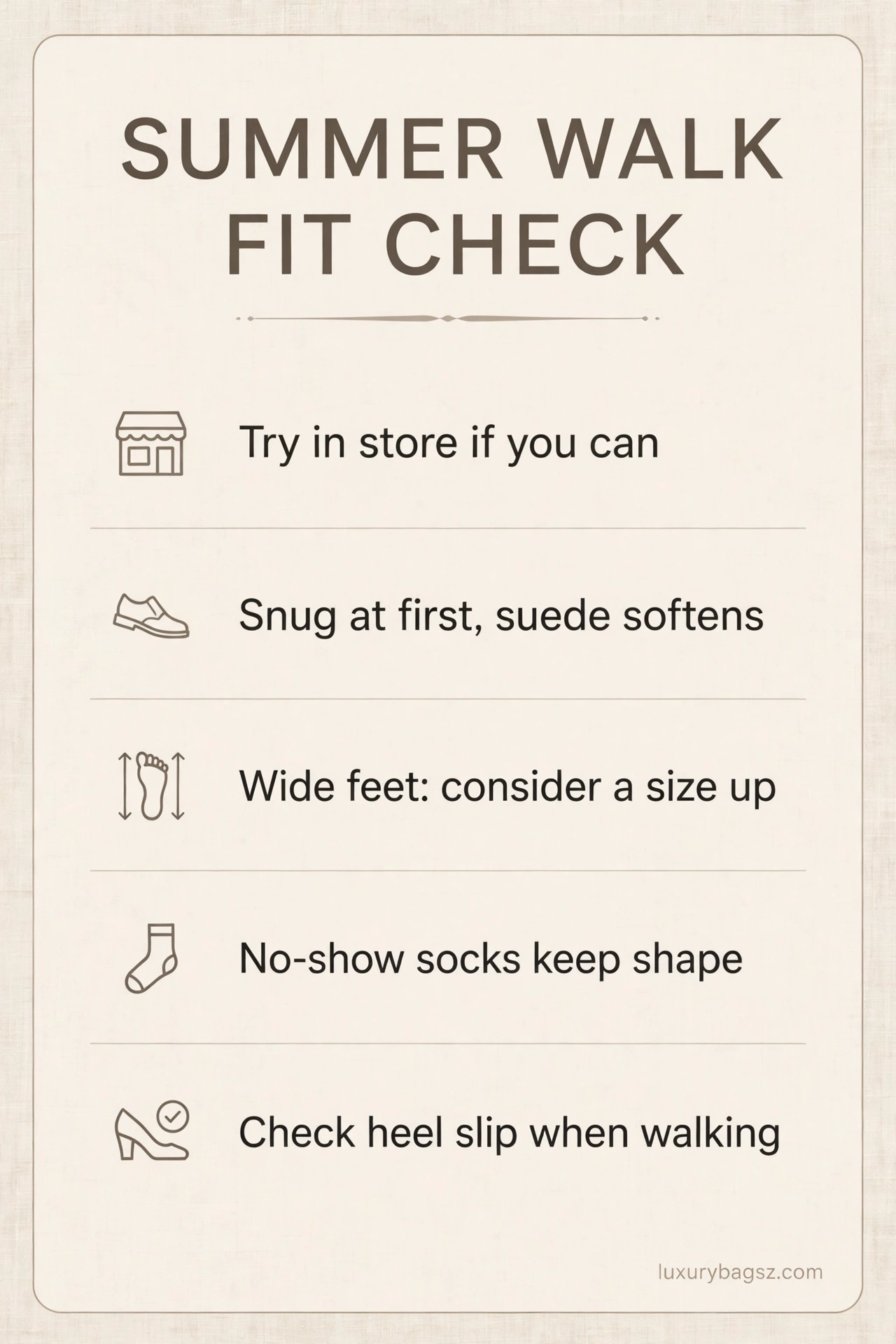
Loro Piana shoes generally fit true to Italian sizing, but many wearers report that Summer Walk loafers feel snug at first and soften with wear. Sizing guides and reviewers often suggest considering a size up for regular or wide feet, and trying the shoes in store where possible. Our guide on how loafers should fit explains heel slip, toe room, and break-in in more detail, and it applies directly here.
Check three things when trying them. First, heel slip: a little movement at first is normal for a slip-on, but your heel should not lift freely when you walk. Second, width: suede stretches, but it will not turn a narrow shoe into a wide one. Third, length: your toes should not press the front, because there is no lace to relieve pressure.
For the Charms version, check that the charms sit comfortably and do not catch on trousers or each other. For knitwear, note that Loro Piana cuts are often relaxed rather than tight, so size down only if you genuinely prefer a closer fit. When buying online, use the retailer's size chart, read recent reviews for your exact style, and keep the return option open.
Care: Suede, Cashmere and Storage
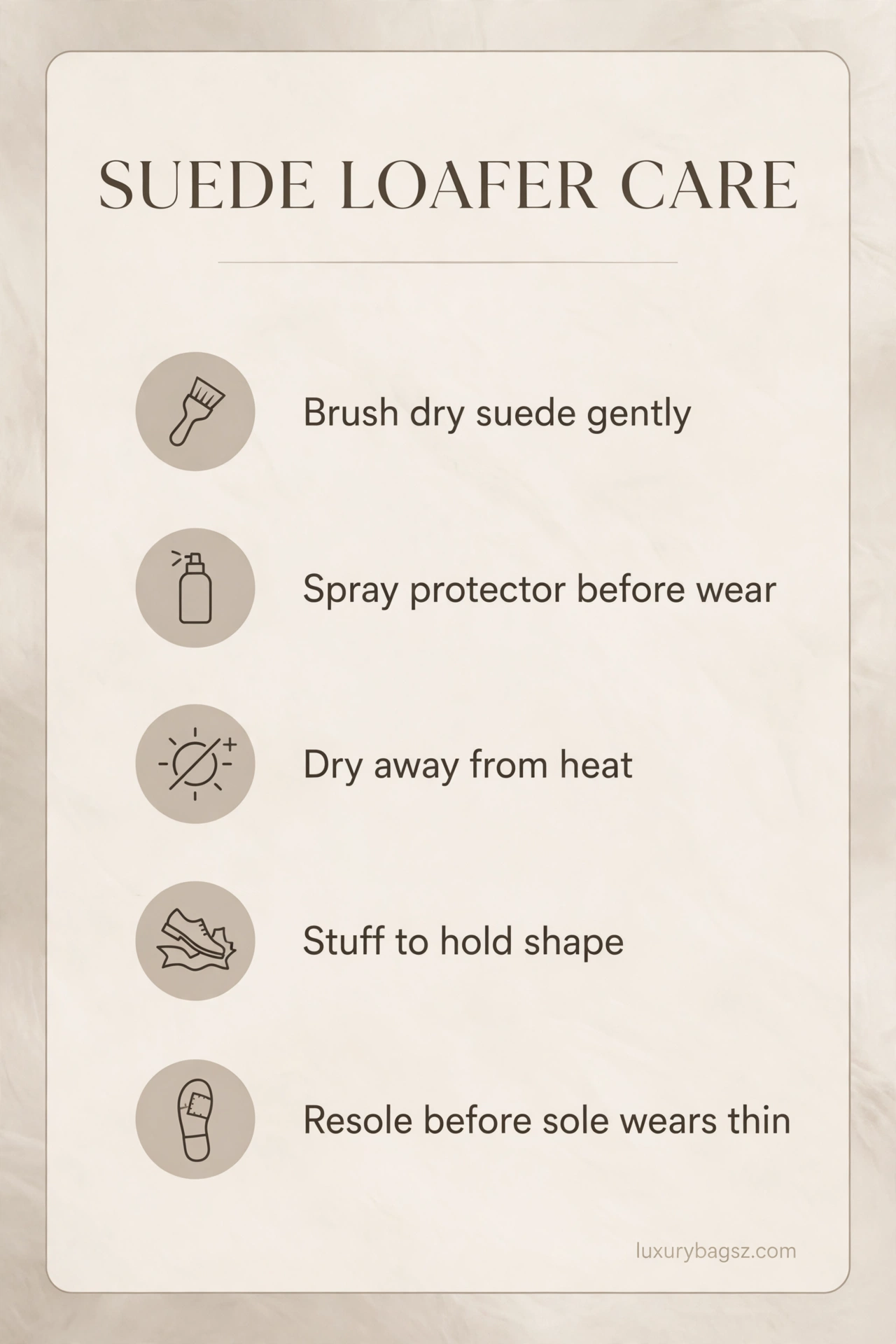
Suede loafers need dry-first care. Brush gently with a suede brush after wear, protect with a suede protector spray before first wear, and let wet shoes dry away from direct heat, stuffed with paper to hold their shape. Do not soak suede, and do not use ordinary leather cream on it. Resole before the sole wears through, because a worn sole can damage the upper.
Cashmere needs similar restraint. Hand wash or dry clean according to the care label, dry flat away from heat, and store folded, not hung, with moth protection. Never hang a heavy cashmere coat on a thin wire hanger, and never store knitwear damp. Small pills are normal for soft cashmere; remove them gently with a cashmere comb rather than pulling.
Keep dust bags and boxes for shoes and bags. They protect against light, dust, and scuffs, and they help resale later. Rotate your shoes, so no single pair bears every summer day, and give suede a rest day between wears so it can dry and recover its shape.
Buying Pre-Owned: Checks That Actually Work
Pre-owned Loro Piana is attractive because the style changes slowly, so a well-kept pair or sweater can look current for years. It is also risky, because the absence of a logo means fakes can look convincing in photographs. Buy from boutiques, authorised retailers, or reputable resale sellers with clear photos and a returns policy.
Check the suede, lining, and sole first. Genuine Summer Walk pairs are described by the house and by authentication guides as having a calfskin lining and leather insole, with a flat rubber sole carrying a monogram pattern and crest, not studs. The heel stamp and insole print should be crisp, but be aware that good fakes copy stamps closely, so stamps alone cannot clear a pair. Feel, weight, stitching, and seller history matter as much as any mark.
For knitwear, check fibre feel, gauge, seams, and care labels against known genuine pieces. For bags, use the same discipline as for any designer purchase, and read our guide on how to buy a pre-owned designer bag safely before paying. If the price is far below market, the photos are stock images, or the seller cannot answer basic questions about size and provenance, walk away.
Frequently Asked Questions
1. What is Loro Piana known for? Rare natural fibres, especially cashmere and vicuña, and quiet, logo-free luxury clothing, knitwear, coats, and shoes made in Italy.
2. When was Loro Piana founded? Family wool trading dates to the early 1800s in northern Italy, and the modern textile company is commonly dated to 1924.
3. What are Summer Walk loafers? Soft suede slip-on loafers with a pale rubber sole, made in Italy, designed for warm-weather comfort and understated elegance.
4. What is the difference between Summer Walk and Summer Charms Walk? Summer Charms Walk adds knot details and small charm pendants to the Summer Walk loafer idea, making it more decorative.
5. How much do Summer Walk loafers cost? Around the thousand-dollar mark, with retailer listings around $980 for the Lady Summer Walk and $1,025 for the Summer Charms Walk. Prices vary by market and season.
6. Do Loro Piana loafers run true to size? Generally true to Italian sizing, but many wearers find them snug at first. Wide feet may need a size up, and trying them in store is best.
7. Are Loro Piana shoes comfortable for long walks? They are soft and light, but they offer little arch support, so they suit city days and shorter walks better than very long hikes.
8. Is Loro Piana part of LVMH? Yes. LVMH bought a majority stake in Loro Piana in 2013, while the house kept its fabric-first identity.
9. How do you care for suede Loro Piana loafers? Brush dry suede gently, protect before wear, dry away from heat, stuff to hold shape, and resole before the sole wears thin.
10. Is pre-owned Loro Piana worth buying? Yes, if the condition is excellent and the seller is reputable. Check suede, lining, sole, stitching, and seller history, because stamps alone cannot prove authenticity.
Final Verdict: Buy the Fabric, Not the Fame
Loro Piana is at its best when you judge it by touch. The cashmere is lighter than it looks, the vicuña is finer than you expect, and the Summer Walk loafer slips on like a glove rather than a shoe. That is the whole proposition, and it is enough for buyers who value material over marketing.
Buy it when you will wear it often, care for it gently, and enjoy quiet quality. Skip it when you need hard-wearing support, rain-proof shoes, or a visible status signal. For the right buyer, the Summer Charms Walk is not just a loafer with charms. It is the most wearable expression of a house that has spent two centuries learning what good fibre feels like.






