

Alexander McQueen Brand Guide: History, Skull Clutches, Heroine and Jewelled Bags
Alexander McQueen in Brief: Tailoring, Theatre and a Skull
Alexander McQueen is a British luxury house founded in London in 1992 by Lee Alexander McQueen. It is known for sharp tailoring, theatrical runway shows, and accessories that carry the house's darker, romantic imagination into everyday life, above all the skull and knuckle hardware on its bags.
The direct answer for bag buyers is this: McQueen bags are statement pieces first and quiet classics second. If you want a bag that starts conversations, the Skull clutch, the Jewelled satchel, or the Jewelled hobo will do it. If you want a discreet work bag that blends in, another house may suit you better.
This guide covers the founder, the house after his death in 2010, the key bags, sizing and styling, and the pre-owned checks that matter most for hardware-heavy designs.
Key Takeaways
- Lee Alexander McQueen founded the house in London in 1992 after graduating from Central Saint Martins.
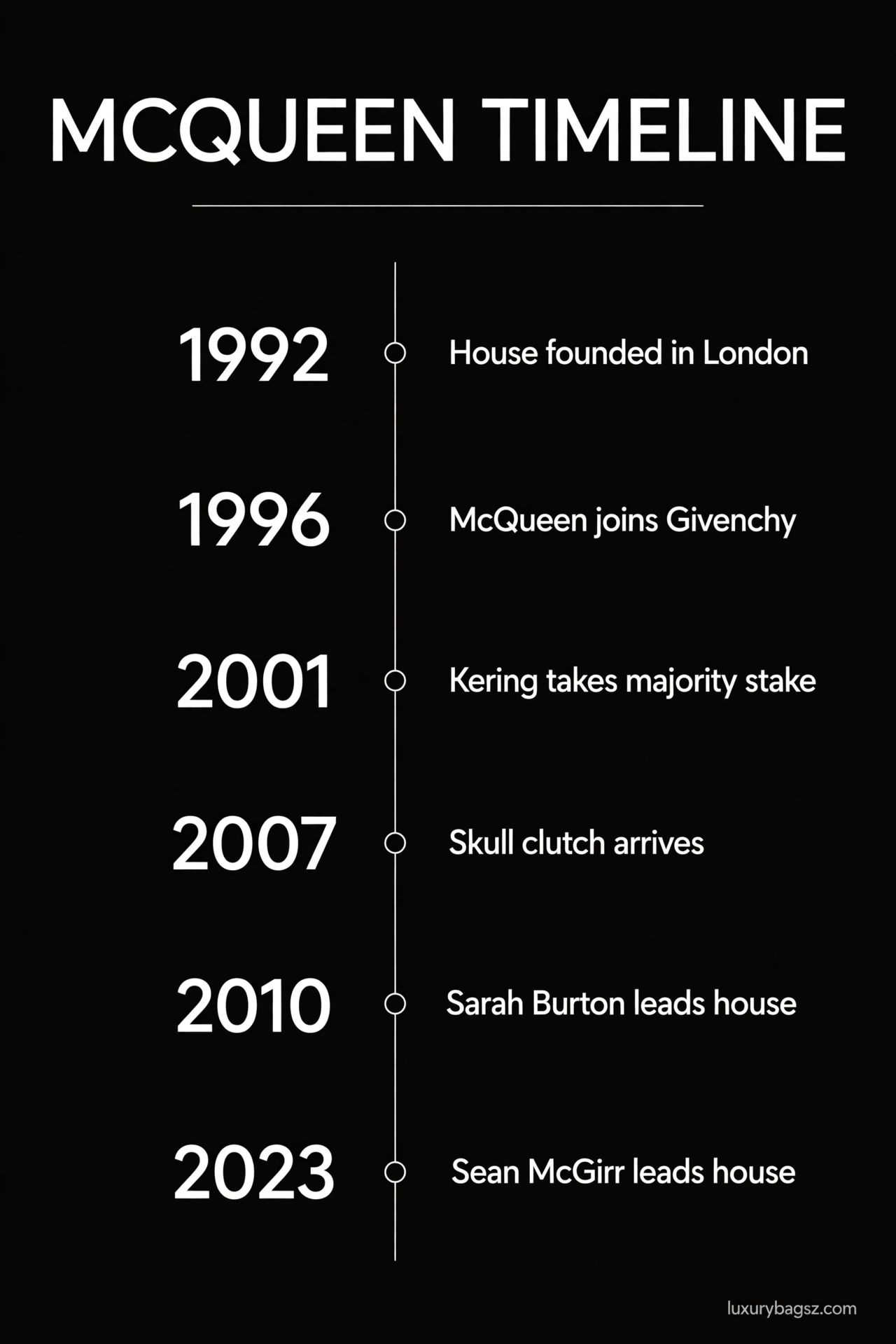
- The skull motif dates to his 1992 graduate collection, and the Skull clutch arrived in 2007.
- The four-ring knuckle clutch, launched in 2009, became the basis for the Jewelled bag family.
- Gucci Group, now Kering, took a majority stake in 2001, giving the house global scale.
- Sarah Burton led the house from 2010 to 2023, followed by Seán McGirr.
- The Heroine bag, from autumn/winter 2012, is the house's most structured, everyday shoulder bag.
Lee McQueen: The Tailor Who Became a Showman
Lee Alexander McQueen was born in London on 17 March 1969, the son of a taxi driver. He left school at sixteen to apprentice on Savile Row, where he learned precise tailoring, then worked for theatrical costumiers Angels and Bermans, where he learned drama. That combination, perfect cut plus theatre, defined everything that followed.
His 1992 Central Saint Martins graduate collection, inspired by Jack the Ripper, shocked and fascinated the fashion world, and won him the support of stylist Isabella Blow, who became a lifelong champion. Early shows were confrontational, romantic, and technically brilliant, often using historical silhouettes, nature, and Gothic imagery to tell a story rather than simply show clothes.
McQueen won British Designer of the Year four times and, in 1996, became head designer at Givenchy in Paris, while still running his own label. The Givenchy years sharpened his couture skills, but his own house remained the place where his imagination ran freest. Understanding that tension, between Savile Row discipline and theatrical rebellion, is the key to understanding McQueen bags.
The Skull and the Knuckle: Two Motifs That Built a Bag Business
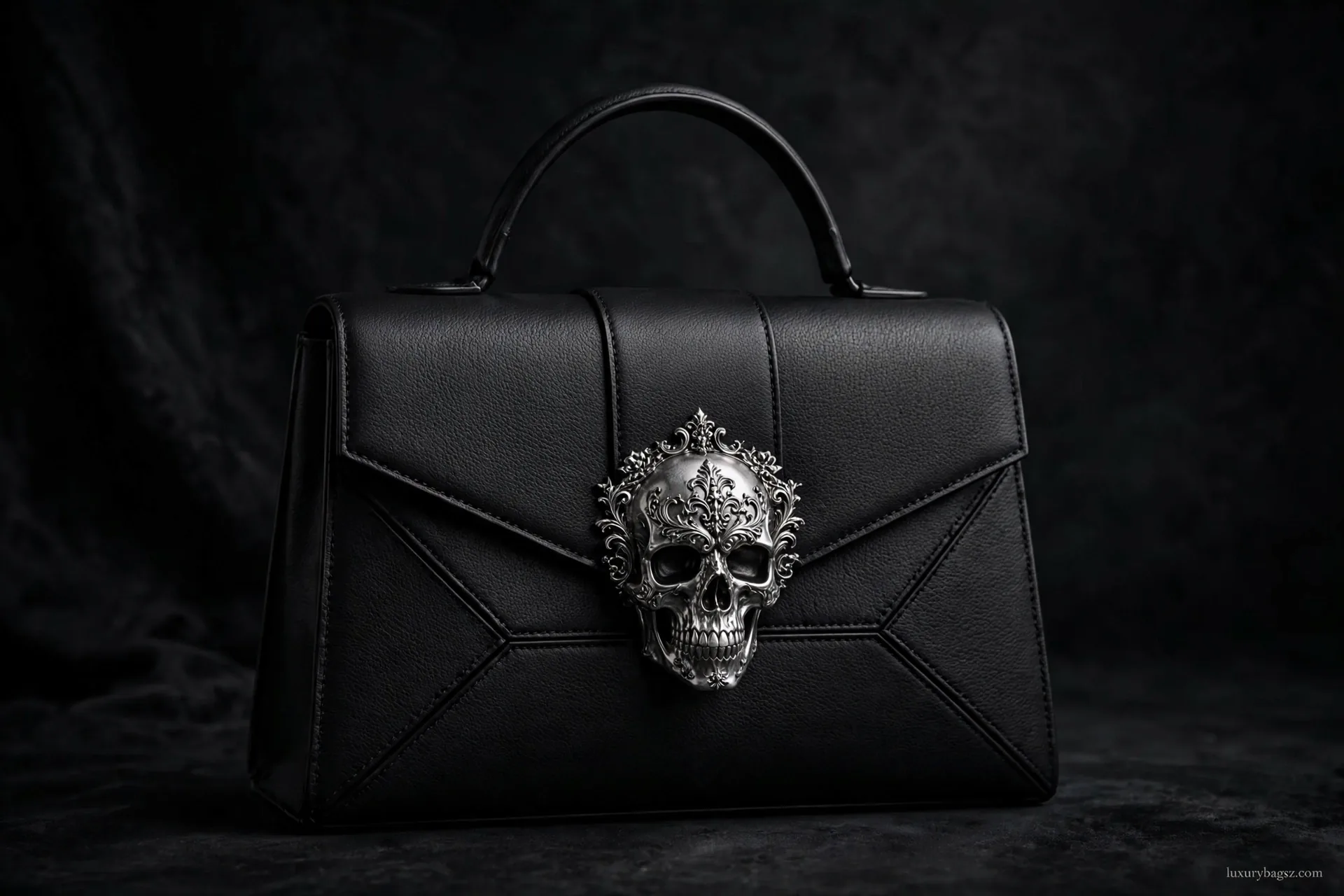
The skull is McQueen's most famous motif. It appeared in the 1992 graduate collection and later on scarves, jewellery, and bags. The skull is not merely decoration. In McQueen's work it speaks to mortality, beauty, and romance at once, a memento mori that is also a piece of jewellery. That depth is why the motif has lasted, while many fashion logos fade.
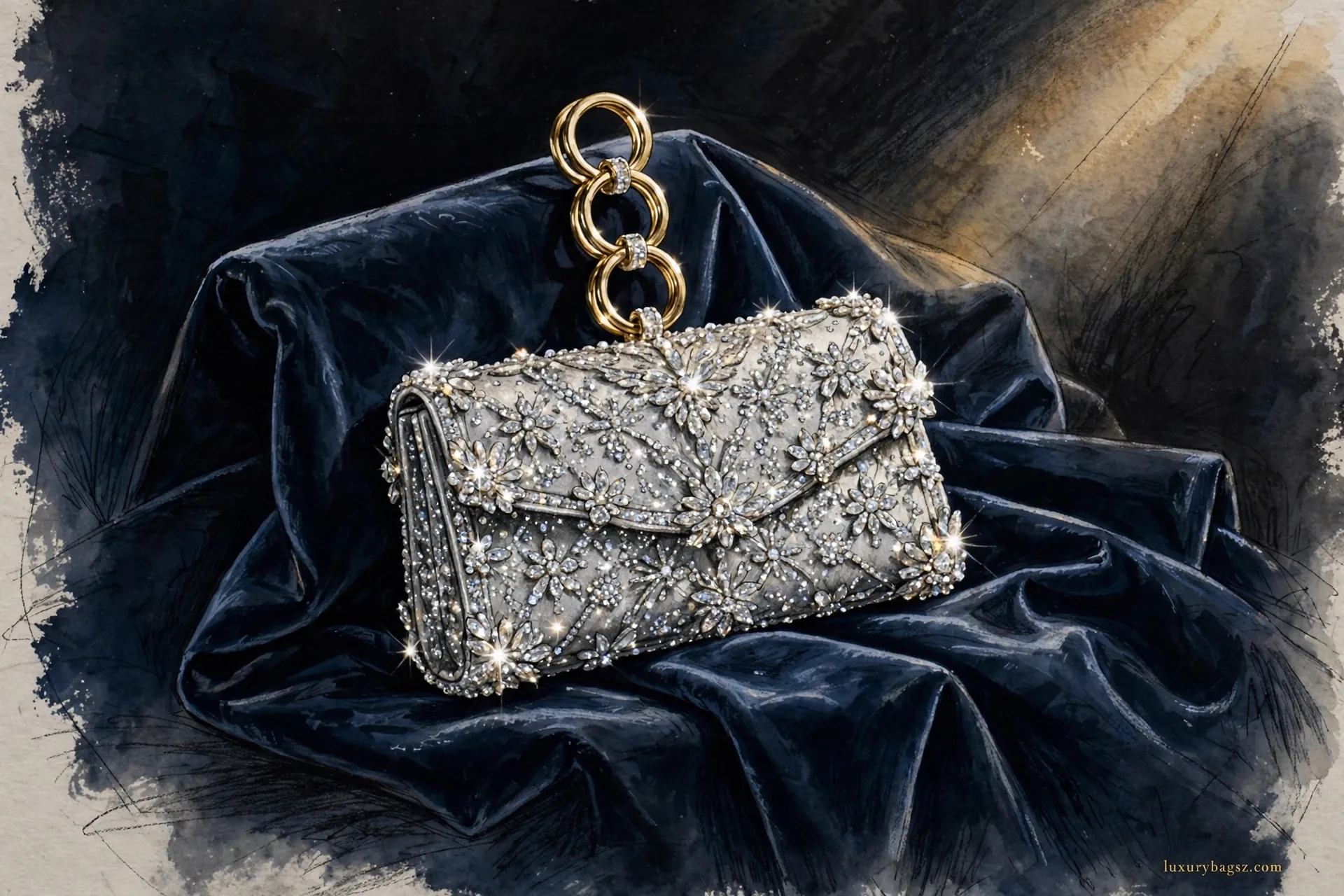
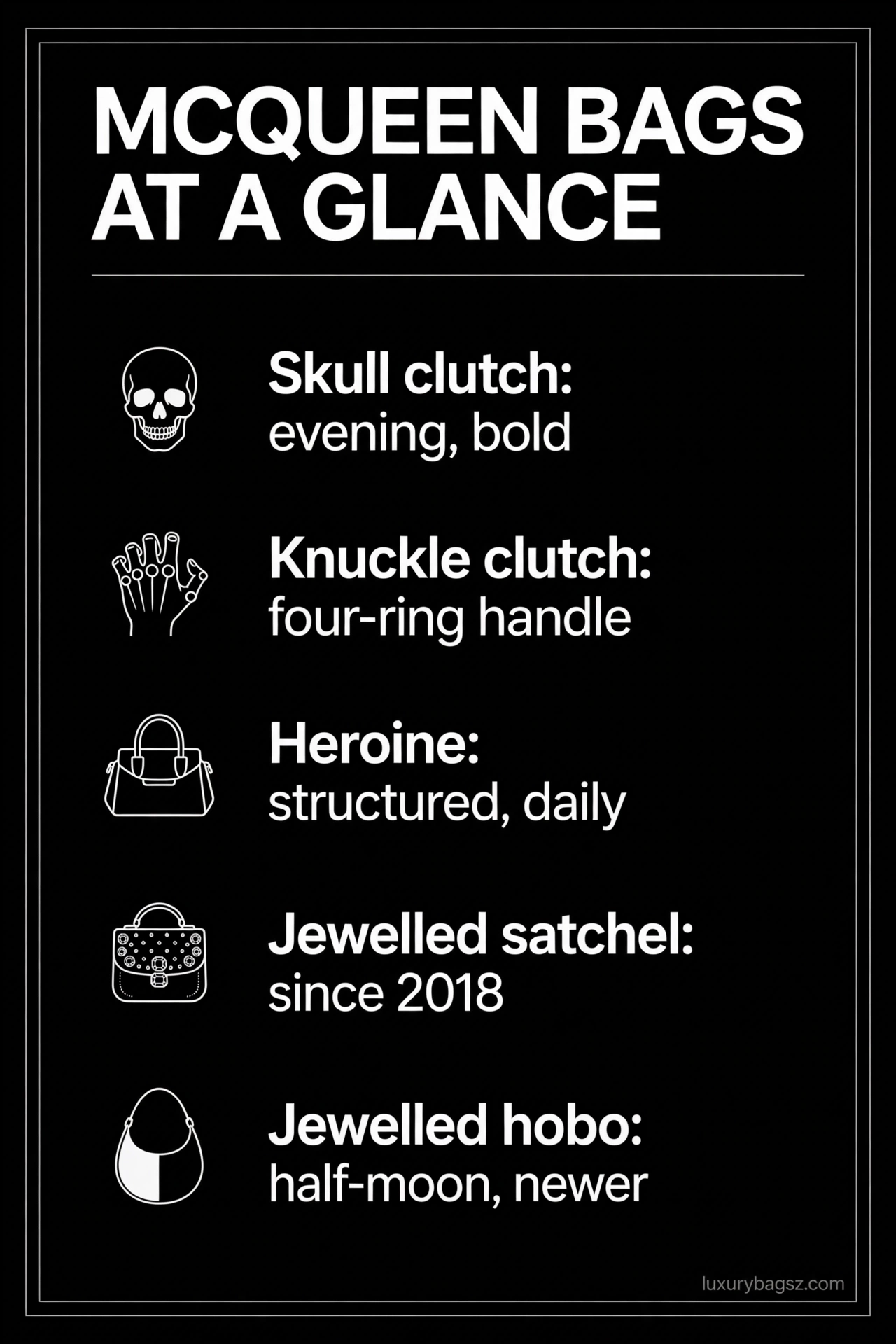
The Skull clutch, introduced in 2007, turned the motif into a handbag. Rendered in leather, crystals, beads, feathers, and exotic finishes, it became a red-carpet staple, even though it holds very little. Its successor, the knuckle clutch of 2009, added a four-ring handle inspired by London street culture, designed, in the house's words, to juxtapose urban toughness with the beauty and refinement of jewellery.
Together, these two designs created a bag business that clothing alone could not. A McQueen gown might be impractical for most buyers, but a clutch brought the house's drama into a normal wardrobe. Later bags, including the Jewelled family, all descend from that knuckle idea.
Kering, Givenchy and the House After 2010
In 2001 Gucci Group, now Kering, acquired a majority stake in Alexander McQueen, giving the house financial stability and global reach. Boutiques followed in London, New York, Milan, and other major cities, and accessories, shoes, and bags became a larger part of the business. The skull scarf, launched in 2003, and the Skull clutch showed how a strong motif could carry across product types.
Lee McQueen died in February 2010, a loss that shook fashion. Sarah Burton, who had worked closely with him since 1996 and had been head of womenswear design since 2000, became creative director. She kept the house's tailoring and craftsmanship while adding romance and softness, and she designed the wedding gown for Catherine Middleton in 2011, a moment that brought McQueen to a global audience beyond fashion insiders.
Burton led the house until 2023, when Seán McGirr became creative director. The change matters for collectors, because Burton-era and McGirr-era pieces carry different design emphases, even when they share hardware codes. When buying pre-owned, note the era as well as the style, because it affects both price and desirability.

The Heroine, the Legend and the Everyday McQueen
Not every McQueen bag is a clutch. The Heroine bag, which debuted in the autumn/winter 2012 collection, is a structured shoulder bag in fine leather, with clean lines and versatile carrying options. It earned a place on many it-bag lists because it offers McQueen polish without demanding an evening occasion. If you want one McQueen bag for daily life, start here.
The Legend bag, first shown in the resort 2015 collection, takes the opposite approach to the Skull clutch: simplicity, practicality, and subtly flared corners, with multiple carrying options. It proves the house can do restraint, even if restraint is not its most famous mode. The Novak bag, an oval-shaped design named for actress Kim Novak, is another earlier example of McQueen translating an unexpected shape into a wearable bag.
For buyers, the lesson is to match the bag to your life, not to the runway photograph. A Heroine or Legend suits work, travel, and daily errands. A Skull or knuckle clutch suits evenings, weddings, and occasions where a small, dramatic bag is the point. Buying the wrong type for your routine is the most common McQueen regret.
The Jewelled Family: Satchel, Hobo and Beyond
The Jewelled bag family is the current heart of McQueen accessories. The Jewelled satchel launched in 2018 as an evolution of the four-ring knuckle design, moving from a long box clutch to a rectangular satchel with a chain strap and skull details. It is now available in several sizes and leather treatments, and it appears on the runway season after season.
The Jewelled hobo, which debuted in the pre-spring 2023 collection, is a half-moon hobo reimagined with the founder's knuckle-duster clasp and skull motif. Worn by figures including Naomi Campbell and Michelle Yeoh, it has quickly become a favourite, because it combines a fashionable hobo shape with unmistakable McQueen hardware. The De Manta clutch, sculpted like a manta ray from the final Plato's Atlantis collection, shows the house's sculptural side at its most extreme.
When choosing within the Jewelled family, check size carefully. The satchel's three sizes suit different needs, from evening to daily carry, and the hobo's curved shape holds less than its outline suggests. Try the bag with your phone, wallet, and keys before buying, because a beautiful bag you cannot use will stay in its dust bag.
Styling McQueen Bags Without Overdoing It
McQueen bags are strong, so the rest of your outfit should stay calm. Pair a Skull or Jewelled clutch with a simple black dress, tailored trousers, or a plain coat, and let the hardware be the single dramatic note. Pair a Heroine bag with structured tailoring, a knit, and clean shoes, and it reads as polished rather than theatrical.
Avoid stacking McQueen motifs. A skull bag plus a skull scarf plus skull jewellery can look like a costume, even if each piece is beautiful alone. One motif, worn with confidence, carries more impact than three competing for attention. The same rule applies to embellishment: a crystal clutch needs a quiet dress, while a plain leather Heroine can handle a bolder outfit.
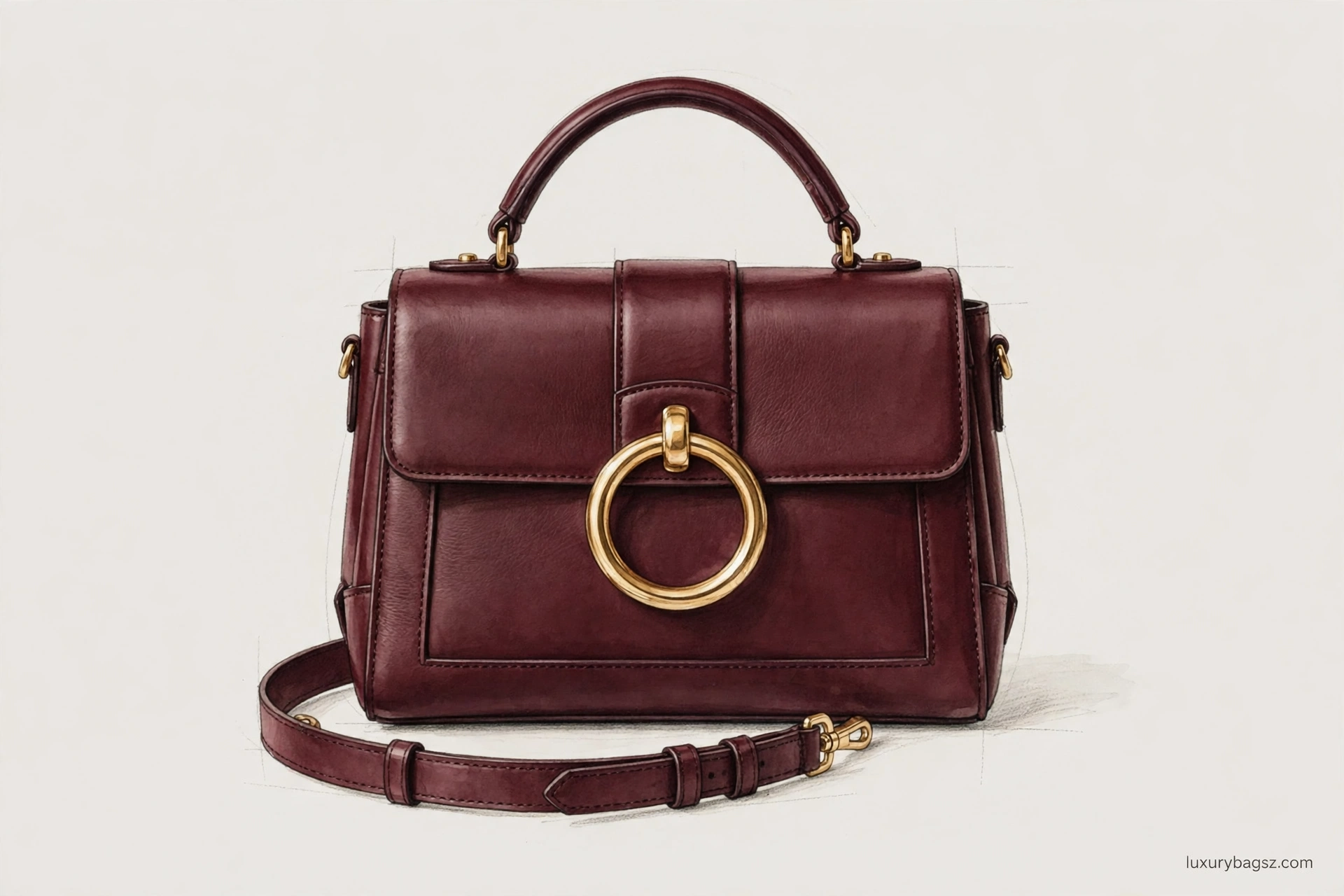
For colour, black, burgundy, and deep neutrals are the safest McQueen choices, because they suit the house's darker palette and show hardware well. Brighter or embellished versions are wonderful for occasions, but they are harder to wear weekly and harder to resell. Buy the dramatic version only if you have occasions to match it.
Buying Pre-Owned: Hardware, Stitching and Era
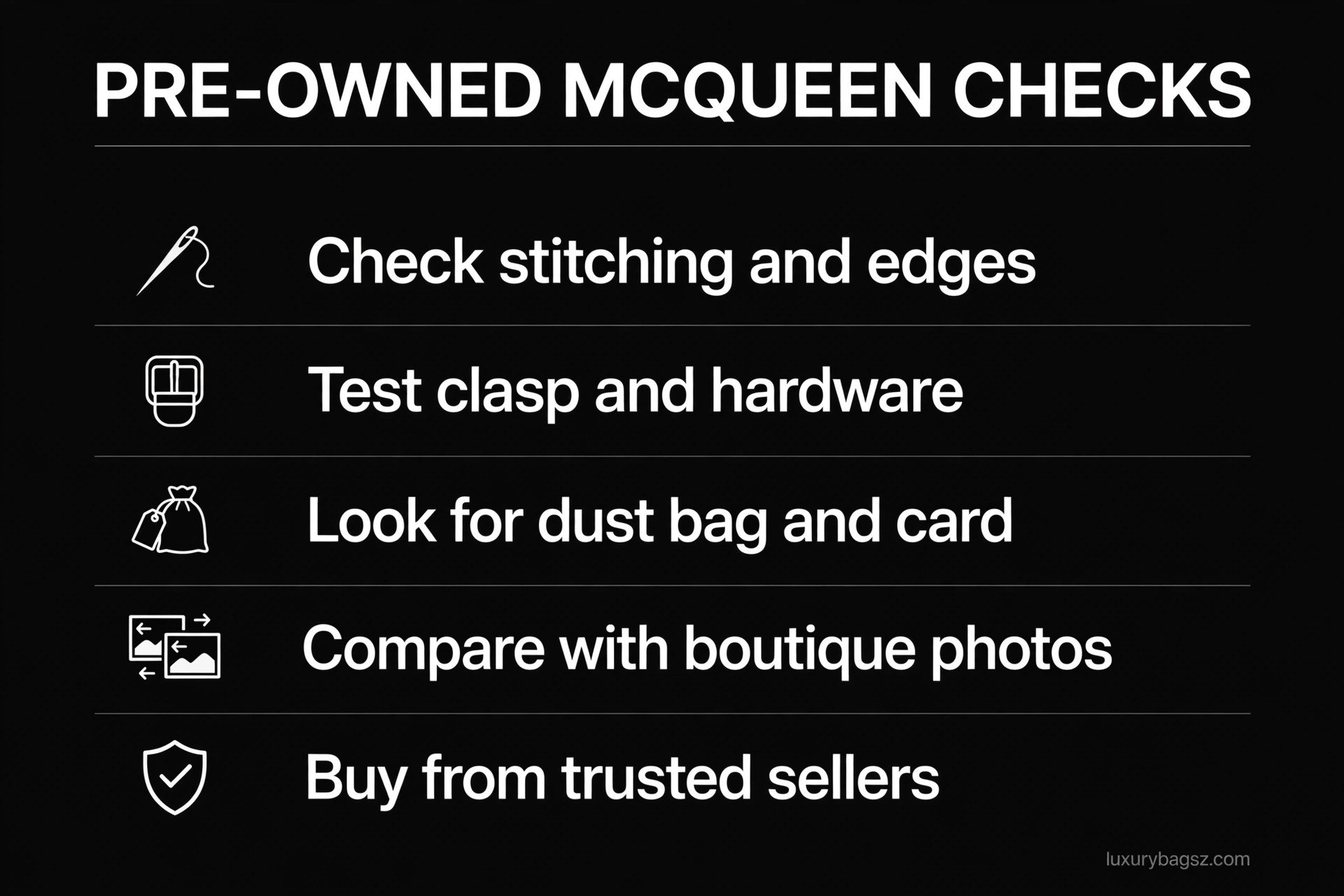
McQueen bags need hardware checks above all. Test the knuckle handle, clasps, and chain for smooth movement, and look for chips, scratches, or loose crystals on embellished pieces. Check stitching, edges, and corners for wear, and examine the interior lining and pockets for stains or repairs. Our guide to pre-owned condition grades helps you judge whether a seller's description matches the photographs.
Buy from boutiques, authorised retailers, or reputable resellers, and read our guide on how to buy a pre-owned designer bag safely before paying. Use the checks in our guide to authenticate a pre-owned designer bag for general principles, and compare the bag against current boutique photos for your exact style and era.
Keep the dust bag, box, and authenticity card where provided, because completeness affects value, especially for limited or embellished pieces. For crystal or feather versions, ask about missing stones or damage before buying, because repairs can be costly and may not match the original finish. If a price is far below market or the seller uses stock photos, walk away.
Value, Collectability and What to Avoid
McQueen resale is strongest for iconic, well-kept pieces: Skull clutches, Jewelled satchels in classic colours, and Heroine bags in good condition. Limited editions, artist collaborations, and unusual embellishments can be collectable, but they appeal to a narrower buyer, so they may take longer to sell. As with any designer bag, what affects resale value applies here: condition, rarity, completeness, and demand decide the outcome.
Avoid three traps. First, do not buy a tiny clutch as your only bag if you need daily carry; it will frustrate you. Second, do not buy a heavily embellished piece without checking every crystal and clasp, because damage is hard to hide. Third, do not assume every McQueen bag will appreciate. Most will hold a portion of retail if kept well, and only rare, iconic pieces command a premium. When selling, our guide on how to sell a designer bag for the best price covers timing, photography, and pricing realistically.
Buy McQueen when you want art you can carry. Choose the bag that fits your life, check its hardware with care, and wear it with a simple outfit that lets its drama breathe.
Frequently Asked Questions
1. When was Alexander McQueen founded? The house was founded in London in 1992 by Lee Alexander McQueen after his graduation from Central Saint Martins.
2. What is Alexander McQueen known for? Sharp tailoring, theatrical runway shows, and the skull and knuckle motifs that appear across clothing, scarves, jewellery, and bags.
3. What is the Skull clutch? A small evening clutch introduced in 2007, decorated with skull clasps and, in many versions, crystals, beads, or other embellishments.
4. What is the knuckle clutch? A clutch with a four-ring handle, launched in 2009, inspired by London street culture and designed to pair toughness with jewellery-like refinement.
5. What is the Heroine bag? A structured leather shoulder bag that debuted in autumn/winter 2012, known as McQueen's most everyday, versatile bag.
6. What is the Jewelled satchel? A rectangular satchel launched in 2018, evolving from the knuckle clutch, with a chain strap and skull details, available in several sizes.
7. Who led the house after Lee McQueen? Sarah Burton became creative director in 2010 and led the house until 2023, when Seán McGirr succeeded her.
8. Is Alexander McQueen part of Kering? Yes. Gucci Group, now Kering, took a majority stake in 2001, giving the house global scale while keeping its London identity.
9. Are McQueen bags practical for daily use? Heroine and Legend bags are practical daily bags. Skull and knuckle clutches are evening pieces and hold very little.
10. What should I check when buying pre-owned McQueen? Hardware movement, crystal condition, stitching, edges, lining, dust bag and card, and the seller's reputation, compared against boutique photos.
Final Verdict: Drama You Can Actually Carry
Alexander McQueen endures because its drama was never empty spectacle. It was tailoring, history, nature, and mortality, cut and stitched into clothes and bags that still feel alive decades later. The skull and the knuckle are not gimmicks. They are the house's shorthand for beauty with an edge.
Buy McQueen when you want that edge in your wardrobe. Choose a Heroine for daily life or a Skull or Jewelled piece for evenings, check the hardware as carefully as you admire it, and wear it simply. One strong McQueen bag, worn well, says more than a wardrobe full of quiet copies ever will.






