

How to Take Care of Leather: Cleaning, Conditioning and Storage Guide
Leather Care in Brief: Little, Gentle and Regular
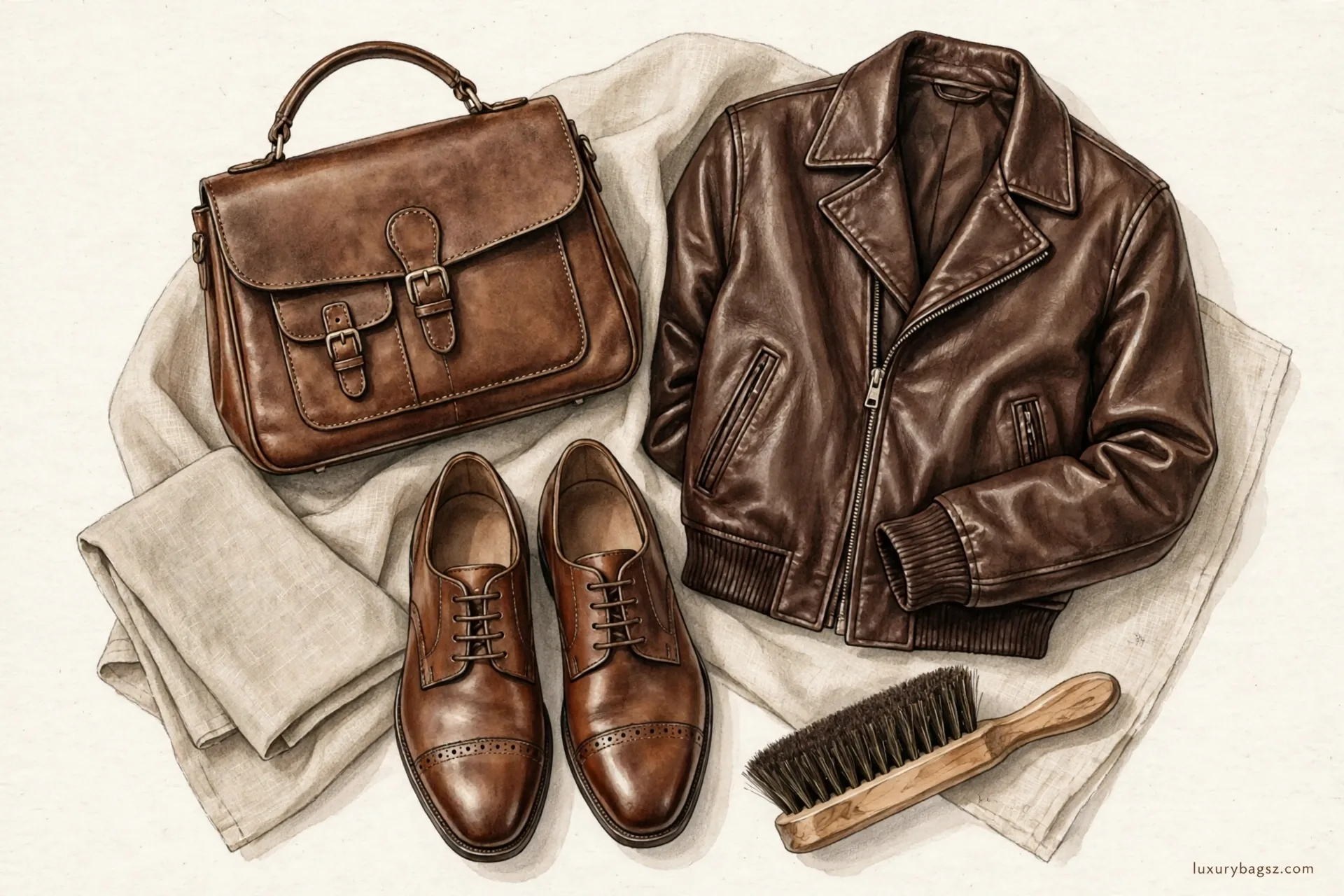
To take care of leather, dust it often, clean it gently with a soft cloth, condition it sparingly a few times a year, keep it from soaking and heat, and store it where air can move. Most leather damage comes from doing too much, not too little: harsh cleaners, heavy oils, radiators and sealed plastic. A light, regular routine beats an aggressive rescue every time.
Key Takeaways
- Identify the finish first: smooth, suede, nubuck and coated leathers need different care.
- Wipe with a soft, dry cloth weekly; that alone prevents most grime build-up.
- Condition smooth leather sparingly, typically a few times a year, not weekly.
- Never soak leather, never dry it on heat, and never store it in sealed plastic.
- Test any product on a hidden spot first and wait to check colour and feel.
- Suede and nubuck get brushes and erasers, never creams or wet cleaning.
Price is no guide to finish. Expensive leathers are often the most delicate, because luxury frequently means softness and a natural surface rather than a protective coating. Always check the maker's own care note first.
Know Your Leather Before You Touch It
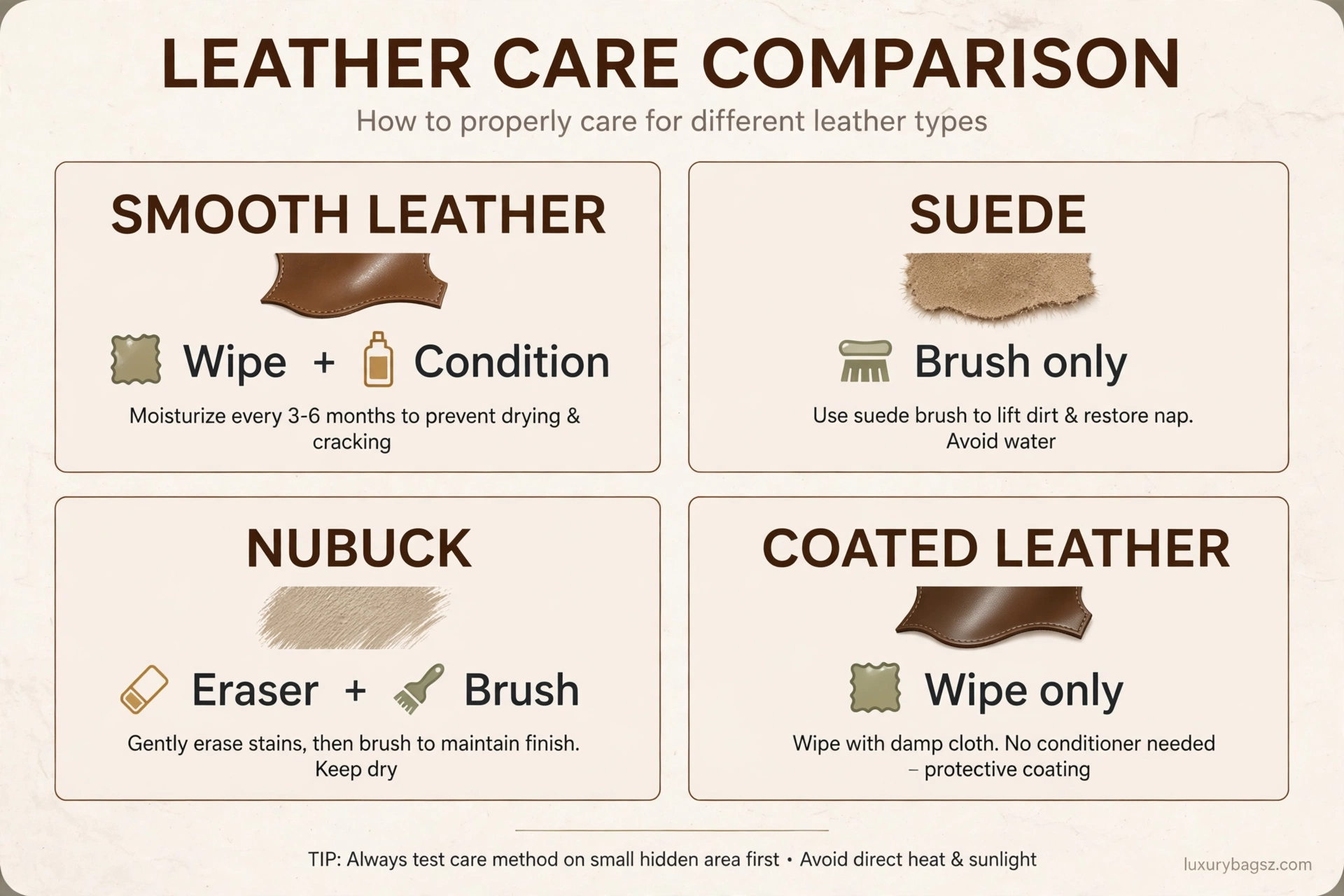
Leather is skin, tanned to preserve it, and the finish decides the care. Smooth full-grain leather takes creams and balms; delicate and unfinished leathers often take almost nothing. Our leather types guide explains grain, tanning and finishes in full. Read the maker's care advice too, since some finishes are coated and behave differently. A simple test helps: a drop of water on smooth leather should sit briefly, then darken slightly as it absorbs. On coated leather it beads; on suede it darkens at once. If you cannot identify the finish, do less. A dry cloth and a soft brush are safe on nearly every leather, while the wrong product is hard to undo.
Smooth, Suede, Nubuck and Coated: The Four Families
Smooth leather, including most bags, shoes and jackets, is the easiest to care for: wipe, condition occasionally, and protect from soaking and scratches. Our nappa leather guide covers the softest smooth leathers, which mark easily and need especially gentle handling and minimal product. Suede and nubuck have a napped surface that creams would ruin. They need a suede brush, a crepe or eraser block for marks, and protector spray made for nap. Coated and patent leathers need only wiping and careful storage away from other colours, since patent surfaces can pick up dye transfer that will not come off.
Work in daylight when you clean. Weak light hides water marks, colour transfer and early cracking, and those small signs are exactly what a regular wipe is meant to catch before they settle in.
Everyday Cleaning That Actually Works
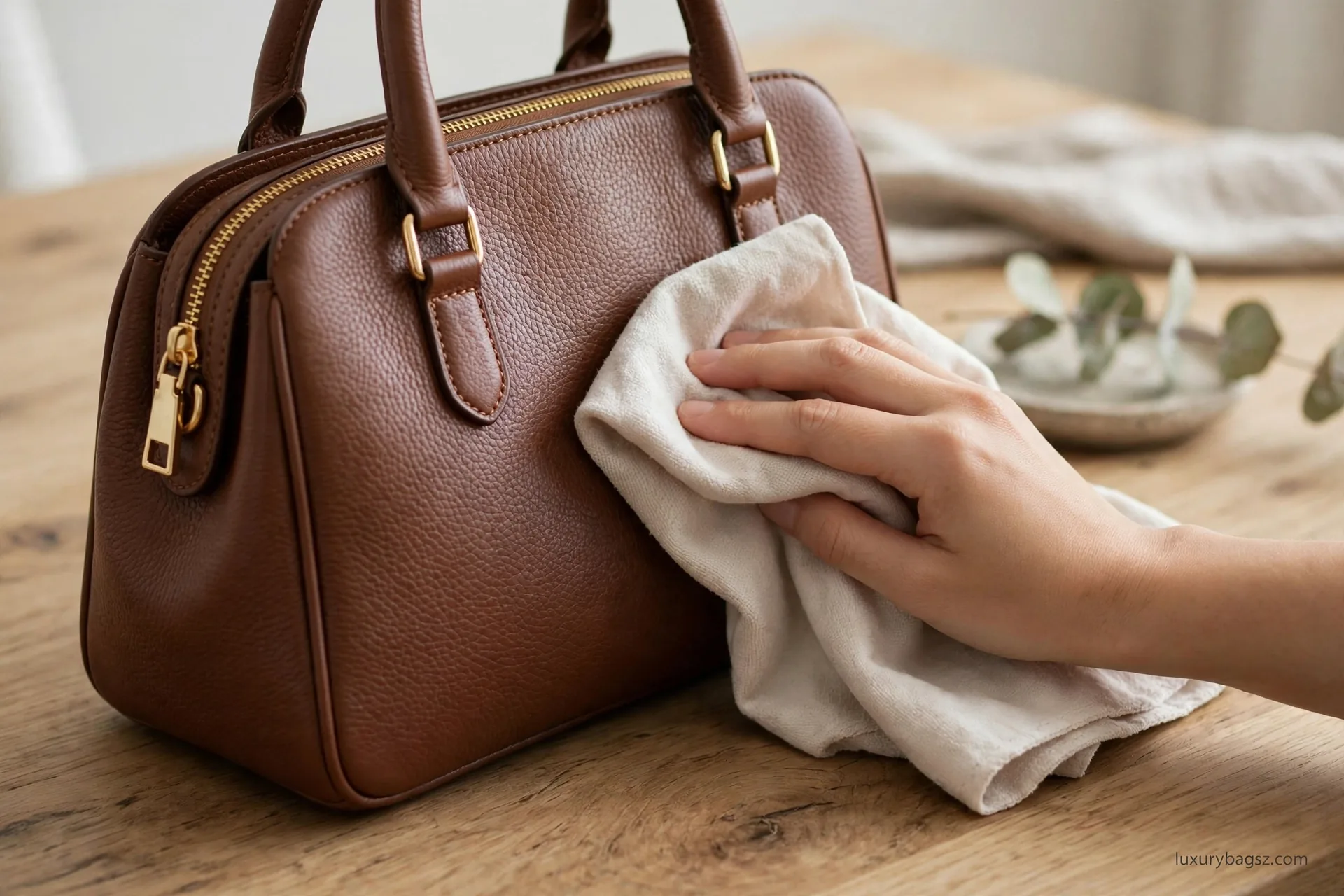
Start dry. A soft cloth or horsehair brush removes dust and grit, which act like sandpaper under straps, folds and soles if they are left in place. For light dirt on smooth leather, use a cloth barely dampened with clean water and wipe gently, then dry with a second cloth. Our leather bags and shoes care guide gives item-by-item routines. Avoid household cleaners, baby wipes with additives, vinegar mixes and alcohol products. They can strip finishes, darken pale leather and leave sticky residues. Empty pockets, bags and boots before cleaning, and undo laces or straps so dirt trapped underneath is removed rather than ground in during wiping.
Deep Cleaning and When to Stop
If gentle wiping is not enough, use a cleaner made for leather, applied with a cloth, never poured on. Work on one panel at a time and wipe residue away fully. Stop if colour lifts onto the cloth beyond light surface dirt, if the finish feels tacky, or if a stain spreads. Those are signs to hand the piece to a leather specialist. Ink, dye transfer and oil stains are specialist work on most finished leathers. Home attempts often set them deeper or strip the surrounding colour, making repair harder. Mould needs air first: brush it off outdoors, let the piece dry fully in moving air, then clean gently. A piece that smells mouldy after drying needs professional help.
Shoes and boots in daily rotation may need conditioning slightly more often than bags, since they flex constantly and meet wet ground. Judge by feel: dry, stiff leather asks; supple leather does not.

Conditioning: Less Than You Think
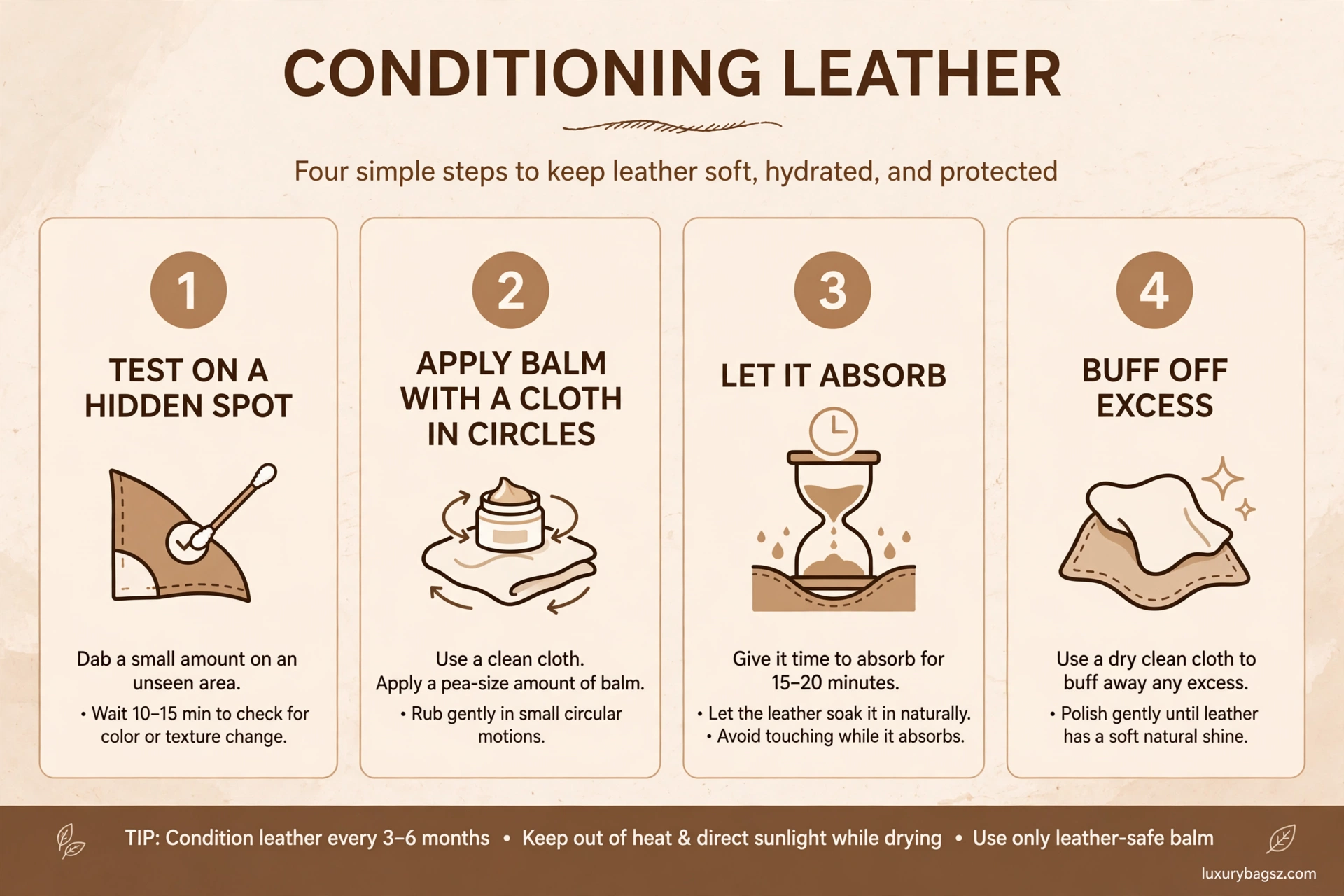
Conditioner replaces a little of the fat leather loses with age, keeping fibres flexible. Smooth leather in regular use typically needs it only a few times a year. Apply a pea-sized amount on a cloth, work it in thinly in circles, let it absorb, then buff off the excess. Our Saphir Renovateur guide shows a classic product routine. Over-conditioning makes leather limp, dark and greasy, and can weaken stitching. If the surface feels tacky the next day, you used too much. Always test first on a hidden area, such as under a strap or inside a hem, and wait several hours. Some conditioners darken pale and untreated leathers permanently.
Water, Rain and Stain First Aid
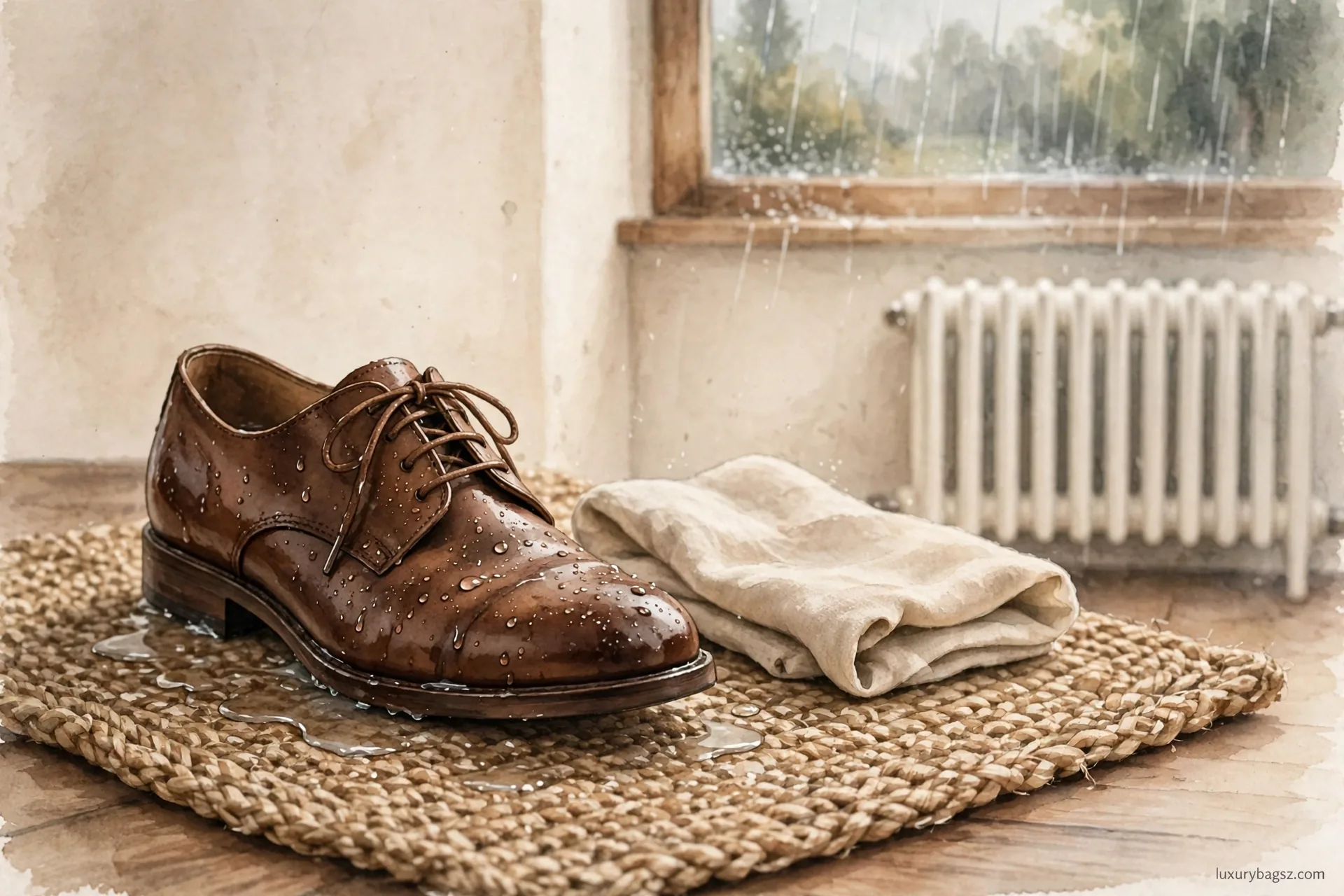
If leather gets soaked, blot, never rub, then let it dry naturally at room temperature, stuffed lightly to hold shape. Keep it well away from radiators and hairdryers. Rain spots on smooth leather often fade as the piece dries fully over a day or two. Our leather restoration guide covers what to do when marks remain. Salt lines from winter roads should be wiped promptly with a barely damp cloth once the piece is dry, since salt left in place draws moisture and stiffens leather. For grease marks, blot gently and leave the leather alone; many lighten as oils redistribute. Do not apply water or detergent to grease, which usually spreads it.
Storage That Keeps Leather Alive
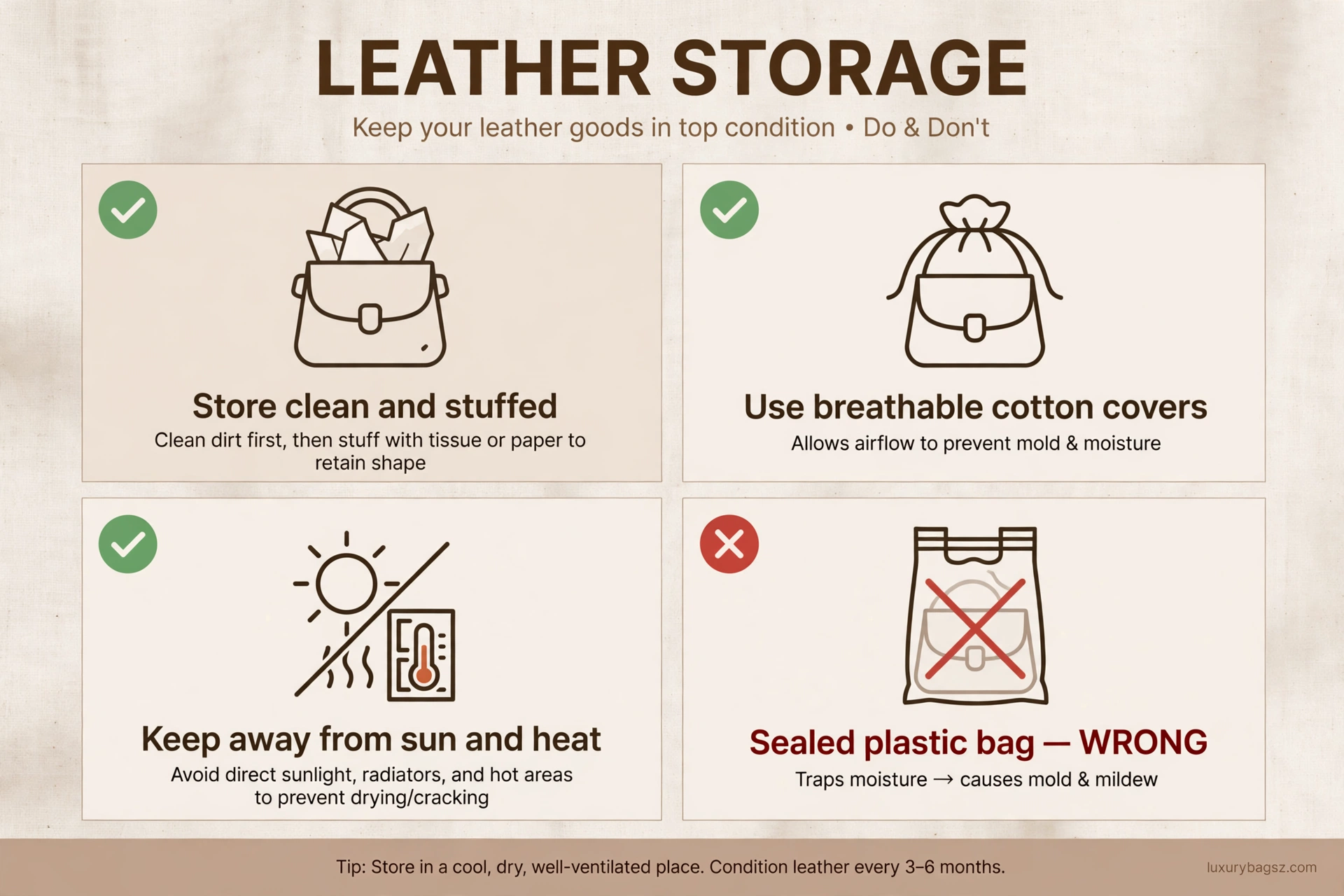
Store leather clean, dry and stuffed or supported to hold shape, in cotton covers that breathe. Airtight plastic traps moisture and is a common cause of mould and sticky surfaces. Keep leather away from direct sunlight, which fades and dries it, and from heat sources that crack finishes over a single season of neglect. Separate colours, especially patent and pale leathers, since dye transfer in storage is permanent. Tissue between folded items prevents impressions and sticking. Air stored leather every few months and check for mould, dryness or insect damage. A light condition before long storage helps smooth leather, applied at least a day before covering.
One kit serves most homes: two soft cloths, a horsehair brush, a suede brush, an eraser block and one mild conditioner matched to your smooth leathers. More products than that usually means more mistakes, not better care.
Care by Item: Bags, Shoes, Jackets and Furniture
Bags: wipe after use, rest them stuffed, and rotate them so handles and corners recover. Handles darken from hand oils first, so clean, dry hands are real care. Shoes and boots: brush after wear, insert trees while warm, rest a full day between wears, and condition only when the leather looks dry or feels stiff. Jackets: hang on wide hangers, wipe spills promptly, and condition lightly once or twice a year depending on wear. Zips run better kept clean and fully dry. Furniture follows the same rules at larger scale. Our leather sofa care guide covers sun fading, seat conditioning and stain first aid for the home.
Frequently Asked Questions
How often should I condition leather?
For most smooth leather in regular use, a few times a year is enough. Condition sooner only if the leather looks dull or feels dry and stiff, and always use a thin layer.
Can I clean leather with water?
A cloth barely dampened with clean water is fine for light dirt on smooth leather. Never soak leather, and always dry it naturally away from direct heat afterwards.
What should I never use on leather?
Avoid household detergents, bleach, alcohol cleaners, vinegar mixes and silicone sprays not made for leather. They can strip finishes, darken colour and leave sticky residues.
How do I care for suede?
Use a suede brush to lift the nap and an eraser block for dry marks. Never apply creams, balms or wet cleaning to suede, and use a protector spray made for nap.
What do I do if leather gets wet?
Blot gently, stuff it lightly to hold shape, and let it dry slowly at room temperature away from radiators. Once fully dry, condition smooth leather lightly if it feels stiff.
Why did conditioner darken my leather?
Many conditioners darken pale or untreated leather as they absorb. That is why you test on a hidden spot first and wait several hours before treating the whole piece.
Can cracked leather be fixed?
Surface dryness can improve with careful conditioning, but true cracks in the grain cannot be reversed at home. A specialist may improve appearance, not restore the original surface.
How should leather be stored long term?
Clean, dry and lightly stuffed or supported, inside breathable cotton covers, away from sun, heat and damp. Never store leather sealed in plastic.
Is mink oil good for all leather?
No. Heavy oils suit some rugged boots but can darken, soften and grease finer bags, shoes and jackets. Match the product to the finish, and use the lightest option that works.
When should I use a professional leather cleaner?
For ink, dye transfer, mould that persists, valuable antiques and any piece where colour lifts during gentle cleaning. Early professional help is cheaper than repairing home damage.
Final Verdict: Gentle Habits Beat Heroic Rescues
Leather rewards restraint. Dust often, wipe gently, condition rarely and store it breathing, and most pieces will outlast the trends that produced them. When in doubt, do less and test first. The most expensive leather mistakes are almost always products applied in a hurry to a finish they were never made for.






