

What Is Nappa Leather? Is Nappa Leather Good for Sneakers?
Nappa Leather in Brief
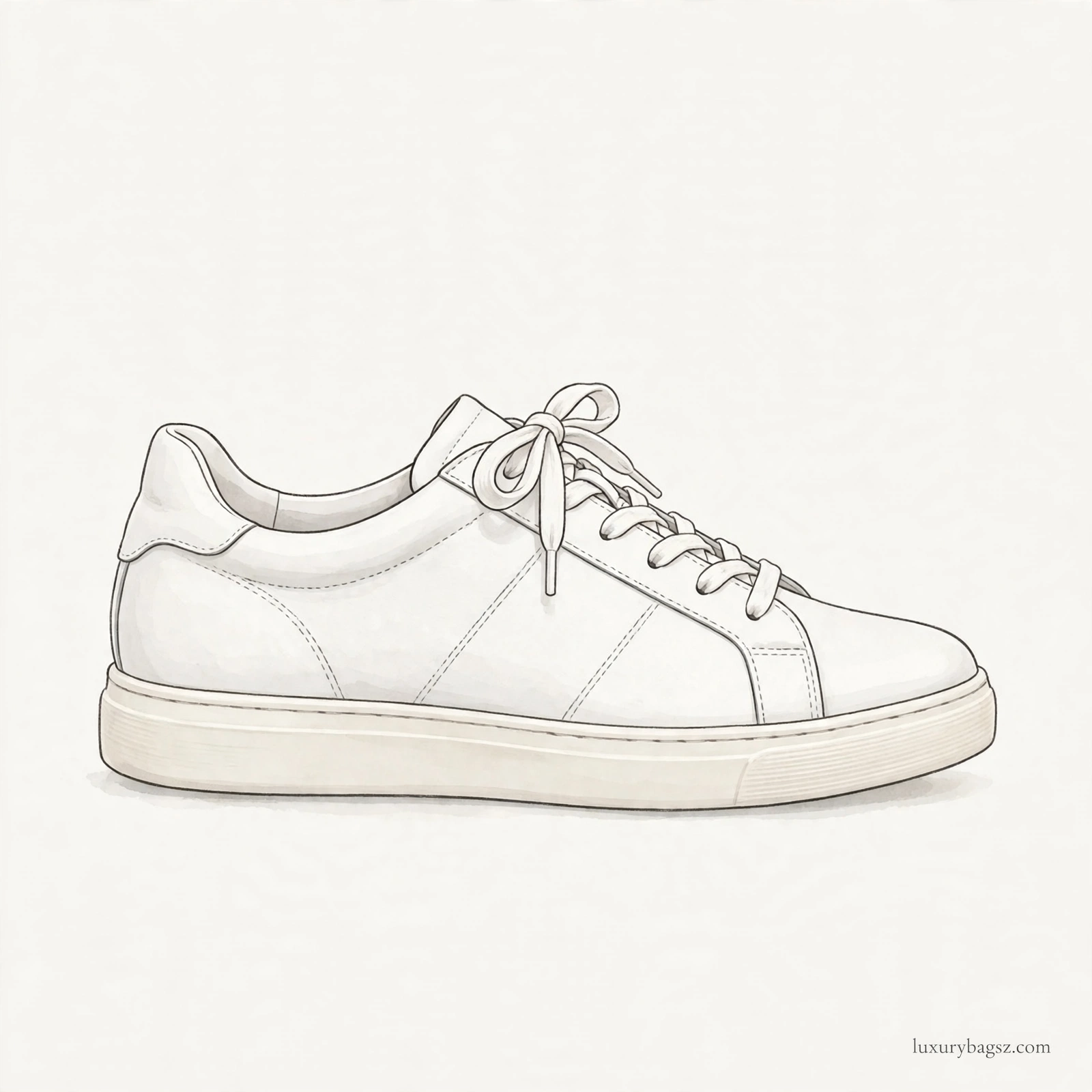
Nappa leather is soft, smooth, full-grain leather, usually from lamb, calf, or goat, tanned with chromium and aluminium salts and tumbled until it feels buttery. The word describes a tanning and finishing style, not one animal, which is why nappa varies so much between brands.
Is it good for sneakers? Yes, with a clear trade-off. It is tougher than most cheap sneaker leathers and far softer than boot leather, so it makes a comfortable, premium everyday sneaker. It scuffs easily and hates water, though, so it is a poor choice for hard outdoor use.
Buy nappa sneakers for daily city wear, travel, and smart-casual outfits. Skip them for trail walking, wet commutes without protection, or any job where the shoes will be kicked and scraped all day.
Key Takeaways
- Nappa means soft, smooth leather tanned with chromium and aluminium salts, then tumbled.
- It usually comes from lamb, calf, or goat, and is often full-grain at around 1.2 to 1.4 mm thick.
- For sneakers it beats cheap leather on comfort and durability, but loses to boot leather on toughness.
- Its weak points are water, stains, and scuffs: the finish is thin and protective coatings are minimal.
- Waterproofing spray, prompt cleaning, and light conditioning keep nappa sneakers looking good.
- Do not buy nappa for heavy work or wet trails; buy it for comfortable everyday premium sneakers.
What Nappa Leather Really Means
The name is often traced to Napa Valley in California, though that origin is contested. What everyone agrees on is the feel: nappa is soft, smooth, and pliable, with a fine, even grain and no heavy coating.
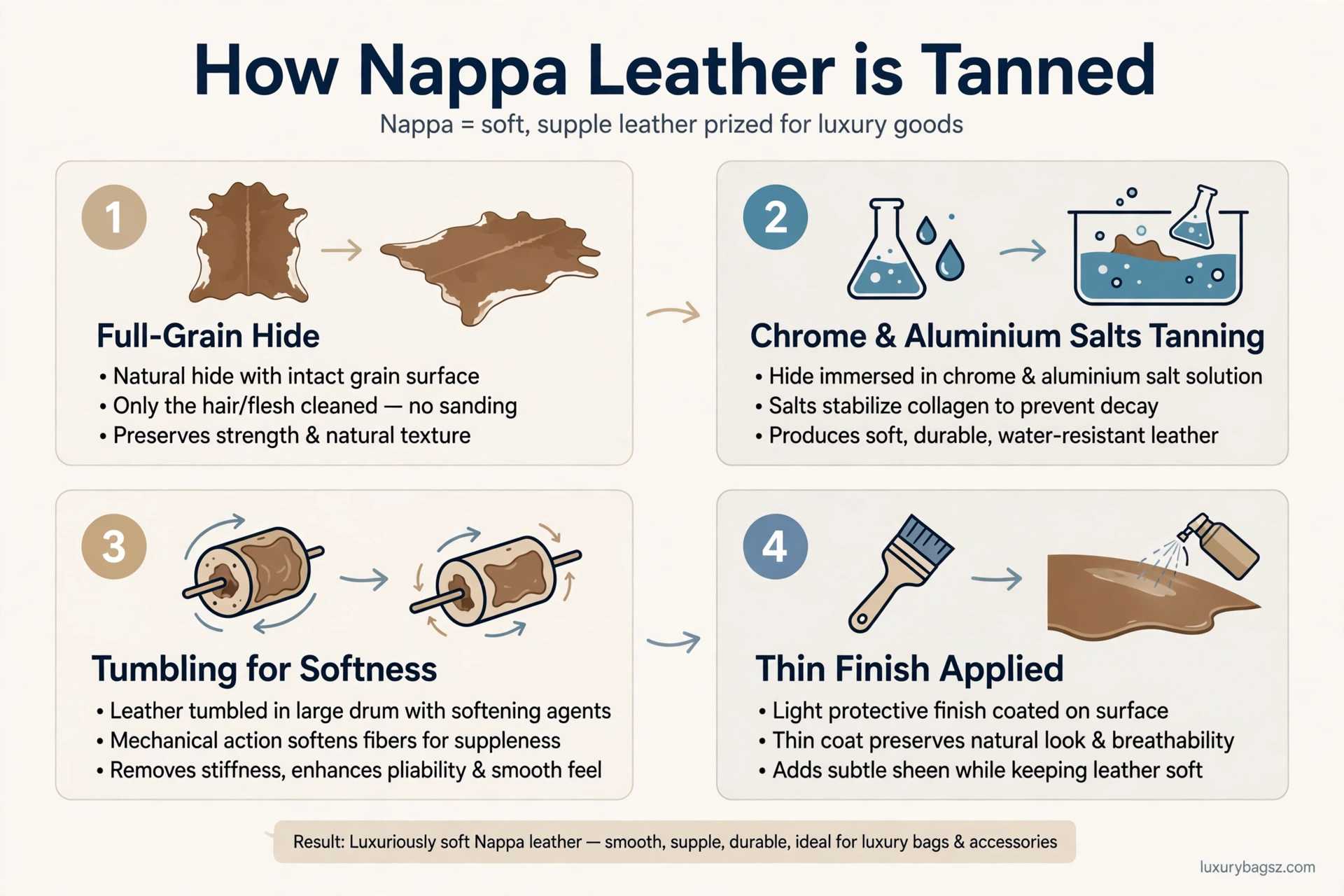
The defining step is tanning. Nappa is tumbled with chromium and aluminium salts, which soften the fibres while keeping them strong enough for daily wear. That tanning style, more than the animal, is what makes leather count as nappa.
Because the definition is loose, quality varies. A luxury brand's full-grain calf nappa and a cheap brand's corrected nappa can share the name and little else. Always check grain, thickness, and feel, not just the word on the label.

How Nappa Is Made
It starts with a full-grain hide, meaning the outer grain layer is kept intact rather than sanded away. That layer gives nappa its strength and its natural, fine texture.
After tanning with chromium and aluminium salts, the leather is tumbled in drums. Tumbling breaks down stiffness, softens the fibres, and gives nappa its characteristic drape. The leather is then dyed and finished with a thin top layer, essentially a light paint, rather than a heavy protective coat.
That thin finish is both the charm and the flaw. It preserves the soft hand feel, but it offers little defence against water and stains. Water passes through easily, which is why restorers warn that untreated nappa soaks up rain fast.
Nappa vs Other Sneaker Leathers
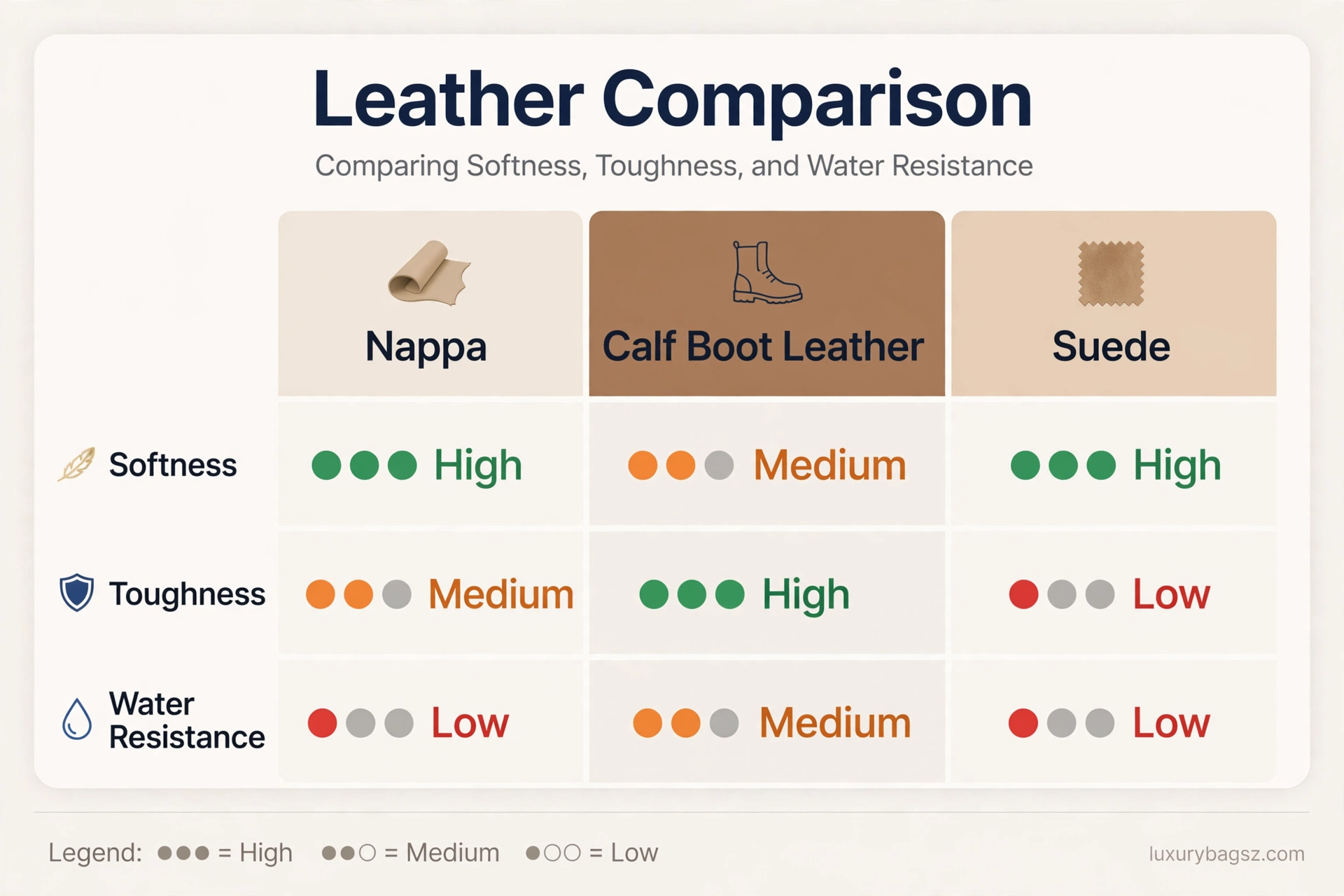
Against cheap split or bonded leather, nappa wins clearly. It is stronger, it moulds to the foot, it resists cracking and peeling far longer, and it ages with a patina instead of flaking apart.
Against full-grain boot leather, nappa loses on toughness. Boot leather is thicker, more heavily oiled or waxed, and built to take abrasion. Nappa at 1.2 to 1.4 mm is made for comfort, not for worksite abuse.
Against suede, nappa is easier to wipe clean but shows scuffs differently. Suede hides light marks in its nap, while nappa shows a scuff as a shiny line. Both need protection before wet weather, but suede needs its own dedicated products.
Is Nappa Good for Sneakers?
For everyday sneakers, yes. Nappa is softer than almost anything else in its price range, it needs almost no break-in, and it stays comfortable over long days on your feet. That is why luxury sneaker brands use it so widely.
It also looks premium in a way mesh and synthetic leather rarely match. The smooth grain, the soft drape, and the way it creases finely rather than cracking all signal quality at a glance.
The limits are real, though. Daily wear in rain without spray will stain it, rough use will scuff it, and a single deep scratch shows more than it would on a grained or pebbled leather. Treat nappa sneakers as premium daily shoes, not beaters.
Durability: What to Expect in Real Life
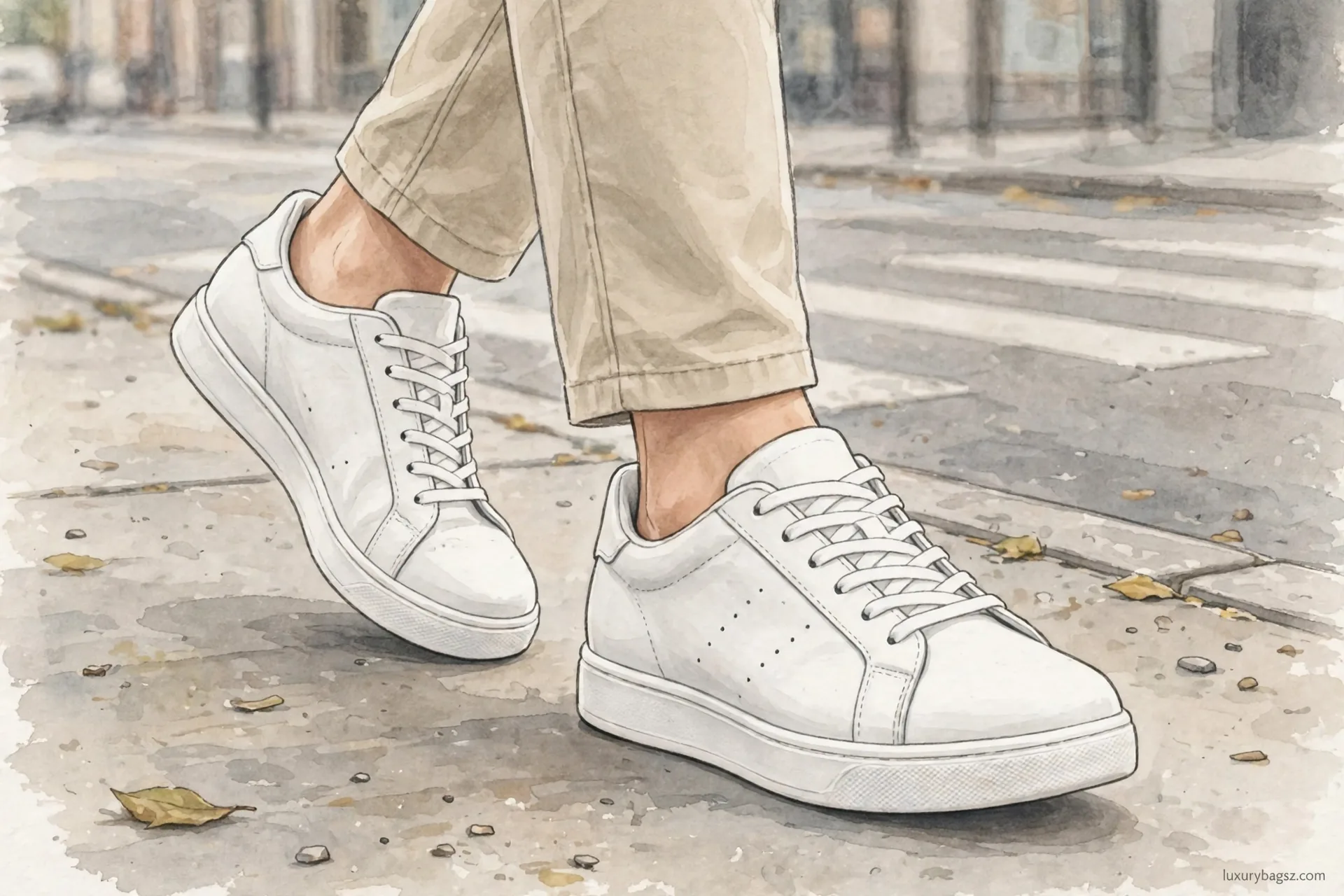
With normal city wear and basic care, nappa sneakers can last several years and still look good. The leather itself is durable; the finish is the fragile part, and that is what you are really maintaining.
Creasing is fine and expected. Nappa creases softly across the vamp, and those creases deepen with wear. Cracking, peeling, or flaking is not normal for genuine full-grain nappa, and usually signals a coated or bonded imitation.
Watch the areas that flex most: the toe box and the sides near the sole. If the finish wears thin there first, a light conditioner and a matching cream can even the look, but deep colour loss may need a professional restorer.
Water, Stains, and Scuffs
Water is nappa's main enemy. Because the tannery does not load it with waxes and oils, rain soaks in quickly and can leave dark marks or stiff patches as it dries. Salt in winter is worse, leaving white rings that need prompt cleaning.
Stains behave the same way. Oil, food, and dye transfer from dark jeans all penetrate the thin finish faster than on a coated leather. Wiping a mark within minutes often saves the shoe; leaving it overnight often sets it.
Scuffs are unavoidable in daily wear, but light ones usually buff out with a soft cloth and a little conditioner. Deep scuffs that cut through the finish will show the paler leather beneath, and those need colour-matched cream to disguise.
How to Care for Nappa Sneakers
Start with protection. Spray new nappa sneakers with a leather waterproofing spray, in a ventilated area, and reapply every few weeks in wet seasons. This single step prevents most water and stain damage.
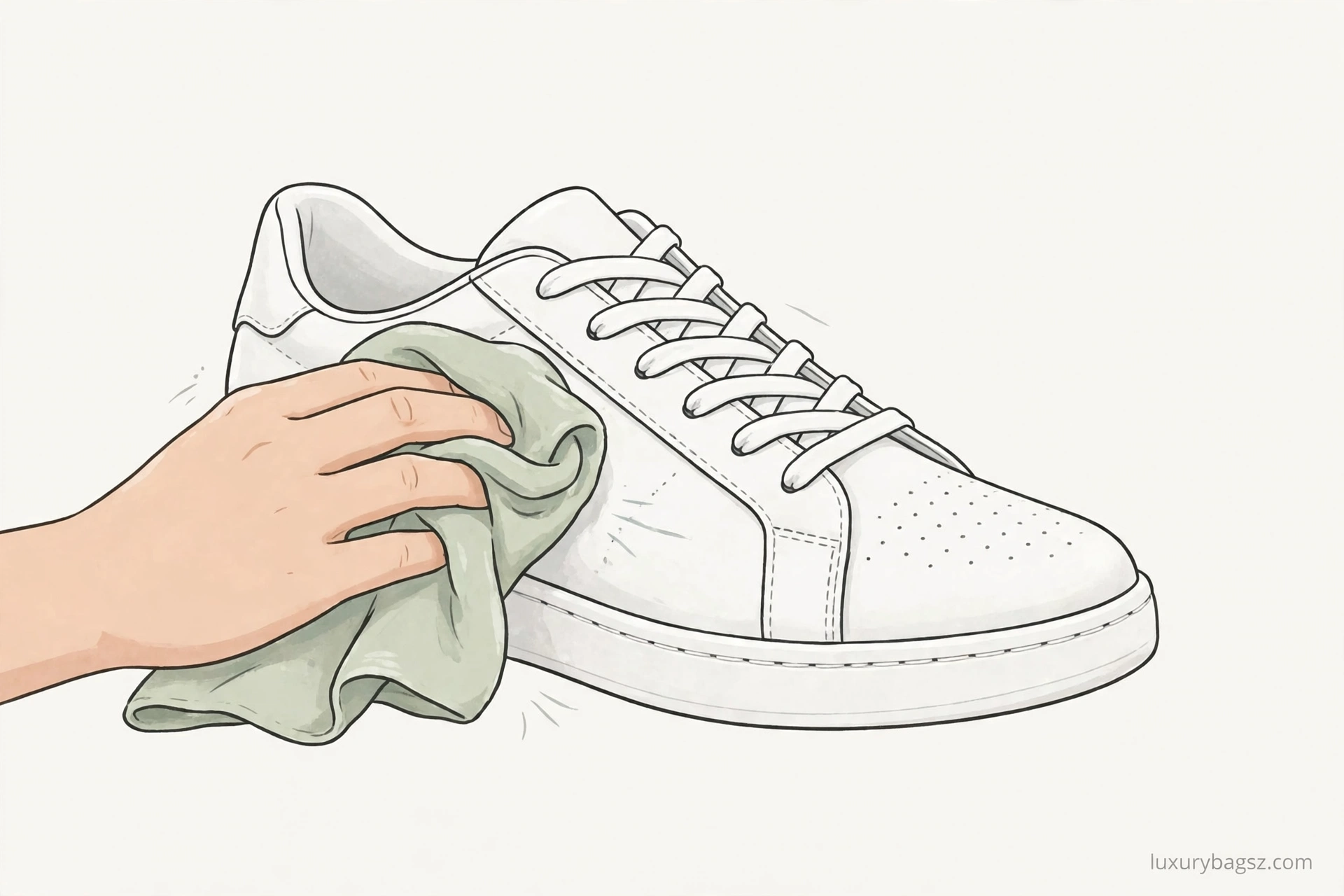
Clean with a soft, barely damp cloth for dust and light dirt. For deeper dirt, use a gentle leather cleaner, test it on a hidden spot first, and never soak the shoe or use harsh solvents.
Condition lightly, a few times a year, or monthly if you wear the pair daily. Our Hermes leather boots care guide covers the slow-drying rule, and the Saphir Renovateur guide explains a light conditioner suitable for smooth leather when used sparingly.
What to Check Before Buying
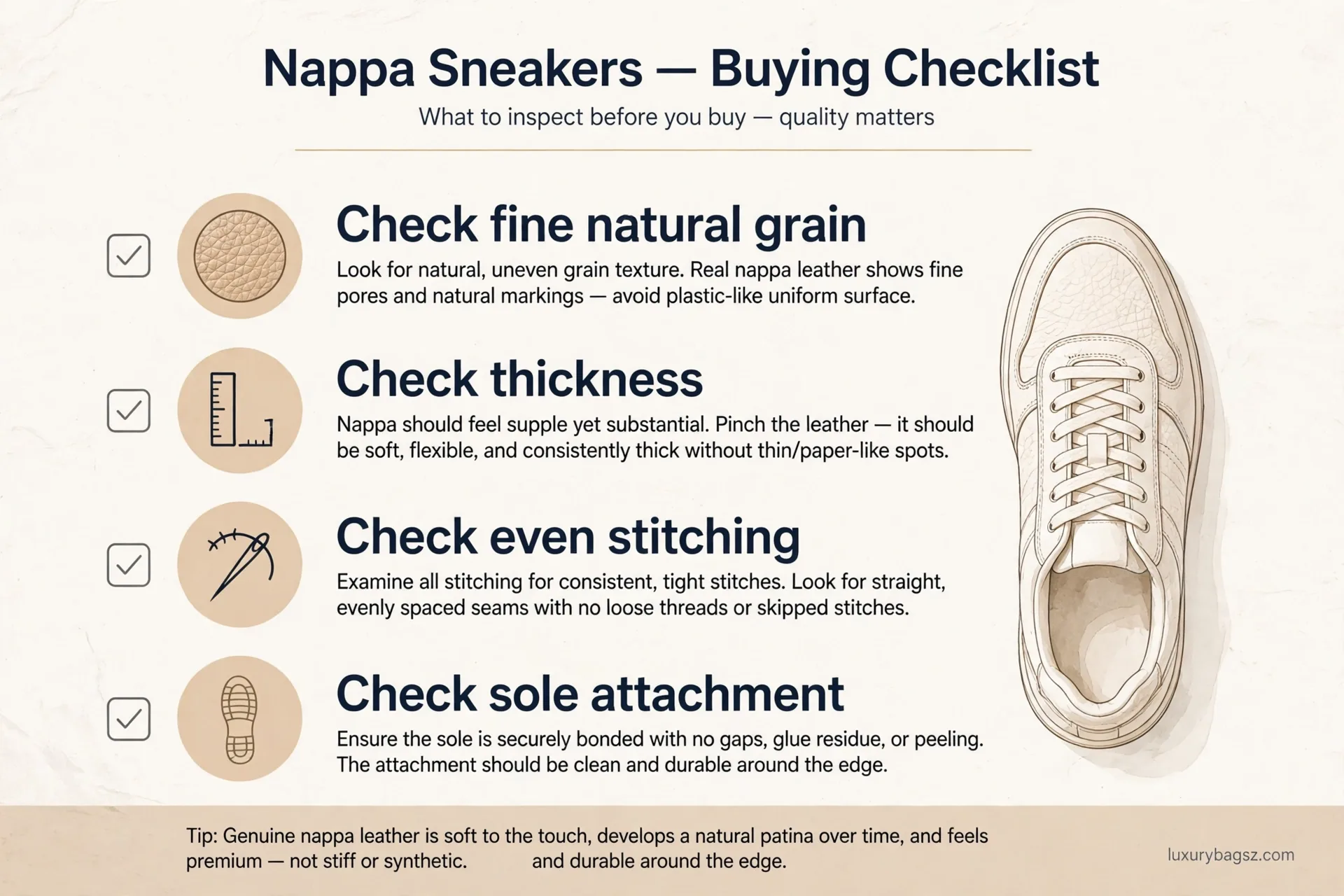
Feel the grain first. Genuine full-grain nappa feels smooth but not plasticky, with a fine, natural texture. A perfectly uniform, shiny, plastic feel often means a heavy coating over a lower-grade hide.
Check the thickness and the edges. Nappa sneakers should feel substantial without stiffness, and cut edges should look clean and dense, not fibrous or layered like bonded leather.
Check stitching and sole attachment too. Even the best nappa cannot save a sneaker with weak stitching or a glued sole that peels. Look for even stitching, a well-finished sole edge, and a maker that names the leather source.
When to Choose Something Else
Choose grained or pebbled leather if you scuff shoes often, since texture hides marks far better than smooth nappa. Choose waxed or oiled boot leather if you work outdoors or walk trails regularly.
Choose suede only if you accept its own care routine and avoid rain, or choose a technical synthetic if you need a washable, fully waterproof trainer. Each beats nappa at one job, and none matches nappa for soft, premium everyday comfort.
The honest rule is simple: match the leather to the life the shoe will actually live. Nappa wins the city, the office, and the airport, and loses the building site, the trail, and the downpour.
Nappa Beyond Sneakers
Nappa also appears in jackets, gloves, bags, and car interiors, for the same reason it suits sneakers: it feels soft against skin and looks premium without a heavy coating. A nappa jacket drapes better than a stiff cowhide jacket, and nappa gloves mould to the hand quickly.
The same weaknesses follow it everywhere. Nappa car seats stain from jeans dye, nappa bags scuff at corners, and nappa jackets mark in rain. In every use, protection and prompt cleaning matter more than the product name.
If you love nappa in one product, you will probably love it in sneakers too. Just budget the same care habit: spray before wear, wipe after wear, and condition lightly.
Frequently Asked Questions
What is nappa leather made from?
Usually lamb, calf, or goat skin, tanned with chromium and aluminium salts and tumbled until soft. The word describes the tanning and finishing style, not a single animal.
Is nappa leather good for sneakers?
Yes for everyday city sneakers: it is soft, comfortable, and tougher than cheap sneaker leather. It is not good for heavy outdoor use, where it scuffs and soaks up water.
Is nappa leather real leather?
Yes, genuine nappa is real, usually full-grain leather. Beware of cheap imitations that use the word nappa for coated split or bonded leather with a soft feel.
Is nappa leather durable?
It is durable for daily wear with care, resisting cracking and peeling far better than cheap leather. Its thin finish is vulnerable to scuffs, water, and stains, which is the main durability limit.
Is nappa leather waterproof?
No. It absorbs water easily because it has little protective wax or oil. Waterproofing spray before wear, and reapplied regularly, is essential in wet weather.
Does nappa leather crease?
Yes, it creases softly across the flex points, which is normal. Cracking or peeling is not normal and usually signals a lower-grade or imitation leather.
How do you clean nappa leather sneakers?
Wipe with a soft, barely damp cloth for light dirt, use a gentle leather cleaner for deeper dirt, and never soak them. Test any product on a hidden spot first.
Can you condition nappa leather?
Yes, lightly and infrequently, with a light neutral conditioner. Over-conditioning can darken nappa and make it feel greasy, so use less than you think you need.
Is nappa better than suede for sneakers?
Nappa is easier to wipe clean and handles light rain better with spray, while suede hides scuffs in its nap but needs dedicated suede products. For most buyers, nappa is the easier daily choice.
Why is nappa leather expensive?
Full-grain hides, chrome and aluminium tanning, and tumbling all cost more than making split or bonded leather. Luxury brands also charge for the soft, premium finish that cheaper leather cannot copy.
Final Verdict
Nappa leather is an excellent sneaker leather for the life most sneakers actually live: city streets, offices, airports, and weekends. It is soft from day one, tougher than cheap leather, and ages gracefully with basic care. Protect it from water, accept light scuffs, and do not ask it to do a work boot's job, and it will repay you with years of comfortable wear.






