

How to Store a Chanel Classic Flap Bag the Right Way
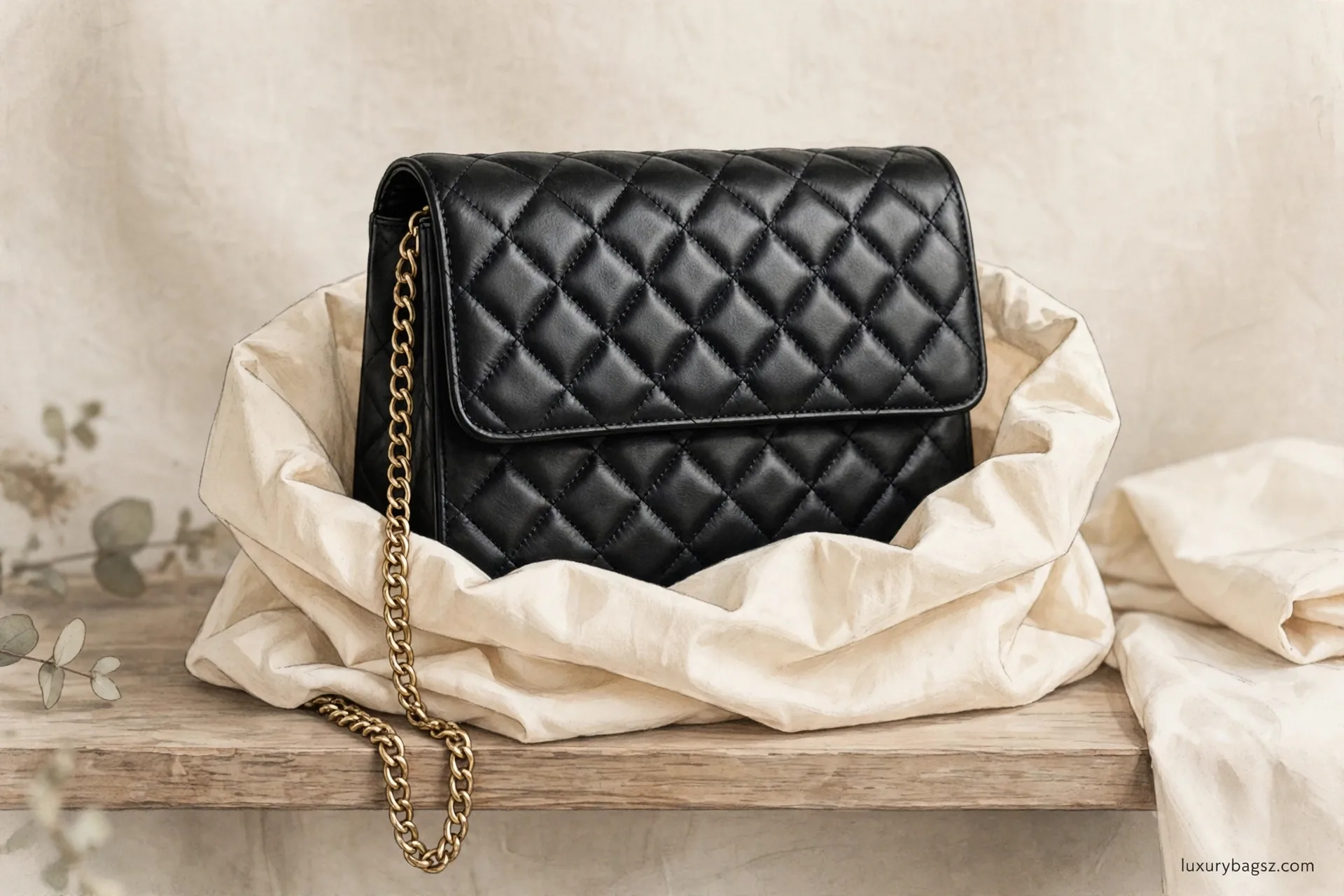
Storing a Chanel Classic Flap in Brief: Upright, Stuffed, Chain Inside
The right way to store a Classic Flap is simple: empty it, wipe it, stuff it lightly, tuck the chain inside, and stand it upright in its breathable dust bag. That single routine protects shape, leather and hardware at once, and it costs nothing beyond tissue and a few minutes.
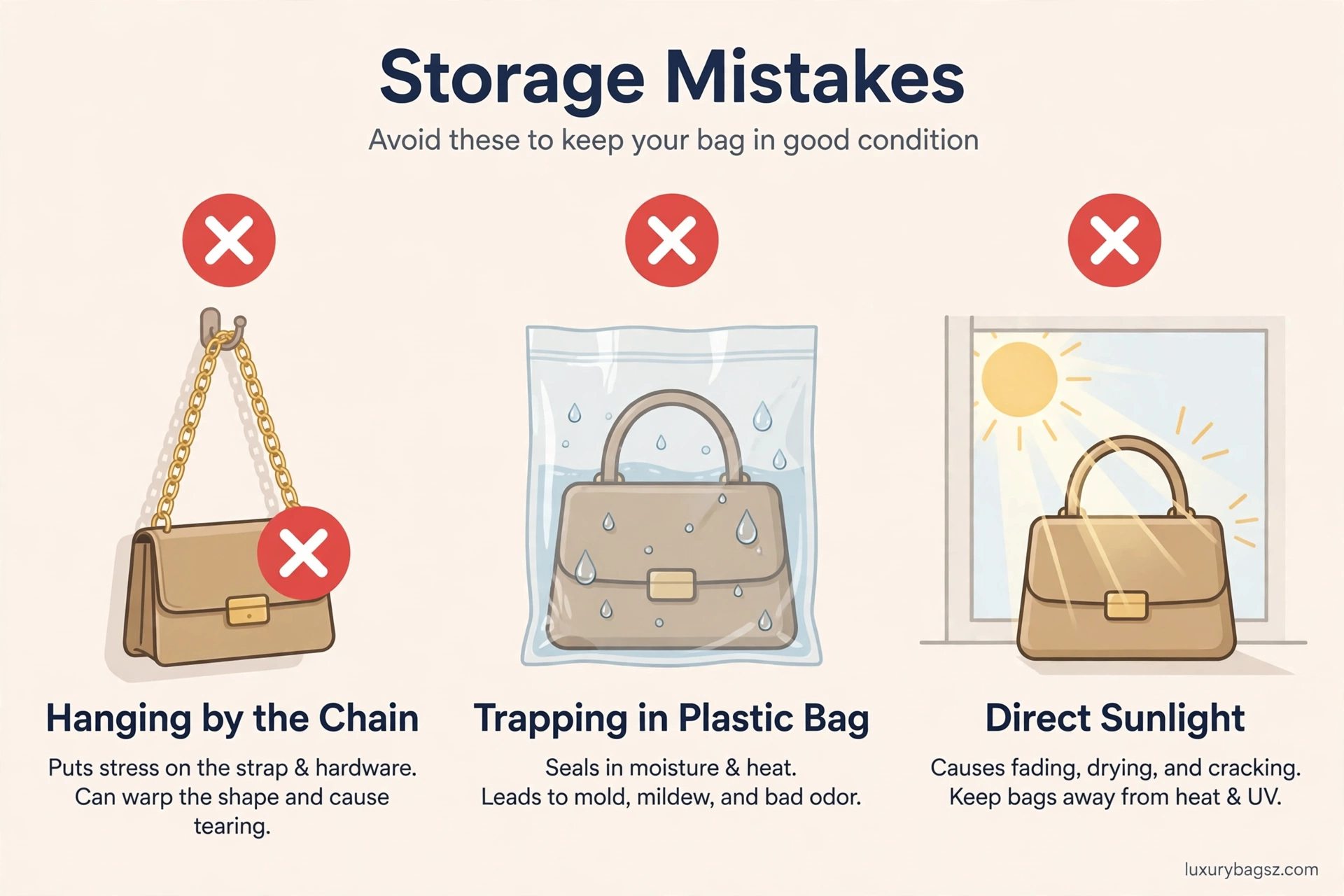
Never hang the bag by its chain, and never store it in plastic. Hanging stretches leather and stresses attachment points, while plastic traps moisture and encourages mould and discolouration. A cool, dry, ventilated shelf away from sunlight does the job far better.
Long-term care adds only a little more: rotate the bag every few months, air it out now and then, and check hardware and corners for early wear. A Classic Flap stored well keeps its structure and value for decades, which is exactly why the routine matters.
Key Takeaways

- Store the Classic Flap upright in its original breathable dust bag, never in plastic.
- Stuff lightly with acid-free tissue to hold shape without stretching seams.
- Tuck the chain strap fully inside, or wrap it in tissue, to protect quilted leather.
- Never hang the bag by its chain or strap.
- Keep it cool, dry and ventilated, away from sunlight, heat and damp.
- Rotate and air the bag every few months, and check hardware early for wear.
Prepare the Bag Before It Goes Away
Empty the bag completely before storage. Everyday contents press on the lining, stain interiors and distort shape over weeks. Check every pocket, including the zipped pocket and the slip pocket under the flap, since small items hide there.
Wipe the outside with a soft, dry cloth to remove dust and fingerprints. If the bag is damp from rain or humidity, let it air dry fully before it goes into the dust bag. Storing a damp bag invites mould and musty smells that are hard to remove.
Inspect corners, edges and the base for scuffs while you have the bag in hand. Early wear is cheaper to address than damage found a year later. For cleaning basics that pair with this routine, see our guide to cleaning Chanel bags.
Remove any bag organiser only if it presses the sides outward. A well-fitting insert can stay in place and protect the lining, but an overfilled organiser strains seams. When in doubt, take it out and use tissue instead.
Stuffing: Hold the Shape Without Stretching
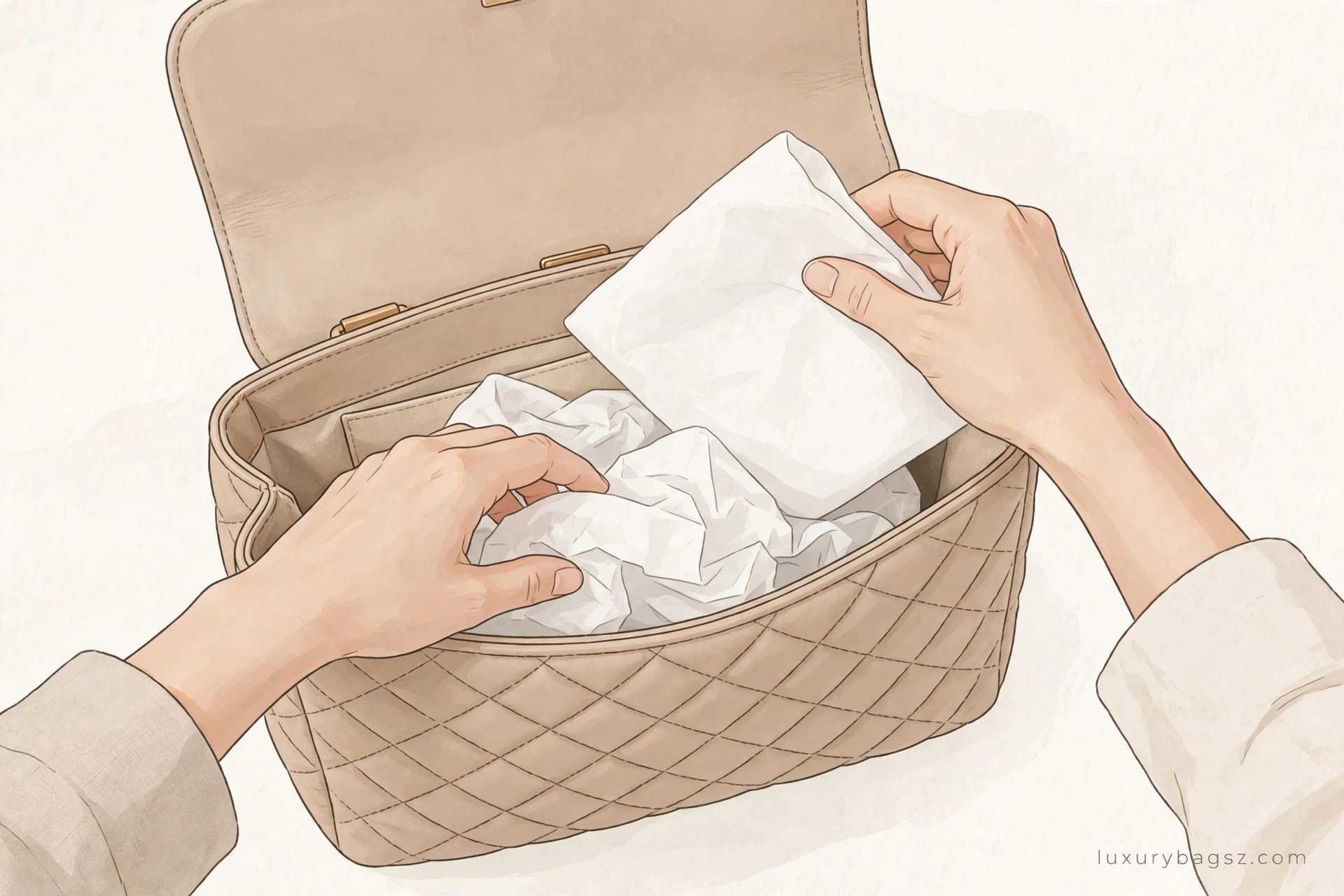
Stuff the bag lightly with acid-free tissue paper, shaping it to fill the body without forcing the sides out. Regular tissue can transfer acids over time, so acid-free tissue is worth the small cost. The goal is a natural, relaxed shape, not a drum-tight fill.
Classic Flaps have a double-flap construction, so add a very light layer of tissue in the gap between the interior and exterior flaps. This stops the flaps pressing together and marking each other during long storage. Keep the layer thin, since bulky stuffing strains the flap hinges.
Size changes the amount of tissue needed. A small flap needs only a few sheets, while a jumbo needs more, shaped to support the base and sides evenly. Our guide to Chanel Classic Flap sizes helps you judge how much fill each size takes.
Do not use newspaper, coloured tissue or old clothes as stuffing. Newsprint transfers ink, coloured tissue can bleed, and heavy clothes stretch seams. Plain acid-free tissue, lightly placed, is the safest and simplest choice.
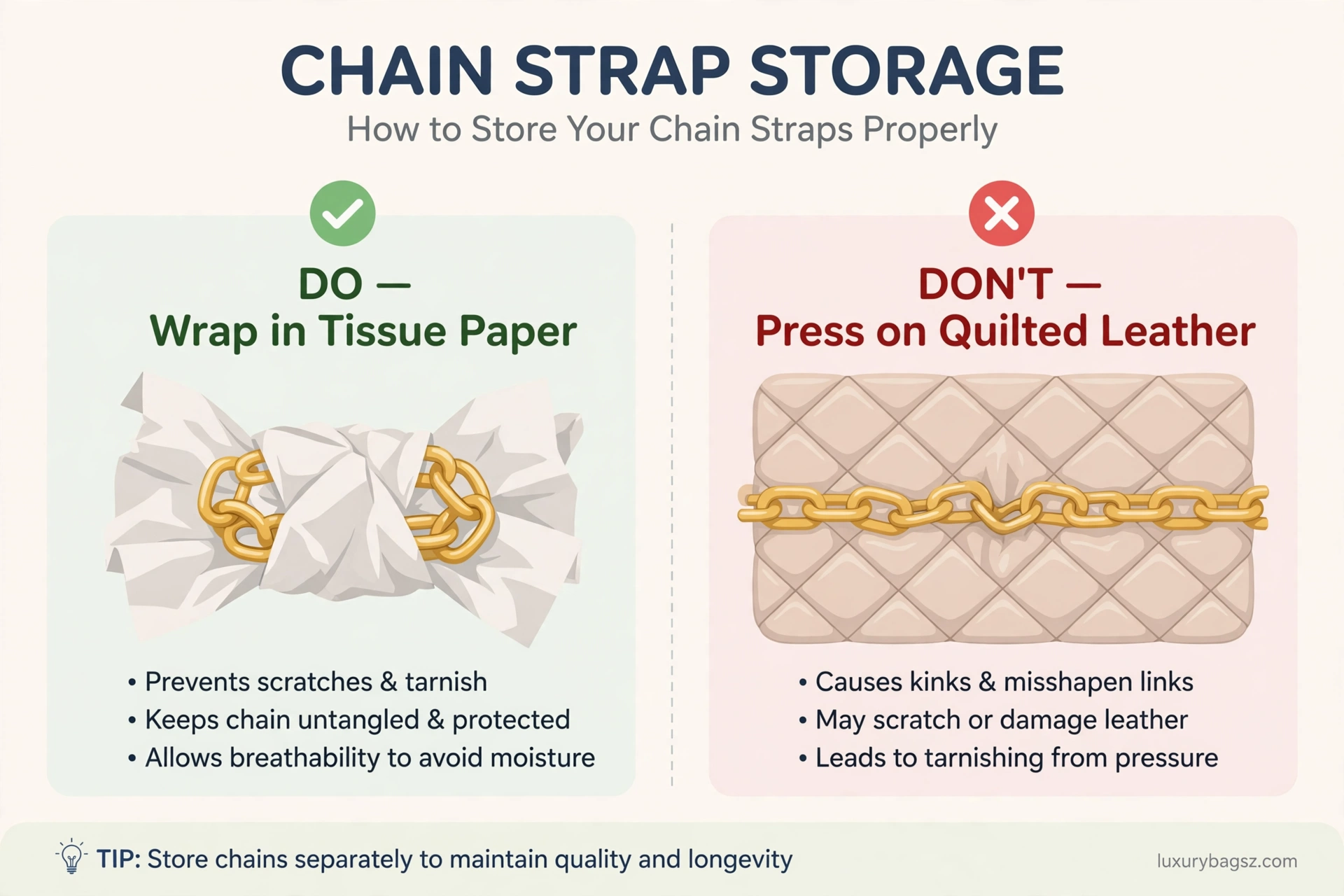
Chain Care: The Detail Most Owners Get Wrong
The chain strap causes more storage damage than any other single part. Left lying across the bag, it presses dents and scratches into quilted leather, especially soft lambskin. Those marks can become permanent after months of pressure.
Tuck the chain completely inside the bag, looped neatly and wrapped in tissue paper if you prefer extra protection. Alternatively, wrap the chain in tissue and lay it beside the bag inside the dust bag, so metal never touches leather. Either method works, as long as the chain cannot rest on the quilting.
Never hang the bag by its chain, even for a short display. Hanging stretches the leather woven through the chain and stresses the attachment points. Hooks and hangers look tidy, but they trade long-term structure for short-term convenience.
Check the chain when you next take the bag out. Look for kinks, loose links and wear where the chain meets the leather. Early attention keeps a small repair small, while ignored wear can lead to a broken strap at the worst moment.
Dust Bag, Shelf and Room Conditions
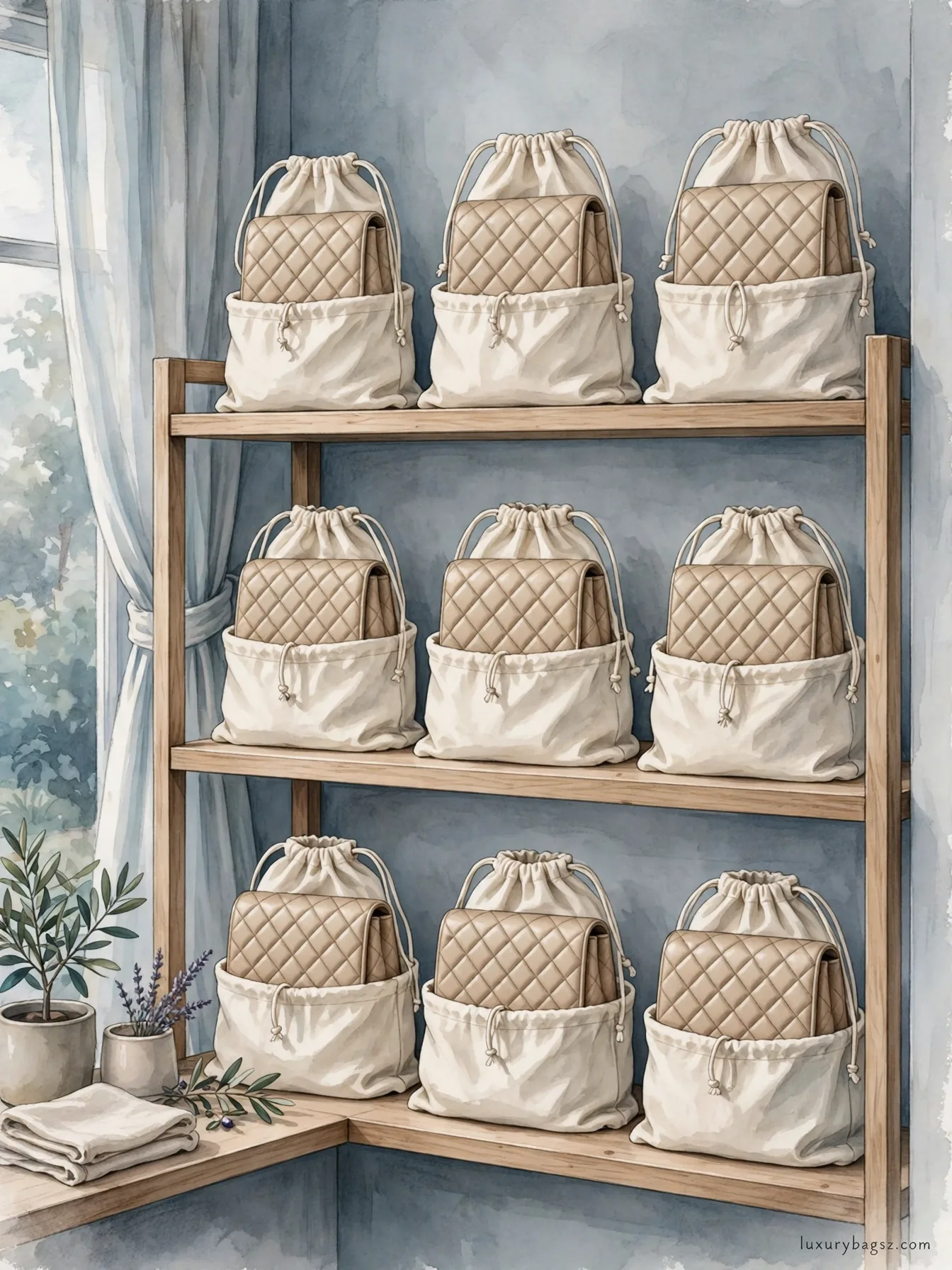
Use the original cotton dust bag, which breathes and keeps dust off the leather. If the original is lost, any clean, breathable cotton bag works. Avoid plastic covers, vacuum bags and sealed boxes, all of which trap moisture against the leather.
Stand the bag upright on a shelf with air around it, rather than stacking bags on top of each other. Stacking squashes quilting and presses hardware into neighbouring leather. If shelf space is tight, give the Classic Flap its own spot and move a less delicate bag instead.
Room conditions matter as much as the bag itself. Choose a cool, dry, ventilated room away from direct sunlight, radiators and outside walls that run damp. Avoid basements, attics and bathrooms, where temperature and humidity swing the most.
One third-party guide suggests 40 to 60 percent humidity as ideal for Chanel leather storage. Treat that as a guide range, not a Chanel-published figure, since the house does not give a universal home humidity setting. A stable, moderate room beats a perfect number that swings daily.
Mistakes That Quietly Ruin a Classic Flap
The most common mistake is hanging the bag by its chain in a wardrobe. It looks organised, but it stretches leather and warps shape over months. Upright shelf storage is less photogenic and far kinder to the bag.
Plastic storage is the second trap. Clear boxes and garment bags seem protective, yet they seal in moisture and heat. Mould, musty smells and discolouration follow, especially in warm climates. Breathable cotton is the only cover the bag needs.
Sunlight is the third quiet enemy. A bag left near a window fades unevenly, and light colours show it fastest. Heat from radiators and lamps dries leather in the same way, so keep the shelf shaded and cool.
Finally, do not store the bag touching dark denim, raw textiles or other bags. Colour transfer and pressure marks build slowly and are hard to reverse. A little space between items is one of the cheapest forms of protection available.
Long-Term Routine: Rotation, Airing and Checks
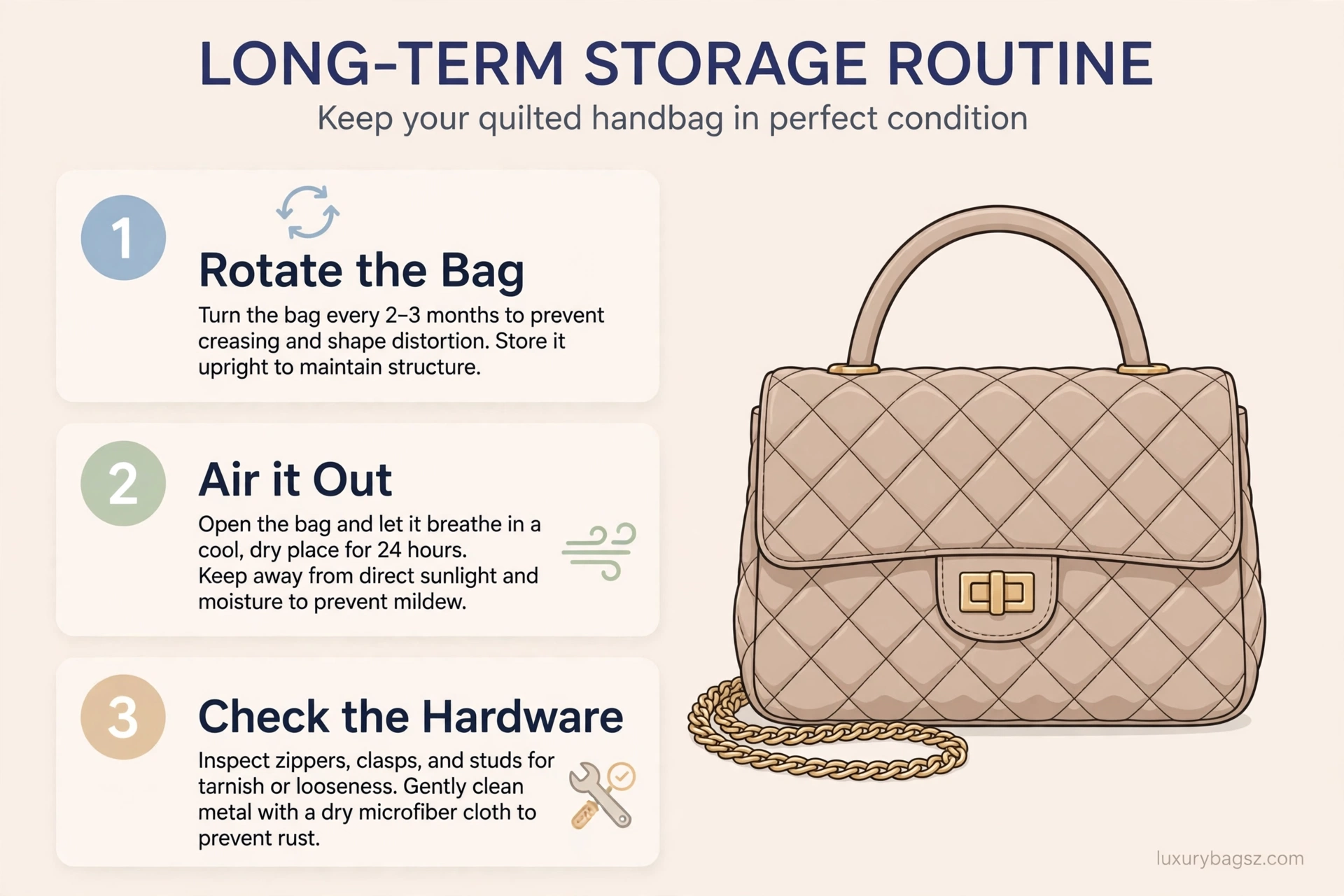
Rotate the bag every few months so one side is not squashed against a wall or another item. Turn it around, refluff the tissue lightly, and check that the shape still sits naturally. Rotation takes a minute and prevents the slow creasing that long storage causes.
Air the bag out now and then by opening the dust bag in a cool, dry room for a few hours. Fresh air keeps the interior smelling clean and lets any trapped moisture escape. Keep the bag out of sunlight during airing, and return it to its dust bag the same day.
Check hardware, corners and the chain at each rotation. Look for tarnish, loose stitching, corner wear and lining marks, and have a specialist look at anything that worries you early. Small repairs cost far less than restoration after years of neglect.
In humid climates, line interior pockets with acid-free tissue so pocket linings cannot stick together. Replace the tissue when you rotate the bag, since old tissue absorbs moisture over time. Fresh tissue is cheap insurance for a valuable bag.
Material Notes: Lambskin, Caviar and Patent
Lambskin needs the most care. It is soft, buttery and easily marked by chains, denim dye, hand cream and rain. Keep lambskin Classic Flaps away from dark jeans, store them with the chain tucked inside, and wipe them with a soft dry cloth before storage.
Caviar leather is firmer and more forgiving. It resists scratches and holds its shape well, which makes it easier to store. Even so, the same routine applies: upright, stuffed, chain inside, dust bag on. Caviar tolerates handling better, not neglect.
Patent leather has its own risk: prolonged humidity and contact with other materials can cause discolouration and sticking. Store patent bags separately, with tissue between surfaces, and keep them out of warm, damp rooms. Never stack a patent bag against another bag.
The leather differences that shape daily care also shape storage, as explained in our guide to caviar versus lambskin leather. And if you own both flap styles, note that the Classic Flap's double-flap build needs the light tissue layer described earlier, unlike the simpler design compared in our Classic Flap versus Boy Bag guide.
Frequently Asked Questions
1. Should I store my Classic Flap in its dust bag? Yes. Store it upright in its original breathable cotton dust bag. Never use plastic, which traps moisture and encourages mould and discolouration.
2. How do I stuff a Classic Flap for storage? Stuff it lightly with acid-free tissue, shaped to fill the body without stretching seams. Add a very light tissue layer between the interior and exterior flaps.
3. Where should the chain strap go during storage? Tuck it fully inside the bag, looped neatly, or wrap it in tissue paper. Never leave it lying across the quilted leather, where it presses dents and scratches.
4. Can I hang my Classic Flap by its chain? No. Hanging stretches the leather and stresses the attachment points, which can warp the shape and weaken the strap over time. Store it upright on a shelf.
5. What humidity is best for storing a Classic Flap? One third-party guide suggests 40 to 60 percent humidity. Treat that as a guide range, not a Chanel-published figure, and prioritise a stable, moderate room over a perfect number.
6. Can I store bags stacked on top of each other? It is best not to. Stacking squashes quilting and presses hardware into neighbouring leather. Give the Classic Flap its own upright spot on the shelf.
7. How often should I rotate a stored bag? Every few months. Turn it, refluff the tissue, air it briefly in a cool dry room, and check hardware, corners and the chain for early wear.
8. Does lambskin need different storage from caviar? The routine is the same, but lambskin needs more care: keep it from chains, dark denim, hand cream and rain, since it marks far more easily than firm caviar.
9. Can I use newspaper to stuff my bag? No. Newsprint transfers ink and regular tissue can transfer acids. Use plain acid-free tissue, lightly placed, for safe long-term stuffing.
10. Should I use a bag organiser during storage? Only if it fits without pressing the sides outward. A well-fitting insert protects the lining, but an overfilled organiser strains seams, so tissue is safer when in doubt.
Final Verdict: Five Minutes of Care Protects Decades of Value
Storing a Classic Flap well takes almost no effort: empty it, wipe it, stuff it lightly, tuck the chain inside, and stand it upright in its dust bag. Add rotation and a quick check every few months, and the bag will keep its shape, leather and hardware for as long as you own it.






