How to Care for Designer Clothing and Extend Its Life: Storage, Rotation, Repair and Professional Care
Wear, Rest, Check, Then Store It Properly
The routine that keeps designer pieces going longest is simple: wear something, give it time to air and recover, look it over briefly, then put it away in a way that holds its shape. Most damage comes from poor storage, constant repetition and small faults left alone, not from washing.
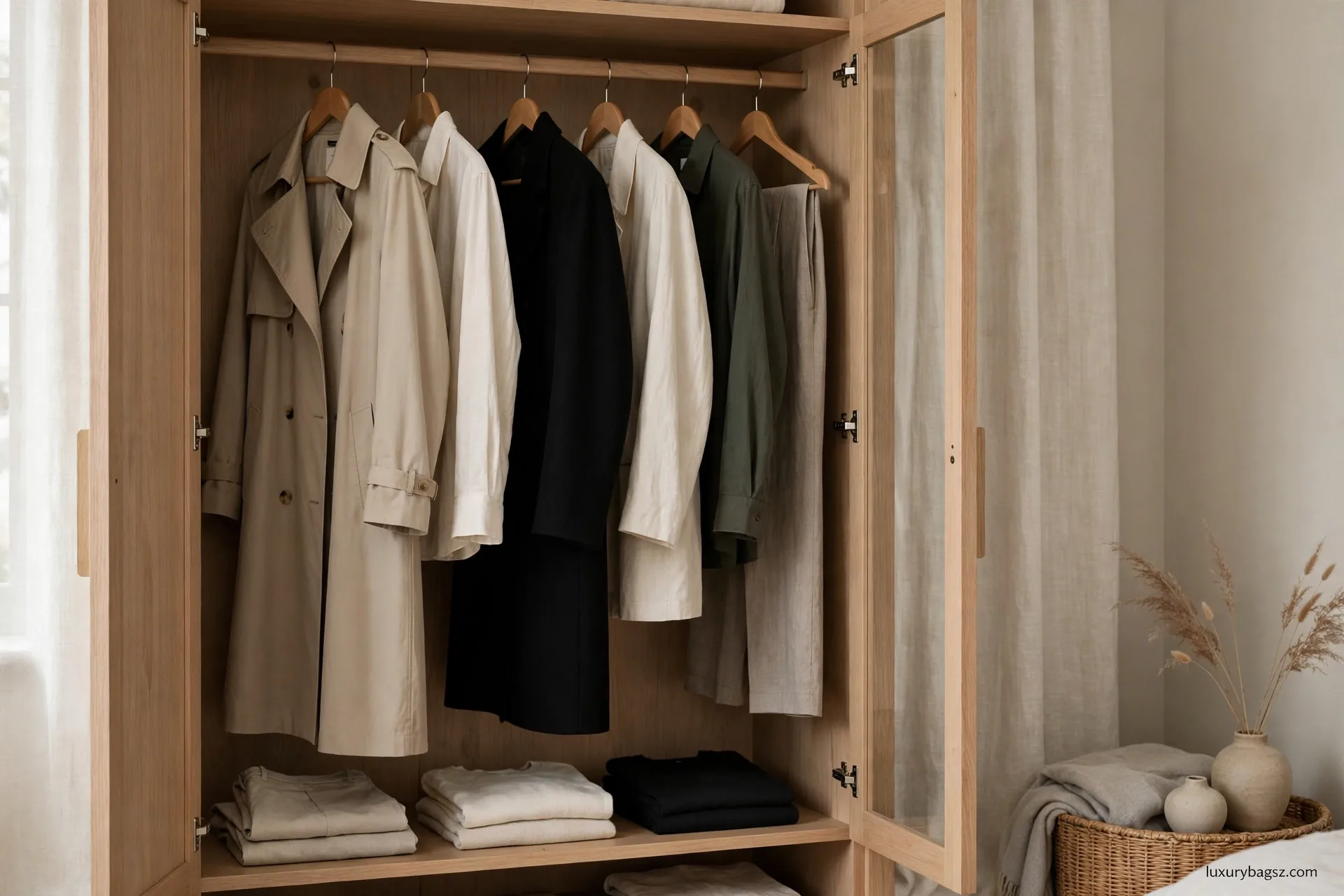
Hang tailored jackets, coats, trousers and dresses on broad wooden or padded hangers, fold knitwear loosely so it does not stretch, and keep the wardrobe cool, dry, dark and aired. Rest tailored pieces and knits for at least a day between wears.
Fix a loose button, dropped hem or tiny hole in the week you spot it, while it is still cheap. Save full professional cleaning for when a piece is genuinely soiled, rather than treating it as an automatic step after every wear.
Designer Clothing Care in Brief
Designer clothing lasts longest when care starts before washing ever comes into it. The cut, the fabric and the finishing are what you paid for, and they are damaged most often by storage, repetition and delay: a jacket crushed on a wire hanger, a knit folded wrong, a loose button ignored until the fabric tears around it.
This guide is the umbrella view. It covers how to store designer pieces, how to rotate them so no single garment carries all the wear, how to repair small damage early, and how to choose professional care wisely. Fibre-by-fibre washing detail belongs in the dedicated washing guides, and this guide points to those where they fit rather than repeating them.
Designer clothing is not fragile by nature. A well-cut wool suit, a structured coat and a good knit are made to be worn for years. What shortens their life is usually not the fabric giving up, but the care around it giving up first.
Key Takeaways
- Storage shapes life: hang structured pieces, fold knitwear, and never crush garments together.
- Rotation matters: rest days let fibres recover, dry out and hold their shape longer.
- Air garments after wear before putting them away; most pieces do not need cleaning after one wear.
- Repair small damage at once: loose buttons, dropped hems and small holes are cheap now and costly later.
- Use wide, padded or wooden hangers for jackets and coats, and never use wire hangers for structured pieces.
- Keep wardrobes cool, dry, dark and ventilated, and protect against moths without harsh chemicals near fabric.
- Choose cleaners by experience with designer pieces, not by price or speed alone.
- Keep care labels, receipts and repair records; they guide future care and protect resale value.
Start With the Label, the Cut and the Fabric
Every designer garment carries care information, and the label is the safest starting point. Read the fibre content, the cleaning symbols and any maker warnings before you wash, press or store a piece. A label that says dry clean only is not a suggestion to test at home, especially on structured tailoring with fused or canvassed construction.
Cut changes care as much as fibre does. A structured jacket has shoulders, canvas and shaping that water and heat can distort, while an unstructured shirt or soft dress is more forgiving. A pleated skirt, a bonded fabric or a garment with leather trim, beading or bonded seams needs specialist handling even if the main fabric looks hardy.
Fabric families behave differently in storage too. Wool and cashmere attract moths and need protection. Silk creases and marks with water and heat. Linen creases naturally and softens with wear. Cotton is sturdy but fades and shrinks if handled carelessly. Knowing the family helps you choose storage, hangers and cleaning, even before you look at washing detail.
If a label is missing, faded or in doubt, treat the garment as delicate. Photograph labels when a piece is new, so the information survives even if the label wears out. A photo of the label, the receipt and the maker's care notes is a small habit that prevents many expensive mistakes. Keep those photos in one place, such as a wardrobe folder on your phone, so you can check them in a shop or at a cleaner without hunting through drawers.
Storage: Hang, Fold or Roll, by Shape
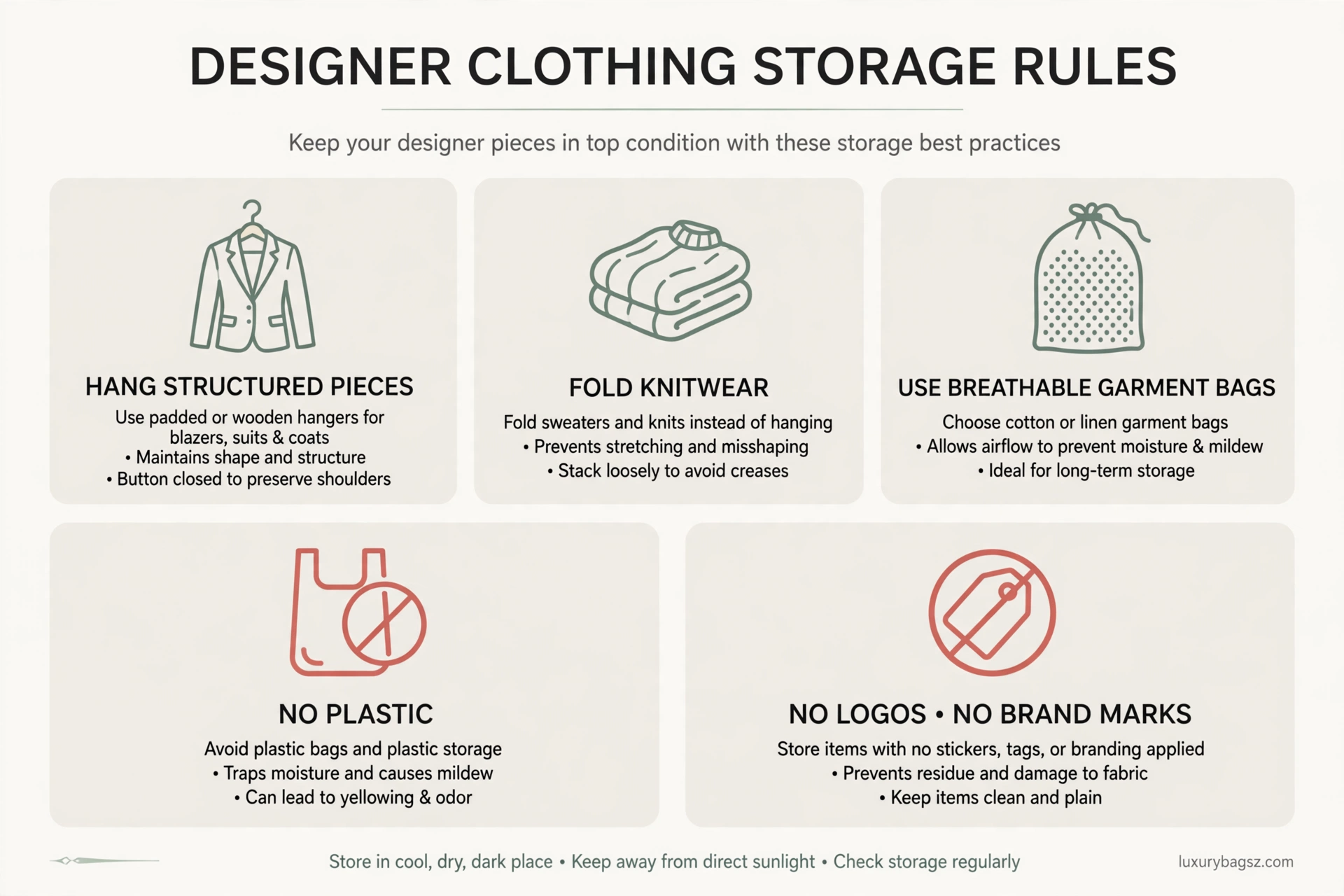
Storage is the highest-impact care decision, and the rule is to support the garment's shape. Hang structured jackets, coats, trousers and dresses on wide wooden or padded hangers that match the shoulder width. A hanger that is too narrow creates shoulder points, while a wire hanger distorts shape and can rust or snag.
Fold knitwear. Heavy knits stretch under their own weight on a hanger, and the damage shows as elongated shoulders and a longer body. Fold knits loosely with tissue between layers, and store them in drawers or on shelves where they are not compressed. Lightweight knit tops can hang on padded hangers if they are short and light, but heavy sweaters should always be folded.
Trousers hang best by the waistband or clipped at the cuff with padded clips, falling straight so creases set evenly. Skirts hang from the waistband on clips or a skirt hanger. Delicate dresses and gowns hang with support, with straps or heavy beading supported so weight does not pull on one seam.
Use breathable garment bags for pieces you store long term, and avoid sealed plastic bags, which trap moisture and encourage mildew and yellowing. The same breathable-bag principle applies to accessories, as the silk scarf storage guide shows for scarves. Leave space between garments so air circulates and fabrics do not crush each other.
A crowded wardrobe is a wardrobe that creases, fades unevenly and hides moth damage until it is widespread.
The Wardrobe Environment: Light, Air, Damp and Pests
Where you store clothing matters as much as how. Keep wardrobes in a cool, dry room away from direct sun, radiators and damp outside walls. Sun fades colour unevenly, heat dries fibres and adhesives, and damp invites mould and musty odours that are hard to remove.
Air circulation prevents mustiness. Open wardrobe doors occasionally, avoid packing shelves solid, and do not store clothing in sealed boxes in a damp garage or attic. Cedar blocks, lavender sachets and other natural deterrents can help against moths, but keep them from direct contact with fabric, since oils and dyes can mark delicate materials.
Moths are the quiet enemy of wool and cashmere. Inspect knitwear and wool suits at the start of each season, looking for small holes, larvae casings and thinning patches. If you find damage, isolate the piece at once, clean it, and check neighbours before the problem spreads. Freezing is sometimes used for infested pieces, but follow a reliable method and protect the garment in a sealed bag, or ask a cleaner for advice.
Prevention beats treatment. Moths are drawn to soiled wool, so never store a worn, uncleaned knit or suit for a season. Body oils, food traces and perspiration all attract pests, which is why the rule to clean before storage matters so much. Vacuum wardrobe shelves and drawers at seasonal change, and check dark, undisturbed corners where larvae hide.
A wardrobe that is cleaned, ventilated and inspected regularly rarely suffers a serious infestation, while a wardrobe that is packed and forgotten can hide damage for months.
Shoes and bags stored in the same wardrobe need their own care, and leather pieces should not press against delicate garments. Dyes can transfer, hardware can snag, and heavy bags can crush folded knits. Give each category its own zone, and keep pale garments away from dark, newly dyed items.
Rotation and Rest: The Cheapest Way to Extend Life
Rotation is simple and powerful. A garment worn daily never fully dries, recovers or releases creases. Wool in particular benefits from rest: fibres relax, moisture evaporates and the garment returns to shape. Aim for at least a day of rest between wears for suits, jackets and knitwear, and longer for heavy coats.
Plan rotation around real life, not an ideal wardrobe. If you wear a suit for work, two or three suits rotated through the week last far longer than one suit worn daily, even if each suit is worn more carefully. The same applies to favourite knitwear, coats and dresses: a second piece in rotation is often cheaper than replacing the first piece early.
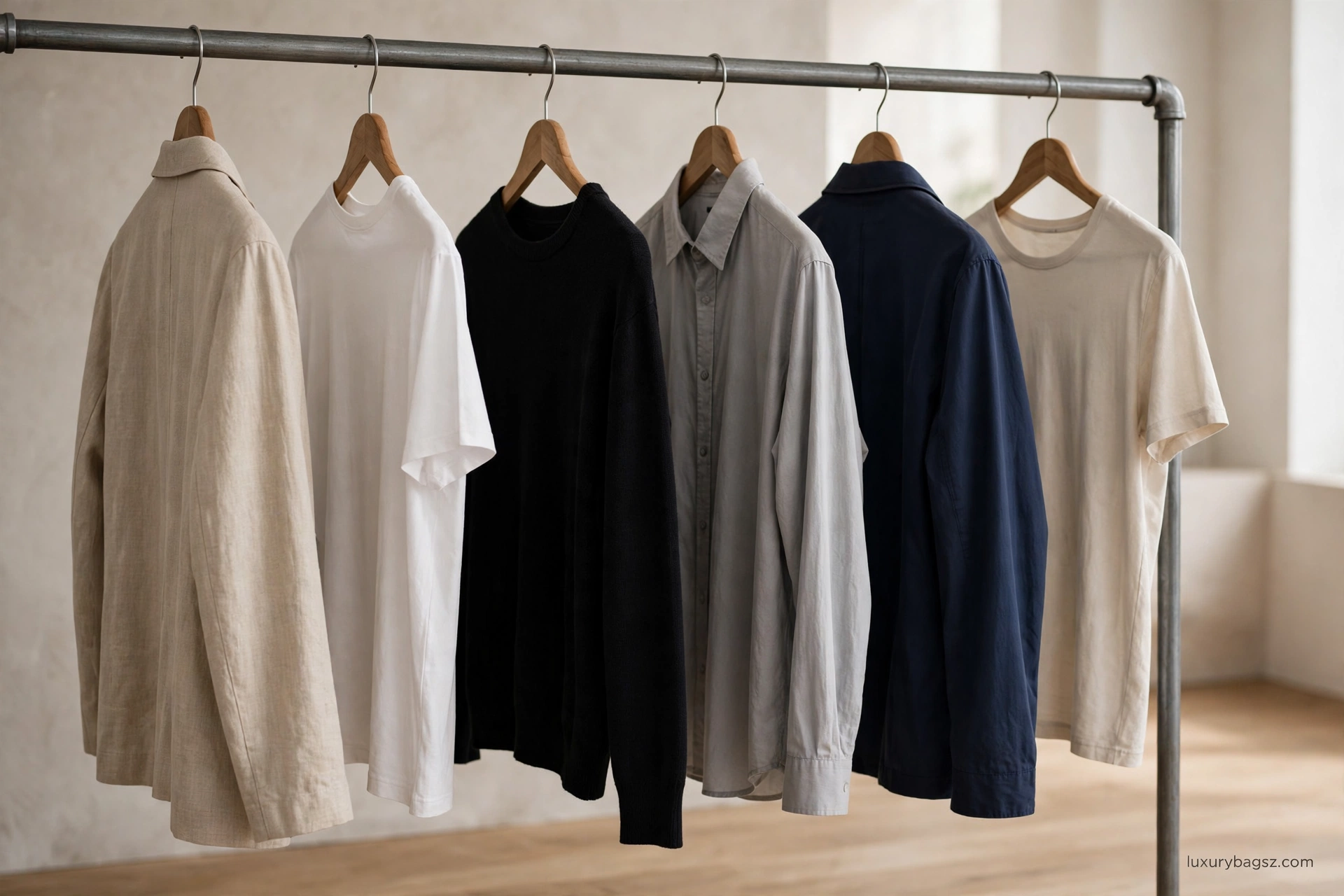
Rest also means airing. After wear, hang a garment in fresh air for a few hours before returning it to the wardrobe. Airing removes odour and surface moisture without washing, and it is the reason many designer pieces need cleaning far less often than people assume. A garment that smells fresh after airing does not need to go to the cleaner.
Keep a simple rotation habit: wear, air, inspect, store. That short loop catches loose buttons, small stains and wear points while they are still small, and it keeps any one garment from carrying a whole season of wear alone.
Airing, Brushing and Spot Care Between Cleans
Between cleans, gentle maintenance does most of the work. Brush wool suits and coats with a soft clothes brush after wear, brushing downward to remove dust and surface lint. Brushing keeps fabric looking fresh, reduces the need for cleaning, and prevents dust from grinding into fibres.
Steam is a gentler refresher than ironing for many garments. A handheld steamer relaxes wrinkles and freshens fabric without pressing a shine into wool or flattening texture. Hold the steamer away from the fabric, work from top to bottom, and let the garment dry before storing. Never steam leather trim, beading or bonded areas unless the maker allows it.
Spot care needs restraint. Blot a fresh mark with a clean, dry cloth, working from the outside inward so the mark does not spread. Do not rub, and do not reach for a stain remover on a designer piece without testing it on a hidden area first. Many home stain products are too harsh for silk, wool or dyed fabrics, and a stain made worse by the wrong product is harder for a professional to fix.
If a mark does not lift with gentle blotting, or if the fabric is silk, light-coloured wool or a bonded material, take the piece to a professional and point out the mark honestly. Tell the cleaner what the mark is and what you have already tried; that information changes the treatment and improves the result.
Washing at Home: When It Fits, and When It Does Not
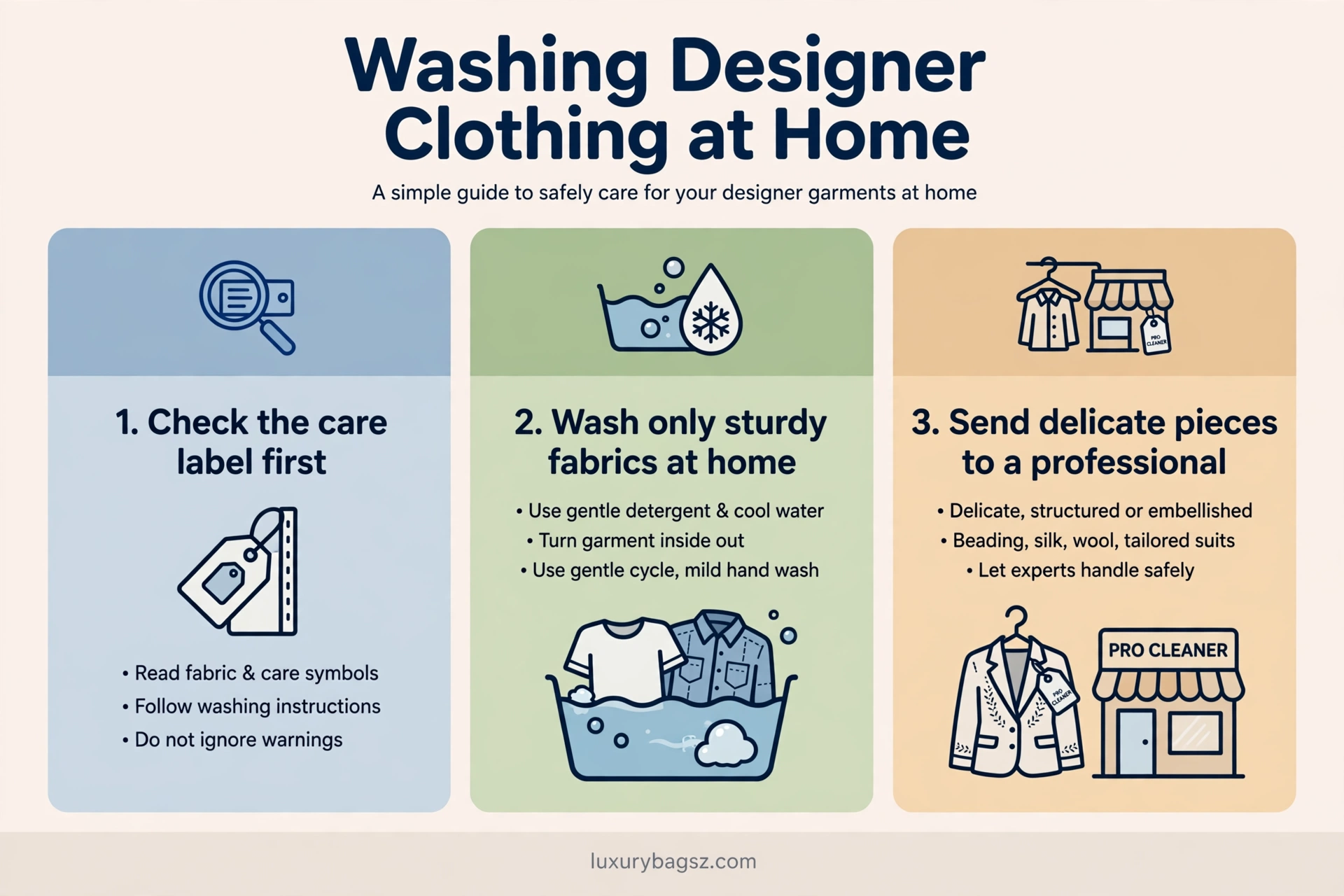
Some designer clothing can be washed at home, and some cannot. The label decides, not the fabric name alone. A cotton shirt with a simple construction may wash well, while a cotton garment with structure, bonding or delicate trim may not. When the label allows home washing, follow it exactly, and use the gentlest method it permits.
General principles apply across fibres. Wash similar colours together, turn garments inside out where that protects the outer surface, use a gentle detergent, and avoid hot water and aggressive spinning unless the label allows them. Dry flat or on a line away from direct sun, and never tumble-dry a designer piece unless the label explicitly allows it.
Detailed washing methods for cotton, linen and silk live in the dedicated fibre guides, and this guide does not repeat their step-by-step routines. For one delicate silk item, the silk scarf washing guide shows how gentle a silk wash needs to be.
The point here is judgement: home washing suits simple, unstructured pieces with clear labels, while structured, embellished, bonded or dry-clean-only pieces belong with a professional.
When in doubt, ask before you wash. A cleaner can advise whether a piece is washable, and the cost of asking is far lower than the cost of a shrunken, distorted or faded garment. If a piece matters to you, uncertainty alone is a good reason to choose professional care.
Drying is where home washing most often goes wrong. Never wring a designer garment, since wringing twists fibres and distorts shape, especially in knits and silk. Instead, press water out gently with a clean towel, reshape the garment on a flat surface, and let it dry away from direct heat and sun. Hanging a wet knit stretches it, and hanging a wet structured garment pulls its shape, so flat drying is the safer default for anything delicate.
Detergent choice matters too. Use a gentle detergent made for delicates, measure it carefully, and avoid bleach, optical brighteners and fabric softeners on designer pieces unless the label allows them. Excess detergent leaves residue that dulls fabric and attracts dirt, while softeners coat fibres and can affect how a garment drapes and breathes.
Rinse thoroughly, and never pour detergent directly onto fabric; dissolve it in water first where the method allows.

Repairs: Fix Small Damage the Week It Appears
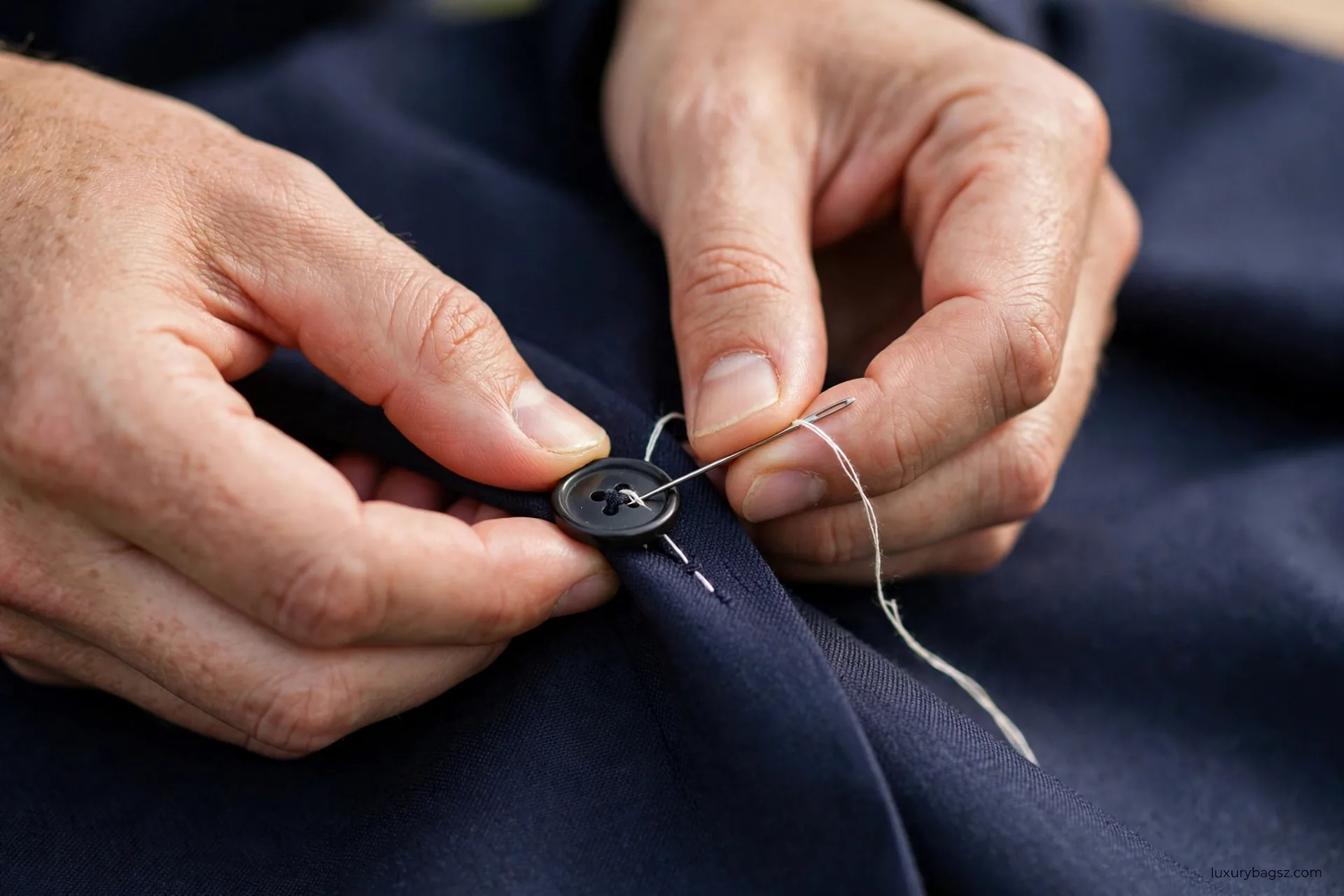
Repairs are where designer clothing either survives or slowly falls apart. A loose button, if ignored, tears the fabric around its holes as it pulls. A dropped hem catches on shoes and frays. A small moth hole, left alone, becomes a larger hole as the fabric weakens around it.
Learn a few basic repairs or find a good tailor promptly. Replacing a button, securing a loose thread, tacking a hem and closing a small seam are quick jobs, and a tailor can do them well for a modest fee. Keep spare buttons that arrive with designer pieces in a labelled envelope, since matching buttons later can be difficult.
Know the limits of home repair. Restitching a load-bearing seam, repairing a torn pocket, fixing a lining, replacing a zip or reweaving a visible hole are professional jobs. A home attempt with the wrong thread, tension or technique can leave extra holes and puckering that a tailor then has to work around.
Inspect garments on a schedule. A monthly check of your most-worn pieces, plus a seasonal check of stored pieces, catches nearly all small damage early. Check buttons, hems, seams, pockets, linings, zips and areas that rub, such as underarms, cuffs and inner thighs, where wear shows first.
Tailors, Cobblers and Restorers: Building Your Team
A good tailor is as important as a good cleaner. Ask whether the tailor has worked on designer construction, and look at finished work before trusting a valuable piece. A tailor who understands canvassed jackets, hand-finished hems and delicate linings will protect the cut, while a rushed alteration can change how a garment hangs permanently.
Alterations deserve thought before cutting. Taking in, letting out, shortening and lengthening all change proportions, and some changes cannot be reversed. Discuss how the garment should sit, whether original hems and finishes can be preserved, and what happens to spare fabric. Keep spare fabric and removed buttons, since they help future repairs.
For garments with leather trim, hardware or specialist materials, ask whether the tailor works with those materials or can recommend a restorer. A general tailor may do excellent cloth work and still be the wrong choice for a beaded gown or a bonded coat. Matching the specialist to the problem is part of good care.
Build relationships before you need them urgently. A tailor and a cleaner who know your wardrobe, your preferences and your pieces will give better advice and faster help when a wedding, a trip or an event creates a deadline.
Choosing Professional Cleaning Wisely
Professional cleaning is not all the same. Dry cleaning suits structured garments and delicate fibres, but it uses solvents, and frequent dry cleaning can wear fabric, fade colour and weaken trims over time. That is why airing, brushing and spot care matter: they reduce how often a piece needs full cleaning.
Choose a cleaner with experience in designer and couture pieces, and ask directly about solvents, hand-finishing and pressing methods. A good cleaner will inspect the garment with you, note existing marks, loose buttons and fragile areas, and warn you when a stain may not fully lift. That honesty is a sign of competence, not a warning to go elsewhere.
Point out stains, their cause and anything you have tried, and mention any previous cleaning problems. Do not send a garment with a stain you have already treated with a home product without saying so, since the product changes how the cleaner should treat it.
Check cleaned garments before leaving the shop. Look for remaining marks, shine from pressing, missing buttons and changes in shape. Raising a problem at the counter is far easier than raising it weeks later, and a reputable cleaner will rework a genuine problem.
Pressing, Steaming and Ironing Without Damage
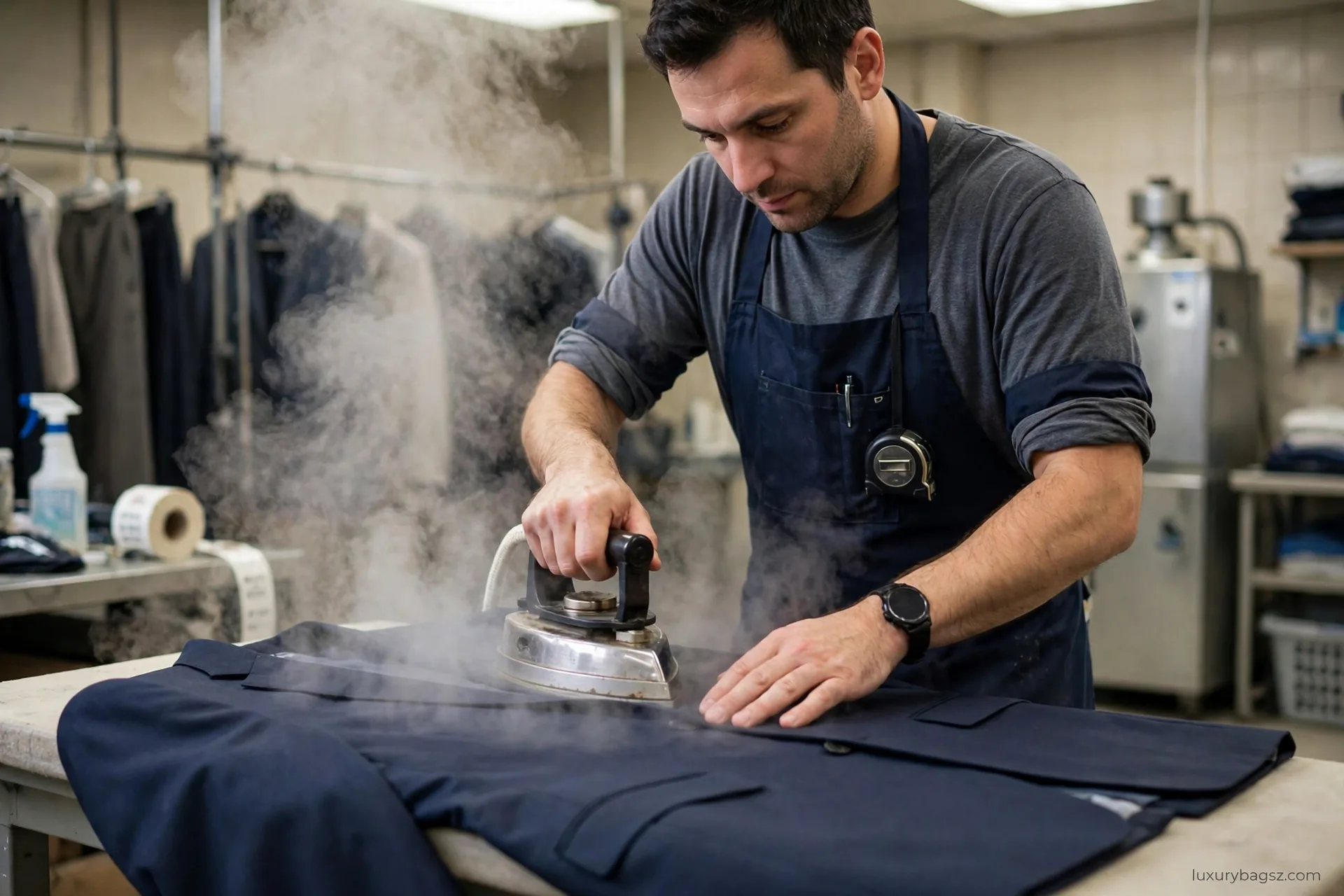
Heat is the fastest way to damage a good garment, and the second fastest way to make it look new. The difference is control. Always follow the label's heat guidance, and when a garment allows ironing, use the lowest effective heat, a pressing cloth for delicate fabrics, and no steam on fabrics that water-marks.
Press wool suits and structured pieces with care. Pressing along a seam or a lapel with too much heat creates shine that is difficult to remove, and pressing a crease into the wrong place changes the garment's line. For many tailored pieces, professional pressing is worth the fee, because the press, the form and the experience protect the shape.
Steaming is safer for most everyday refreshing, but it is not risk-free. Keep the steamer moving, avoid soaking any one area, and let the garment dry fully before wearing or storing. Never steam a garment with leather, suede or bonded areas unless the maker allows it, and test steaming on a hidden area for silk and light colours.
Store ironing and steaming tools clean. A dirty iron soleplate transfers marks, and a steamer with mineral build-up can spit. Clean tools, a pressing cloth and patience protect more garments than any expensive product.
Seasonal Care: Putting Pieces Away and Bringing Them Back
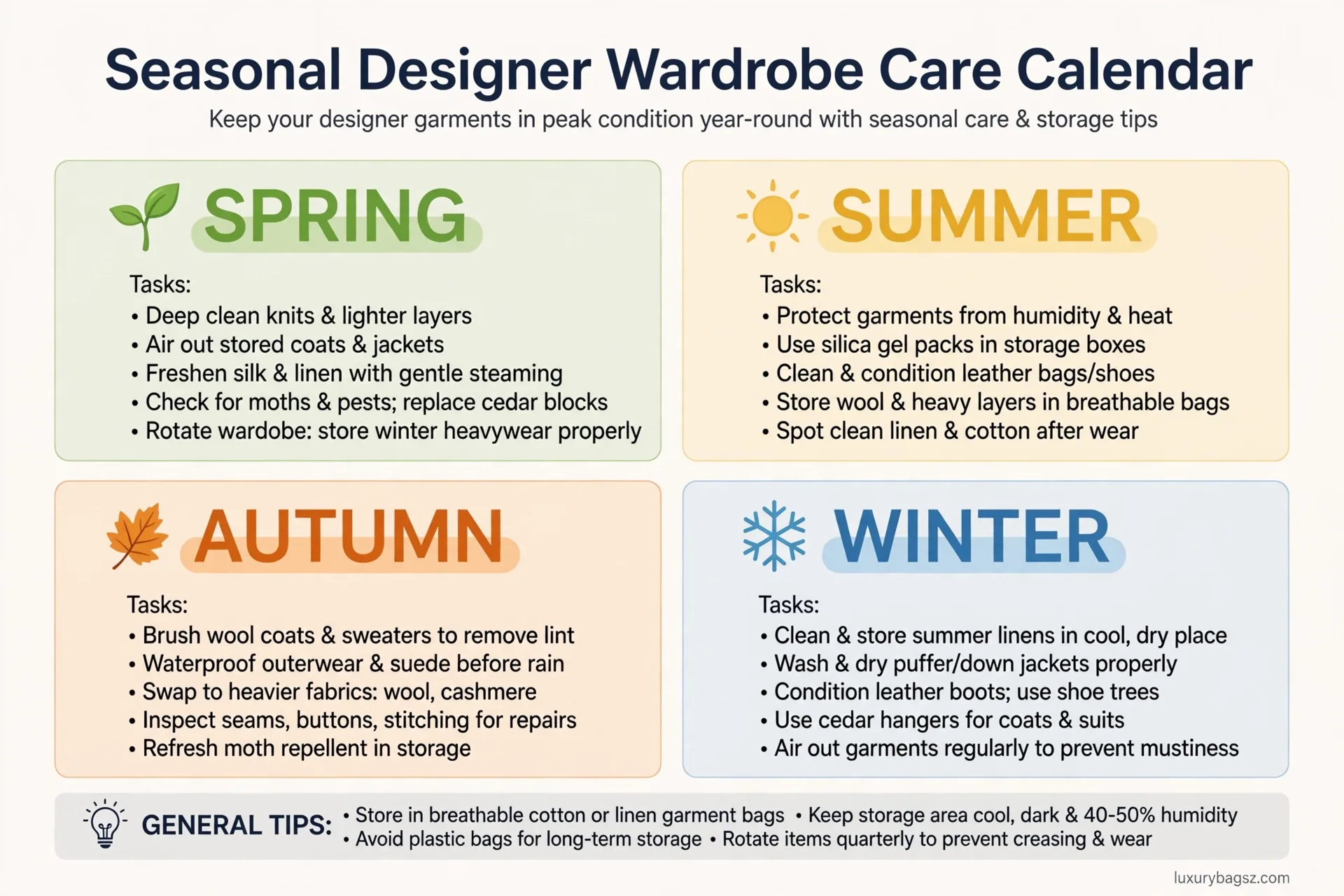
Seasonal change is when most storage damage happens, so treat it as a care event. Before storing a coat, suit or knit for a season, clean it first. Stains, body oils and food marks stored for months become harder to remove and attract pests, while a clean garment stores safely.
Inspect, repair and then store. Fix loose buttons and small holes before storage, since damage stored under weight or pressure worsens. Fold knits with tissue, hang structured pieces with space, use breathable bags, and add moth protection that does not touch fabric directly.
When bringing a piece back, inspect it before wearing. Look for moth damage, fading, mustiness, flattened shape and loose stitching. Air it, brush it, steam it gently if the fabric allows, and press it only if needed. A garment that has stored well needs refreshing, not a full clean, and that restraint extends its life.
Seasonal rotation also helps you notice what you no longer wear. A piece that has sat unworn for two full seasons may be better sold, donated or restyled than stored for another year, since storage itself carries risk and wardrobe space is finite.
Travel, Events and Everyday Wear
Travel tests designer clothing. Pack structured jackets inside out or in a garment bag, fold knits loosely, and use tissue to protect folds. Unpack promptly on arrival, hang garments, steam gently if allowed, and let them air before wearing. A garment left crushed in a suitcase for days sets creases that are hard to remove.
Events add their own risks: perfume, food, drinks, seating and dancing all leave marks. Apply perfume before dressing and let it dry, so it does not mark silk or light fabric. Sit carefully in light trousers and structured dresses, and check hems and buttons after an event rather than discovering damage at the next wear.
Everyday wear is where habits compound. Keep pens, keys and sharp objects out of pockets that were not made for them, since they wear linings and distort shape. Remove a jacket before driving long distances when you can, since seat belts and seat backs crease and wear shoulders and backs unevenly.
The goal is not to keep designer clothing unworn. It is to wear it with habits that let it recover: airing, brushing, rotating, inspecting and storing with support. A garment worn often and cared for well outlasts a garment worn rarely and stored badly.
Work wear deserves its own note, since it repeats the same stresses daily. A desk chair, a seat belt and a bag strap wear the same places every day, so rotate work pieces, vary your bag, and check cuffs, elbows and seat areas monthly. Small reinforcements by a tailor, such as a strengthened pocket or a secured lining, cost little and prevent the slow wear that ends a workhorse garment early.
The most expensive work wardrobe is the one replaced piece by piece because no one checked it.
Building a Wardrobe That Is Easier to Care For
Care gets easier when the wardrobe itself is designed for it. A smaller wardrobe of pieces you truly wear is easier to rotate, inspect and store than a large wardrobe of pieces you rarely reach for. Each garment gets rest days, space on the rail and attention at seasonal change, instead of competing for hangers in a crowded wardrobe.
Choose versatility when you add a piece. A jacket that works with several outfits earns rotation naturally, while a piece that only works one way tends to sit unworn, gathering dust and risking storage damage. Versatility is not about owning less for its own sake; it is about owning pieces that share the care routine and the wear load.
Keep a simple wardrobe record. Note the purchase date, the fabric, the cleaner or tailor who has worked on the piece, and any repairs. That record helps you spot patterns, such as a knit that pills every season or a trouser that always needs hemming, and it helps a future buyer or a restorer understand the garment's history.
Colour and fabric choices affect care load too. Very pale garments show marks sooner and need more prompt spot care, while dark garments hide marks but show lint and fading. Delicate fabrics need more professional care, while sturdy fabrics tolerate more home care. None of these is a reason to avoid a colour or fabric you love, but knowing the care load before you buy prevents disappointment after.
Finally, give new pieces a care start. Photograph the label, keep spare buttons, try the garment on with the shoes and accessories you will wear it with, and check for loose threads or buttons before the first wear. A new garment that starts with a quick inspection and a proper hanger is far more likely to age well than one that goes straight into a crowded wardrobe.
Caring for Special Pieces: Gowns, Coats and Knits
Special pieces need special attention, and each category has its own weak point. Gowns and occasion dresses often combine delicate fabric with beading, boning or layered construction. Store them hanging with full support, never folded across beading, and keep them in breathable bags away from pressure. Clean them promptly after an event, since food, drink and perspiration marks set over time.
Coats carry weight, weather and daily friction. Brush a coat after wear, check pockets and linings for wear, and repair loose buttons before a button loss strains the fabric. Heavy coats need wide, strong hangers and space on the rail, since a crushed coat loses its shoulder line and takes professional pressing to restore.
Knitwear's enemies are stretching, pilling and moths. Fold knits, keep them clean before storage, and depill gently with a fabric comb or shaver, working lightly so you do not thin the fabric. A knit that pills heavily may be telling you something about friction: a bag strap, a seat belt or a rough layer underneath can all accelerate pilling in one area.
Leather-trimmed and mixed-material garments combine two care worlds. Follow the most delicate material's rules, and keep leather conditioners, suede protectors and fabric cleaners away from the other material. When a mixed garment needs cleaning, a professional who has handled mixed materials is the safer choice, since a treatment that helps one material can harm the other.
Frequently Asked Questions
How often should designer clothing be dry cleaned?
Only when it is actually soiled or smells after airing, not after every wear. Many suits and coats need cleaning only a few times a year, since airing and brushing keep them fresh between cleans.
Should I hang or fold knitwear?
Fold heavy knitwear, since hanging stretches shoulders and lengthens the body. Lightweight knits can hang on padded hangers, but anything heavy should always be folded loosely with tissue between layers.
What hangers are best for designer jackets?
Wide wooden or padded hangers that match the shoulder width. Wire hangers distort shoulders, and narrow hangers create points, so match the hanger to the garment's structure.
How do I protect wool from moths?
Store clean wool, inspect each season, keep wardrobes ventilated, and use cedar or lavender deterrents kept away from direct fabric contact. Isolate and clean any piece with damage at once, and check neighbouring garments.
Can I iron a designer suit at home?
Only if the label allows it, with low heat and a pressing cloth, and with care around lapels and seams. For structured tailoring, professional pressing is often safer, since excess heat creates shine and changes the garment's line.
What should I do about a stain on designer clothing?
Blot gently without rubbing, do not use a harsh home stain product on delicate fabric, and take the piece to a professional, telling the cleaner what the stain is and what you have tried. Honest information improves the result.
How long should I rest a garment between wears?
At least a day for suits, jackets and knitwear, and longer for heavy coats. Rest lets fibres dry, relax and return to shape, which is why rotation extends life so effectively.
Is steaming safer than ironing?
Usually, yes, for refreshing wrinkles, since steam relaxes fabric without pressing a shine into it. Keep the steamer moving, avoid soaking one area, and never steam leather trim, beading or bonded areas unless the maker allows it.
Should I store designer clothing in plastic bags?
No. Sealed plastic traps moisture and encourages mildew and yellowing. Use breathable garment bags, leave space for air, and store in a cool, dry, ventilated place away from sun.
When is a repair worth paying a tailor for?
Almost always for small damage caught early, since a loose button or dropped hem is cheap now and costly later. For major damage, get a quote and weigh it against the garment's value, wear and replacement cost before deciding.
Summary
Designer clothing rewards a calm routine: store it by shape, rotate it with rest days, air and brush it between cleans, repair small damage promptly, and choose professional care for structure, stains and specialist fabrics. Washing detail belongs in the fibre guides, and this umbrella routine is what makes that washing, and every clean, last longer.
Care for the cut and the fabric together, and designer pieces will repay you with years of good wear rather than a short life of avoidable damage. Start with the piece you wear most, give it a proper hanger, a rest day and a quick inspection, and let that habit spread across the wardrobe from there.
A wardrobe cared for this way does not just last longer; it feels better to open each morning, because every piece in it is ready to wear, in good shape, and free of the small damage that turns a favourite garment into a disappointment.