

How to Spot Fake Christian Louboutin Shoes: Red Sole, Stamping, Stitching and Box Checks
Spot Fakes in Brief: Shade, Stamp and Shape
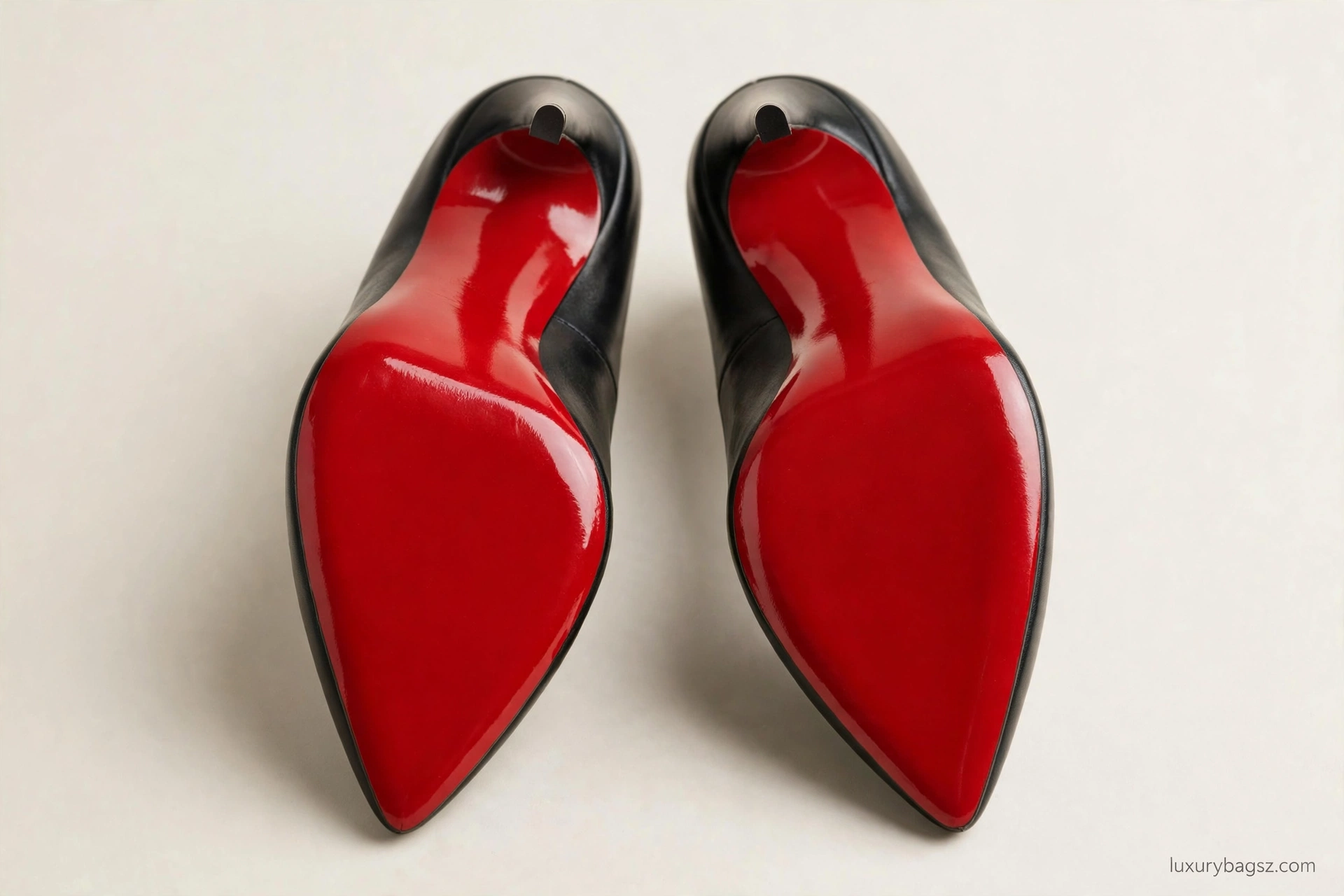
To spot fake Christian Louboutin shoes, check three things first: the sole should be a deep, glossy red with clean stamped lettering, and the shoe's arch should sweep in a tight, elegant curve. Fakes usually fail on finish before they fail on shape. Dull or orangey red, shallow crooked stamps, visible glue and clunky curves are the tells that appear again and again.
Key Takeaways
- The genuine sole is a deep, glossy lacquer red, smooth and evenly coated.
- Sole stamps are crisp, centred and correctly spaced, including Made in Italy.
- Half sizes are stamped as a fraction, such as ½, not as a decimal point.
- Genuine pairs have sweeping curves, neat stitching and no visible glue.
- A plastic authenticity card is a fake giveaway; genuine pairs do not include one.
- The box, spare heel tips and dust bag support the verdict but never prove it alone.
The Red Sole: Shade, Gloss and Finish
Start underneath, where our brand history guide explains the signature began. The genuine lacquer is deep, rich and glossy, like fresh nail polish. Hold the shoe to the light. The coating should be smooth and even, running cleanly to the edges with no peeling, bubbles or sticky patches. Fakes often miss the shade: too bright, too orange or dull and matte. Uneven paint that thins at the edges is another common failure. Remember that worn genuine soles scuff and fade honestly. Judge the unworn areas near the arch, where the original finish survives best.
Natural light is your best tool for the sole. Shop lighting flatters bad lacquer, so judge the red beside a window where dull, orange or uneven coatings cannot hide.
Sole Stamping: Lettering That Must Be Right
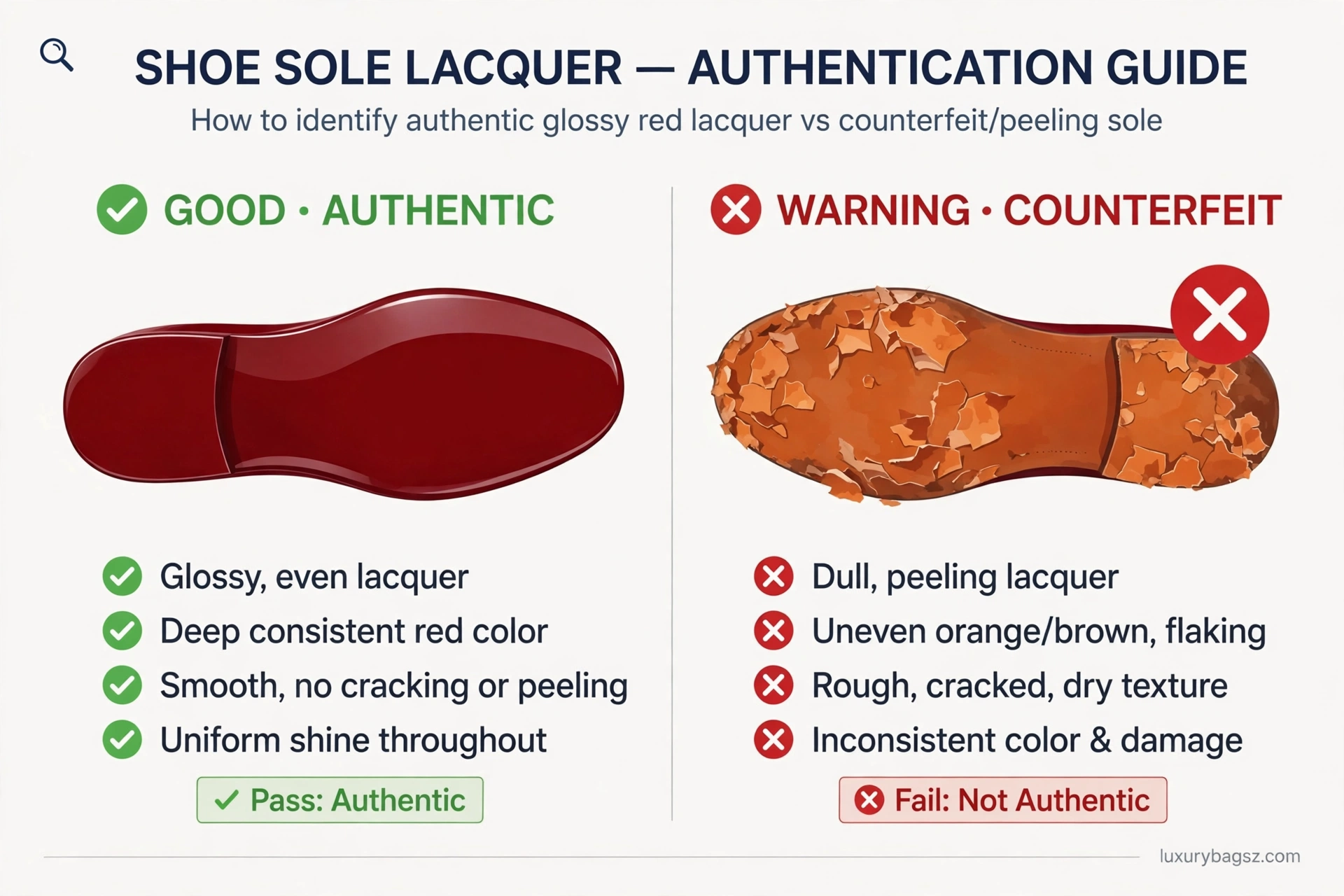
Turn the shoe over and read the stamp. The brand name, Paris and Made in Italy should be crisp, deep enough to read easily and properly centred. Spacing matters. Run-together words, wobbly lines or letters of uneven depth point to a stamp cut without care, which genuine production avoids. Size marks use European sizing. Half sizes appear as a proper fraction, such as 38½, while a decimal style mark is a known replica habit. Very old pairs carried extra stamps that later pairs dropped. Date a shoe by its overall design before condemning it for one unfamiliar mark.
Ask for a short video if you are buying remotely. A genuine pair turning in hand shows the arch curve, sole gloss and stamp depth far better than still photographs alone.
Insole Printing and Interior Details
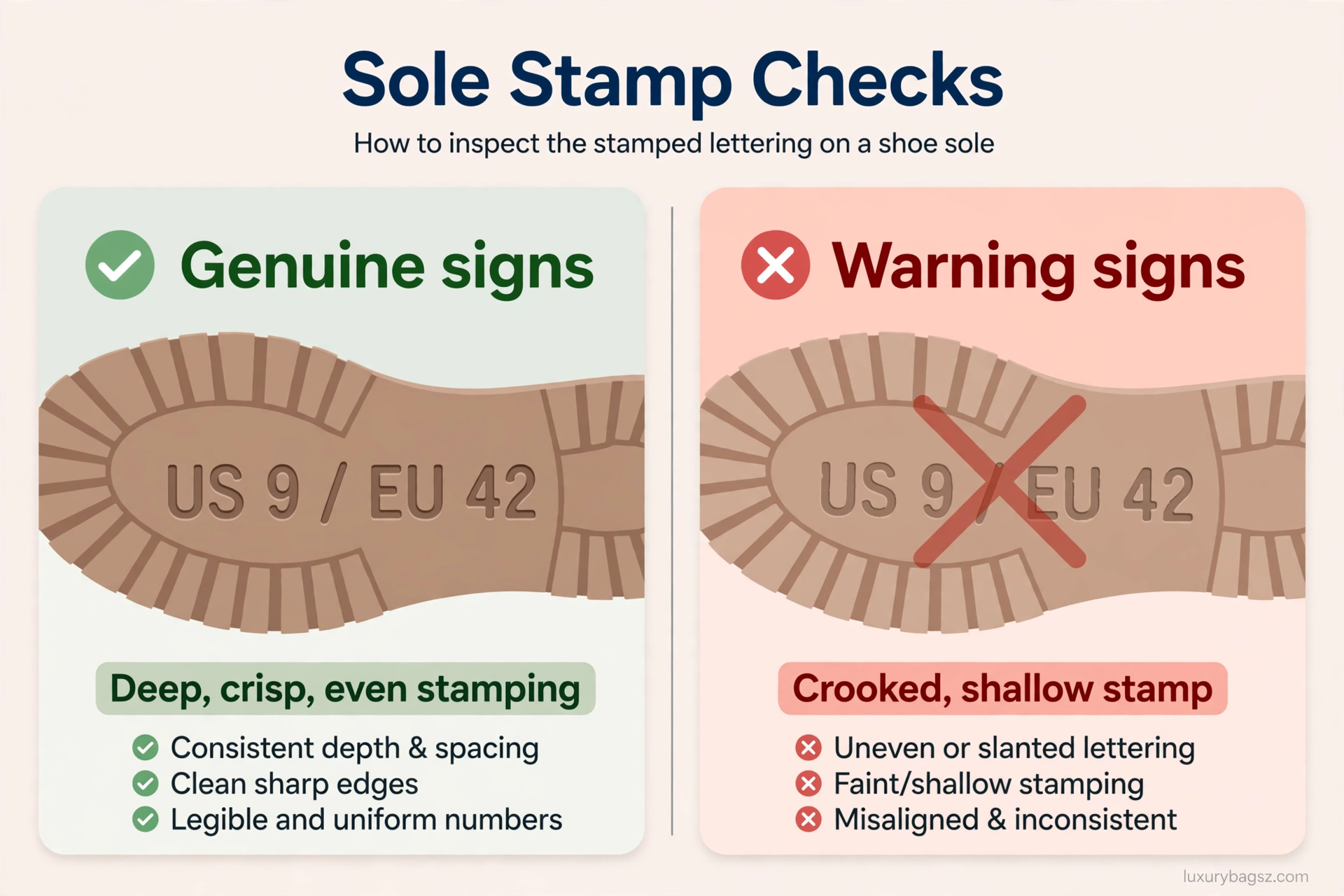
Look inside. The brand name printed on the insole should be sharp, correctly spelled and in the house style, with the word Paris in its proper place. Fakes often betray themselves here with thin, blurry or oddly spaced lettering. Compare against a verified boutique photograph of the same era. Lining materials should feel like quality leather or fabric, neatly fitted with no lifting edges. Rough, papery linings suggest a much cheaper build. Size and style information should be clean and consistent. Smudged, crooked or missing interior marks deserve extra suspicion and more photographs.

Shape and Curves: Compare With the Classics
Genuine Louboutins are drawn with a distinctive sweep. Our Pigalle pumps guide shows the tight arch and refined toe that copies routinely widen. Our So Kate guide shows the slimmest version of that line. A supposed So Kate with a thick, clumsy profile is mislabelled at best. Our Lady Peep guide shows the platform shape done properly: curved, balanced and cleanly joined at the sole. Side by side, replicas usually look wider through the waist of the shoe, with a heavier heel and a flatter, less graceful arch.
Stitching, Glue and Materials
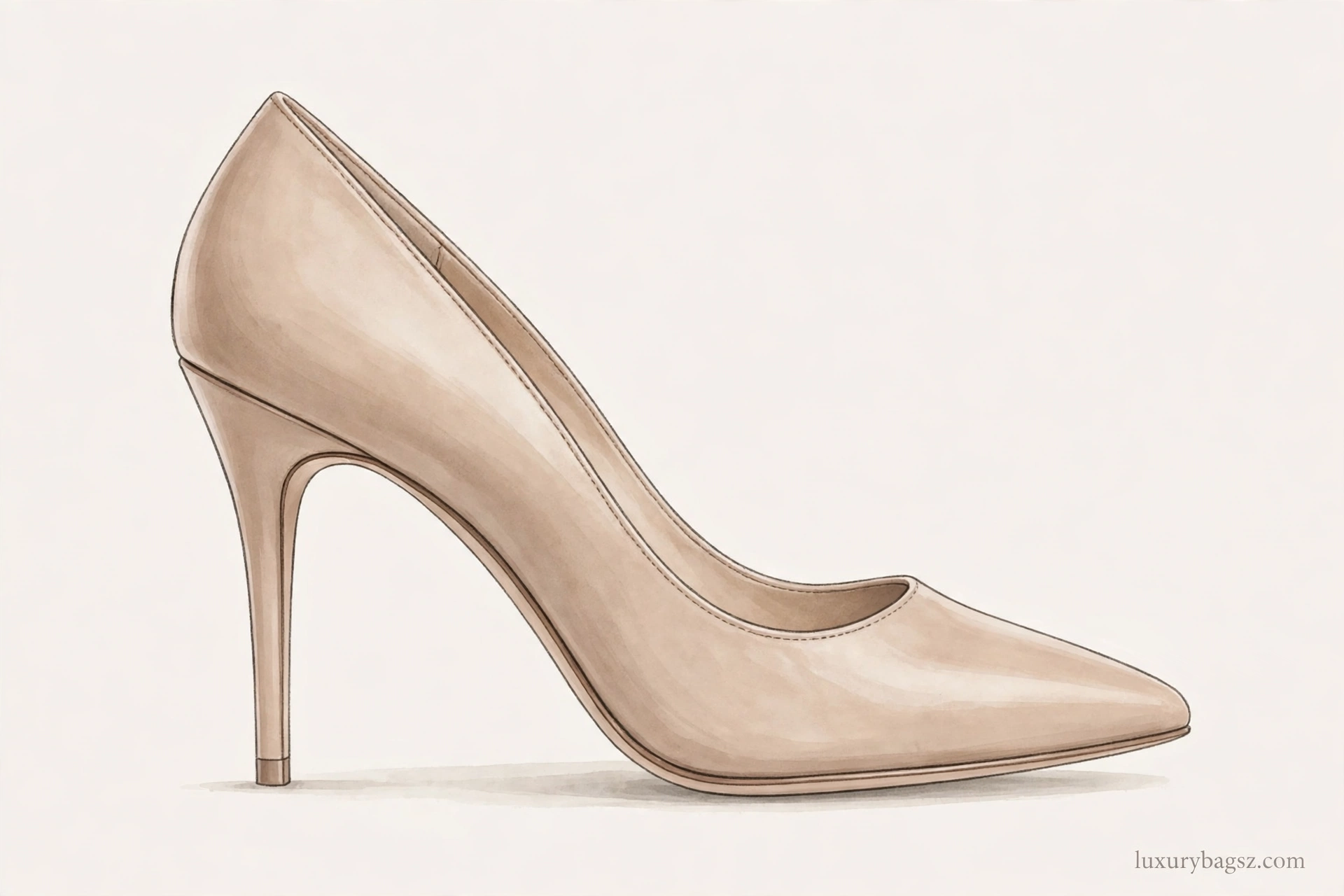
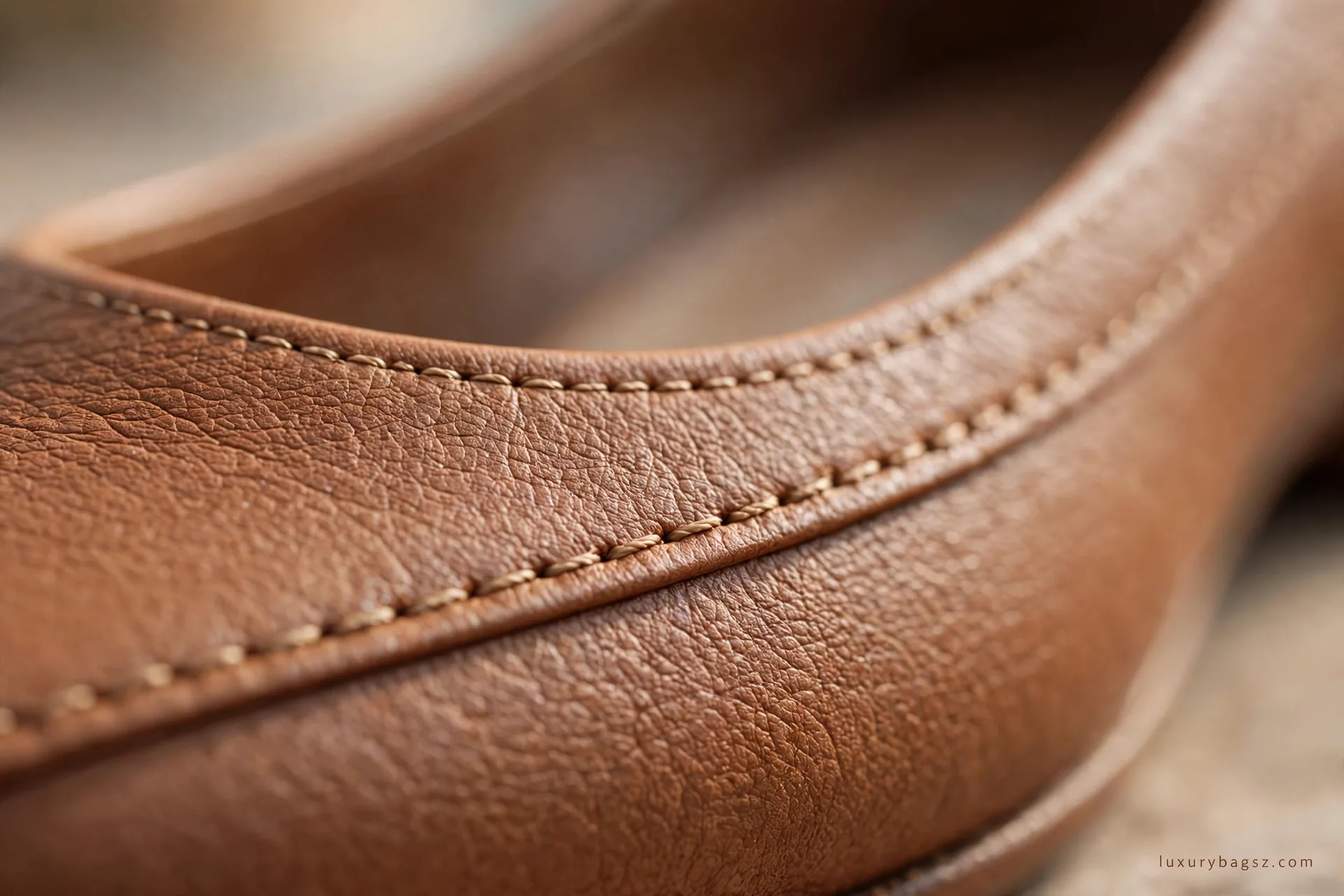
Run your eye along every seam. Genuine stitching is even, discreet and symmetrical, designed to disappear into the shoe rather than announce itself. Visible glue at the sole edge, fraying threads and puckered joins are workshop shortcuts. A genuine pair should feel like one clean, finished object. Materials tell the truth under your fingers. Leather should feel supple and smell like leather; patent should be glassy and even, not sticky or cloudy. Both shoes in a pair should match each other closely in shape, colour and finish. Mismatched pairs suggest seconds, copies or careless assembly.
Keep a known-genuine reference open while you check. Comparing stamp spacing and curve against a boutique photograph stops your eye accepting small errors as normal.
Heels, Tips and Symmetry in Hand
Pick the shoes up. Genuine heels are straight, firmly attached and finished cleanly, with tips that sit flush and match the model's stated height. Wobble either shoe on a flat surface. Rocking, twisting or visibly uneven heel placement points to poor making at any price. Weigh the pair in your hands and compare left with right. Noticeable differences in weight or balance between the two shoes are unusual in genuine production. Walk a few steps on carpet if the seller allows. Genuine tall heels are demanding, but they should feel stable rather than flexing or creaking.
Box, Dust Bag and the Card That Gives It Away
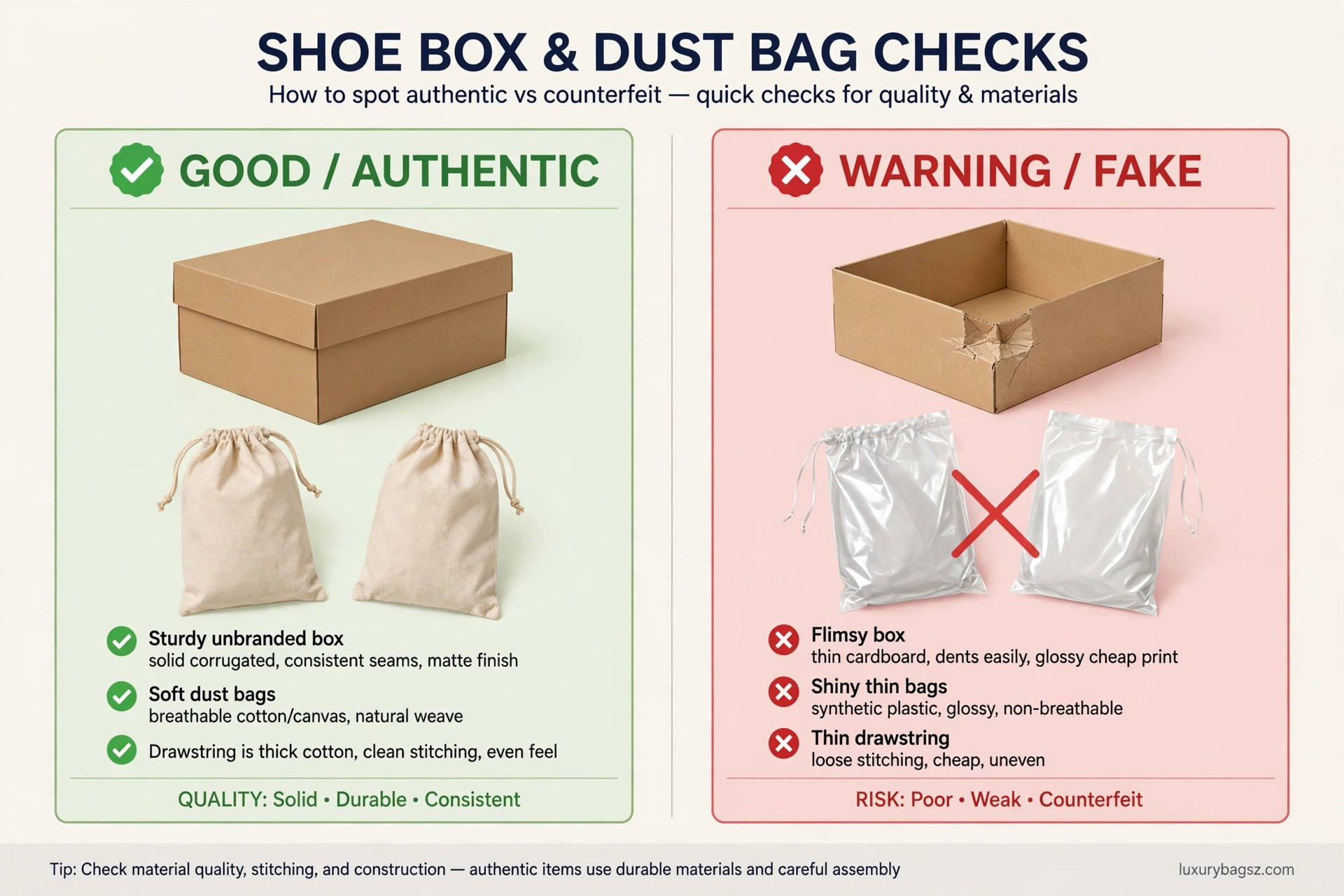
The box should be sturdy with crisp printing and a clear label on the short side of the lid, showing model, colour and European size. Shoes arrive protected in a proper dust bag with clean printing and firm fabric. Thin, shiny or sloppily sewn bags accompany many replicas. Spare heel tips come in a small red pouch on genuine pairs. Tips rattling loose in a plain plastic bag are a small but telling detail. Above all, a plastic authenticity card means fake. Genuine Louboutin shoes do not come with one, whatever a listing claims.
Price, Sellers and Getting a Verdict
Current classics at a fraction of boutique price are the standard trap. Our are Louboutin shoes worth it guide sets out what genuine pairs actually cost and why. Buy from boutiques, authorised stockists or resale platforms with expert checks and returns. Private bargains carry the full risk yourself. The method in our pre-owned designer bag authentication guide applies here too: many clear photographs, slow checks, protected payment. For a costly pair, use a specialist shoe authentication service before the return window closes. A small fee beats a wardrobe of doubt.
Older Pairs: Vero Cuoio and the Era Details
Vintage pairs break modern checklists, and condemning them by today’s rules is the most common authentication mistake with this brand. Shoes made before around 2007 carry an extra mark on the sole: the words Vero Cuoio, meaning real leather, set inside a small leather-shaped inlay stamped into the sole.
That inlay disappeared from later production, so its presence dates a pair rather than damning it, and its absence on a modern shoe is equally meaningless. Era checks work the same way throughout this brand: stamps, fonts and details evolved, and the question is never “does it match a 2024 shoe” but “does it match its own period”.
Construction on older pairs can also look hand-finished beside modern precision, because it was. Judge an older shoe first against verified photographs of the same model from the same years, exactly as this guide advises for the insole printing, and let one unfamiliar mark trigger research rather than a verdict.
Pristine condition deserves its own scepticism in the other direction: a supposedly twenty-year-old pair with unworn soles and box-fresh lining is a story that needs receipts, literally.
Resoled Soles: When a Different Underside Is Not a Fake
Many genuine pairs no longer wear their original underside. Owners protect the red lacquer with thin rubber overlays, commonly Topy soles, which carry their own maker’s stamp across the rubber. An overlaid sole can look alarmingly different from the glossy red of this guide’s first checks while sitting under a completely genuine shoe.
The house’s own Paris repairer, Minuit Moins 7, fits a red rubber overlay stamped with the brand’s name, the closest thing to an official protective sole. Cobblers elsewhere fit plain red overlays matched to the shoe. Either way, the work is an owner’s choice after purchase, and it changes nothing about the shoe above it.
Authenticate a resoled pair by everything except the covered area: the stamps that survive at the waist or heel breast, the insole printing, the shape, stitching and materials from the earlier checks. Ask the seller directly whether the soles are original, overlaid or fully resoled, and price accordingly, because collectors pay for original soles and wearers often prefer protected ones.
A dishonest version exists too: a fake can hide under a fresh overlay. If every other check cannot be performed because the shoe is covered, boxed and story-wrapped, the missing evidence is itself the answer.
What the Brand Will and Will Not Do
Do not plan on official confirmation. Christian Louboutin’s boutiques do not issue certificates of authenticity, and staff will not authenticate a pair bought elsewhere as a walk-in service. The absence of a brand verdict is policy, not a hint about your shoes.
The brand does run an anti-counterfeiting programme and invites reports of websites and sellers offering fakes, which protects future buyers rather than certifying present ones. A receipt from an authorised retailer remains the strongest paper a pair can carry, as the box chapter of this guide noted about receipts generally.
For a paid verdict, use a recognised authentication service with footwear expertise, and send the full photograph set: soles in daylight, stamps, insoles, side profiles of both shoes, heels from behind, box label and any packaging. Services verdict from exactly the evidence this guide has taught you to gather.
If a seller offers to “have the boutique confirm it” as part of the sale, treat the offer itself as a warning sign. Genuine sellers describe the shoes; they do not promise certificates the brand does not issue.
Dust Bag and Box: The Small Print That Matters
Two placement details separate careful copies from careless ones. On the genuine dust bag, a red felt bag of real substance, the black logo sits crisply with the word Paris at the bottom right. Fakes frequently misplace that word, blur it or print it in the wrong weight.
The box repeats the test: Paris belongs at the bottom right of the branding, and on many fake boxes it is tucked up beneath the main logo instead. The lid’s side label should carry the logo, model, colour and European size in clean, evenly spaced type that matches the shoes inside it.
Feel the materials as this guide has throughout. The genuine bag is felt-like and weighty, the genuine box rigid board that holds its corners. Thin, shiny fabric and a box that flexes like a cereal packet belong to the parcels described earlier, the ones whose cards already gave them away.
None of this proves a pair alone, and a correct box can be married to wrong shoes. But packaging that fails every small-print check, beside a shoe that fails two of the main ones, is a file that closes itself.
Spikes, Studs and Exotic Skins: The Special Finishes
Spiked styles give copies a hundred chances to fail at once. On genuine pairs every spike sits at the same angle and depth, in rows that follow the shoe’s curve without drifting, and each one is firmly fixed: spikes on genuine shoes are screwed or set, not surface-glued, and none should rock under a fingertip.
Run a finger across a spiked panel. Even height and even spacing feel like a machined surface; a copy feels like gravel, with tilted spikes, gaps in the pattern and the occasional sharp edge where a spike was set crooked. Missing spikes on a used pair happen; irregular spacing on a new pair is a verdict.
Exotic skins ask for the opposite eye. Genuine python and other scaled skins vary naturally: scale size changes across the shoe, the pattern never repeats mechanically, and the surface feels like skin because it is. Printed imitations repeat their pattern at intervals your eye can find once you look for the loop, and they feel uniformly plasticky.
Exotics also carry paperwork expectations, since protected species travel under CITES rules and serious sellers of genuine exotic pairs usually hold or mention the documentation. A spiked or exotic pair at a plain-leather price, with no papers and drifting spikes, has told you everything.
Frequently Asked Questions
What colour should a real Louboutin sole be?
A deep, glossy lacquer red, smooth and evenly coated. Dull, orangey, sticky or peeling soles are classic signs of a fake pair.
Do real Louboutins come with an authenticity card?
No. A plastic authenticity card is a strong fake indicator. Genuine shoes come with a box, dust bag and spare heel tips in a small red pouch.
How can I check the sole stamp?
Lettering should be crisp, centred and correctly spaced, reading Made in Italy with clear gaps. Half sizes appear as fractions, such as ½.
Does Vero Cuoio on the sole mean fake?
Not by itself. Some much older models carried that stamp. Judge it alongside the model's era, sole finish, shape and stitching quality.
What does the dust bag tell me?
A genuine bag is firm, neatly sewn felt-like fabric with crisp printing. Thin, shiny bags with blurry logos usually accompany replicas.
Can fakes hide in real boxes?
Yes, which is why packaging never proves a pair. Always authenticate the shoes themselves: sole, stamps, shape, stitching and materials.
Why do fake Louboutins look wider?
Copies often miss the tight, sweeping arch of the genuine last. A wide waist, heavy heel and flat profile are reliable visual warnings.
Are worn red soles a sign of a fake?
No. Genuine soles scuff and fade with honest wear. Judge finish and colour in protected areas near the arch, and check the other details too.
Where is the safest place to buy pre-owned Louboutins?
Resale platforms with expert authentication and returns, or established luxury consignment stores. Avoid no-returns private listings for costly pairs.
Should I get shoes authenticated professionally?
For expensive or rare pairs, yes. A specialist verdict protects the purchase and supports a return claim if the pair fails inspection.
Summary: The Finish Confesses First
Fake Louboutins are caught by finish: the wrong red, a sloppy stamp, a clunky curve and glue where no glue should show. Check those before you admire anything else. Slow down, compare with verified examples of the exact model, and let price realism guide you. Genuine pairs reward the scrutiny; fakes rarely survive it.






