

Hublot Facts: 3 Things to Know About the Art of Fusion, Big Bang and Unico
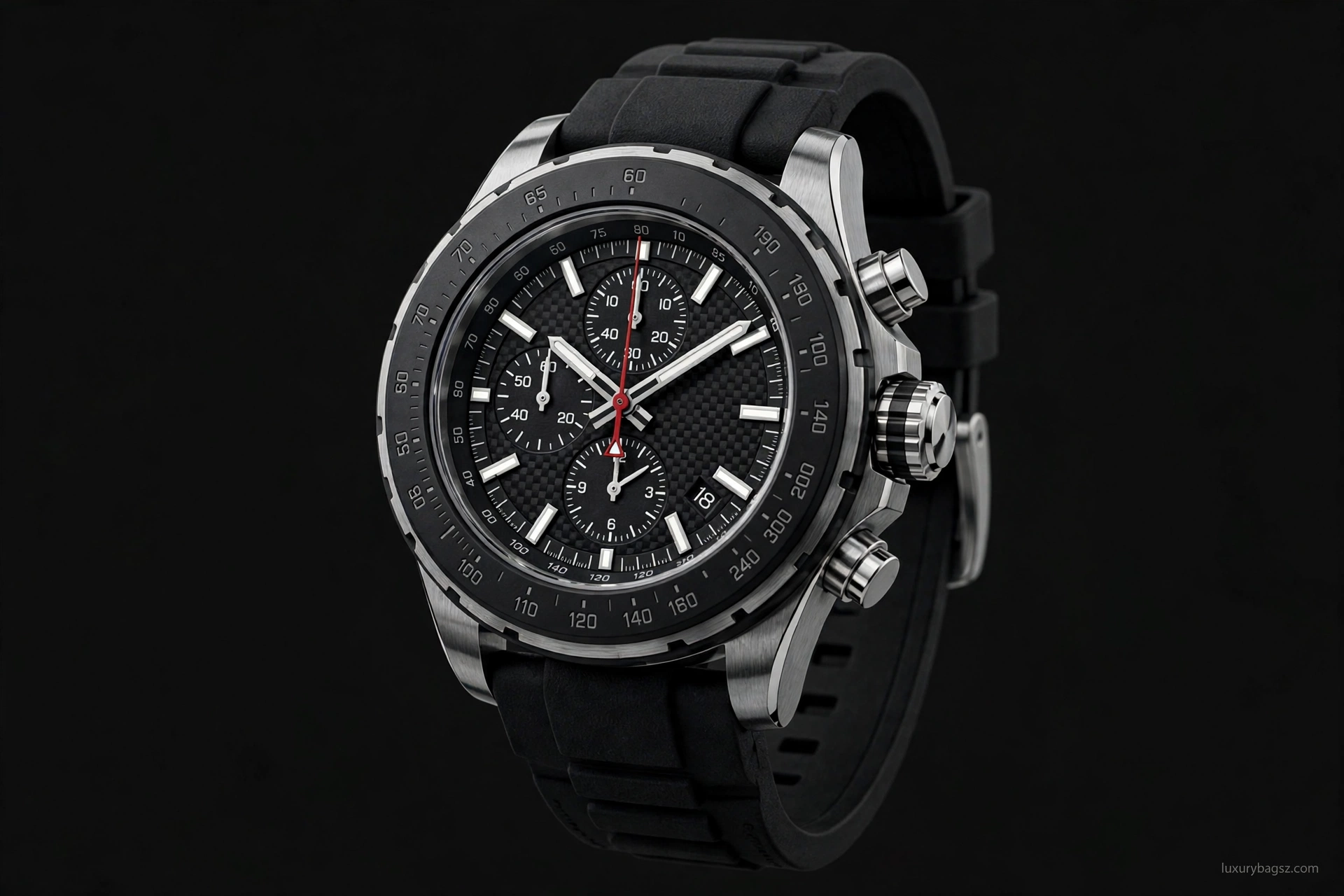
Hublot in Brief: Three Facts Explain the Brand
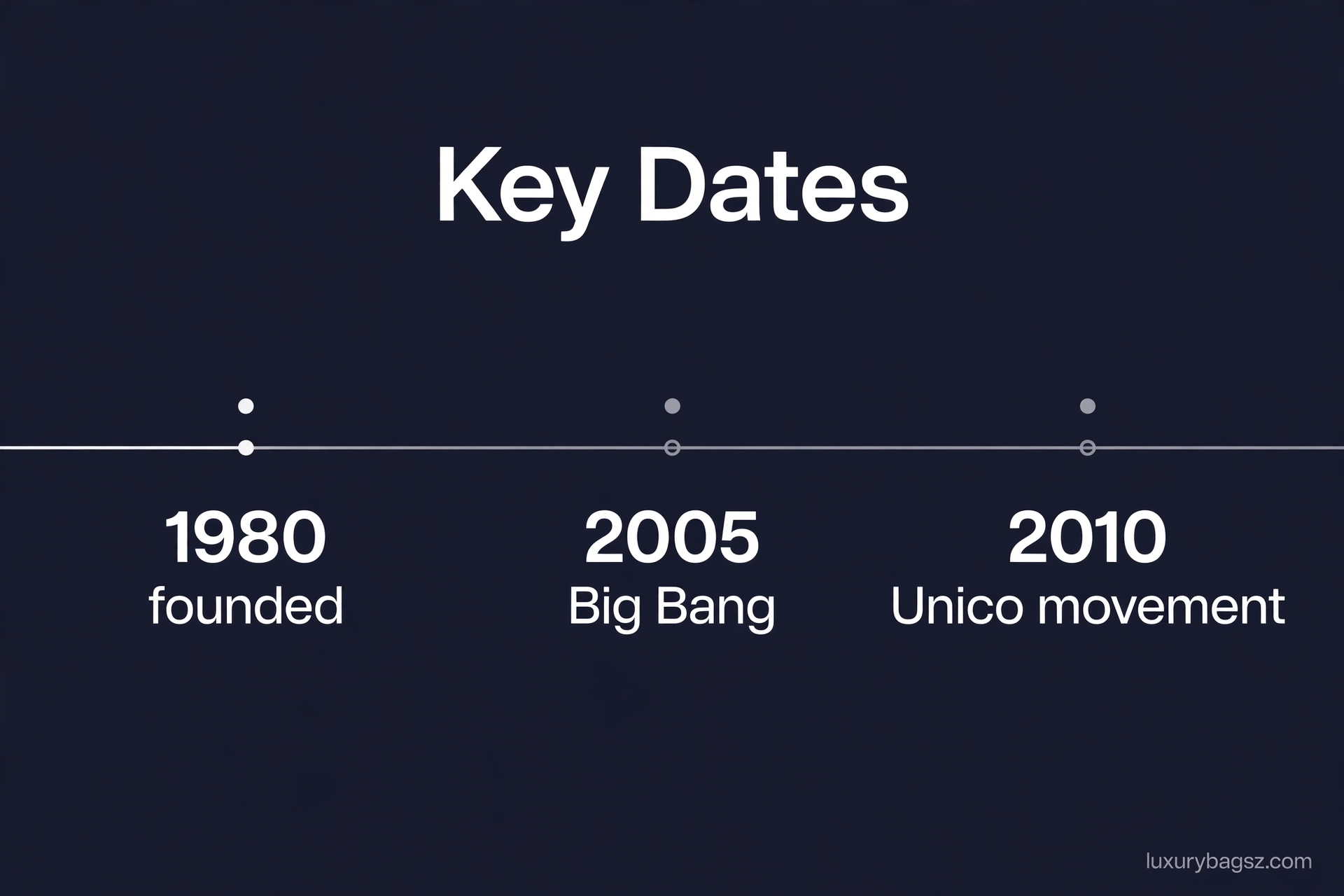
Three facts explain Hublot. It began in 1980 by putting gold on a rubber strap, it exploded in 2005 with the Big Bang, and it builds watches by fusing unlikely materials. Everything else about the brand, the size, the noise, the sports deals and the arguments among collectors, follows from those three decisions.
Key Takeaways
- Hublot was founded in 1980 by Carlo Crocco in Switzerland.
- Its first idea was radical: a precious-metal case on a natural rubber strap.
- The Big Bang of 2005, under Jean-Claude Biver, multiplied the idea and the sales.
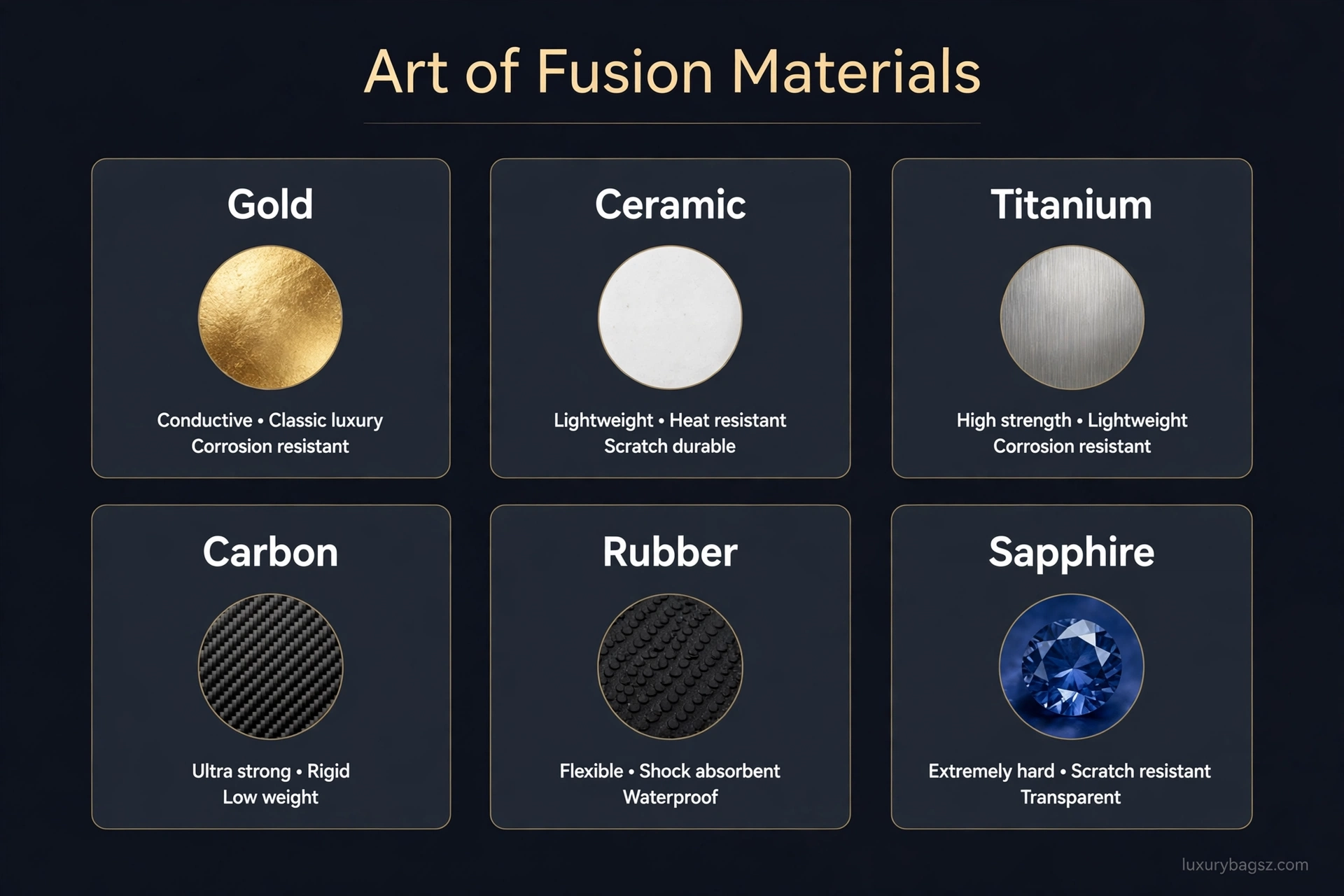
- The Art of Fusion mixes gold, ceramic, titanium, carbon, rubber and sapphire.
- The in-house Unico chronograph movement arrived in 2010.
- Hublot divides opinion, which the brand treats as a feature, not a flaw.
Fact One Starts in 1980
Hublot is young by Swiss standards. Carlo Crocco founded the brand in 1980, when most luxury houses were measuring their histories in centuries. The name means porthole in French, and the first watches looked like one: a round case held by visible screws, worn on a plain black rubber strap. For more short brand stories in this style, see our Bvlgari facts article. Hublot's tale is the modern opposite: no long past, so it invented a future instead. That youth explains the confidence. A brand with no archive to protect can experiment in ways older houses hesitate to try.
Crocco's background shaped the experiment. He came from a family business that made components for other watch brands, so he knew exactly which conventions the new brand was breaking in 1980.
Gold on Rubber: The Founding Shock
The first Hublot paired a gold case with a natural rubber strap. In 1980 that was close to heresy: precious metal belonged on leather or gold bracelets. Rubber was comfortable, waterproof and cheap, and that contrast was the point. Luxury, Crocco argued, could be defined by design rather than by materials alone. The strap itself was a technical project, developed to resist cracking and hold its shape. Owners noticed the faint vanilla scent added to the rubber. Every fusion watch since, in any brand, owes something to this pairing. It proved a strap could be a design statement rather than an afterthought.
The rubber strap also solved a practical problem. Metal bracelets and leather both suffered in heat and water; rubber, developed carefully, stayed comfortable and kept the watch's porthole silhouette uncluttered and modern.
The Porthole Look and the Screws
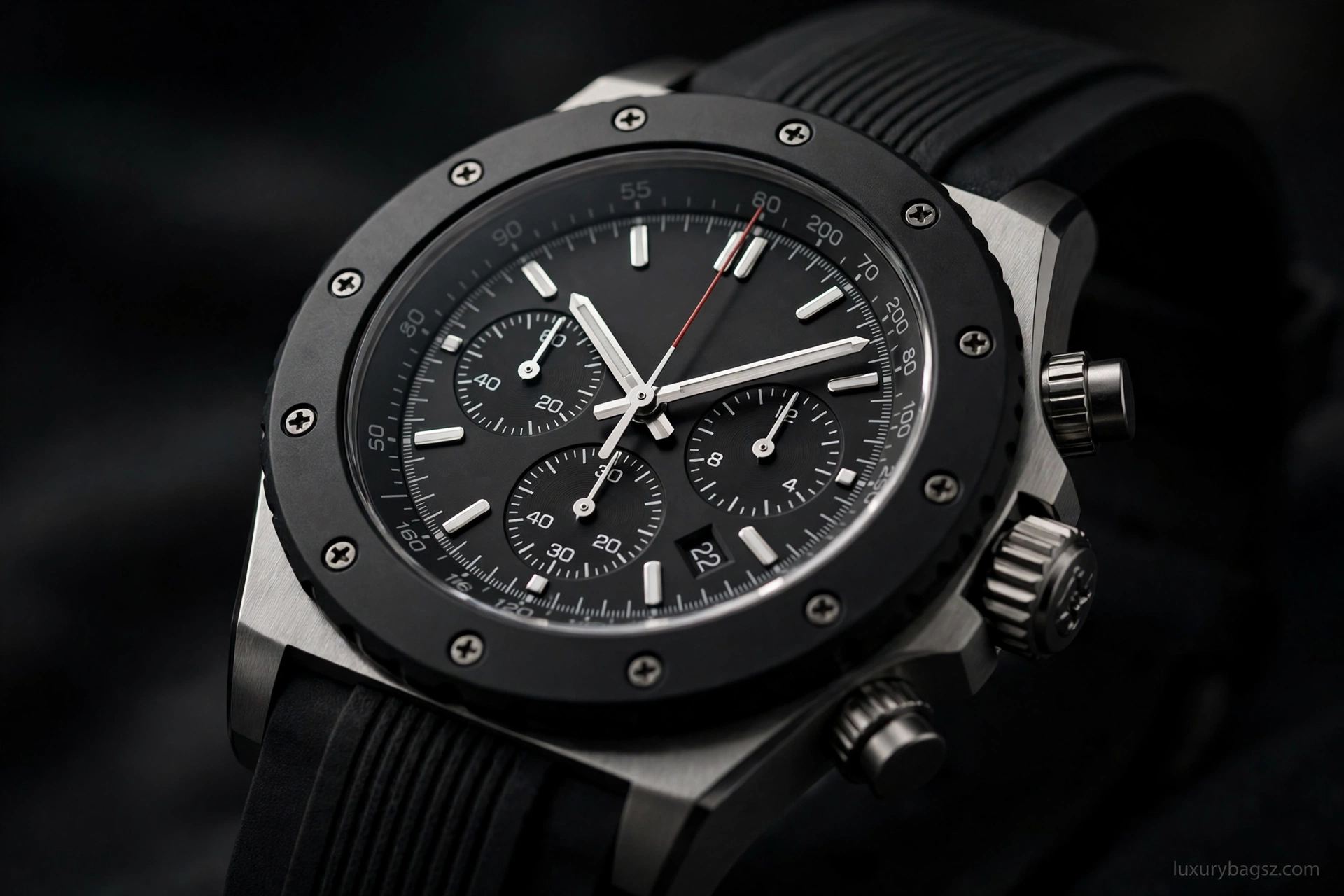
The exposed screws are not decoration for its own sake. They quote the porthole that gives the brand its name, and they hold the layered case together. That layered, sandwich construction became Hublot's canvas. Different materials could be stacked for the bezel, the case middle and the inserts between them. Sizes grew with the idea. Big, architectural cases showed the layers best, and Hublot has rarely apologised for presence on the wrist. If you prefer slim and quiet, this design language will not convert you. Hublot knows it, and builds for the other audience.
Fact Two: The Big Bang of 2005
Jean-Claude Biver took over in 2004, fresh from reviving other brands, and in 2005 he launched the Big Bang chronograph. It took fusion to an extreme. Steel, ceramic, Kevlar-style inserts and rubber met in one large watch. It won design prizes, sold in numbers Hublot had never seen and defined the brand worldwide. Limited editions followed in waves, with sports and art partners. Our limited edition watches guide explains the strategy Hublot uses more than almost anyone. The All Black version of 2006 added another idea: a watch in black on black, where texture, not contrast, does the reading. It is now an industry standard trick.
Celebrity and sport visibility was engineered, not accidental. Biver understood that a young brand without heritage could borrow fame quickly by appearing, unmistakably, wherever cameras already pointed every weekend.

Wearing a Big Bang or Classic Fusion
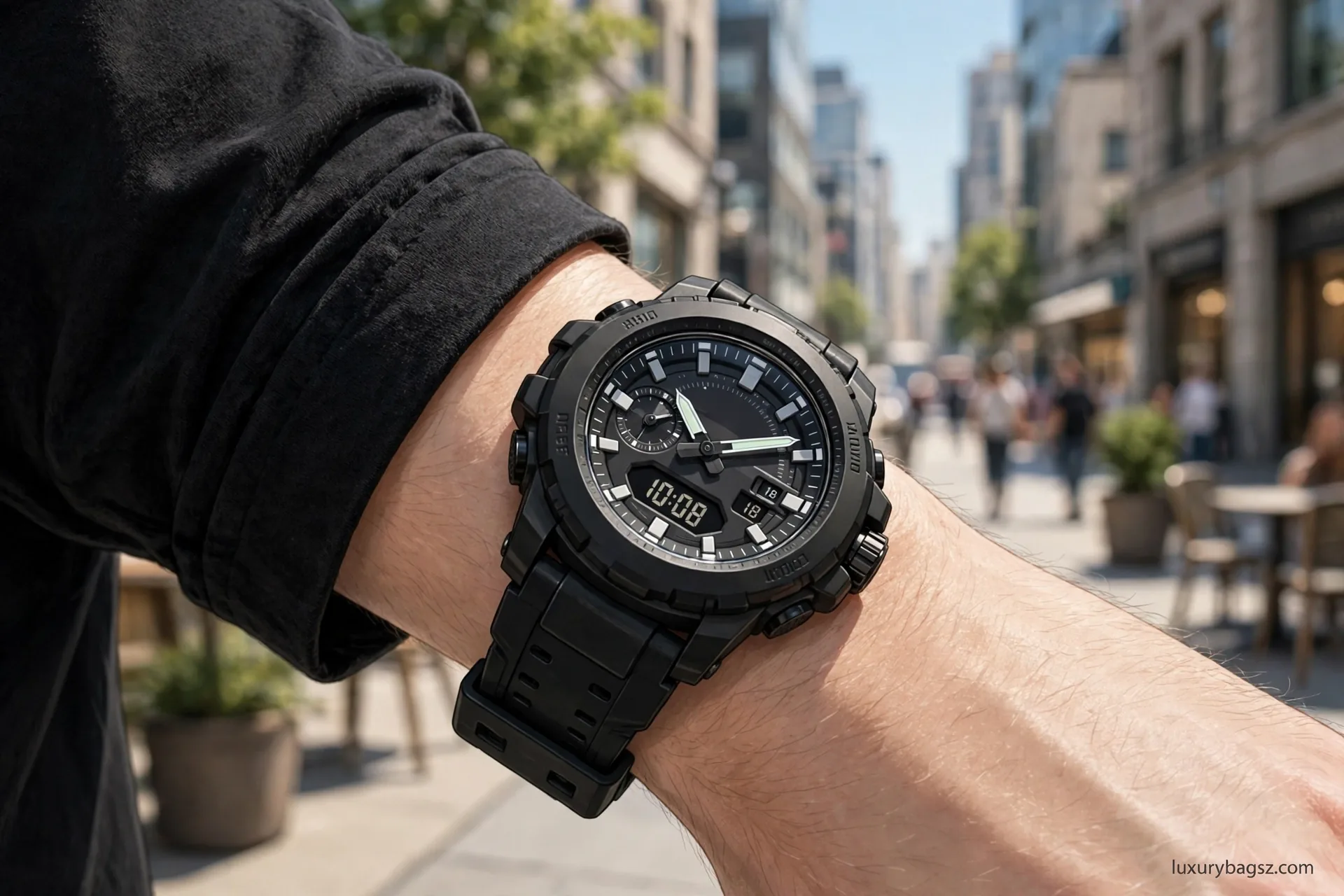
Expect presence. Classic Big Bang models sit around 44 mm and wear boldly, so smaller wrists should look at the 38 and 33 mm models or the slimmer Classic Fusion line. Classic Fusion is the quieter Hublot: thinner cases, cleaner dials and the original porthole idea in a dressier form. It is the easiest entry for the curious. Straps are part of the fun. Many models use a quick-change system, so rubber, leather and fabric looks swap in minutes without tools. Try before you buy where you can. Hublot's sizing and height surprise many first-time wearers, in both directions.
Fact Three: Fusion Materials and Unico
The Art of Fusion is the brand's own phrase for its material mixing: gold with ceramic, titanium with carbon, and cases machined from coloured sapphire. Magic Gold is the headline example, a gold and ceramic alloy developed with Swiss researchers and presented as highly scratch-resistant for a gold material. In 2010 the Unico gave fusion a movement of its own: an in-house automatic chronograph with a column wheel visible from the dial side and around three days of reserve. Not every Hublot is a Unico, and simpler models use bought-in movements. Knowing which movement a model carries is part of judging its price fairly.
Coloured sapphire cases show the fusion idea at its extreme. Growing, machining and polishing synthetic sapphire into a case takes far longer than steel, which is why those models carry extreme prices.
Sport, Sponsorship and the Noise
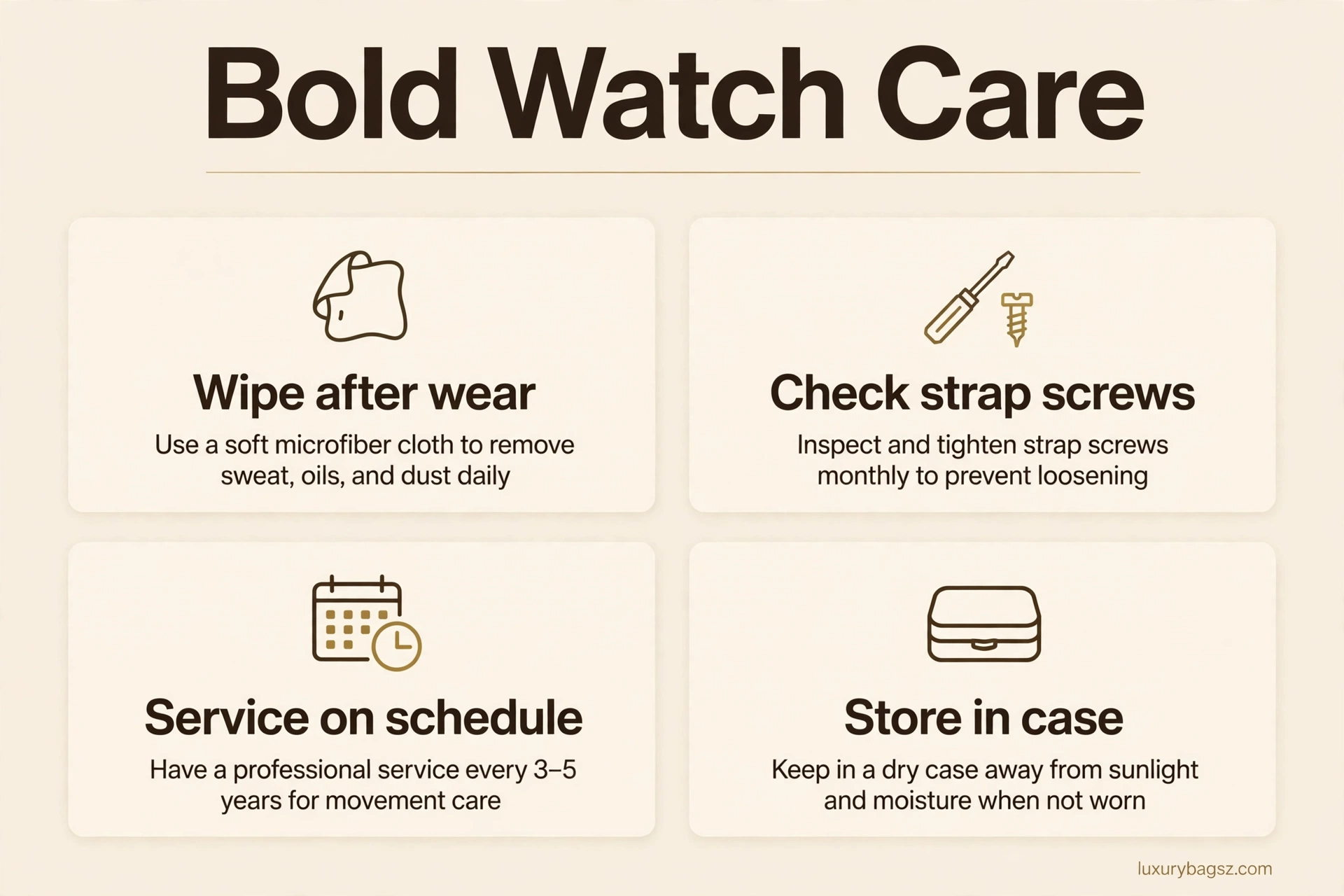
Hublot attached itself to football early and loudly, including World Cup timing roles, and its boards and referee watches became part of the tournament scenery. Partnerships in motor racing, boxing, art and music followed. Critics call it buying attention; the brand calls it being first where its buyers already are. Ownership care is simpler than the marketing. Follow our how to clean a watch guide, check strap screws, and service on schedule. Rubber straps age and will need replacing over the years. Budget for that as part of ownership, as you would for leather.
Why Collectors Argue About Hublot
The argument is really about what luxury means. Traditionalists prize heritage and restraint; Hublot prizes novelty, materials and visibility. Resale reflects the debate. Many models trade below retail pre-owned, which buyers can use to their advantage, as our investing in luxury watches guide explains in wider terms. Buy a Hublot because you love how it looks and feels, in the right size, at a sensible price. That buyer is rarely disappointed. Judge it as a design object with real watchmaking inside, not as a quiet heirloom, and the brand's three facts make complete sense.
Second-hand buyers should check which movement a model carries before judging price. A Unico-powered piece and a bought-in-movement piece can look alike while standing in quite different value positions.
The LVMH Chapter: What 2008 Changed
A fourth fact belongs in the timeline. In April 2008, LVMH, the world’s largest luxury group, bought Hublot from Carlo Crocco, barely three years after the Big Bang relaunch. Business case studies of the period put the brand’s growth starkly: turnover rose from roughly 25 million dollars in 2004 to around 200 million by the sale, a trajectory few watch brands have matched.
Group ownership changed the machinery behind the marketing. A dedicated manufacture opened in Nyon in 2009, giving the Unico project and later in-house movements a home. Distribution, boutiques and materials research gained a parent company’s budget, and Hublot took its seat in the group’s watch division alongside TAG Heuer and Zenith.
What did not change is the more interesting fact: the fusion strategy, the big cases and the sponsorship noise all survived acquisition intact. LVMH bought the formula rather than correcting it, which is its own verdict on the three facts this article began with.
The Collections Map: King Power, Spirit and MP
Beyond the two famous families sits a wider map worth knowing. The King Power line, launched in 2009, pushed the Big Bang idea to 48 mm extremes with even more aggressive case architecture, a maximalist branch that has since quietened as tastes settled.
The Spirit of Big Bang translated the design language into a tonneau, or barrel-shaped, case, keeping the layered construction and visible screws while changing the silhouette entirely. It is the clearest proof that fusion is a construction method rather than one round shape.
At the top stands the MP, or Masterpiece, collection: low-volume haute horlogerie with exotic complications and record-chasing power reserves, built to argue that the loud brand can also do serious watchmaking. Collectors who dismiss Hublot wholesale usually have not priced an MP.
For buyers, the map simplifies choice: Classic Fusion for restraint, Big Bang for the icon, Spirit for shape, King Power for maximum presence, MP for the technical deep end.
Football First: How the Sponsorship Actually Worked
The sport chapter deserves its dates. Hublot moved into football in the mid-2000s, when luxury watch brands largely ignored the game, and by the 2010 World Cup it held an official timekeeping role that put its name, and its distinctive referee boards shaped like watches, in front of billions of viewers.
The referee board is the sponsorship’s genius detail: a functional object in the sport’s own ritual, shaped like the product, impossible to broadcast without showing. Sponsorship money usually buys logos at the edge of the picture; Hublot bought a place inside it.
The model was then repeated across boxing, motor racing, golf and art and music partnerships. Rivals have copied the football playbook since, which completes the pattern of this article: in materials, in all-black design and in marketing, Hublot’s loudest ideas kept becoming the industry’s habits.
The 2008 Correction: Women and Smaller Wrists
The early Big Bang was resolutely masculine, and the brand corrected course in 2008 with the first Big Bang designed for women: a 38 mm case, gem-set bezels and brighter colours, launched the same year Classic Fusion arrived as the calmer alternative.
The correction mattered commercially as much as aesthetically. Smaller and slimmer models widened the audience beyond the big-watch faithful, and the current range’s spread of sizes, from the low thirties upward, descends from that 2008 decision rather than from the 44 mm flagship alone.
It also completes the honest version of the size fact. Hublot built its fame on presence, then spent the following years quietly engineering its way back down the wrist, a journey the whole industry eventually copied as tastes turned from maximum diameter.
Try sizes in person remains the practical advice from the wearing chapter, because the range now spans more wrist shapes than the brand’s loud image suggests.
Frequently Asked Questions
Who founded Hublot and when?
Carlo Crocco founded Hublot in Switzerland in 1980. Jean-Claude Biver took charge in 2004 and launched the Big Bang a year later.
What does Hublot mean?
Hublot is French for porthole. The first watches copied a porthole's shape, with a round case and visible screws around the bezel.
What is the Art of Fusion?
It is Hublot's name for combining unlike materials in one watch, such as gold with rubber, ceramic with titanium, or coloured sapphire cases.
What is Magic Gold?
It is a gold and ceramic alloy developed by Hublot with Swiss research partners, presented as far more scratch-resistant than standard gold alloys.
What is the Unico movement?
Unico is Hublot's in-house automatic chronograph movement, introduced in 2010, with its column wheel visible from the dial side.
Why are Hublot watches so big?
The layered fusion case shows best at larger sizes, and presence is part of the brand's identity. Smaller Big Bang and Classic Fusion models do exist.
Are Hublots good value pre-owned?
Many trade below retail, so a checked pre-owned Hublot can be strong value for a buyer who loves the design. Verify movement and papers carefully.
Why is Hublot linked to football?
The brand invested early in football sponsorship and World Cup timing, making its name and its referee watches familiar to a huge audience.
Do all Hublots have in-house movements?
No. Unico and other manufacture movements power many models, but some simpler watches use bought-in movements. Check the specific model.
Is a Hublot a good first luxury watch?
It can be, for a buyer who wants bold design and modern materials. Try sizes on first, and consider Classic Fusion for a calmer first step.
Summary: Young, Loud and Deliberate
Hublot's three facts, a 1980 gold-and-rubber shock, a 2005 Big Bang and a fusion of materials with its own movement, explain everything the brand does. Love it or argue with it, Hublot is never accidental. Few young brands have changed what a luxury watch may look like as completely as this one.






