How to Authenticate a Balenciaga Bag: Leather, Tag, Lampo Zip and Hardware Checks
Authenticate It in Brief: Tag First, Leather Second
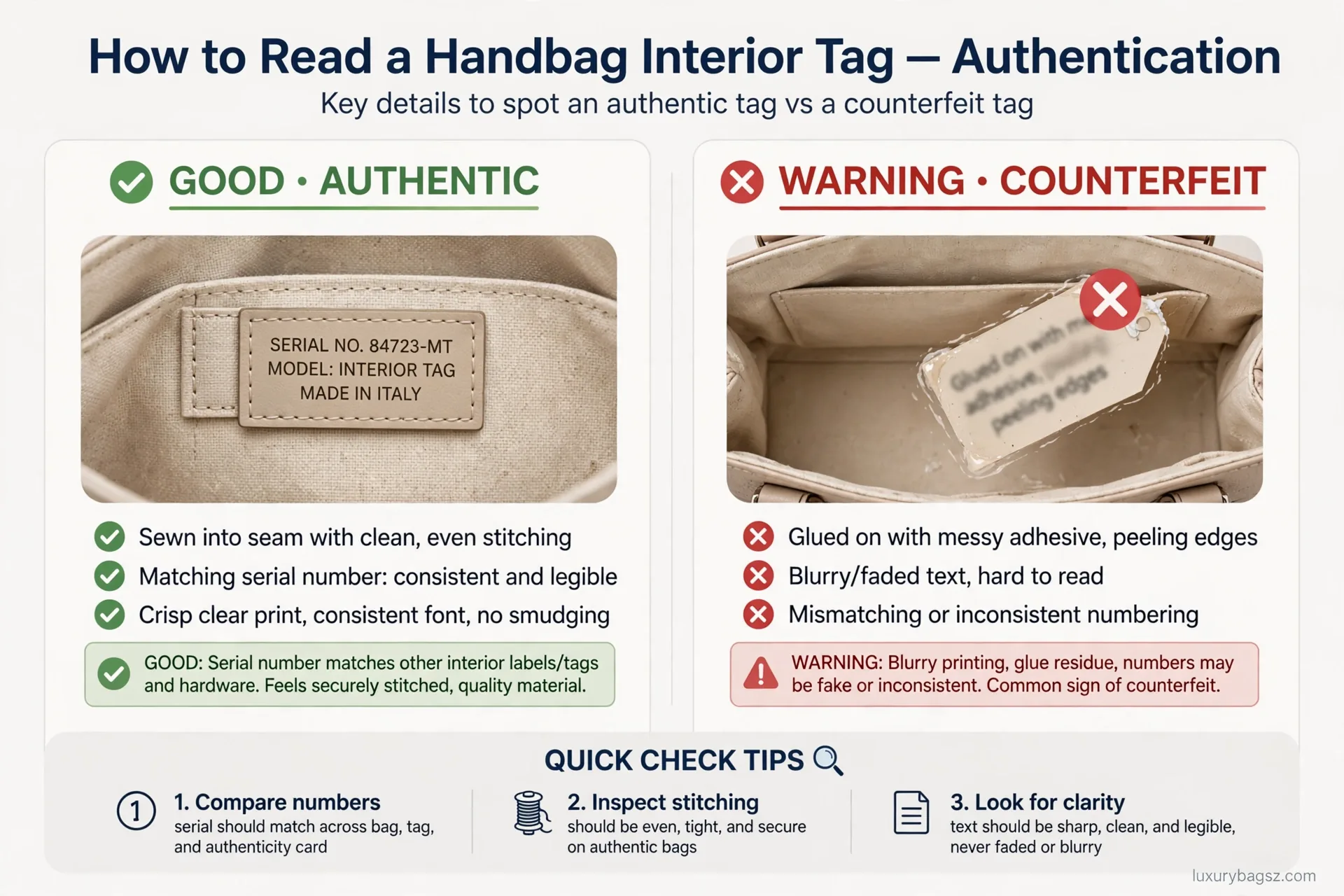
To authenticate a Balenciaga bag, start with the interior tag: it should be sewn in, never glued, with clean, even lettering and numbers that match front to back. A glued tag, or numbers that tell two different stories, ends the inspection before it starts.
Then check the leather, studs and Lampo zips, slowly. Genuine bags pass every check together; fakes usually fail two or three at once once the looking slows down. Every check in this guide follows the Luxury Bagsz authentication process.
Key Takeaways

- The interior tag is sewn in, with crisp lettering and matching numbers on both faces.
- Real leather is soft, thin and naturally wrinkled, never stiff, shiny or plasticky.
- Classic motorcycle styles use Lampo zips with the name engraved on the back.
- Studs and hardware carry real weight with a slightly raw, matte finish.
- Stitching is tight and even, and the front pocket lining changed after 2005.
- A professional authentication is worth paying for on any costly purchase.
Balenciaga authentication, in my hands, begins at the interior tag. I check that it is sewn in rather than glued, that the lettering is clean and even, and that the numbers on the front and back agree — a tag telling two stories ends the inspection early. After that come the leather’s distressed finish, the studs and rivets, and the Lampo zips. I also run pre-owned examples through the Entrupy app where the model allows it. No single detail has ever settled a bag for me; it is the tag, leather and hardware passing together that does.
Know the Model Before You Judge the Bag
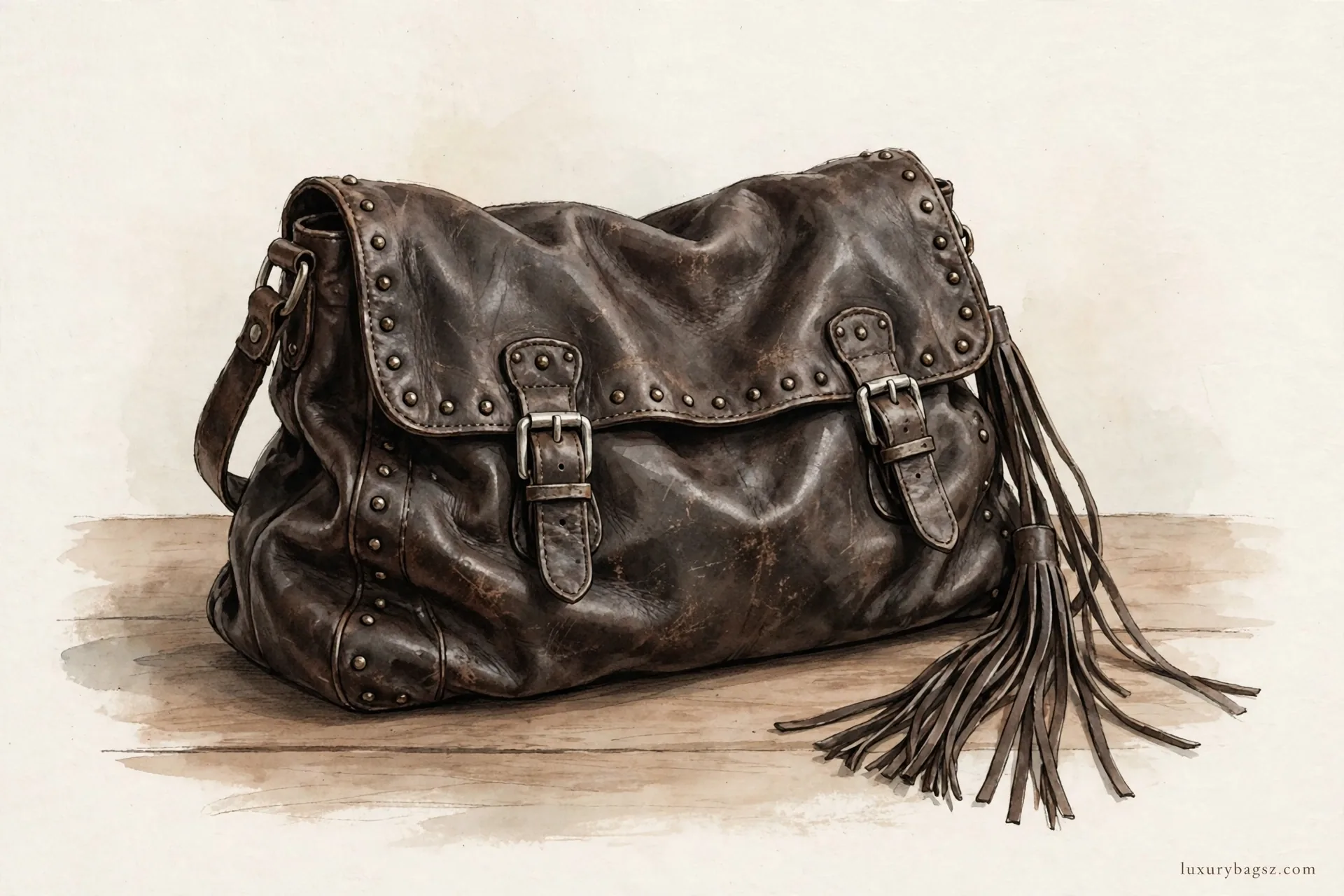
Authentication starts with homework. Learn the exact model, its sizes, its hardware options and its era before you examine a single stitch. Our Balenciaga City bag guide covers the most faked style of all, the slouchy motorcycle design with studs and tassels. Details changed across years: leathers switched, tags evolved and hardware was updated. A detail that is wrong for 2018 may be right for 2005. Compare against several verified examples of the same model and season. One reference photograph is never enough to judge a bag fairly.
Take photographs as you check, in daylight and without filters. A clear personal record helps if you later use an authentication service or need to support a return claim.
The Interior Tag and Serial Numbers
Find the interior tag. On most styles it is a leather tab sewn into the lining; some classic styles carry a metal plate instead. Glued tags are a warning sign. Lettering should be clean, evenly spaced and evenly weighted. Blurry, crooked or oddly bold printing points away from the genuine article. Where numbers appear on both faces of the tab, they must agree. The style number should also match the model you are holding, not a different bag entirely. Older tags use different formats from newer ones, including a season letter in the code. Judge the tag against the bag's claimed era, not a modern template.
Leather: The Distressed Signature
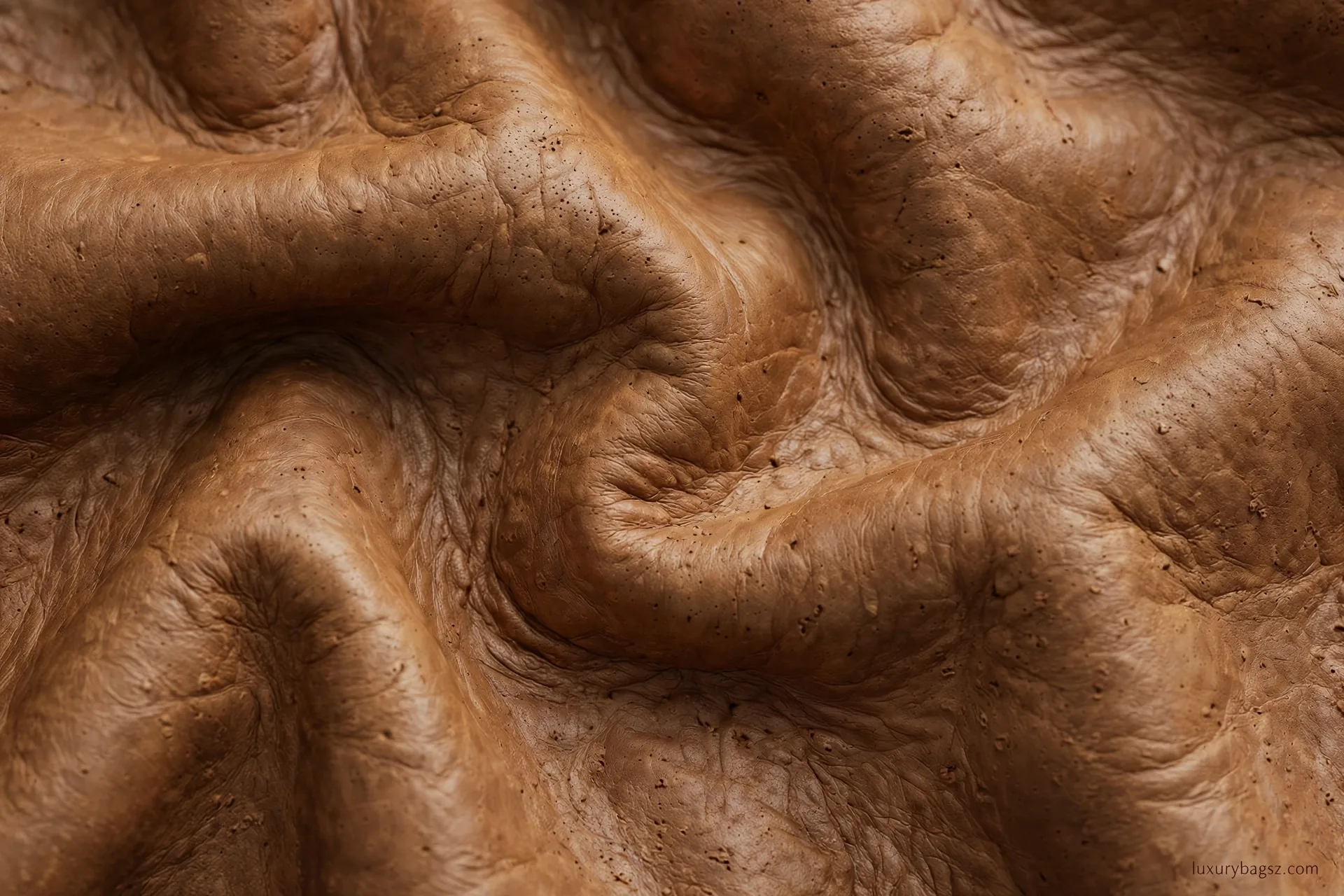
Balenciaga leather is famous for looking lived-in. Classic styles use thin, soft lambskin or goatskin with a natural, uneven wrinkle and a gentle slouch. Run your hand over it. Genuine leather feels supple and slightly waxy, and it softens further with age rather than cracking or peeling. Fakes often use stiff or coated material with a uniform, printed wrinkle. An even pattern repeated across panels is a strong counterfeit clue. Smell helps too. Real leather smells like leather; heavy chemical or plastic smells suggest synthetic material, whatever the listing claims.
Era knowledge protects you from false alarms. A detail that looks wrong beside a current bag may be perfectly correct for an older one, so always date the bag before you judge it.
Studs, Rivets and Hardware Weight
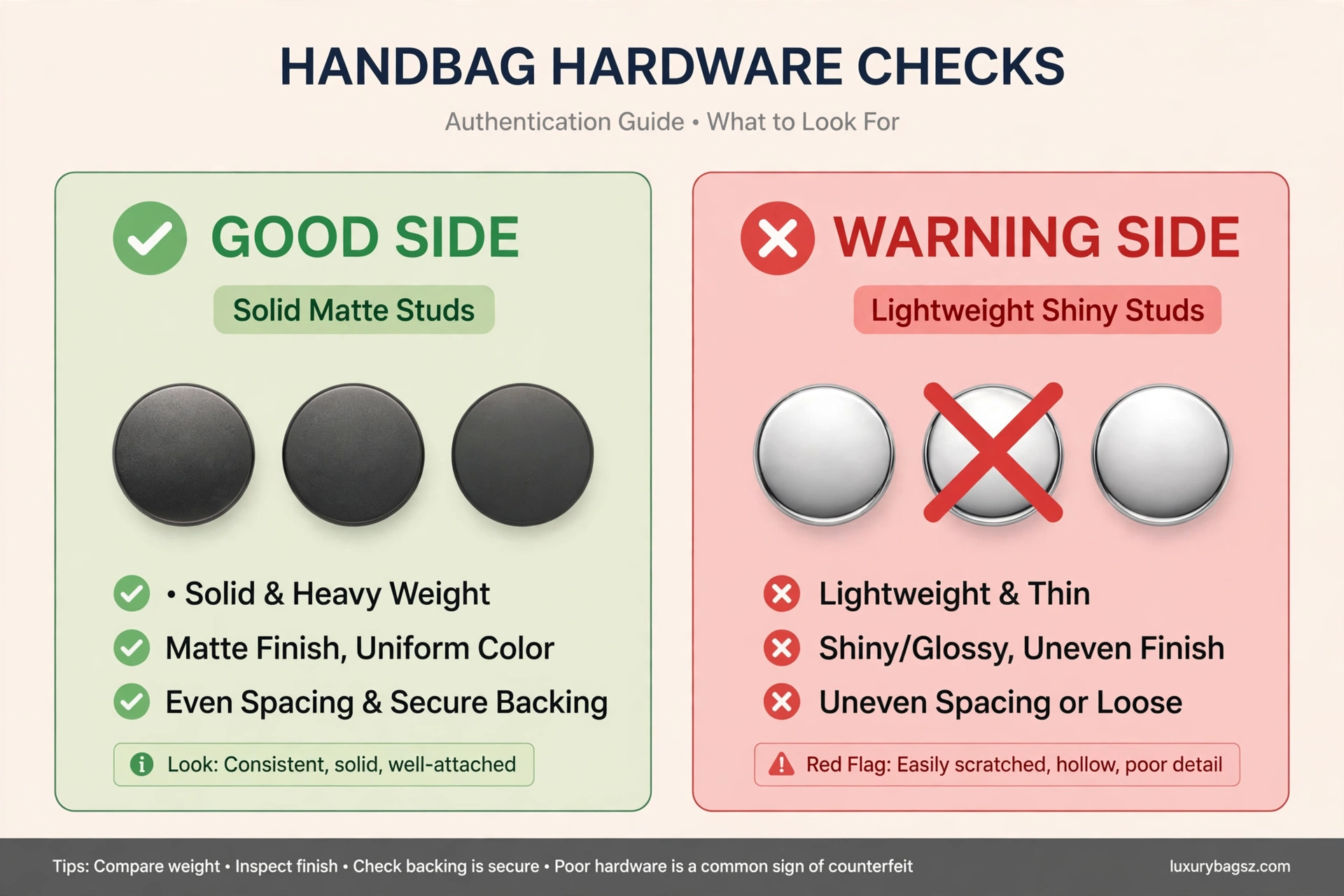
Pick the bag up and feel the hardware. Genuine studs, buckles and clasps are solid metal with a slightly raw, matte character and reassuring weight. On classic styles, studs should sit firm and even, with clean slots and no spinning or rattling. Shiny, feather-light studs are a common fake trait. Handle attachments deserve a close look. The bales and rings should be smoothly finished, rounded and strong, with no sharp casting edges. Finishes should match across the whole bag. One bright stud among aged ones suggests a repair or replacement worth asking the seller about.
Stitching, Edges and Build Quality
Work around the bag slowly. Genuine stitching is tight, straight and consistent, with thread tones matched to the leather and no loose ends. Edges should be neatly finished, handles firmly attached and the whole bag evenly made. Lopsided panels and wandering seams betray rushed production. Look inside the front pocket on classic styles. From 2005, that pocket is partly lined in leather, so plain canvas throughout conflicts with a later date claim. Lining fabric, pocket placement and mirror or tassel details should all match verified examples of the same model. Small layout errors add up quickly.
Zips, Tassels and Model Details
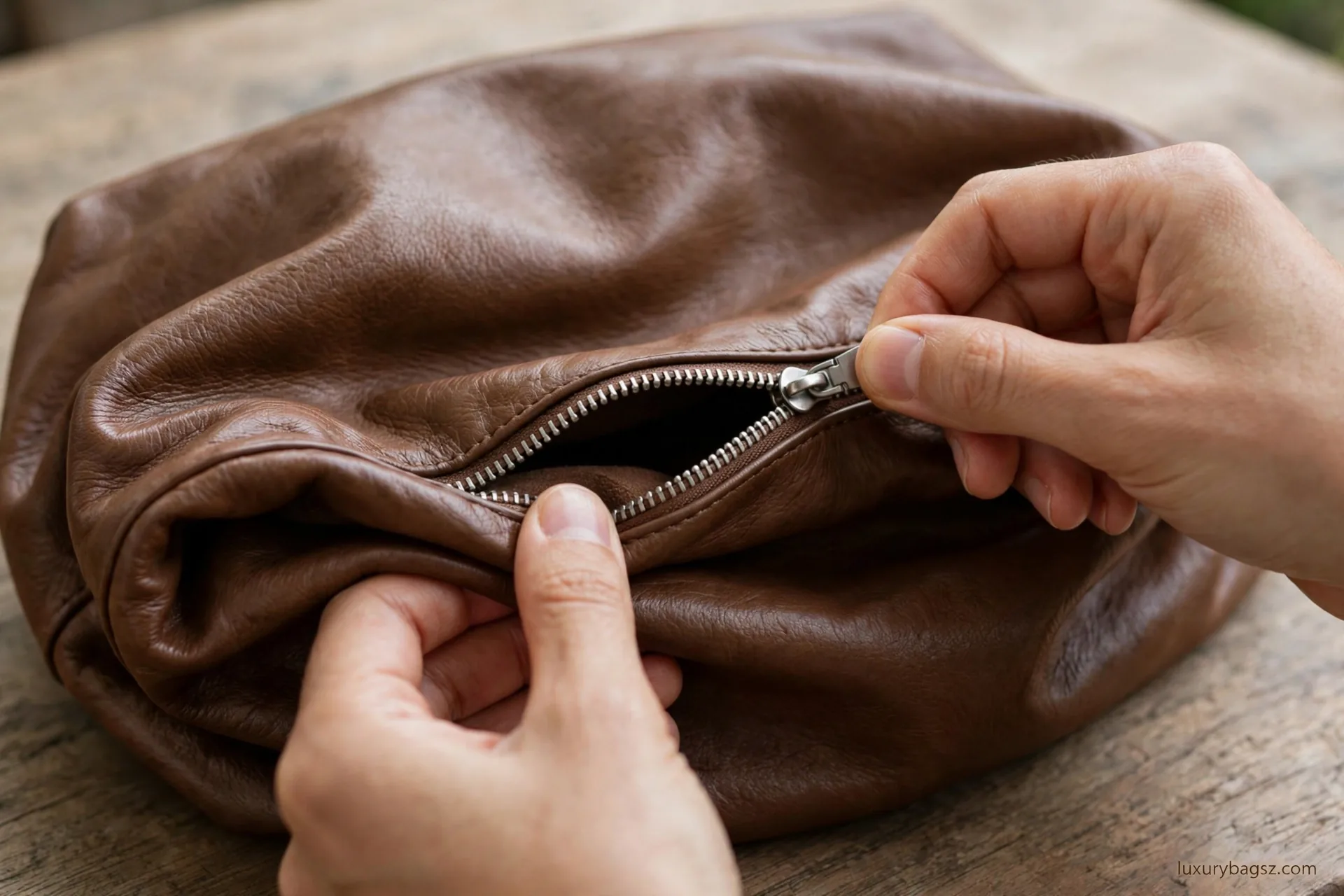
Classic motorcycle styles use Lampo zips, with the name engraved in italics on the back of the zip. The action should feel smooth and solid, never gritty. Our Balenciaga Le Cagole guide and our Balenciaga Hourglass sizes guide show how details differ by family, so judge each model on its own rules. Tassels on classic styles should be thick, soft leather with clean cuts. Thin, stringy or plasticky tassels are an easy tell. Check the mirror, strap and spare tassels where the model includes them. Accessories are often made more cheaply on fakes than the bag itself.
Weight is a supporting clue many buyers skip. Genuine leather and solid hardware give these bags a characteristic heft; unexpectedly light bags deserve a slower, closer look.
Price, Packaging and Seller Red Flags
A genuine bag at a tiny fraction of its usual price is the oldest warning in resale. Sellers who know the market rarely give real bags away. Packaging helps but proves little alone. Dust bags and cards can be copied or borrowed from real bags, so never let a good box overrule a bad bag. Ask for clear photographs in natural light: tag front and back, zips, studs, corners and lining. A seller who refuses detail shots is telling you something. Pressure tactics, stock photographs and no-returns terms at high prices should all end the conversation. Good sellers expect careful questions.
When to Get a Professional Opinion
Pay for authentication when the price is high, the model is heavily faked or any check leaves you unsure. My guide to how online authentication services work explains what that fee buys, from photo review to certificate. The fee is small beside the cost of a mistake. Our pre-owned designer bag authentication guide sets out how reputable services work and what photographs they need. Our buying a pre-owned designer bag safely guide covers protected payment routes, which matter as much as the checks themselves. Still tempted? Read our piece on the reasons to own a Balenciaga bag, then buy the best verified example your budget allows.
The Season Letter: A Backwards Alphabet
Inside the tag’s number string sits a standalone letter, and it is a dating tool hiding in plain sight. Collector and reseller references agree that the letter names the season, and that Balenciaga counts backwards through the alphabet, two letters a year. Bags before autumn and winter 2003 carry no letter at all.
The first cycle ran from D for autumn and winter 2003 down to A for autumn and winter 2017, skipping X along the way. The code then wrapped to Z and kept descending, reaching K by spring and summer 2025 in the most recent references. Treat the newest entries cautiously: the house publishes no official list, and the table is a collector reconstruction.
The trap is repetition. Most letters have now served two different years, one in each cycle, so a letter alone cannot date a bag. It must agree with the tag’s typeface, the hardware generation and the model’s production years; when all four point to the same season, the date is trustworthy.
Fakes copy letters faithfully from genuine bags, so a correct letter proves formatting, not authenticity. Its real power is negative: a letter impossible for the bag’s era, or matching a season when the model did not exist, exposes a wrong bag quickly.
Reading the Tag by Era: Underscore, Period and the Silver Plate
The tag’s own typography carries dates. References note that labels read Balenciaga_Paris, with an underscore, until around 2005, then Balenciaga.Paris with a period. A bag claiming 2003 with the later form, or 2010 with the earlier, contradicts itself before any number is read.
Typefaces shifted too: the house moved from a serif to a sans-serif style around autumn and winter 2004, and from 2011 the words made in Italy began appearing in large capital letters on tags. Each change is a small checkpoint that a claimed year must pass.
Metal plates split by period as well. Plates fitted from 2001 to around 2008 were sterling silver, and genuine silver plates from before autumn and winter 2008 carry a tiny 925 stamp in the bottom-right corner. Later plates are nickel, and many models, including most giant-hardware bags, use a leather tab instead. A 2006 bag with a nickel plate, or a silver plate missing its 925 where the era demands it, needs explaining.
This is why the tag chapter opened this guide: the tag is not one check but a stack of dated details, and copies usually date at least one of them wrongly.
The Controllato Card and the Leather Swatch
Classic-era bags arrived with a supporting cast worth knowing. Alongside care paperwork, genuine examples of the motorcycle era typically included a controllato card and a small leather swatch: a sample of the bag’s own leather, kept as a reference for colour and texture.
The swatch is the more interesting witness. It should be the same leather as the bag, same grain family, same distressing character, same colour. A swatch that feels like different material, or a generic sample clearly never cut for this bag, weakens the set’s story.
Judge paperwork with the restraint this guide applied to packaging generally: cards are copied, borrowed and sold separately, so they corroborate rather than prove. A complete, coherent set raises confidence in a bag that already passes its physical checks; it rescues nothing that fails them.
Absence is equally un-dramatic. Bags carried for years lose cards and swatches honestly, and a missing set on a well-worn genuine bag is normal history, not a verdict.
Leather Eras: Chevre, Agneau and Arena Finishes
The leather itself is dated, if you know the eras. Early motorcycle bags were made in chevre, goatskin, prized by collectors for its durability and the way its distressing deepens; the house later moved production to agneau, lambskin, softer and more delicate, and the feel difference between the two is real in hand.
That chronology creates checks. A bag claimed as an early-2000s piece should wear the leather of its period, and a seller describing lambskin behaviour in a goatskin-era bag, or the reverse, is mixing references they may have copied from different listings.
Finishes changed too, including the glossy Arena treatment associated with certain years. None of this can be judged from photographs alone, which is why leather-era claims on expensive early bags are exactly where the professional opinion chapter earns its fee.
For buyers, the practical rule is simple: learn which leather your target season used, then let your hands vote. The distressed signature in this guide’s leather chapter should feel like the era’s material, not just look like it.
Modern Lines: New Tags, New Zip Pulls
Post-motorcycle families follow updated rules, so do not authenticate a modern bag entirely by classic tests. Newer styles carry a white leather tag sewn into the lining, printed with the line of numbers this guide described: the opening digits are the style number, followed by colour and production codes.
Zip hardware modernised as well: from around 2014, many styles moved to zip pulls carrying a bold letter B rather than relying on the classic Lampo arrangement. A modern bag failing the Lampo test may simply be modern; a classic-era bag wearing the modern pull has the anachronism problem instead.
The constants across eras are the ones worth trusting: tags sewn never glued, type evenly weighted and clean, numbers consistent front to back, hardware with real weight, and leather that feels like the material named. Eras change the furniture; they do not change the standard of making.
Judge each bag inside its own generation, with this chapter and the era chapters together, and the two decades of production stop contradicting each other.
Hardware Generations: Classic Studs and the Giant Era
Hardware has generations too, and mixing them up dates a bag wrongly. Classic regular hardware uses the small studs and rings of the original motorcycle design. From 2007 the house added giant hardware: much larger studs that changed the bag’s whole face, first in the larger format collectors call G21, then in a reduced G12 size, alongside finishes including gold, silver and rose tones and even leather-covered studs on some runs.
Each generation pairs with its years and its tag behaviour. Giant-hardware bags generally carry the leather tab rather than the silver plate, which is why a claimed giant bag wearing an early silver plate, or a 2004 bag wearing giant studs, is internally inconsistent.
Thimbles, bales and buckles follow the same sizing logic as the studs on any given bag: one hardware family, one scale, throughout. A bag mixing small classic bales with giant studs has been assembled or copied from mixed references, and both explanations end a purchase.
Learn your target bag’s hardware generation as part of the model homework in the opening chapter, then check that every fitting on the bag belongs to it. Hardware is heavy, visible and expensive to fake well, which makes its consistency one of the strongest witnesses you have.
Frequently Asked Questions
What is the first check for a Balenciaga bag?
The interior tag. It should be sewn in with clean, even lettering, and any numbers on the front and back should match each other and the model.
Do all Balenciaga bags have Lampo zips?
Classic motorcycle styles famously use Lampo zips with the name engraved on the back. Newer families vary, so check the rule for your exact model.
How should real Balenciaga leather feel?
Soft, thin and supple, with a natural, uneven wrinkle and a gentle slouch. Stiff, shiny or plasticky material with a repeated pattern is a warning sign.
Can a serial number prove a bag is real?
No. Numbers can be copied from genuine bags. Treat the code as one clue among many, and weigh leather, hardware and build quality alongside it.
Why does the front pocket lining matter?
On classic styles from 2005 onward, the front pocket is partly lined in leather. A bag claiming a later date with a fully canvas pocket needs explaining.
Are Balenciaga bags made in Italy?
Most leather bags are made in Italy, and tags reflect that. Country alone proves nothing, but a wrong or oddly printed origin line is a red flag.
Do fakes come with dust bags and cards?
Yes, packaging is copied and sometimes borrowed from real bags. Judge the bag itself first and treat packaging as supporting evidence only.
What hardware details matter most?
Weight, finish and firmness. Genuine studs feel solid and slightly raw or matte, sit evenly and do not spin. Light, shiny, rattling studs suggest a fake.
Is a very cheap Balenciaga ever genuine?
Occasionally a worn bag sells cheaply, but deep discounts on popular styles are the classic scam pattern. Extra checks and protected payment are essential.
Should I pay for professional authentication?
For any expensive or heavily faked model, yes. A specialist verdict costs little compared with the bag and can support a return if problems emerge.
My Balenciaga Rule: Tag First, Leather Second, Story Last
Authenticate a Balenciaga by agreement: tag, numbers, leather, hardware, stitching and zips all telling the same story about the same era and model. When the story breaks in two places, walk away. Another genuine bag will come along, and patience is the cheapest protection in resale.
I start at the interior tag because that is where copies economise. After checking more than 500 bags, I trust the order in this guide: construction first, materials second, and the seller’s story only once the bag itself has passed.