How Luxury Authentication Technology Works: AI, Digital IDs, Expert Review and Their Limits
Three Technologies Behind a Luxury Verdict
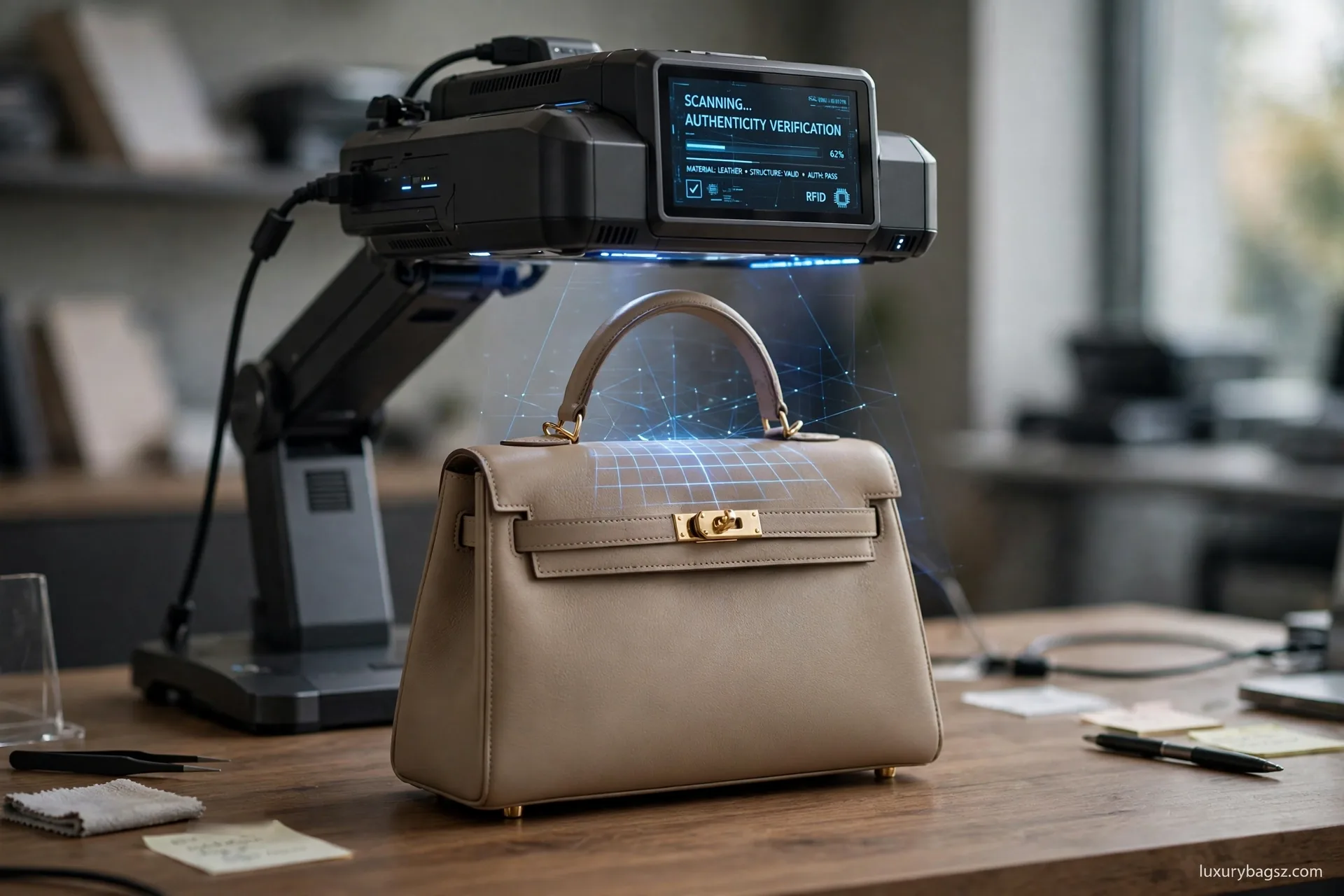
Three tools do most of the work: AI image analysis, digital IDs and expert review. AI compares detailed photographs and microscopic features against databases of authenticated examples, checking stitching, fonts, hardware and finishes for patterns that suggest a fake.
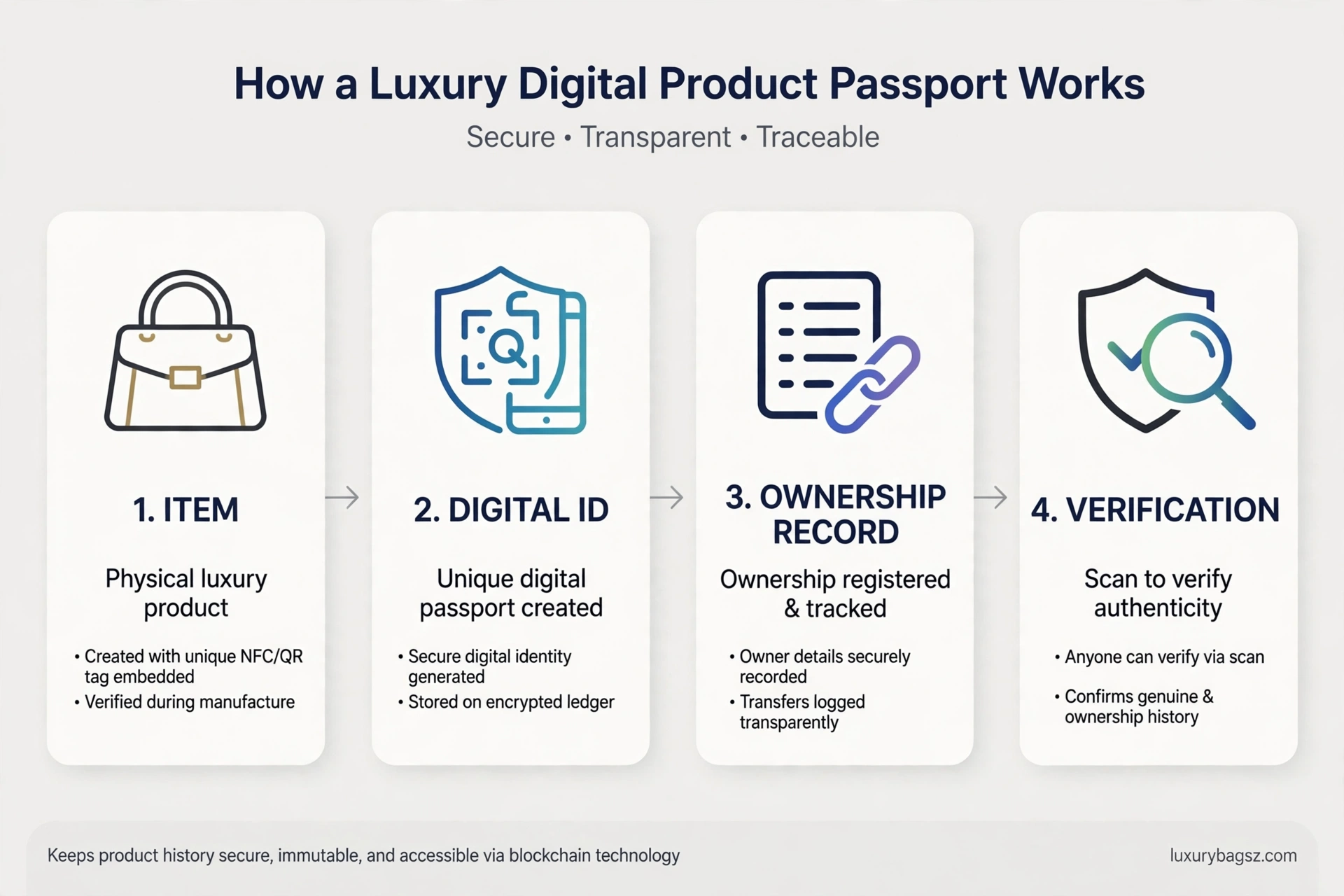
A digital ID links a physical item to a verifiable record of identity and ownership history, sometimes anchored on blockchain. That makes the record harder to alter, though it cannot prove a false record was true when first created.
Experts then judge borderline, rare or newly faked items where machines are weakest. No verdict is absolute; training data, photo quality and a secure link between item and record all limit confidence.
Luxury Authentication Technology in Brief
Luxury authentication technology answers a question that has grown harder every year: given a bag, watch, shoe or jewel, is it genuine, and how confidently can anyone say so? Counterfeits have improved from obvious copies to near-perfect replicas, and human expertise alone, however skilled, cannot scale to the millions of items traded second hand each year.
Technology now helps experts work faster, more consistently and across more categories, but it does not replace them.
This guide leads with those cross-category technologies, explains how AI is trained and where it fails, describes digital IDs and their limits, and follows a typical expert-AI workflow from submission to verdict. It deliberately does not repeat two topics covered in depth elsewhere: the microchip and NFC detail for bags, and one well-known AI authentication service's method, both of which belong to the bag authentication guide linked below.
This guide cites that guide, then goes beyond it to the wider technology landscape.
No technology proves authenticity absolutely. Every method has limits, every database has gaps, and every system can be fooled by a sufficiently good fake, a poor photo or a missing record. Understanding those limits is what makes technology useful, rather than a false promise of certainty.
Key Takeaways
- AI authentication compares detailed photos and measurements against databases of authenticated examples, looking for patterns humans miss at scale.
- AI is only as good as its training data: rare, new or poorly photographed items are its weakest cases.
- Digital IDs tie a physical item to a verifiable record, but they prove the record, not the item, unless the link between them is secure.
- Blockchain anchoring makes a record harder to alter, but it cannot make a false initial record true.
- Expert-AI workflows use machines for speed and consistency, and humans for judgement on borderline cases.
- Forensic checks, from stitch patterns to material composition, add evidence that photos alone cannot provide.
- Counterfeiters adapt to known checks, so authentication systems must update constantly to stay effective.
- A technology verdict is a probability with evidence, not a guarantee, and it should be read alongside provenance, seller history and physical inspection.
I use authentication technology every week, so let me be plain about what it does in my hands. The Entrupy app is my second opinion, not my verdict: I scan microchips and submit the microscopic details — stitching, engravings, hardware finishes — and let its database argue with my own judgement. When the two disagree, I go back to the bag, not the screen. After ten-plus years and more than 500 bags examined by hand, I trust the workflow this guide describes precisely because it ends with an expert looking again, not with an algorithm closing the case.
Why Authentication Needed Technology
Counterfeiting changed the authentication problem. Early fakes were easy to spot: wrong materials, sloppy stitching, misspelled stamps and cheap hardware gave them away to any experienced eye. Modern high-grade replicas, often called superfakes, use similar materials, copy stamps and hardware closely, and reproduce packaging, cards and receipts, so visual inspection alone, especially from seller photos, is no longer enough for many buyers.
Volume changed the problem too. Second-hand luxury now trades at a scale that human experts alone cannot serve quickly: marketplaces list thousands of items daily, and buyers expect verdicts in hours, not weeks. Technology offers speed and consistency at that scale, checking every item against the same criteria, without fatigue, bias or variation between individual experts on straightforward cases.
Technology also creates records. A photo-based check leaves a trail of images, measurements and comparisons that a buyer, a marketplace or a later owner can review, while a purely verbal expert opinion leaves little trace. Records support disputes, returns and resale, since a later buyer can see what was checked and how, rather than trusting a single verdict without evidence.
None of this means human expertise is obsolete. It means expertise is now deployed where it matters most: on borderline cases, rare items, new fakes and complex categories, while machines handle routine pattern matching at scale. The best systems are partnerships, not replacements, and this guide explains how that partnership works.
AI Image Analysis: What the Machine Actually Sees
AI authentication starts with images, but not the images buyers usually take. Systems ask for specific, detailed photos: overall views, stitching close-ups, hardware engravings, stamps, linings, zips, soles or dials, depending on category, taken in good light, in focus, and without filters. Poor photos are the most common reason for inconclusive results, since an AI cannot analyse detail that a blurry or dark photo does not contain.
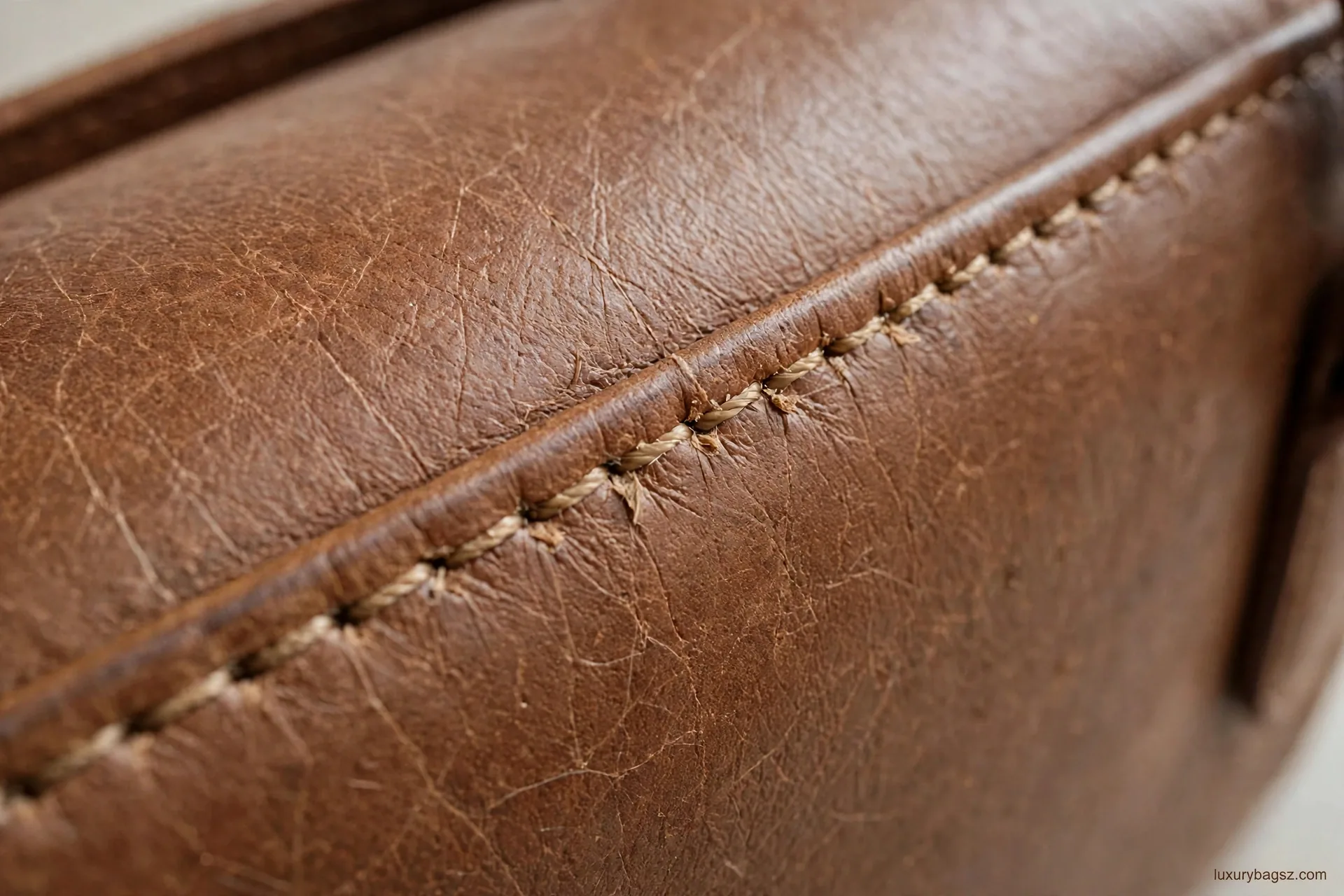
From those photos, computer vision models extract features: stitch length and consistency, font shapes in stamps and engravings, hardware shapes and finishes, leather grain patterns, pattern alignment, and colour and texture measurements. These features are compared with patterns learned from authenticated examples, and the system looks for matches to genuine patterns and deviations that suggest counterfeiting.
Different AI approaches suit different evidence. Classification models sort an item into genuine or counterfeit categories based on learned patterns, while anomaly detection flags items that differ from genuine examples in unusual ways, even when the specific fake type has never been seen before.
Some systems use microscopic imaging, capturing stitch holes, leather pores or metal surfaces at magnifications where manufacturing differences become visible, since factory tooling leaves traces that hand copying rarely reproduces exactly.
Results are usually expressed as a verdict with a confidence level and, in better systems, with the specific features that drove it: a stamp font mismatch, a stitch inconsistency, or a hardware finish deviation. A verdict without reasoning is less useful than a verdict with evidence, since evidence lets a human reviewer check the machine's work and lets a buyer understand what was actually tested.
How AI Is Trained, and Why Training Data Decides Everything
AI models learn from examples, and their quality depends entirely on the quality, quantity and diversity of those examples. Training sets for luxury authentication combine photos and measurements from items authenticated by experts, from brand reference collections, and from confirmed counterfeits seized or identified through other channels. Each example must be labelled correctly, since a mislabelled example teaches the model the wrong pattern.
Diversity matters as much as volume. A model trained mostly on one brand, one era or one colour will perform poorly on other brands, eras or colours, and a model trained on new items may struggle with vintage items whose materials and making have aged. Good systems therefore train across brands, eras, conditions and lighting, and they track performance by category, so weaknesses are visible rather than hidden in an overall accuracy claim.
Training is continuous, not one-off. Counterfeiters adapt to known checks, changing stamps, hardware and materials to pass automated screening, so models must be retrained on new fake examples as they appear. A model that was accurate last year may be less accurate this year if fakes have evolved and the model has not, which is why reputable systems update frequently and publish, at least in general terms, how they handle new fake types.
Human labelling is the bottleneck. Every training example needs expert verification, and expert time is scarce and expensive, especially for rare or high-value items. That scarcity explains why AI performs best on common, well-documented items with large training sets, and worst on rare, limited or vintage items where authenticated examples are few.
Buyers should ask how a system handles rare items, since a confident verdict on a rare item from a thin training set deserves scepticism.
For bag-specific AI detail, including one widely used service's approach and its microchip and NFC context, the authenticate a pre-owned designer bag guide covers those topics in depth, and this guide does not repeat them. The principles here, training, features and limits, apply across services and categories, while that guide gives the bag-specific workflow.
Digital IDs and Product Passports: Tying an Item to a Record
A digital ID gives a physical luxury item a verifiable digital twin: a record containing its identity, materials, maker, date and ownership history, accessible through a code, tag or app. When a buyer scans the ID, they see the record, and when ownership changes, the record can update, creating a history that follows the item through resale. The idea is to replace easily faked paper cards with a record that is harder to forge and easier to check.
Product passports extend digital IDs with richer information: material composition, care guidance, repair history and recycling information, alongside authenticity data.
The European Union is introducing digital product passport requirements for product groups including textiles, which will push brands toward standardised, machine-readable product data, and luxury houses are already experimenting with passports for bags, watches and garments, though standards and coverage remain uneven.
The critical question for any digital ID is the link between item and record. A record can be genuine while the item in hand is fake, if a genuine tag, code or card has been moved to a counterfeit, or if a code has been copied.
Secure links use tamper-evident tags, unique identifiers that are hard to clone, and checks that bind the ID to physical features, such as a serial number engraved on the item, a microscopic pattern, or a hardware detail that matches the record. Without a secure link, a digital ID proves only that a record exists, not that the item in hand is the item the record describes.
Privacy and control matter too. A digital ID that tracks ownership, location and resale creates data about owners, and buyers should ask who controls that data, who can see it, and whether ownership transfer requires brand or platform approval. A passport that locks resale to one platform, or that exposes owner data without consent, trades one problem for another, however strong its authenticity claim.

Blockchain Records: What They Prove, and What They Do Not
Blockchain technology is often described as making luxury authentication unforgeable, but its actual contribution is narrower and still valuable. A blockchain record is distributed, time-stamped and difficult to alter after it is written, so a record anchored on a blockchain is harder to backdate, edit or delete than a record on a single company's server. That tamper resistance helps ownership history, transfer records and audit trails.
What blockchain does not do is verify the physical item at the moment its record is created. If a counterfeit is registered as genuine, whether by error, fraud or a compromised process, the blockchain faithfully preserves a false record, and its immutability then makes the false record harder to correct. The principle is often stated as garbage in, garbage out: blockchain protects records, it does not create truth about objects.
Blockchain also does not solve the link problem on its own. A blockchain record tied to a serial number still depends on that serial number staying with the genuine item, and on the process that issued the record being trustworthy.
Systems that combine blockchain records with physical binding, such as secure tags, microscopic fingerprints or brand-issued registration at manufacture, are stronger than systems that use blockchain alone as a marketing claim.
For buyers, the right questions about a blockchain claim are practical: who issued the record, how was the item verified at issuance, how is the record linked to this physical item, and can the record be checked without trusting the seller? A blockchain claim that cannot answer those questions is a label, not a verification, whatever its technical language suggests.
Serial numbers and microchips sit alongside digital IDs in many systems, and their brand-by-brand detail matters for specific purchases. For Chanel, the Chanel serial numbers and microchips guide explains stickers, microchips and era changes in depth, while this guide stays at the cross-category level of how such identifiers fit into digital ID systems generally.
Forensic and Physical Checks Beyond Photos
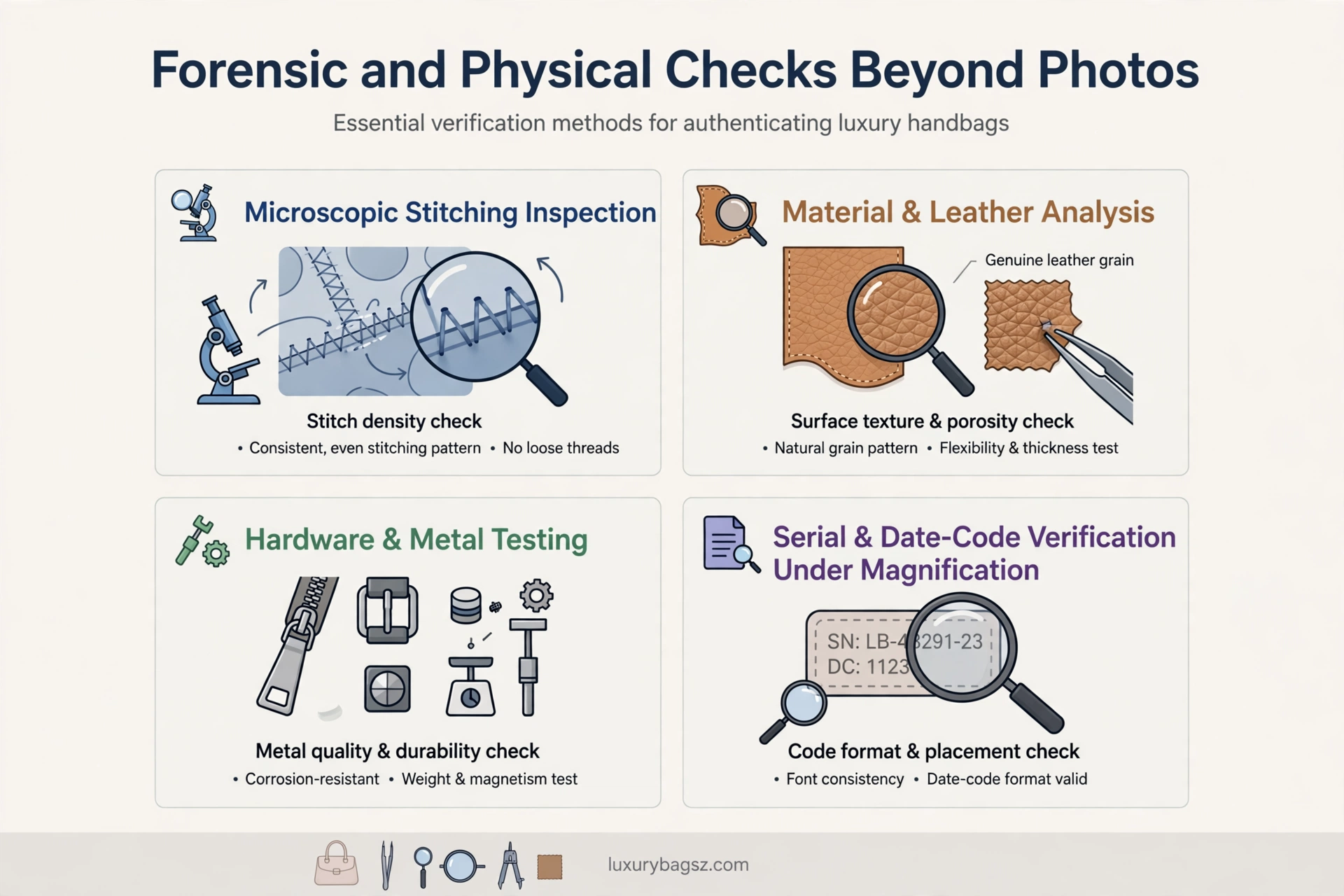
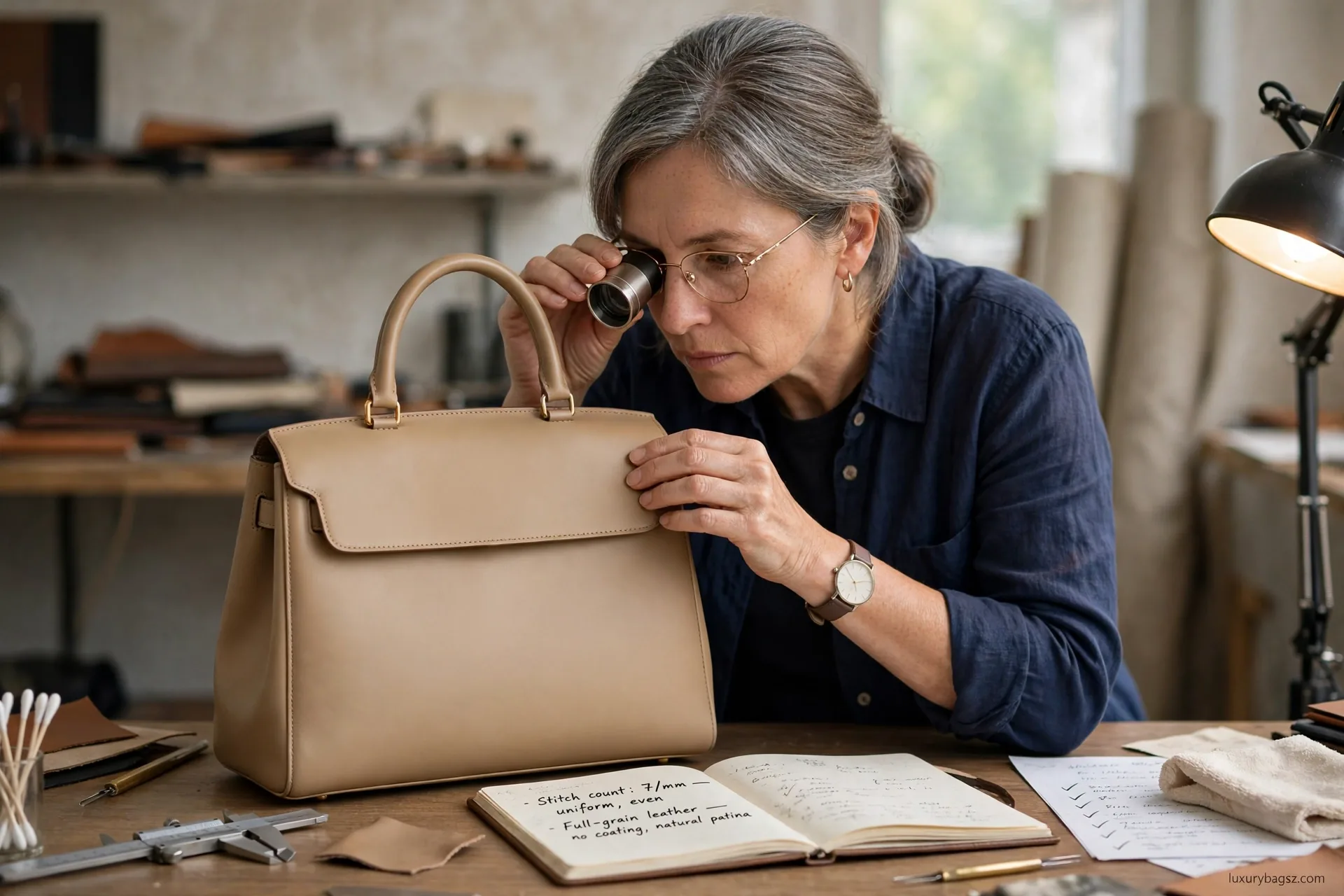
Photos alone cannot capture every authenticity signal, so serious authentication adds physical and forensic checks where items can be handled. These include microscopic examination of stitching, leather grain and hardware finishes, measurement of dimensions, weights and proportions against brand specifications, and comparison of fonts, spacings and engraving depths under magnification.
Material analysis adds another layer. Leather grain patterns, metal composition, thread types, dye characteristics and hardware plating can all be compared with known genuine examples, using tools from loupes and microscopes to spectrometers and X-ray fluorescence in specialist laboratories.
These methods are slower and costlier than photo AI, so they suit high-value, disputed or borderline items rather than every marketplace listing, but they provide evidence that photos cannot.
Wear and ageing patterns also carry information. Genuine items age in ways consistent with their materials and use: leather patinas, hardware wears at contact points, and linings fade evenly, while counterfeits sometimes age inconsistently, with new-looking hardware on worn leather, or fading that does not match the item's claimed age.
An expert who handles an item can judge ageing holistically in a way a photo system, limited to submitted images, cannot.
Physical checks have limits too. They need the item in hand, they need reference examples for comparison, and they need experts who know what genuine variation looks like, since genuine items vary by era, factory and batch. A physical check that treats every variation as a fake will reject genuine items, while a check that tolerates every variation will pass fakes, so reference data and expert judgement remain central even in forensic work.
The Expert-AI Workflow: From Submission to Verdict
A typical expert-AI workflow follows a clear sequence, and understanding it helps buyers judge verdicts. First, submission: a seller or owner provides detailed photos, and sometimes the physical item, plus provenance information such as purchase history, receipts and previous ownership. Better systems specify exactly which photos and angles they need, since missing angles are a common cause of inconclusive results.
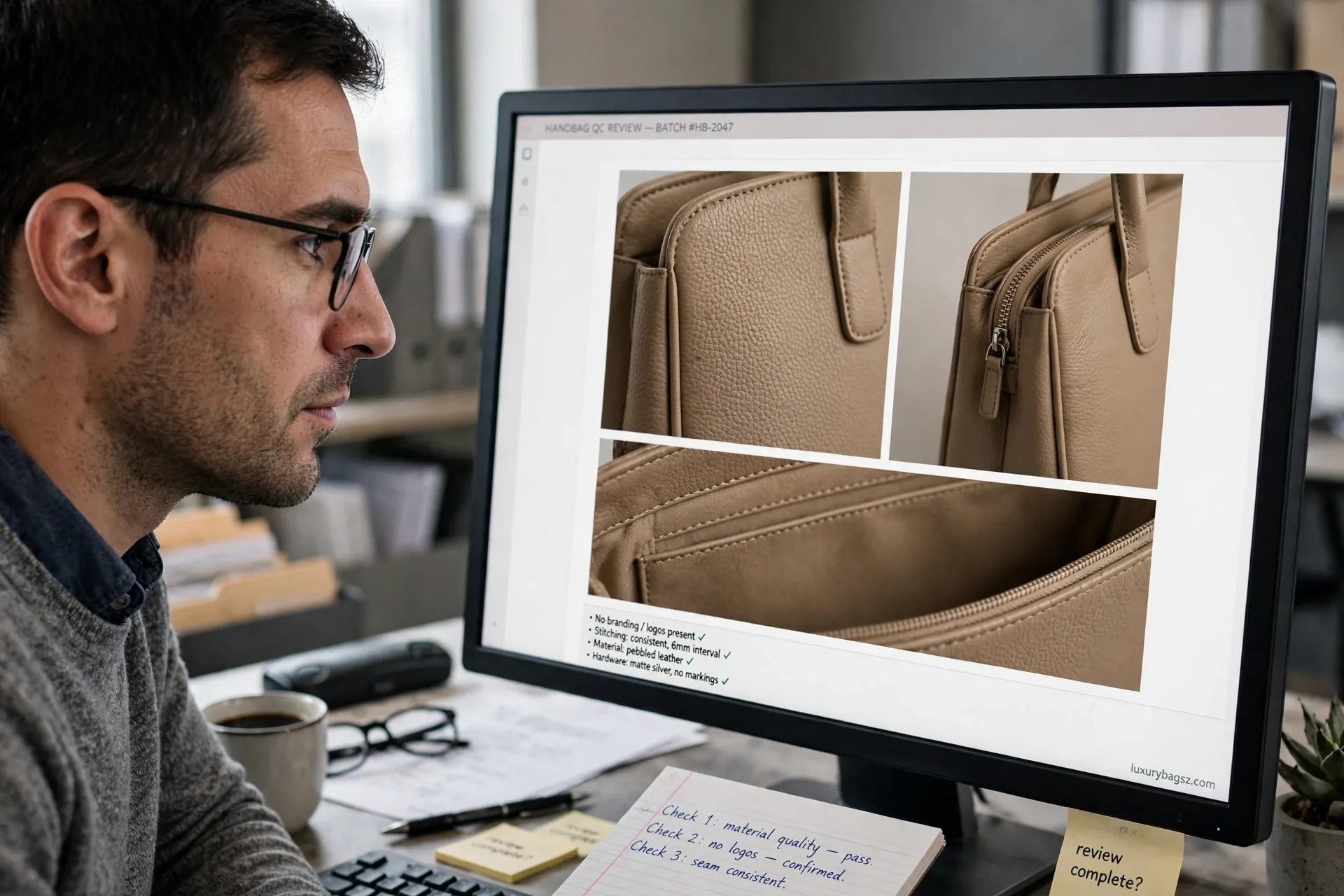
Second, automated screening: AI models analyse the photos, compare features with authenticated databases, and produce a preliminary verdict with confidence and feature evidence. Straightforward genuine and straightforward counterfeit cases often resolve here, quickly and consistently, freeing human experts for harder cases.
Third, human review for borderline, rare, high-value or low-confidence cases: an expert examines the photos, the AI's feature evidence, and the provenance, and may request additional photos, physical inspection or forensic checks. Human reviewers also audit a sample of automated verdicts, catching model errors and feeding corrections back into training, so the system improves over time.
Fourth, verdict and record: the final verdict, with its confidence, evidence and limitations, is recorded and shared with the buyer or marketplace, sometimes with a certificate, a digital record or a marketplace guarantee. A verdict should state what was checked, what was not checked, and whether it was based on photos alone or on physical inspection, since those distinctions change how much weight a buyer should give it.
Marketplace Verification and Guarantees
Marketplaces use authentication technology as a trust mechanism, and their workflows affect buyers directly. Some marketplaces authenticate every item before it ships to a buyer, holding payment until verification passes, while others authenticate on request, or rely on seller reputation with verification only for disputes.
Pre-shipment authentication, where an independent team handles the item, is stronger than photo-only verification, since it allows physical and forensic checks.
Guarantees vary in scope and should be read carefully. A marketplace guarantee may cover authenticity only, or authenticity plus condition, and it may require a claim within a short window, with specific evidence. A guarantee that promises a refund for counterfeits is valuable, but it does not make every listing genuine, and it does not replace a buyer's own checks on seller history, photos and provenance.
Seller verification is a related layer. Marketplaces increasingly verify seller identity, track seller history, and restrict high-value listings to sellers with established records, since a seller's history predicts risk better than any single item check. A new seller with no history, listing rare items at low prices, carries higher risk than an established seller with a long, clean record, whatever technology is applied to the item itself.
Buyers should also understand that marketplace authentication is a service with costs and limits. My walkthrough of how online bag authentication services work follows a submission from photos to certificate, with prices and turnaround. It adds fees and shipping time, it may not cover every brand or category, and it may return inconclusive results for rare or poorly documented items. An inconclusive result is not a verdict of counterfeit, but it is a reason to pause, request more evidence, or walk away, rather than assuming the item is genuine because it was listed.
Authentication by Category: Bags, Watches, Sneakers, Jewellery
Authentication technology adapts to each category's signals, and cross-category systems must handle those differences rather than applying one method everywhere. Bags rely heavily on stitching, stamps, hardware, leather grain and lining details, with serial and microchip records as supporting evidence.
Watches rely on movement inspection, dial printing, case engraving, serial numbers and weight, with physical inspection mattering more than photos, since movements cannot be authenticated from exterior photos alone.
Sneakers rely on shape, stitching, sole patterns, box labels, size tags and material details, with AI photo systems performing well on common models with large training sets, and less well on rare, sample or regional variants.
Jewellery relies on metal testing, stone identification, setting quality and hallmarks, with laboratory methods such as spectrometry and gemmological testing providing evidence that photos cannot, especially for high-value stones and metals.
Watches illustrate the physical-inspection point clearly. Exterior photos can flag many fake watches, but a convincing fake can pass exterior checks while its movement, visible only when the case is opened by a watchmaker, reveals its true origin. That movement-first logic is exactly what drives the checks for a fake Hermès watch. For that reason, watch authentication often combines exterior checks with movement inspection, and buyers should treat a photo-only watch verdict as weaker than a physical verdict.
The spot a fake Rolex guide covers Rolex-specific exterior and detail checks that complement this general technology discussion.
Category expertise also matters for training data. A system excellent on handbags may perform poorly on watches, since its models, features and reference databases do not transfer. Buyers should ask whether a service specialises in their category, how large its authenticated database is for that category, and whether its verdicts for that category are photo-based, physical, or both.
Databases, Reference Collections and Brand Cooperation
Authentication databases are the hidden infrastructure of the whole field. They combine authenticated item photos, measurements, material data, serial records and fake examples, organised by brand, model, era and variant, so a new item can be compared with genuine references. The larger, cleaner and more diverse a database, the better its AI and expert checks perform, and the more confidently it can handle variation within genuine production. Each step follows the Luxury Bagsz authentication process, which sets out the checks in full.
Brand cooperation strengthens databases, since brands hold the most complete records of their own products: specifications, serial ranges, material sources and production variations.
Some brands share reference data with authenticators, issue digital IDs at manufacture, or operate their own authentication and resale programmes, while others guard their data closely, forcing authenticators to build reference collections from authenticated market items alone. That difference affects accuracy by brand, and buyers should expect stronger technology coverage for cooperative brands than for secretive ones.
Reference collections also need maintenance. Brands change suppliers, materials, stamps and hardware over time, sometimes within a single model year, so a database that is not updated will flag genuine variation as counterfeit, or miss new fake techniques. Good systems version their references by era and batch, track brand changes, and update models as new genuine and fake examples appear.
Data quality and bias deserve attention. A database built mostly from items sold in one region, one price tier or one condition will perform unevenly elsewhere, and a database with mislabelled examples will teach models wrong patterns. Reputable systems audit their data, track performance by subgroup, and correct errors transparently, rather than claiming a single overall accuracy figure that hides uneven performance.
Limits, Failures and How Fakes Adapt
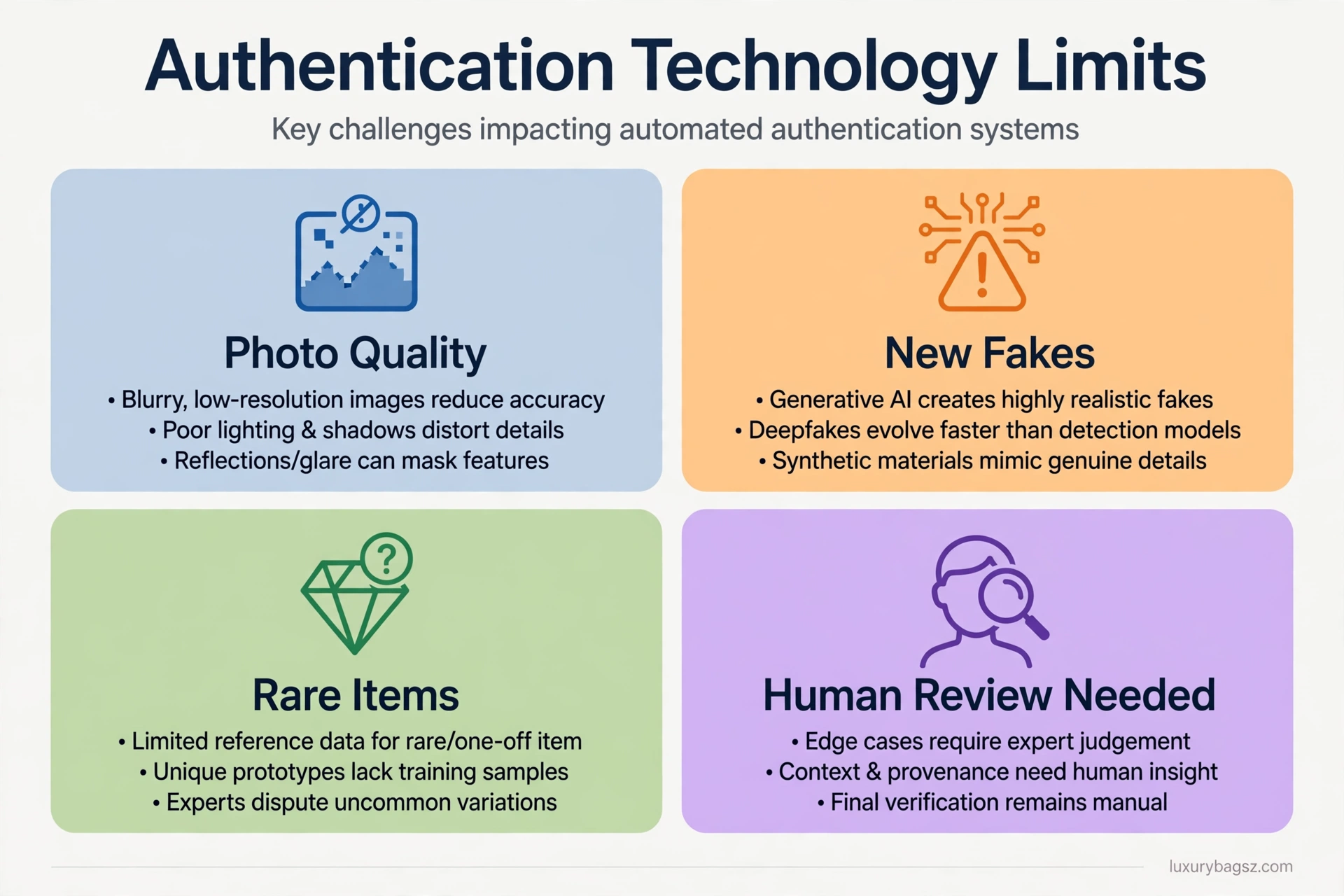
Authentication technology fails in predictable ways, and knowing them helps buyers avoid overconfidence. Photo quality is the first failure mode: blurry, dark, filtered or incomplete photos hide the very details AI and experts need, and a system that returns a verdict from poor photos is less trustworthy than one that requests better photos or returns an inconclusive result.
Rare, new and vintage items are the second failure mode. Rare items have thin training data, new items may not yet be in databases, and vintage items vary by era and condition in ways models struggle to capture. A confident verdict on a rare item, from a system with few references for it, should be questioned, and physical expert review should be sought for high-value rarities.
Adversarial adaptation is the third failure mode. Counterfeiters study known checks, from stamp fonts to hardware shapes, and adjust their products to pass them, sometimes by copying genuine items in detail or by using genuine parts, such as authentic hardware or packaging, on counterfeit bodies. Authentication must therefore update continuously, adding new features, new checks and new fake examples, or its accuracy will decay as fakes evolve.
Systemic failures include database errors, mislabelled training examples, and overreliance on a single signal, such as a serial number or a card, that can be copied or transferred. A robust system uses multiple, independent signals, so a fake that passes one check fails another, and it reports uncertainty honestly rather than forcing a verdict from weak evidence.
Buyers should favour systems that explain their limits over systems that promise certainty.
Privacy, Data and the Ownership of Authentication Records
Authentication creates data about items and owners, and that data raises privacy and control questions. Photos, serial numbers, ownership histories and verdicts, stored by authenticators, marketplaces or brands, can reveal what a person owns, buys and sells, and how much they paid. Buyers should ask who stores authentication data, how long it is kept, who can access it, and whether it can be deleted or transferred.
Digital IDs intensify these questions, since a passport that follows an item through resale also follows its owners, at least in record form. Good systems separate item identity from owner identity where possible, allow ownership transfer without exposing previous owners, and give owners control over what is shared with future buyers.
Systems that expose full ownership history without consent, or that require brand approval for resale, deserve scrutiny, however strong their authenticity claims.
Data security matters too. A database of authenticated items, serial numbers and fake patterns is valuable to counterfeiters, who could use it to improve fakes, and to thieves, who could use ownership data to target collections. Reputable systems protect their data with access controls, encryption and audit trails, and they limit what is published publicly to aggregated patterns rather than item-level records that could be exploited.
Ownership of a verdict is a final question. If an authenticator issues a certificate or a digital record, who owns it, can it be transferred with the item, and does it remain valid after resale? A certificate tied to one owner, or to one marketplace, loses value on resale, while a transferable, verifiable record retains value and supports the item's second life.
Buyers should check transferability before paying for a premium authentication service.
The Future: Better Sensors, Better Records, Better Standards
Authentication technology is improving on several fronts, and buyers will see those improvements in stages. Better sensors, including higher-resolution phone cameras, microscopic attachments and portable spectrometers, will let more checks happen outside laboratories, with richer data than today's photos. Those sensors will help only if systems specify how to use them, since a better sensor used poorly still produces poor data.
Better records, through standardised digital product passports and shared, verified databases, will make item histories easier to check across brands and marketplaces, reducing reliance on paper cards and seller claims. Standards will take time, since brands, marketplaces and regulators must agree on formats, verification and privacy, but the direction is toward interoperable records rather than isolated brand systems.
Better AI, trained on larger, cleaner and more diverse data, with explicit uncertainty reporting and human oversight, will handle more categories and rarer items with greater reliability. Progress will be uneven, since data scarcity for rare items will persist, and adversarial adaptation will continue, so future systems will still need human experts for borderline cases, even as routine cases become faster and more accurate.
Regulation will shape the future too, through product passport requirements, marketplace liability rules and consumer protection standards for authentication claims. Buyers should watch for rules that require authenticators to disclose methods, limits and accuracy by category, since transparency rules will separate credible services from marketing claims more effectively than any single technology advance.
Buyer Checklist: Using Authentication Technology Wisely
Use technology as one layer of a broader check, not as a sole verdict. Before buying, ask what technology was used: photo AI only, physical inspection, forensic checks, or a combination, and what its confidence and evidence were. A verdict with named features checked, and with limitations stated, deserves more weight than a verdict that simply says authentic.
Check provenance alongside technology. Seller history, purchase receipts, original packaging, service records and previous authentication records all add evidence, and inconsistencies between technology verdicts and provenance should prompt caution, not dismissal of either. A genuine item with weak provenance and a strong technology verdict may still be worth buying, but a strong verdict with inconsistent provenance deserves a second look.
For high-value, rare or disputed items, seek physical expert review, not just photo AI, and consider a second opinion from a different service or a brand service where available. Two independent verdicts, especially from different methods, carry more weight than one, and disagreement between services is information, not noise, since it signals a borderline item that needs more evidence.
Finally, keep your own records. Save authentication verdicts, photos, receipts and service records with the item, since they support future resale, insurance and dispute claims, and they help the next owner verify the item without starting from scratch. A well-documented item, with technology verdicts and provenance together, is easier to sell, easier to insure and easier to trust than an identical item without records.
Frequently Asked Questions
Can AI authenticate a luxury item from photos alone?
Sometimes, for common items with large training sets and excellent photos, photo AI can give a reliable verdict, but it is weaker for rare, vintage or poorly photographed items, and it cannot inspect movements, materials or internal details that photos do not show. Photo verdicts should be read with their confidence and limitations, and physical review should be sought for high-value or borderline items.
Does a blockchain record prove an item is genuine?
No. Blockchain makes a record harder to alter, but it cannot verify the physical item at the moment the record was created, and it cannot prevent a genuine tag or code from being moved to a counterfeit. A blockchain claim should be judged by who issued the record, how the item was verified at issuance, and how securely the record is linked to this physical item.
What is a digital product passport?
A digital record tied to a physical item, containing its identity, materials, maker, care, repair and ownership history, accessible through a code, tag or app. Passports help buyers verify history and care, but their value depends on who verified each entry, how the passport is linked to the item, and whether ownership transfer and privacy are handled fairly.
Why do authentication systems return inconclusive results?
Usually because photos are poor or incomplete, the item is rare or new with thin reference data, or the evidence is genuinely borderline between genuine and counterfeit patterns. An inconclusive result is not a counterfeit verdict, but it is a reason to provide better photos, seek physical review, or walk away, rather than assuming the item is genuine.
Are microchips and NFC tags foolproof for authentication?
No. Microchips and NFC tags are useful identifiers when they are securely issued and linked to the item, but tags can be copied, moved or cloned, and a tag alone does not prove the item in hand is genuine. Tag data should be checked alongside physical features, provenance and, where available, brand records, not trusted on its own.
How do counterfeiters adapt to authentication technology?
By studying known checks and adjusting stamps, hardware, materials and packaging to pass them, sometimes using genuine parts on counterfeit bodies, and by exploiting weak signals such as copied serial numbers or cards. Authentication systems counter this by updating models, adding new features, using multiple independent signals, and relying on human review for borderline cases.
Should I trust a marketplace authentication guarantee?
As one layer of protection, yes, but read its scope, time limits and evidence requirements carefully. Pre-shipment physical authentication is stronger than photo-only checks, and a guarantee covers authenticity as defined by that marketplace, not every aspect of condition or value. Combine guarantees with your own checks on seller history, photos and provenance.
What is the difference between photo authentication and physical authentication?
Photo authentication analyses submitted images against databases, quickly and at scale, but it cannot handle the item, inspect movements, test materials or judge ageing holistically. Physical authentication handles the item, allowing microscopic, material and forensic checks, and it is stronger for high-value, rare or disputed items, though slower and costlier.
Can authentication technology detect superfakes?
Sometimes, especially when it uses microscopic, material or multi-signal checks that superfakes have not yet copied, but superfakes are designed to pass known checks, so no single technology detects all of them reliably. Multi-signal systems, updated models, expert review and provenance checks together offer the best defence, and even then, borderline superfakes may remain uncertain.
What records should I keep after buying an authenticated item?
Keep the authentication verdict with its method, confidence and evidence, the photos submitted, purchase receipts, original packaging, service records and any digital ID or passport transfer records. Those records support future resale, insurance and disputes, and they help the next owner verify the item without starting from scratch.
What I Trust, and What I Still Check by Hand
Luxury authentication technology works best as a partnership: AI for speed and pattern matching at scale, digital IDs and blockchain records for verifiable histories, forensic checks for physical evidence, and human experts for judgement on borderline, rare and evolving cases. No single technology proves authenticity absolutely, and every system has limits in photo quality, training data, physical linkage and adversarial adaptation.
Use technology wisely, as one layer alongside provenance, seller history and physical inspection, demand evidence and limitations with every verdict, and keep your own records for resale. Done that way, authentication technology does not promise certainty it cannot deliver; it gives buyers better evidence, faster, and a clearer basis for trusting, or walking away from, a luxury purchase.
That balance is my working rule. I use the Entrupy app, including for microchip checks, because it sees what my eyes cannot — but after more than 500 bags, I still finish every important check by hand: leather, engravings, stitching, hardware and date codes. The technology advises; it does not sign the verdict.