

Hermès Sneakers vs Ballet Flats: What to Buy
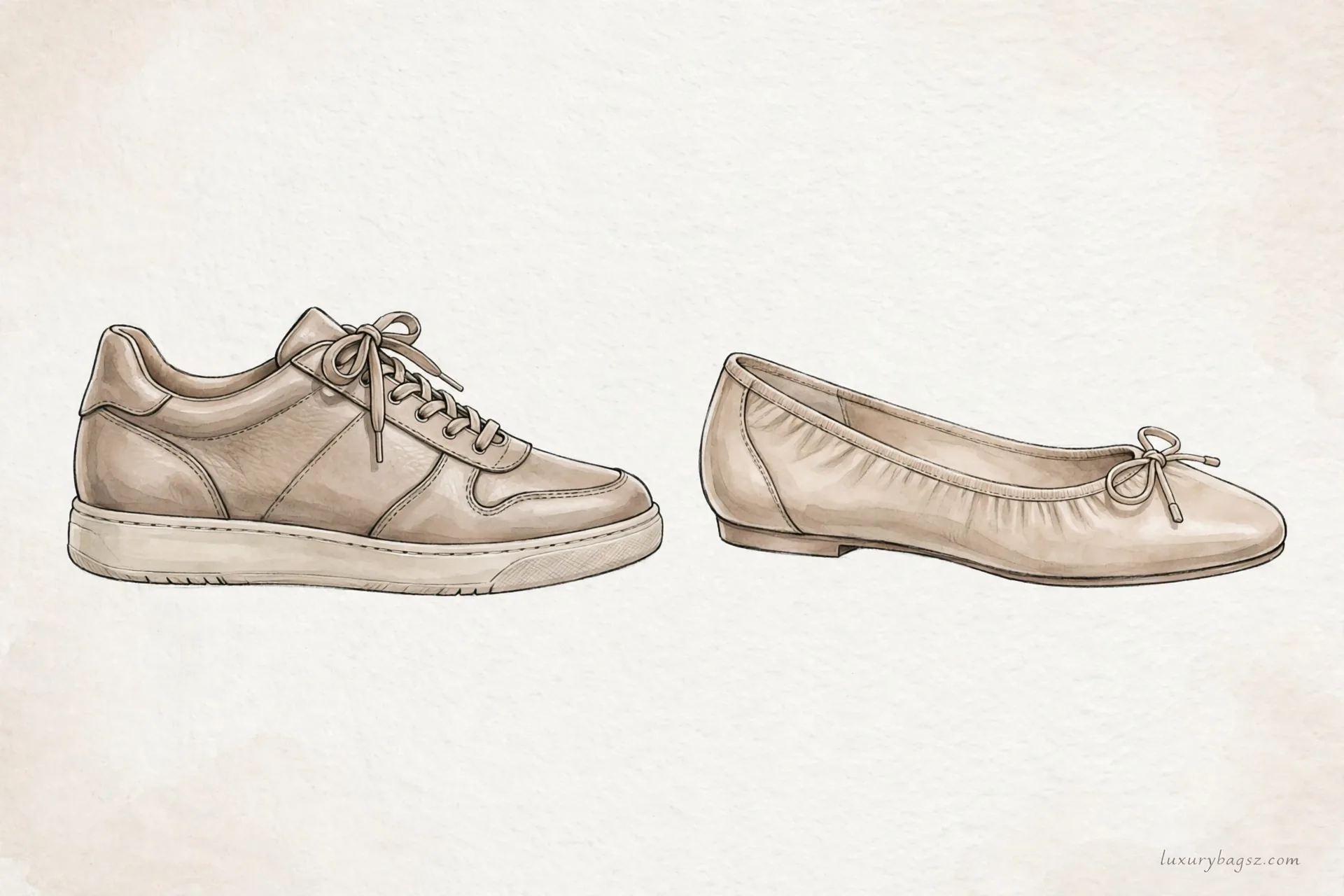
Sneakers or Flats: The Quick Pick
Buy the sneaker if you walk a lot, stand all day, or want one pair that handles rain, travel, and long city days without fuss. Buy the ballet flat if you want the dressier, quieter shoe for work, dinners, and outfits that need polish rather than sport.
If you can only buy one pair, pick by your week, not by your wishlist. A week full of walking, commuting, and casual outfits points to sneakers. A week full of offices, lunches, and smarter outfits points to ballet flats.
Neither choice is the wrong one, and neither shoe does the other shoe’s job well. Sneakers look out of place with a tailored dress, and ballet flats punish feet on a ten-mile walking day. The rest of this guide helps you match the shoe to your real life.
Hermès makes both families in fine leather, and both carry luxury prices. That shared quality makes the choice harder, not easier. Price alone will not settle it, so comfort, styling, and care have to do the deciding.
You are choosing between two very different ideas of luxury footwear. One is built for movement, with laces, cushioning, and a rubber sole. The other is built for elegance, with a slim profile, a soft leather upper, and almost no sole at all.
This guide compares them head to head on models, prices, sizing, comfort, styling, care, and pre-owned buying. It states plainly where sources disagree, because Hermès sizing and pricing claims do conflict across regions and retailers.
The goal is simple: by the end, you should know which pair earns its place in your wardrobe first. You should also know which pair to buy second, if you ever do, and what to check before paying.
Most buyers in this comparison are not athletes and not dancers. They are people who want one beautiful, comfortable pair for daily life. That is the lens used throughout this guide.
Key Takeaways
- Sneakers win for walking distance, standing time, grip, and wet weather.
- Ballet flats win for polish, packability, and smarter outfits.
- Hermès lists the Bouncing sneaker at $1,275 in the United States, while ballet flats range from $1,450 to $1,750 in the same market.
- Hermès says its shoes run true to size, but many third-party guides warn that the fit feels narrow, especially for wide feet.
- Suede and mesh need more care than smooth calfskin, whichever family you choose.
- Pre-owned prices vary widely, and a price far below retail is a warning sign, not a bargain.
- Try both families on in person before buying, if you possibly can.
Part 1: The Two Families at a Glance
A Hermès sneaker is a low-top lace-up with a cushioned, rubber-based sole. It looks sporty even in leather, and it is built to be walked in for hours. The most famous model is the Bouncing, with its oversized “H en biais” motif and chunky sole.
A Hermès ballet flat is a slip-on with a thin, flat sole and a soft leather upper. It sits close to the foot and disappears under a trouser hem or beside a dress. The most famous model is the Kelly ballet flat, with its small Kelly-style buckle.
The sneaker gives you structure: laces, a padded collar, and a sole that absorbs impact. The ballet flat gives you freedom: no laces, no bulk, and a shoe that folds easily into a bag. Those two ideas pull in opposite directions.
Weight tells part of the story. Sneakers feel more substantial on foot, even when the materials are light. Ballet flats feel like almost nothing, which is lovely for short outings and tiring over long ones.
Height matters too. The Bouncing sneaker adds roughly 3.5 to 4 cm of sole height, depending on which regional Hermès listing you read. Ballet flats add almost nothing, so your height and your hem length stay exactly as they are.
Think of it this way: sneakers change how you move, and ballet flats change how you look. Both are valid goals. Your week decides which goal matters more right now.

Part 2: The Sneaker Models Worth Knowing
The Bouncing is the headline sneaker. Hermès describes it as light and energetic, made in calfskin and suede goatskin, with a second pair of laces included. It is made in Italy, and Hermès says it runs true to size.
The Bouncing sole height is a small but real conflict. Some regional Hermès listings give 3.5 cm, others give 4 cm, and the United States listing gives 1.4 inches. Those figures are close but not identical, so treat the height as roughly 3.5 to 4 cm rather than an exact number.
The Day sneaker is the quieter option. It is built from perforated calfskin and carries a functional Kelly buckle in palladium plating. It looks more like a classic tennis shoe and less like a chunky fashion sneaker.
The Day suits buyers who find the Bouncing too bold. Its profile is slimmer, its detailing is subtler, and it pairs more easily with smarter casual outfits. It still has a proper sneaker sole, so it keeps the comfort advantage.
Other sneaker names appear in current Hermès listings, including the Jet, the Match, the Neon, the Next, and the Trail. Availability shifts by season and region, so not every model is on sale everywhere at once. Check the current local listing before falling in love with one name.
The Jet and the Match lean sporty and minimal, while the Neon is a brighter, more casual style. The Trail, as its name suggests, leans toward a rugged, outdoor-influenced look. None of these is a running shoe, despite the sporty styling.
That last point matters. Hermès sneakers are lifestyle shoes, not performance trainers. They are comfortable for city walking, but they are not built for running, hiking, or gym training. Buy them for daily life, not for sport.
Part 3: The Ballet Flat Models Worth Knowing
The Kelly ballet flat is the signature flat. It carries a small Kelly-style buckle and a clean, elegant line. In the United States listings found during research, it appears at $1,675 in standard leather, with some versions at $1,850.
The Jane ballet flat is the plainer sister. It has no buckle and a simpler, softer look. United States listings show it at $1,450 in standard versions, with some versions at $1,525. It is the quieter, often slightly cheaper entry point.
The Nemetis ballet flat appears at $1,750 in United States listings. It is a dressier, more detailed flat than the Jane. Prices vary by material and colour, so treat each figure as a dated listing example, not a fixed price.
Other flat names appear too, including the Neptune and the Nectar. These rotate with seasons and collections, and their prices differ by market. A flat that is easy to find in one country may be absent in another.
Materials drive much of the difference between flats. Smooth calfskin looks polished and wipes clean more easily. Suede looks softer and more casual, but it marks faster and needs brushing.
Colour changes the character completely. A black Kelly flat reads as a work shoe. A bright or metallic version reads as a statement shoe. Neutral shades like beige, tan, and étoupe are the most versatile first buys.

Part 4: Prices in Plain Numbers
Start with the official United States figures found in current Hermès listings. The Bouncing sneaker is listed at $1,275. The Jane ballet flat is listed at $1,450, and the Kelly ballet flat at $1,675.
Those three numbers tell a useful story. The best-known sneaker costs less than the best-known flats in the same market. The gap between the Bouncing and the Kelly flat is $400, which is real money even at luxury prices.
Other markets tell a different story in local currency. In Singapore, the Bouncing appears at S$1,650, while the Kelly flat appears at S$2,200 to S$2,400. In Australia, the Bouncing appears at AU$2,005 and the Kelly flat at AU$2,640.
Do not convert those figures casually and call the result a global price. Taxes, duties, and local pricing policies differ, and a converted figure can mislead. Compare prices only within one market at one time.
Third-party sources disagree with official prices. One resale guide puts new Bouncing retail between $930 and $1,200, which conflicts with the $1,275 official United States listing. The official listing is the safer figure, and the lower range may reflect older prices or other markets.
Prices also move over time. Hermès raises prices periodically, and seasonal colours or exotic materials cost more. A price you saw last year is not a promise about this year’s price, so check the current listing before budgeting.
Pre-owned prices are lower but far from cheap. One resale marketplace lists pre-owned Hermès men’s sneakers from around $420 in good condition up to about $1,050 for lightly worn recent Bouncings. Condition, size, and colour drive where a pair falls in that range.
Ballet flats hold value well when kept in good condition, but they show wear faster than sneakers. A scuffed sole or worn heel tip cuts resale value quickly. Keep the box, dust bag, and spare laces, where included, to protect value.
Part 5: Sizing and Fit, With the Conflicts Stated
Hermès says its shoes run true to size. That statement appears on the official Bouncing product page and across much of the shoe range. If you trust the brand’s own guidance, you order your usual European size.
Third-party guides tell a more cautious story. Several fit guides warn that Hermès shoes feel narrow, and that wide feet should size up by half a size or even a full size. Fit is only part of the decision, though: price, comfort and resale are weighed in our guide to whether Hermès shoes are worth it. Some wearers also report that certain styles feel short compared with other luxury brands.
Both claims can be true at once. A shoe can match standard length while still feeling narrow across the toes. Foot shape matters as much as foot length, and a narrow last punishes wide feet even at the right length.
Sneakers forgive more than flats. Laces let you adjust tightness, and elastic panels or padded collars give a little. If you are between sizes in a sneaker, many guides suggest sizing up so the collar has room to settle.
Flats forgive less. There are no laces to loosen, and a tight flat pinches toes while a loose flat slips off the heel. Between sizes in a flat, the safer move is usually to try both sizes in person rather than guessing.
European sizing adds another wrinkle. A Hermès size 38 is often described as a United States 7.5 or 8, but that conversion varies by brand and by foot shape. Use the conversion as a starting point, never as a guarantee.
Try shoes on carpet or a non-abrasive surface if you buy new. Hermès itself warns that it may not accept returns on shoes with marked or damaged soles. Walk indoors, test both feet, and decide before going outside.
If you have high arches, bunions, or very wide feet, lean toward sneakers first. Their adjustable fit and cushioned sole are more forgiving. Ballet flats can still work, but they demand a more precise fit from the start.

Part 6: Comfort Over a Full Day
Comfort is where sneakers pull clearly ahead. A cushioned sole, a padded collar, and laces that hold the foot in place add up over hours. Most wearers can walk a city all day in sneakers without thinking about their feet.
Ballet flats are comfortable in a different, shorter way. They feel soft and free for the first hour or two, especially in buttery calfskin. The trouble starts when the thin sole meets hard pavements again and again.
Arch support is the key gap. Sneakers offer some built-in structure and room for a thin insole. Ballet flats offer almost no arch support, which is why long days in flats leave arches and heels aching.
Heel slip is the classic flat problem. A flat that fits in the shop can slip once the leather warms and softens. Heel grips help, but they are a fix for a fit problem, not a feature of the shoe.
Toe comfort cuts the other way. Flats leave toes free and uncompressed, which suits narrow feet and pointed-toe lovers. Sneakers can feel warm and enclosed by comparison, especially in summer heat.
Break-in differs too. Leather sneakers soften over roughly the first week of regular wear, as the sole settles and the upper moulds. Leather flats also soften, but a flat that pinches on day one rarely becomes a favourite by day ten.
Socks change everything. Sneakers welcome socks, including cushioned or moisture-wicking pairs. Flats are usually worn barefoot or with no-show liners, which means sweat, friction, and odour need more attention.
If your day involves more than about three hours of walking or standing, sneakers are the safer comfort bet. If your day is mostly seated, with short walks between car, office, and restaurant, flats are perfectly comfortable.

Part 7: Styling for Work, Weekend, and Evening
For smart work outfits, ballet flats win easily. They sit neatly under tailored trousers, midi skirts, and dresses. A black or navy Kelly flat reads as polished without trying too hard.
Sneakers can work in relaxed offices, especially the slimmer Day model in a neutral colour. They pair well with straight trousers, a blazer, and a simple top. They struggle, though, with formal tailoring or a dress that needs a dressy shoe.
Weekend styling favours sneakers. Jeans, linen trousers, shorts, and casual dresses all sit naturally with a leather sneaker. The Bouncing adds a sporty, modern edge that flats cannot match.
Ballet flats still shine on weekends when the outfit is softer. A sundress, a pleated skirt, or cropped trousers with a knit all look lovely with flats. The look is quiet and feminine rather than sporty.
Evening outfits split by venue. A dinner at a smart restaurant suits flats, especially in a rich colour or with the Kelly buckle catching the light. A casual evening out, from a bar to a late walk home, suits sneakers better.
Travel styling is a sneaker story. Airports, cobbled streets, and long sightseeing days demand grip and cushioning. Flats pack smaller, which is a real advantage, but they earn their place as the second pair, not the walking pair.
Bag pairing matters in the Hermès world. A Kelly flat echoes a Kelly bag beautifully, and the shared buckle detail ties an outfit together. Sneakers pair better with a crossbody or a casual tote, keeping the whole look relaxed.
A useful rule: match the shoe’s energy to the outfit’s energy. Tailored and dressy outfits want flats. Relaxed and sporty outfits want sneakers. Mixing the two energies is possible, but it takes confidence and a simple outfit.
Part 8: Weather and Seasons
Rain is a sneaker win. A rubber sole grips wet pavements, and a laced upper keeps the foot secure when puddles appear. Ballet flats slip more easily and soak through faster, especially in suede.
Heat favours flats in the shade and sneakers in motion. Flats breathe well and keep feet cool for short outings. Sneakers get warm, but their grip and support matter more once you are walking in summer heat for hours.
Cold weather favours sneakers clearly. Socks, a closed upper, and a thicker sole protect against cold pavements. Ballet flats leave ankles bare and feet cold, and they offer no protection against slush or grit.
Snow and ice are no place for ballet flats. The thin sole has little grip, and leather soles can be dangerously slippery. Sneakers are better but still not winter boots, so treat icy days as a boots day, not a sneakers-versus-flats day.
Spring and autumn are the shared seasons. Mild weather lets both families shine, and the choice comes down to outfit and walking distance rather than weather. This is when owning both pairs feels most justified.
Suede needs extra weather care in either family. Rain spots suede, and wet suede should dry naturally away from heat. Smooth calfskin handles a surprise shower better, though neither shoe loves standing water.
Part 9: Durability and What Wears Out First
Sneakers generally last longer under daily wear. Their thicker soles absorb impact, and their laced structure holds its shape. The first wear usually shows on the sole edges and the toe cap.
Ballet flats wear faster at the sole and heel tip. The thin sole thins quickly on hard pavements, and the heel tip can wear down in weeks of daily use. A cobbler can replace heel tips cheaply, so do it early.
Uppers age differently. Calfskin sneakers scuff at the toe and crease across the vamp, but the structure hides much of it. Flat uppers crease too, and because flats are so slim, every crease and scuff shows more.
Stitching is a durability clue in both families. Genuine Hermès stitching is tight, even, and symmetrical. Loose threads, uneven spacing, or glue lines on a new pair are warning signs, not character marks.
Sole separation is rare on genuine pairs but worth checking on pre-owned ones. Flex the shoe gently and look at the sole edge all the way around. Gaps, glue overflow, or a wobbly heel mean repair or rejection.
Rotation extends the life of either shoe. Wearing the same pair daily wears it out far faster than alternating two pairs. Shoe trees help sneakers keep their shape, and they help flats resist curling at the toe.
Part 10: Care Routines That Actually Work
Smooth calfskin care is simple. Brush off dust, wipe with a soft dry cloth, and condition occasionally with a leather conditioner made for smooth calfskin. Test any product on a hidden spot first.
Suede care needs a different kit. A suede brush lifts nap and removes surface dirt, and a suede protector spray helps against light rain. Never use a smooth-leather conditioner on suede, as it flattens the nap.
For deeper leather conditioning, a product like Saphir Renovateur is widely used by leather lovers, but always check it suits your exact leather first. Pale and exotic leathers need extra caution, and a cobbler can advise when in doubt.
Mesh and technical fabric panels on sneakers need gentle cleaning. A soft brush and a barely damp cloth lift most dirt. Avoid soaking the shoe, and never machine-wash a leather sneaker, which can warp the shape and ruin the leather.
Soles deserve attention too. Wipe rubber soles after wet or dirty days, and check heel tips monthly. Early heel-tip replacement is cheap, while a worn-down heel block costs far more to rebuild.
Storage matters as much as cleaning. Keep shoes in their dust bags, away from direct sun and damp, with shoe trees or tissue inside. The same careful storage that protects a Kelly bag also protects fine shoes.
Odour control is a flats issue above all. No-show liners, cedar shoe trees, and airing pairs between wears help. Rotate flats so no pair is worn two days running, and let them dry fully before putting them away.
Leather origin and quality explain part of the care story. Learning about leather origins gives useful background on why Hermès leather behaves the way it does. Good leather rewards gentle, regular care rather than harsh rescue treatments.

Part 11: Who Should Buy Which Pair
Buy sneakers first if you walk to work, travel often, or spend long hours on your feet. Buy sneakers first if you have wide feet, high arches, or a history of heel pain. Comfort will decide this purchase more than looks.
Buy ballet flats first if your outfits are mostly tailored, dressy, or office-smart. Buy flats first if you drive more than you walk, or if your days are short outings rather than long treks. Polish will decide this purchase more than mileage.
Buy sneakers first if you own mostly casual clothes. Jeans, relaxed trousers, and simple knits all pair naturally with sneakers. A flat can feel overdressed beside a very casual outfit, while a sneaker never does.
Buy ballet flats first if you already own good walking shoes. If a comfortable trainer already covers your walking days, the flat adds something new: elegance. The sneaker would only duplicate a job you have covered.
Parents of young children often lean sneakers. Chasing toddlers, carrying bags, and walking parks all favour grip and support. Flats slip, scuff, and offer no help on a playground or a long pushchair walk.
People who love the Hermès bag world may lean flats. The Kelly flat’s buckle echoes the Kelly bag, and the whole look feels coherent. If your wardrobe already centres on structured bags, flats complete the picture.
Consider your climate honestly. Wet, cold, or hilly cities punish flats daily. Warm, flat, dry cities let flats thrive. Your postcode may settle this debate faster than any style argument.
If you are still torn, rent the decision in cheap form. Wear your most comfortable sneakers for a week and note when you wished for something dressier. Then wear flats for a week and note when your feet complained. The pattern will be obvious.

Part 12: Buying New Versus Pre-Owned
Buying new gives you the full choice of size, colour, and model, plus the boutique experience and return protection. You pay full price, but you remove doubt about authenticity and condition. For a first luxury shoe, new is the calmest route.
Pre-owned buying saves money but adds homework. Prices vary by condition, size, rarity, and seller reputation. A lightly worn pair in a common size may save only a little, while a well-kept rare colour may cost close to retail.
Check return policies before buying pre-owned. Some platforms allow returns, others sell as seen. A no-return listing demands better photos, more questions, and ideally an independent authentication before payment.
Size risk is higher pre-owned. You cannot try before you buy, and a previous owner’s wear pattern may have stretched the shoe. Ask for insole measurements and photos of both shoes, not just one.
Sneakers hide wear better than flats in photos, so ask specifically about sole wear and heel tips. Flats hide less, which is actually an advantage: scuffs, sole thinning, and heel wear show clearly in good photos.
Keep all packaging from a new purchase. The box, dust bag, spare laces, and receipt all support future resale value. For pre-owned buys, the presence of the box and dust bag is a small but real authenticity and care signal.
Part 13: Pre-Owned Checks Before You Pay
Start with the price. Listings offering supposed Hermès sneakers at $116 to $145, as seen on some discount-style sites during research, are far below any genuine retail or resale range. A price that low is a warning sign, not a lucky find.
Check stitching closely in photos. Genuine Hermès stitching is tight, even, and symmetrical, with no glue lines or gaps. Loose threads, uneven spacing, or messy eyelets all point away from genuine craftsmanship.
Study the sole. On genuine Day sneakers, authentication guides note a symmetrical sole pattern with a deeply engraved logo. Fakes show sharper, cheaper-looking H shapes, shallower logos, and thicker, uneven lettering.
Look at hardware with care. The Day sneaker’s Kelly buckle should be palladium-plated and cleanly finished, not yellowish or golden. Overdone, brassy hardware is a common fake tell, as is hardware that feels light or peels.
Examine the heel and tongue. Genuine heels show tight, symmetrical stitching and, on some models, small ventilation dots. Fake heels often lack those dots, and fake tongues show a poor, blunt outline compared with the sleek genuine shape.
Smell and feel matter in person. Genuine leather smells rich and natural, while fakes often smell chemical or plasticky. Genuine leather feels supple and substantial, while fake leather feels thin, stiff, or oddly uniform.
Ask for proof of purchase and full photo sets. A genuine seller can usually show the box, dust bag, receipt or boutique details, and clear close-ups. Evasiveness, stock photos, or a refusal to photograph details are reasons to walk away.
When in doubt, use an independent authentication service before paying. The fee is small beside a four-figure purchase, and it protects you far better than any checklist alone. A seller who resists authentication is telling you something.
Related fake-spotting guidance on this site covers similar checks for other Hermès pieces. The fake Kelly guide and the fake Oran guide both stress stitching, hardware, and seller reputation. Those same principles apply to shoes.
Part 14: Cost Per Wear and Resale Reality
A $1,275 sneaker worn 200 times costs about $6.40 per wear. A $1,675 flat worn 100 times costs $16.75 per wear. The shoe you actually wear wins the value contest, whatever its price tag says.
Sneakers usually win cost per wear because they get worn more. They suit more days, more weather, and more outfits in a casual wardrobe. A flat that only suits dressy days may sit unworn for weeks.
Resale value depends on condition above all. Well-kept sneakers in popular colours and sizes resell best. Flats resell well too, but sole wear and heel-tip damage cut their value faster, so protect the soles from day one.
Rare colours can hold value better than black or white, but only if the colour is genuinely sought after. An unusual colour you love but nobody else wants is a wearing pleasure, not an investment. Buy for wearing first.
Exotic materials and limited editions complicate resale. They may command more, but they also narrow the buyer pool and raise care costs. For a first pair, standard calfskin or suede is the saner financial choice.
Think of these shoes as purchases, not investments. Some pairs hold value well, but none is guaranteed to appreciate. The real return is years of comfortable, beautiful wear, not a resale profit.
Part 15: Mistakes Buyers Make
The biggest mistake is buying for an imagined life. A buyer who walks everywhere buys flats for a fantasy of lunches and galleries. A buyer who lunches everywhere buys sneakers for a fantasy of city hikes. Buy for your actual week.
The second mistake is guessing size online. Hermès sizing conflicts make guessing risky, and return rules on marked soles are strict. Try both sizes in person, or order from a seller with a clear, fair return policy.
The third mistake is ignoring the sole. Buyers obsess over leather and colour, then discover thin flat soles or worn sneaker heels. Inspect soles first on pre-owned pairs, and budget for heel tips on flats.
The fourth mistake is choosing suede as a first pair for wet climates. Suede looks beautiful and suffers visibly in rain. Start with smooth calfskin if your city is wet, and add suede once you have a fair-weather rotation.
The fifth mistake is trusting a bargain price. A supposed Hermès sneaker at a fraction of retail is almost certainly fake. The money saved on a fake is money lost, since the shoe will not last, resell, or feel like the real thing.
The sixth mistake is buying both pairs at once. Start with one, wear it for a season, and learn what you actually miss. The second purchase will then be obvious, and you will not own two pairs competing for the same days.
Part 16: Pairing Shoes With Your Hermès Bags
A shoe rarely travels alone in a Hermès wardrobe. The bag on your shoulder sets the tone, and the shoe either matches that tone or fights it. Thinking about bag and shoe together prevents outfits that feel half-dressed.
A Kelly flat with a Kelly bag is the most coherent pairing in the range. The shared buckle detail links shoe and bag without matching colours exactly. A black flat with a tan Kelly still works, because the hardware story ties them together.
An Evelyne or a casual crossbody pairs naturally with sneakers. These bags are relaxed, hands-free, and made for movement. A sneaker keeps that energy, while a dressy flat can make the outfit feel confused about its own occasion.
A Garden Party tote sits happily with either family. It is structured enough for flats and casual enough for sneakers. The deciding factor becomes the rest of the outfit, not the bag itself.
Colour matching needs restraint. Shoes and bag in exactly the same bright colour can look forced. A neutral shoe with a coloured bag, or a coloured shoe with a neutral bag, usually looks more confident and more expensive.
Hardware matching is subtler and often more effective. Palladium shoe buckles sit well with palladium bag hardware. Gold-tone details pair with gold-tone details. Mixed metals can work, but matching metals looks intentional.
Size and scale matter too. A small, neat flat suits a small, structured bag. A chunky Bouncing sneaker suits a larger, relaxed tote or crossbody. A tiny bag with a chunky sneaker can look top-heavy in reverse, with the shoe dominating the outfit.
Travel pairings deserve a plan. One pair of sneakers plus one pair of flats covers almost every trip, and both pack lighter than boots. Wear the sneakers for transit and keep the flats in the bag for dinners.
Part 17: A Season-by-Season Buying Calendar
Spring is the best season to buy ballet flats. New colours arrive, the weather suits thin soles, and you get months of wear before winter. Spring flats in a neutral shade earn their price fastest.
Autumn is the best season to buy sneakers. Cooler weather, longer walks, and layered outfits all favour a leather sneaker. An autumn sneaker purchase carries you through winter city days and into spring.
Summer sales can offer genuine savings, but sizes go fast. Popular sizes in popular colours rarely survive to deep discounts. If your size is common, buy when you find it rather than waiting for a sale that may not include you.
Winter is the hardest season for both families. Flats suffer in cold and wet, and sneakers, while better, still lose to boots. Winter is a good time to care for, repair, and rotate existing pairs rather than buying new ones.
Holiday collections bring limited colours and materials. These can be beautiful, but they also carry higher prices and trickier care. A limited colour is a second-pair pleasure, not usually the wisest first pair.
Pre-owned markets move differently. Listings rise after gift seasons, when unworn or barely worn pairs appear. Patience pays here: a well-kept pair in your size at a fair price beats a rushed purchase at any price.
Price rises reward earlier buying for a pair you are certain about. If you have tried the shoe, loved the fit, and know the colour, waiting rarely helps. Certainty plus a planned purchase beats hoping for a future discount.
Part 18: The Final Comparison Table
A direct comparison helps when the details blur. Sneakers win walking, weather, and comfort. Flats win polish, packing, and dressy outfits. Prices overlap, with the best-known sneaker costing less than the best-known flats.
- Walking distance: sneakers win by a wide margin.
- Standing all day: sneakers win, thanks to cushioning and laces.
- Smart outfits: ballet flats win, especially with tailoring.
- Casual outfits: sneakers win, especially with denim.
- Packing for travel: ballet flats win on size and weight.
- Wet weather: sneakers win on grip and coverage.
- Durability: sneakers win, with thicker soles and structure.
- Resale: both hold value when kept well, with flats more sensitive to sole wear.
No single row should decide the purchase alone. Add up the rows that describe your actual week. The family with more wins for your life is your first pair, whatever the fashion press says this season.
Second pairs change the maths. Once you own sneakers, flats become a low-risk treat, since walking days are already covered. Once you own flats, sneakers become the practical addition that saves your flats from long, punishing days.
Budget timing matters too. Buying the versatile pair first means every outfit benefits sooner. Buying the occasion pair first means waiting for the right event to justify it. Versatility first is usually the happier order.
Finally, trust your feet over any guide, including this one. A shoe that fits your foot shape beats a shoe that wins a comparison table. Fit is personal, and no amount of styling advice fixes a shoe that pinches.
Frequently Asked Questions
Are Hermès sneakers or ballet flats more comfortable?
Sneakers are more comfortable over long days, thanks to cushioning, laces, and a thicker sole. Ballet flats feel lovely for short outings but offer almost no arch support. For walking or standing beyond a few hours, sneakers win clearly.
Do Hermès sneakers run true to size?
Hermès says its shoes run true to size, including the Bouncing sneaker. Third-party guides add that the fit can feel narrow, and wide feet may need half a size up. If you are between sizes, try both before deciding.
Do Hermès ballet flats run small?
Some wearers find Hermès flats narrow or short compared with other luxury brands, while others find their usual size perfect. The conflict comes down to foot shape, since a narrow last punishes wide feet. Trying on in person is the safest route.
How much do Hermès sneakers cost?
The Bouncing sneaker is listed at $1,275 in the United States in current Hermès listings. Other models and markets differ, and some third-party guides quote lower retail ranges from older or other-market prices. Always check the current local listing.
How much do Hermès ballet flats cost?
United States listings show the Jane ballet flat at $1,450 and the Kelly ballet flat at $1,675, with some versions higher. Prices vary by material, colour, and market. Treat any single figure as a dated example, not a permanent price.
Can you wear Hermès sneakers to work?
Yes, in relaxed or smart-casual offices, especially slimmer models like the Day in neutral colours. They pair well with straight trousers and a blazer. For formal offices or tailored dress codes, ballet flats are the safer choice.
Can you walk all day in Hermès ballet flats?
Short city days are fine, but a full day of walking in flats usually ends with sore arches and heels. The thin sole offers little shock absorption. For sightseeing or long walking days, choose sneakers and keep flats for evenings.
Which lasts longer, sneakers or ballet flats?
Sneakers usually last longer under daily wear, since their thicker soles and laced structure absorb more punishment. Flats wear fastest at the sole and heel tip, though early heel-tip replacement extends their life a lot. Rotation helps both families.
How do you clean Hermès sneakers and ballet flats?
Brush off dust, wipe smooth calfskin with a soft dry cloth, and condition occasionally. Use a suede brush for suede, never a smooth-leather conditioner. Clean mesh gently with a soft brush and a barely damp cloth, and never machine-wash leather shoes.
Is it safe to buy Hermès shoes pre-owned?
Yes, if you buy from a reputable seller, check stitching, soles, hardware, and price carefully, and use independent authentication when unsure. Prices far below retail are a warning sign. Keep the box and dust bag, and ask for full photo sets before paying.
Final Verdict
Buy sneakers first if your life involves walking, travel, or long days on your feet. Buy ballet flats first if your life involves offices, dinners, and outfits that need polish. Both are beautifully made, and neither is a compromise once it matches your week.
If you must choose one pair today, choose the pair that fits the next three months of your life, not the next three years of your dreams. The right first pair gets worn constantly, and constant wear is what makes a luxury shoe worth its price.
Whichever you choose, try it on properly, care for it gently, and wear it without fear. A beautiful shoe kept in a box is not an investment. It is a missed pleasure, and pleasure is the whole point of buying Hermès in the first place.






