Are Hermès Shoes Worth It? Prices, Comfort and Resale, Honestly
The Honest Answer First
Hermès shoes are worth it for a narrow set of reasons: excellent leather, stable designs that do not date, and resale that returns a real share of the price. They are not worth it as comfortable workhorses bought blind, or as investments in any strict sense.
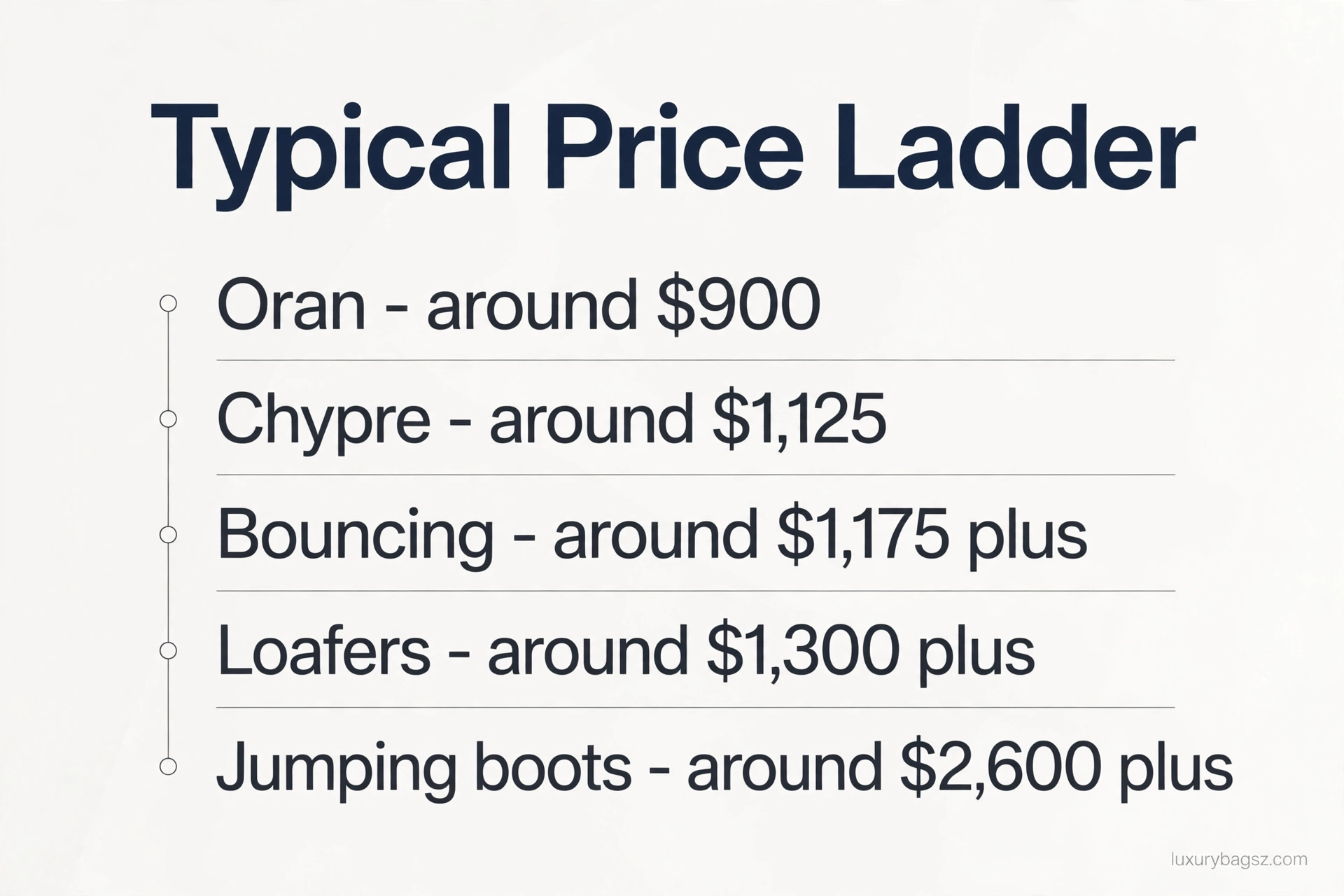
Prices span a wide field, from around $900 for an Oran or Izmir sandal to roughly $2,600 to $3,100 for tall Jumping boots. Comfort varies just as widely, from the cushioned Chypre to famously stiff new Box calfskin boots.
This piece scores the range honestly: prices, comfort, durability, resale and the buyer profiles the shoes reward, so you can decide with numbers rather than with boutique lighting.
Key Takeaways
- Worth it if you wear them weekly, buy classic colours and fit them in store.
- Not worth it as a financial investment; resale softens the cost, it does not erase it.
- Comfort champions: Chypre sandals and Bouncing sneakers. Stiff starters: Jumping boots.
- Prices typically run $900 for core sandals to about $3,100 for tall boots.
- Classic colours in mid sizes resell best; exotic and seasonal pairs are for love.
- The real value test is cost per wear over five years, not the boutique moment.
What Hermès Shoes Cost
Set the field first. Core sandals sit around $900 to $1,125 in the US; loafers roughly $1,200 to $1,600; sneakers around $1,175 to $1,300; tall boots up to about $3,100.
Those prices buy leather quality, Italian making and finishing that mass luxury rarely matches. They also buy a logo's worth of demand, and honesty requires naming both halves.
Price rises arrive most years, which quietly helps owners: last year's pair often resells against a higher current retail. That is a cushion, not a return strategy.
Compare like with like: a hand-finished leather-soled loafer against trainers is a category error. Judge each Hermès shoe against the best of its own kind before judging the house.
There is also the matter of what the price excludes: no trainer technology programme, no orthotic research lab. You are buying craft and design, and comfort must be judged style by style, as the comfort section does.
Set a ceiling before you enter the boutique and tell the salesperson the styles you are weighing. A good fitting, honestly advised, is part of what the margin pays for; use it fully.
Comfort, Style by Style
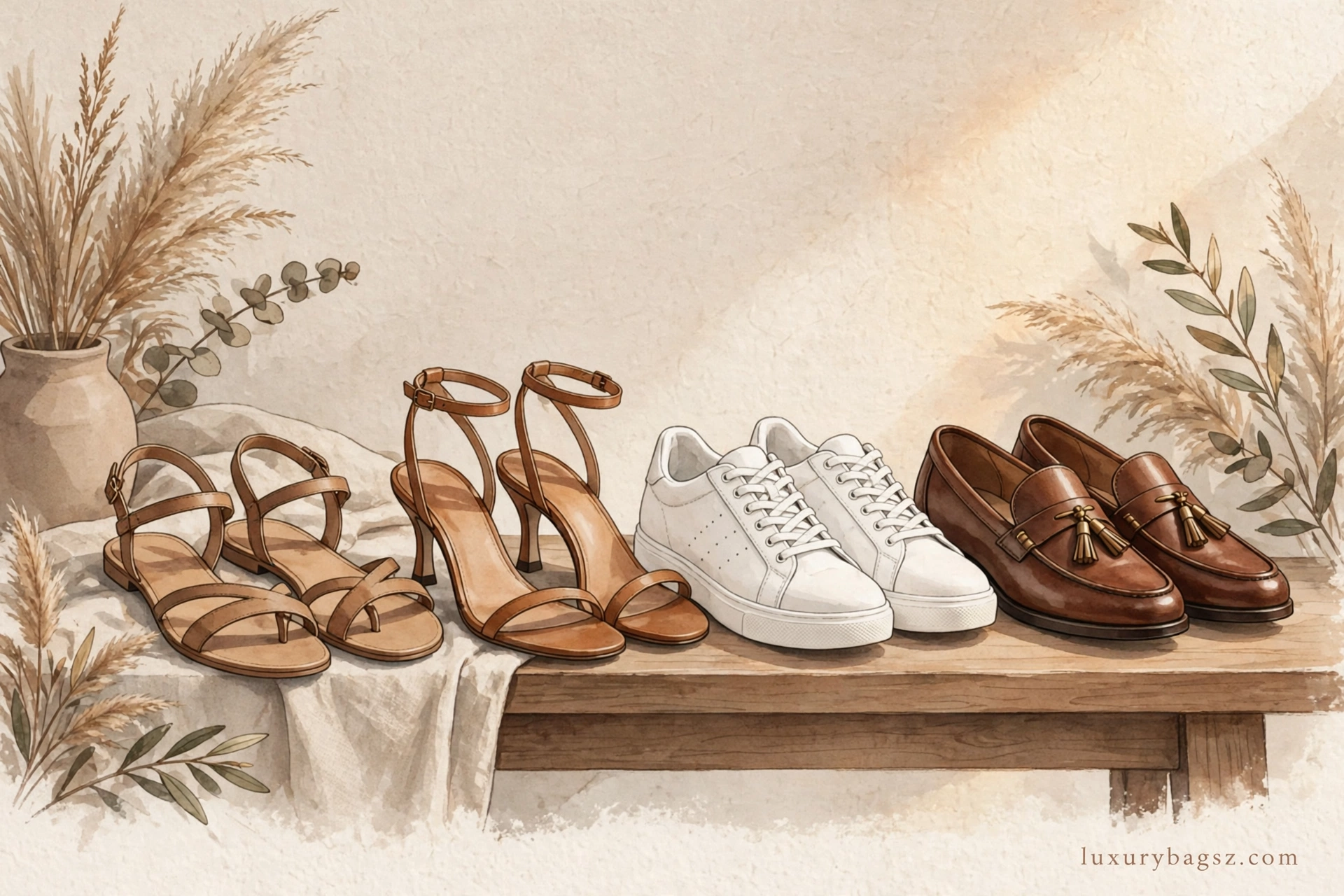
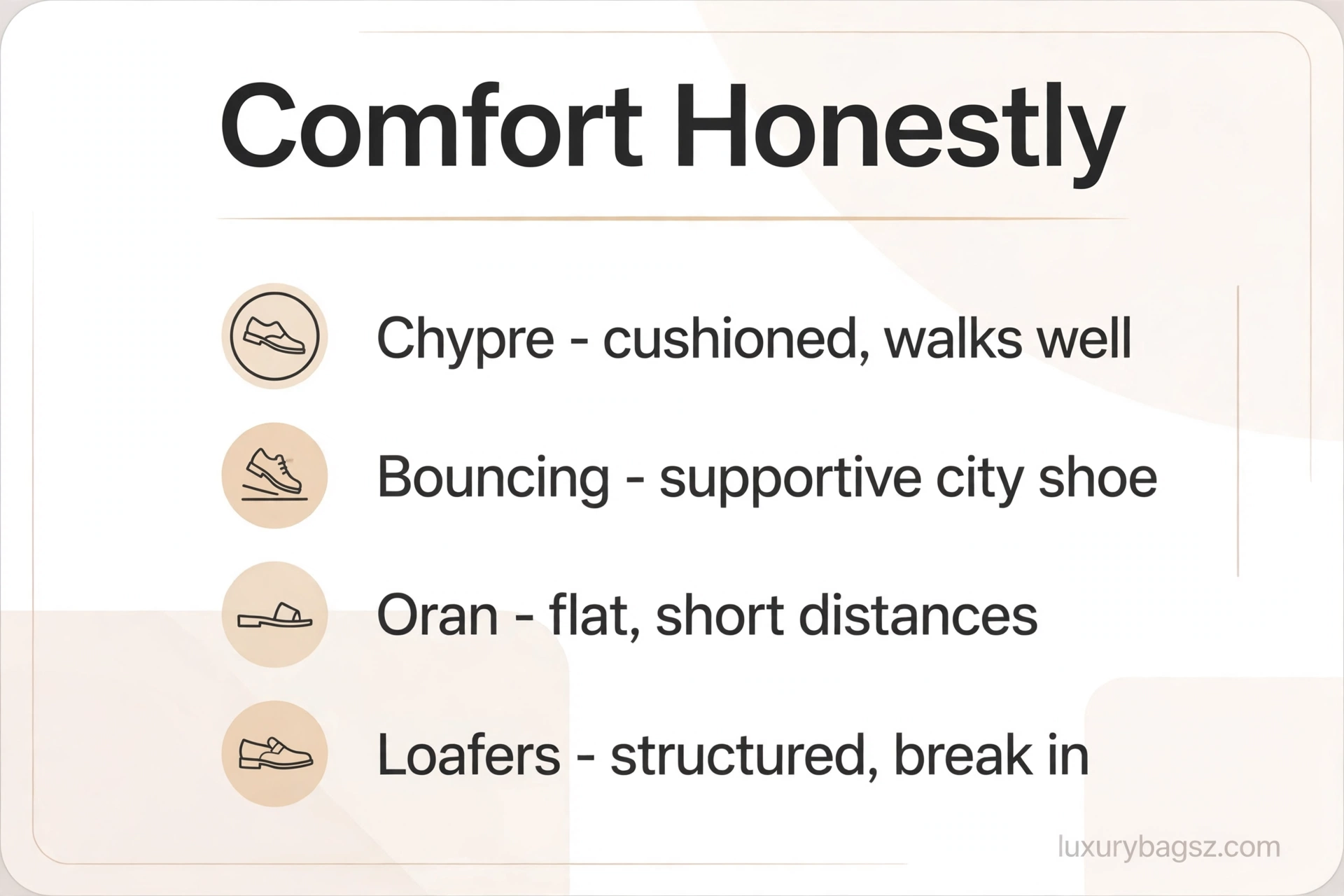
There is no single Hermès comfort story. The Chypre's cushioned sole and the Bouncing's springy trainer sole are genuinely all-day shoes once sized right.
Sizing help lives in our Hermès Oran sandals sizing guide, and its lesson generalises: width and instep, not length, cause most Hermès shoe regret.
The leather-soled sandals and loafers sit in the middle: fine for normal days once moulded, unkind before. Jumping boots in Box calfskin are the hard start everyone warns about, fairly.
If comfort is your first criterion, buy the comfort models and skip the icons. Hermès sells both, and confusing the two lists is the commonest expensive mistake buyers make.
A fitting-room test that tells the truth: walk the boutique's hard floor for five unbroken minutes in each candidate. Shoes that need excuses at minute five will need them at year five too.
Which Styles Earn Their Keep
Our three-way Hermès sandals comparison shows the pattern for the whole range: the designs that match a real routine get worn, and worn shoes are the only ones that justify themselves.
The Oran earns its keep in versatile wardrobes. The Chypre earns it in travelled ones. The Paris loafer earns it under tailoring worn weekly, not under a suit worn monthly.
Boots earn it across winters, not weekends: a Jumping boot worn forty times a year for six years costs less per wear than most high-street boots replaced each season.
Sneakers earn it fastest of all, because trainers are worn constantly. They also wear out fastest, which is why their resale story, covered below, is the weakest of the range.
Durability and Repair
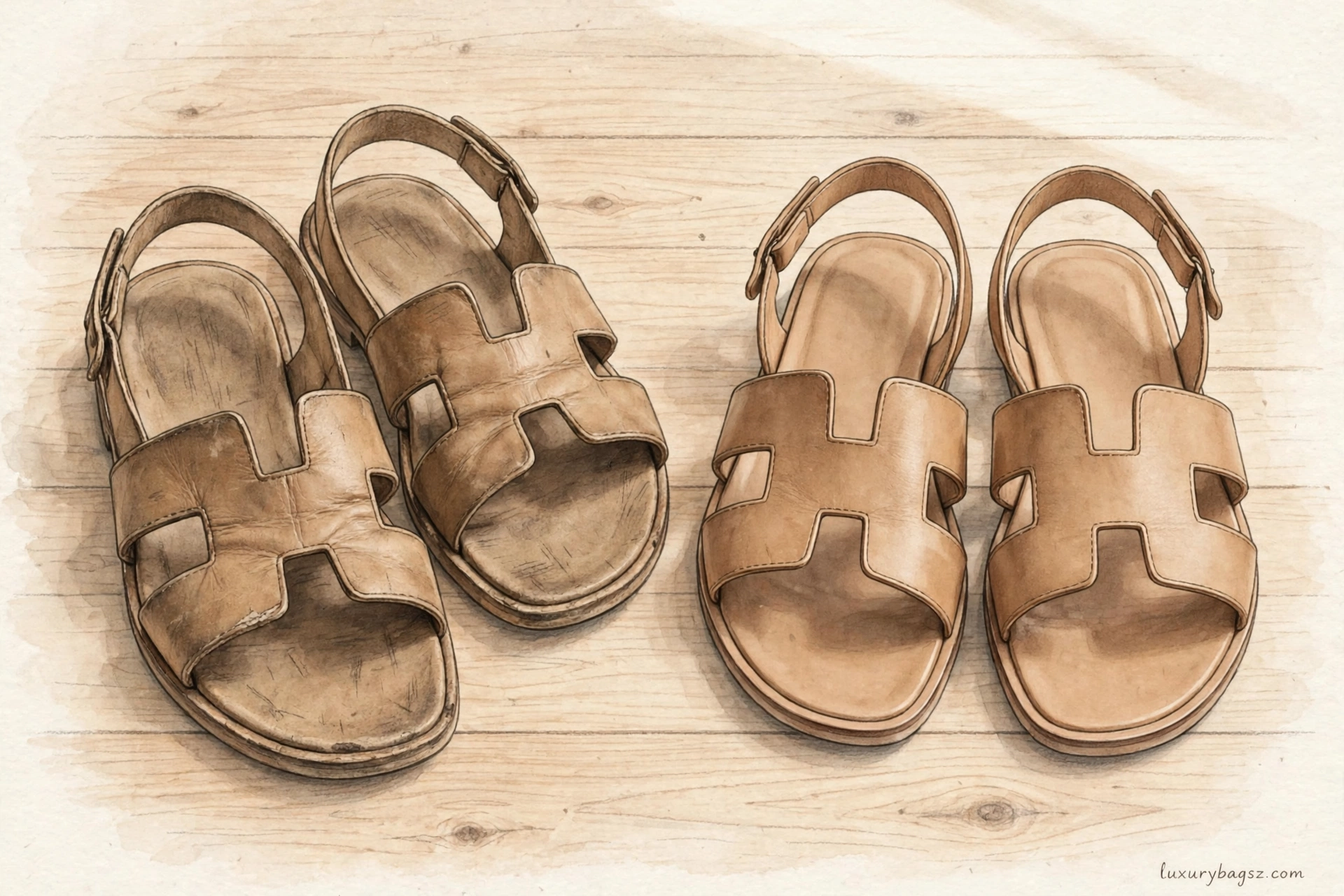
Leather quality is the range's genuine strength: uppers mould rather than collapse, and stitching and edge work hold up under years of rotation when the shoes are rested and treed.
Leather soles are the weak point in wet, gritty cities. Protective soles fitted early turn a delicate shoe into a durable one for a modest cobbler's fee.
The men's range shows the same pattern, as our guide to Hermès men's loafers notes: structure and finish last, soles need help.
Hermès boutiques can advise on repairs for many styles. Keeping receipts and boxes helps after-sales conversations and, later, resale ones.
Resoling economics favour the classics: cobblers know the Oran, the loafers and the Jumping boot well, quote them easily and source matching materials, which keeps lifetime costs predictable.

Resale: What You Actually Get Back
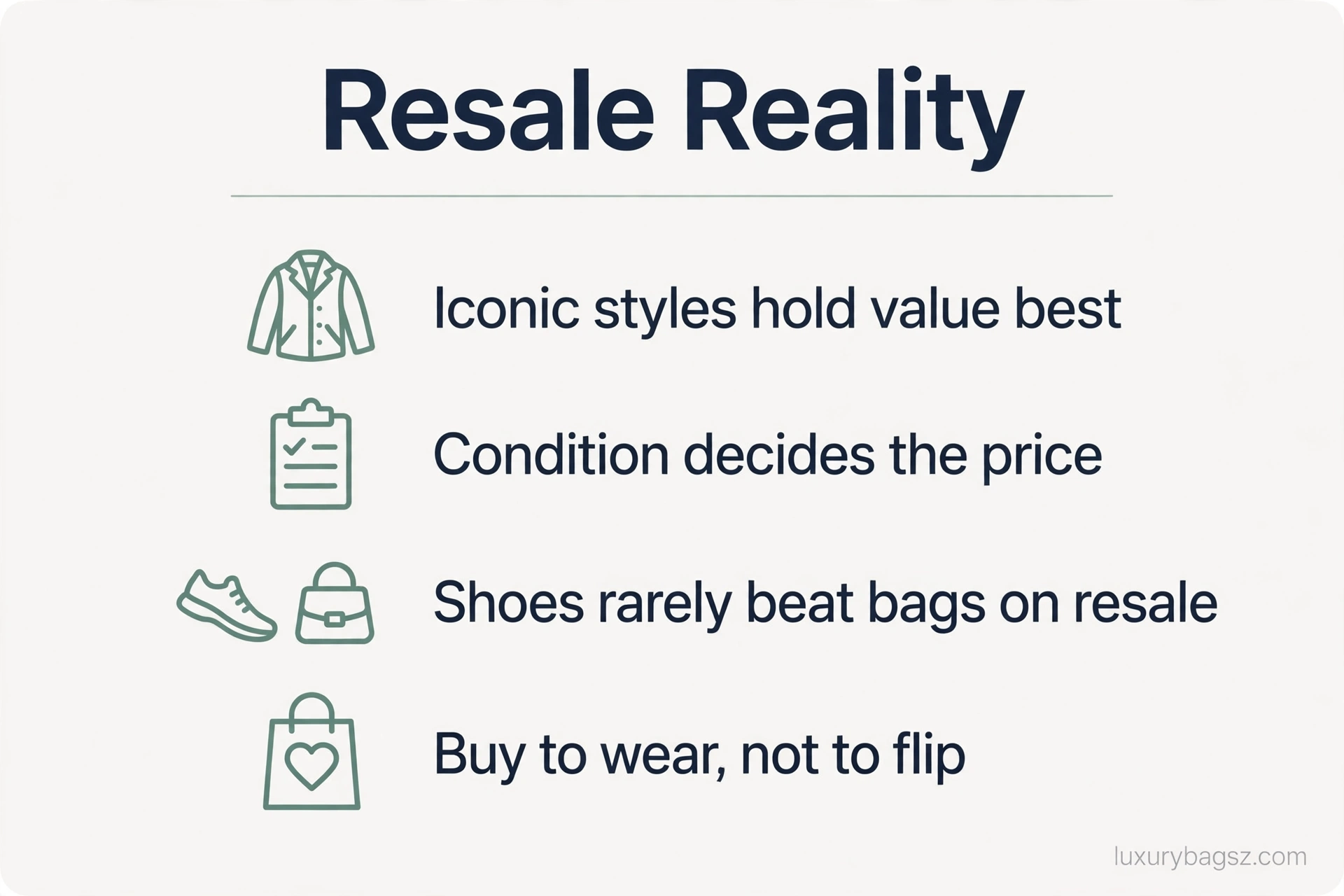
Clean, classic pairs in mid sizes commonly resell around half to three-quarters of current retail, with scarce Chypre and Oran colours sometimes doing better in the right week.
Trainers return less, because wear shows sooner and buyers discount it hard. Boots return steadily, because the design is stable and the buyer pool is patient.
Exotic and crystal versions are not a resale strategy: their market is thin, and thin markets pay slowly. Buy them for love and wear, with resale as a possible bonus.
Nothing in the range should be bought expecting profit after fees, tax and time. Resale at Hermès is best understood as a discount on ownership, honestly earned by buying classics.
Boutique relationships add a soft return that never appears in resale tables: honest sizing advice, first sight of scarce sizes, and repairs handled without argument. Regular buyers price that in, rightly.
The Cost-Per-Wear Test
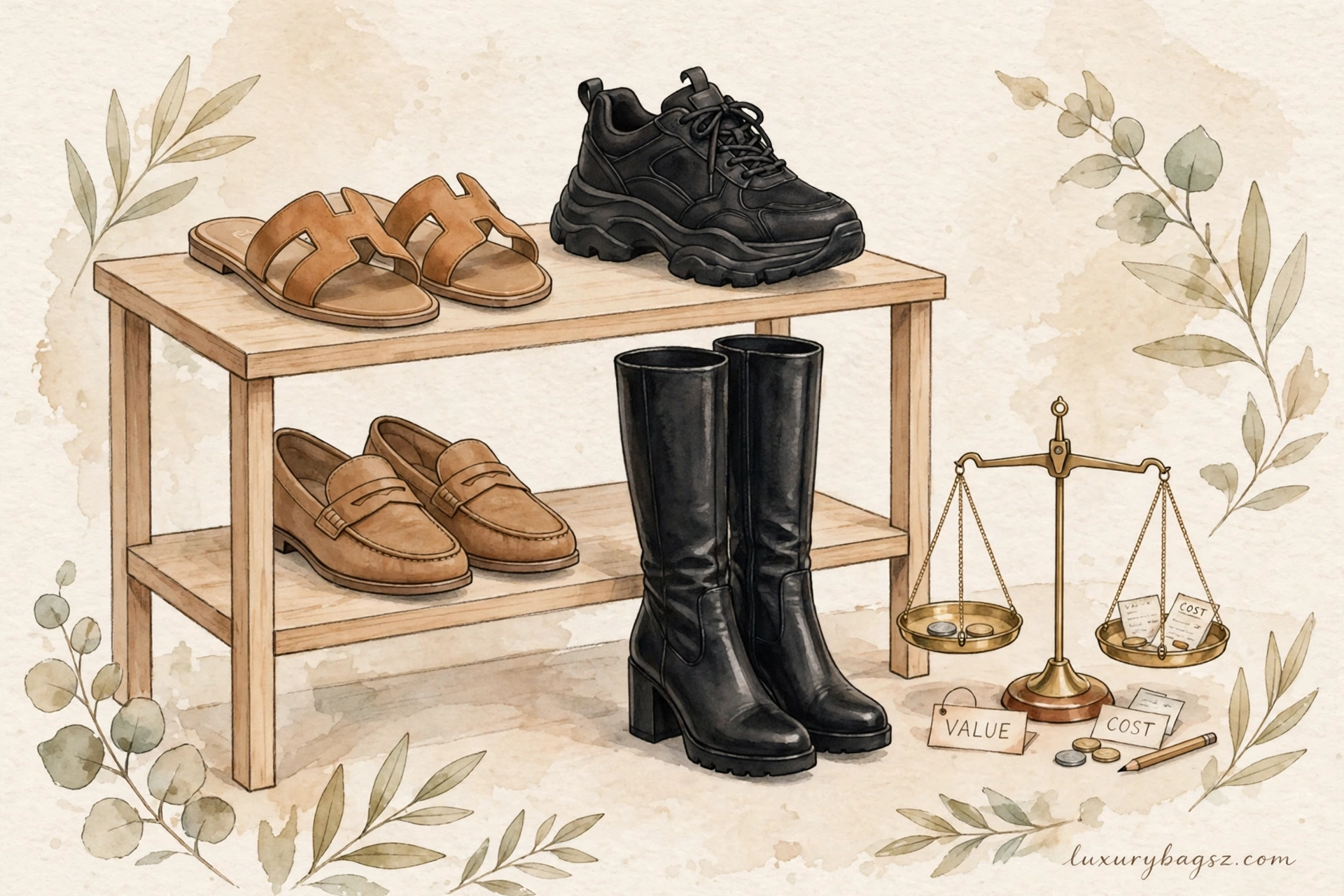
Run the only maths that matters. A $900 Oran worn 100 times over five summers costs $9 a wear. A $3,000 boot worn 240 times over six winters costs $12.50 a wear.
Now run the failure case: a beautiful pair worn six times costs more per wear than almost anything else in your wardrobe, whatever the logo. Fit and routine decide which case you get.
Before buying, name the ten outfits and the twenty days you will wear the pair this year. If you cannot, the honest answer for that style, for you, is not yet.
Borrow the boutique's time instead: try the pair, walk away, and see if you still want it in a week. Desire that survives a week usually survives five years of wear too.
Emotion is a legitimate line in the ledger, priced honestly: if a pair will make you dress better and stand taller for years, that return is real, provided the wear count backs it up.
Who Should Skip Hermès Shoes
Skip them if you need wide fits the range does not offer, if your days are long walks on wet pavements, or if a four-figure shoe would make you too anxious to enjoy it.
Skip them if you are buying for resale profit, for a single event, or in a colour you like only in photographs. Each of those purchases ends as a listing, not a wardrobe piece.
Skip the stiff icons if you will not break shoes in. The house sells comfort models for a reason, and choosing the icon against your own habits is self-defeating.
And skip them, for now, if sizing is a guess. Hermès shoes reward an in-store fitting more than almost any other shoe purchase at this level.
There is also a wardrobe test: open your shoe shelf and count how many pairs you wore this month. If the answer is three, a fourth expensive pair must displace one of them, not join a museum.
So, Are They Worth It?
Yes, for the buyer who fits them properly, wears them weekly, buys the classic version first and keeps them for years. For that buyer, quality, stability and resale stack up honestly.
No, for the buyer chasing a logo, a trend colour or a quick profit. The same money buys more happiness in a shoe that matches their actual feet and actual days.
The house's best value sits where design barely changes: Oran, Izmir, Paris, Jumping. Styles that look the same in five years are the ones still being worn in five years.
Decide by your calendar and your feet, and the answer these shoes give you will be the right one. That, more than the price tag, is what worth it means here.
Time is the final judge and it is not sentimental. The pairs still in rotation after five summers were worth it; the pairs in boxes were not, whatever either cost at the till.
Frequently Asked Questions
Are Hermès shoes worth the money?
For frequent wearers who buy classic styles and fit them in store, yes: leather quality, stable design and solid resale justify the price over years. For occasional wear, usually not.
Which Hermès shoes are most comfortable?
The Chypre sandal and the Bouncing sneaker lead the range for comfort, thanks to cushioned, shaped soles. Leather-soled icons need break-in and suit shorter days.
Do Hermès shoes hold their value?
Classic colours in mid sizes commonly resell around half to three-quarters of current retail in clean condition. Trainers return less; scarce sandals can return more.
Which Hermès shoe should I buy first?
The Oran in Gold or Noir for most wardrobes; the Chypre first if you walk a lot; the Paris loafer first if your life is tailored. Match the shoe to your routine.
Are Hermès shoes good quality?
Yes: the leather, stitching and finishing are among the best in luxury footwear. Leather soles still need protection in wet cities, and stiff styles need patience.
Why are Hermès shoes so expensive?
Materials, Italian making, hand finishing and controlled supply all feed the price, along with brand demand. The quality component is real, even if it is not the whole story.
Do Hermès shoes run small?
Most styles run true in length and neat in width. Sandals and loafers often need half a size up for wide feet, and Jumping boots add a slim calf to the equation.
Can Hermès shoes be repaired?
Cobblers can protect and renew soles and heel tips, and boutiques advise on many repairs. Uppers in good leather respond well to professional care for years.
Are Hermès shoes a good investment?
Not as a financial investment: fees, tax and wear eat any gain. They are a good ownership decision when cost per wear is low and resale returns part of the price.
Where should I buy my first pair?
In a boutique, fitted, late in the day, walked in properly. The right size and style chosen calmly is worth more than any discount on the wrong pair.
Final Verdict: Worth It, With Conditions
Hermès shoes are worth it the way a good coat is worth it: bought carefully, worn constantly and kept for years. Bought impulsively, they are an expensive ornament with a famous strap.
Fit first, classics first, routine first. Follow those three rules and the price becomes the least interesting thing about the pair you take home.