

Best Women’s Shoes for Work: Comfortable Styles That Still Look Sharp
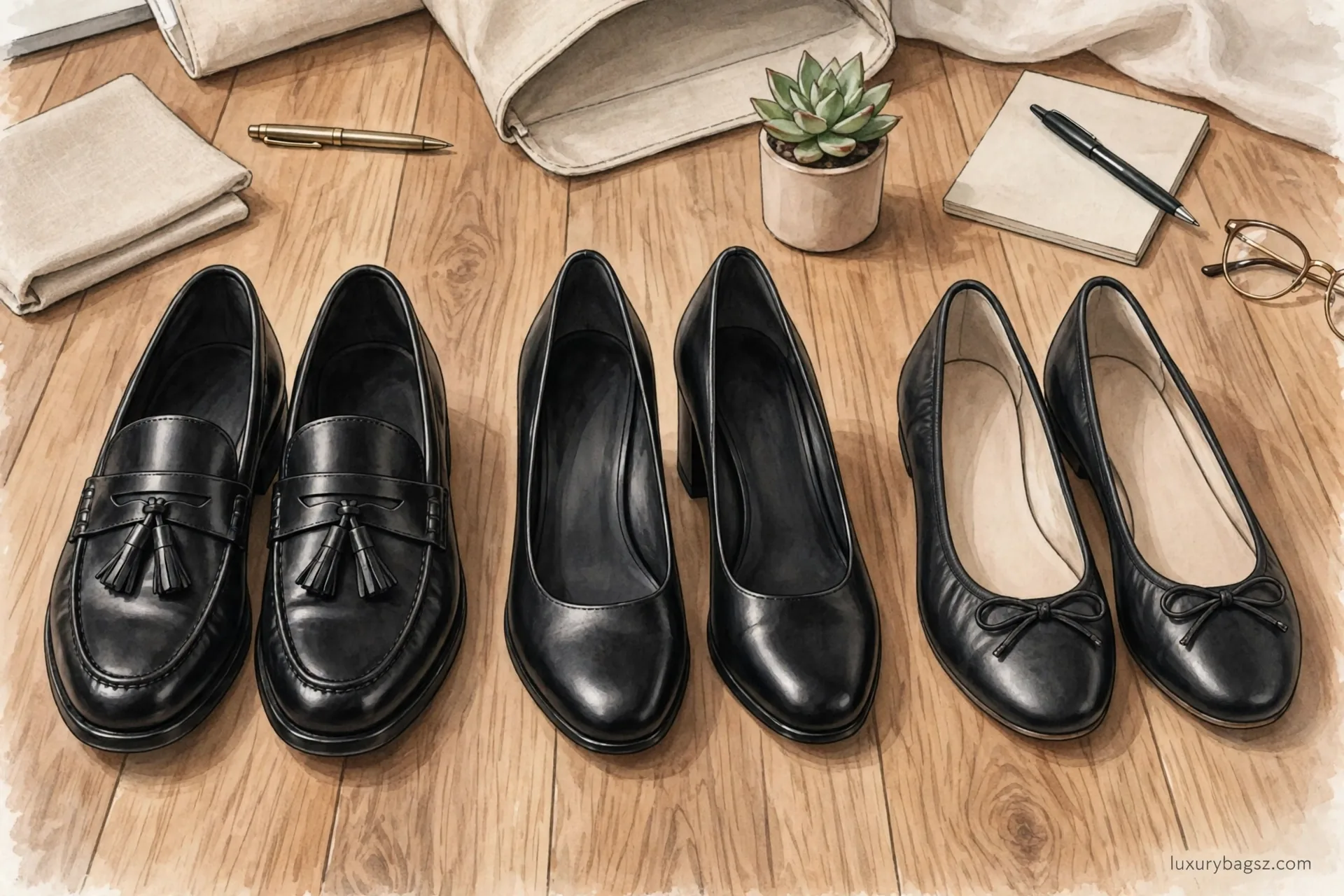
Work Shoes in Brief: Three Pairs Cover the Whole Week
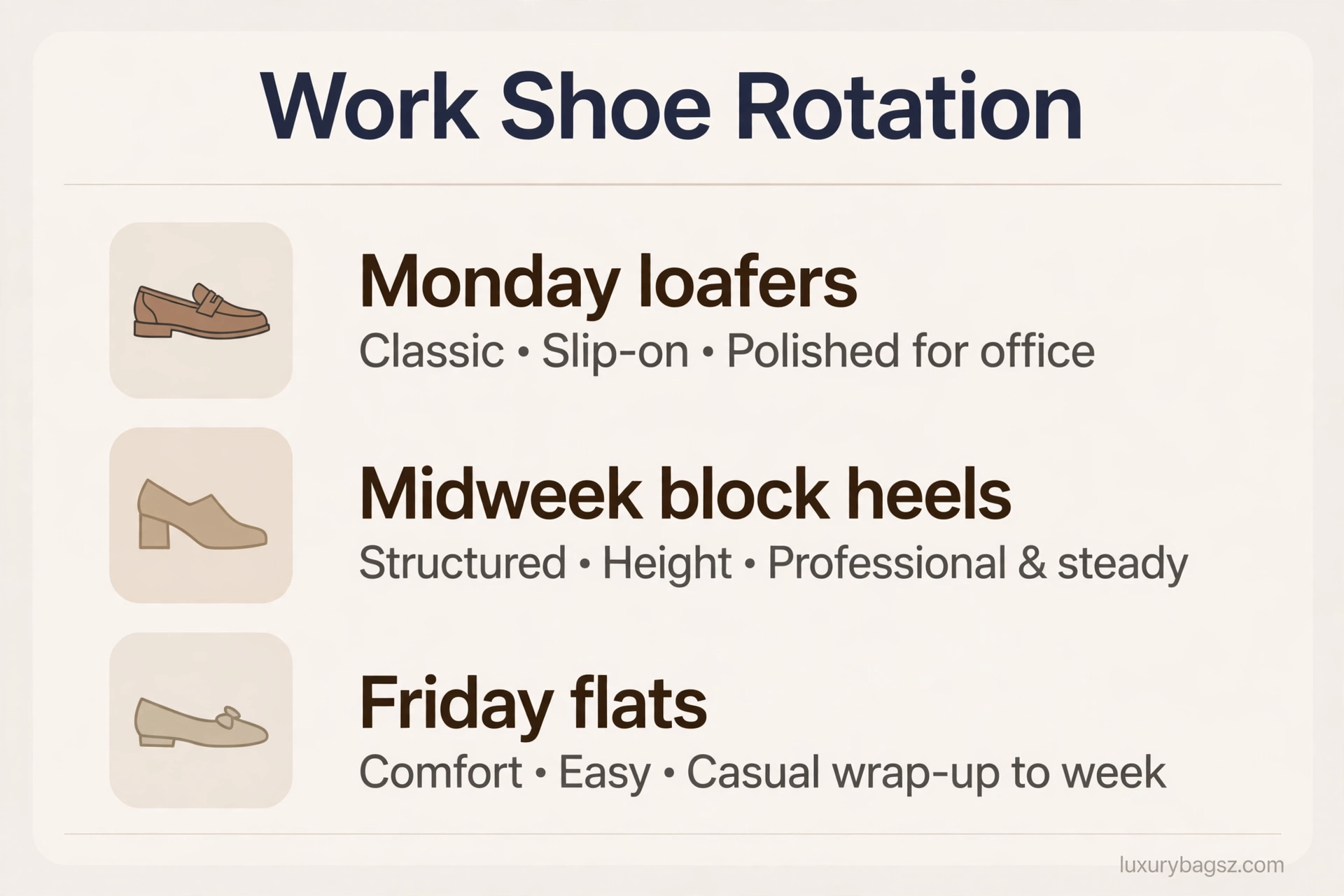
The best women's shoes for work are a small rotation, not one heroic pair: a loafer for everyday polish, a block-heel pump for meetings and presentations, and a structured flat for long, mobile days. All three should be leather, cushioned and fitted at the end of the day.
Buy for your real working week: the commute, the floors, the standing. A work shoe that needs rescuing by lunchtime is the wrong shoe, whatever the label says.
Key Takeaways
- A three-pair rotation (loafer, block heel, structured flat) covers nearly every dress code.
- Block heels of 40 to 65 mm give presence without the pain of a stiletto.
- Cushioned insoles and a firm heel counter matter more than brand for all-day comfort.
- Fit work shoes in the evening; feet swell across a working day.
- Rotating pairs daily roughly doubles their working life.
- Polished trainers now pass in many offices, but leather still reads safest for formal days.
Match the Shoe to Your Working Day
Start with your diary, not the display shelf. Desk-based days tolerate a heel; days of site visits, conferences and commuting need flats or low, stable heels.
Note your floors too. Polished stone and marble lobbies punish smooth leather soles, while carpet softens everything. A thin rubber sole layer solves the slippery-floor problem cheaply.
Formal industries still read a closed toe and a heel as the default. Creative and tech offices accept loafers and clean trainers. Match the strictest day of your week first.
Loafers: The Everyday Anchor
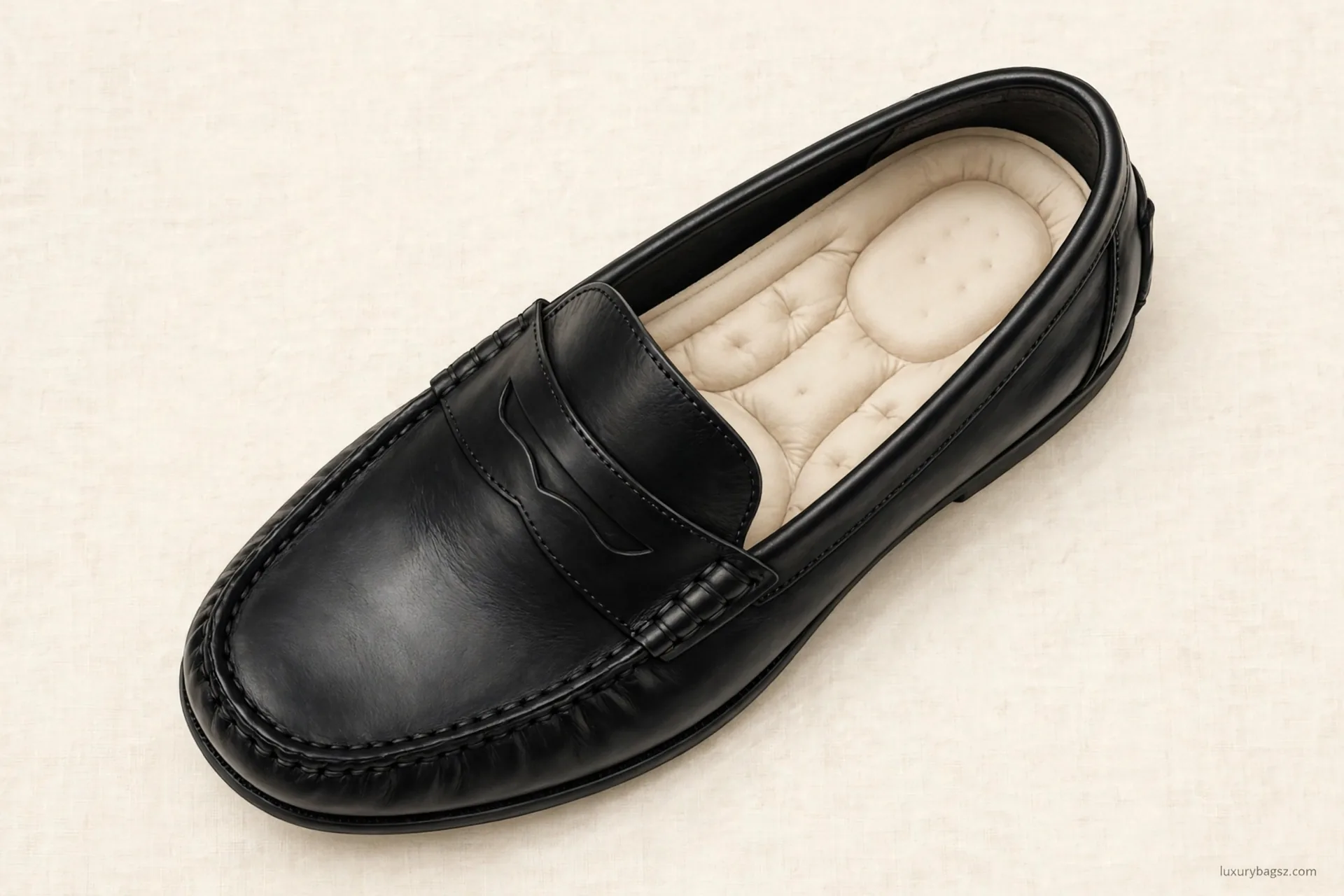
The loafer is the modern work default because it is polished, flat and fast. Leather penny and tassel styles pair with trousers, skirts and dresses without a second thought.
Fit is everything in a slip-on: snug across the instep, no heel slip, and room for the toes to lie flat. Our guide on how should loafers fit walks through the checks in detail.
Chunky soles add comfort and a current edge, but classic flat soles read more formal. Own one of each if your week swings between client days and casual Fridays.
Block-Heel Pumps for Meeting Days
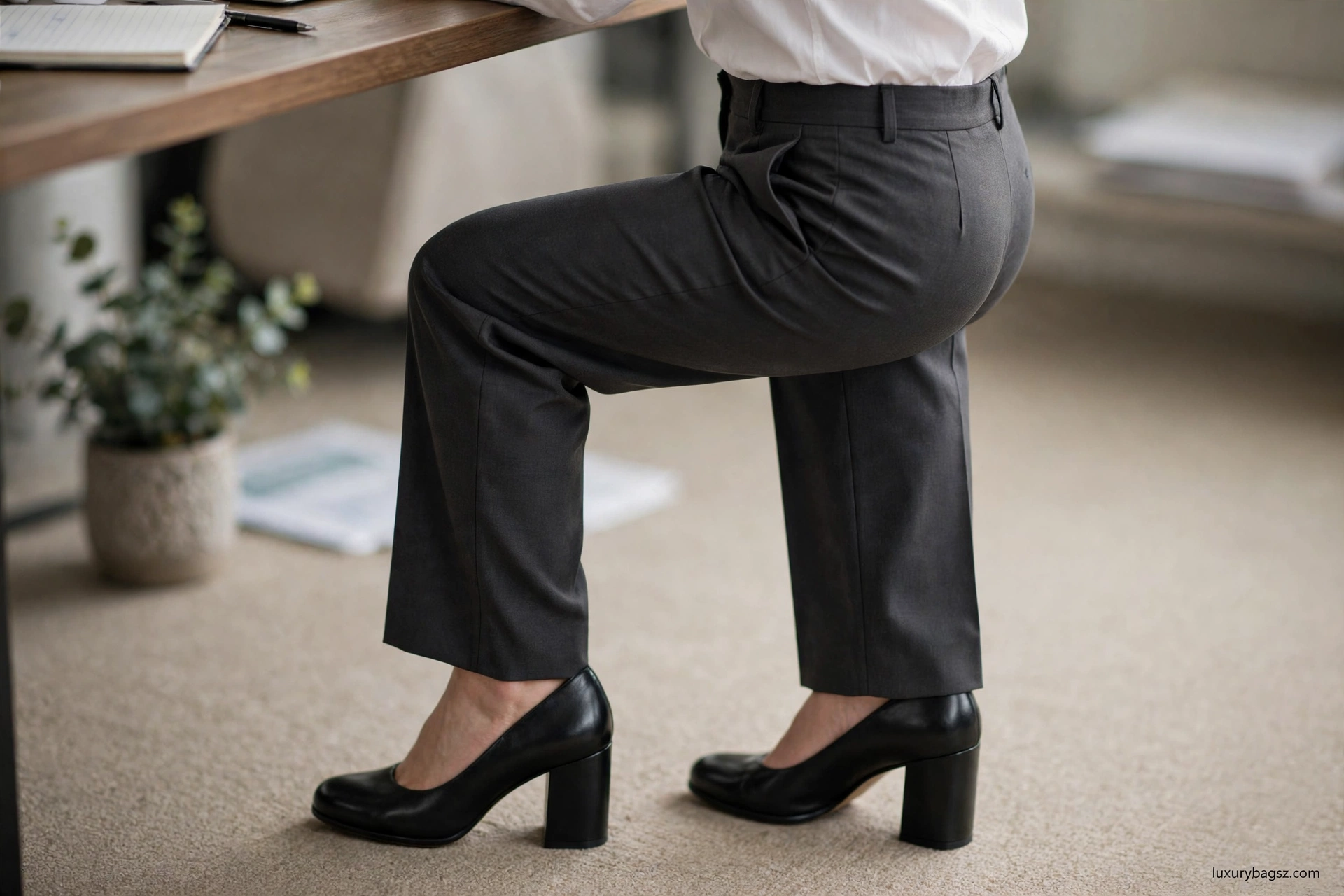
A block heel between 40 and 65 mm gives the posture and polish of a heel with far better stability. It is the shoe for presentations, interviews and any day you are being judged quickly.
Rounded and almond toes fit wider feet kinder than sharp points, and a padded insole is worth paying for. Our roundup of comfortable designer heels focuses on pairs built around exactly this brief.
Black is the first colour; a second pair in tan, navy or burgundy stretches a wardrobe further than a second black pair ever will.

Heels at Work: Keeping Them Honest
Some workplaces still expect a classic pump, and some women simply prefer one. Keep the height at or below 85 mm for a full day, and choose the pitch your feet already know.
Our designer heels guide explains how pitch and platform change how a height actually feels, which matters more than the number on the box.
Keep a pair of flats under the desk for the commute and the walk to lunch. There is no prize for doing the whole day in the meeting shoes.
Flats and Polished Trainers
Structured ballet flats with a real sole and heel support work hard in a rotation. The test in our piece on are ballet flats comfortable for walking is simple: if the sole folds in half, it is a slipper, not a work shoe.
Pointed flats give the leg line of a heel without the height, and loafers remain the most formal flat of all; our styling notes on how to wear loafers cover trousers, skirts and dresses.
Minimal leather trainers in white or black now pass in many offices. Keep them spotless, keep the shape simple, and keep a smarter pair for client-facing days.
Pre-Owned and Condition Checks
Work shoes take real mileage, so pre-owned buys need a harder look than party shoes. Soles and insoles show the truth: heavy insole impressions mean heavy use.
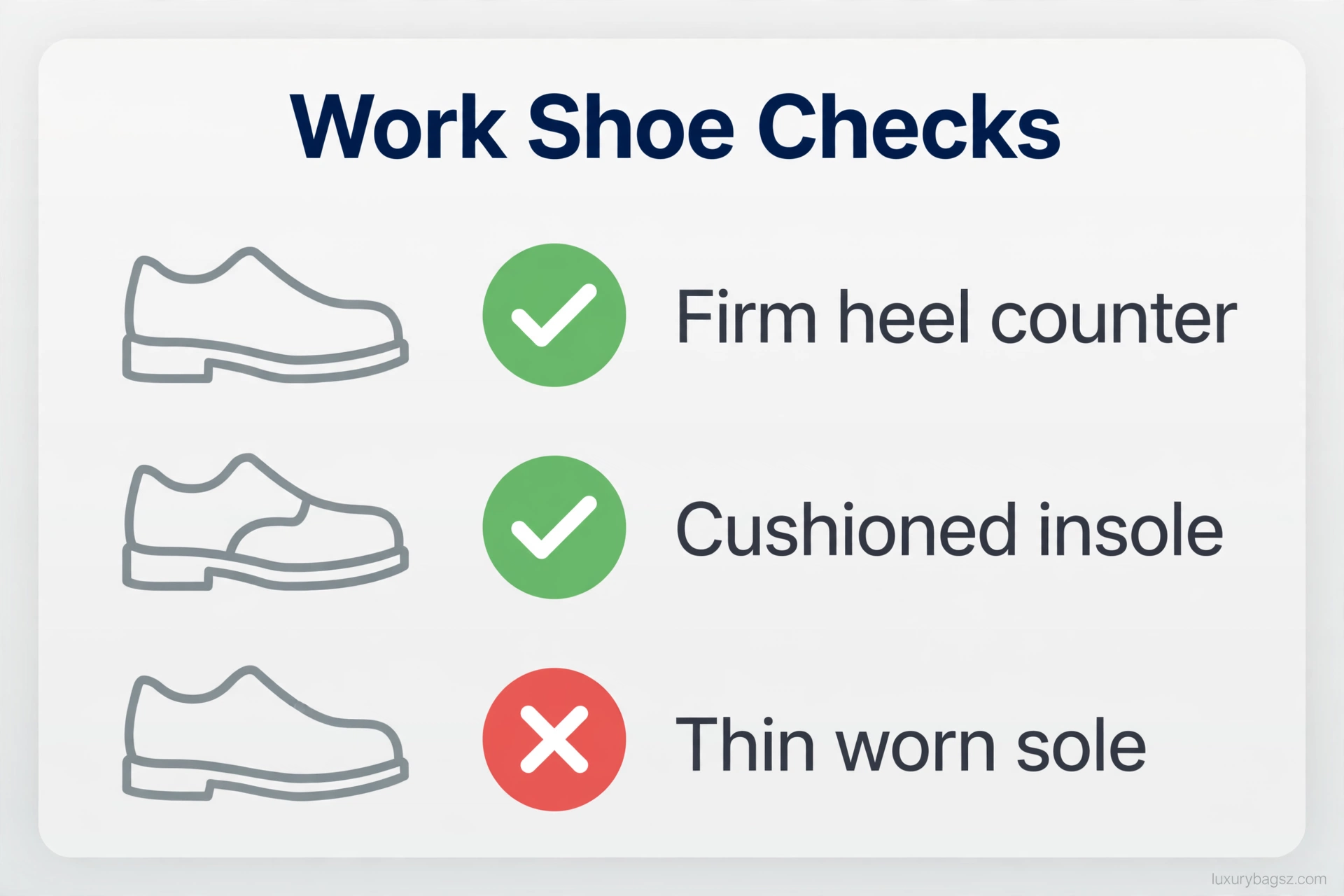
Check the heel counter still feels firm, the insole cushioning still springs back, and the sole has not worn thin at the ball of the foot. Lightly used executive pairs are the sweet spot.
Prices follow condition steeply in this category. A half-worn pair at a third of retail is rarely the bargain it looks like once resoling costs land.
Rotation and Care That Double Shoe Life
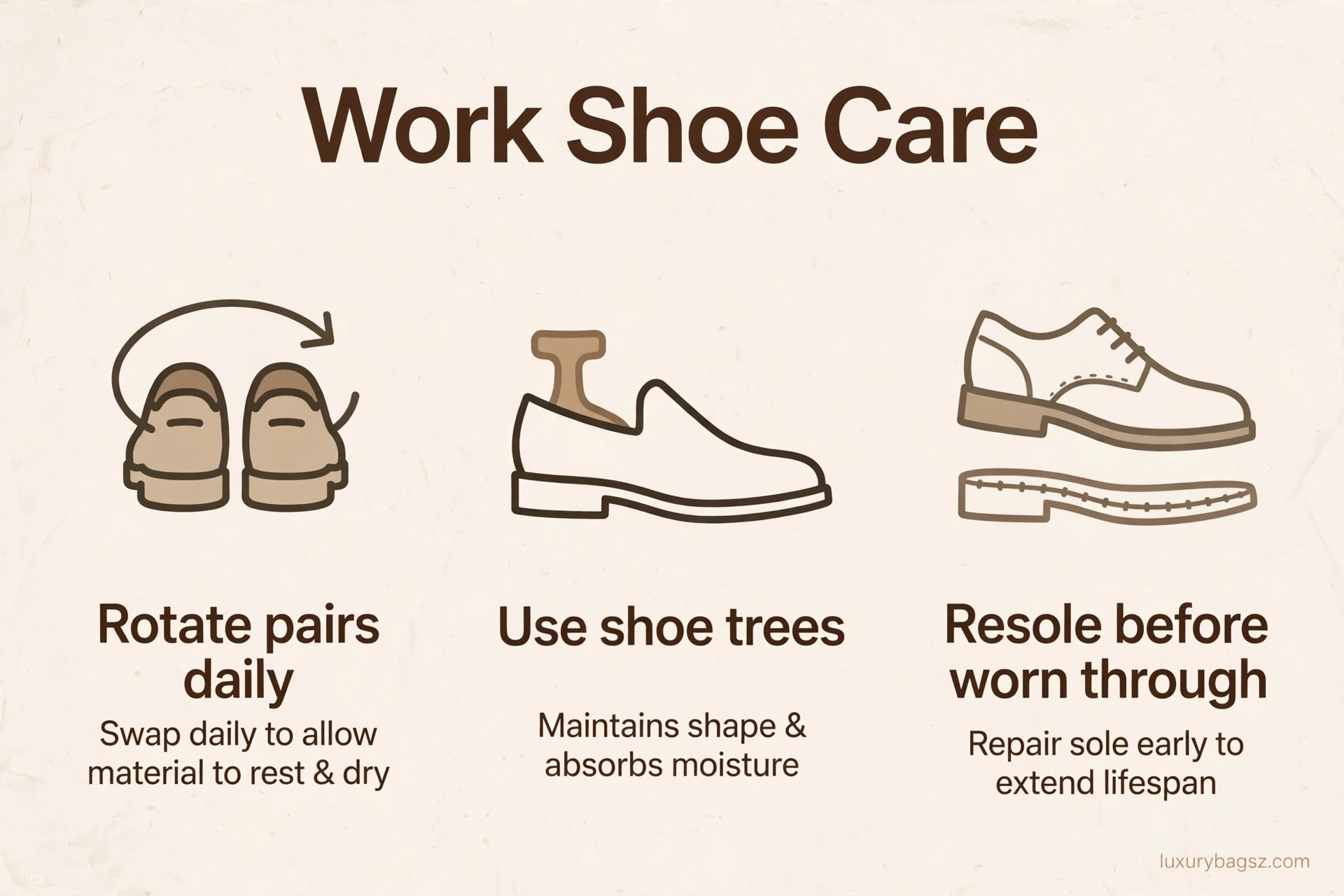
Never wear the same leather pair two days running. A rest day lets the insole dry and recover, and rotating three pairs spreads wear so each lasts far longer.
Use shoe trees in your best pairs, brush or wipe after wear, and keep a basic kit together; our guide on how to build a shoe care kit lists the few tools that actually earn their space.
Resole leather-soled shoes before the sole wears through to the welt. Early resoling is a modest cost; late resoling can become a rebuild.
What to Spend at Each Level
Good leather work shoes start around $150 to $300 from quality contemporary brands. Designer pairs typically run $500 to $950, with the value in better leather and resolable builds.
Cost per wear favours the mid-range here more than in any other category: a $300 loafer worn 150 times costs less per day than most coffee habits.
Spend the most on the pair you will wear most, usually the loafer, and let sales and pre-owned finds fill the rotation around it.
Dress Codes Decoded, Industry by Industry
Business professional, the strictest common code, lives in law, finance, government and formal client services. Its shoe language is closed toes, leather, low-to-moderate heels or polished loafers and flats, in black, brown or navy. Nothing about it requires a heel; it requires finish.
Business casual, the code most offices actually run, accepts everything in the rotation this guide builds, plus slingbacks, heeled ankle boots and, in summer, a smart closed sandal in some workplaces. The line it draws is against beach, gym and evening shoes, not against comfort.
Smart casual and creative codes accept polished trainers and fashion loafers, and judge by cleanliness and condition rather than category. The trap in relaxed codes is complacency: a scruffy designer trainer reads worse than a spotless simple one, every time.
When a code is unwritten, copy the shoes of the person two levels above you whose style you respect. Dress codes are read off feet faster than off any policy document, and the safest interpretation is always one step more formal than the minimum you have seen.
On-Your-Feet Jobs: Teaching, Retail, Events and Clinics
Some work is standing work, and its shoe brief is different in kind, not just degree. Teachers, retail staff, event teams, gallery and healthcare-adjacent roles need support engineered for hours of standing on hard floors, inside a silhouette that still looks employed.
The answers are a cushioned loafer with a real sole, a structured flat with arch support, or a low block heel with a wide base, rotated daily. Thin ballet flats and fashion trainers fail this brief by midday regardless of how they photograph.
Insoles are legitimate equipment here: a quality supportive insole inside a polished shoe outperforms most shoes marketed as comfort footwear, and it moves between pairs as you rotate.
Employers with uniform or safety requirements narrow the field further; within any such rules, fit and rotation remain yours to control, and they are where the comfort is actually decided.
Interviews and the First Week
Interview shoes have one job: to be unmemorable in the right way. A clean, polished, closed shoe in black or a dark neutral, at a height you walk in naturally, is the entire strategy. New shoes bought the day before are the classic error; an interview is a performance, and nobody performs well in untested footwear.
If you do buy for an interview, wear the pair around the house and on one real outing first, and carry blister plasters on the day. Confidence leaks visibly through limping.
The first week of a new job deserves the rotation’s most comfortable pair, not its smartest. You will walk more, stand more and be shown more staircases than in any normal week, and your feet should not be the thing you remember about starting.
Save the meeting heels for the first meeting. By then you will also have read the office’s real dress code with your own eyes, which no amount of pre-start research can do for you.
Work Shoes Across the Seasons
Winter promotes the ankle boot into the rotation: a heeled or flat leather boot with trousers or dresses covers the commute and the office in one pair, and keeps hems off wet pavements. Choose a sole with grip; the polished office lobby in January is an ice rink wearing a suit.
Spring and autumn are loafer weather and the rotation’s home ground, with the block heel returning for meeting-heavy weeks.
Summer tests dress codes hardest. Where open shoes are allowed, a structured sandal with a back strap and a covered-enough front keeps the professional line; where they are not, breathable leather loafers and unlined flats carry the season.
Heat also swells feet, so the summer pair in any rotation should be the roomiest you own. A rotation built in September will betray you in July if every pair was fitted to winter feet.
Frequently Asked Questions
What are the most comfortable shoes for standing all day at work?
A loafer or structured flat with a cushioned insole, firm heel counter and a sole with some thickness. Avoid thin ballet soles and any heel above about 65 mm for standing days.
Are block heels professional enough?
Yes. A block-heel pump in black or tan reads fully formal in most offices and is far easier to walk in than a stiletto of the same height.
How many pairs of work shoes do I need?
Three working pairs is the practical sweet spot: a loafer, a block heel and a structured flat. Rotation also rests the leather, so the pairs last noticeably longer.
Can I wear trainers to the office?
In many workplaces, yes, if they are minimal leather styles in white or black and kept spotless. Keep a smarter pair ready for client meetings and formal days.
What heel height is best for work?
For a full working day, 40 to 65 mm in a block shape suits most women. Reserve 85 mm and above for shorter, seated days or special meetings.
How should work shoes fit?
Snug at the heel with no slip, room for toes to lie flat, and no pressure across the widest part of the foot. Always fit them in the evening, when feet are largest.
Are ballet flats bad for your feet at work?
Only the very thin, floppy kind. A structured flat with a cushioned insole, slight heel and firm counter is a sound all-day choice for most office work.
How do I make work shoes last longer?
Rotate them daily, use shoe trees, clean little and often, and resole before soles wear through. Resting leather between wears is the single biggest life extender.
What colour work shoe is most versatile?
Black first, then tan or deep tan-brown. Between those two pairs you can cover navy, grey, black and most coloured tailoring without a third purchase.
Is it worth buying designer shoes for work?
It can be, for better leather, cushioned builds and resolable soles, but a good $200 to $300 pair often beats a delicate designer pair for daily mileage. Buy for construction first.
Conclusion: Build the Rotation, Then Forget It
Choose a loafer, a block heel and a structured flat that fit your real week, rotate them, and care for them lightly but often. Work shoes should be the most boring decision of your morning, and the most reliable.






