

How to Build a Shoe Care Kit: Starter to Complete, Without Wasting Money
A Shoe Care Kit That Earns Its Shelf Space
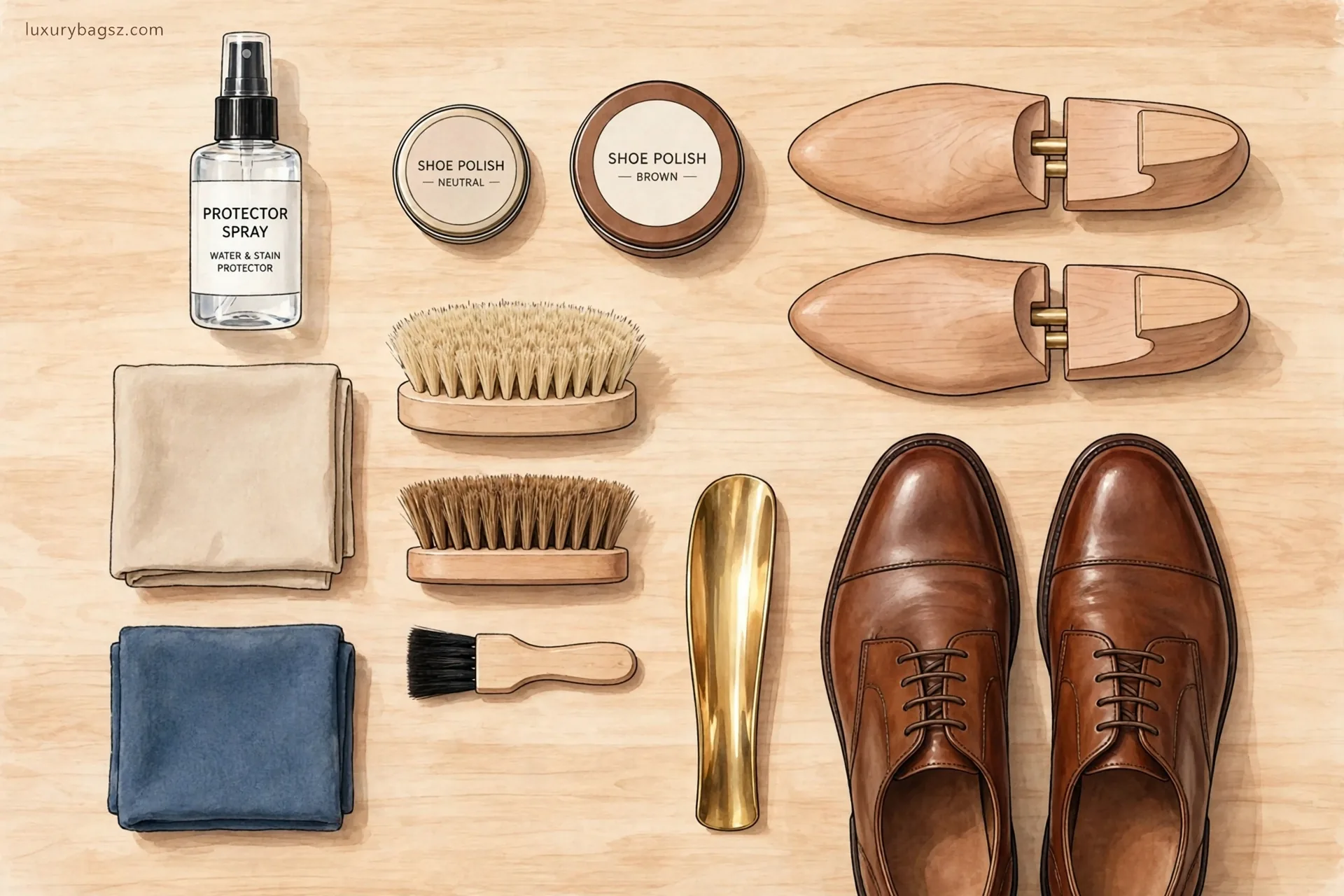
Build a shoe care kit around three jobs: clean, protect, and shine. A starter kit of five items covers most shoes, and a complete kit adds specialist tools only when your collection needs them. Buy the starter first, learn the routine, then upgrade with purpose.
That order saves money. A drawer of unopened products helps no shoe, while a brush, a cloth, and a cream used weekly keep a whole rotation looking sharp. Start small, use everything you own, and add one item at a time when a real need shows up.
New shoes are the best reason to build the kit now, since protector spray before the first wear prevents most early stains. But the kit pays for itself on older shoes too, since regular brushing and conditioning stretch the life of leather far beyond neglect.
Key Takeaways

- A good kit does three jobs: clean, protect, and shine, in that order.
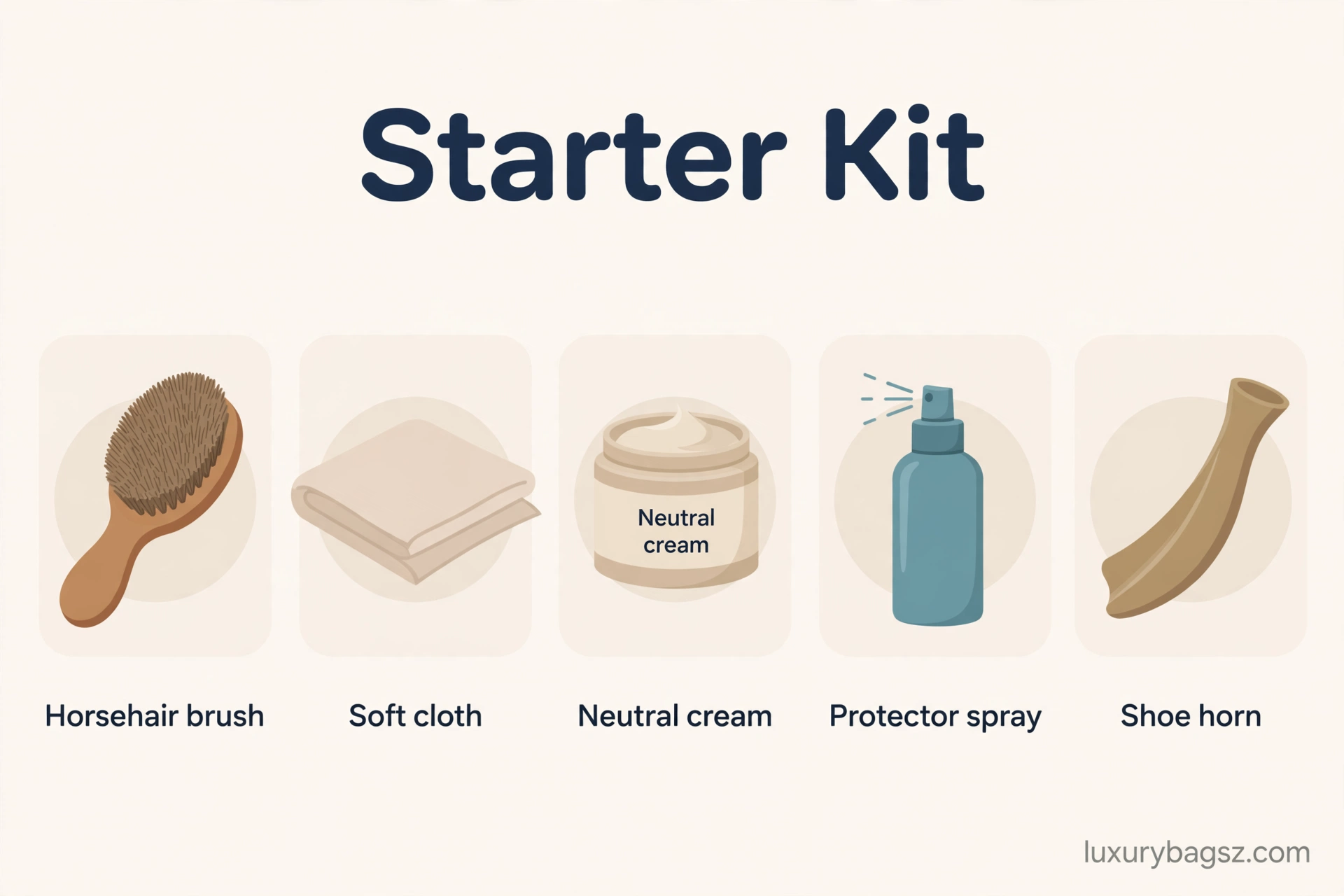
- Start with five items: horsehair brush, soft cloth, neutral cream, protector spray, and shoe horn.
- Keep brushes separate by job and material, and keep one cloth only for shoes.
- Match products to the material: cream for smooth leather, never cream or polish on suede.
- Add complete-kit items only when your collection needs them, not all at once.
- Store the kit in one box, upright, away from heat, with lids closed and brushes clean.
- A two-minute brush after wear beats a rare deep clean every time.
What a Kit Should Do, and What It Should Not
A kit keeps shoes clean, protected, and presentable. No product restores cracked leather or worn soles, so buy only what you will use monthly.
The Starter Kit: Five Items That Cover Most Shoes
Start with a horsehair brush, the tool you will use most. It lifts dust after wear and buffs cream to a shine, without scratching smooth leather. A medium-sized brush suits most hands and shoes.
Add a soft cloth, ideally low-lint cotton, kept only for shoes. It applies cream and polish and buffs the final shine. Add one neutral cream polish, a protector spray matched to your most-worn material, and a shoe horn, which protects the heel counter.
Brushes and Cloths: Keep Them Separate by Job
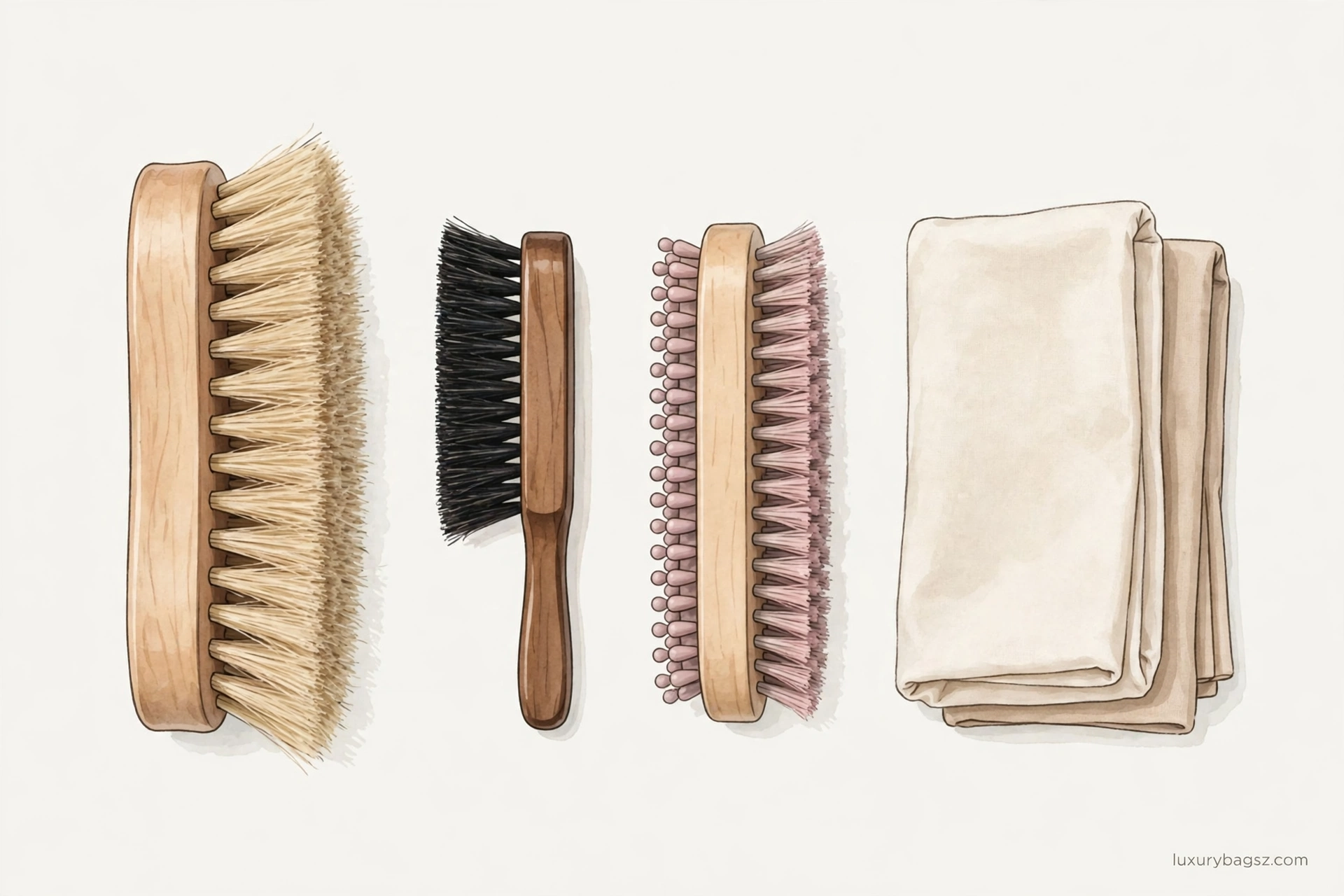
Brushes look alike, but their jobs differ, and mixing them causes problems. A horsehair brush dusts and buffs smooth leather. A stiffer brush handles soles and welts. A suede brush lifts nap without flattening it.
Keep brushes stored apart, and never use a sole brush on an upper. Grit from soles scratches leather, and polish residue tints the next pair. Keep shoe cloths away from household cloths, which may carry chemicals or grit.
Products: Cleaner, Conditioner, Cream, Wax, and Protector
Cleaner comes first when brushing stops being enough. A gentle leather cleaner lifts ground-in dirt and old cream buildup. Use it sparingly, on a cloth, and let shoes dry first.
Conditioner restores moisture to dry or stiff leather. Apply a thin coat, let it absorb, and buff off excess.
Cream polish nourishes and recolours smooth leather, while wax builds a harder gloss on toes and heels. Most daily shoes need cream only. For the wider routine, our guide to leather bags and shoes care covers the same clean, condition, and polish order.
The Complete Kit: Upgrades Worth Adding Next
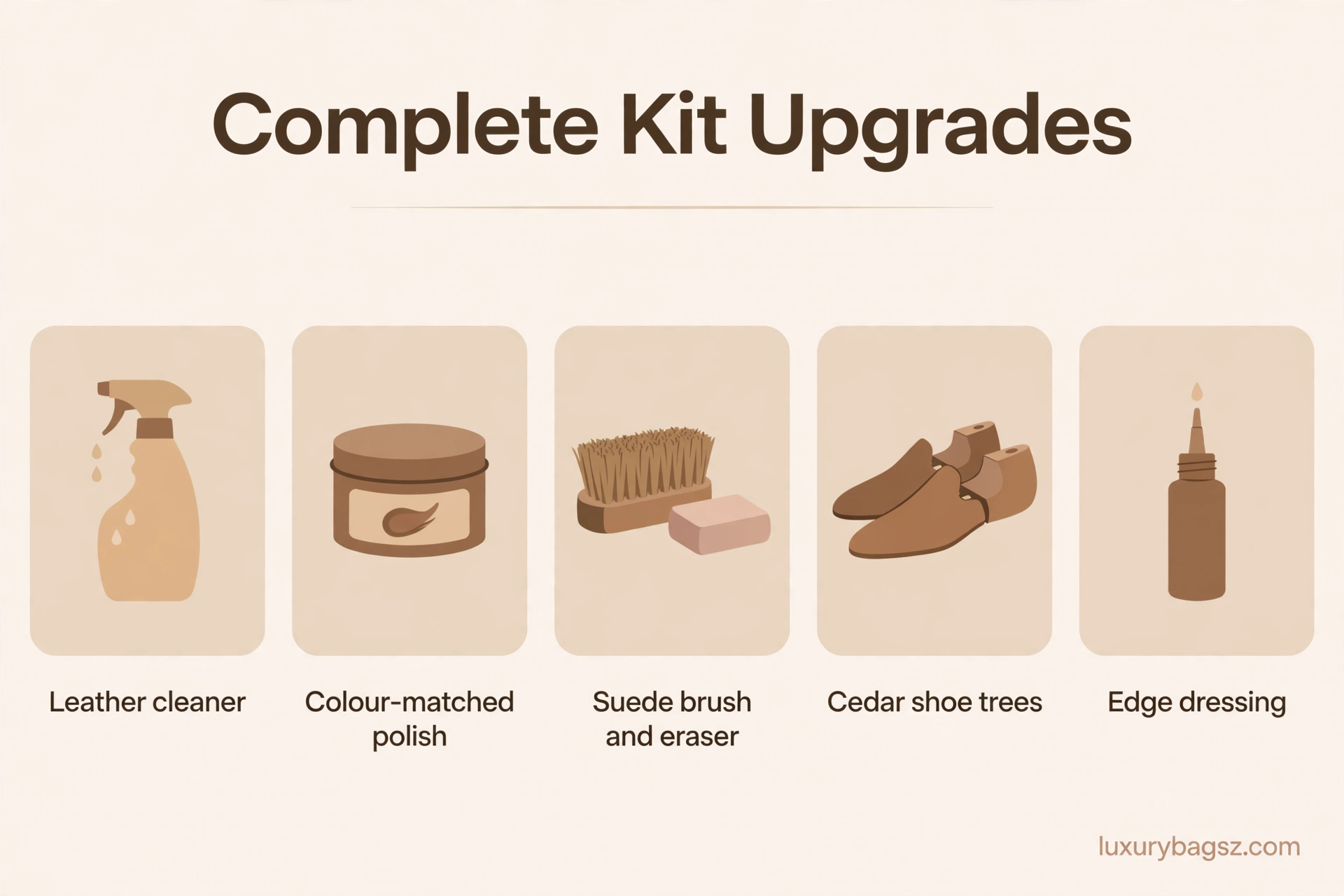
Once the starter routine is habit, add a leather cleaner for deep cleans. Add colour-matched cream for your most-worn colours, since it hides scuffs better than neutral. Keep neutral for everything else.
Add a suede brush and eraser if you own suede or nubuck, plus cedar shoe trees for leather shoes you wear weekly. Keep suede tools away from creams and waxes that would ruin suede. Trees absorb moisture and hold shape.
Extras for Suede, Sneakers, and Boots
Suede and nubuck need their own mini-kit: a suede brush, an eraser, and a suede protector spray. Nothing else from the main kit touches suede, since cream, wax, and oils flatten nap and stain it.
Sneakers need a different cleaner and a softer touch. A sneaker cleaner with a soft brush handles mesh and canvas without fraying them. For the full method, see our guide to clean sneakers. Boots add a welt brush and a longer shoe horn, but do not buy specialist extras before you own the shoes they serve.
Storing the Kit So It Lasts
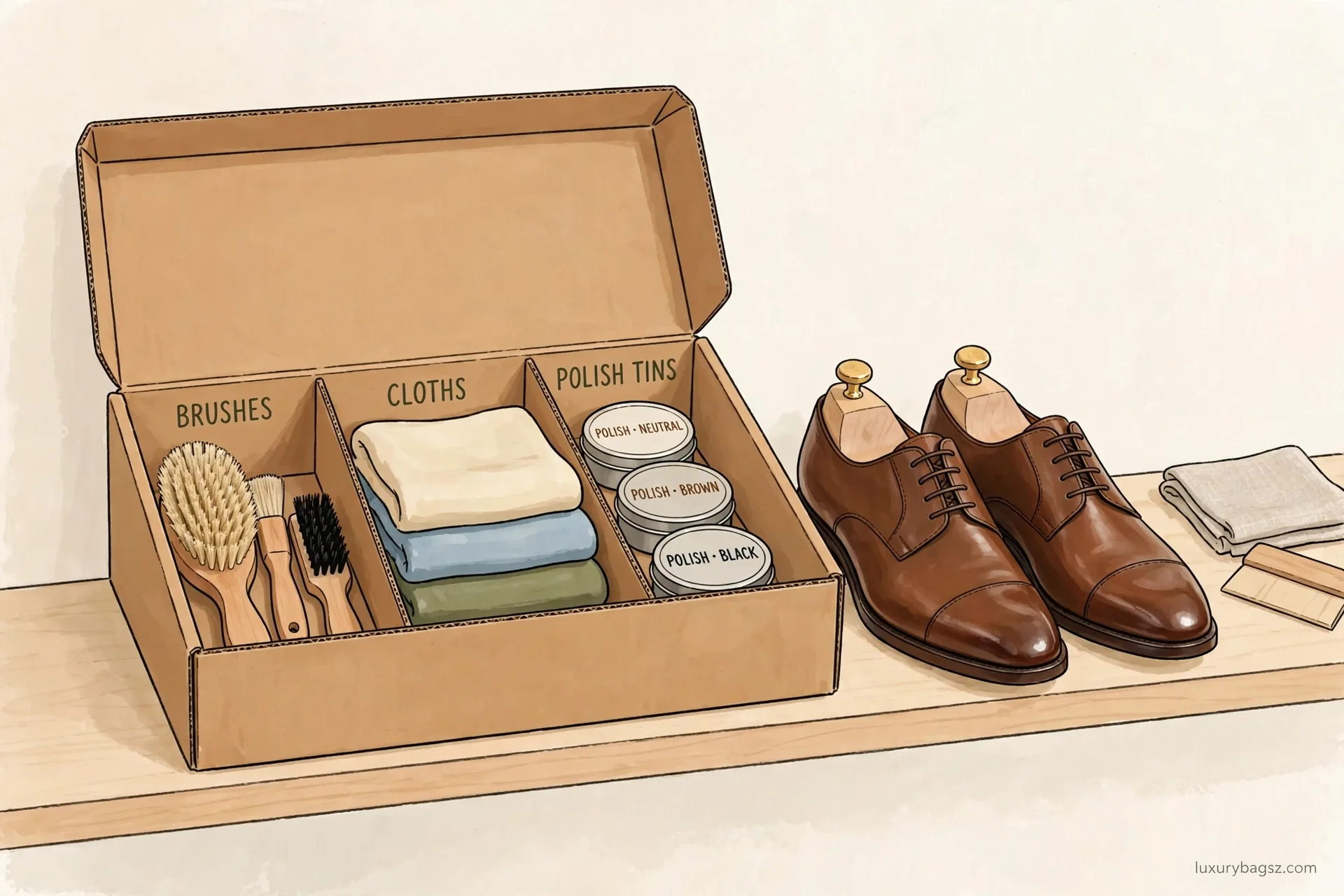
Store the whole kit in one place, ideally a box or caddy with compartments. One home means you actually use it, instead of hunting across drawers. A box also keeps dust off brushes and cloths.
Keep the box upright, in a cool, dry spot away from heat and sun. Heat dries out creams and warps brush handles. Close lids after use, keep brushes clean and dry, and label tins by colour.
The Routine, and the Buying Mistakes to Avoid
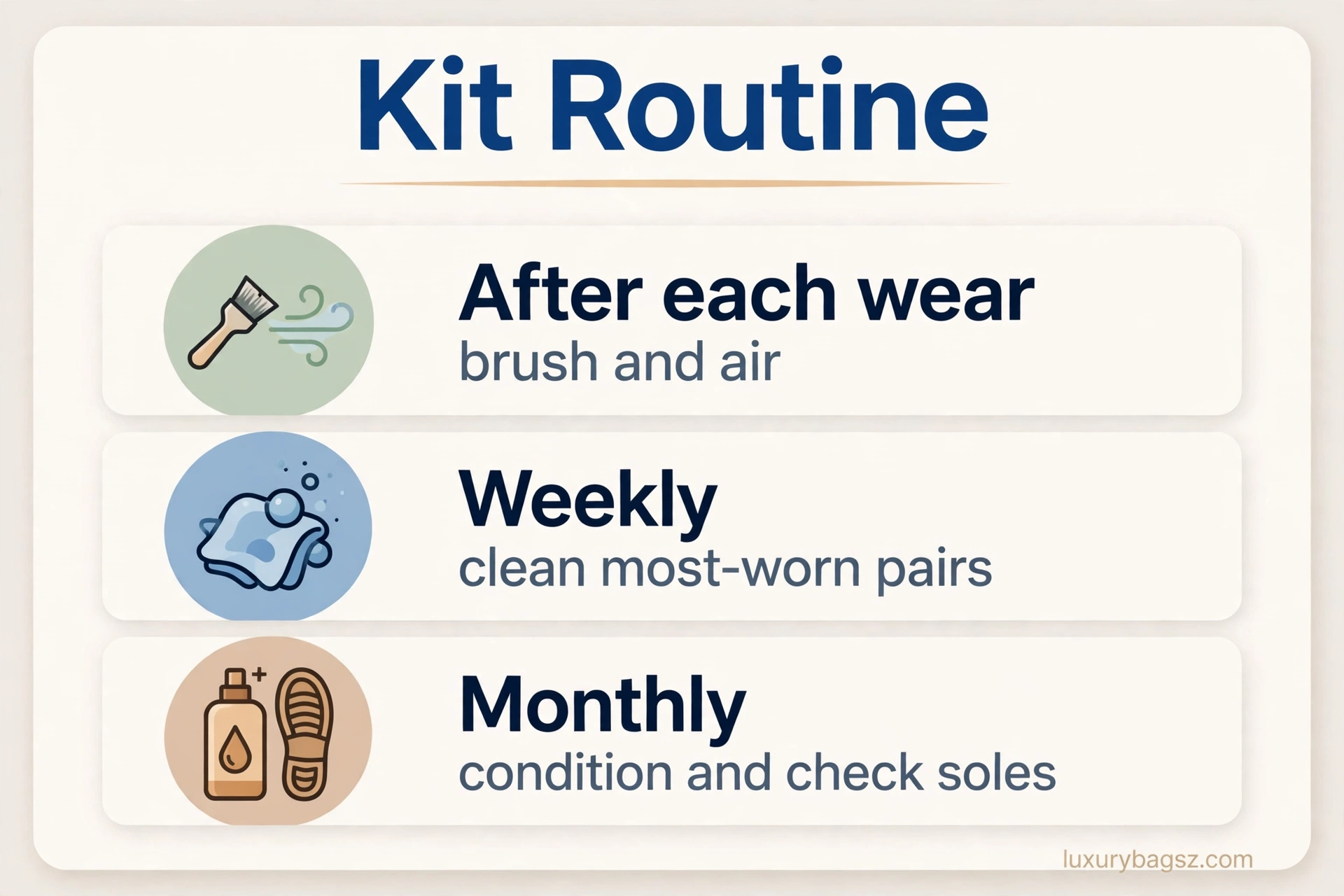
Use the kit on a rhythm, not in bursts. After each wear, brush off dust and air the shoes. Weekly, clean your most-worn pairs as needed. Monthly, condition dry leather, check soles and heels, and reapply protector.
New shoes slot into the same rhythm, with protector before the first wear and short indoor wears while they break in. For that gradual method, our guide to how to break in boots uses the same short-session principle. Avoid giant bundled kits and coloured cream before neutral.
Choosing Brushes Properly
Brush size matters more than brush price. A large horsehair brush suits boots and brogues; a smaller one gives control on dress shoes and heels. Long, soft bristles buff; shorter, denser bristles clean. If you can own only one, choose medium and soft.
Serious kits keep two polishing brushes: one for dark polishes, one for light. Polish pigment lives in bristles forever, and a black-polish brush will grey a tan shoe in one buffing. Label the handles if your memory needs help.
A dauber, the small round brush on a handle, applies cream into seams and brogue holes better than a cloth, and keeps product off your fingers. It is a two-pound upgrade that changes how even your cream coats look.
Retire brushes that shed or whose bristles have gone wiry. A dying brush scratches more than it shines, and it usually dies from being stored dirty, which is why the storage advice earlier in this guide insists on clean brushes in a closed box.
Conditioner in Depth: The Product People Get Wrong
Conditioner is the most overused and under-understood item in the kit. Its job is replacing the oils leather loses to wear, heat and cleaning, and it is needed when leather looks dry, feels stiff or has just been cleaned, not on a fixed weekly schedule.
All-in-one renovating creams clean lightly, condition and add a soft shine in one step, which makes them the right centre of a small kit. Pure conditioners go deeper but leave no colour or shine, so they belong under a cream in a fuller routine.
Over-conditioning is a real fault, not a myth. Saturated leather goes dull, attracts dust and can darken permanently, especially in pale colours. Thin coats, fully absorbed and buffed, always beat one generous soaking.
Test any new conditioner inside the heel or under the tongue first. Leather that darkens a shade when conditioned usually dries back close to its colour, but exotic and unfinished leathers can keep the change, and the hidden test is where you want to learn that.
The Mirror-Shine Additions
A mirror shine is a separate discipline with its own small kit: a tin of hard wax, a cup of water, a smooth cotton cloth or chamois, and patience. It belongs on toe caps and heel counters only, because wax built up over the flexing vamp cracks as you walk.
Work in tiny circles, adding wax in layers so thin they feel like nothing, touching the cloth to water between layers. The shine arrives suddenly after several coats, which is why beginners quit one layer too early.
Edge dressing belongs in the same upgrade tier. It recolours the sole edge and heel stack where they scuff pale, and it is the single fastest way to make a worn shoe look serviced rather than merely cleaned.
Keep the shine kit honest about its purpose. It is for dress shoes, ceremonies and pleasure; a daily shoe needs cream and brushing, and waxing its whole upper is work that walking will undo by Friday.
The Travel Kit
A travel kit is the starter kit edited by a suitcase: a small brush, one cloth, a travel-size neutral cream, a mini protector if the trip involves weather, and the shoe horn you already own. Everything else stays home.
Decanting products into unlabelled pots causes the classic travel disaster of conditioner used as cream. Keep products in their own small containers, and wrap tins in the cloth so a leak ruins cotton, not clothes.
Hotels are where shoes get damaged innocently: bathroom steam, balcony sun, and the well-meant shine from a machine brush loaded with who-knows-what. Keep new or good pairs in their dust bags, on trees if you packed the lightweight travel kind.
The emergency items weigh nothing: a few plasters for your heels, spare laces for the pair you wear most, and a small suede eraser if suede is travelling. Each has saved more trips than any polish.
Three Example Builds, by Budget
The lean build is the starter five from earlier in this guide plus cedar trees for your most-worn pair. It covers cleaning, conditioning, protection and shape for a small rotation, and it is where most people should stop until a gap appears.
The working build adds a leather cleaner, colour-matched creams for your two most-worn colours, a dauber, a second polishing brush for light shoes, and a suede mini-kit if you own suede. This is the complete kit for a real shoe wardrobe.
The enthusiast build adds the mirror-shine set, edge dressing, a dedicated boot brush and grease for work boots, and trees for every leather pair. It is a pleasure to own and entirely optional; nothing in it rescues a shoe the working build would lose.
Notice what none of the builds contain: a product for a material you do not own, a colour you do not wear, or a tool duplicated for its own sake. Kits grow by answering needs, not by completing sets.
Consumables: What Runs Out and What Wears Out
Creams and waxes dry out in one to two years once opened, faster if lids sit loose in a warm room. A cream that has gone grainy or skinned over can sometimes be revived by warmth and stirring; one that smells rancid should be replaced.
Protector sprays lose pressure and spray unevenly as they age, which matters because their whole technique depends on a fine, even mist. Our Saphir Super Invulner guide covers choosing and using a protector properly, including how to test whether an old layer is still working.
Cloths wash well in plain hot water without fabric softener, which coats the fibres and smears polish. Brushes last for years if they are kept clean and dry, and shoe trees effectively last forever, which is why the kit’s maths improve the longer you keep the routine.
Keep a pencil note of purchase dates on tins and cans. It takes two seconds and ends the guessing about which cream is five years old.
Using the Kit Beyond Shoes
Most of a shoe kit moonlights on leather goods with care. The horsehair brush dusts handbags beautifully, neutral renovating cream suits many smooth leather bags, and protector logic transfers directly, always with a hidden test first.
What does not transfer is enthusiasm. Bags have linings, hardware and finishes shoes do not, and wax polish near a bag’s fabric lining or pale stitching is a stain waiting for a moment’s carelessness.
Keep one cloth for bags only, and never let the suede eraser or brushes migrate between suede shoes and a suede bag mid-job; grit travels. The kit’s discipline, separate tools for separate jobs, is the whole system wherever you apply it.
The Delicate Shoes Annex: Heels, Satin and Patent
Heels need smaller versions of the same ideas: a small brush that fits a narrow shoe, a cloth reserved for light colours, and heel grips and spare tips kept with the kit rather than in a handbag’s forgotten corner.
Satin gets almost nothing from the kit on purpose. It takes protector before wear, a dry soft brush after, and no cream, wax or water-based cleaner ever. Its place in the kit is a reminder that restraint is also a product decision.
Patent leather wants its own wipe-down cloth and nothing abrasive. Most patent care is a damp cloth, a dry buff and storage away from anything coloured that could transfer in a warm wardrobe.
Embellished shoes, crystals, bows and delicate straps, need the softest brush you own and a rule: dust them, protect the material around the decoration, and never buff across stones or beads as if they were plain leather.
Five Jobs the Kit Handles Before a Cobbler Is Needed
A scuffed toe is a cream job: clean the spot, work colour-matched cream in small circles, let it dry, and buff. Deep cuts through the leather are a cobbler’s repair, but most scuffs are surface colour loss pretending to be damage.
Salt lines from winter streets wipe away with a cloth barely dampened with water and a drop of vinegar, followed by drying and conditioning once fully dry. Left alone, salt keeps drawing moisture and the line becomes a crack.
A squeak usually lives in the shank or a loose heel, and kit products cannot fix it. Note where it sounds from and take it in; the kit’s job is diagnosis here, not cure, and a good owner knows the boundary.
Water marks on suede respond to patience: dry fully, brush the whole shoe evenly so the colour evens out, and use the eraser on the line itself. Local panic with water and soap makes a bigger mark.
A dull, dusty pair that simply looks tired is the kit’s home ground: brush, renovate or condition lightly, rest overnight on trees, and brush again. More shoes are revived by that sequence than by any purchase in this guide.
The Monthly Session, Timed Honestly
People abandon shoe care because they imagine an hour of labour. A monthly session for two or three pairs takes about fifteen minutes, and here is where the time actually goes.
Minutes one to three: brush every pair you will treat, check soles, heel tips and laces, and decide what each pair genuinely needs. Most pairs need nothing beyond this brushing, and they go back on trees at minute three.
Minutes four to ten: treat the one or two pairs that earned it — a light condition, a cream coat on scuffed toes, an eraser pass on suede. Work pair by pair and let products settle while you move to the next shoe.
Minutes eleven to fifteen: buff, re-spray protector where the beading test failed, put everything back on trees, and wash the cloth. The session ends with the kit closed and the shoes better than you found them, which is the entire philosophy of the box.
Frequently Asked Questions
What are the essential items in a shoe care kit?
A horsehair brush, a soft cloth, a neutral cream polish, a protector spray, and a shoe horn. Those five handle cleaning, protection, and shine for most smooth leather.
Should I buy a pre-made kit or build my own?
Build your own, starting with the five starter items. Pre-made kits often include products you will never use.
Do I need different brushes for different shoes?
Yes: a horsehair brush for smooth leather, a suede brush for suede, and a stiffer brush for soles and welts. Mixing brushes moves grit and polish and can scratch uppers.
What is the difference between cream polish and wax polish?
Cream nourishes leather and gives a natural shine, while wax builds a harder gloss on toes and heels. Most daily shoes need cream only.
How often should I condition leather shoes?
Condition when leather looks dry or feels stiff, often every four to six weeks. Thin, occasional coats beat thick, frequent ones.
Can I use the same kit on shoes and boots?
Yes, the core products and tools work for both. Boots add a welt brush and a longer shoe horn, but cleaner, conditioner, and cream carry over.
How do I store shoe care products?
Store them in one box, upright, in a cool, dry spot away from heat and sun. Close lids after use and label coloured creams.
What should a suede shoe care kit include?
A suede brush, a suede eraser, and a suede protector spray, stored apart from creams and waxes. Never use cream, polish, or oil on suede.
How often should I use my shoe care kit?
Brush after every wear, clean most-worn pairs weekly, and condition monthly. Short, regular use beats rare deep cleans.
When should I replace items in my kit?
Replace brushes when bristles splay or shed, creams when they dry out, and cloths when they fray. Worn tools damage shoes.
Summary
A good shoe care kit is small, used often, and matched to the shoes you own. Start with five items, learn the rhythm, then add cleaner, matched colours, suede tools, and trees as your collection grows.
Store it in one box, keep brushes and cloths separate by job, and let the routine do the work. Shoes cared for this way look better, fit better, and last years longer than shoes left to chance.






