

Are Ballet Flats Comfortable for Walking? A Complete Comfort Guide
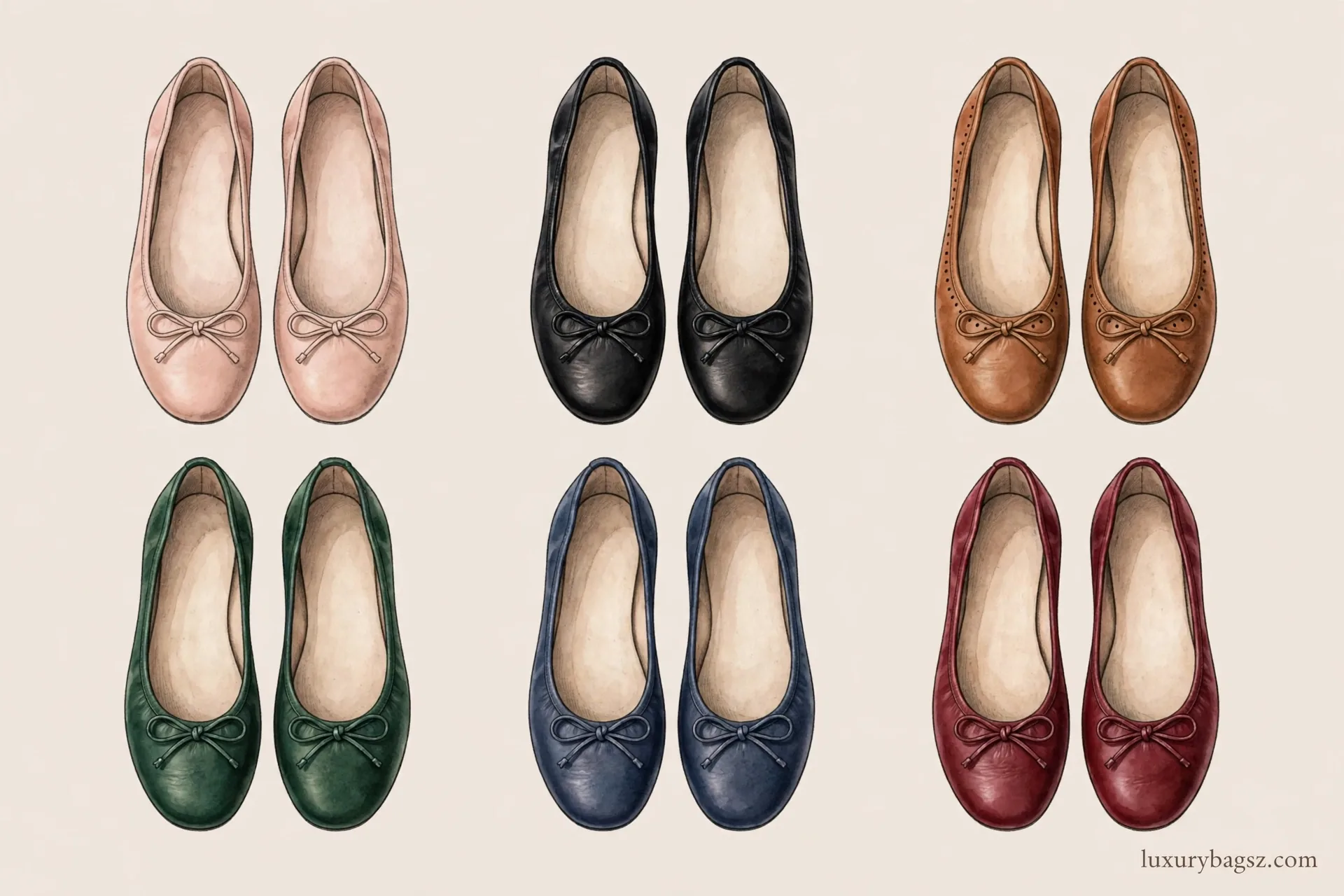
Ballet Flats for Walking at a Glance
Are ballet flats comfortable for walking? The honest answer is: it depends on the flat, your feet, and how far you walk. A well-made leather flat with cushioning, a flexible sole, and a good fit can be comfortable for hours of city walking, while a cheap, flat, unsupportive pair can hurt within minutes.
Ballet flats were designed for dance studios and elegant days, not for hiking or marathon walking, and their low profile means they offer less shock absorption and ankle support than trainers or boots. That does not make them uncomfortable by definition, but it does mean you must choose carefully and break them in properly.
This guide explains what makes a ballet flat comfortable, which features matter most, how different foot types cope, how far you can realistically walk, and how to improve comfort with fit, insoles, and care. It is a comfort guide, focused on walking, not on fashion alone.
Key Takeaways
- Ballet flats can be comfortable for walking, but comfort varies hugely by construction, fit, and foot type.
- Cushioning, arch support, sole flexibility, and toe-box width matter more than brand or price alone.
- Leather flats usually mould to feet and breathe better than cheap synthetics, but need break-in.
- Most people find ballet flats best for short to medium walks, with limits for all-day, high-mileage days.
- Flat feet and high arches need extra arch support, often from insoles, because most flats are flat inside.
- Fit is decisive: too tight causes blisters and pinching, too loose causes slipping and heel rubbing.
- Insoles, heel grips, and no-show socks can transform a mediocre flat into a comfortable one.
- Terrain, weather, and distance matter: smooth pavements suit flats better than cobbles, hills, or rain.
What a Ballet Flat Is, and Why Comfort Varies
A ballet flat is a low, slip-on shoe with a rounded or almond toe, a thin sole, and little or no heel, inspired by ballet slippers but made for street wear. It typically has an elasticated edge, a small bow or trim, and a leather, suede, or fabric upper, with a flat insole and a flexible outsole.
Comfort varies because ballet flats are not a single product but a category spanning cheap, mass-produced pairs and carefully made leather pairs. A cheap pair may use thin synthetic uppers, a hard insole, and a stiff sole, while a good pair uses soft leather, padded insoles, and a flexible, cushioned sole.
Construction details explain much of the difference. A flat with a padded footbed, a slight arch contour, and a rubber outsole with grip will feel different from a flat with a cardboard-thin insole and a smooth leather sole, even if they look identical in a photo.
Price correlates with comfort only loosely. Some expensive designer flats prioritise looks over cushioning, while some mid-priced leather flats prioritise walking comfort. Judge the shoe in your hands and on your feet, not by its price tag or label.
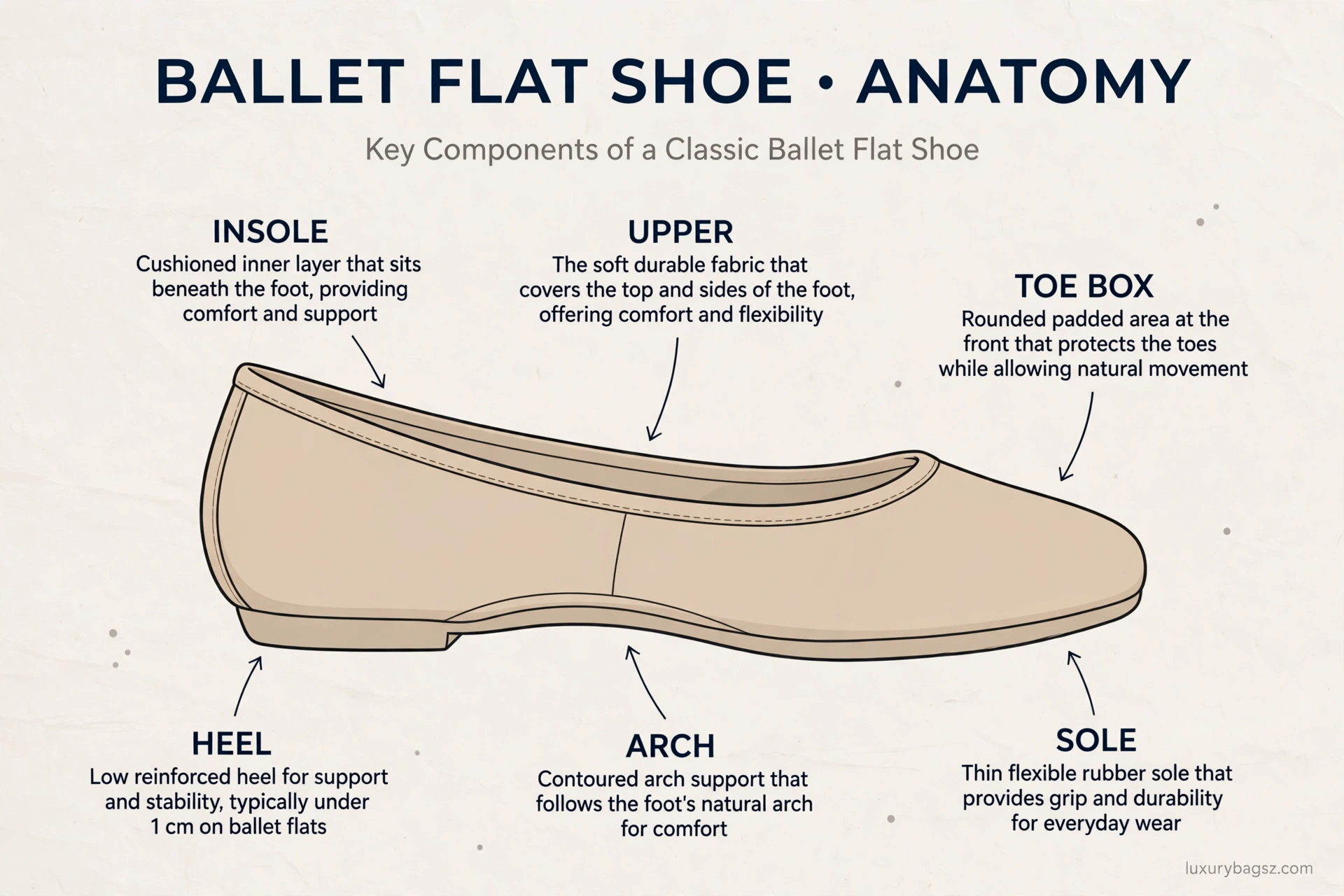
Anatomy of a Comfortable Ballet Flat
The upper should be soft, flexible, and breathable, moulding to your foot without pinching. Leather uppers soften with wear and breathe well, suede offers softness but less water resistance, and mesh offers breathability for warm days but less structure.
The toe box should be wide enough for your toes to spread naturally, without squeezing or overlapping. Pointed toes look elegant but compress toes, while rounded and almond toes offer more room. If your toes feel cramped standing still, they will hurt after walking.
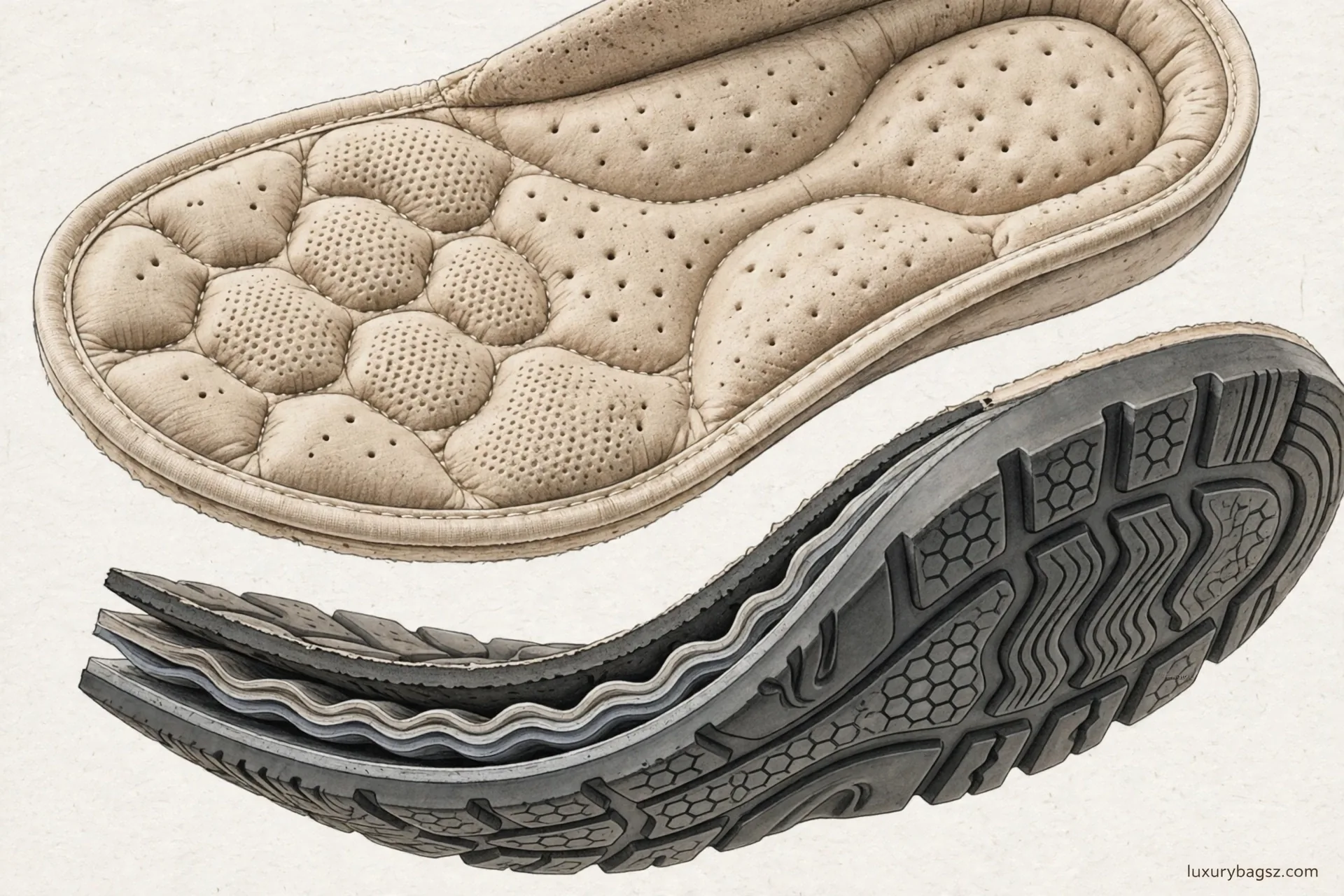
The insole is the comfort core: it should be padded, preferably with arch contouring, and removable if you want to add your own insole. A thin, hard insole transmits every pavement impact to your feet, while a cushioned insole absorbs shock and reduces fatigue.
The outsole should be flexible, with enough grip for pavements and light rain, and thick enough to protect against stones and uneven surfaces. A sole that bends easily at the ball of the foot, but not in the middle, supports natural walking motion without feeling floppy.
A Short History: From Dance Studio to Street
Ballet flats began as dance slippers, worn by ballerinas for practice and performance, with soft leather, a drawstring, and a flexible sole that allowed foot articulation. Their elegance and simplicity attracted fashion designers, who adapted them for street wear in the mid-twentieth century.
Audrey Hepburn, photographed in ballet flats in the 1950s, helped make them a fashion staple, pairing them with slim trousers and simple dresses for a look that was both elegant and practical. The flat became a symbol of Parisian chic: polished, understated, and easy to wear.
Later fashion revivals, including designer collections and celebrity styles, kept ballet flats in the spotlight, with variations such as Mary Jane straps, pointed toes, and embellished uppers. Our guide to Amy Winehouse ballet shoes covers one famous fashion interpretation, showing how a dance shoe became a style statement.
Today, ballet flats span fashion and function, from delicate evening flats to cushioned walking flats with arch support and rubber soles. That range explains why comfort answers vary: a delicate fashion flat and a walking-focused flat are different shoes, even if they share a name.
Cushioning, Arch Support, and Shock Absorption
Cushioning matters because walking impacts your feet with each step, and a thin flat transmits that impact directly. Good cushioning, especially under the heel and ball, absorbs shock, reduces fatigue, and makes longer walks feasible. Look for padded insoles and a sole with some give, not a hard, flat board.
Arch support matters because most ballet flats are flat inside, with little contouring for the arch. Feet with medium arches may cope well, but flat feet may overpronate, rolling inward, while high arches may lack contact and support. Both can cause pain over distance without added support.
Shock absorption comes from the sole as well as the insole. A rubber outsole with a little thickness absorbs more than a thin leather sole, and a sole with flex grooves bends naturally with your foot. A flat that feels hard and unyielding on a shop floor will feel harder after an hour of walking.
If a flat lacks arch support, a removable insole or an orthotic insert can help, provided the shoe has room for it. Try insoles in store, because an insert that makes a flat too tight defeats its purpose. Comfort is a system: upper, insole, sole, and insert working together.

Materials: Leather, Suede, Patent, and Fabric
Leather is the classic ballet flat material, and it offers the best combination of breathability, moulding, and durability for walking. Good leather softens with wear, shapes to your foot, and breathes in warm weather, though it needs break-in and protection from rain.
Suede offers softness and a luxurious feel, but it marks easily, absorbs water, and needs protector spray and gentle care. Suede flats suit dry days and lighter walking, not rainy commutes or muddy paths, where they will stain and stiffen.
Patent leather looks polished and wipes clean, but it breathes poorly, creases, and can feel stiff and hot. Patent flats suit evenings and short outings better than long walks, where heat and stiffness cause discomfort and blisters.
Fabric and mesh flats, including canvas and knit uppers, offer breathability and lightness for summer, but they provide less structure and support than leather. They suit warm, dry days and shorter walks, and they need washing and care to stay fresh.
Fit: The Single Most Important Comfort Factor
Fit decides comfort more than any other factor, because a flat that does not fit will hurt regardless of materials or cushioning. Ballet flats should fit snugly without pinching, with toes free to move, heels secure without slipping, and no pressure points at the sides or top.
Too tight is the most common error, especially with pointed toes or narrow lasts. Tight flats cause blisters, pinched toes, and numbness, and they do not stretch enough to fix a poor fit, even in leather. If a flat hurts in the shop, it will hurt more after walking.
Too loose is also a problem, causing heel slipping, toe gripping, and blisters from friction. Heel grips, elastic edges, and ankle straps can help a slightly loose flat, but they cannot fix a shoe that is a full size too big. Choose the size that fits your larger foot, and adjust the smaller one with an insole or grip if needed.
Try flats at the end of the day, when feet are slightly swollen, and walk on a hard floor, not just carpet, for several minutes. Wear the socks or hosiery you will walk in, and check fit standing and walking, not just sitting, because feet spread under weight.
Breaking In Ballet Flats Without Blisters
Breaking in is essential for leather flats, which start stiff and soften over days of wear. Wear new flats indoors for short periods first, gradually increasing time, and stop if pain develops. That gradual approach lets leather mould without causing blisters.
Thick socks during break-in can stretch leather gently, while a shoe stretcher or a cobbler's stretching service can target tight spots such as the toe box or sides. Do not force break-in by walking miles in new flats on day one, which is the fastest route to blisters.
Blister prevention helps during break-in: apply petroleum jelly or anti-blister balm to hotspots, use heel grips or moleskin on areas that rub, and carry plasters on early outings. If a spot consistently blisters after break-in, the fit is wrong, not just new.
Suede and fabric flats need less break-in than leather, but they still benefit from short indoor wears to check fit and rubbing. Patent flats break in least, because patent coating resists softening, so fit must be right from the start for patent styles.
How Far Can You Walk in Ballet Flats?
For short walks, up to an hour or a few kilometres on smooth pavements, most well-fitting ballet flats are comfortable, especially leather pairs with cushioning. Shopping, commuting with a short walk, and city sightseeing in bursts all suit flats well.
For medium walks, two to three hours or five to eight kilometres, comfort depends on the flat and your feet. A cushioned, supportive flat with good fit can handle this distance, especially with breaks, while a thin fashion flat will likely cause fatigue, soreness, or blisters by the end.
For long, all-day walking, ten kilometres or more, or hilly and uneven terrain, ballet flats are generally not the best choice. Trainers, walking shoes, or supportive boots offer more cushioning, arch support, ankle stability, and grip, and they reduce injury risk over distance.
Listen to your feet as a guide. Soreness in the arches, balls, or heels, blisters, or a feeling that you are gripping with your toes to keep flats on, all signal that you have reached the limit for that pair. Change shoes, rest, or choose a more supportive shoe for longer days.
Terrain, Weather, and City Walking
Smooth pavements, shopping centres, and flat city streets suit ballet flats best, because their thin soles and low profile handle even surfaces well. Grip matters on polished floors and wet pavements, so choose rubber outsoles over smooth leather soles for city walking.
Cobbles, gravel, and uneven paths challenge ballet flats, because thin soles transmit stones and bumps, and low ankles offer no stability. If your route includes cobbles or trails, choose a thicker-soled flat or a different shoe, and save delicate flats for smooth routes.
Hills strain ballet flats, because downhill walking pushes toes forward into the toe box, and uphill walking demands grip and arch support. Pointed toes worsen downhill pressure, while cushioned, roomy flats cope better. For hilly cities, consider a supportive alternative for steep days.
Weather matters too. Rain soaks suede and fabric flats, makes leather slippery, and causes blisters from wet socks, while heat makes feet swell and patent flats hot. Carry a weather-appropriate alternative, and save ballet flats for dry, mild days when possible.
Foot Types: Flat Feet, High Arches, Wide Feet, and More
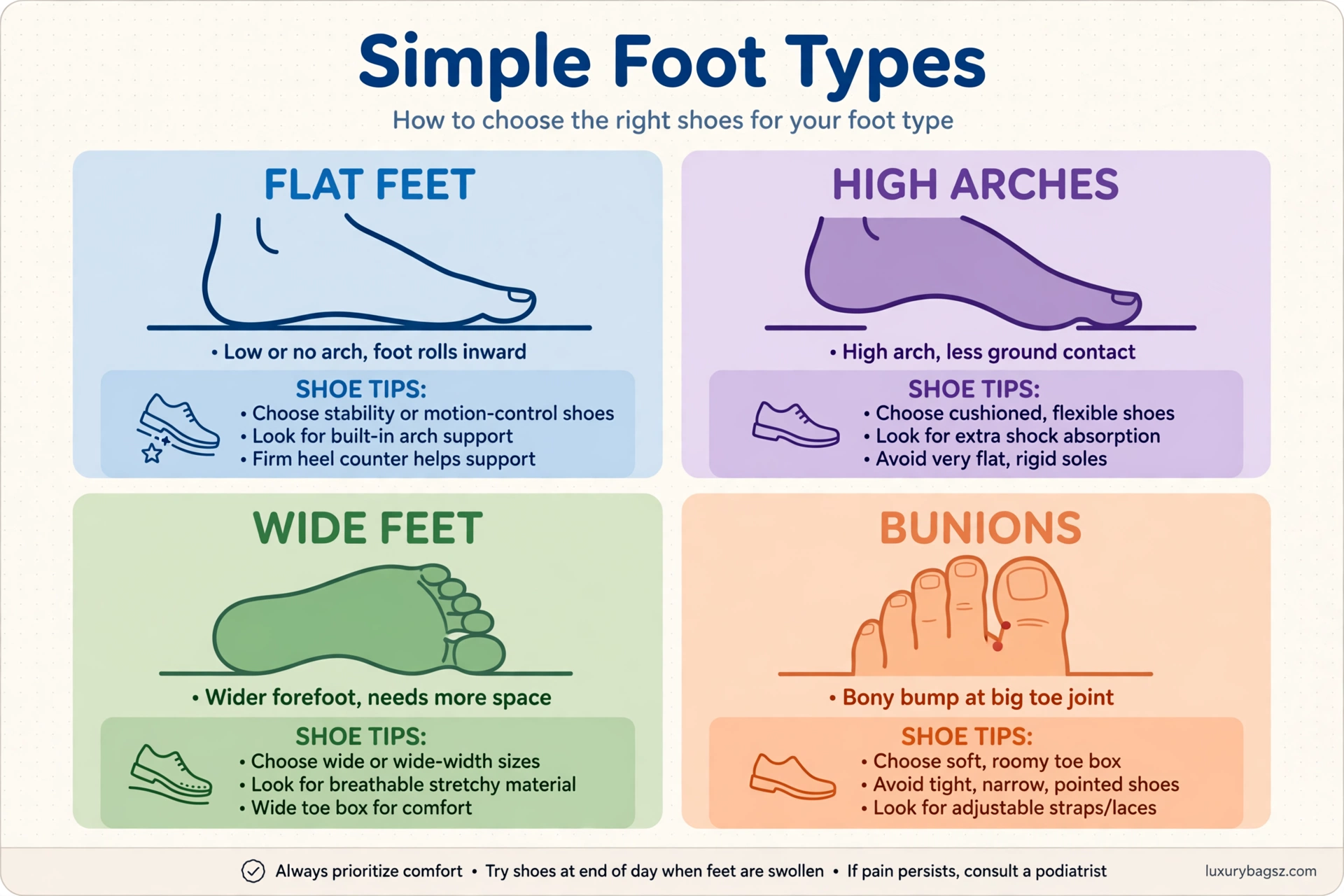
Flat feet, where the arch collapses and the foot rolls inward, need arch support that most ballet flats lack. Without it, flat feet may ache, overpronate, and develop knee or back pain over distance. Removable insoles with arch contouring, or custom orthotics if prescribed, help significantly.
High arches, where the arch is raised and the foot is rigid, need cushioning and contact under the arch, which flat insoles do not provide. A cushioned insole with arch filling, or a flat with a contoured footbed, reduces pressure on the heel and ball and improves comfort.
Wide feet need a wide toe box and a last that accommodates width, not just length. Many ballet flats run narrow, especially pointed styles, so wide-footed buyers should seek wide-fit options, rounded toes, and soft leather that stretches. Sizing up in length alone does not fix width pinching.
Bunions, hammertoes, and sensitive feet need soft, roomy uppers without seams over painful areas. Leather that moulds, a wide toe box, and seamless interiors help, while pointed toes and stiff patent worsen pressure. If foot pain persists, consult a podiatrist before choosing walking shoes.
Insoles, Heel Grips, and Comfort Upgrades
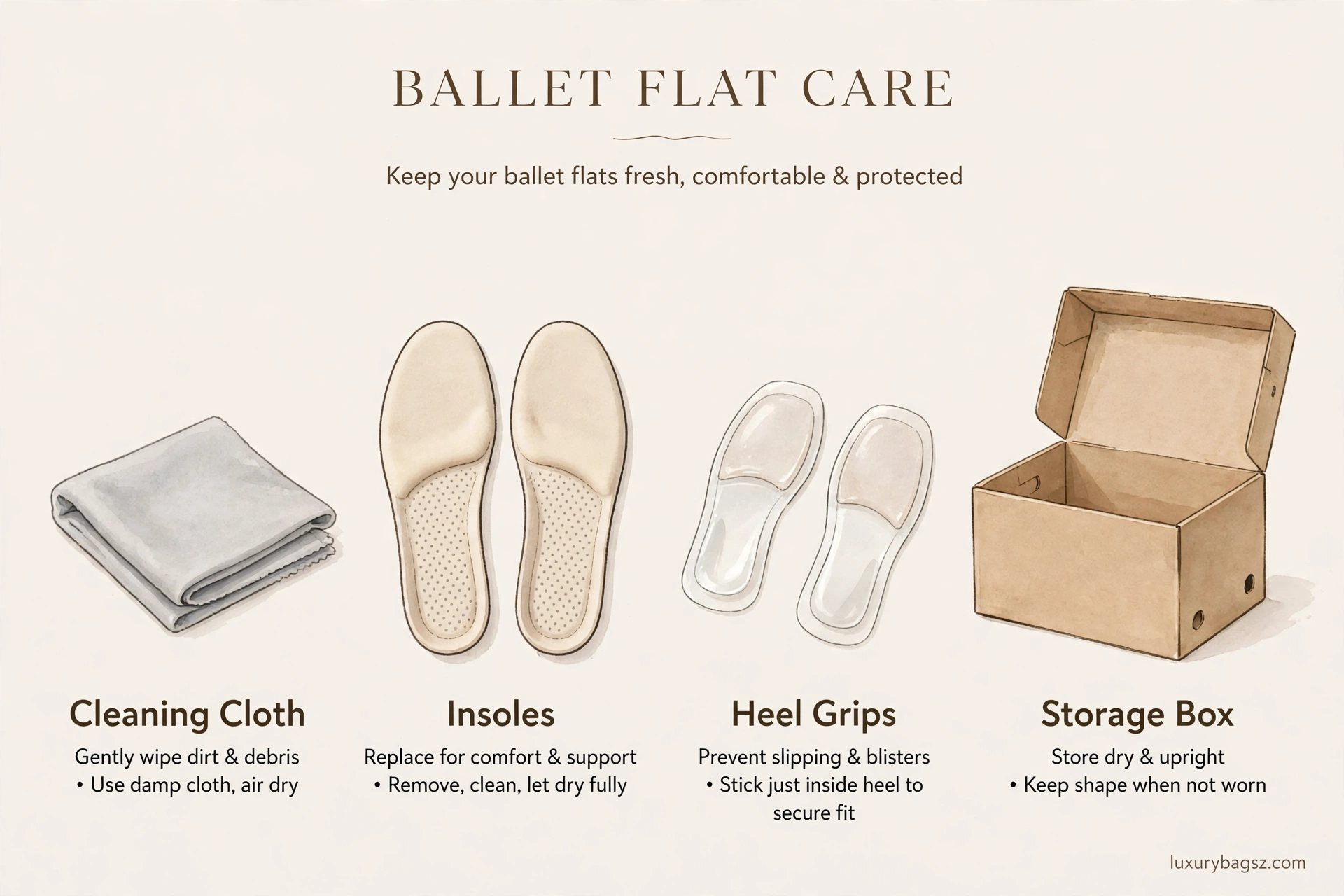
Insoles are the most effective comfort upgrade for ballet flats, adding cushioning, arch support, and shock absorption. Choose thin, flat-specific insoles that fit without making the shoe tight, and try them in store with the flats you will wear them in.
Heel grips, small pads stuck inside the heel, prevent slipping and blistering when a flat is slightly loose. They work best for minor looseness, not for a full size too big, and they should be replaced when worn or dirty.
Ball-of-foot cushions, gel pads under the forefoot, reduce pressure and fatigue during longer walks, especially in flats with thin soles. They suit buyers who feel pain under the balls of their feet after an hour or more of walking.
Toe separators, moleskin, and anti-blister balms help specific problems: separators for overlapping toes, moleskin for rubbing spots, and balm for friction areas. These small, cheap upgrades can transform a flat from painful to wearable, and they are worth carrying on longer days.
Socks, Hosiery, and Bare Feet
No-show socks, also called loafer socks, protect feet from friction, absorb sweat, and reduce blister risk, while staying hidden in ballet flats. Choose socks with silicone heel grips to prevent slipping, and with breathable fabric to keep feet dry.
Hosiery, including tights and sheer stockings, offers less cushioning than socks but more coverage and polish for formal outfits. Sheer hosiery can increase slipping inside flats, so choose hosiery with a little grip or pair it with heel grips for longer walks.
Bare feet in ballet flats feel cool and elegant, but they increase sweat, odour, and blister risk, especially in leather flats that absorb moisture. If you prefer bare feet, use foot powder, anti-blister balm, and clean flats regularly to prevent odour and fungal issues.
For walking, no-show socks are usually the best choice, balancing comfort, hygiene, and invisibility. Carry a spare pair on longer days, because damp socks cause blisters faster than dry ones, and changing socks mid-walk can refresh tired feet.
Ballet Flats for Travel, Work, and Holidays
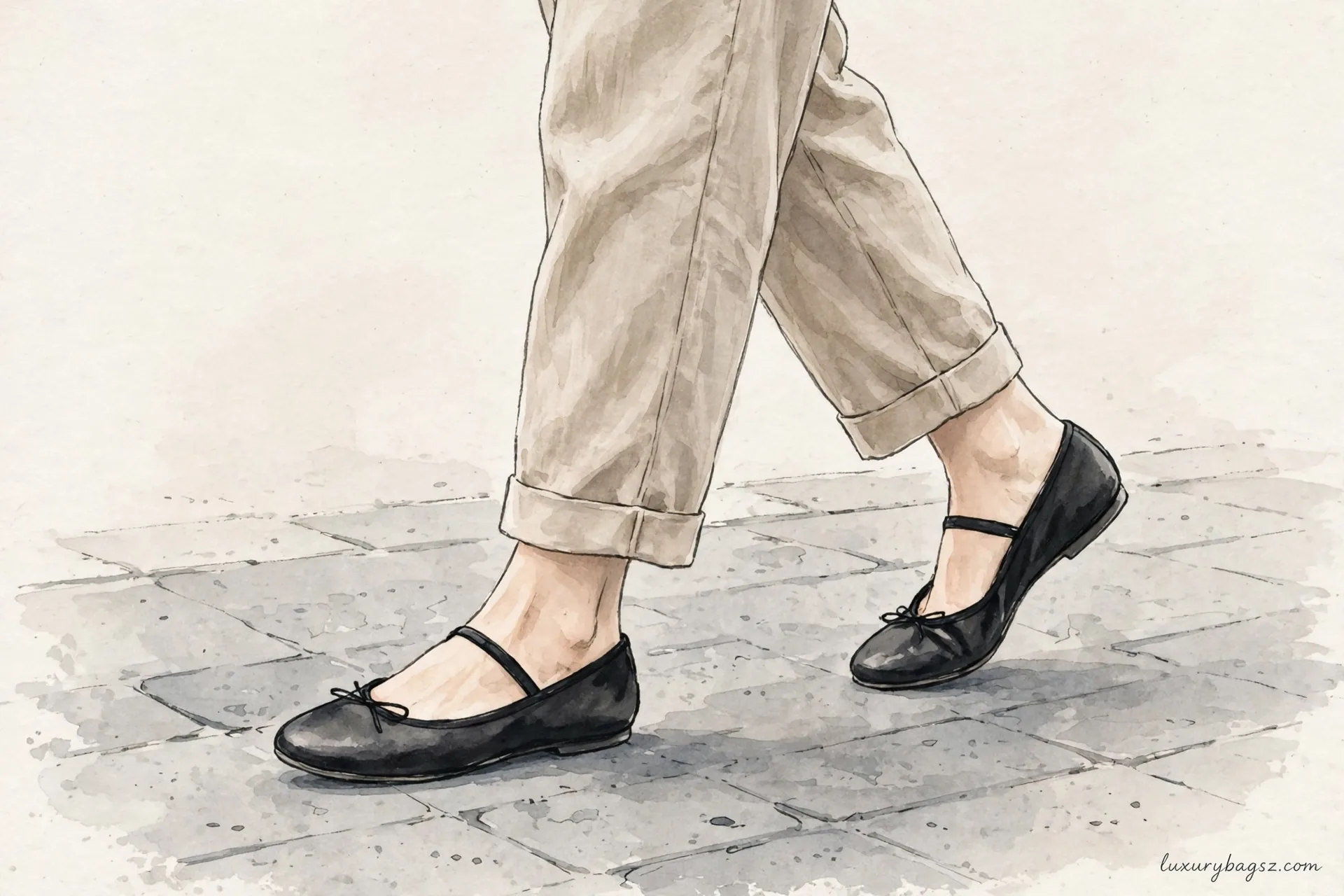
For travel, ballet flats are popular because they are light, packable, and versatile, pairing with many outfits. They suit city breaks with moderate walking, museum visits, and dinners, but they are not ideal for all-day sightseeing on foot, where trainers serve better.
For work, ballet flats suit office days with limited walking, especially in leather and neutral colours that pair with tailoring and dresses. Keep a pair of comfortable walking shoes for the commute, and change into flats at the office, to protect both feet and flats.
For holidays, ballet flats suit beach towns, resorts, and evenings, where walking is short and surfaces are smooth. For hiking, historic sites with cobbles, or hilly towns, pack a supportive alternative, and use flats for evenings and light days.
A travel tip: pack flats in a dust bag, stuff them lightly to hold shape, and carry insoles and heel grips as backups. That small kit lets you adapt flats to longer days without packing extra shoes.
Caring for Ballet Flats So They Stay Comfortable
Cleaning preserves comfort, because dirt, sweat, and salt stiffen leather and fabric and cause odour. Wipe leather flats with a soft, damp cloth, brush suede gently, and wash fabric flats as labelled, drying naturally away from heat.
Conditioning leather keeps it soft and flexible, which maintains moulding and comfort. Use a leather conditioner sparingly, tested on a hidden spot, and avoid over-conditioning, which darkens light colours and softens structure too much.
Sole care matters too: replace worn heel tips and outsoles promptly, because worn soles reduce grip and cushioning and change gait. A cobbler can resole many leather flats, extending their life and comfort far beyond a cheap pair's lifespan.
Storage affects shape and comfort: store flats stuffed lightly, in a cool, dry place, away from damp and heat, and do not stack heavy items on top, which crushes toe boxes. Rotating between two pairs also extends life, by letting each pair dry and recover between wears.
When Ballet Flats Are Not the Right Shoe
Ballet flats are not ideal for running, hiking, or sports, where trainers or boots offer cushioning, grip, and ankle support that flats cannot match. Using flats for these activities risks blisters, sprains, and foot pain, and it wears flats out quickly.
They are also poor choices for very wet, muddy, or snowy conditions, where water resistance, grip, and warmth matter more than elegance. Waterproof boots or trainers suit those days better, and they protect both feet and flats from damage.
For people with significant foot problems, including severe flat feet, plantar fasciitis, or diabetic foot issues, ballet flats may worsen pain without specialist insoles or medical advice. Consult a podiatrist for walking shoes if you have ongoing foot pain, rather than relying on fashion flats.
Finally, ballet flats are not ideal for jobs requiring long standing, such as nursing, retail, or hospitality, where supportive, cushioned shoes reduce fatigue and injury over shifts. For those roles, choose occupational footwear designed for standing, and save flats for off-duty days.
Choosing Your Pair: A Step-by-Step Guide
Start by defining your use: short daily walks, work, travel, or evenings. That decision narrows materials, cushioning, and price, and prevents buying a delicate evening flat for a life that needs a walking flat.
Try several pairs in store, walking on hard floors for several minutes, with the socks you will wear. Check toe room, heel security, arch feel, and sole flexibility, and compare pairs side by side rather than judging one pair alone.
Check construction: soft, breathable uppers, padded insoles, arch contouring or room for insoles, flexible rubber outsoles, and even stitching. A flat that passes these checks is more likely to be comfortable than one that merely looks pretty.
Set a budget that includes insoles, heel grips, and care products, because those extras improve comfort significantly. A mid-priced flat plus insoles often beats an expensive flat without them, and a cheap flat with good insoles can surprise you.
Ballet Flats, Loafers, and Dress Shoes: When to Choose What
For walking comfort, loafers often offer more than ballet flats, because their thicker soles, structured uppers, and better arch support suit longer days. Our guide to dress shoes explains the broader category, and loafers sit within it as a practical, polished alternative for many walkers.
Dress shoes, including loafers, brogues, and low heels, suit formal occasions where ballet flats may feel too casual or too flat. They offer more structure and support, though they may weigh more and need break-in, just like leather flats.
Trainers remain the best choice for high-mileage, hilly, or uneven walking, with cushioning, grip, and support that flats cannot match. Save ballet flats for days when walking is moderate and style matters, and use trainers when distance and terrain dominate.
Choosing between shoes is about matching the shoe to the day, not about loyalty to one style. A wardrobe with ballet flats, loafers, and trainers covers more days comfortably than any single style alone.
Common Mistakes, and How to Avoid Them
The first mistake is buying ballet flats a size too small, hoping they will stretch. Leather stretches a little, but not enough to fix a tight toe box, and tight flats cause blisters and pain. Buy the size that fits, and stretch only for minor tightness.
The second mistake is walking miles in new flats on day one, without break-in. New leather needs gradual wear, and a long first walk guarantees blisters. Break in indoors first, then increase distance slowly.
The third mistake is ignoring arch support, especially for flat feet or high arches. A flat insole may feel fine for ten minutes and painful after an hour, so test flats for longer walks before committing, and add insoles early rather than after pain.
The fourth mistake is choosing pointed toes or patent leather for long walks, because both prioritise looks over comfort. Save pointed and patent flats for evenings and short outings, and choose rounded, leather flats with cushioning for walking.
The fifth mistake is wearing flats barefoot in hot weather without protection, which causes sweat, odour, and blisters. Use no-show socks, foot powder, or anti-blister balm, and clean flats regularly to keep them fresh.
Ballet Flats in 2026: Comfort Innovations
Ballet flat design in recent years has added comfort features that older flats lacked, including cushioned footbeds, arch contouring, flexible rubber soles, and stretch uppers. These innovations make modern walking-focused flats more comfortable than the thin, hard flats of earlier decades.
Sustainable materials, including recycled leather, plant-based alternatives, and repairable construction, are also appearing, offering comfort with a lower footprint. These materials vary in quality, so judge them by feel, fit, and durability, not by sustainability claims alone.
Customisation, including wide fits, half sizes, and adjustable straps, helps more foot types find comfortable flats. Wide-fit and half-size options are worth seeking, because a better fit improves comfort more than any cushioning feature.
For buyers, the message is positive: comfortable ballet flats exist today in more styles and prices than ever before. Look for cushioning, arch support, flexible soles, and good fit, and you can find a flat that walks well, not just looks well.
Your Walking Comfort Checklist
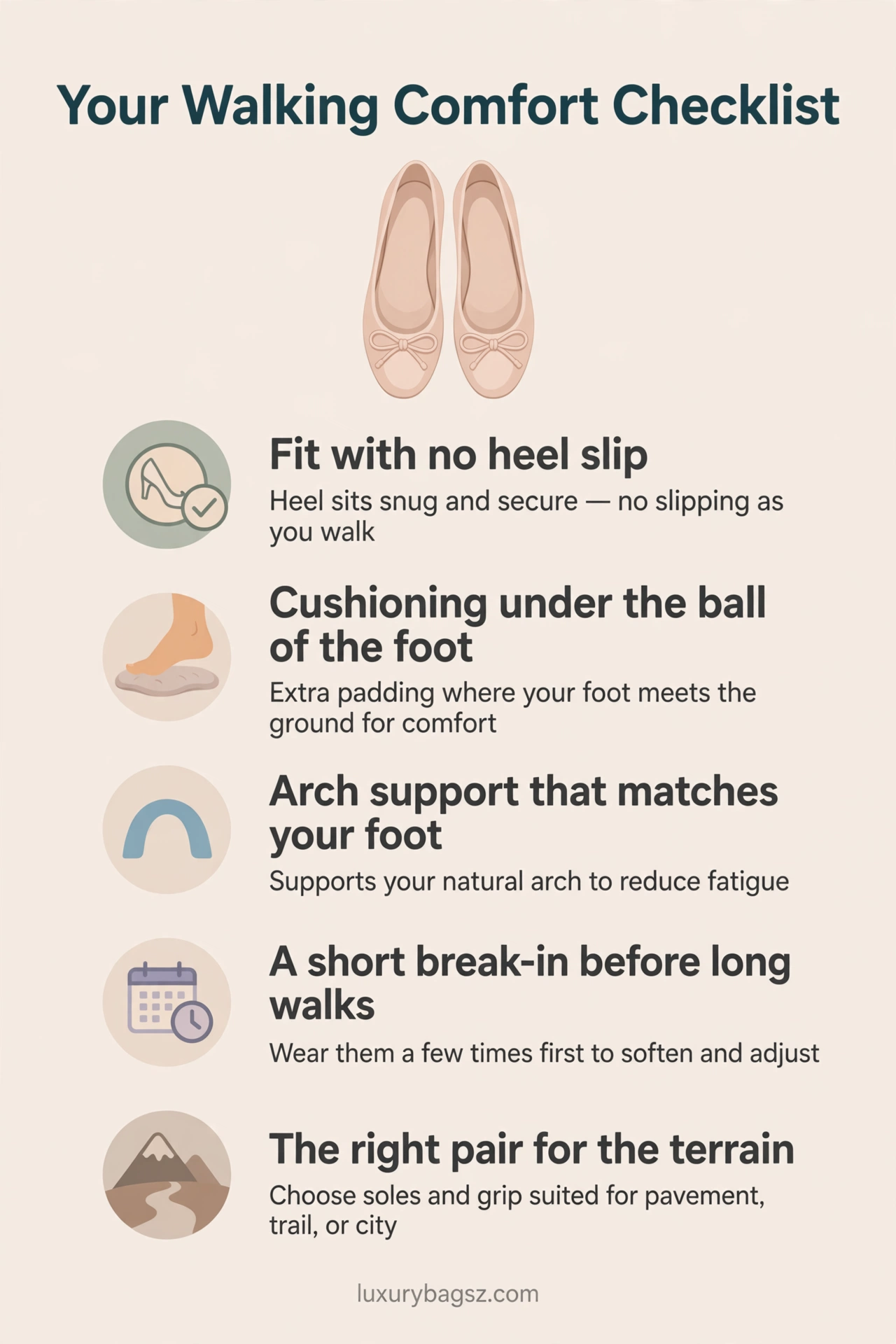
Before buying, check toe room, heel security, arch feel, sole flexibility, and upper softness, walking on a hard floor for several minutes. A flat that passes all five checks is a strong candidate for comfortable walking.
Before walking, break in new flats indoors, add insoles or heel grips if needed, choose no-show socks, and apply anti-blister balm to hotspots. That preparation prevents most walking pain before it starts.
During walking, listen to your feet: soreness, blistering, or toe-gripping signals that you need a break, a shoe change, or a different shoe for that distance. Do not push through pain, which turns a minor rub into a blister that ruins a day.
After walking, clean flats, let them dry naturally, store them stuffed lightly, and rotate pairs to extend life. Comfort is not just about buying the right flat, but about caring for it and knowing its limits, so it serves you well for many walks.
Frequently Asked Questions
Are ballet flats comfortable for walking?
Yes, well-made, well-fitting ballet flats with cushioning and arch support can be comfortable for short to medium walks. Cheap, thin, unsupportive flats hurt quickly, especially over distance.
Can you walk all day in ballet flats?
Most people cannot comfortably walk all day, ten kilometres or more, in ballet flats, because they offer less cushioning and support than trainers. They suit moderate walking better than high-mileage days.
Are ballet flats bad for your feet?
Ballet flats are not inherently bad, but thin, unsupportive flats can worsen flat feet, high arches, and plantar pain over time. Choose cushioned, supportive flats, add insoles if needed, and consult a podiatrist for ongoing pain.
Do ballet flats need breaking in?
Leather ballet flats need gradual break-in indoors to soften and mould, while suede and fabric flats need less. Do not walk miles in new flats on day one, which causes blisters.
What insoles are best for ballet flats?
Thin, flat-specific insoles with cushioning and arch contouring work best, provided they fit without making the shoe tight. Try insoles in store with the flats you will wear them in.
Are leather ballet flats more comfortable than synthetic?
Generally yes, because leather breathes, moulds to feet, and softens with wear, while cheap synthetics trap heat and stay stiff. Good synthetics and mesh can still work for summer and short walks.
Should you wear socks with ballet flats?
No-show socks with silicone heel grips are best for walking, reducing friction, sweat, and blister risk while staying hidden. Bare feet increase blister and odour risk.
Are pointed ballet flats uncomfortable?
Pointed toes compress toes and cause pain over distance, especially downhill, so they suit evenings and short outings better than long walks. Rounded and almond toes offer more room and comfort.
How do I stop ballet flats rubbing my heels?
Use heel grips, moleskin, or anti-blister balm, ensure correct fit, and break in gradually. If heels consistently slip or rub after break-in, the fit is wrong.
What shoes are better than ballet flats for long walks?
Trainers, walking shoes, and supportive boots offer more cushioning, arch support, grip, and ankle stability for long, hilly, or uneven walks. Save ballet flats for moderate, smooth-surface days.
Summary
Are ballet flats comfortable for walking? Yes, when you choose well: a leather flat with cushioning, arch support, a flexible rubber sole, and a roomy toe box, fitted perfectly and broken in gradually, can carry you happily through hours of city walking. No, when you choose poorly: a cheap, thin, tight, pointed flat will hurt quickly, whatever its brand or price.
Judge the shoe on your feet, not in a photo, add insoles and heel grips where they help, wear no-show socks, and respect the flat's limits on distance, terrain, and weather. Done right, ballet flats are a comfortable, elegant walking companion for the days they suit, and knowing those days is the key to enjoying them, mile after mile, in comfort and style, for years to come.
Choose the pair that fits your feet and your life, break it in gently, and let it carry you through the city days it was made for, comfortably and elegantly, wherever the pavement takes you. That is the simple test of a good ballet flat: it disappears on your feet and lets the walk itself take centre stage.






