

Comfortable Designer Heels: Heights, Shapes and Brands That Respect Your Feet
Comfortable Designer Heels in Brief: Comfort Is Geometry
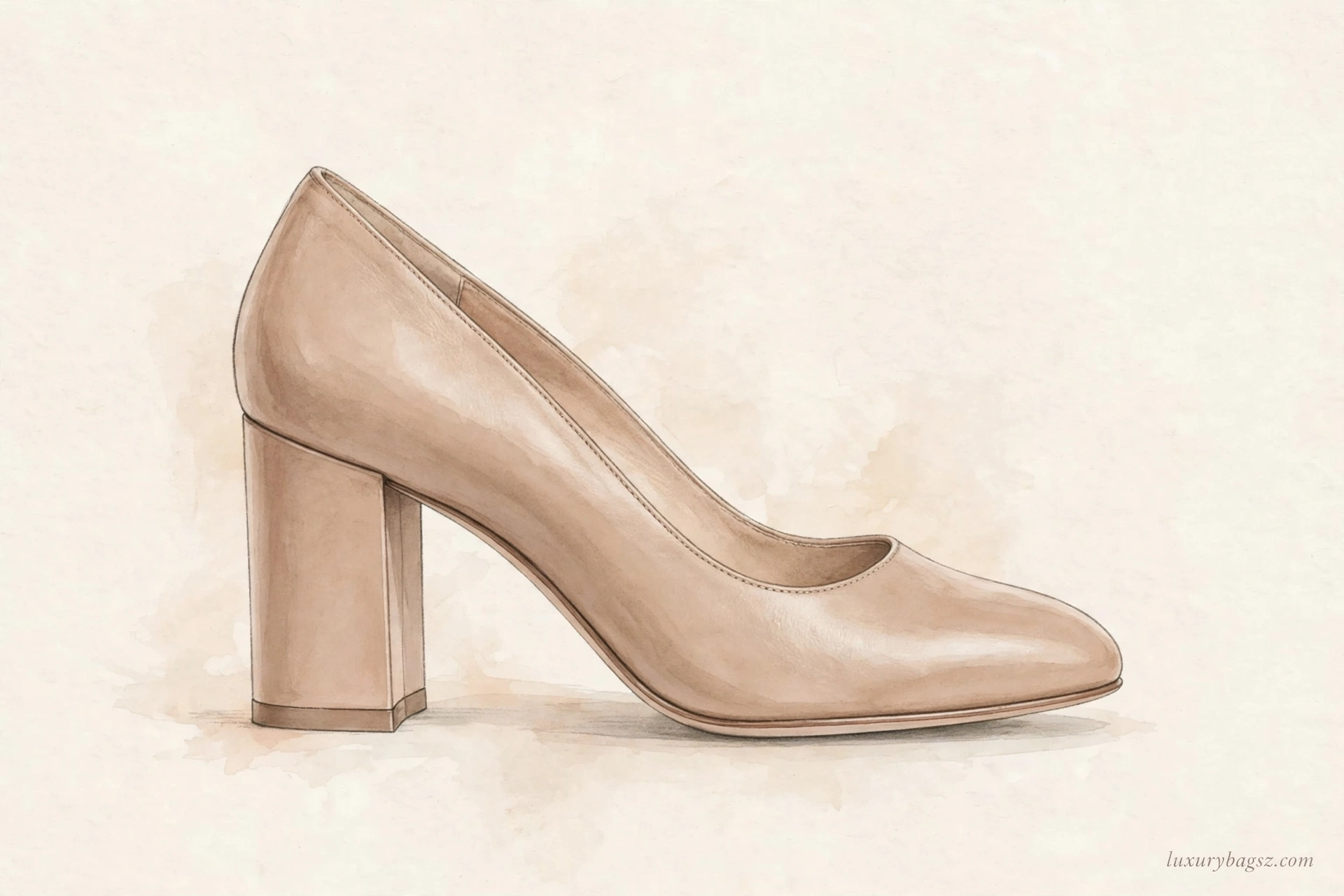
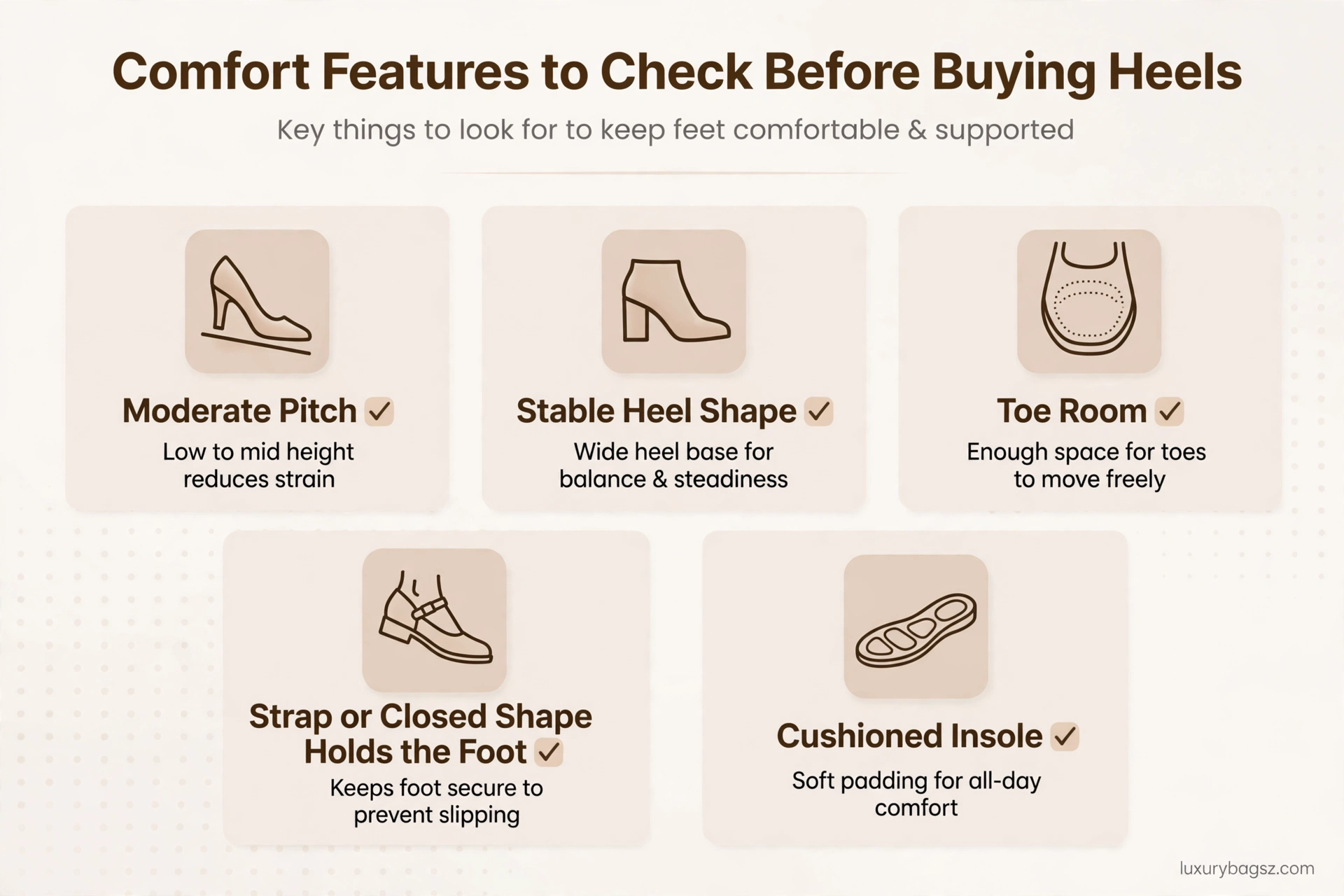
Comfortable designer heels are made, not found: a moderate pitch, a stable heel shape, room in the toe box, a strap or closed shape that holds the foot, and cushioning under the ball of the foot. A well-designed 85 mm block heel can be worn for an evening on your feet. A badly balanced 65 mm stiletto can hurt within the hour. Buy the geometry, not the promise.
Key Takeaways
- Effective pitch matters more than raw heel height; platforms reduce pitch.
- Block, flared and chunky heels spread weight and steady the ankle.
- Toe room is the most skipped check; pointed styles need length to be kind.
- Straps, slingbacks and closed shapes stop the foot sliding forward into the toe.
- Cushioned insoles help, but they cannot rescue a bad last or a wrong size.
- Break heels in at home, fit them late in the day, and carry a flat backup for long nights.
What Actually Makes a Heel Comfortable
Four things decide comfort: pitch, stability, hold and cushioning. Pitch is the angle of the foot inside the shoe, and it loads the ball of the foot as it steepens. Stability comes from the heel's footprint and position under your own heel bone. Hold keeps the foot from sliding forward; cushioning softens what remains. Our designer heels guide covers the style families these principles apply to. Designer prices do not guarantee any of the four. Some luxury heels are built for photographs. The checks in this guide separate the wearable designs from the sculpture.
Heel Shapes Ranked by Kindness
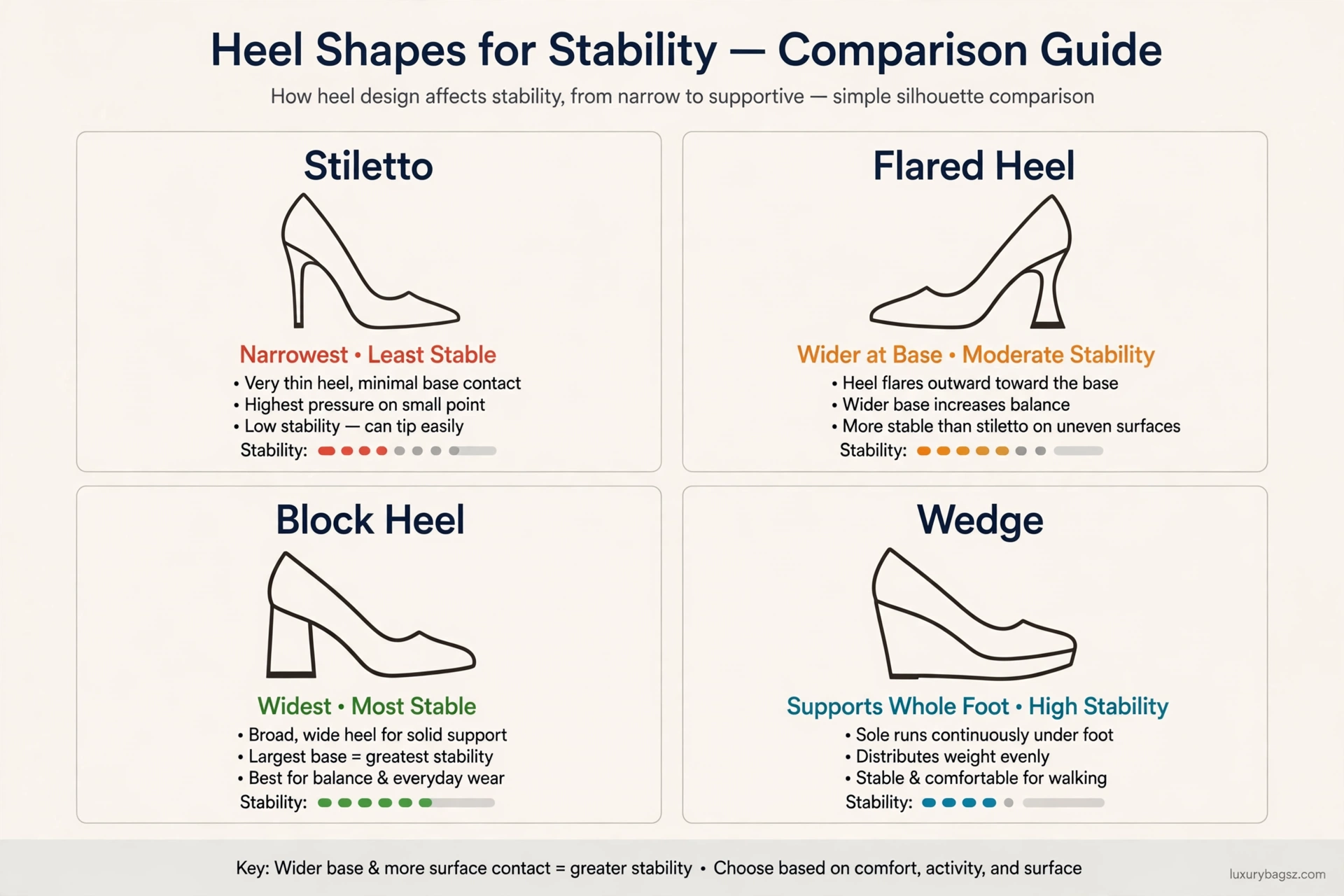
Block heels spread weight over a wide footprint and are the most forgiving shape at any height. They suit work, weddings on grass, and long standing. Flared heels widen at the base and give much of the block's stability with a slimmer look. Wedges support the whole foot and are kind, though fewer designer houses style them formally. Stilettos concentrate everything on a point. At 50 to 65 mm they can be perfectly wearable in a good design; at 100 mm they are short-distance shoes for almost everyone.
Height and Pitch: The Honest Numbers
For all-evening wear, most people land between 50 and 85 mm of effective pitch. Kitten and mid heels in that band can be genuinely comfortable in the right design. Platforms cheat the maths usefully: a 105 mm heel on a 20 mm platform pitches the foot like an 85. Our guide to how to buy your first designer shoes explains pitch when choosing a first pair. Be honest about terrain. Cobbled streets, grass and long walks to venues change the answer; the elegant choice is the heel that survives your actual evening.

Shapes That Hold the Foot
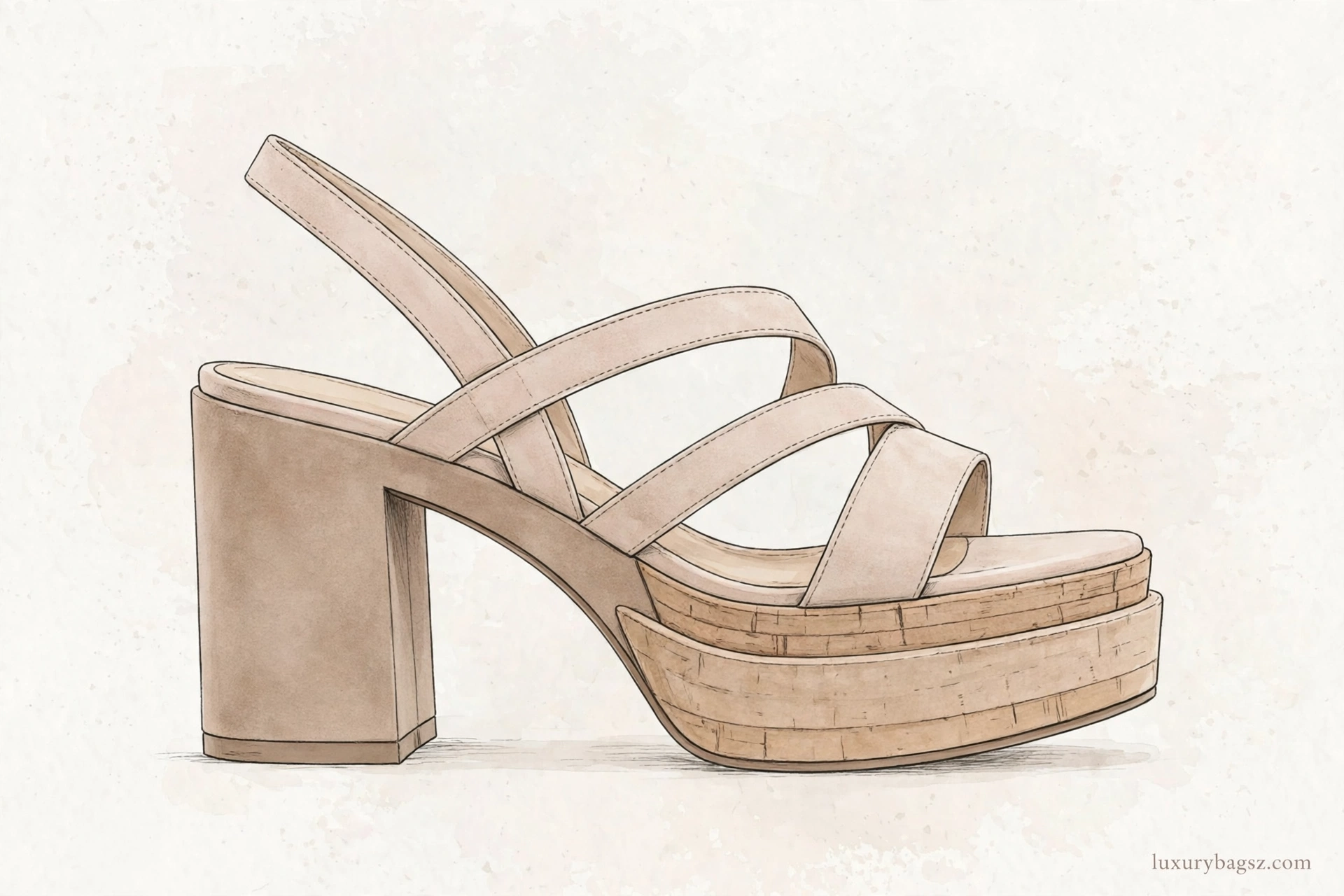
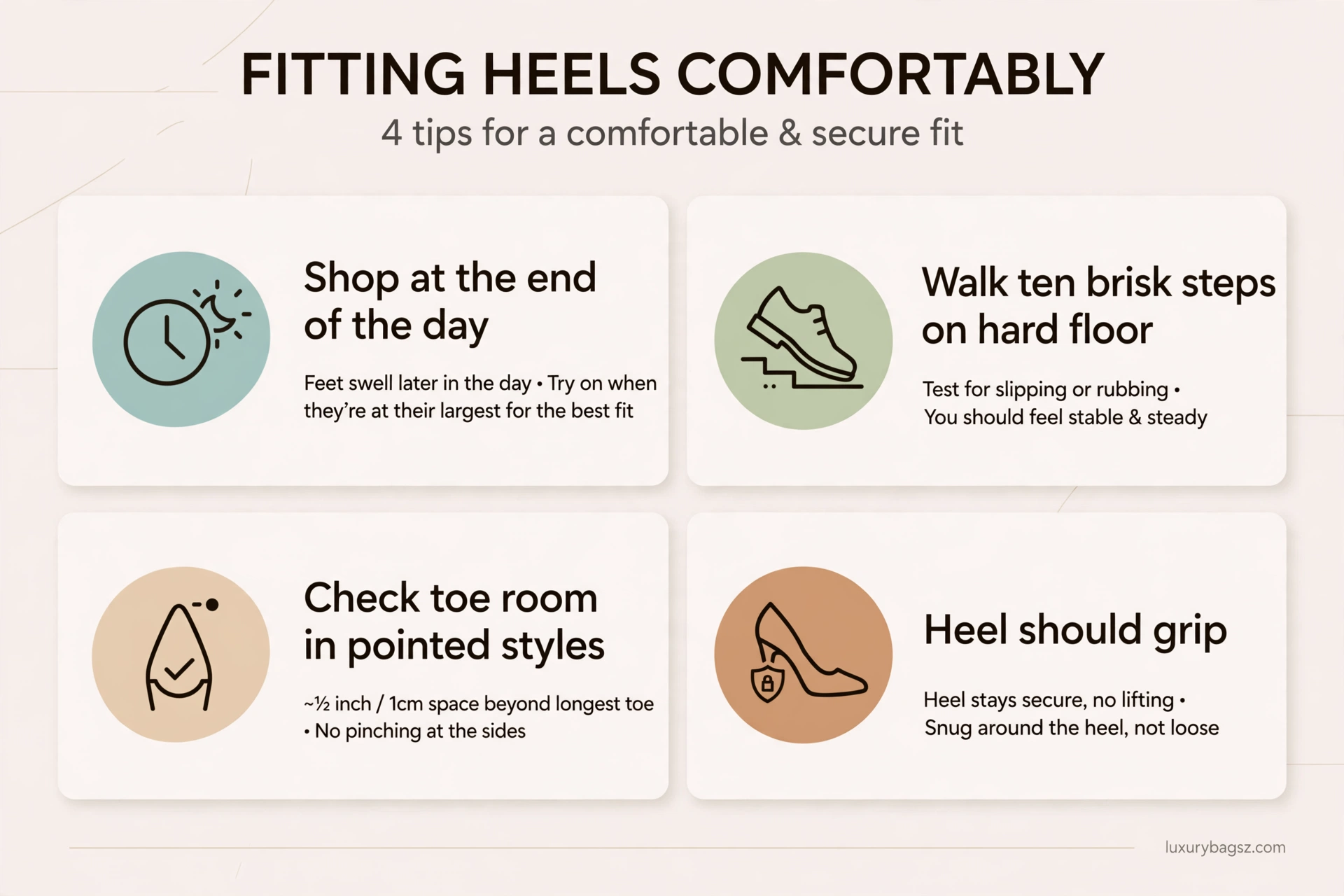
A foot that slides forward ends up crushed in the toe box, whatever the shoe's size. Straps across the instep, T-bars, ankle straps and closed pumps prevent that slide. Slingbacks hold well if the strap is firm; mules and backless styles demand toe-gripping and tire the foot fastest. Platform sandals in the style of our Saint Laurent Tribute sandals guide show how straps plus platform create a wearable high heel. Try the walking test in store: ten brisk steps on hard floor. If your toes are working to keep the shoe on, the design will punish you by midnight.
Fit: Where Comfort Is Won or Lost
Fit heels at the end of the day, when feet are at their largest. A heel fitted to morning feet often becomes an instrument of torture by the second hour of an evening. Toes need length in pointed styles; if the longest toe touches the end, go up half a size. Width matters too: leather gives a little with wear, patent and satin barely give at all. The heel counter should grip without digging. Slipping at the heel means the size or the last is wrong for you, and inserts only partly disguise that mismatch.
Cushioning, Insoles and Honest Add-Ons
Padded insoles under the ball of the foot genuinely help, and some designer lines build in extra cushioning. Thin gel pads can be added to most closed heels without changing fit much. Heel grips, moleskin and anti-slip sole pads each solve one small problem. None of them fixes a wrong size, a steep pitch or a narrow last, so treat them as finishing touches. For very long days, alternate: heels for the event, an elegant flat to travel in. Our piece on are ballet flats comfortable for walking helps pick the backup pair.
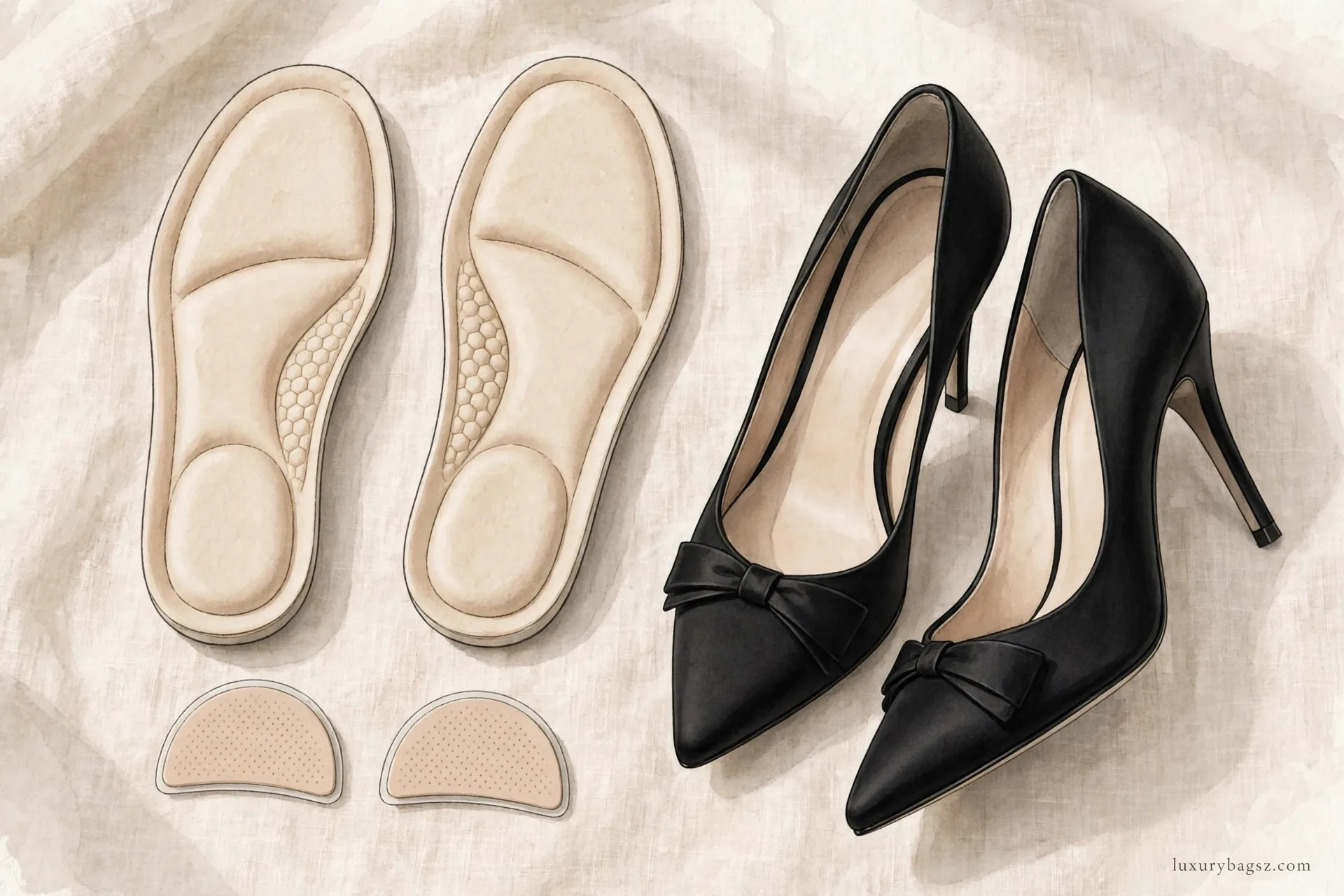
Ask in store which styles the staff themselves wear for full shifts. Sales teams stand all day in the shop's shoes, and their personal pairs are the most honest comfort review any house publishes, offered free at the counter.
Houses and Lines Known for Wearability
Reputations in this area are earned style by style, not brand by brand, but patterns exist: houses known for balanced mid-heel pumps and block-heeled sandals tend to deliver kinder shoes across their ranges. Italian makers with long shoe-making traditions often shape a better arch; comfort-focused luxury lines exist specifically to engineer cushioning into classic silhouettes. Read reviews for the exact style, not the brand, and weight comments about toe room and pitch over comments about looks. A beautiful shoe with fifty "killed my feet" reviews is telling you the truth.
Breaking In and Wearing Well
Break new heels in at home in short sessions across several days, on carpet first. Leather shapes to the foot gradually; one long first wear creates blisters and regrets. Protect the soles and replace heel tips early, following the routines in our guide to how to care for new shoes, because worn tips change the shoe's balance and your gait. On the night, prepare honestly: well-fitting heels, a small plaster in the bag, and a planned point where swapping to flats is allowed. Comfort is partly logistics.
Comfort by Foot Type
Wide feet suffer most in designer heels because luxury lasts skew narrow. Look for houses offering wide fittings or styles cut on a generous last, choose almond or round toes over sharp points, and let leather, not patent or satin, do the stretching.
Bunions need the pressure moved, not padded over. A pointed toe aims the shoe’s narrowest part at exactly the wrong joint, so choose softer uppers, lower pitches and toe shapes that follow the foot’s real outline. A cobbler can stretch a precise spot over the joint, which often saves a pair that felt hopeless in the shop.
High arches need the pitch filled in. A shoe whose arch curve matches yours distributes weight along the whole foot; one that leaves a gap dumps everything onto the ball. Gel arch pads help some feet, but a last that fits your arch beats any insert.
Flat feet tire quickly in heels because the shoe offers nothing to lean on. A firmer insole, a stable block heel and a strap that holds the midfoot will carry a flat foot further than any amount of soft foam.
Narrow heels slip in almost every closed shoe. Heel grips buy a little security, but the real fixes are a smaller size, a slingback or ankle strap that anchors the foot, or a different last. Slipping is a fit verdict, not a comfort feature you can accessorise away.
The In-Store Comfort Test, Done Properly
Comfort cannot be judged in three carpeted steps. Walk briskly on the shop’s hardest floor for a full minute, because carpet hides pitch, slip and sole stiffness that marble will expose at your event.
Stand still for two minutes. Standing loads the ball of the foot without the relief of movement, and it is the test most like a wedding drinks reception or a gallery evening, which is where heels actually hurt people.
Climb a step or two and turn sharply. Heels that feel fine in a straight line often roll on turns, and a strap that loosens when you pivot is telling you its midnight plans.
Sit down and stand up twice. Shoes that dig when the foot flexes will do it at every table visit all evening. Then check the clock: any pinch, burn or rub present inside ten minutes will not improve by hour four.
Finally, test both feet separately. Most people have one foot measurably larger, and the bigger foot is the one the size must serve. Fit to the larger foot and pad the smaller.
All-Day Scenarios: Work, Weddings, Travel
For a working day, the winning formula is boring: a 50 to 70 mm block or flared heel, a closed or strapped shape, and a commute in flats. Heels worn only inside the office last longer and hurt less, because pavements and train platforms do the damage.
Weddings are a standing marathon disguised as a party. Choose for the drinks reception, not the ceremony: if the shoe survives two hours of standing on grass and stone, the seated dinner is easy. Take the flat backup without embarrassment; every experienced guest does.
Travel days punish feet that swell in the air. A heel that fitted at home can be a vice after a flight, so travel in the forgiving pair and keep the strict pair in hand luggage for arrival, or choose the looser of two sizes when you buy for an event abroad.
For conferences and exhibitions, where you walk miles indoors, treat the day like retail work: mid heel, stable base, padded insole, and a planned swap point. Nobody’s presentation improved because their shoes were suffering beautifully.
What a Cobbler Can Adjust
A good cobbler stretches width and specific pressure points, softens heel backs, adds rubber half-soles for grip, and replaces tips before they reach the pin. Most comfort rescues are this unglamorous.
Heel height can sometimes be reduced by a few millimetres when a tip is replaced, which slightly softens pitch. It is a small change with real limits, and it is not available on every heel construction, so ask before you buy with that plan in mind.
What a cobbler cannot do is change the last. A shoe built narrow and steep stays narrow and steep; stretching buys millimetres, not a new geometry. Spend the rescue money only on pairs whose basic shape already suits your foot.
Straps can occasionally be added or repositioned on sandals, which turns a slide-prone mule into a held shoe. Ask for the honest version of the quote, including whether the result will look original or repaired.
Comfort Claims That Should Make You Suspicious
Memory foam is the most abused phrase in comfort footwear. Thin foam feels plush in the shop and compresses flat within weeks, leaving the same hard base it was hiding. Judge cushioning by thickness and density, not by the label.
A sole that bends in half at the waist is marketed as flexible, but in a heel that flexibility usually means the arch support has left the building. A comfortable heel flexes at the toe and stays firm under the arch.
Celebrity wear proves nothing about comfort, because red-carpet shoes are worn for photographs and short walks, often a size strategically chosen for the hour. Reviews from people who stood a whole shift in the style are the evidence that counts.
Finally, distrust any design that needs three add-on products before it can be worn. Grips, pads and sprays are finishing touches; a shoe that requires all of them on day one has already told you its geometry is wrong for you.
Building Heel Fitness
Comfort is partly trained. Feet and calves adapt to moderate heels worn regularly in short sessions, which is why a weekly heel wearer finds 75 mm easy and a once-a-year wearer finds it an ordeal.
Start with your target height minus a step. Wear the lower pair for full days until they are unremarkable, then move up. Jumping straight to the tallest pair for the biggest event is the standard route to bare feet by nine.
Simple calf raises and foot stretches keep the machinery supple, and they matter more after thirty, when calves tighten and arches change. Treat it as maintenance, not athletics.
Know your personal ceiling and honour it. Every foot has a pitch beyond which no design, price or practice makes the shoe kind, and finding yours is the single most useful comfort knowledge you can own.
When Heels Hurt: A Pain Diagnosis
Pain under the ball of the foot is the pitch talking. The steeper the angle, the more weight parks there. Fixes run in order: a lower effective pitch, a platform that cheats the angle, a thicker pad under the forefoot, and only then a different pair.
Burning or crushed toes are a shape problem. The toe box is too short, too narrow or too pointed for your foot, and no insert creates room that the leather does not have. Size up, change toe shape, or accept the pair as short-wear only.
A rubbing heel back is usually a mismatch between the shoe’s curve and your heel bone, made worse by slipping. If the shoe also slips, it is fit; if it grips and still rubs, a cobbler’s softening or a moleskin routine is the honest answer.
Aching arches by midday mean the shoe is not carrying its share. Look for a firmer insole, a last whose arch curve meets yours, and a stable heel that stops the foot rolling inward for support.
Rolling ankles point at heel placement and base width. A heel positioned too far back, or a pin-thin base on a tall shoe, asks your ankle to do the stabilising. Block and flared bases exist precisely to take that job back.
Pain that moves, sharpens or persists across different shoes deserves a podiatrist rather than another purchase. Heels expose foot problems efficiently; they rarely cause the serious ones, and they should never be asked to hide them.
Frequently Asked Questions
What is the most comfortable heel height?
For most people, 50 to 85 mm of effective pitch. Within that band, a block or flared heel in a well-fitted design can be worn for hours.
Are block heels really more comfortable than stilettos?
Yes, at the same height. The wider footprint spreads weight and steadies the ankle, which reduces fatigue in the ball of the foot and the calves.
Do platforms make high heels comfortable?
They reduce the effective pitch, so a high platform heel can feel like a lower plain heel. The shoe is still tall, so balance and terrain still matter.
Why do my feet slide forward in heels?
Gravity and pitch push the foot toward the toe. Straps, closed shapes and correct sizing resist the slide; mules and loose pumps suffer most.
Can insoles fix uncomfortable designer heels?
They soften impact but cannot fix a wrong size, steep pitch or narrow last. Buy the right geometry first, then use insoles as a finishing touch.
Which toe shape is kindest?
Almond and rounded points give toes more room than sharp points. If you love a pointed style, allow extra length and check the longest toe carefully.
Are expensive heels always more comfortable?
No. Price buys materials and finishing; comfort depends on the last, pitch and fit. Some designer heels are made for looks and short distances.
How should I break in new heels?
Wear them at home in short sessions over several days, protect tender spots early, and never debut any heel at an all-day event.
What should I look for in wedding heels?
A mid or block heel, a strap or closed shape, and a full evening's break-in beforehand. Photographs last; so does the memory of painful feet.
When should I choose flats instead?
For long walking distances, uneven ground or very long standing, an elegant flat is the comfortable designer answer. Heels are a choice, not an obligation.
Summary: Buy Geometry, Not Promises
Comfortable designer heels exist in every house's range, hidden among the sculpture. Moderate pitch, stable heel shapes, real toe room and a foot that is held, not perched, find them every time. Fit late in the day, walk briskly in store, break them in at home, and your heels can carry the whole evening.






