

Boots Every Woman Needs: The Five Styles That Cover the Year
The Boot Line-Up in Brief: Five Styles, No Gaps
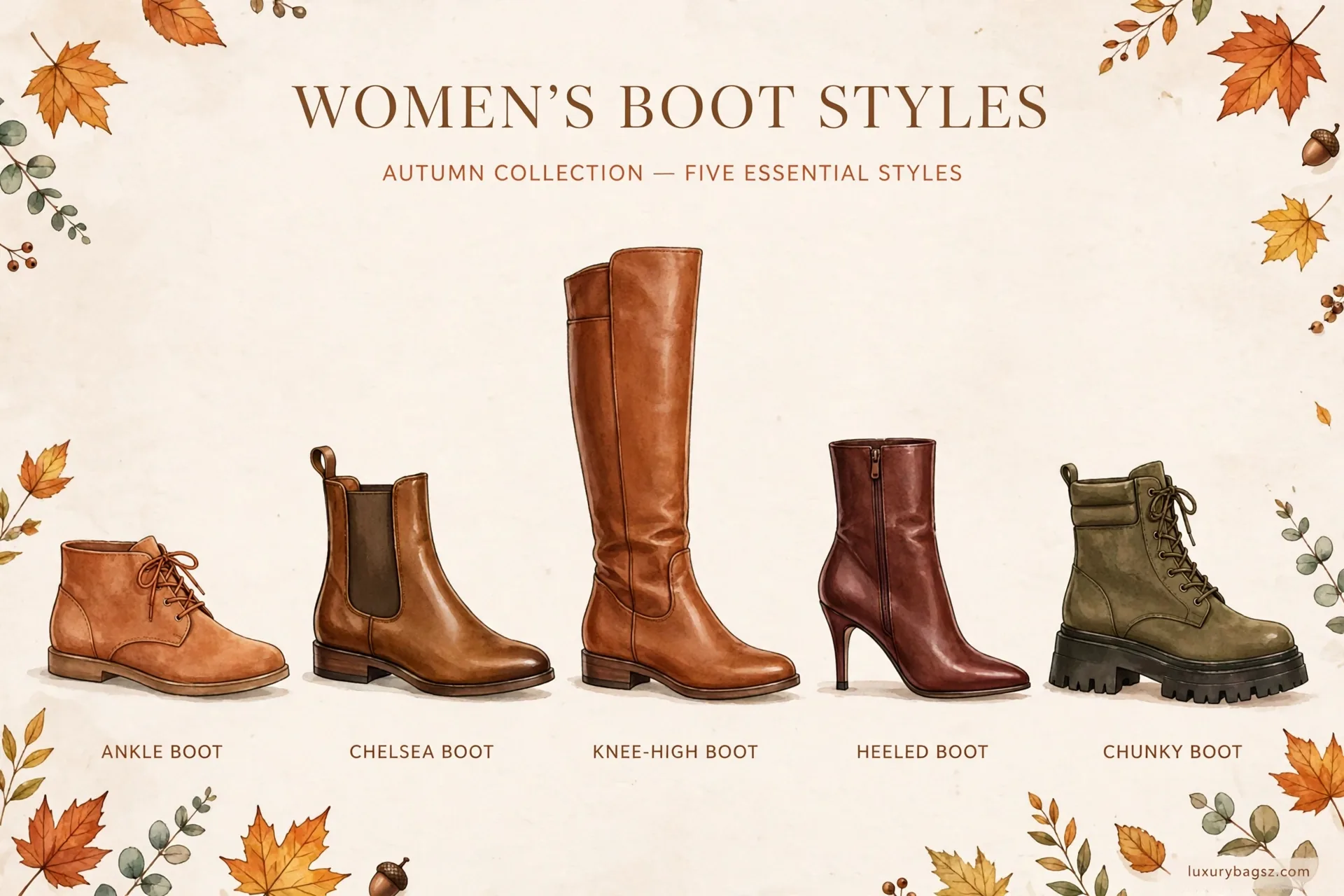
Five boot styles cover almost every outfit and month: a flat ankle boot, a Chelsea boot, a knee-high boot, a heeled boot for polish, and a chunky or weatherproof boot for the worst days. Own those five in black and one brown tone and the boot question answers itself from autumn to spring.
Buy them in that order, fit the calf as carefully as the foot, and choose leather you can resole. Boots are the most repairable shoes you own, and the right five pairs can serve for a decade.
Key Takeaways
- Five styles cover the year: ankle, Chelsea, knee-high, heeled and chunky or weatherproof.
- Calf fit decides knee-high boots: aim for a close fit with roughly a two-finger gap.
- Leather quality and resolable soles decide whether boots are a one-winter or ten-year buy.
- Buy the ankle boot first; it works with the widest range of clothes.
- Break boots in gradually at home before the first long day out.
- Salt and wet are the main killers; wipe, dry slowly and use boot trees.
Why Boots Earn Their Place
Boots cover more of the year and more of the leg than any other footwear, and they protect clothes as well as feet. A good pair also changes outfits: the same dress reads three ways with three boots.
Construction is where the money goes: more leather, more stitching and a shaped shaft. Our explainer on how boots are made shows why a well-built boot costs what it does and why it can be repaired for years.
That repairability is the economic argument. A resoleable boot at $600 worn for eight winters beats three cheap pairs that split by February.
The Ankle Boot and the Chelsea
The flat ankle boot is the first buy: jeans, dresses, tailoring, travel. A close-fitting shaft that ends just above the ankle bone works with the widest range of hems.
The Chelsea boot is its sleeker sibling, with elastic sides instead of laces or zips. It reads smarter, slips on faster, and suits both office trousers and weekend denim.
Choose black for the first pair of either style. Brown, tan and suede versions earn their place once the black anchor exists.
Knee-High and Heeled Boots
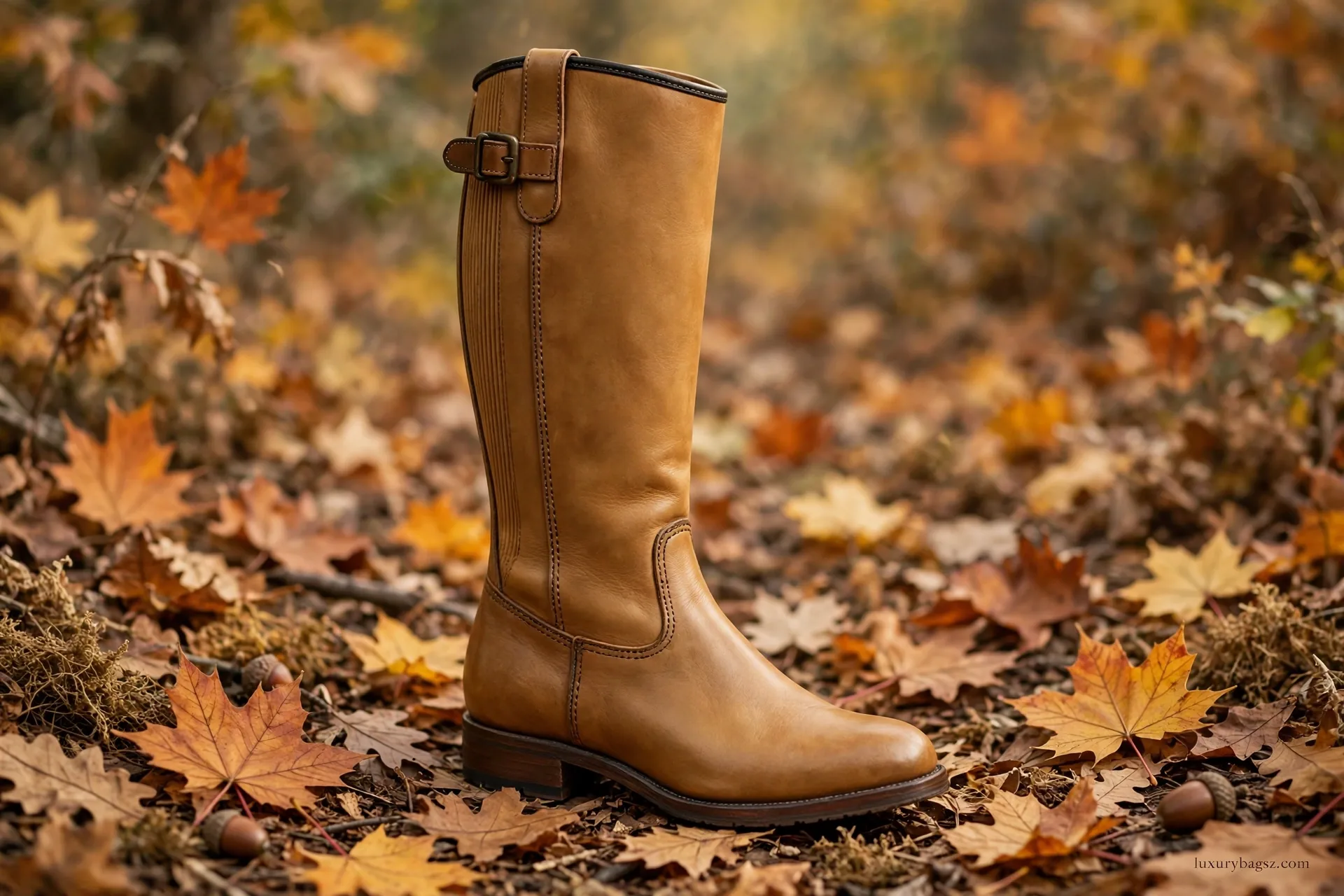
The knee-high boot is the winter dress shoe: it warms the leg, finishes midi dresses, and replaces tights-and-shoes combinations on cold days. Riding-style flat versions are the most versatile.
Luxury versions such as the style explained in our piece on what are Hermes jumping boots show the template: clean shaft, minimal hardware, leather that shines rather than shouts.
The heeled boot, whether a sleek ankle style or a knee-high with a block heel, is the evening and office option. Keep the heel steady and the toe shape in line with your smarter wardrobe.

Fit: Foot First, Then Calf
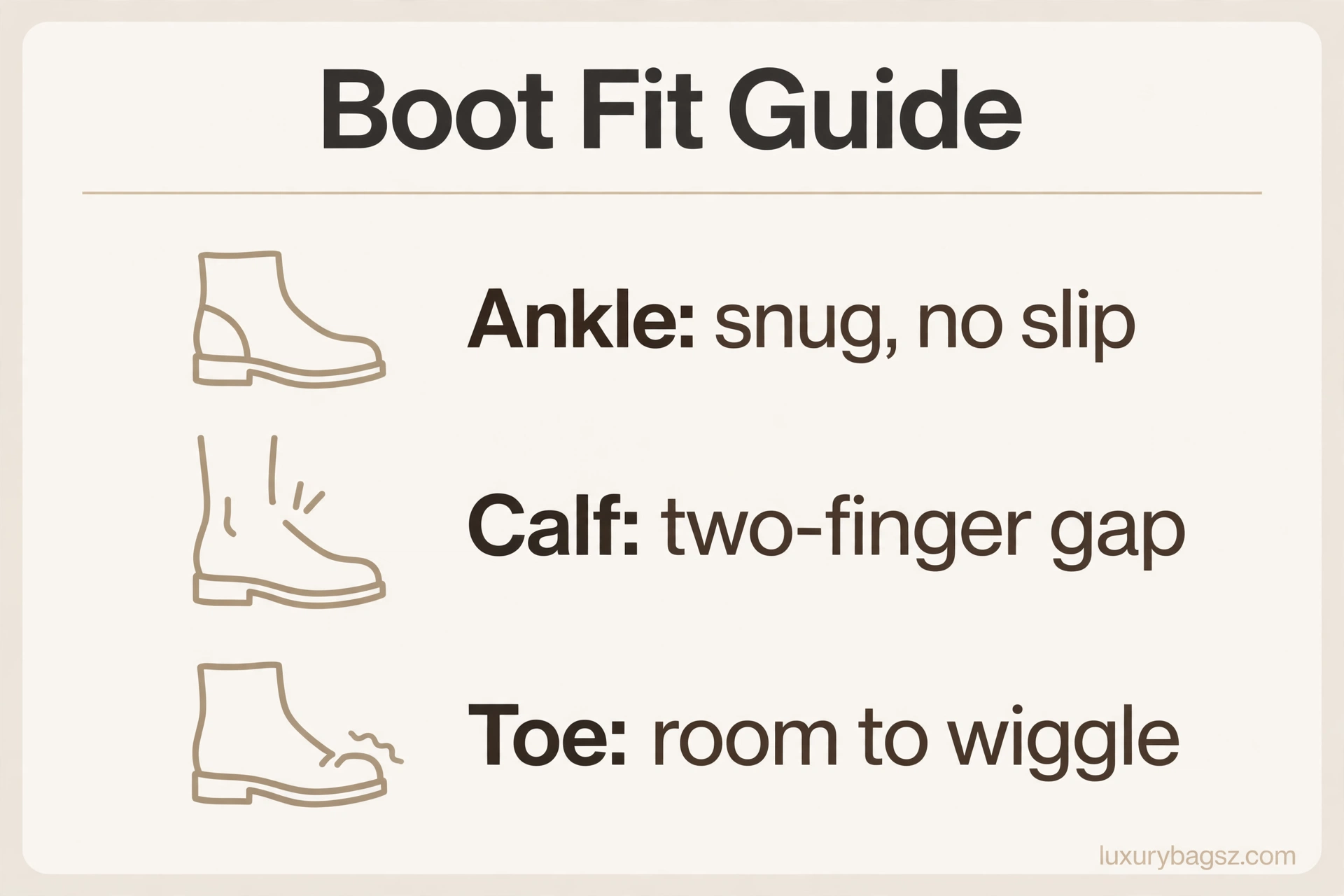
Fit boots at the end of the day, wearing the socks or tights you will actually use. The foot should feel held, with toes flat and a small amount of heel movement that will settle as the leather softens.
For knee-high shafts, look for a close fit with about a two-finger gap at the top. Much looser and the shaft slouches; much tighter and zips strain and fail. Many brands now offer wide-calf versions, so measure before ordering.
New boots should feel firm, not painful. Our guide on how to break in boots sets out the gradual home-wear method that softens leather without blisters.
The Chunky and Weatherproof Pair
Every wardrobe in a wet climate needs one boot that does not care about the weather: chunky soles, treated leather or rubber, and a tread that grips on wet leaves and ice.
Wear them unapologetically with dresses as well as denim; the contrast is the point of the style. They are also the pair that saves your good leather boots from salt and slush.
If you ride, hike or spend time outdoors, this pair may need to be more technical. Keep it separate from the fashion pairs and buy it for grip first, looks second.

Pre-Owned Boots and Resoling
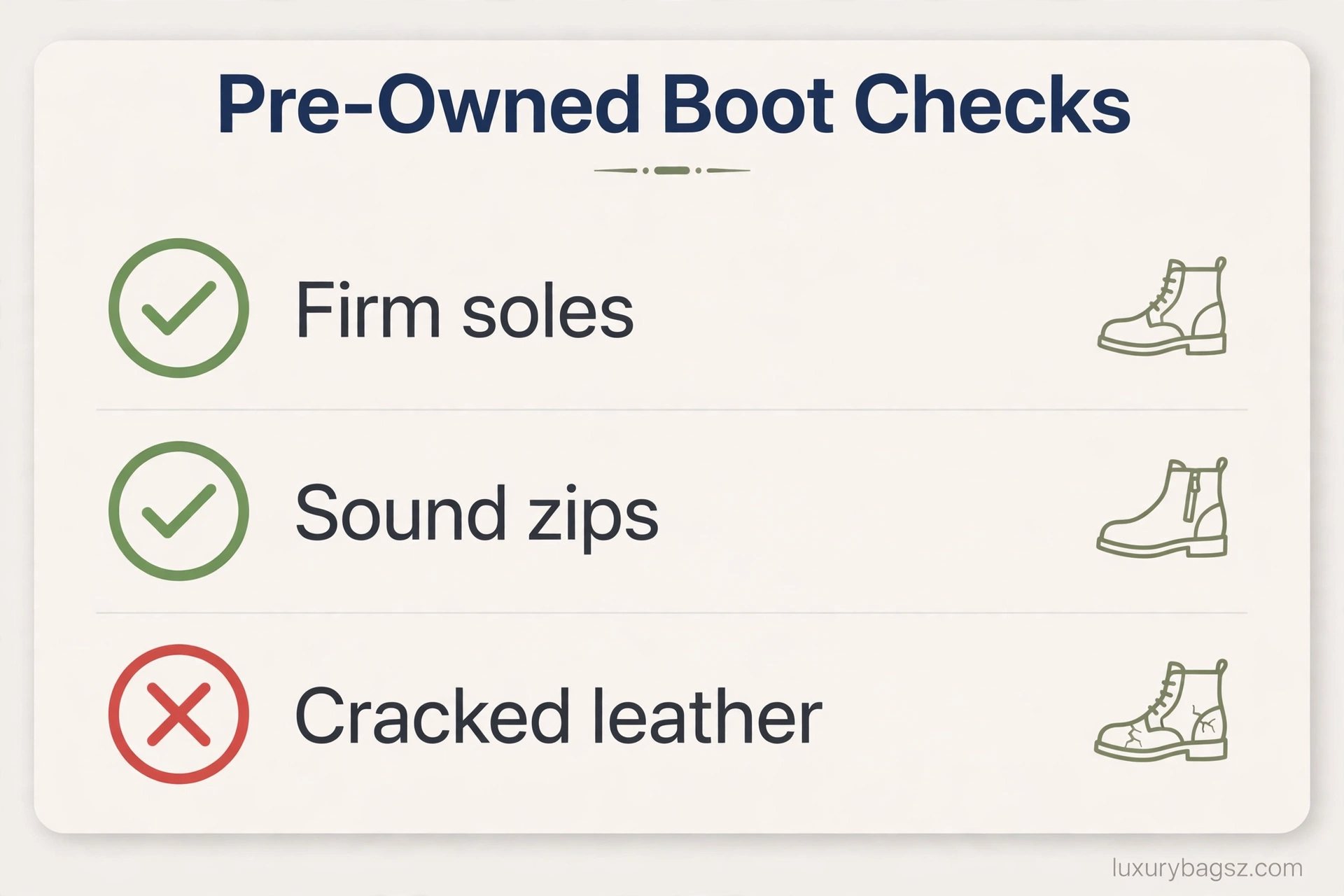
Boots hold value and wear slowly, which makes pre-owned a strong route into luxury pairs. Check zips run smoothly, shafts stand without collapsing, and heels are not worn down on one side.
Sole construction decides future costs. Our guide on which boots can be resoled explains stitched versus glued soles and what each means for repair.
Avoid boots with cracked leather at the flex points or a strong damp smell. Both signal storage damage that cleaning rarely reverses.
Care Through Winter
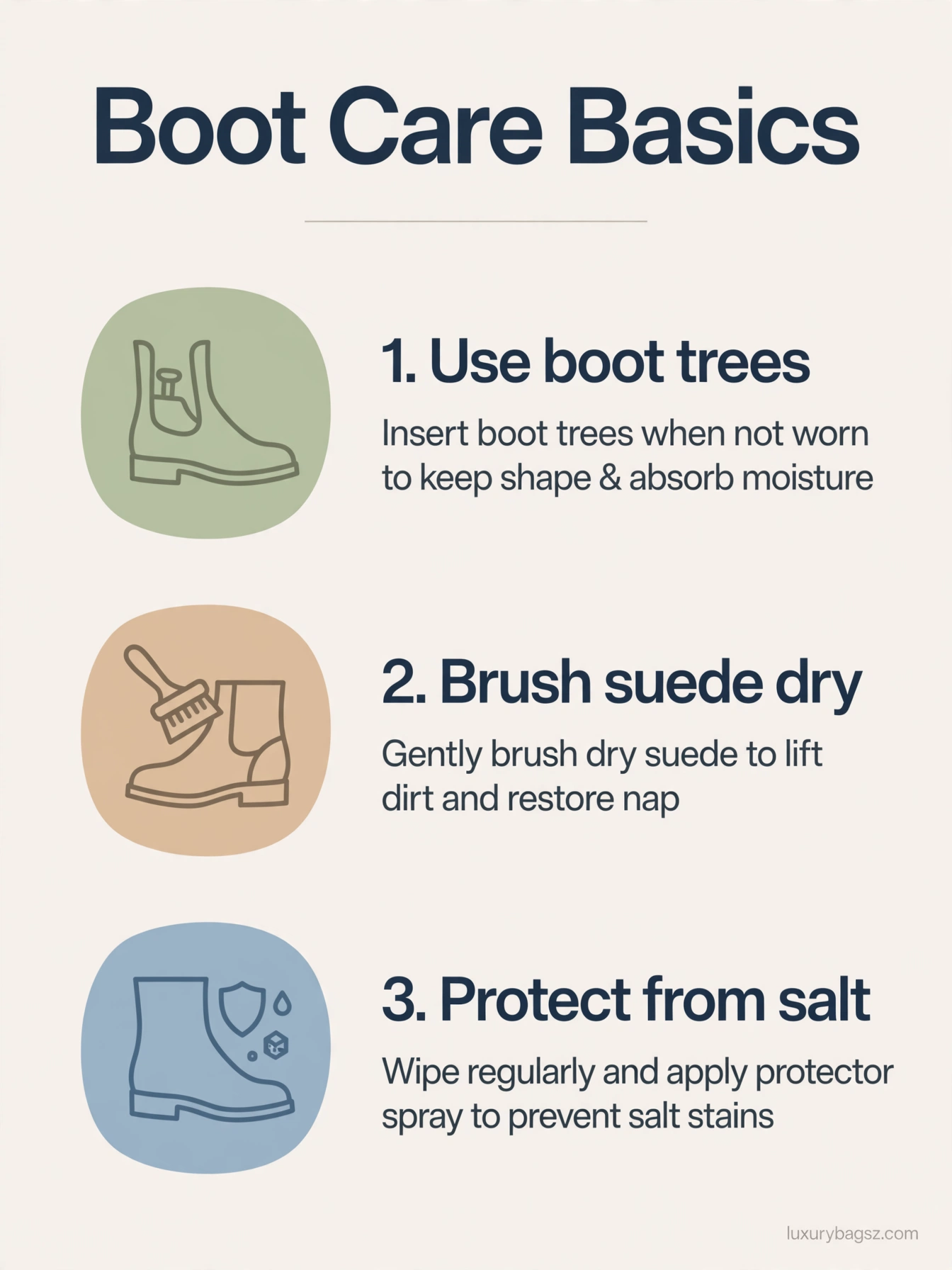
Wipe salt marks off the same day with a barely damp cloth; salt left overnight blooms into pale stains that take real work to lift. Dry wet boots slowly, away from radiators, stuffed with paper.
Boot trees or shapers keep tall shafts upright and prevent the ankle creasing that ages boots early. The care routine in our guide on how to care for Hermes leather boots applies to any good leather pair, whatever the label.
Brush suede only when dry, use protector spray before the first wear, and condition smooth leather a few times a season rather than drowning it once a year.
What Each Pair Typically Costs
Quality leather ankle and Chelsea boots typically run $300 to $700 from strong mid-range makers. Designer and luxury versions commonly sit between $900 and $1,800, knee-highs at the top of that band.
Chunky fashion boots range wider, from around $200 upward. Weatherproof performance pairs are priced by function rather than fashion, usually $250 to $500.
Spread the buying across two or three winters. The ankle boot and knee-high first, then the heeled and chunky pairs as the gaps in your outfits become obvious.
The Optional Sixth: Over-the-Knee and Western Boots
Two famous styles sit just outside this guide’s five, and honesty about their roles helps more than pretending they are essentials. The over-the-knee boot is a statement extension of the knee-high: magnificent with short hems and sweater dresses, worn by fewer outfits each month than its owners expect. Buy it after the five, in suede or soft leather, when your wardrobe already contains the dresses it completes.
The western boot rotates in and out of fashion on a roughly five-year tide, which makes it a poor first purchase and a delightful later one. In its in-years it works with everything from denim to floaty dresses; in its out-years it waits, and quality leather waits patiently without dating as badly as cheaper fashion versions.
Both styles obey the same economics as the five: construction quality and fit decide whether the purchase becomes a decade piece or a season’s experiment. A sixth pair should be bought with more discipline, not less, because its wear count will be lower and its cost per wear has further to fall.
If neither calls to you, your five are complete. A boot wardrobe is finished when every pair earns wears, not when every famous style is represented.
Hem Lines and Boot Lines: The Proportion Rules
Most boot styling mistakes are really hem mistakes, and three rules prevent nearly all of them. First, let shafts and hems either meet deliberately or separate clearly: a midi dress should overlap a knee-high boot’s top by a comfortable margin, or end well above it; the awkward sliver of leg between hem and boot top is the proportion that never looks intended.
Second, cropped trousers want a close ankle boot whose shaft tucks under the hem or meets it cleanly. A gap of bare ankle between trouser and boot is fine and modern; a loose shaft visible below a wide crop, flapping as you walk, is the version that reads unfinished.
Third, jeans decide by cut: straight and wide legs wear over ankle and Chelsea shafts, skinny and slim legs tuck into knee-highs, and bootcut shapes were designed, as the name confesses, to fall over a boot’s shaft. Matching the trouser’s intention to the boot’s height makes outfits look built rather than assembled.
Apply the rules in a mirror before any new pairing leaves the house. Boots change an outfit’s architecture more than any other shoe, and thirty seconds of proportion-checking is the cheapest styling there is.
Storing Boots Between Seasons
How boots spend their summers decides how they start their winters. Clean and condition each pair before storage, following the winter care advice earlier in this guide in reverse: arrive at storage with the season’s salt and dirt already gone, because six months of storage sets stains that a spring cloth would have lifted in minutes.
Keep shafts upright and supported with boot trees, shapers or rolled magazines, never folded over, because a crease set across a shaft over summer becomes the shaft’s permanent slouch line. Store pairs in their bags or boxes, away from heat and damp, with cedar if the cupboard runs humid.
In autumn, the stored pair needs only a brush, a polish and a sole check before its first outing: the cheapest possible start to the season, bought entirely by ten minutes of care the spring before.
Frequently Asked Questions
How many pairs of boots does a woman actually need?
Five styles cover nearly everything: ankle, Chelsea, knee-high, heeled and a chunky weatherproof pair. Many women manage well with three: ankle, knee-high and one weather pair.
Which boots should I buy first?
A black leather ankle boot. It works with jeans, dresses and tailoring, in most weathers, and earns more wear in its first winter than any other boot you will buy.
How should knee-high boots fit the calf?
Closely, with roughly a two-finger gap at the top when worn over your usual tights or jeans. Too loose slouches; too tight strains the zip and cuts circulation.
Are chunky boots still appropriate with dresses?
Yes. The contrast between a heavy boot and a soft dress is an established look, and chunky soles are the practical choice on wet or icy days.
Can boots be resoled?
Stitched leather soles usually can, often several times. Many glued fashion soles cannot, or only at a cost close to replacement. Check construction before buying if longevity matters.
How do I stop new boots rubbing?
Break them in gradually at home over short wears, use thicker socks during the first outings, and add moleskin at any hot spot. Firm is normal at first; pain is a fit problem.
What is the best material for winter boots?
Smooth leather with a stitched sole is the durable classic. Suede looks softer but needs protection from wet and salt; keep a treated leather or rubber pair for the worst days.
Are pre-owned boots a good buy?
Often, yes, because boots wear slowly and hold their shape. Check zips, shaft stiffness, heel wear and flex-point cracking, and avoid any pair that smells of damp storage.
How do I remove salt stains from boots?
Wipe them the same day with a cloth dampened with water and a little white vinegar, then dry slowly and condition once dry. Old, set stains may need a cobbler's help.
When is the best time to buy boots?
Late winter sales and early autumn, before peak demand, give the best prices and size availability. Classic black styles rarely date, so last season's pair is a smart buy.
Summary: Five Pairs, Sorted for Years
Ankle, Chelsea, knee-high, heeled and weatherproof: fit them carefully, buy leather you can resole, and care for them through winter. That small line-up quietly answers almost every cold-weather outfit question you will ever ask it.






