How to Carry a Hermès Tote Without Sagging: The Honest Guide to Inserts, Bases, Packing, and Storage
Stopping a Tote From Sagging at the Base
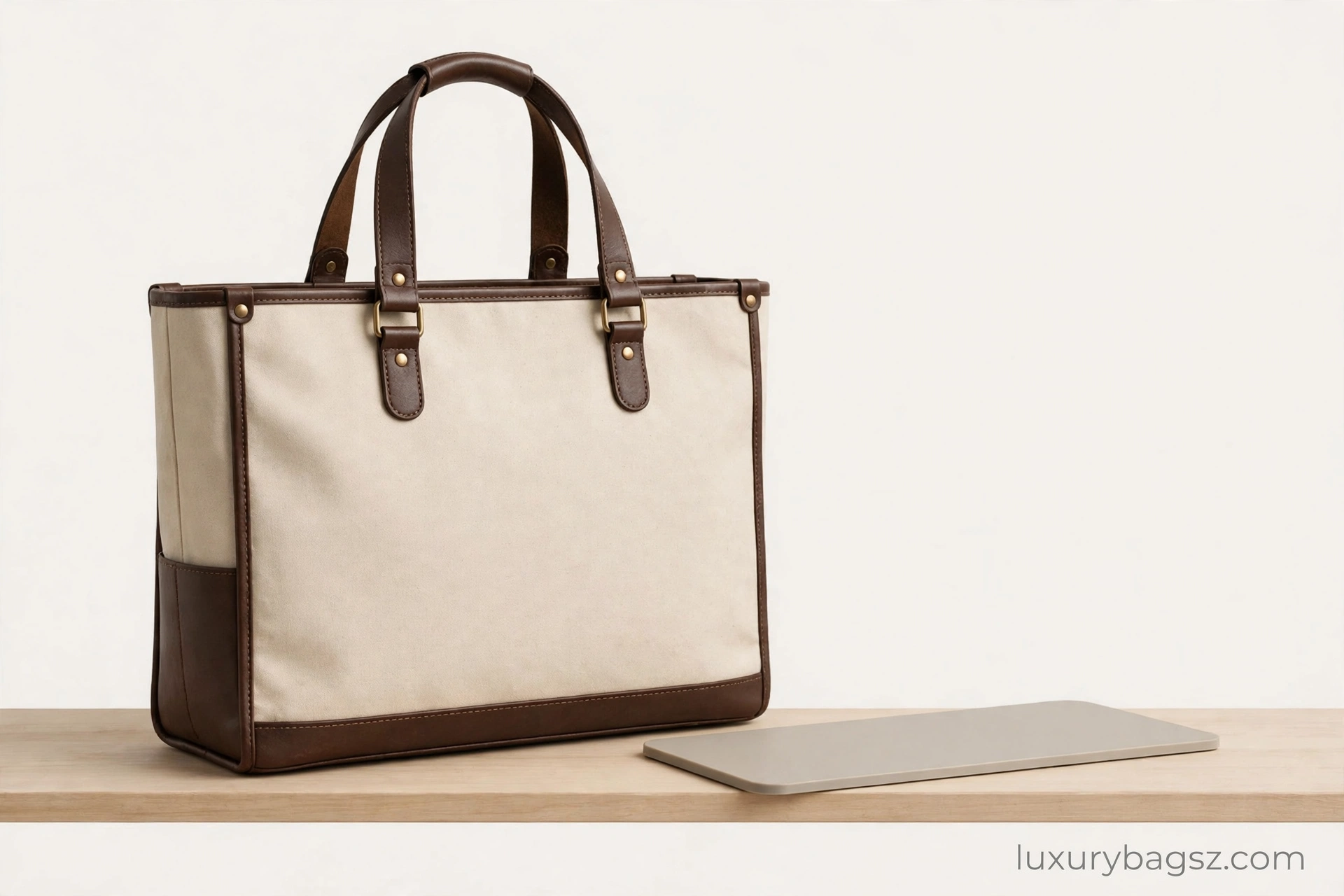
Fit a base shaper cut to the exact inside measurements and you stop most dipping straight away. Lay heavy pieces flat in the middle on top of it, keep the overall load light, and never let weight gather in a corner or ride loose near the top.
Add a light organiser only when the sides also bow when the bag is set down; a base panel alone will not hold them up. To store the tote, stand it upright with light stuffing inside its dust bag on a shelf, and never hang it by the handles.
A tote sags for a simple reason: it is a soft container carrying weight that pulls downwards and outwards. The base dips in the middle, the sides bow, the corners collapse, and the handles stretch. That is not a sign that the bag is badly made. It is what happens when a flexible material — canvas, Toile, or soft leather — is asked to hold a heavy, uneven load, day after day, and then is stored empty and squashed.
The good news is that most sagging is preventable, and much of it is reversible in appearance, if not in the material itself. A tote that sags because it is overloaded will usually stand better once the load is lighter and the base is supported.
A tote that sags because its base has permanently stretched, or its handles have permanently elongated, will not be fixed by stuffing it harder. Knowing which kind of sag you have is the first step, and this guide starts there.
This guide covers the totes most readers mean when they ask this question: open-top, soft-structured totes such as the Hermès Garden Party in canvas and leather, and similar canvas-and-leather everyday totes.
The same principles apply to a leather tote, but the details differ: leather stretches and softens with use in a way canvas does not, and leather needs different cleaning. Where the advice differs by material, this guide says so plainly.
Table of Contents
Key Takeaways
- Sagging has three causes, and they need different fixes: a weak or unsupported base, an uneven or overloaded pack, and storage that squashes or hangs the bag.
- The single most effective carry fix is a base shaper that fits the inside base exactly, plus a light organiser if you want side support. A base shaper alone fixes base dip; it does not fix bowed sides on its own.
- Pack heavy items flat on the base, in the centre, never in a corner or loose at the top. Keep the total load light — a tote is not a suitcase.
- Never hang a tote by its handles for storage, and never store it squashed, stacked under other bags, or empty and collapsed. Store it upright, lightly stuffed, in its dust bag, on a shelf.
- Clean canvas only gently: soft brush, barely damp cloth, a drop of mild soap if needed, air-dry in shade. Never soak canvas, never use heat to dry it, and never use alcohol, bleach, or harsh cleaners on canvas or leather.
- If the base has permanently stretched, the handles have elongated, or stitching has failed, stop trying home fixes. That is a professional repair, not a stuffing problem.
The Fix at a Glance
Why does my tote sag? Because weight pulls the base down and the sides out, and soft canvas or leather has little internal structure to resist it. Overloading, carrying a heavy bottle or laptop in one corner, and storing the bag empty or hung by its handles all make it worse.
What fixes it fastest? Put in a base shaper that matches the inside base measurements, pack heavy items flat in the centre, and carry only what you need. That combination fixes most everyday sag in one outing.
Do I need a full organiser, or just a base? A base alone is enough if only the bottom dips. If the sides also bow or collapse when you set the bag down, add a light, well-fitting organiser with side support — but do not buy an organiser so tall or stiff that it forces the tote out of shape.
Can I fix a sagging tote by stuffing it at home? Stuffing helps a stored tote hold its shape, but stuffing a carried tote harder does not fix sag. The fix while carrying is support plus a lighter, better-balanced load.
What should I never do? Never hang the tote by its handles, never overload it, never soak canvas, never dry it with heat, never use harsh chemicals, and never try to iron, steam, or reshape a luxury tote at home.
Why Totes Sag: Base, Sides, and Handles
The base dips first
Most totes have no rigid frame. The base is a single layer of canvas or leather, sometimes with a thin lining. Put a heavy item in the middle and the base bows downwards; put heavy items in the corners and the corners pull down unevenly. Once the base has bowed repeatedly, the material stretches and the dip becomes the bag’s resting shape, even when it is empty. That is why a base shaper works: it spreads the load across the whole base instead of letting it concentrate in one spot.
The sides bow next
Sides bow for two reasons. First, the load pushes outwards: a bottle, a book, or a laptop leaning against one side pushes that side out. Second, the bag is carried by handles attached near the top, so the top is pulled up while the bottom is pulled down — the sides are stretched between those two forces. A light organiser helps here because it holds the sides apart from the inside, but it cannot undo sides that have permanently stretched. If your tote’s sides bow even when it is empty and lightly stuffed, the material has already changed shape, and the goal shifts from fixing to managing: support it, do not overload it further, and store it properly.
The handles stretch last, and permanently
Handles stretch slowly, and the stretch is usually permanent. Leather handles stretch under sustained weight, especially when the bag is hung by them or carried heavily on one shoulder every day. Canvas handles fray and thin at the attachment points before they stretch visibly. Once handles have elongated, the bag hangs lower and swings more, which makes sagging look worse even if the body is supported. Handle care is therefore part of sag prevention, not an afterthought: carry lighter loads, rotate shoulders if you carry on the shoulder, do not hang the bag by its handles, and keep handles clean and dry, because dirt and oils weaken leather over time.
Material matters
- Canvas and Toile: Strong in tension, but soft in structure. Canvas holds weight well but has no memory: once it has been stretched and creased, it tends to stay creased. Canvas is also vulnerable to water and damp — a wet canvas tote sags more, dries stiffer, and can develop water marks.
- Leather: Supple and strong, but it softens and stretches with use. Softer leathers slump more easily than structured leathers. Leather also reacts to oils, sunlight, and heat: direct sun fades and dries it, heat dries and cracks it, and over-conditioning can soften the structure further. This guide does not recommend conditioning a tote to fix sag — conditioning is for dryness, not structure, and too much product can make a soft tote softer.
- Mixed canvas-and-leather totes: The most common Hermès tote construction, for example canvas body with leather handles and trim. The weak points are where the two materials meet: handle attachments, corner seams, and the base edge. Check those points regularly for fraying, stitching gaps, or leather darkening from handling.
The Base Shaper: The Fix That Matters Most
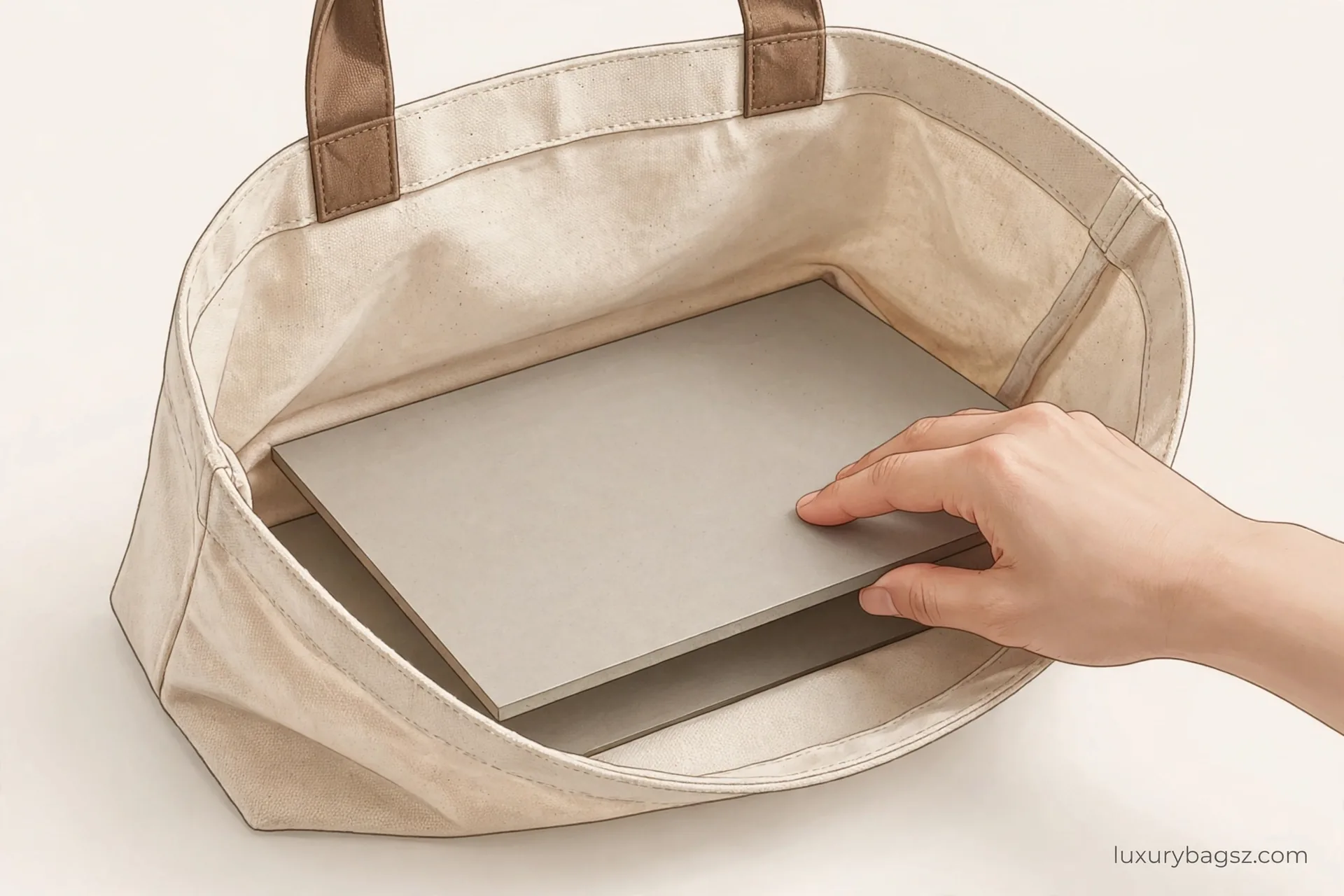
A base shaper is a flat, stiff panel that sits on the inside base of the bag. It is the single most effective anti-sag tool, and it is also the easiest to get wrong.
How to choose one
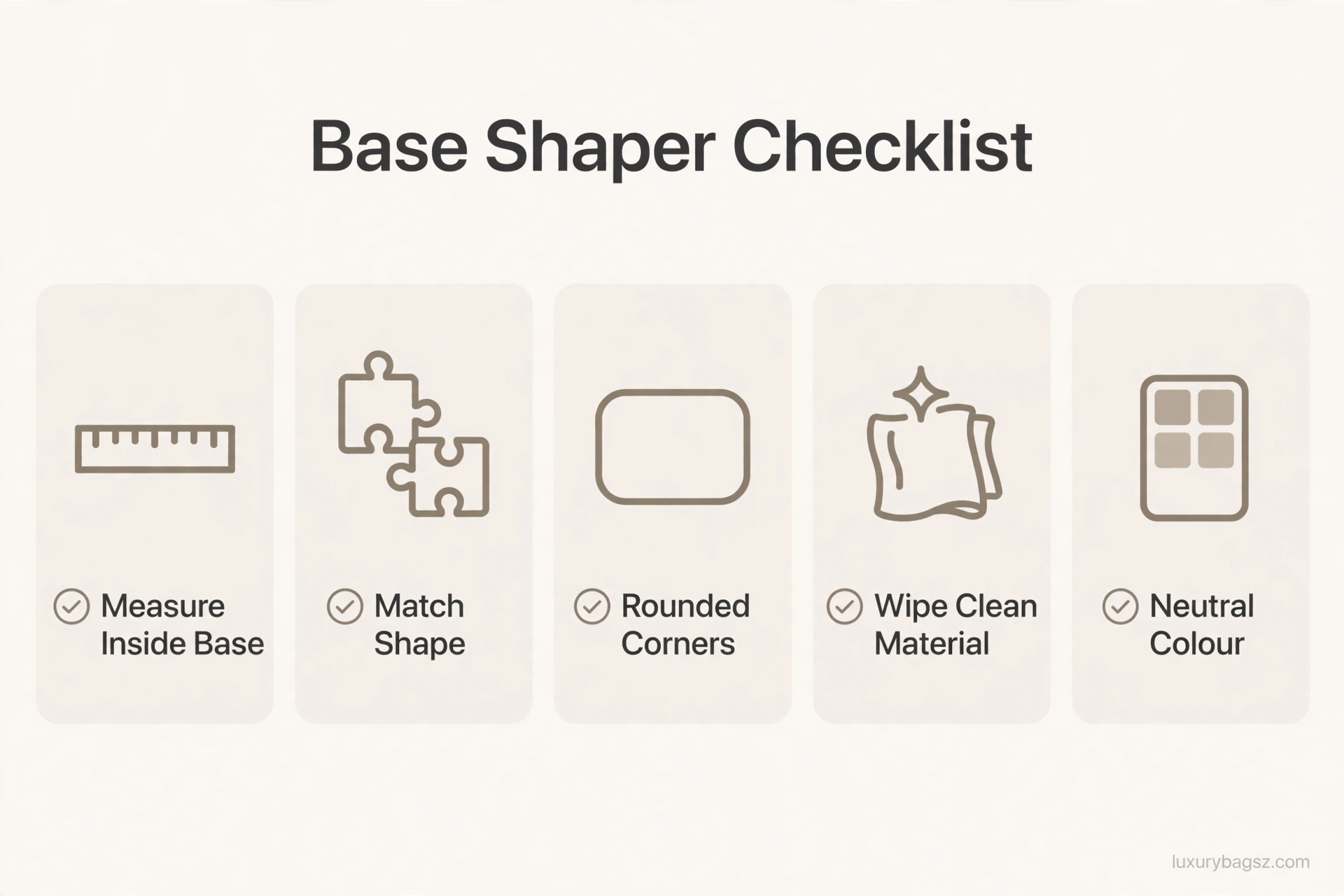
- Measure the inside base, not the outside. Measure length and depth inside the bag, at the base, with the bag empty and flat. A shaper that is too small leaves the corners unsupported and the base still dips at the edges. A shaper that is too large forces the base outwards and strains the seams.
- Match the shape. A Garden Party 30 listing, for example, gives outside dimensions around 30 x 21 x 13 cm, but the inside base is smaller, and the base shape is rectangular with softened corners. Order a shaper made for your bag’s model and size if one exists, or a custom-cut shaper if it does not. A generic shaper can work, but only if its measurements match your inside base.
- Choose rounded corners. Sharp corners rub the lining and can wear through it over time. Sellers who specialise in base shapers for this reason make them with rounded, softer corners. If you cut your own base, round the corners and cover the edges.
- Choose a material you can clean. Acrylic and faux-leather-covered boards wipe clean after a spill. Felt absorbs spills and can hold odour. Cardboard is a short-term trial only: it softens with damp, bends under weight, and can stain a lining if it gets wet. Do not use bare cardboard long-term in a luxury tote.
- Check colour transfer before trusting it. A dark or brightly dyed shaper, organiser, or lining can transfer colour to a light lining, especially in heat or damp. If you buy a coloured insert, test it: leave it in the bag in a cool, dry place for a few days, then check the lining. Sellers of quality shapers test for this, but a cheap insert may not have been tested. When in doubt, choose a neutral colour close to your lining.
How to use it
Lay the shaper flat on the inside base, pressing it gently into the corners so it sits level. It should not bow upwards in the middle, and it should not force the sides out. Put your heaviest items on top of it, flat, in the centre. Take the shaper out when you clean the bag, and wipe it clean separately. If the shaper itself bends or cracks, replace it — a bent shaper creates a new dip.
What a base shaper cannot do
A base shaper fixes base dip. It does not fix bowed sides, stretched handles, or a collapsed top edge. If your tote’s sides still collapse when you set it down, you need side support as well, covered in Section 4. If the top edge will not stay open or closed as it should, that is a structure or stitching issue, not a base issue.

Organisers: Felt, Nylon, or Nothing?
A bag organiser is a soft, structured insert with pockets that sits inside the tote. It organises contents and, if it fits well, supports the sides. It is not automatically better than a base shaper alone, and the wrong organiser can make sagging worse by adding weight and bulk.
Felt organisers
- Pros: Light, soft against linings, quiet, holds its shape without being rigid, cushions contents, and does not scratch. Many owners prefer felt in structured luxury bags for exactly this reason.
- Cons: Attracts lint and pet hair, can hold odour if not aired, absorbs spills instead of wiping clean, and a felt organiser that is too tall can push the top edge out of shape.
- Best for: A tote whose sides bow, where you want gentle side support without much added weight, and where you will air the organiser regularly.
Nylon organisers
- Pros: Light, water-resistant, easy to wipe clean, durable, and available in many colours and sizes. A nylon organiser is easier to maintain if you carry bottles or cosmetics.
- Cons: Less soft against a lining than felt, can feel less refined, and a stiff nylon organiser can be noisy and can force a soft tote into a boxy shape it was not made to hold.
- Best for: Everyday, wet-weather, or spill-prone carrying, where wipe-clean matters more than softness.
What to check before buying any organiser
- Height: The organiser should sit below the top edge of the tote, so it does not push the opening outwards or make the bag hard to close. A good rule is at least a finger’s width below the top edge.
- Fit: It should fill the base without stretching the sides. If you have to force it in, it is too big. If it slides around, it is too small, and it will not support the sides.
- Weight: Weigh the organiser empty. A heavy organiser plus a heavy load defeats the purpose: you have added structure but also added weight, and the handles and base carry both.
- Pockets: Pockets help balance the load, because they stop small heavy items — keys, a phone, a compact — from sinking to one corner. Put the heaviest small items in centre pockets, not side pockets, so the weight stays balanced.
- Removability: You should be able to lift the organiser out easily to clean the bag and to transfer it between bags. An organiser that has to be forced out will wear the lining.
When no organiser is better
If your tote only dips at the base, a base shaper alone is lighter, cheaper, and less likely to distort the bag than a full organiser. If you carry very little, an organiser adds bulk for no benefit. And if your tote is already stretched, a stiff organiser can make it look worse by holding the stretched shape rigidly instead of letting it rest. In that case, a base shaper plus careful packing and proper storage is the kinder option.
How to Pack a Tote So It Does Not Sag
Packing is where most sagging is created, and it costs nothing to fix.
The centre-and-flat rule
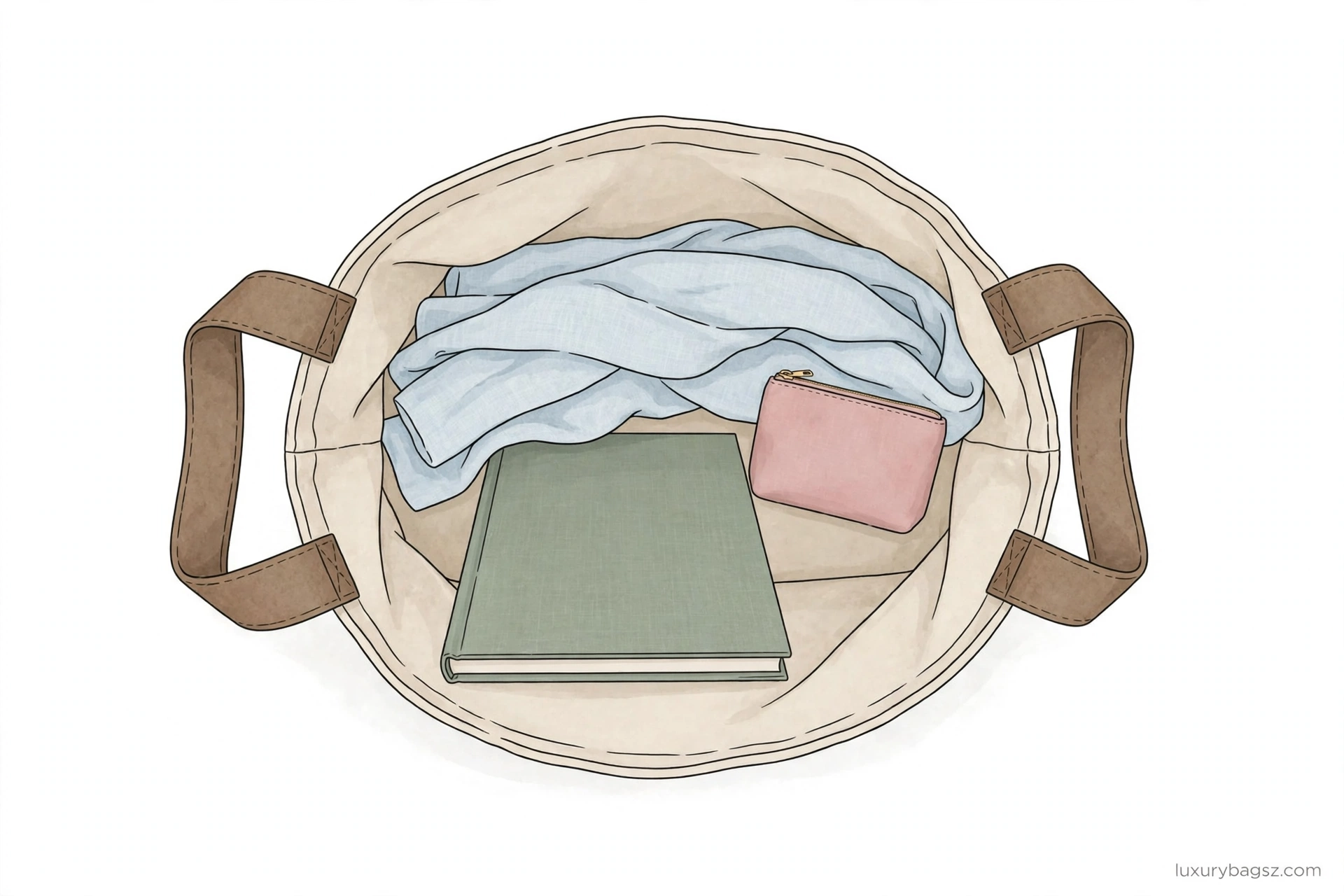
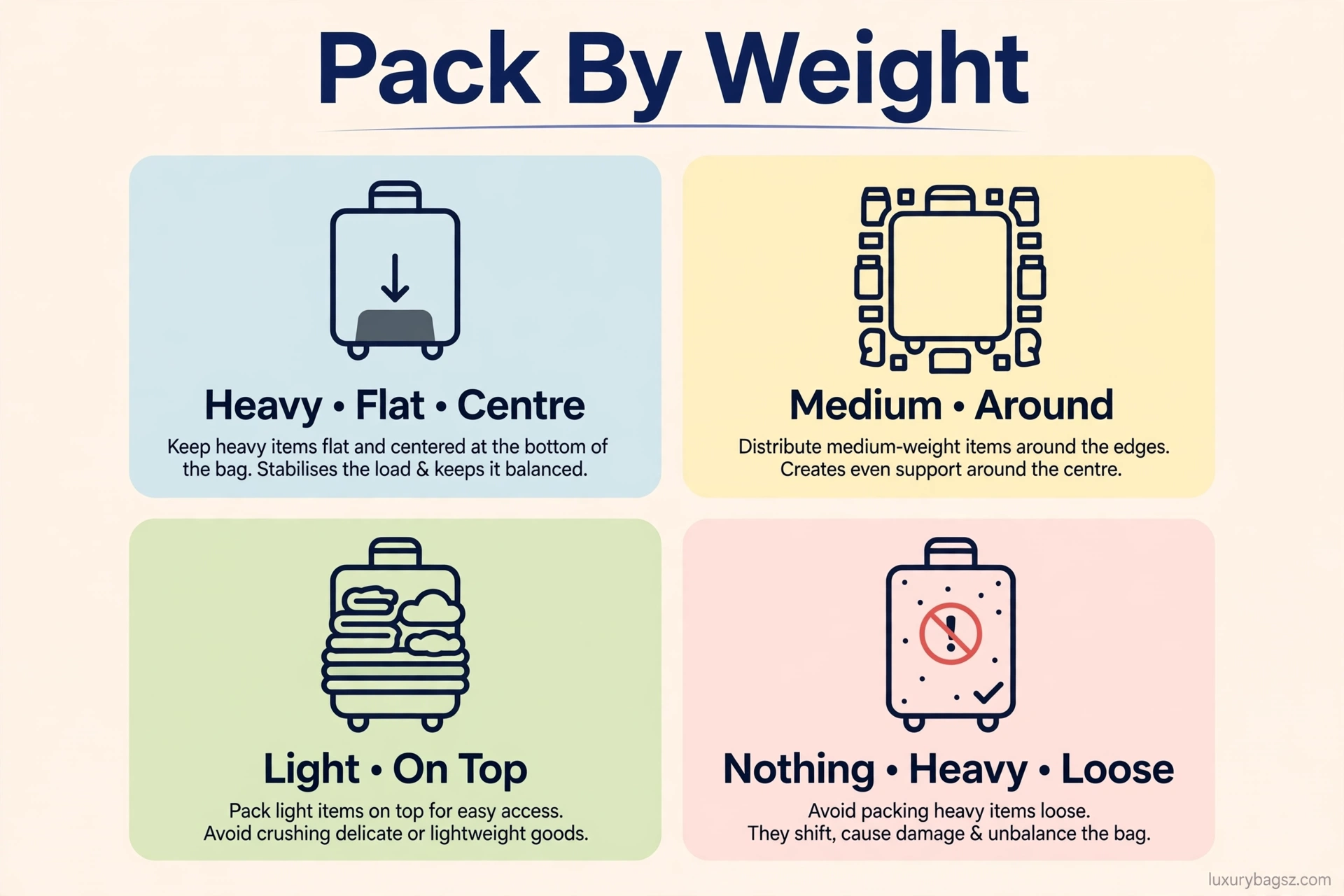
Put heavy items flat on the base, in the centre, on top of the base shaper. A book flat in the centre spreads its weight across the base. The same book standing on its edge in a corner concentrates its weight on one corner and pulls that side down. A bottle should be upright in the centre, not leaning against a side, and it should be in a leak-proof pouch or bottle sleeve, so a leak does not soak the canvas or lining.
Load order, top to bottom
- Base shaper, flat.
- Heavy, flat items in the centre: book, tablet in a sleeve, wallet.
- Medium items around them: pouch, sunglasses case, small umbrella.
- Light, soft items on top: scarf, tissue pack, small cosmetics pouch.
- Nothing heavy loose at the top. A heavy item at the top pulls the top edge down and makes the bag swing, which stretches the handles.
What not to carry in a soft tote
- A full large water bottle plus a laptop plus books, every day, in a soft canvas tote. That load belongs in a structured bag or a backpack, not a soft tote. If you must carry it occasionally, use a base shaper, centre the load, and carry it for the shortest time needed.
- Loose pens, keys, or metal objects without a pouch. They sink to corners, scratch linings, and create uneven weight.
- Wet items, gym clothes, or a damp umbrella loose in the bag. Damp softens canvas and leather, adds weight, and can cause water marks and odour. Use a separate waterproof pouch, and dry the tote fully before storing it.
- Groceries or shopping in a luxury tote on a regular basis. The weight is uneven, the items shift, and the bag is carried for longer than a daily essentials load. Use a separate shopping bag and keep the luxury tote for lighter loads.
A realistic daily load
For a medium tote, a realistic daily load is: phone, card holder or small wallet, keys in a pouch, a small cosmetics pouch, a scarf or tissue pack, and either a small book or a tablet — not all of them plus a laptop and a full bottle. If your daily load is regularly heavier than that, consider whether the tote is the right bag for that day, rather than trying to make it carry more than it was made to carry.
Handle habits while carrying
- Carry by hand when the load is heavy, rather than on the shoulder, if the tote has both options. Hand carry puts the weight more directly under the handles and reduces swing.
- If you carry on the shoulder, rotate shoulders during a long day if you can, and do not let the bag hang from one finger or one handle. That concentrates the whole load on one attachment point.
- Do not overfill the tote so that the top edge is forced open. An overfilled tote sags because the sides are pushed out by the contents, not because the base is weak. If you cannot close or fold the top as the bag was designed to be carried, take something out.
Storage: Upright, Stuffed, and Never Hung
Storage is where long-term sagging is created, and it is also where advice differs. This section states the disagreement plainly, then gives the position this guide recommends.
The disagreement: upright vs flat
Some care guides say to store bags upright on a shelf. Others, including a well-known owner guide for structured bags, say to store bags on their backs, especially for longer storage, because standing a soft bag upright for months can let it slump under its own weight. A third position, common for structured leather bags, is to store upright but well stuffed, so the bag does not slump.
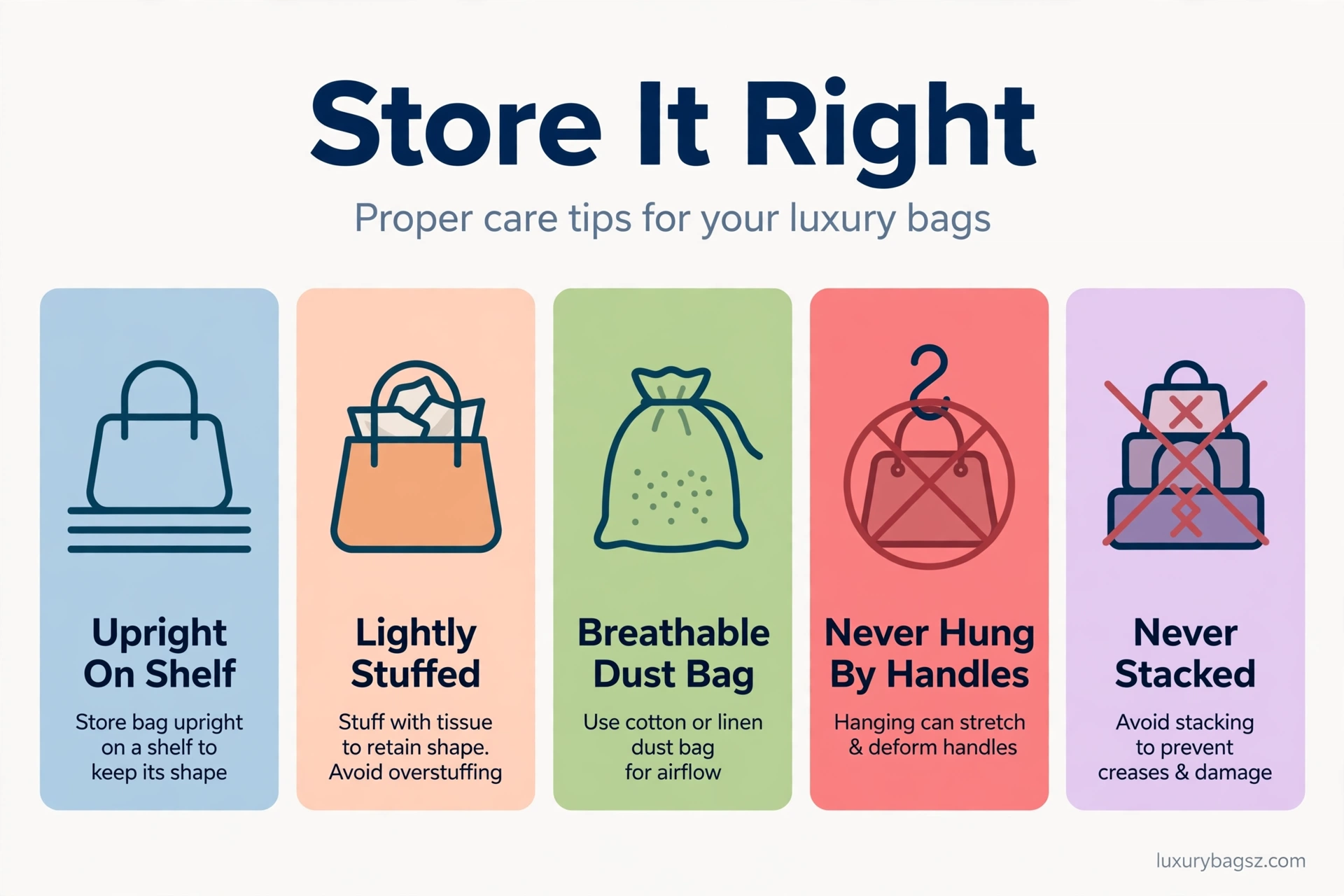
For a soft tote, this guide recommends: store upright on a shelf, lightly stuffed, in its dust bag, with nothing on top of it and nothing pressing against its sides. That is the standard position for totes in most care guides, and it keeps the tote ready to use without creasing the back. If you are storing a tote for many months and it is very soft, storing it flat on its back, lightly stuffed, in its dust bag, is also acceptable — what matters is that it is not squashed, not hung, and not stored empty and collapsed. What is not acceptable in either position is storing a tote hanging by its handles, stacked under other bags, or crammed into a crowded shelf where other bags press it out of shape.
How to stuff for storage
Stuff lightly, to support the shape, not to expand it. Use acid-free tissue paper, clean soft cloths, or sealed air pillows of the kind that come inside a new luxury bag. Do not use newspaper: ink can transfer to a lining. Do not overstuff: stuffing that stretches the seams or forces the sides outwards creates a new sag when the stuffing is removed. The tote should look like itself, filled, not like a balloon.
Check stored totes every few months: adjust the stuffing, air the bag briefly, and check for damp, odour, or pests. A tote stored in a damp place can develop mildew, and a tote stored in direct sunlight can fade, even inside a dust bag if the shelf is in sunlight.
The dust bag and the shelf
Use a breathable cotton dust bag, not a plastic bag or sealed box. Plastic traps moisture and can promote mildew. Store the tote on a shelf away from windows, radiators, and damp walls, in a cool, dry place. Keep each tote separate, with space around it, so bags do not rub against each other and transfer colour or scuff each other. Keep the handles inside the dust bag or laid flat beside the bag, not kinked, folded sharply, or pressed under the bag’s weight. If the handles have a tendency to dent the bag, lay a soft cloth between handle and body.
What to do when you get home
Empty the tote, shake out crumbs and dust, and let it air briefly before putting it away, especially if it has been in rain or humidity. Do not put a damp tote straight into a dust bag and onto a shelf. Let it air-dry naturally at room temperature, away from direct heat and sunlight, until it is fully dry. Then stuff it lightly and store it. That one habit — never storing a damp or overloaded tote — prevents more long-term sagging than any insert.
Cleaning Canvas and Leather Without Making Sag Worse
Cleaning and sagging are linked: a wet, soaked, or heat-dried tote sags more, and a tote cleaned with the wrong product can stiffen, darken, or weaken.
Canvas and Toile
- Dust regularly with a soft-bristled brush or lint roller, especially at seams and corners where dirt collects.
- For a mark, use a barely damp, soft, light-coloured cloth with a drop of mild soap if needed. Blot gently; do not scrub, do not soak, and do not use a rough sponge.
- Test any soap or cleaner on a hidden area first, and wait for it to dry before cleaning the whole bag. If the test area darkens, stiffens, or changes colour, stop.
- Air-dry naturally in shade, at room temperature. Never use a hairdryer, radiator, or direct sun to dry canvas. Heat can stiffen canvas and set a sagging shape in place.
- Do not use bleach, alcohol-based cleaners, hand sanitiser, or harsh stain removers on canvas. They can damage the weave and the colour.
- A note on forum advice: some owners report using a white eraser on canvas marks. This guide does not recommend it as a routine method, because an eraser is abrasive and can thin the weave or lighten the colour. If you try any abrasive method, test it on a hidden area first, and stop if the surface changes.
Leather handles and trim
- Wipe leather handles with a clean, dry, soft cloth after use. Handles pick up oils from hands, and those oils darken and weaken leather over time.
- Keep leather away from oils, perfumes, creams, and sanitisers. Do not apply mink oil, saddle soap, or home remedies to a luxury tote unless a professional has advised it for that specific leather. Some of those products darken leather permanently and can soften its structure.
- For a mark on leather, a barely damp cloth is the safe first step. For anything more, ask a professional. Do not use commercial leather cleaners on a luxury tote without checking that they are suitable for that leather, and test on a hidden area first.
- Protect light-coloured leather from dark fabrics. Jeans, dark scarves, and dark coats can transfer colour to a light tote, especially in heat or damp. That colour transfer is not sagging, but it often happens at the same time as sagging, because the tote is rubbing against clothing while it is overloaded and swinging.
Protecting the tote in rain and sun
- In rain, carry the tote under a coat or use its rain cover if it came with one. If it gets wet, blot gently with a light-coloured, lint-free cloth, then air-dry naturally. Do not put a wet tote into a dust bag.
- In sun, do not leave a tote on a car seat, a windowsill, or a beach towel in direct sun for hours. Sun fades colour, dries leather, and can set a sagging shape.
- In humidity, store the tote in a dry, ventilated place, not a bathroom, basement, or sealed plastic box. If you live in a humid climate, check stored totes more often for damp and odour.
When Sagging Is Already Permanent
Not all sagging can be fixed, and pretending otherwise wastes money on inserts that cannot help.
Signs the sag is permanent
- The base stays dipped when the bag is empty, lightly stuffed, and on a flat surface, even with a base shaper removed and reinserted.
- The sides stay bowed when the bag is empty and lightly stuffed, and the bow does not change when you change the load.
- The handles have visibly elongated, one handle is longer than the other, or the handle attachments have pulled or torn.
- Stitching has gaps, fraying, or broken threads at the base corners or handle attachments.
- The leather has thinned, cracked, or darkened permanently at the handles or base corners.
What to do then
- Stop overloading the bag. A permanently sagging tote can still be used for light loads, with a base shaper and careful packing, but it should not be asked to carry heavy loads again.
- Do not try to reshape it with heat, steam, ironing, or heavy stuffing. Those methods can damage canvas and leather permanently, and they can void any future professional repair.
- Ask a reputable leather-care professional or Hermès after-sales service what can be done. They can advise whether the base can be reinforced, the handles can be repaired, or the stitching can be restored. Get that advice before you buy another insert, because the right repair may change which insert fits.
- If you buy pre-owned, check for permanent sag before you pay: ask for photos of the bag empty, standing on a flat surface, from the front, side, and base, and ask whether a base shaper was used. A seller who only ever shows the bag stuffed or held up may be hiding sag.
A Simple Weekly Routine That Prevents Sag
This routine takes a few minutes and prevents most sagging:
- Empty and shake out the tote at the end of the day. Remove crumbs, receipts, and anything you do not need tomorrow.
- Wipe handles with a dry, soft cloth, and brush canvas lightly if it has picked up dust.
- Check the base and corners once a week for stitching gaps, fraying, or lining wear. Catching a small gap early is cheaper than repairing a torn seam later.
- Repack by the centre-and-flat rule each morning, instead of dropping items in wherever they land.
- Rotate bags if you can. Using the same tote every day accelerates wear on the same handles, base corners, and seams. Rotating between two totes gives each one time to rest and hold its shape.
- Store it properly every night, not just when you put it away for a season: upright, lightly stuffed, in its dust bag, on a shelf, not hung, not squashed.
For general tote care principles, see our guides to clean Chanel bags, suede brush, and Saphir Renovateur for safe, gentle cleaning discipline, and our guide to store Hermes Kelly for storage principles that also protect a tote’s shape.
Frequently Asked Questions
How do I stop my Hermès tote from sagging?
Use a base shaper that fits the inside base exactly, pack heavy items flat in the centre, carry only what you need, and store the tote upright, lightly stuffed, in its dust bag, never hung by its handles.
Does a bag insert stop sagging?
A base shaper stops base dip. A full organiser also supports the sides, but only if it fits well and is not too tall, stiff, or heavy. An organiser that is too big can force the tote out of shape.
Should I use felt or nylon for a tote organiser?
Felt is softer, quieter, and gentler on linings, but absorbs spills and holds odour. Nylon is lighter to clean and water-resistant, but can feel stiffer. Choose felt for gentle side support and nylon for wet-weather or spill-prone carrying, and check the fit and weight in either case.
Can I use cardboard as a base shaper?
Only as a short trial, to test the size. Cardboard softens with damp, bends under weight, and can stain a lining. For regular use, use an acrylic, faux-leather-covered, or purpose-made base shaper with rounded corners.
Should I store a tote upright or flat?
This guide recommends upright on a shelf, lightly stuffed, in its dust bag, with nothing on top. Storing flat on its back, lightly stuffed, is also acceptable for very soft totes stored for months. Never store a tote hung by its handles, stacked under other bags, or squashed.
Can I fix a sagging tote with heat or steam?
No. Do not use heat, steam, ironing, or a hairdryer to reshape a luxury tote. Heat can stiffen canvas, dry and crack leather, and set a sagging shape permanently. Use support, lighter packing, and proper storage instead.
How heavy is too heavy for a tote?
There is no single number, because totes differ in size and material. As a practical rule, if the base dips visibly when you set the bag down, if the handles dig into your hand or shoulder, or if you cannot close or fold the top as designed, the load is too heavy for that tote on that day. Take something out.
Will a base shaper damage the lining?
A well-fitting shaper with rounded corners, in a neutral colour, should not damage a lining. A shaper with sharp corners, a dark dye that transfers, or a size that forces the sides outwards can wear or stain a lining. Check the lining when you first use a new insert, and remove it if you see wear or colour transfer.
Final Verdict
A tote without sagging is not a tote with a secret trick. It is a tote that is supported, packed, and stored properly, every day, not just when it starts to slump. The base shaper does the heavy lifting, literally: it spreads the load across the base so the middle does not dip. Careful packing does the rest: heavy items flat in the centre, light items on top, nothing heavy loose at the top or in a corner. And storage does the long-term work: upright, lightly stuffed, in a dust bag, on a shelf, never hung, never squashed, never stored damp.
If you do only three things, do these: fit a base shaper that matches your inside base, stop overloading the tote, and store it properly every night. Those three habits prevent most sagging, and they cost less than a single repair. If your tote already sags permanently, do not chase it with heat, harsh cleaners, or heavier stuffing. Use it lightly, support it, and ask a professional what can be repaired.
Carried that way, a canvas or leather tote keeps its shape, its handles last longer, and the bag looks like itself — upright, balanced, and ready to use — instead of like a bag that has given up under its own load.
For the leather and storage principles behind this, see our guides to Hermès leather and storing a Kelly.