What Are Boondocker Boots? WWII History, Design, and Modern Versions
Boondocker Boots in Brief
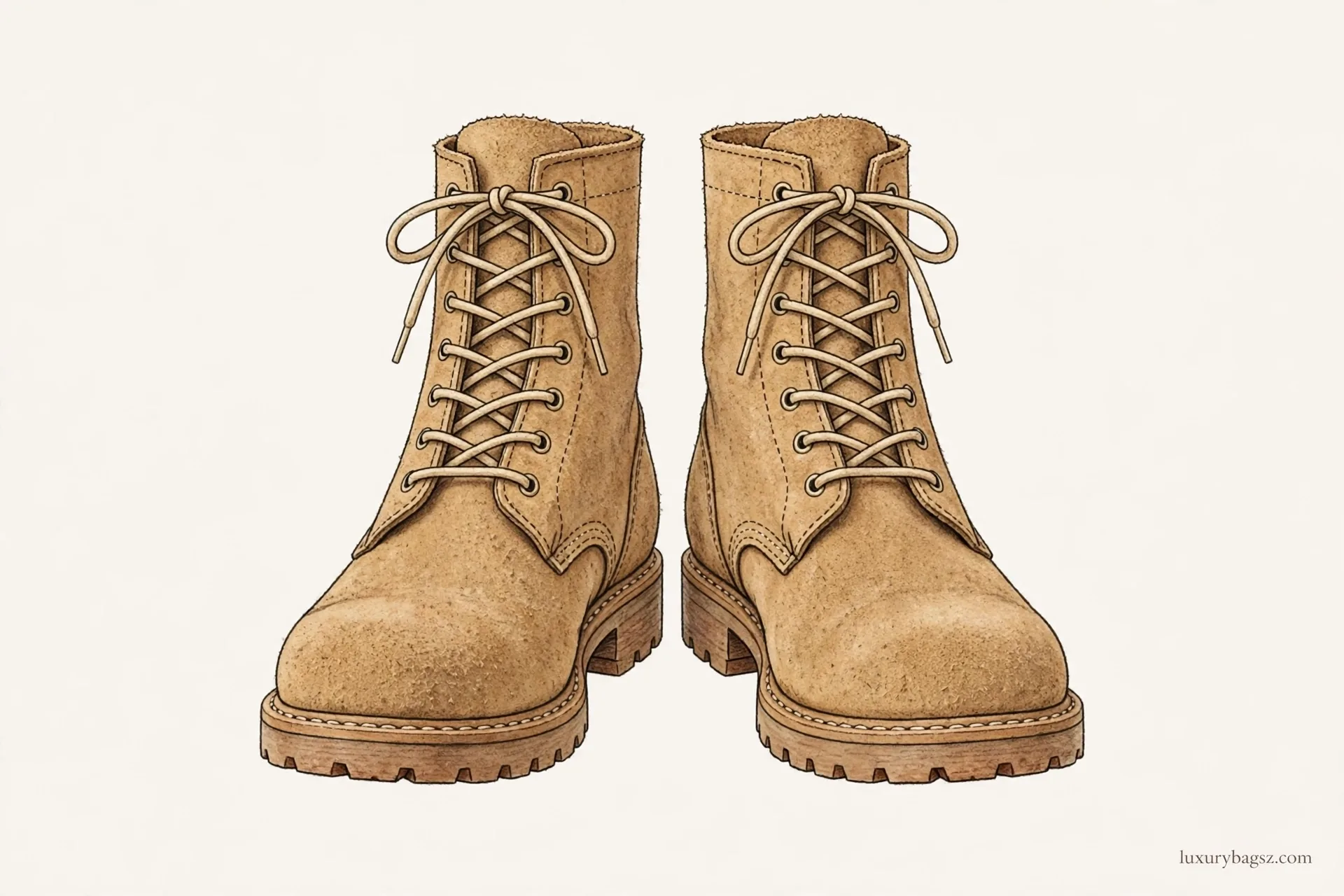
Boondocker boots are the WWII American military field boots nicknamed for the boondocks, the remote, rough country where they were worn. Officially, the best-known version is the US Navy N-1 field shoe, with the Marine Corps field shoe as its close cousin, both plain-toe, high-top blucher boots in roughout leather.
Their signature look is simple: flesh-side-out roughout leather, usually tan, a plain toe, a high lace-up shaft, and a sturdy rubber or corded sole. They were built for marching in the Pacific, not for parade grounds, and their simplicity is exactly why heritage makers still copy them today.
Modern boondockers range from faithful reproductions using Horween roughout leather to budget service boots that borrow the silhouette. Buy the faithful version for history and quality, or the budget version for the look, but do not confuse the two on price or construction.
Key Takeaways
- Boondocker comes from bundok, the Tagalog word for mountain, adopted by US troops in the Philippines for remote country.
- The WWII N-1 field shoe and Marine field shoe are the core boondocker patterns: plain toe, roughout, lace-up, high-top.
- Roughout means flesh side out, giving a suede-like finish that resists water and scuffs better than smooth leather in the field.
- Wartime soles used corded rubber, sometimes from repurposed tyres and nylon, to save materials.
- Type III boots added rivets and toe caps; a 1944 simplification removed them for faster production.
- Modern remakes by Viberg, Oak Street, and others vary from near-exact reproductions to loose interpretations.
Where the Name Comes From
Boondocks comes from bundok, Tagalog for mountain, which American soldiers in the Philippines adopted for any remote, rugged area. Boots worn out there naturally picked up the nickname boondockers, long before any official pattern name stuck.
The nickname stuck because it described the job, not the boot's paperwork. Soldiers needed a boot for jungle, mud, and long marches far from supply depots, and the plain, tough field shoe they were issued became the boondocker in everyday speech.
That informal origin explains why boondocker has no single official specification today. It names a family of similar field boots, with Navy and Marine patterns as the main references, rather than one exact model.
WWII History: From Trench Boots to Field Shoes
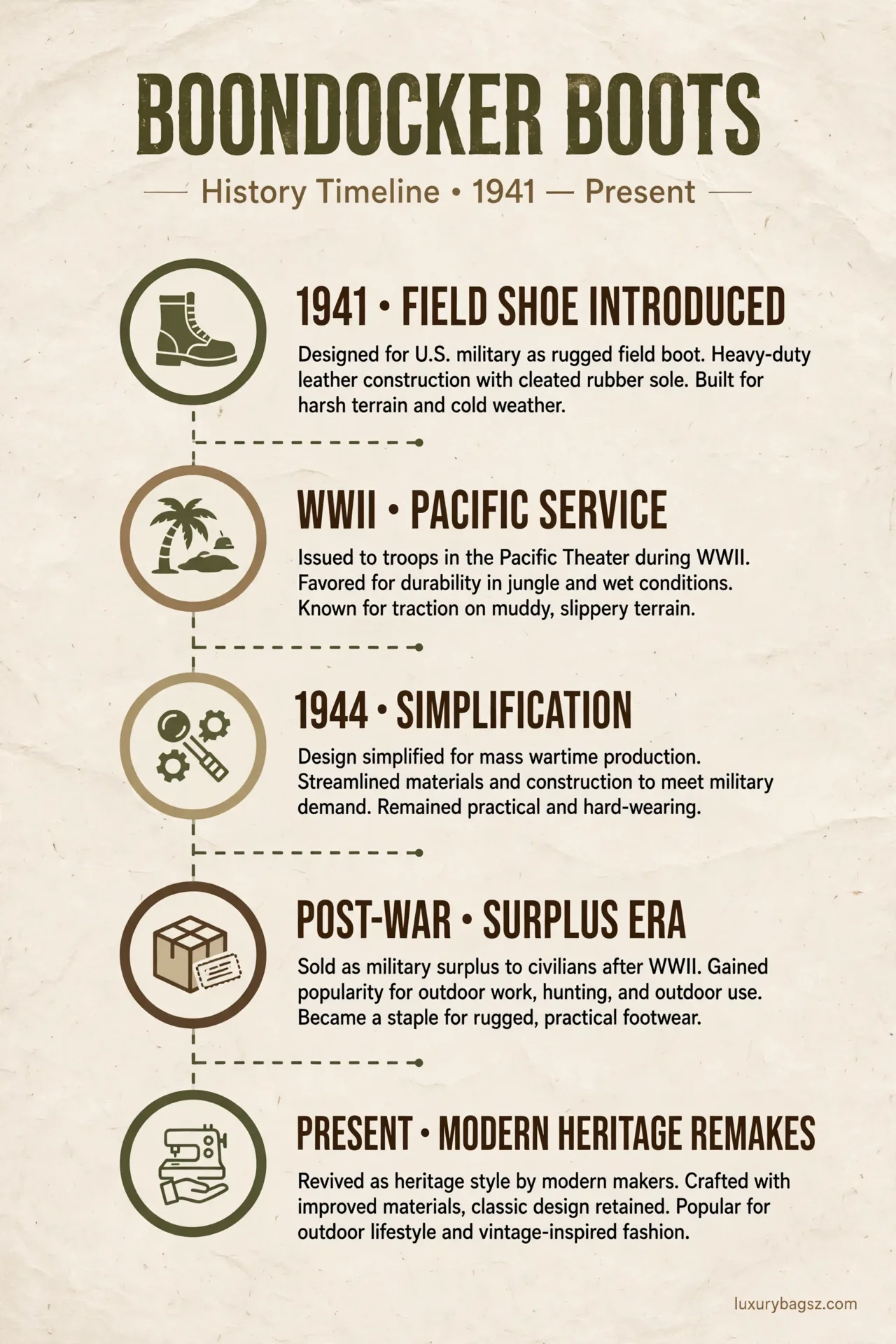
WWI trench boots, known as Pershing boots, were heavy and uncomfortable for the mobile warfare of WWII. The US military replaced them with more pragmatic service shoes, starting with the M-42, a cap-toe service shoe often worn with a canvas gaiter.
The M-43 followed, dropping the cap toe and adding height with a double-buckling gaiter for all branches. Paratroopers later received their own taller jump boots, while ordinary troops received the field shoes that became boondockers.
In the Pacific, the Navy's N-1 field shoe became standard for sailors and Marines working ashore and aboard ship. Its roughout leather, simple pattern, and resoleable construction suited humid, rugged islands far better than polished dress leather ever could.

The N-1 and Marine Field Shoe Patterns
The classic boondocker is an unlined, plain-toe, high-top blucher, usually with a flesh-out roughout upper and a composition rubber sole and heel. The blucher lacing, with open quarters, adjusts easily to swollen feet and thick socks, a real advantage on long marches.
Early versions, known as Type III boots, added riveted quarters and toe caps for extra durability and protection. Those details made the boots tougher but slower and more expensive to produce in wartime quantities.
A 1944 simplification removed toe caps and rivets in response to material shortages and production pressure. The unstructured toe that resulted was more comfortable and flexible, and it became the look most modern remakes follow.
Why Roughout Leather?
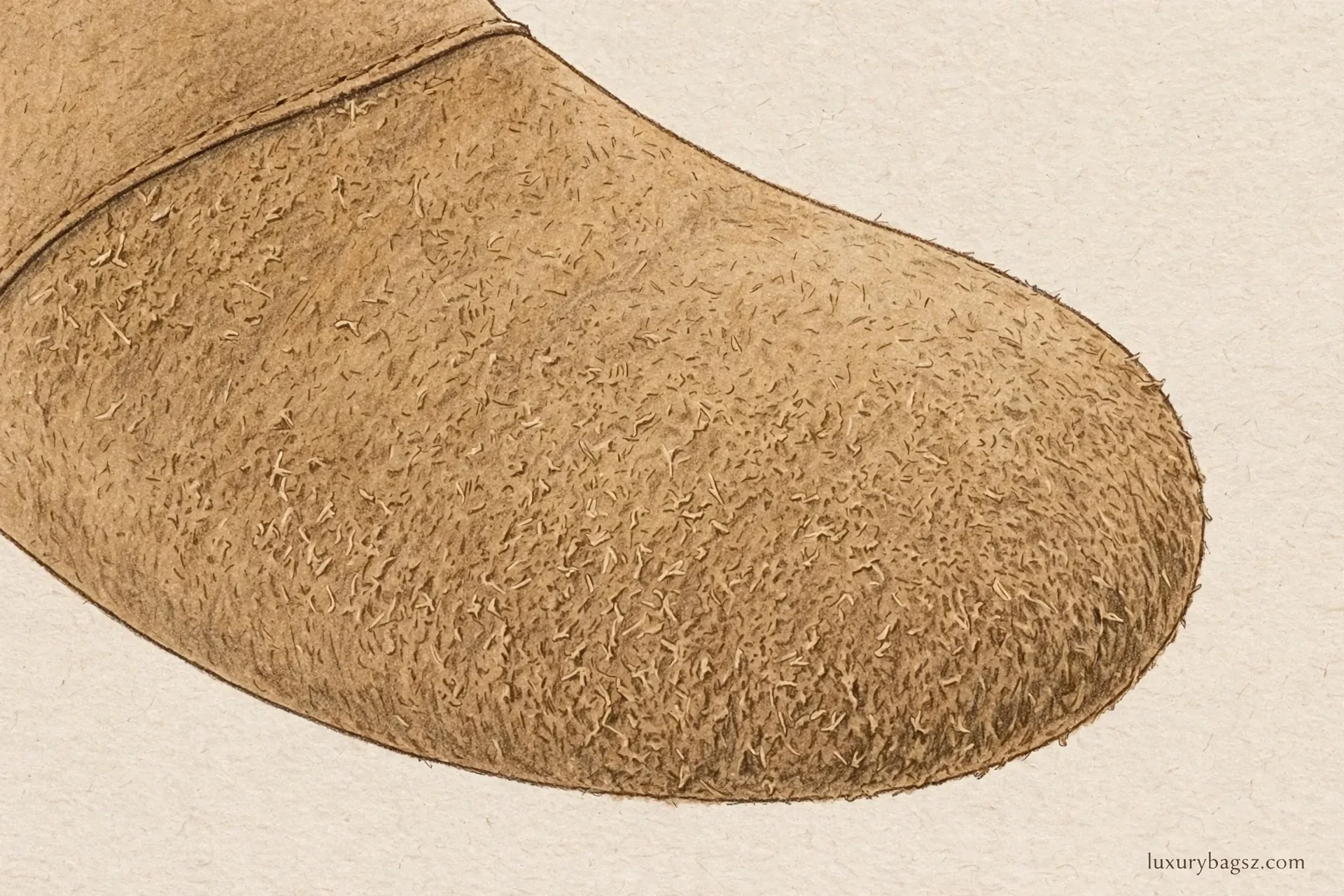
Roughout is leather worn flesh side out, so the exterior feels like suede while the smooth grain side faces the foot. That choice was practical, not fashionable: the fibrous flesh side resists scuffs, sheds water reasonably, and does not show scratches the way smooth leather does.
In the field, a scuffed smooth boot looks damaged and needs polish to recover. A scuffed roughout boot can be brushed back to an even nap in minutes, which mattered when polish, time, and supplies were all scarce.
Modern Viberg remakes use a reproduction of Horween's Marine Field Shoe Chromexcel in roughout, based on the tannery's WWII archive. Horween supplied large quantities of leather to US forces in the 1940s, which gives those remakes a genuine material link to the originals.
Soles, Construction, and Wartime Shortcuts
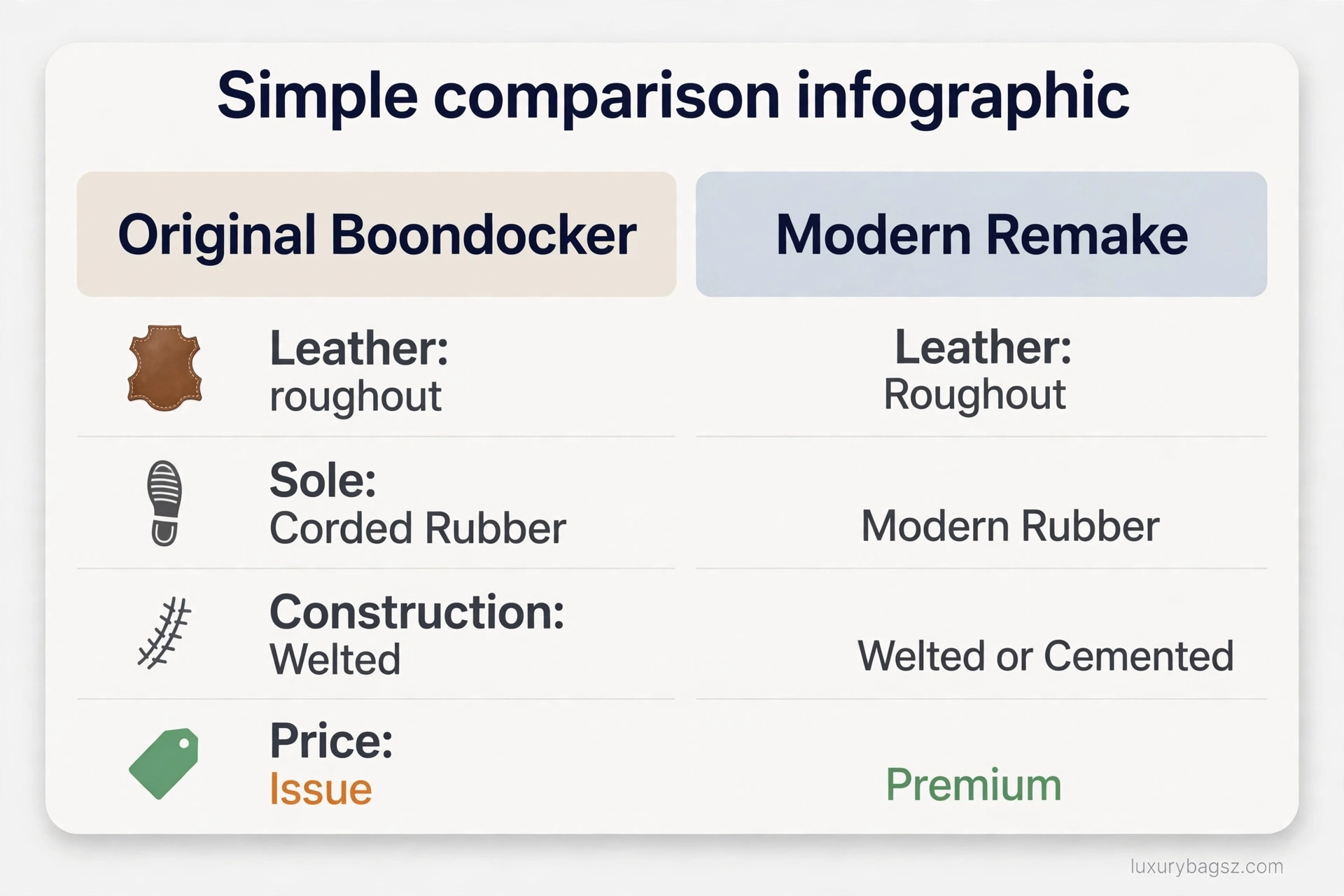
Original boondockers used Goodyear welt construction in many versions, which made them resoleable, a vital wartime advantage when new boots were scarce. A cobbler could replace a worn sole and return a broken-in boot to service.
Soles themselves reflected shortages. Corded soles, made with repurposed car tyre rubber and leftover nylon cord, saved strategic materials while giving grip on wet decks and muddy ground. Later versions used composition rubber soles with similar grip.
That combination, welted construction plus a tough rubber sole, is why original boondockers survived in surplus stores for decades. Soldiers kept wearing them after WWII, and some wore them into the Korean War, long after their official issue ended.
Surplus Fame and Pop Culture
After WWII, huge numbers of M-43 and N-1 boots entered surplus stores, where they sold cheaply to civilians, workers, and young people. In the 1970s, army and navy surplus shops made boondockers an affordable, tough everyday boot for a new generation.
Pop culture cemented the look. Steve McQueen wore boondocker-style boots as Virgil Hilts in the 1963 film The Great Escape, giving the plain field boot a cool, escape-artist association it has never quite lost.
Heritage boot culture later rediscovered the pattern in earnest. Makers began reproducing the N-1 faithfully, studying original pairs, lasts, and leathers, rather than merely borrowing a rough silhouette for a fashion boot.
Modern Boondockers: Faithful vs Budget
Faithful modern boondockers, such as Viberg's N-1, use Horween roughout leather, a 1940-style last, Goodyear welt construction, and historically accurate details like a Chromexcel tongue. Prices reflect that work, often reaching premium heritage-boot levels.
Mid-priced heritage makers, such as Oak Street Bootmakers and The Real McCoys, offer strong interpretations with good leather and welted construction at lower prices, though details and lasts vary. These suit buyers who want the look and quality without chasing exact reproduction.
Budget boondockers, such as Golden Fox models around $100, borrow the silhouette with simpler leather and construction. They can be good value for the look, but they are not the same boot as a faithful remake, and buyers should judge them on their own materials, not on the name.
How to Buy Boondockers Today
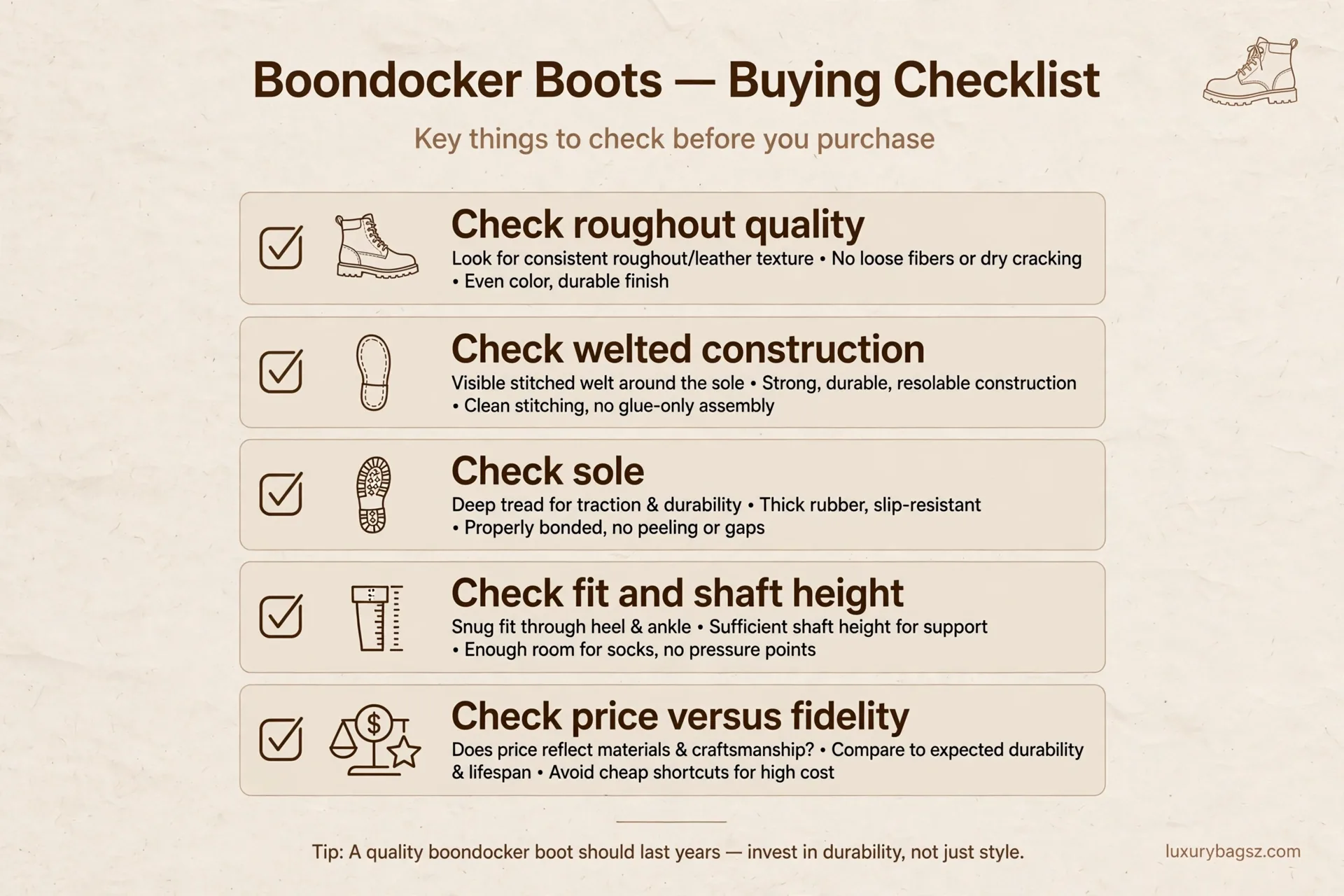
Decide first whether you want history or silhouette. For history, pay for named leather, welted construction, and a maker that explains its last and pattern sources. For silhouette, prioritise fit, comfort, and price, and accept simpler construction.
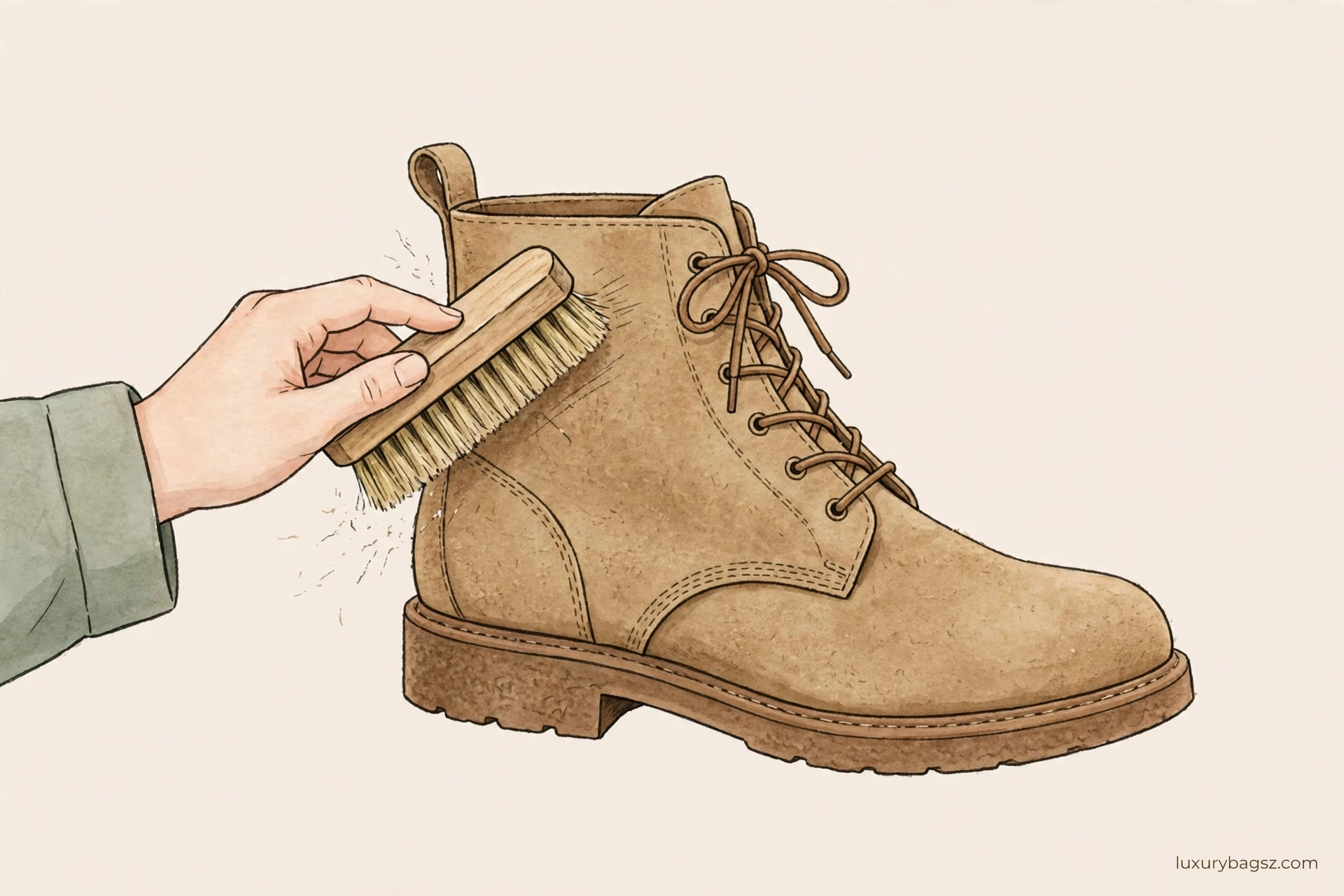
Check the roughout quality by brushing it: good roughout brushes to an even nap and feels dense, not thin or papery. Check the sole attachment for even welt stitching, and check the shaft height and lacing against your calf and ankle, since high bluchers fit differently from ankle boots.
Check sizing carefully, since heritage lasts vary and roughout boots break in differently from smooth leather. Try the exact pair if possible, wear the socks you will march or walk in, and walk on a hard floor before deciding, since a stiff welted boot needs time to reveal its true fit.
Care, Styling, and Everyday Wear
Care for roughout like suede, not like smooth leather. Brush with a suede brush after wear, use a roughout protector before rain, and never apply smooth-leather cream or wax, which will flatten the nap and darken the finish permanently.
Our Hermes leather boots care guide covers the slow-drying rule that applies here too: if boondockers get soaked, stuff them with paper and dry at room temperature, away from radiators and direct heat, then brush the nap back once dry.
Style boondockers as casual, rugged boots: with dark denim, chinos, or fatigues, a plain tee or flannel, and a field jacket. They suit workwear and heritage outfits naturally, and they look out of place with formal tailoring, which is part of their honest charm.
Frequently Asked Questions
What are boondocker boots?
Boondocker boots are WWII US military field boots, especially the Navy N-1 field shoe and Marine field shoe: plain-toe, high-top, lace-up boots in tan roughout leather with a sturdy rubber sole.
Why are they called boondockers?
The name comes from bundok, Tagalog for mountain, which US troops in the Philippines used for remote country. Boots worn in the boondocks picked up the nickname.
What is roughout leather?
Roughout is leather worn flesh side out, giving a suede-like finish. It resists scuffs, brushes back to an even nap easily, and suited field use better than polished smooth leather.
Are boondocker boots Goodyear welted?
Many original and faithful modern versions are Goodyear welted, which made them resoleable in wartime and today. Budget versions may use simpler cemented construction, so check the specific model.
What is the difference between boondockers and M-43 boots?
M-43 boots are the broader service shoe family that replaced the M-42, while boondocker usually refers to the Navy N-1 and Marine field shoe versions in roughout. The patterns overlap closely, and sellers often use the names loosely.
Are modern boondockers true to the originals?
Faithful remakes, such as Viberg's N-1 with Horween roughout and a 1940 last, come close. Mid-priced and budget versions borrow the silhouette with varying leather and construction, so check materials rather than trusting the name.
How much do boondocker boots cost?
Budget models start around $100, mid-priced heritage versions run several hundred dollars, and faithful premium remakes can cost far more. Price tracks leather, construction, and fidelity to the original pattern.
Are boondocker boots comfortable?
Once broken in, yes, especially the unstructured-toe versions from 1944 onward. New welted pairs feel stiff for the first weeks, and the high shaft needs correct lacing to avoid ankle pressure.
How do you care for boondocker boots?
Brush roughout with a suede brush, protect with a roughout spray before wet weather, and never use smooth-leather cream or wax. Dry soaked boots slowly at room temperature, then brush the nap back.
Can you wear boondockers every day?
Yes, as a casual, rugged everyday boot with denim or chinos. They are not formal boots, and their high shaft and roughout finish suit workwear and heritage outfits best.
Final Verdict
Boondocker boots endure because they were designed for a real job and never pretended otherwise. Plain toe, roughout leather, high lacing, and a resoleable sole made them the right boot for the Pacific, for surplus stores, and for heritage wardrobes decades later. Buy a faithful remake for history, a budget version for the look, care for the roughout properly, and you will own a boot with a story that most modern designs simply cannot match.