Top Luxury Men’s Watches: Sports, Dress and Everyday Icons to Choose From
The Top Picks in Brief: Choose by Use, Not by Logo
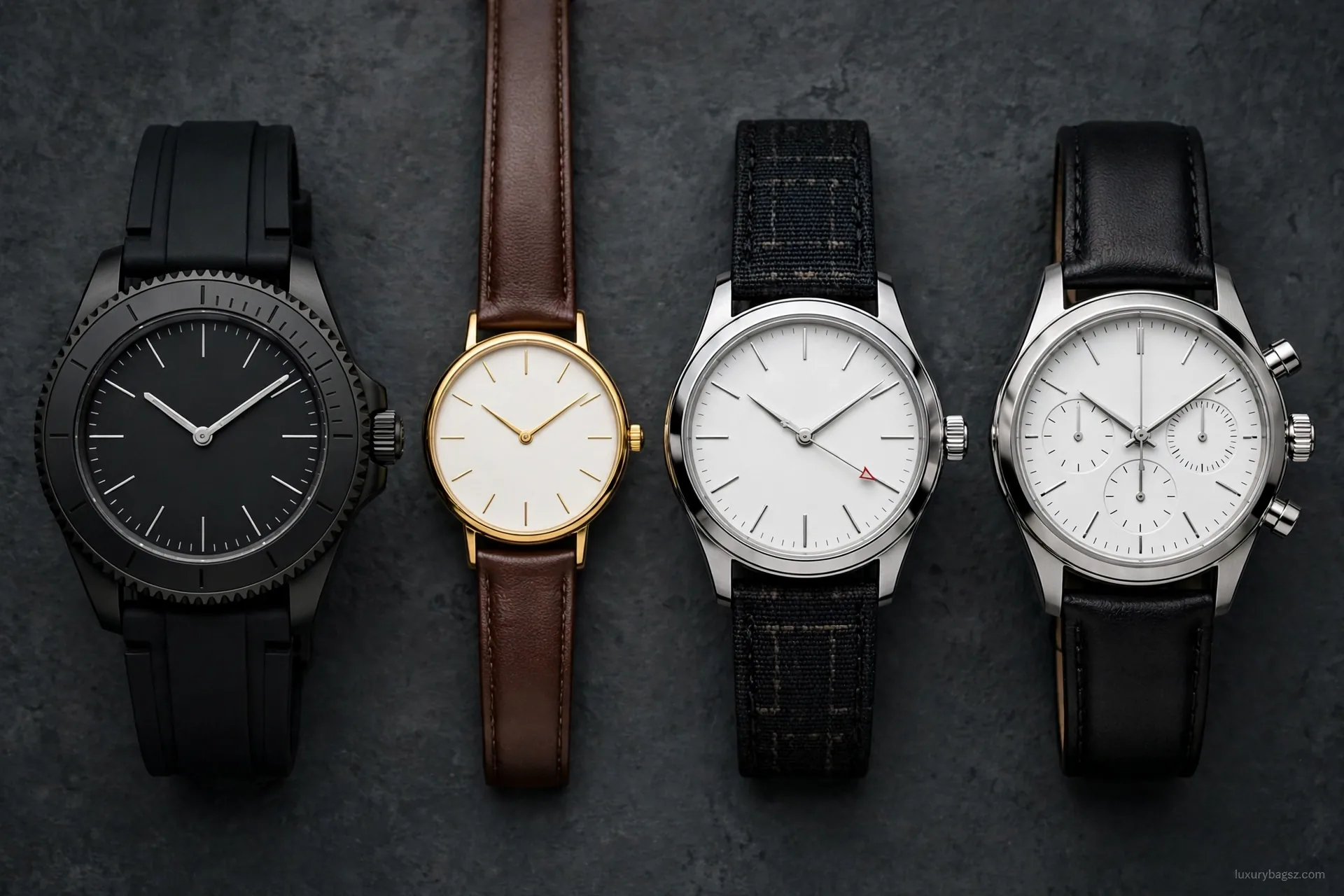
The top luxury men's watches are not one list for everyone. A dive watch for daily wear, a slim dress watch for tailoring, a GMT for travel and a chronograph for timing cover most men's real needs. Pick your category first, then your brand, then your size. That order stops the common mistake of buying a famous name in a shape that never suits your wrist or your week.
Key Takeaways
- Dive watches are the most versatile first luxury watch for most men.
- Dress watches should be slim, simple and sized to slide under a cuff.
- GMT watches earn their place only if you actually travel or work across zones.
- Chronographs add sporty character and useful timing, at extra service cost.
- Lug-to-lug length matters more for fit than case diameter alone.
- Steel on a bracelet is the most flexible starting point for a first purchase.
One more filter helps: water resistance for your real life. A man who swims weekly needs a properly rated sports watch; a man who never swims can happily choose slimmer, less sealed designs.
How This Shortlist Is Built
This guide groups watches by job, because a watch that is perfect for diving holidays can be wrong for a wedding, and the reverse is equally true. Within each job, the names that recur are the long-running model families from established houses: designs that have been made, serviced and resold for decades. Prices are deliberately kept general here, since they vary by market, material and availability. Judge any specific watch on current dealer and brand prices at the time you buy. Availability also varies: some steel sports models involve waiting lists at authorised dealers, while dress models are often available sooner. Factor waiting into your plans honestly.
Sizing: The Numbers That Decide Comfort
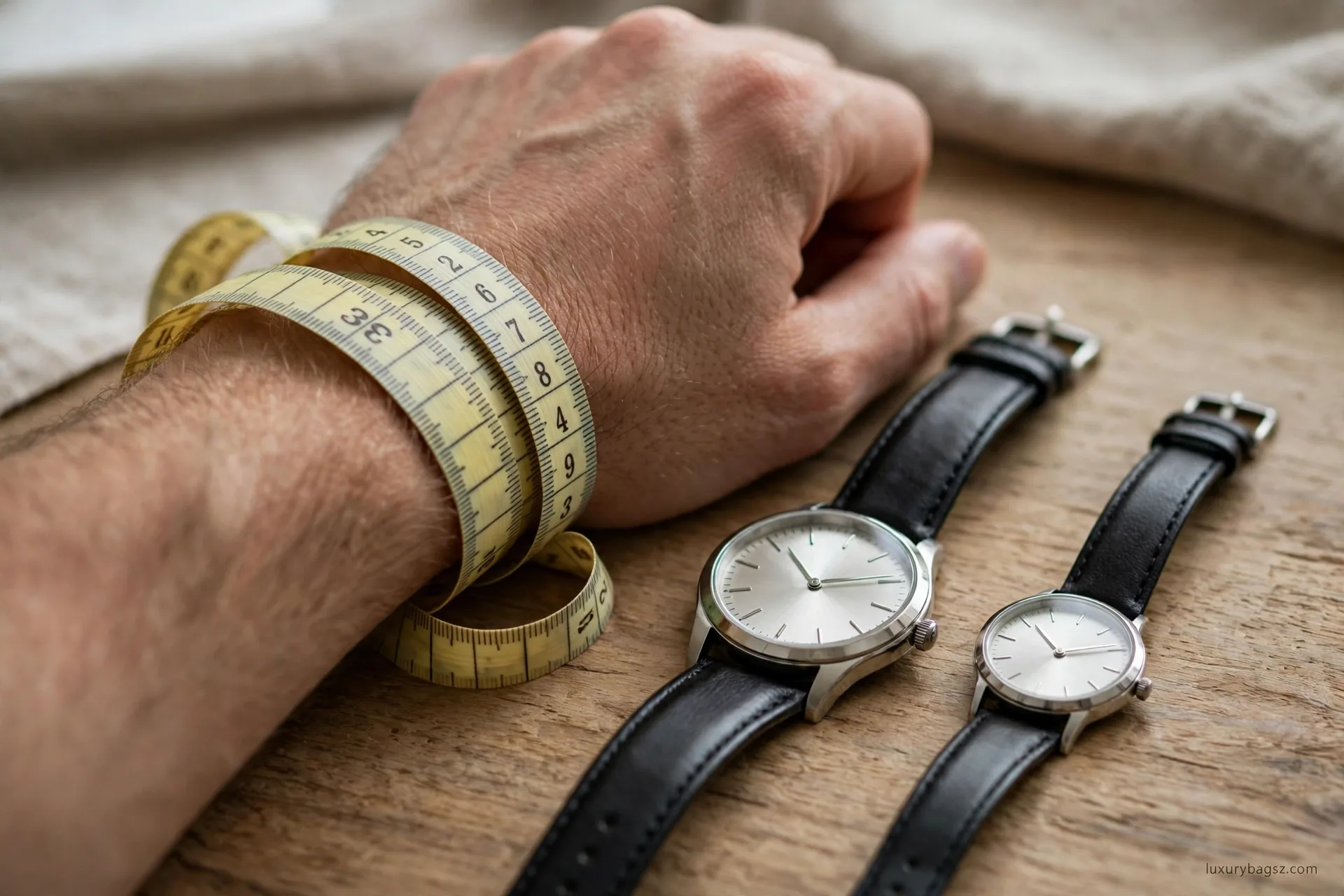
Case diameter is the headline number, commonly from the mid-30s to low-40s in millimetres for men's classics. Smaller classic sizes have returned to favour and suit most wrists well. Lug-to-lug length, the distance across the case where the strap attaches, decides overhang. If the lugs extend past your wrist's edges, the watch will wear awkwardly however fine it is. Thickness matters under cuffs: dress watches are typically slimmer, while divers and chronographs sit taller. Try watches on with the shirts and jackets you actually wear. Bracelet fit can be fine-tuned with links and clasp adjustment. A watch that cannot be sized to sit snug without squeezing will spend its life in a drawer.
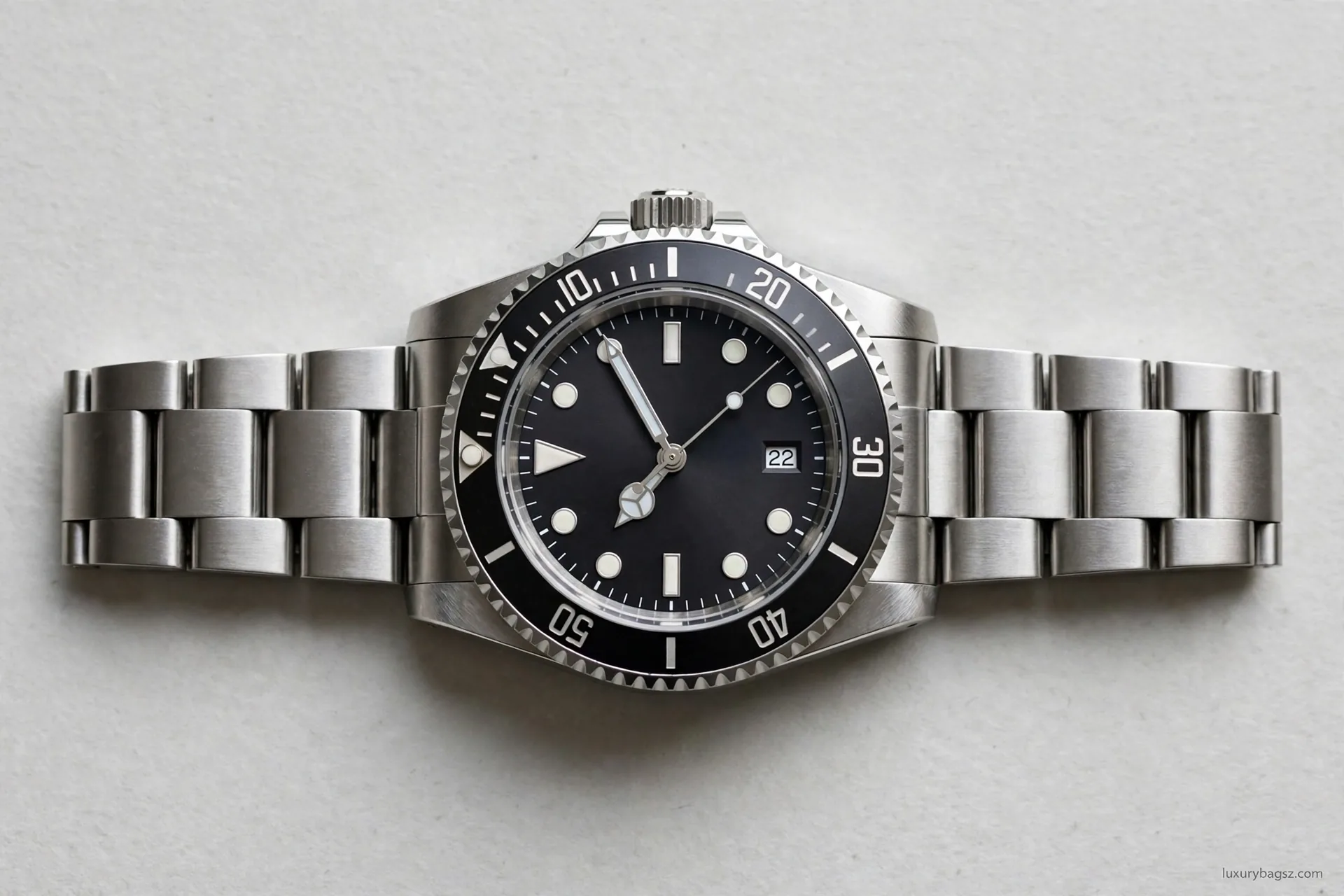
Bezel feel is a quick quality test on any diver: it should turn with firm, even clicks and no wobble, and line up cleanly at twelve. Try it in the shop; you will use it more than you expect.
Dive and Sports Watches: The Versatile Core
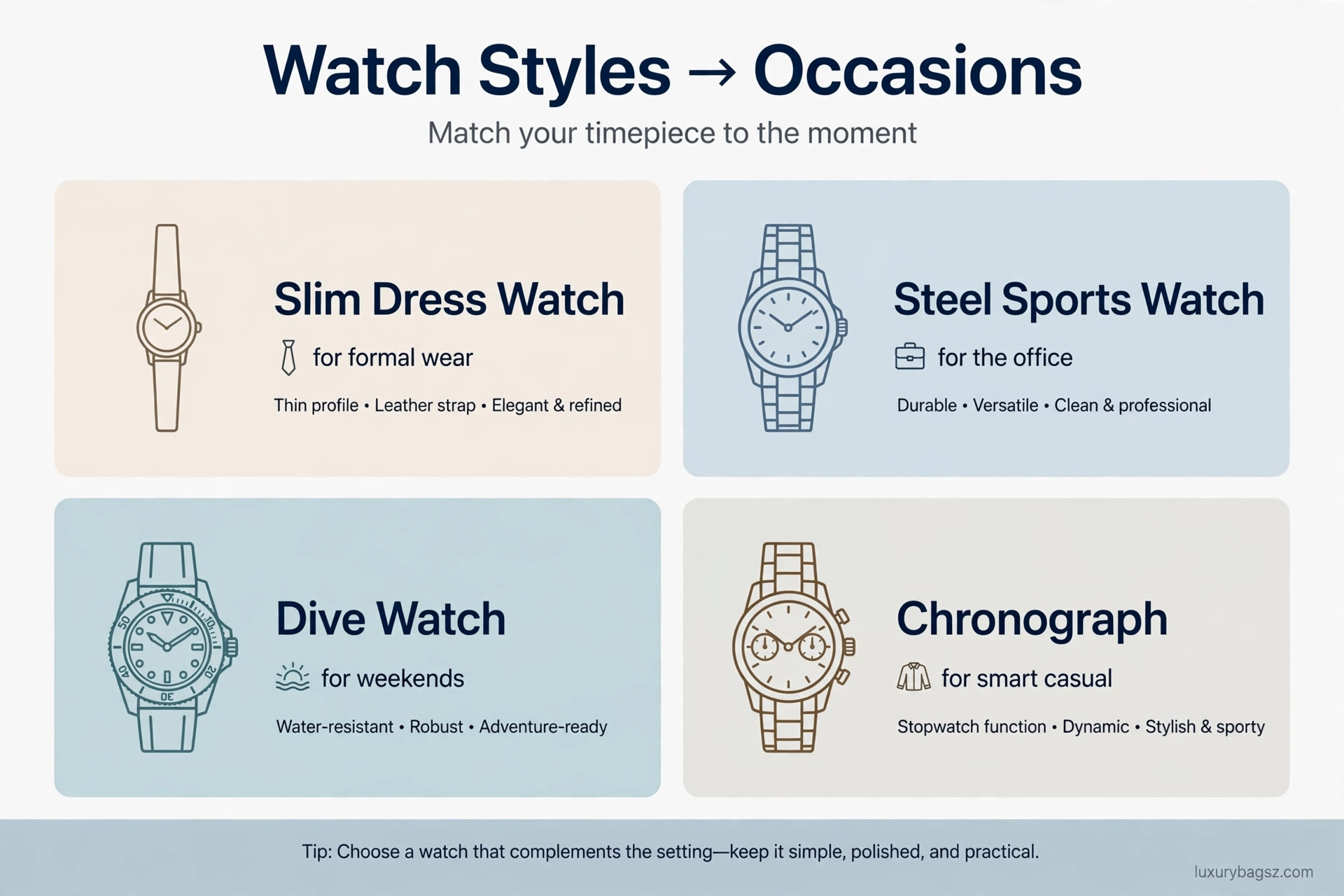
The dive watch is the default first luxury watch for many men: water-resistant, legible, tough enough for holidays and smart enough, in steel, for most offices. Our Rolex Submariner guide profiles the benchmark of the type, a design whose rotating bezel and luminous dial defined the category for decades. Rival houses offer their own long-running divers with different characters, from tool-like to polished. The right pick is the one whose size and bezel feel suit your wrist. Wear them on bracelet for maximum flexibility. A diver on steel moves from beach to boardroom more convincingly than almost any other watch style.
Dress Watches: Slim, Simple, Exact
A dress watch is defined by restraint: a slim case, a clean dial, few or no complications beyond date, and usually a leather strap. It exists to sit quietly under a cuff. Our Cartier Tank watch guide covers the great shaped dress watch, a rectangular design that has dressed formal wrists for over a century. Round dress watches from the classic houses follow the same rules: precious metal or steel, minimal dial furniture, and proportions that favour elegance over presence. For a bridge between dress and sport, our Cartier Santos guide shows a squared design with exposed screws that works across both settings.
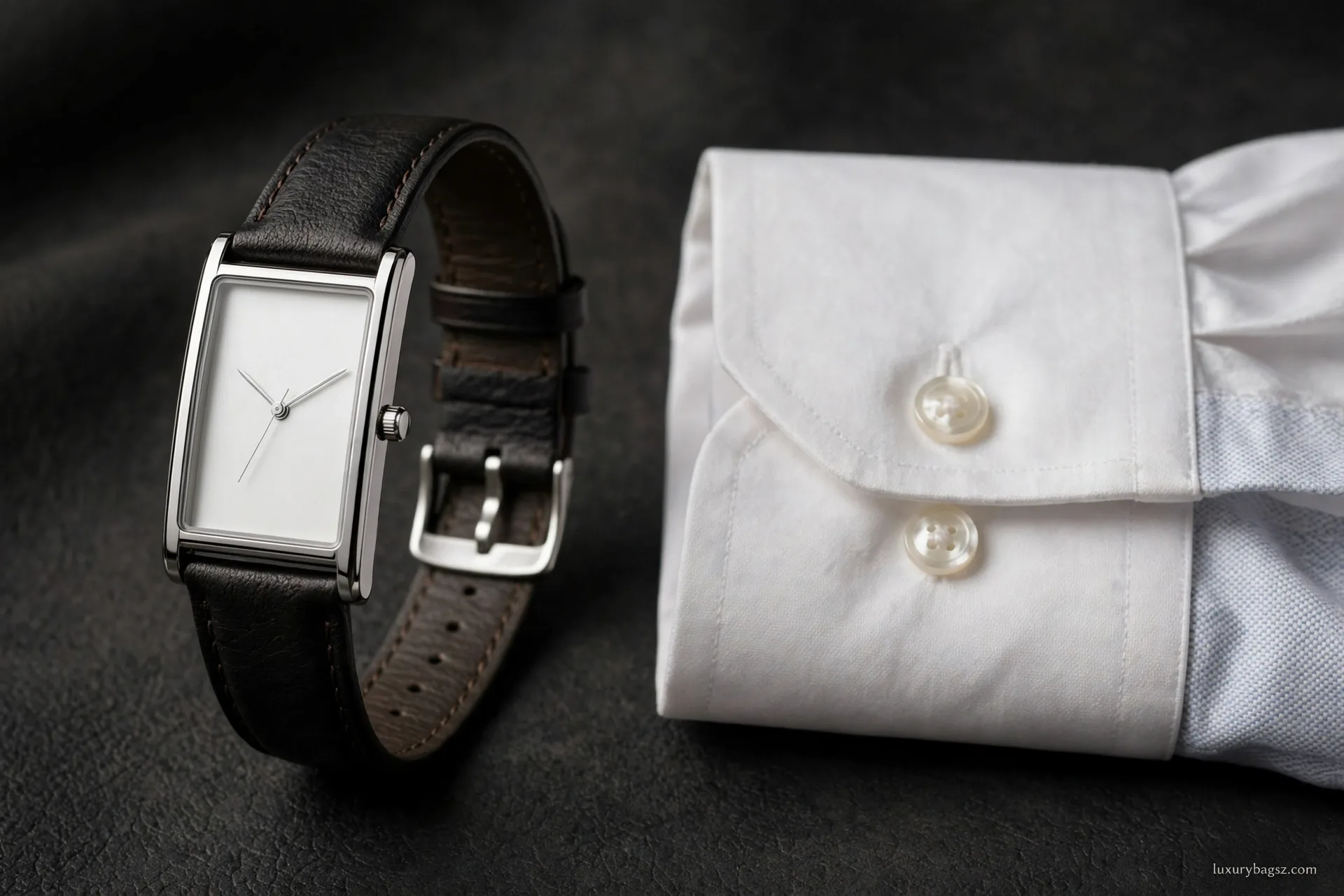
Also consider legibility at a glance. Busy chronograph dials look exciting in photographs but can read slowly in real life, while a clean three-hand dial answers the time question instantly, every time.
GMT and Chronograph Watches: Useful Complications
A GMT watch tracks a second time zone with an extra hand and a 24-hour bezel or dial. For frequent travellers and anyone working across continents, it is genuinely useful weekly. Our what to know about Omega watches guide covers a house famous for both travel watches and the most storied chronograph family in modern watchmaking. Chronographs time intervals with pushers and subdials. They wear sportier and usually thicker, and their movements cost more to service, which belongs in any honest comparison. Buy a complication because you will use it. An unused chronograph is still a handsome watch, but you are paying, in price and servicing, for machinery that never works for you.

Matching the Watch to the Wardrobe
Steel sports watches pair with almost everything short of black tie: knitwear, blazers, open collars and weekend clothes. That range is why they dominate first purchases. Our smart casual dress code guide shows the outfits most men actually wear to work, and a steel watch on a bracelet suits nearly all of them. Dress watches come into their own with tailoring, formal shirts and evening events, where a tall dive watch fights the cuff and distracts from the line of a suit. Gold and two-tone watches warm up navy, brown and cream clothing beautifully, but they draw the eye. Choose them when you want the watch noticed, not when you want it quiet.
Try to handle the exact watch, or at least its model family, before paying. Weight, bezel action, clasp feel and dial legibility are physical qualities that photographs and specifications cannot settle.
Buying New, Waiting Lists and Pre-Owned
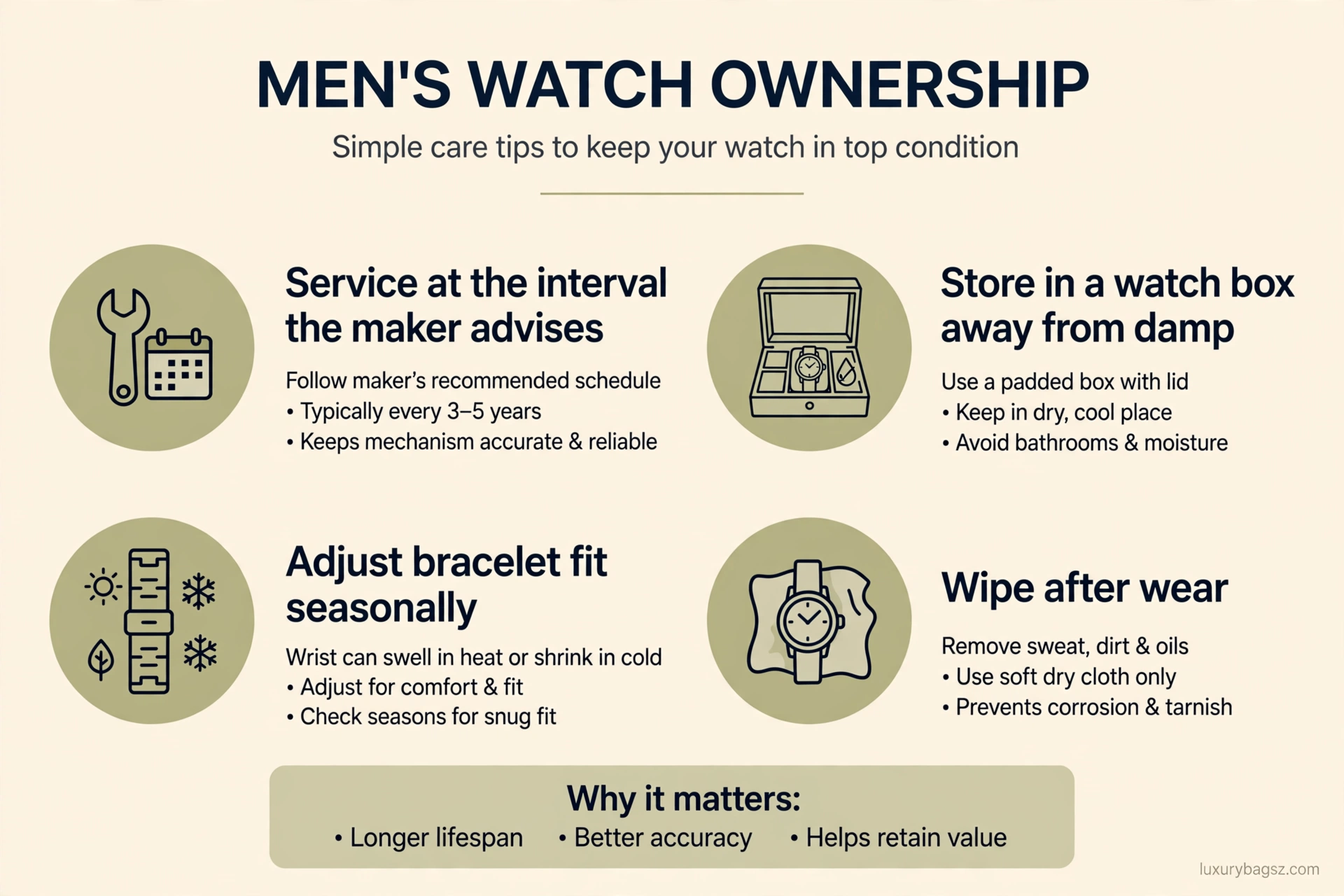
Buying new from an authorised dealer brings warranty, certainty and, for in-demand steel models, sometimes a wait. Ask plainly about realistic timelines before committing. Pre-owned widens choice and can shorten waits, but it demands the full checklist: seller reputation, condition, originality, papers and service history, all verified before payment. Servicing is part of the budget either way. Mechanical watches need periodic service, and a watch bought with a recent documented service carries real added value. Whichever route you choose, keep every document. The file you build from day one is the same file a future buyer will pay extra to see.
Building a Small Watch Rotation
Two watches cover most men completely: one steel sports watch for daily wear and travel, and one slim dress watch for formal days. Add a third only when a real gap appears. Our men's capsule wardrobe guide argues the same for clothing: fewer, better pieces, each with a clear job, worn often. Rotate watches rather than storing one unworn for years. Mechanical watches like use, and a rotation spreads wear, service intervals and enjoyment evenly. Buy in the order you will wear them. The daily watch first, the dress watch second, the specialist third. That sequence keeps money where your wrist actually spends its time.
Frequently Asked Questions
What is the best first luxury watch for a man?
For most men, a steel dive or sports watch in a classic size, on a bracelet, from an established house. It covers work, weekends and travel, and it is the easiest style to live with daily.
What size watch should a man wear?
The size that fits your wrist without lug overhang: commonly mid-30s to low-40s millimetres in diameter for classic designs. Lug-to-lug length and thickness matter as much as diameter, so try watches on.
Is a dive watch suitable with a suit?
A slim steel dive watch can work with smart tailoring for many offices, though a dedicated dress watch looks better with formal suits and evening dress. Cuff clearance is the practical test.
What makes a watch a dress watch?
A slim case, a simple clean dial, minimal complications and usually a leather strap. Dress watches are designed to sit flat under a shirt cuff and stay visually quiet.
Is a GMT watch worth it?
Yes if you travel often or work across time zones, since you will use the second zone weekly. If not, the same money usually buys a better simple watch for your actual routine.
Are chronographs harder to maintain?
They are more complex movements, so servicing typically costs more and takes specialist care. Factor that into long-term cost when comparing a chronograph with a time-and-date watch.
Should I buy new or pre-owned?
New brings warranty and certainty, sometimes with a wait for popular models. Pre-owned brings choice and value but needs careful seller, condition and paperwork checks before you pay.
Do luxury men's watches hold their value?
Some in-demand models have historically held value well, but most watches depreciate from new and nothing is guaranteed. Buy to wear for years and treat value retention as a bonus.
How many luxury watches does a man need?
Two cover most lives: a versatile steel sports watch and a slim dress watch. A travel GMT or a chronograph can follow later if your routine genuinely calls for one.
What strap is most versatile for men?
A steel bracelet is the most flexible single choice, moving between casual and smart settings and handling water and heat well. Leather straps dress a watch up but dislike water and wear faster.
Final Verdict: Category First, Brand Second, Size Always
The top luxury men's watch is the one matched to your life: a diver for daily versatility, a dress watch for tailoring, a GMT for real travel, each sized honestly to your wrist. Choose in that order and you will wear your watch constantly, which is the only ranking that matters after the first month. Fame fades quickly; fit and usefulness do not.