

How to Wear Loafers With Socks: Rules That Actually Work
Socks With Loafers Are Fine, If You Pick Them on Purpose
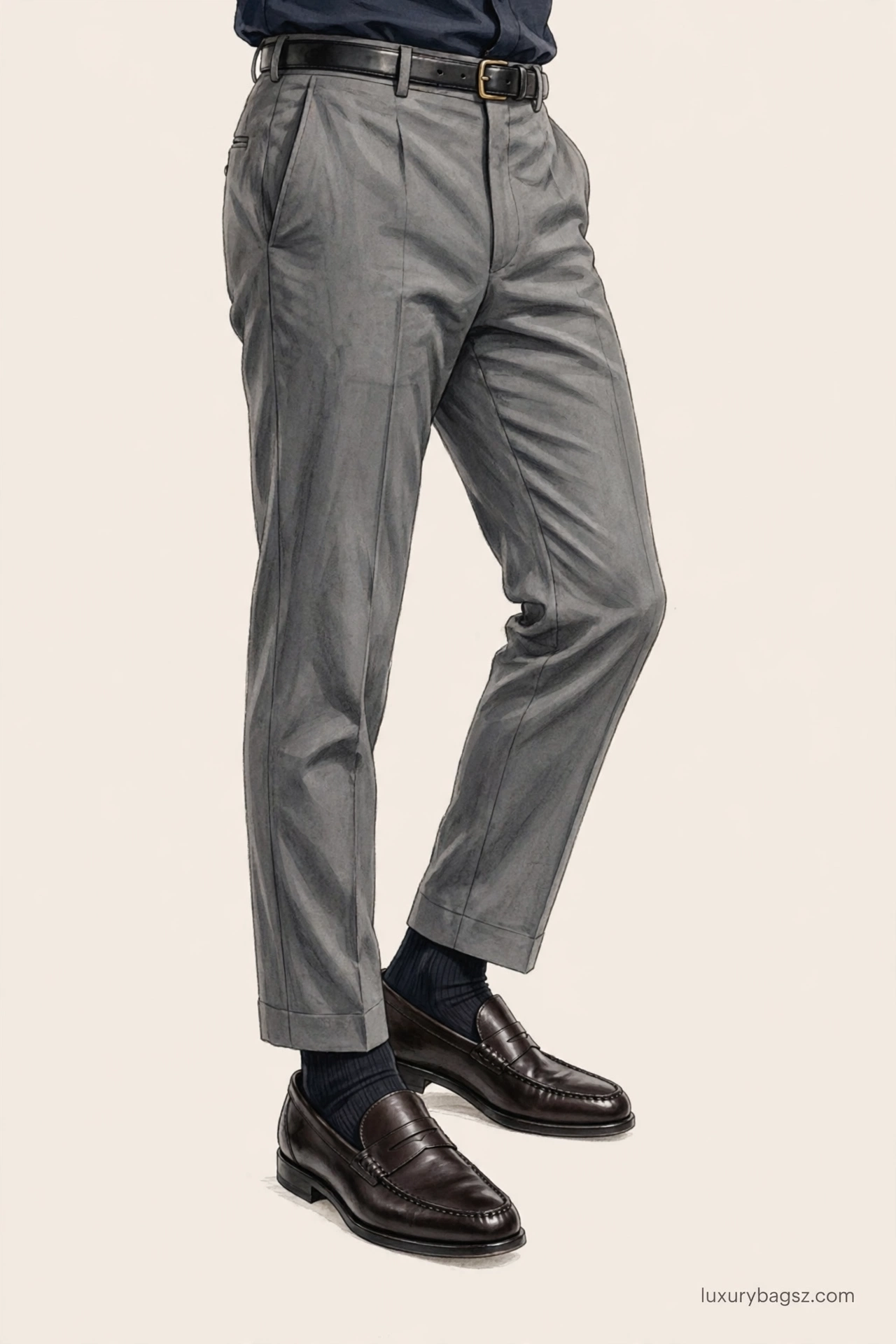
Yes, you can wear socks with loafers. Loafers are low-cut, so the sock shows more than it does with most shoes, which is why a careless sock choice stands out so much.
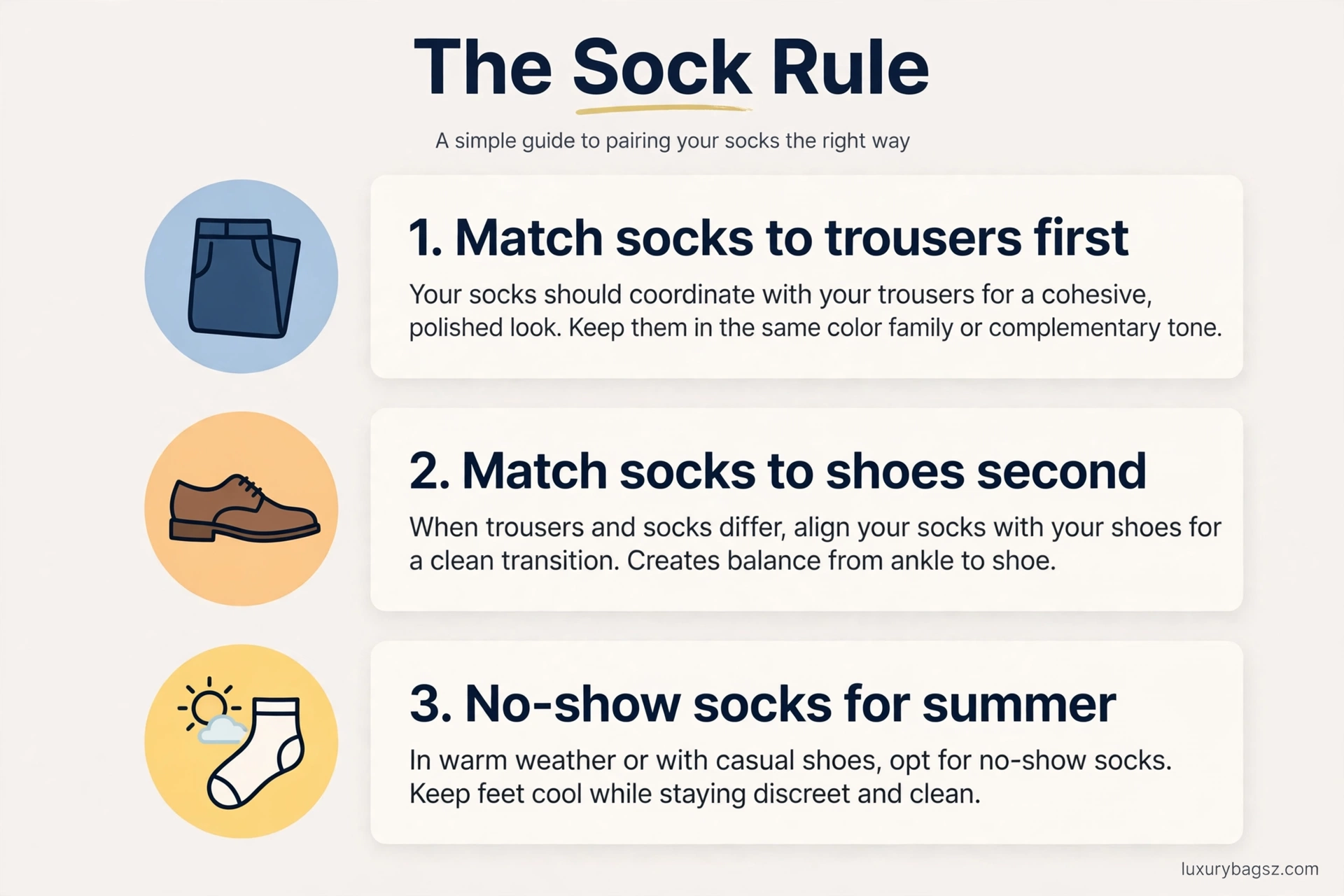
The simplest rule works in most outfits: match your socks to your trousers. That makes the sock an extension of the leg and lets the loafer take the attention instead.
The second choice is to match socks to the shoes. The third choice is no-show socks for a bare-ankle look. Everything else is a deliberate style statement, not a default.
Key Takeaways
- Best default: socks close to your trouser colour, in a fine, thin fabric.
- Second best: socks close to your loafer colour, especially with dark shoes.
- For suits, wear over-the-calf dress socks so no bare leg shows when you sit.
- No-show socks suit shorts and summer outfits, but never let them peek above the shoe.
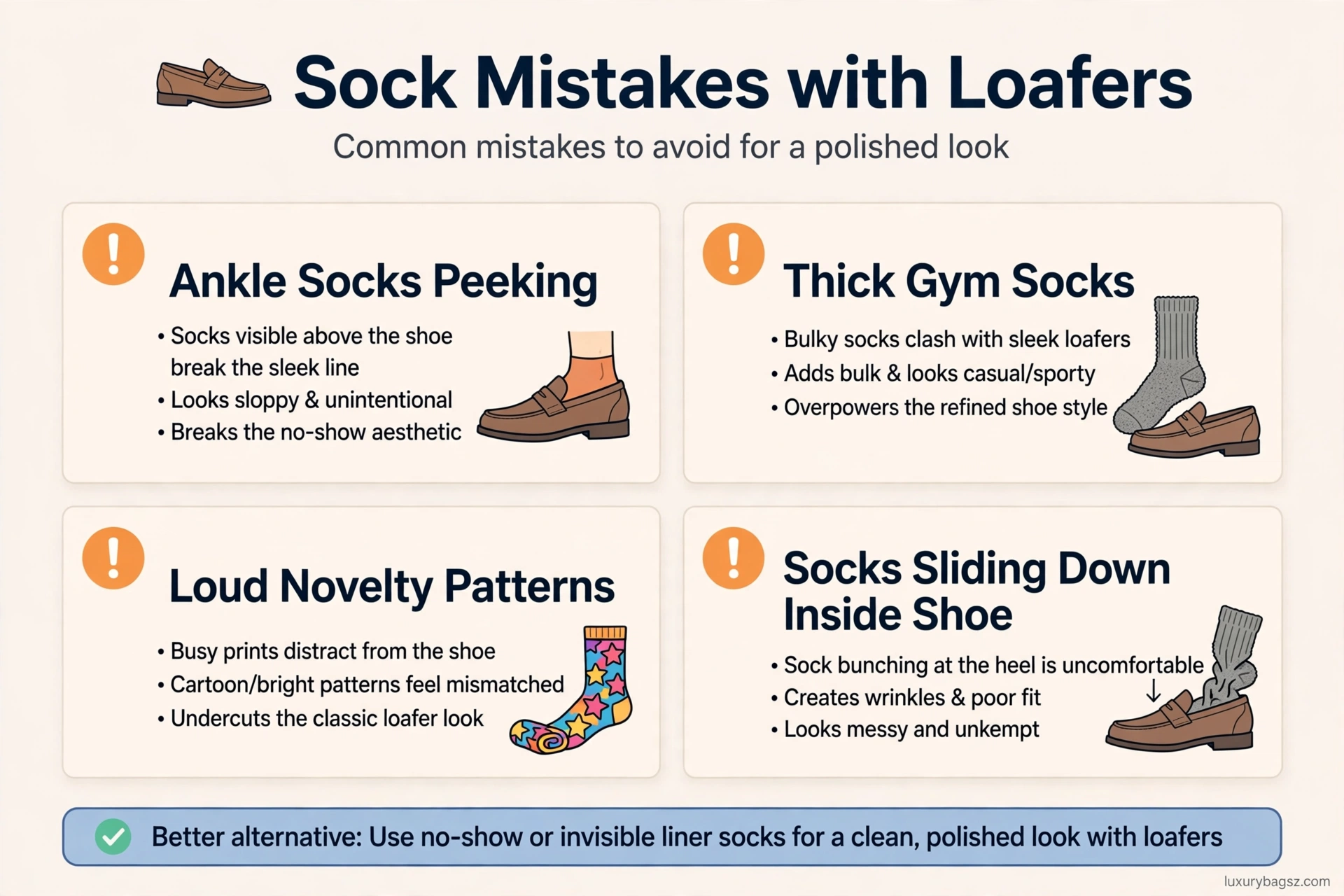
- Avoid ankle socks, thick gym socks and loud novelty patterns with loafers.
The One Rule That Solves Most Outfits
Match socks to trousers first. Grey socks with grey trousers, navy socks with navy trousers, and dark brown socks with brown trousers all create one clean leg line.
This rule also lengthens the leg visually. Because the sock blends into the trouser, the eye travels straight to the shoe, which is exactly where a good loafer deserves attention.
You need not match the shade exactly. A sock a shade darker than the trouser gives the same effect, and it is often easier to find than a perfect colour match.
If you cannot match the trouser, match the shoe instead. Black socks with black loafers and dark brown socks with brown loafers both look calm and intentional.
Only break the rule when the rest of the outfit is simple. A bold sock needs a quiet outfit around it, or the ankle becomes the loudest part of the whole look.
No-Show Socks and the Bare-Ankle Look
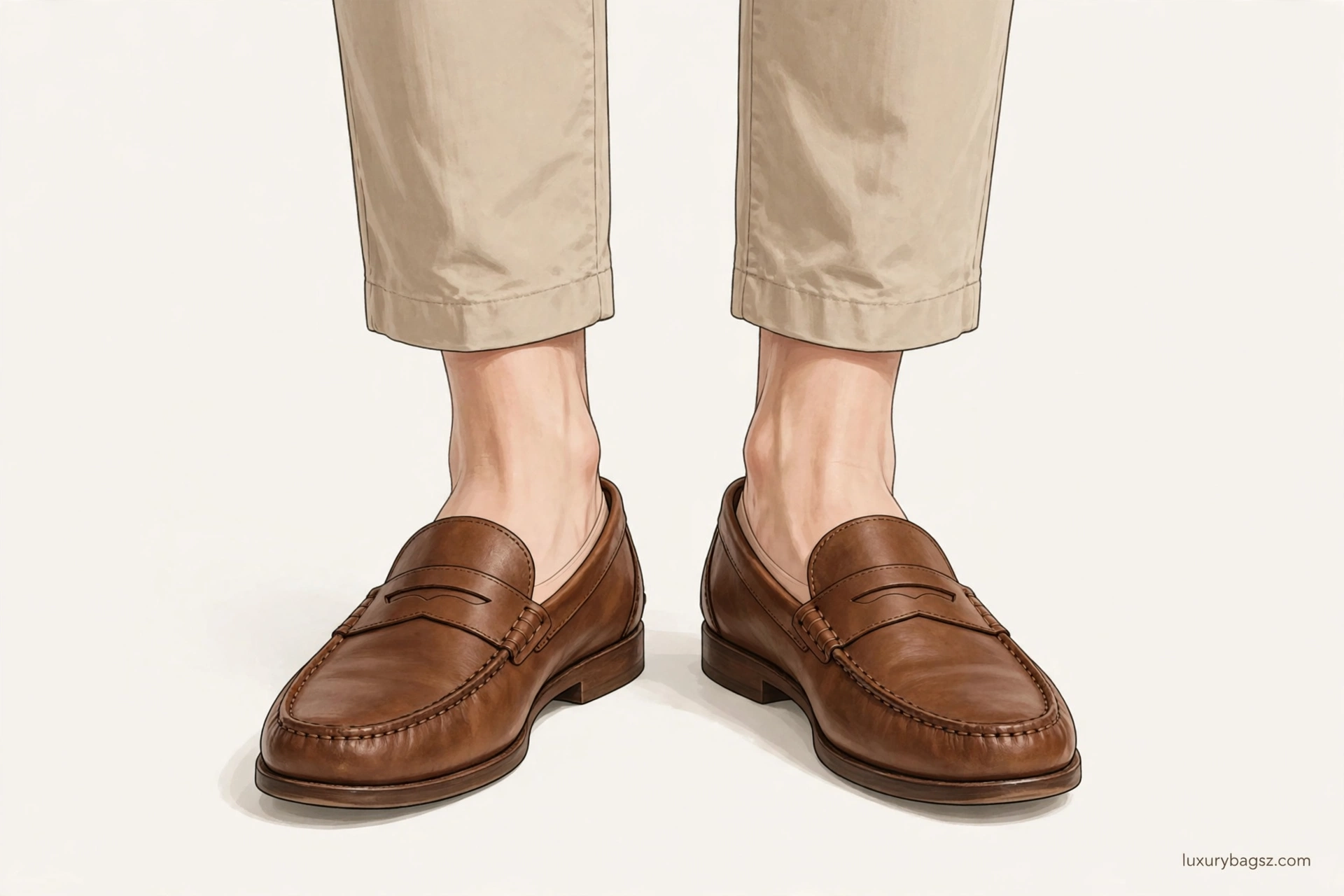
No-show socks sit inside the shoe and hide below the ankle. They give the bare-ankle look while protecting the lining from sweat, which truly bare feet damage fast.
Choose no-show socks with a silicone grip at the heel. Without grip, the sock slides down inside the shoe, bunches under the foot and defeats the whole point.
Check the fit in a mirror before leaving home. A no-show sock that peeks above the loafer in a thin band looks like an ankle sock that failed, not like a style choice.
No-show socks suit shorts, cropped chinos, summer linen and casual jeans best. They suit smart tailoring less well, where a proper dress sock looks more considered.
Buy several pairs, because no-show socks wear out and lose grip faster than dress socks. Replace them as soon as they start slipping, rather than tolerating a sliding sock.
Dress Socks for Suits and Smart Outfits
For suits and business outfits, wear thin dress socks in cotton, wool, silk or a blend. Thin socks fit inside a snug loafer without squeezing the foot or stretching the shoe.
Length matters as much as colour here. Over-the-calf socks stay up and cover the leg when you sit and cross your legs, which mid-calf socks often fail to do.
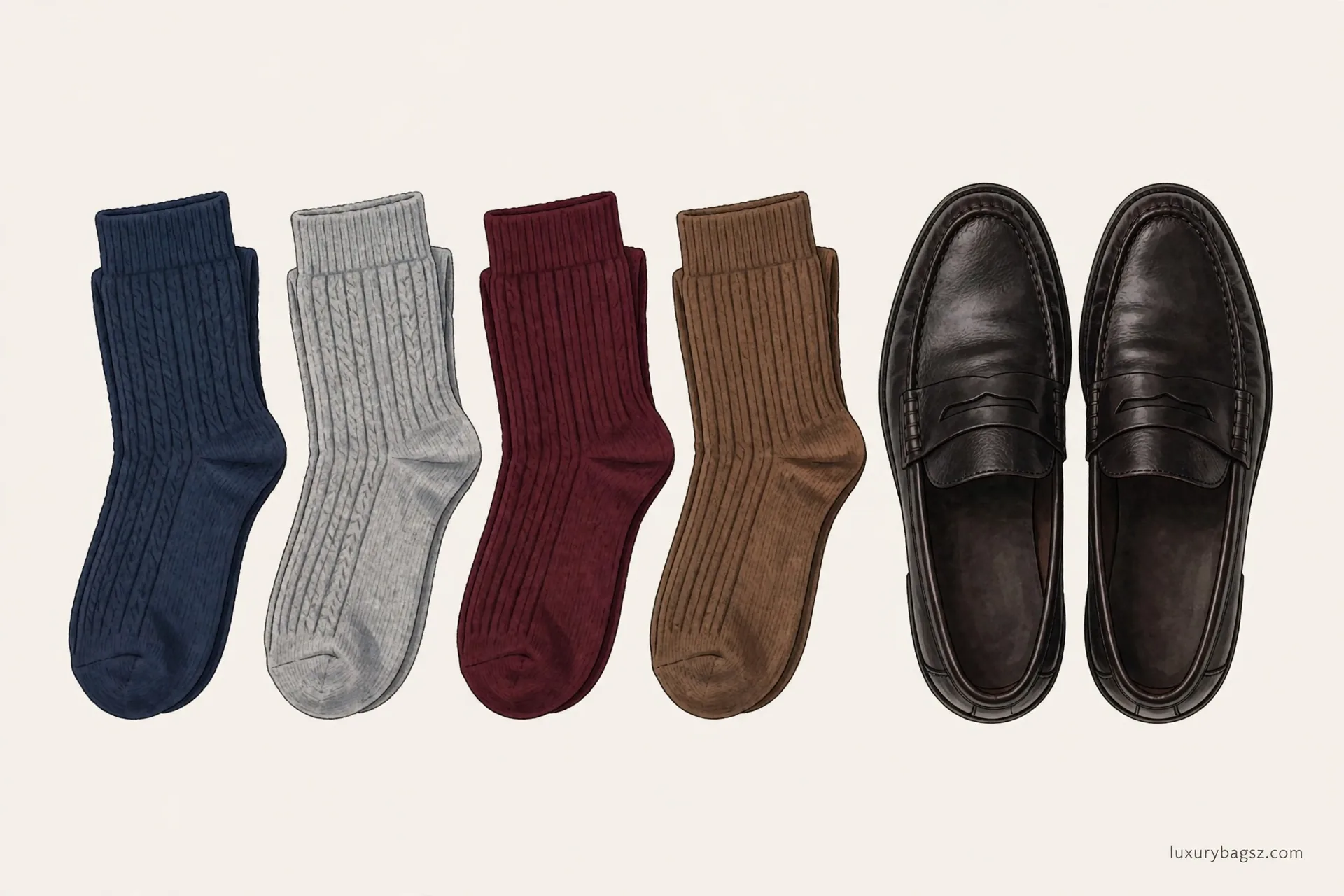
Dark colours are safest for formal outfits: black, charcoal, navy and dark brown. They match most suits and keep attention on the shoes rather than on the ankle.
Loafers count among dress shoes in smarter outfits, so treat their socks the same way you would for Oxfords. The low cut of the loafer makes the sock more visible, not less.
Avoid ribbed gym socks, thick hiking socks and socks with logos at the ankle. All three add bulk inside a snug shoe and read as sporty against tailored clothes.
Colours and Patterns That Work, and Those That Do Not
Solid colours are the safest sock choice with loafers. Navy, charcoal, dark grey, brown and burgundy cover almost every outfit without competing with the shoes.
Subtle patterns can work when the outfit is otherwise plain. Fine stripes, small dots and faint argyle in muted tones add interest without turning the ankle into a feature.
Match a patterned sock to one colour already in the outfit, such as the shirt, jacket or pocket square. That link makes the pattern look planned rather than random.
Avoid large novelty prints, neon colours and cartoon motifs with loafers. They clash with the shoe's refined shape and drag a smart outfit firmly into novelty territory.
If you love bold socks, wear them with simple trousers, a plain shirt and quiet loafers. One bold element works; bold socks plus bold shoes plus a bold shirt do not.

White Socks With Loafers: When It Works
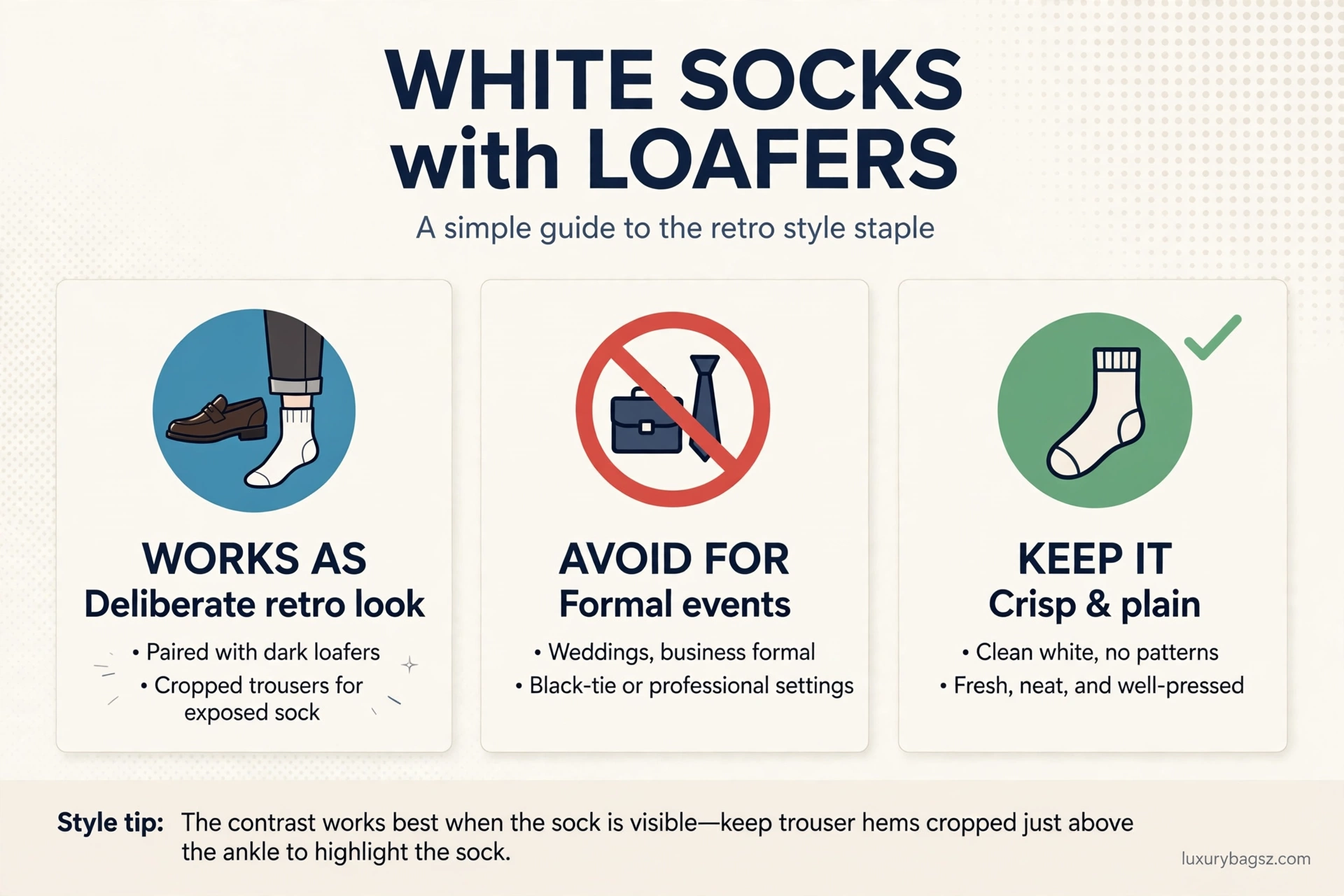
White socks with loafers are no longer an automatic mistake, but they are a statement. They work best as a deliberate retro, preppy or streetwear choice, not as a default.
The classic version pairs clean white crew socks with dark loafers, cropped trousers or dark jeans, and a simple top. The white band becomes a clear, intentional break.
Keep white socks crisp, plain and well-fitted. Greyed, baggy or logo-covered white socks look like gym socks, and gym socks with loafers still look like a mistake.
White socks suit casual and creative settings far better than formal ones. For suits, weddings and conservative offices, dark dress socks remain the correct choice.
If you are unsure, skip white socks. A dark sock matched to your trousers never looks wrong, while a white sock in the wrong room draws every eye to your ankles.
Socks by Season and Fabric
In summer, thin cotton or bamboo no-show socks keep feet cool and dry. Breathable fabric matters most here, because loafers worn sockless trap heat and moisture.
In autumn and winter, fine merino wool dress socks add warmth without bulk. They fit inside snug loafers better than thick wool socks, which change the shoe's fit.
Cashmere-blend socks suit dressy winter outfits, but they wear through faster than wool. Save them for occasions rather than daily wear, and wash them gently.
Avoid cotton gym socks in any season with loafers. They are too thick, too white and too sporty, and they bunch inside a shoe that has no laces to hold the foot steady.
For suede loafers, choose socks that do not shed lint onto the nap. Smooth, fine-knit socks are kinder to suede than fluffy socks, which leave fibres behind.
Sock Lengths Explained
Over-the-calf socks reach above the calf and stay in place all day. They are the correct length for suits, formal events and any outfit where you will sit for long periods.
Mid-calf socks, also called crew socks, suit casual and smart casual outfits. They cover the ankle fully and work with jeans, chinos and cropped trousers.
No-show socks hide inside the shoe and suit summer, shorts and casual outfits. They are a summer tool, not an all-year default, and they fail if they slip or peek.
Ankle socks sit just above the shoe and show a band of fabric. With loafers, that band looks unfinished, so avoid ankle socks and choose either no-show or crew length.
Knee-length and novelty long socks belong with specific uniforms or costumes, not with everyday loafers. They add bulk and draw attention for no styling benefit.
Fit, Comfort and Buying Advice
Try loafers on with the socks you plan to wear most. A loafer fitted with thick socks will feel loose with no-show socks, and the reverse can make a snug pair painful.
Thin dress socks are the best all-round choice for fitting. They add almost no bulk, so the shoe's fit stays true whether you later switch to no-show socks or not.
If your feet sweat, choose moisture-wicking dress socks rather than going truly barefoot. Sweat damages linings, causes odour and shortens the life of leather shoes.
Buy socks in the colours you wear most: navy, charcoal and dark brown cover most wardrobes. Add burgundy or olive only once the basics are covered.
Replace socks with thinning heels or stretched elastic promptly. A sock that slides down inside a loafer is uncomfortable, and it makes an otherwise good outfit look careless.
Frequently Asked Questions
Should you wear socks with loafers?
Yes, in most cases, even if the socks are hidden. No-show socks protect the shoe, while dress socks suit smarter outfits and cold weather far better than bare feet.
What colour socks go with brown loafers?
Dark brown, navy, charcoal or olive socks all work. Match the trouser colour first, and use a sock close to the loafer colour as your second choice.
Can you wear black socks with brown loafers?
Yes, especially with dark trousers. Black socks are a safe, quiet choice, though a brown or navy sock often blends better with brown shoes and lighter trousers.
Are no-show socks better than going sockless?
Yes, almost always. Truly bare feet make loafers damp and smelly, while good no-show socks give the same look and protect the lining and footbed.
Should socks match shoes or trousers?
Trousers first, shoes second. Matching trousers lengthens the leg and lets the shoe stand out, while matching shoes creates a single block of colour at the foot.
Can you wear patterned socks with loafers?
Yes, if the pattern is subtle and tied to another colour in the outfit. Large, loud or novelty patterns clash with the refined shape of a loafer.
What socks do you wear with loafers and shorts?
No-show socks are the standard choice. They give a clean bare-ankle look, protect the shoe, and avoid the unfinished band that ankle socks create.
Are white socks with loafers ever acceptable?
Yes, as a deliberate retro or preppy look with dark loafers and cropped trousers or dark jeans. Keep them crisp and plain, and skip them for formal events.
How long should socks be with a suit and loafers?
Over-the-calf length is correct. It stops bare leg showing when you sit, which matters more with low-cut loafers than with higher shoes or boots.
Do thick socks change loafer fit?
Yes, noticeably. Thick socks fill a snug loafer and can make it painful, so fit and buy loafers while wearing the socks you will actually use most.
Summary
Socks with loafers are not a problem to solve, they are a detail to choose on purpose. Match socks to trousers for smart outfits, use no-show socks for summer, keep fabrics thin and colours calm, and the loafer will always look like it belongs.






