

What Is Chambray? The Lightweight Fabric That Looks Like Denim
Chambray in Brief
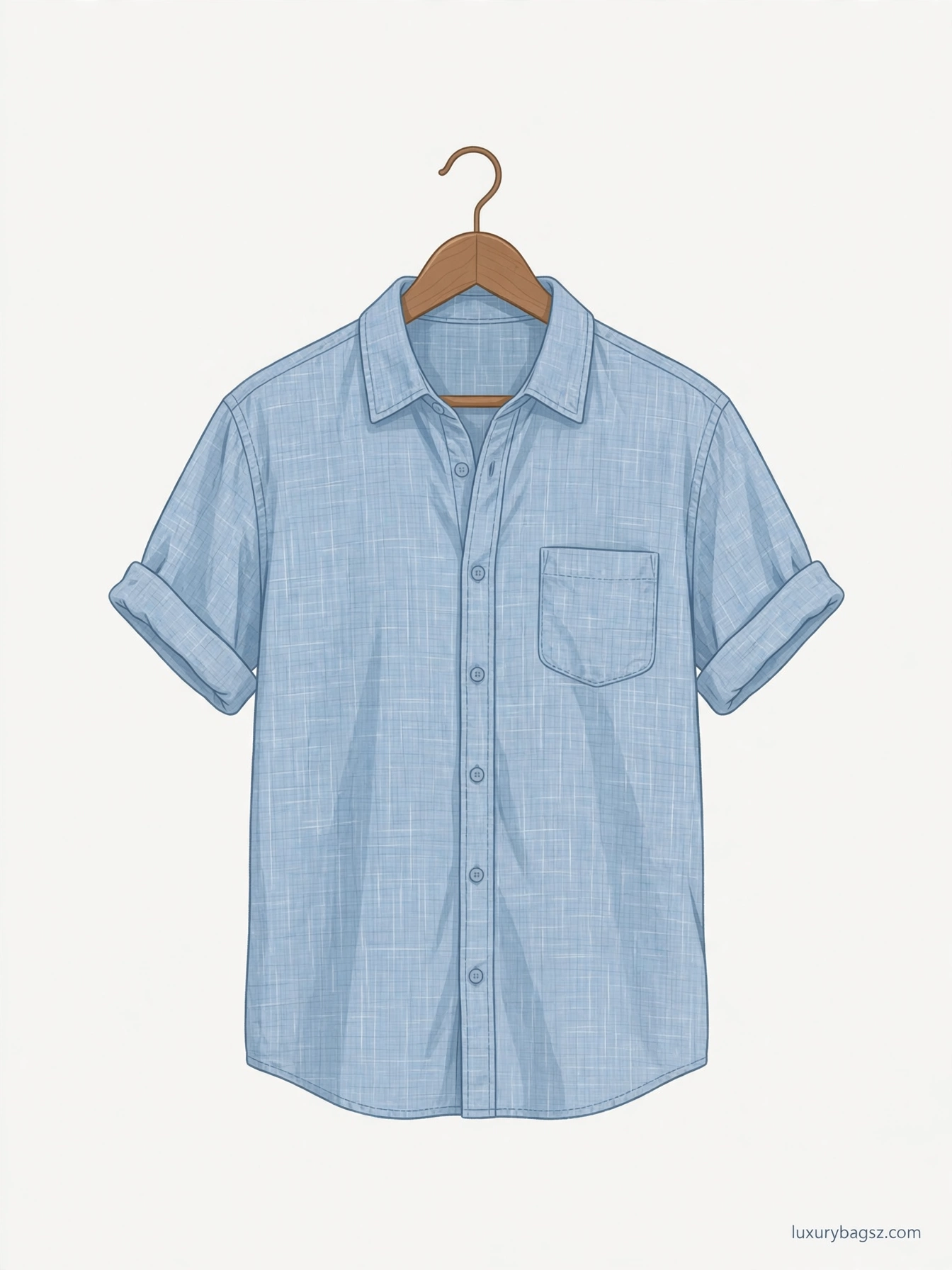
Chambray is a lightweight, plain-weave fabric, usually cotton, woven with a coloured warp and a white weft. That mix gives it a soft, slightly faded look that reads like light denim from a distance, without denim's weight or stiffness.
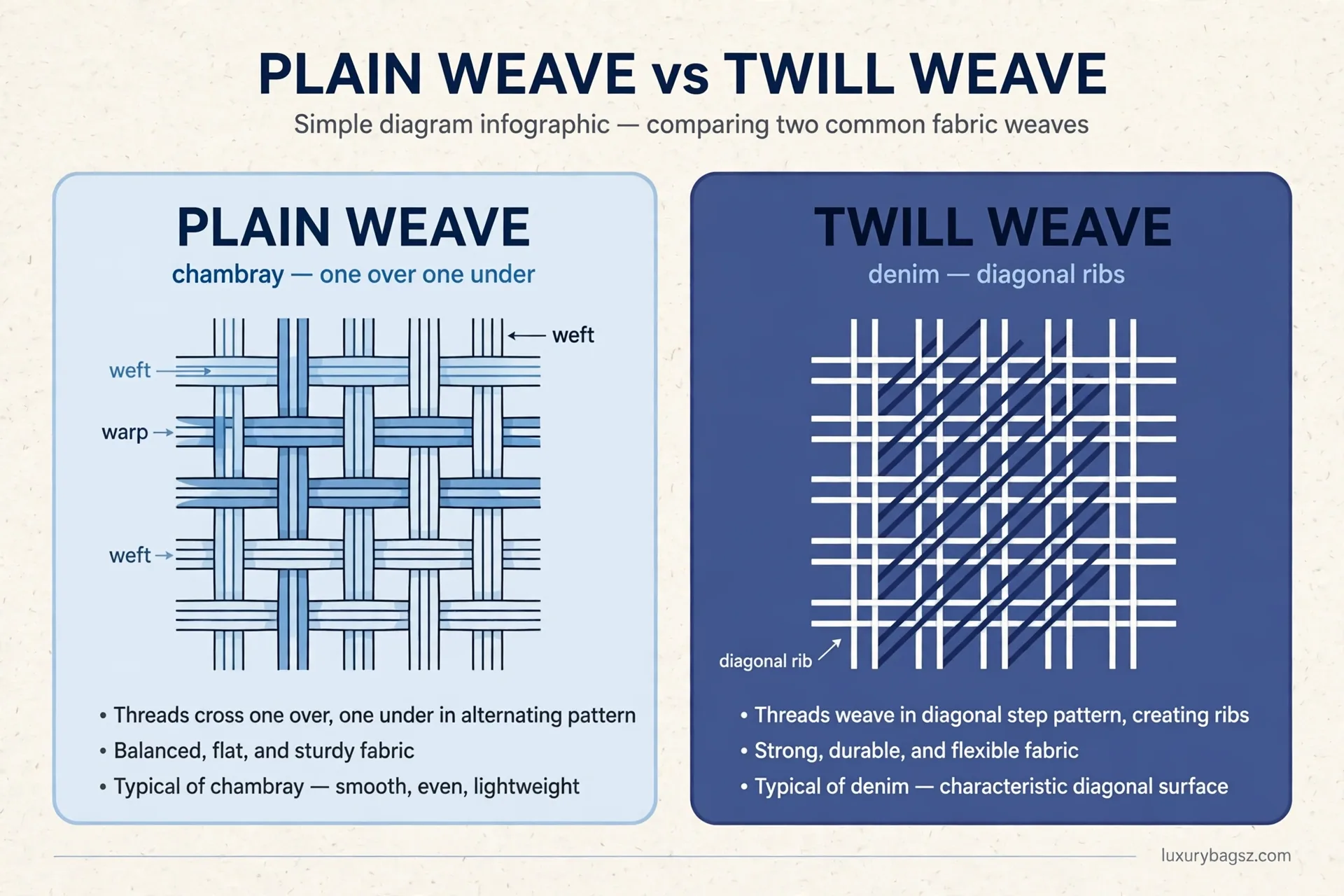
It is not denim. Denim uses a twill weave with diagonal ribs, which makes it heavier, harder-wearing, and paler on the reverse. Chambray uses a simple over-under plain weave, so it looks almost the same on both sides and feels soft from the first wear.
Buy chambray for shirts, summer dresses, and light layering in warm weather. Do not buy it expecting jeans-level toughness: it is built for comfort first, and it will not take the same abuse as denim.
Key Takeaways
- Chambray is a plain weave: coloured warp threads crossed by white weft threads, one over, one under.
- It is usually cotton, traditionally light blue, and typically around 4 to 5 ounces per yard.
- Denim is a twill weave, heavier at 10 to 14 ounces, with diagonal ribs and a paler reverse.
- Chambray looks alike on both sides; denim's reverse is much paler because the white weft shows there.
- It is soft, breathable, and lightweight, but it creases easily and wears out faster than denim.
- Best uses are shirts and summer clothing, not trousers or workwear that face heavy abrasion.
How Chambray Is Woven
Every woven fabric has warp threads running lengthwise and weft threads running across. In chambray, the warp is dyed, traditionally light blue, and the weft is left white or undyed.
The weave itself is plain: each weft thread goes over one warp thread, then under the next, in a simple grid. Your eye catches colour and white at the same time, which creates chambray's soft, mottled, heathered look.
That structure also explains the hand feel. With so many interlacing points, the fabric holds its shape well and resists skewing, yet stays thin and breathable. It has a gentle sheen in some finishes, though many chambrays look fairly matte.
Chambray vs Denim: The Weave Makes the Difference
Chambray and denim are first cousins. Both pair a coloured warp with a white weft, which is why both show that blue-with-white-flecks character. The difference is entirely in how the yarns cross.
Denim uses a twill: each weft thread passes under two or more warp threads before going over one. That creates the diagonal ribs you can see on jeans, packs more thread into the same space, and makes denim heavier and stiffer.
Chambray's plain weave cannot match that tear strength. It trades toughness for lightness, softness, and breathability. Think of it this way: denim is built for jeans and jackets, chambray for shirts and dresses.

A Short History
Chambray takes its name from Cambrai, a French city historically known for fine linen weaving. Early chambray was often linen; modern chambray is usually cotton, though linen and cotton-linen blends still appear.
Workwear adopted chambray for shirts because it was cheap, washable, and cooler than heavier fabrics. In the United States, chambray work shirts became a staple long before they became a fashion item.
Today chambray sits in a curious place: casual enough for weekends, neat enough for a smart-casual office, and light enough for hot climates. That versatility is why it keeps returning to menswear and womenswear alike.
What Chambray Feels Like to Wear
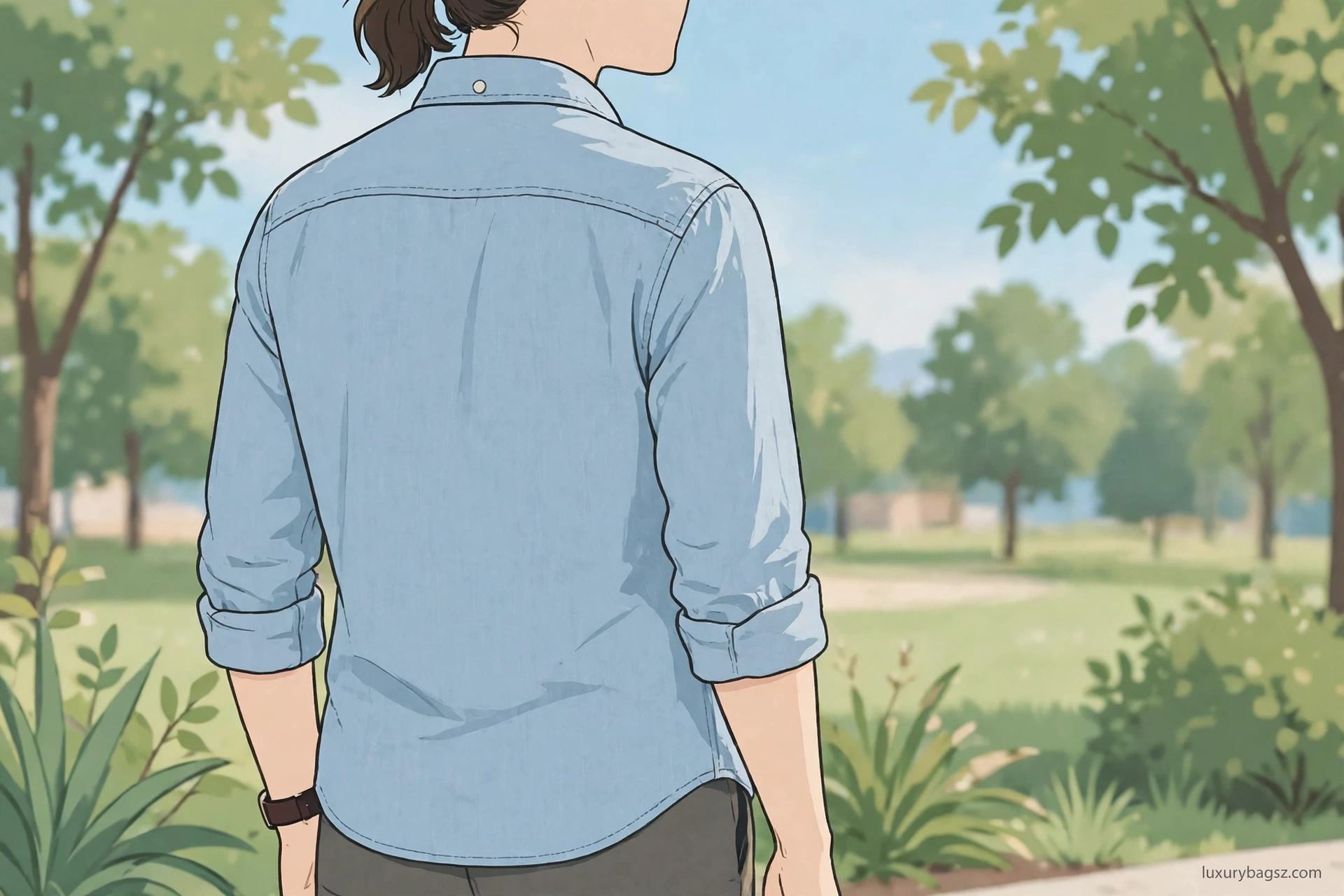
Chambray feels soft from the first wear, with no break-in period. It drapes easily, breathes well, and layers without bulk, which makes it ideal for summer shirts worn open over a tee or tucked into chinos.
The trade-offs are creasing and thinness. Chambray wrinkles readily, especially around elbows and the waist, and lighter weights can look slightly sheer over dark underlayers. A quick steam or a relaxed attitude to wrinkles solves the first problem.
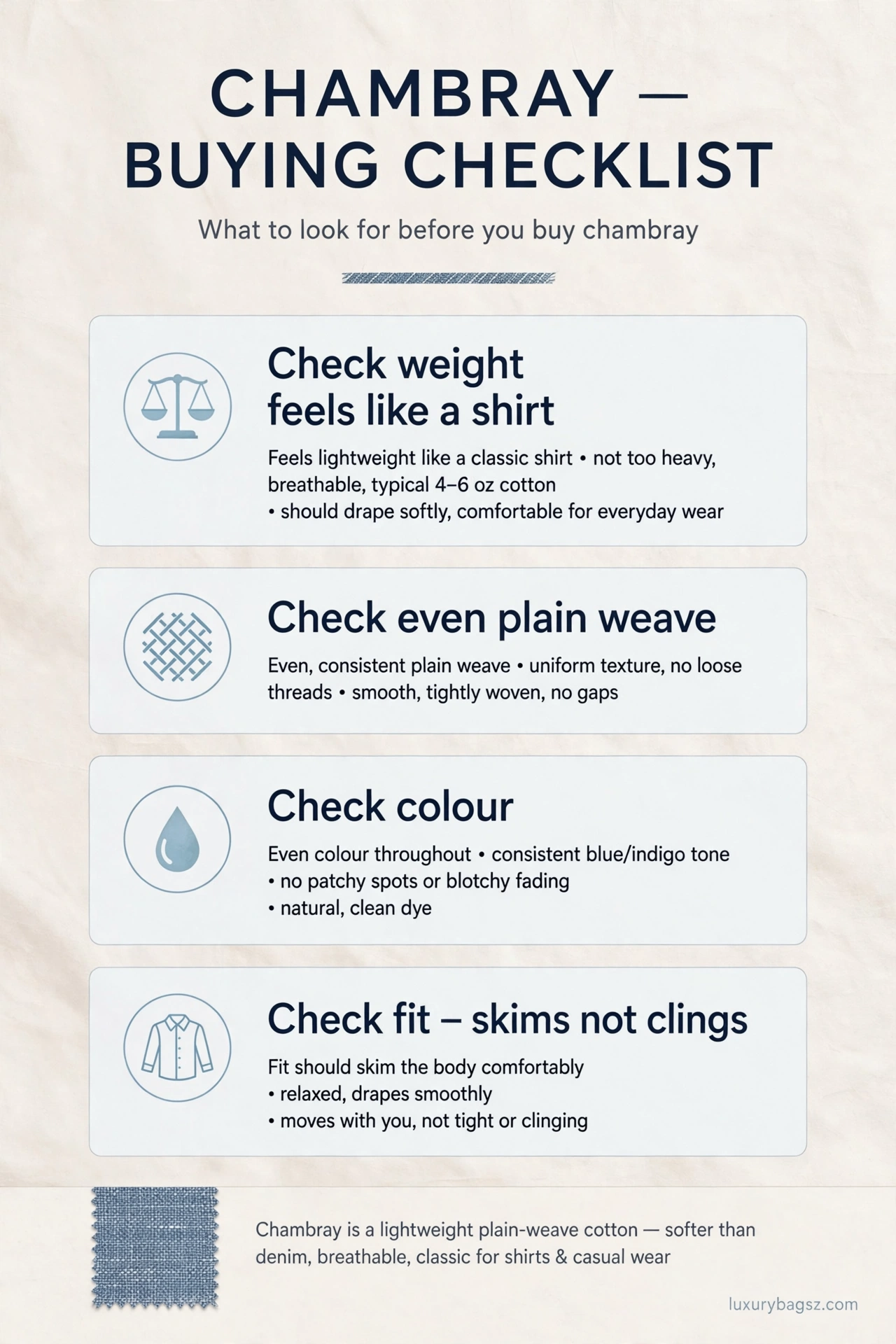
Fit matters more in chambray than in denim, because the fabric shows every pull and bunch. Choose a fit that skims rather than clings, and avoid very slim cuts if you dislike visible creasing across the stomach.
Chambray, Denim, and Gingham: Do Not Mix Them Up
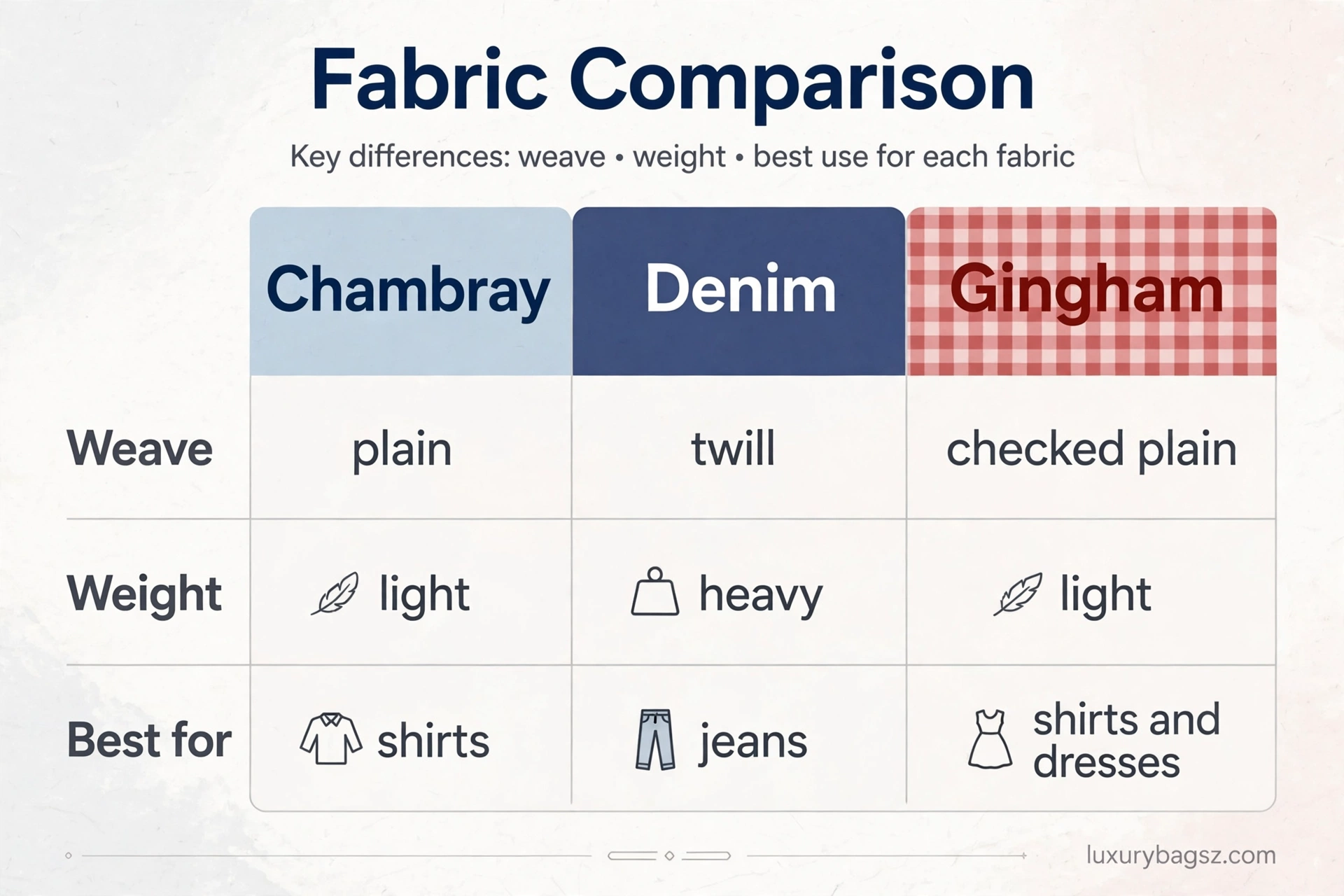
Gingham is often confused with chambray, but it is a different idea. Gingham is a checked pattern woven from coloured stripes running in both directions, so the check is woven in, not printed.
Denim, as covered above, is a twill with a warp-faced front and a pale reverse. Chambray is a plain weave with a balanced look on both sides. Once you check the reverse of a fabric, telling them apart becomes easy.
A quick test helps in shops: look at the back. If it is much paler and shows diagonal ribs, it is denim. If it looks the same as the front and feels light, it is chambray. If it is checked, it is gingham, whatever the colour.
How to Wash and Care for Chambray
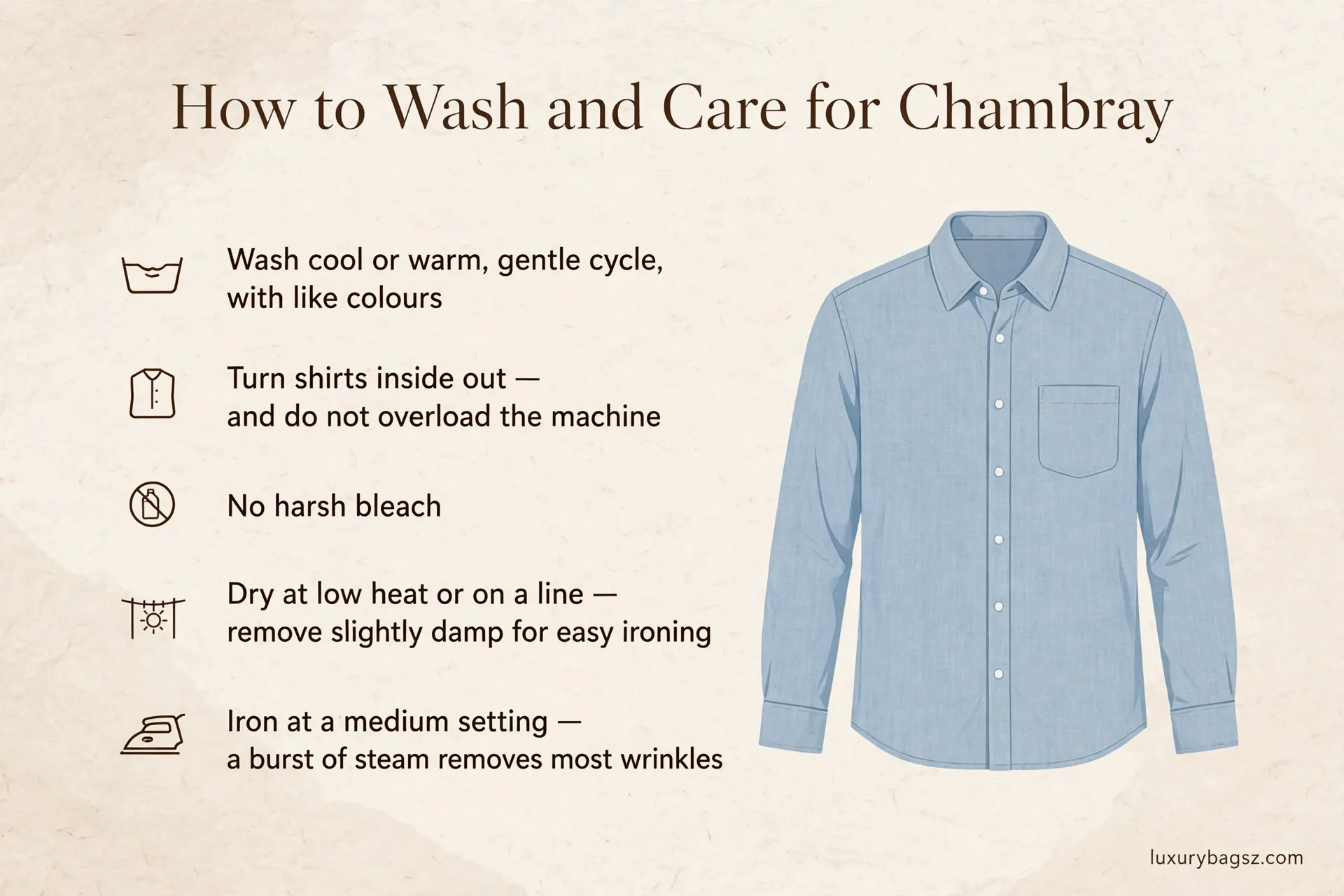
Wash chambray in cool or warm water on a gentle cycle, with like colours, and avoid harsh bleach. Turn shirts inside out to reduce surface wear, and do not overload the machine, since friction accelerates fading.
Dry at low heat or on a line, and remove shirts slightly damp for easier ironing. Chambray irons well at a medium setting, and a burst of steam removes most wrinkles without flattening the fabric's character.
Expect gentle fading over time, especially in blue chambray. The colour softens rather than developing the high-contrast fades of jeans, because the dye usually penetrates the yarn more fully. Wash less often and in cooler water to slow that process.
What to Buy, and What to Avoid
Look for 100% cotton or a cotton-linen blend at a weight that feels like a shirt, not a sheet. Very thin chambray can feel flimsy and go sheer, while heavier chambray, sometimes called denim chambray, suits overshirts and light jackets.
Check the weave up close: you should see the even over-under grid and the mixed blue-and-white yarns. Uneven dyeing, slubs, and thick spots are not typical chambray character; they belong to slub denim, a different fabric altogether.
Avoid chambray for trousers you will kneel in, for workwear that faces abrasion, and for anything that needs to hold a sharp crease all day. Its strengths are softness and breathability, not structure or toughness.
How to Style Chambray
A light blue chambray shirt is one of the most versatile summer pieces you can own. Wear it with white or khaki chinos for a clean casual look, or under a navy blazer when you want denim character without denim weight.
For a workwear look, pair chambray with darker denim, but keep the tones apart: light chambray on top and dark indigo below avoids the matched-denim effect. Brown leather shoes and a canvas belt complete the outfit without formality.
In cooler weather, layer chambray under knitwear or a waxed jacket. It adds texture without bulk, and its light colour lifts dark winter outfits. Just keep it out of heavy rain, since thin cotton takes time to dry.
Frequently Asked Questions
What is chambray fabric?
Chambray is a lightweight plain-weave fabric, usually cotton, woven with a coloured warp and a white weft. That mix gives it a soft, faded, denim-like look at a much lighter weight.
Is chambray the same as denim?
No. Both use coloured and white yarns, but denim is a heavier twill with diagonal ribs and a paler reverse, while chambray is a lighter plain weave that looks alike on both sides.
Is chambray good for summer?
Yes, it is one of the best summer shirt fabrics. It is light, soft, and breathable, though it creases easily and dries more slowly than linen.
Does chambray shrink?
Cotton chambray can shrink slightly on the first hot wash, so wash cool and avoid high dryer heat. Pre-washed chambray shrinks less than unwashed fabric.
Is chambray durable?
It is durable for shirts and light use, but not as tough as denim. It will not survive the same abrasion as jeans, so it suits shirts and dresses rather than work trousers.
Why does chambray look faded?
Your eye sees coloured warp and white weft together, which softens the colour into a heathered, faded look. It is a property of the weave, not a wash effect.
Can you wear chambray with denim?
Yes, if the tones differ clearly. Light chambray with dark indigo denim works well; matching light tones top and bottom can look like an unintended denim suit.
Does chambray wrinkle a lot?
Yes, cotton chambray creases easily, especially at elbows and the waist. Steaming helps, and many wearers accept the wrinkles as part of its relaxed character.
What is denim chambray?
Denim chambray is a slightly heavier, washed chambray with more denim character, used for shirts, pinafores, and light jackets. It is still plain-woven, not a true denim twill.
Is chambray only blue?
Traditionally light blue is most common, but chambray comes in many colours, since any dyed warp can be paired with a white weft. Blue simply remains the classic.
Conclusion
Chambray is denim's lighter, softer cousin, and that is exactly its value. It gives you the colour and casual character of denim in a fabric you can comfortably wear as a shirt in summer. Learn the weave test, buy a weight that feels like a shirt, accept the wrinkles, and chambray will earn its place in your warm-weather rotation.






