

Designer T-Shirts for Men: Summer Fabrics, Fits, Prices and What to Check
Summer Tees, Sorted: The Short Answer First
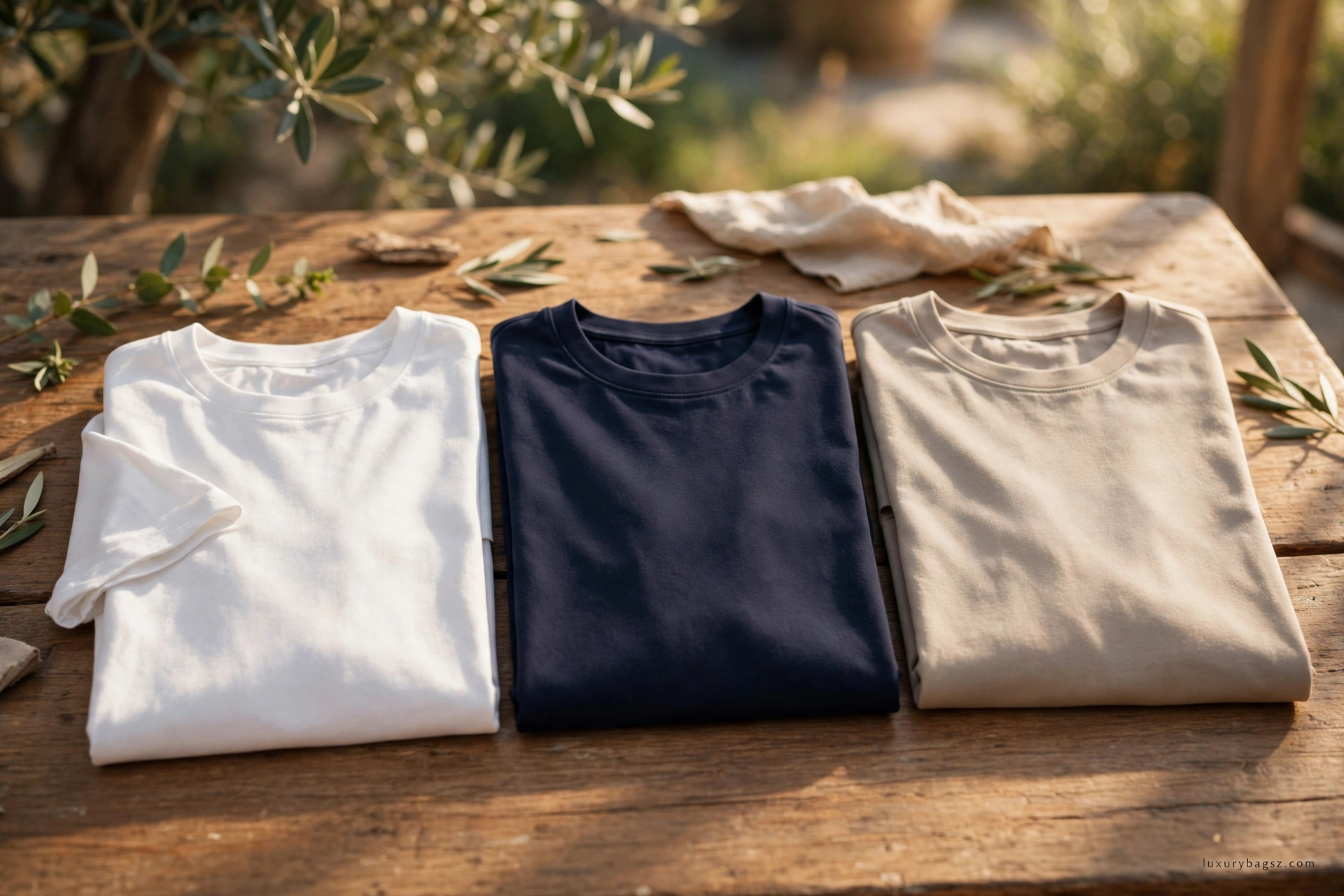
For summer, the best designer T-shirt for men is a mid-weight cotton or cotton and linen tee in white, navy or stone, cut neat rather than tight, with a collar that holds its shape.
Pay for fabric and fit, not for a large logo. A plain tee in good cotton will outlast and out-style a printed one, and it works with shorts, chinos and tailoring alike.
- Fit should skim the body, with sleeves ending mid-bicep and no pulling at the chest.
- White, navy, black and stone cover almost every summer outfit you will build.
- Typical designer prices sit well above high-street tees; fabric weight is the clue.
- Check collar recovery and seam quality in the shop before you pay.
- Wash cool and dry flat or on a hanger to keep the neckline true.
What Makes a Tee Designer, Beyond the Label
A designer tee earns its price in cloth, cut and finishing. The cotton is usually longer-staple, so the surface stays smooth after many washes.
Seams sit cleaner, the collar is often ribbed or bound so it does not sag, and the hem falls level. Those details are what you see in a mirror.
Our summer cotton edit makes the same point for warm-weather dressing generally: fibre first, branding last.
If a tee feels thin, twists in the wash at home or shows a shiny print, the label is doing all the work. Put it back and choose cloth you can judge.
Weight is the quickest hand test: a summer tee should feel present but never heavy when you lift it by the shoulders in the shop.
Fabrics That Stay Cool
Pure cotton breathes well and suits most men. Cotton with a little linen feels drier in humidity, though it creases more through the day.
Light jersey with a small amount of elastane holds shape on the move. Heavy interlock and dense pique trap heat and suit spring better.
For fabric science, our breathable summer fabrics guide compares weaves for hot days in useful detail.
Hold the cloth to the light. A summer tee should feel substantial yet airy, never like a winter base layer and never see-through on the chest.
Prints fade first at the chest and under the arms, so a printed tee you love should be washed gently from the very first wash.
Fit: Neat, Not Tight
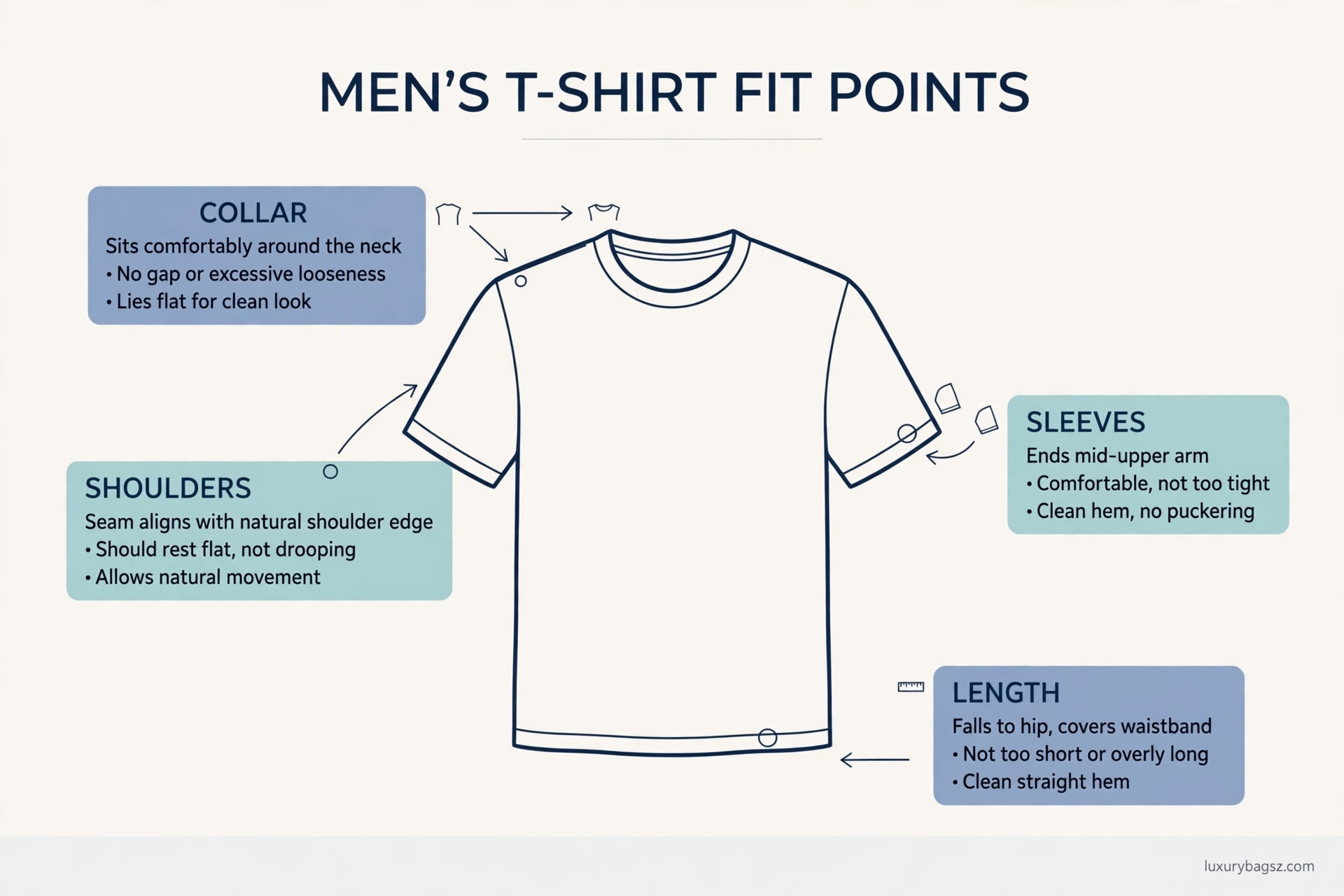
The shoulder seam should sit on your shoulder bone. Sleeves that end around mid-bicep look clean; very long sleeves read as borrowed clothing.
Length matters with shorts and untucked wear. The hem should cover the waistband and a little more, without pooling over the hips.
If you lift your arms and the whole tee rises, it is too short or too tight. If fabric folds at the waist, try the size down or a slimmer cut.
Tapered and straight cuts suit most builds. Very boxy cuts work best tall and deliberate, paired with wider trousers to balance them.
Necklines differ more than men expect: a higher crew suits layering, while a lower scoop reads more relaxed and holiday-minded.
Colours and Prints for Summer
Start with white, then navy, then black or charcoal. Stone, sage and washed blue follow easily and still pair with navy and denim.
One striped Breton-style tee adds pattern without noise. Large chest logos date fast and limit what the tee can pair with.
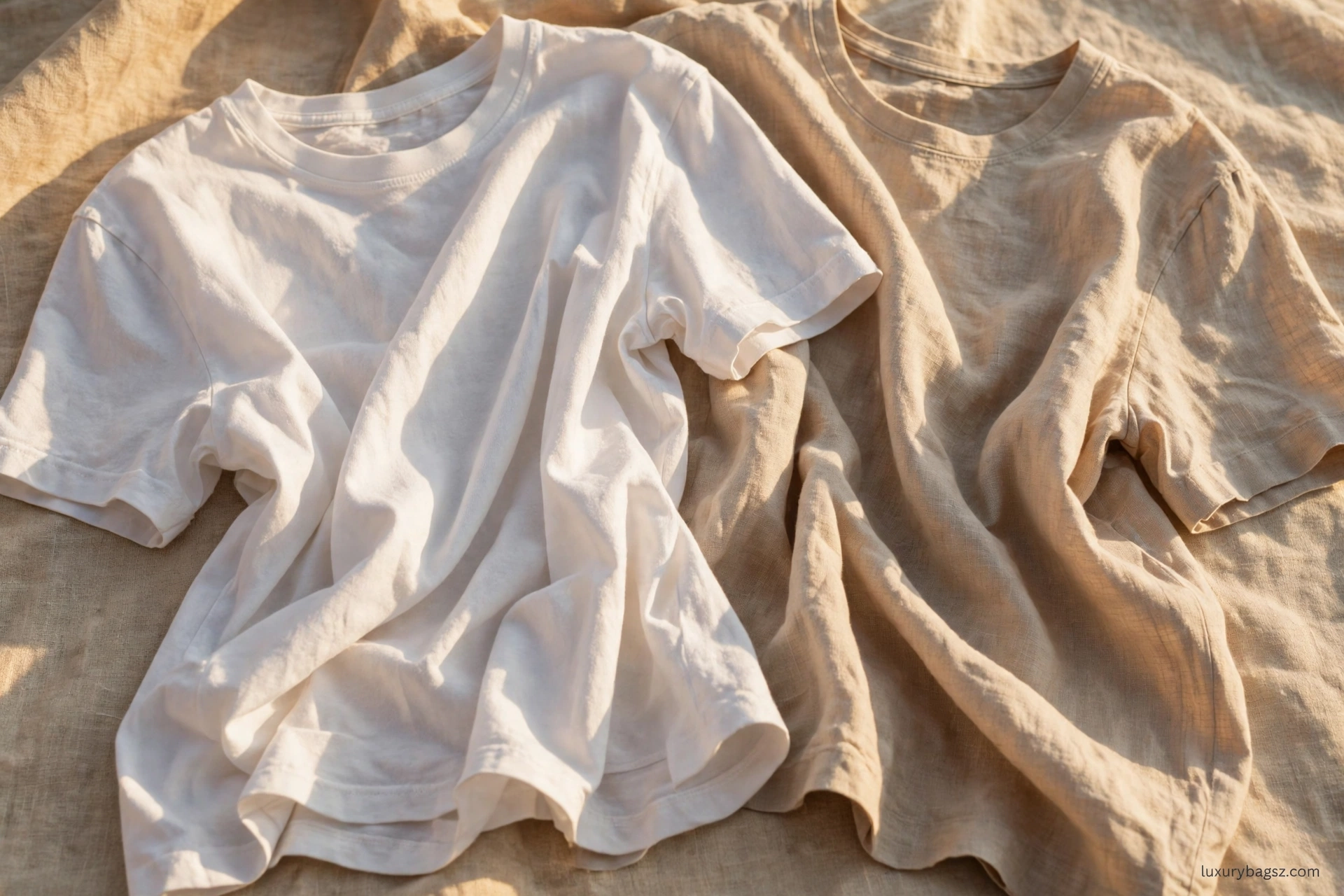
Faded, garment-dyed colours suit summer light well. They also hide the soft fading that sun and washing bring to any cotton tee.
Build three plain tees before one statement print. The plain ones will be worn weekly; the print is a sometime piece by design.
A Breton stripe earns its keep because it patterns an outfit without demanding that everything else stay plain around it.

Prices: What Typical Money Buys
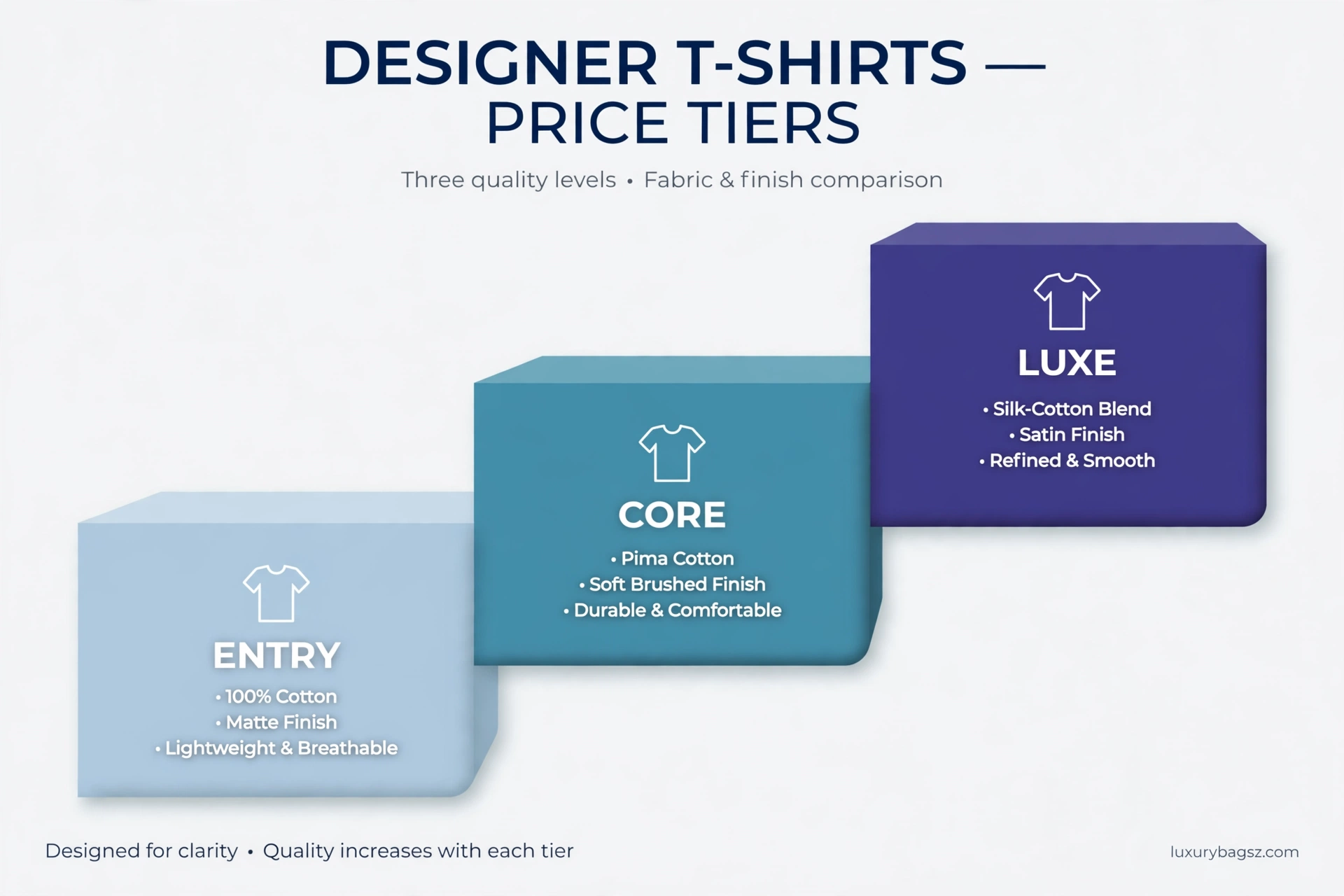
Designer tees typically cost several times a basic high-street tee, with fabric, country of making and finish driving the gap. Treat any single price as a guide.
At the lower designer end you pay for better cotton and a cleaner cut. Higher prices add finer yarns, garment dyeing and limited runs.
Cost per wear is the honest test. A tee worn twice a week all summer quickly earns back a careful purchase; a novelty print rarely does.
On sale, plain core colours in your size are the smart buy. They are the same tees, simply bought at the calm end of the season.
Multi-packs from designer lines can lower the cost per tee, but only buy them when every colour in the pack suits you.
Styling: Shorts, Chinos and Tailoring
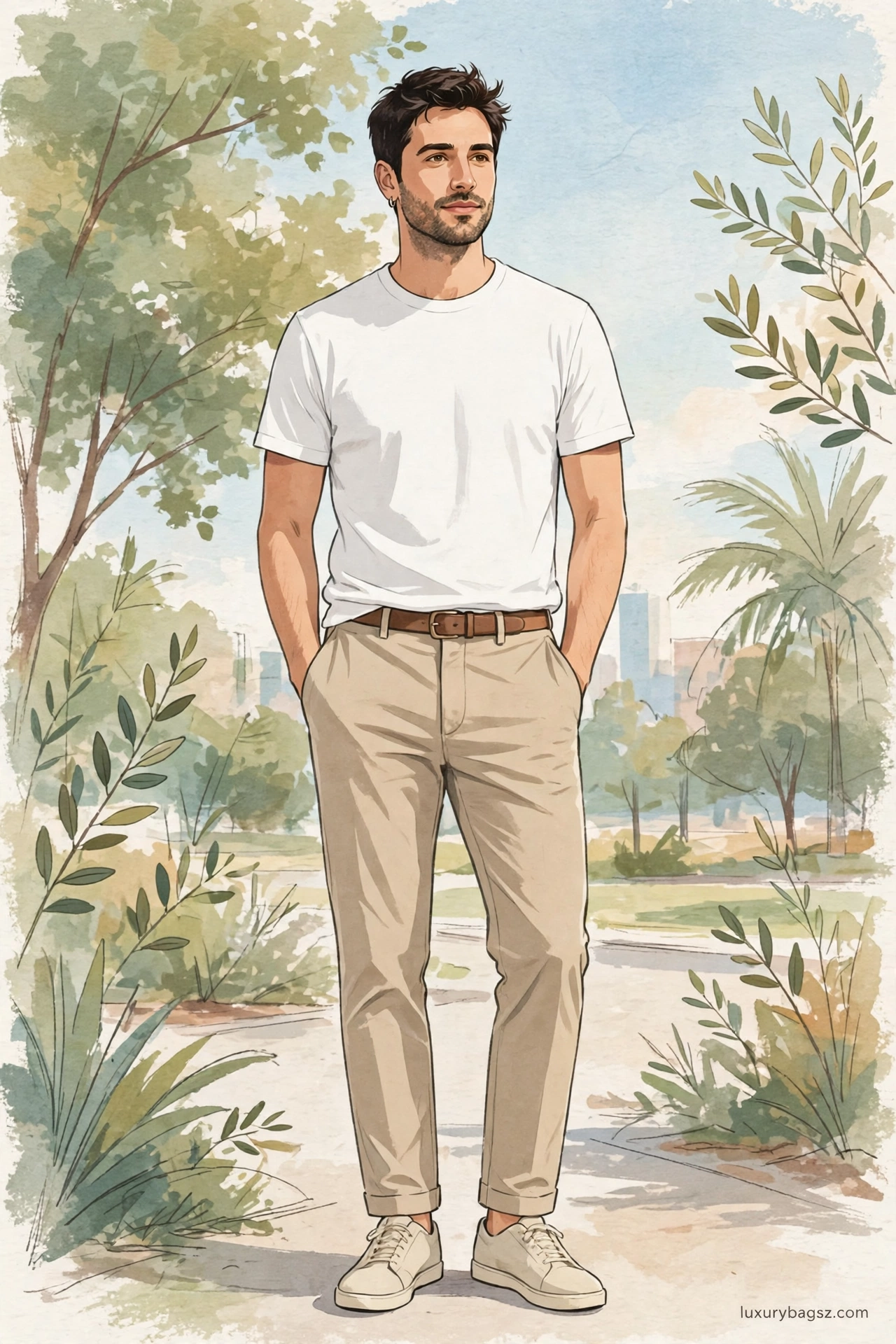
With shorts, keep the tee untucked and the shorts plain. A leather sandal or clean sneaker finishes the simplest summer uniform there is.
With chinos, a half tuck or full tuck sharpens the line. Add a woven belt and loafers and the same tee reads far smarter.
Under an unstructured blazer, a plain white or navy tee works for warm evenings. Our men's capsule wardrobe guide shows how few pieces that look needs.
Finish with plain designer sneakers for men in white leather for the cleanest base of all.
A tee under a linen overshirt is the easiest hot-evening formula there is, smart enough for dinner and cool enough for a walk home.
Checks Before You Buy
Stretch the collar gently and let go. It should spring back; a collar that stays wavy in the shop will only worsen at home.
Check side seams for twisting and the print, if any, for cracking when the cloth is lightly stretched. Both are quick, fair tests.
Read the fibre label, not just the brand name. Long-staple cotton, linen blends and a touch of elastane each tell you how it will wear.
Try it with the shorts or trousers you will actually wear. A tee is a team piece, and the shop mirror should judge it as one.
If a brand's tee twists after washing in reviews, believe the reviews; side-seam twist is a making fault, not a wearing one.
Care That Keeps the Shape
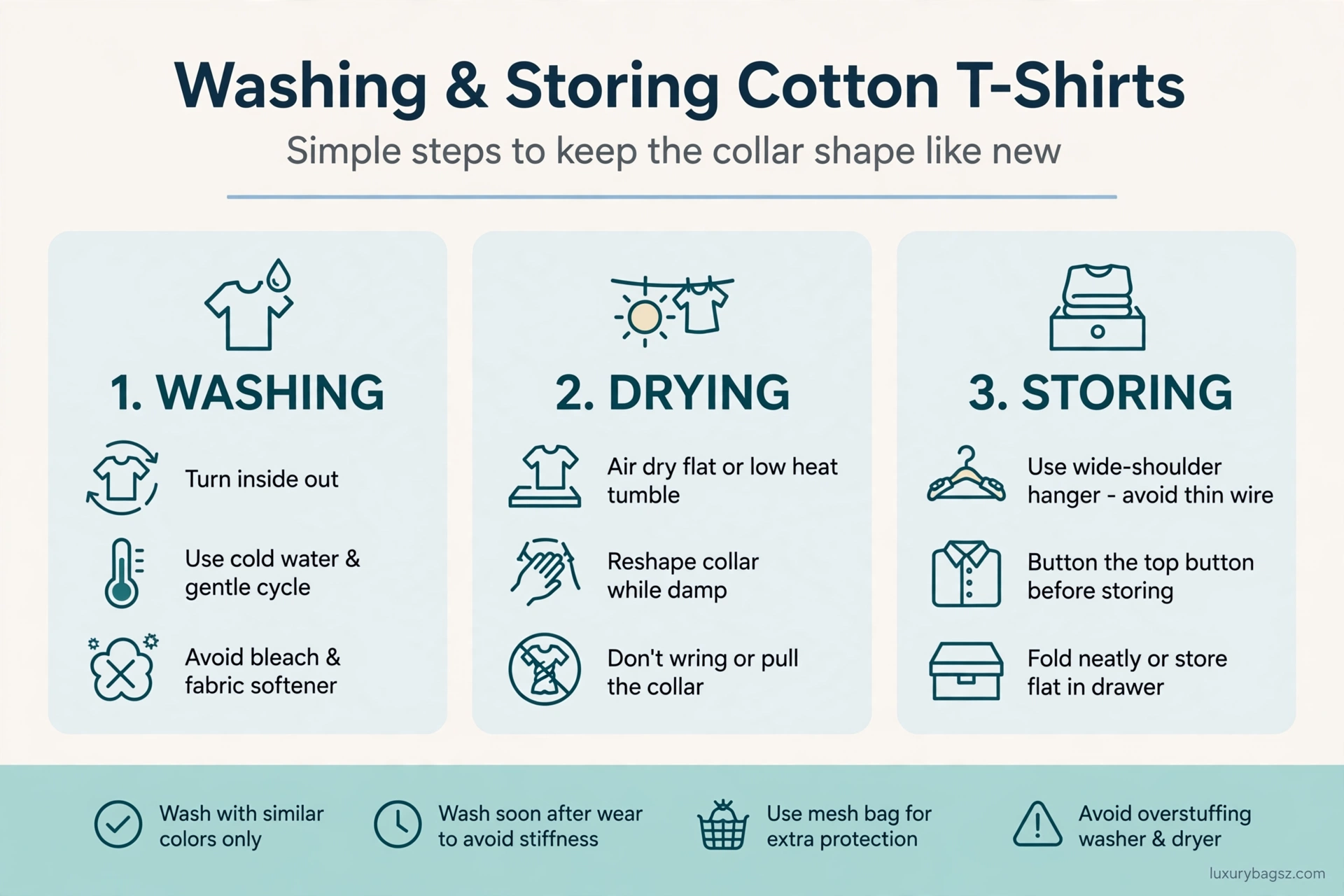
Wash inside out, cool, with like colours. Hot washes fade black and navy fast and can shrink cotton more than the label allows for.
Skip long tumble drying. Heat tires elastane and ribbed collars; air drying on a hanger keeps the neckline sitting flat.
Fold rather than hang heavy tees for storage, since hangers can stretch wet-weight shoulders. Light tees hang happily once fully dry.
Treat sunscreen and sweat marks the same day. Summer stains set in heat, and a quick rinse saves most tees from yellowing at the collar.
Sun cream can yellow white cotton at the neck, so rinse the collar the same evening rather than leaving it for wash day.
Frequently Asked Questions
Are designer T-shirts worth it for summer?
They can be, when the money goes on fabric and cut. A smooth, long-staple cotton tee that holds its collar will outlast several cheap tees and look better throughout.
What fabric is coolest for a men's summer tee?
Cotton and cotton-linen blends breathe best for most men. Light jersey feels smooth, while linen blends feel driest in humidity but crease more.
What colours should I buy first?
White first, then navy, then black, charcoal or stone. Those four cover shorts, chinos, denim and light tailoring without clashing.
How should a summer T-shirt fit?
Neat rather than tight: shoulder seams on the bone, sleeves to mid-bicep, and a hem that covers the waistband without pooling at the hips.
Why do designer tees cost so much?
Finer yarns, better finishing, smaller runs and brand costs all add up. Judge by cloth and collar recovery, not by the logo alone.
Can I wear a designer tee with a blazer?
Yes. A plain white or navy tee under an unstructured blazer is a proven warm-evening look, provided the tee is clean, plain and well fitted.
How do I stop the collar sagging?
Wash cool, avoid tumble drying, and store folded or on wide hangers. A ribbed or bound collar also holds its shape far longer.
Are logo T-shirts a good buy?
Small, quiet marks age better than large chest prints. If you love a logo tee, treat it as a statement piece and build plainer tees first.
What weight of cotton should I choose?
Mid-weight is the summer sweet spot: substantial enough not to cling or show through, light enough to stay comfortable in heat.
How many designer tees does a man need?
Three to five in core colours cover a summer well, rotated and washed gently. Quality and rotation beat a drawer of rarely worn prints.
Final Verdict: Buy the Cloth, Not the Logo
A great summer designer tee is simple: good cotton, a collar that behaves, and a fit that skims rather than squeezes.
Start with white and navy, check the fabric in your hands, and let cost per wear, not hype, make the final call.






