

Louis Vuitton Noé and Néonoé Guide: History, Sizes, Prices and Buying Guide
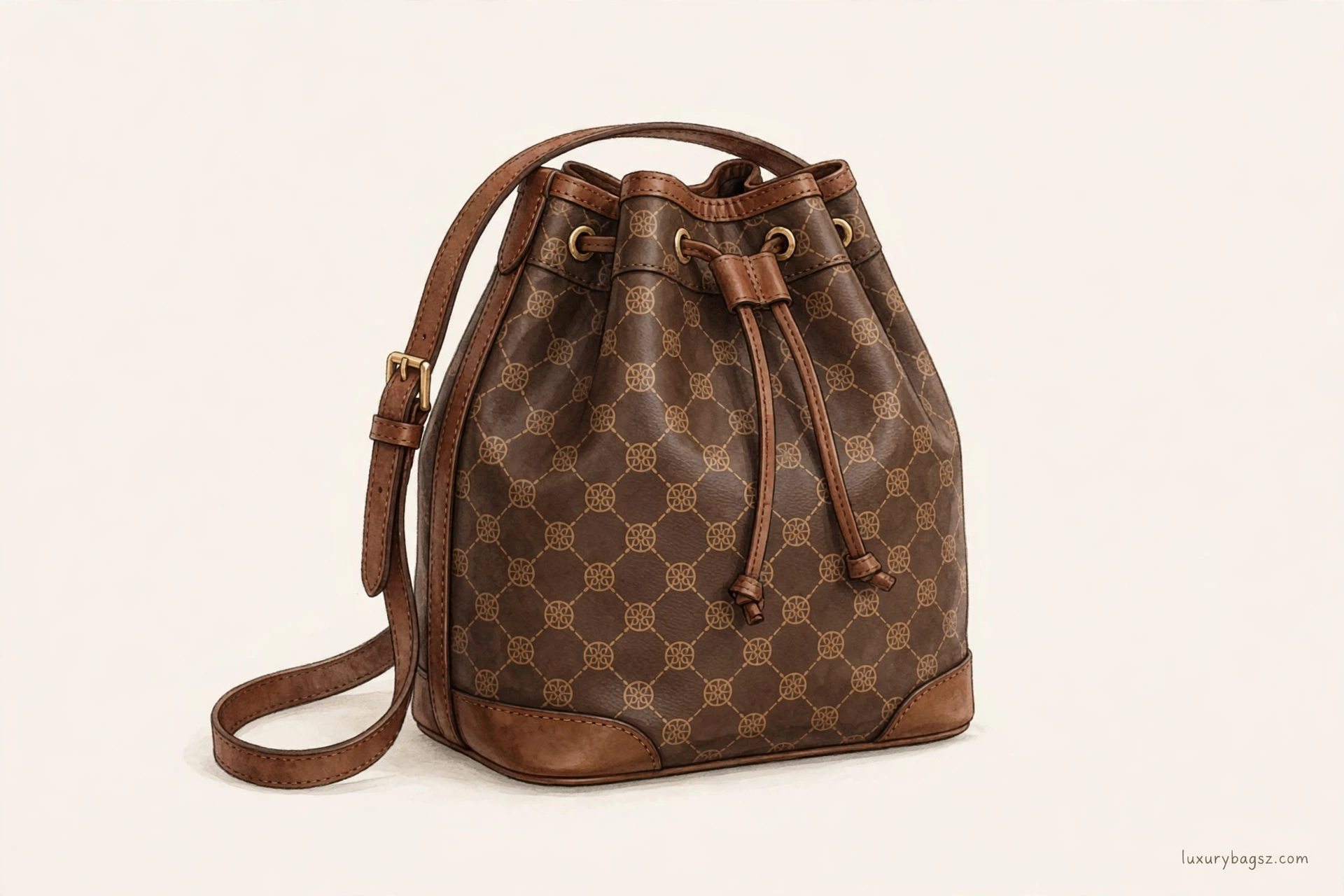
The Noé and Néonoé in Brief
The Louis Vuitton Noé is the original luxury bucket bag, created in 1932 to carry champagne bottles without breaking them. The Néonoé, launched in 2017, is its modern redesign: more structured, with a top handle, a removable strap, and a colourful interior.
Both bags share the same DNA: a round bucket shape, a drawstring top, and an adjustable strap. The classic Noé is softer and slouchier, while the Néonoé holds its shape and organises better. Neither has a zip, so both suit careful everyday carry rather than crowded commuting.
Choose the Noé if you love vintage character and a relaxed shape. Choose the Néonoé if you want structure, a handle, and a divided interior. Either way, check size carefully, since the range runs from a tiny purse to a large everyday bucket.
Key Takeaways

- The Noé was created in 1932 by Gaston-Louis Vuitton to transport champagne bottles.
- Its name comes from Noé, the French form of Noah, linked to the first winemaker story.
- The classic Noé is soft and slouchy; the 2017 Néonoé is structured with a top handle.
- Noé sizes run from Noé Purse to the large Noé; Néonoé comes in BB and MM.
- The Néonoé interior has a zipped central pocket that divides the bag in two.
- Drawstring bags are less secure than zipped bags, so keep valuables in the inner pocket.
- Pre-owned Noé bags are plentiful; check drawstring, canvas, strap, and date code.
What Is the Noé?
The Noé is a bucket-shaped bag with a drawstring closure, a single shoulder strap, and a round, roomy body. It was Louis Vuitton's first soft handbag shape after decades of rigid travel cases, and it became the template for nearly every bucket bag that followed.
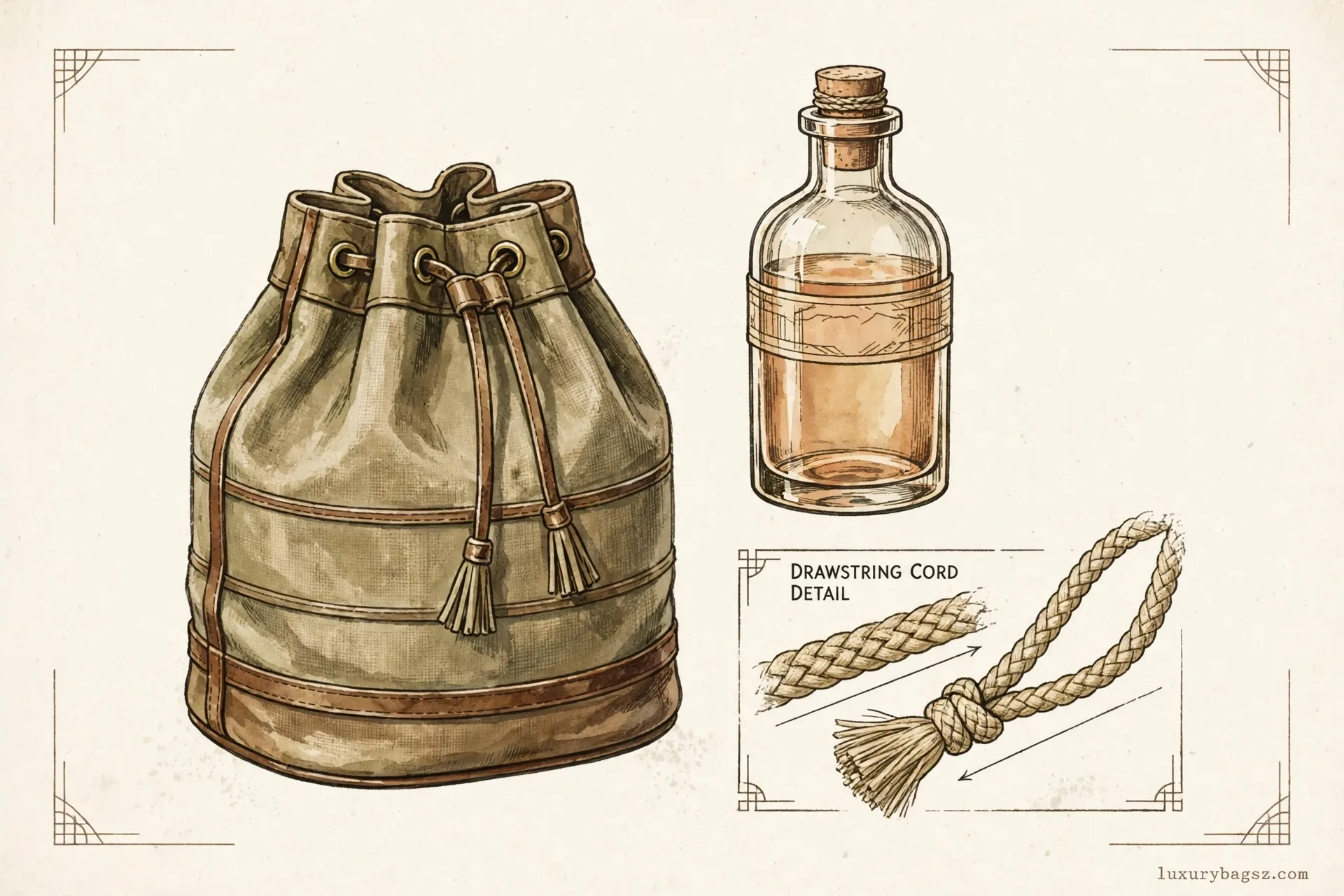
The drawstring threads through eyelets around the top and pulls the bag closed, cinching the contents in place. That design is what made it work for champagne: bottles stood upright around the sides with one upside down in the centre, held snug so they could not knock together.
As a handbag, the same shape is forgiving and spacious. It swallows a wallet, phone, keys, sunglasses, and a cosmetic pouch with room to spare, and the soft canvas collapses slightly when partly empty. If you prefer a structured, formal bag, the Alma in our Louis Vuitton brand guide range is the opposite approach.
The Champagne Story
Louis Vuitton founded the house in 1854, but handbags only arrived later, after the Keepall soft travel bag of 1930. In 1932, Gaston-Louis Vuitton, the founder's grandson, created the Noé as a practical carrier for champagne bottles.
The story behind the name is a charming one. Noé is the French form of Noah, and the biblical Noah is described as the first winemaker after the flood. Naming a champagne carrier after him was a deliberate wink, and it stuck.
The bag soon outgrew its original job. Women began carrying it as a handbag, Louis Vuitton added sizes and materials, and the Noé became a fashion staple. It has been spotted on actresses from Angelina Jolie to Julianne Moore, and vintage Noé bags remain a mainstay of the pre-owned market today.
One reason the Noé lasted is that it was never precious. Unlike rigid trunks and structured handbags, it could be squashed into a suitcase, carried daily, and repaired easily. That practicality kept it in wardrobes long after trendier shapes came and went, and it is why so many 1980s and 1990s Noé bags still circulate today.
Classic Noé Sizes
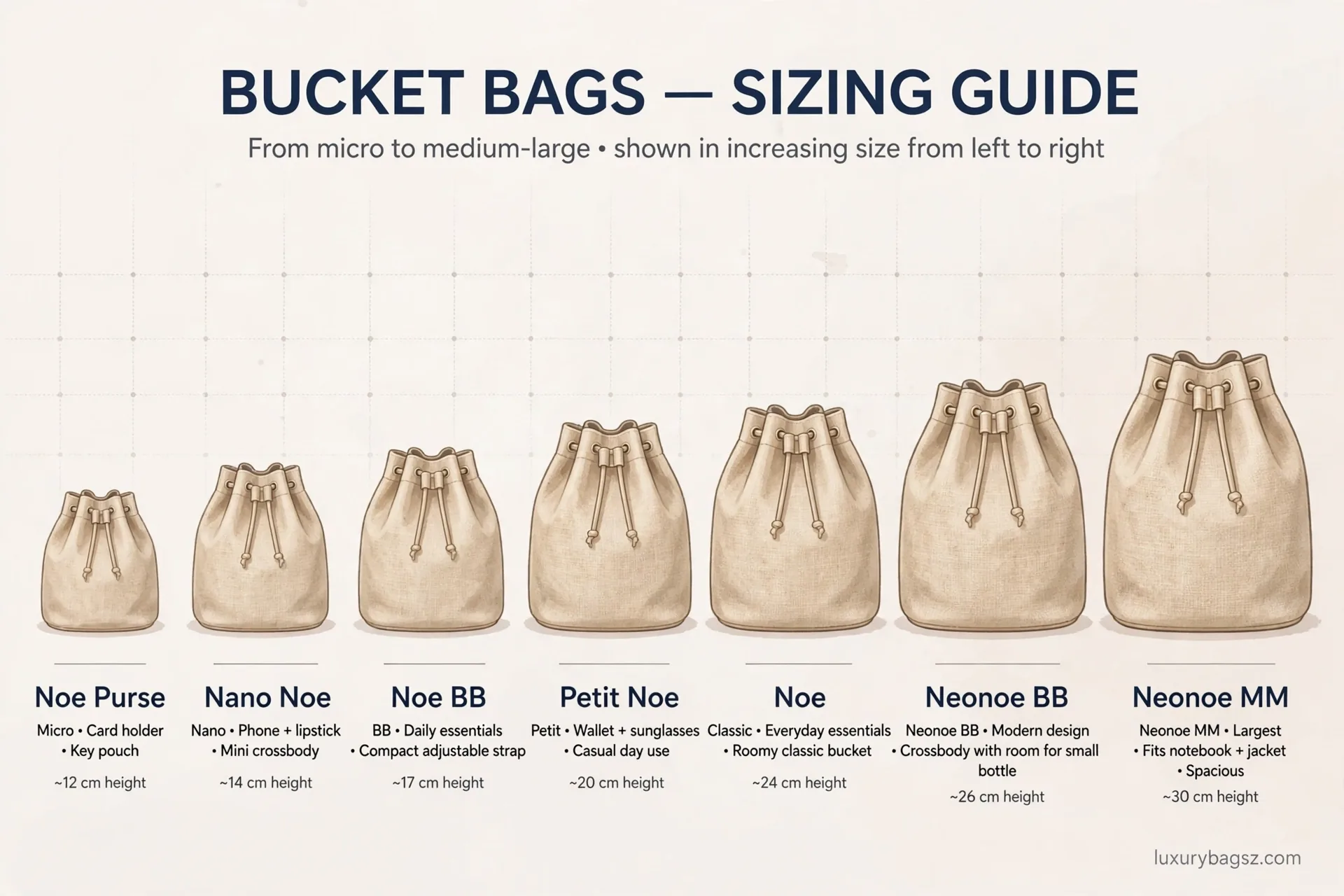
The classic Noé range is wide, and sources quote slightly different measurements, so measure any bag before buying. From smallest to largest, the range runs: Noé Purse, Nano Noé, Noé BB, Petit Noé, and the large Noé.
The Noé Purse, about 4.5 inches wide and 4.7 inches high, fits keys, a card holder, a phone, and a lip balm. The Nano Noé, about 5.1 by 6.3 inches, is a compact crossbody with a strap drop around 18.5 to 22 inches.
The Noé BB, about 8.7 by 9.4 inches, is the everyday sweet spot for light carry. The Petit Noé, about 9.8 by 10.6 inches, adds room for a small notebook and cosmetic pouch. The large Noé, about 10.2 by 13.4 inches, carries a book, a small laptop, and a full day's essentials.
The Néonoé: The 2017 Redesign
The Néonoé arrived in 2017 as a modern reimagining of the Noé. It keeps the bucket shape and drawstring, but the walls are structured rather than soft, so the bag stands upright on its own and keeps its silhouette when set down.
It also adds a removable top handle, so it can be carried by hand, on the shoulder, or crossbody with its adjustable strap. The interior is lined in a contrasting colour with a bonded finish, and a zipped central pocket divides the inside into two compartments.
The Néonoé comes in two sizes. The BB measures about 7.9 by 7.9 by 5.1 inches, while the MM measures about 10.2 by 10.2 by 6.9 inches. Materials include Monogram canvas, Damier, Epi leather, and Monogram Empreinte, with trim colours that change by season.
Noé or Néonoé: How to Choose
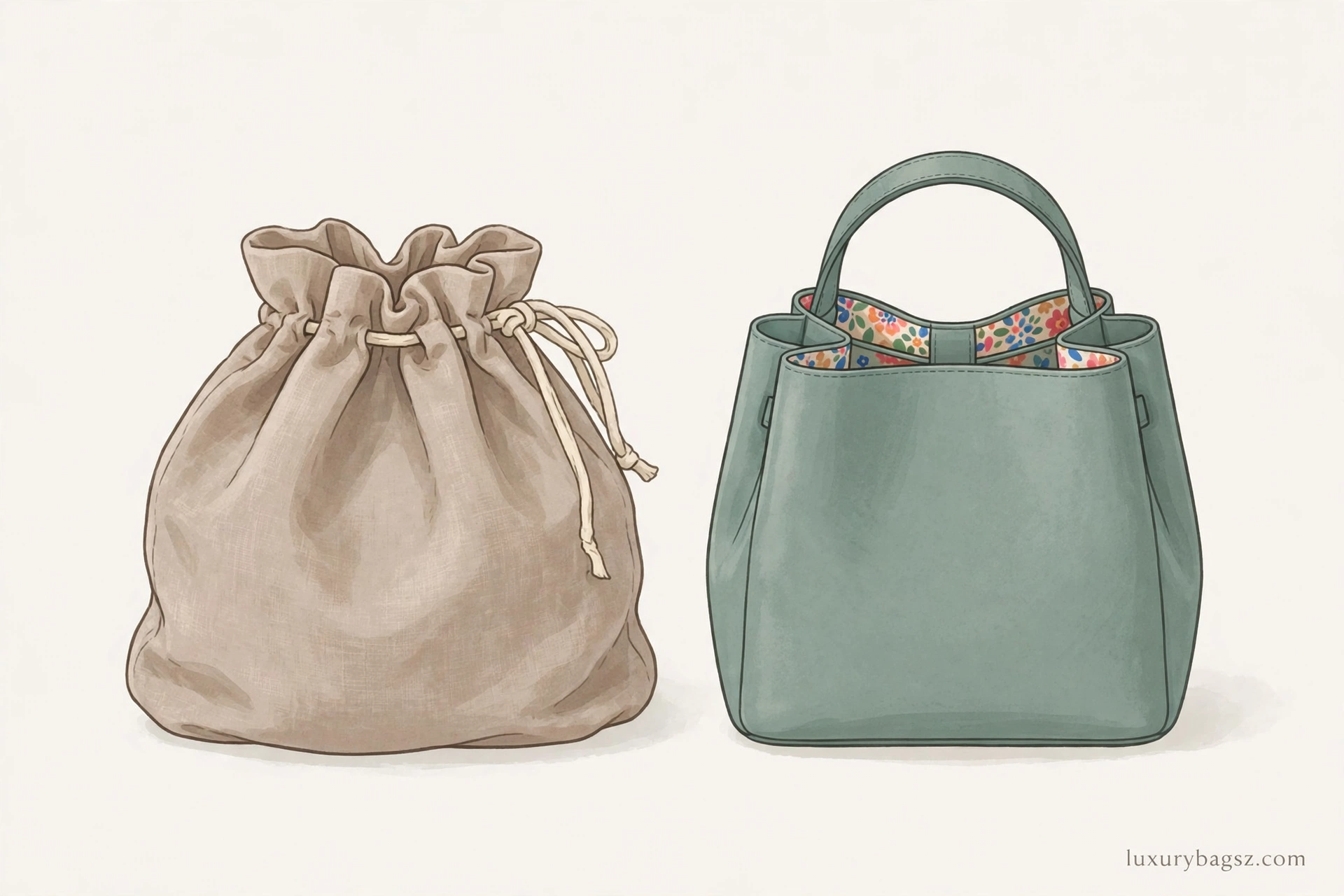
Start with shape. The classic Noé is soft canvas that crinkles and bounces back, slouching gently when partly empty. The Néonoé is firmer and more polished, holding a clean bucket silhouette even when full, which suits smarter outfits.
Next, consider organisation. The classic Noé is one open space, so small items sink to the bottom unless you add a pouch. The Néonoé's central zip pocket splits the bag in two and gives small items a safe home, which many buyers prefer daily.
Finally, think about carry. The classic Noé is a shoulder bag, while the Néonoé adds a top handle for hand carry. If you want a structured everyday bag with a handle, pick the Néonoé MM. If you want vintage charm and a softer price pre-owned, pick a Petit or BB Noé. Our Speedy sizes guide covers another classic shape if neither bucket suits you.
Materials and Prices
Monogram canvas is the classic Noé material: durable, lightweight, and easy to wipe clean. Damier Ebene offers a quieter checked look, while Epi leather gives the Néonoé a textured, logo-free finish in bright colours. Empreinte leather is softer and more expensive.
Prices move with Louis Vuitton increases, and older guides go stale fast. PurseBlog's Néonoé guide, last updated in 2026 but with prices from an earlier increase, lists the BB from about $2,100 in Epi and the MM from about $1,780 in canvas to $2,390 in Epi.
Pre-owned markets tell a different story. One resale source lists new Néonoé MM bags above €2,000 at retail, with excellent-condition pre-owned Néonoé bags around €1,000 to €1,500, and vintage Petit Noé bags from about €350 to €500. Check current boutique prices before judging any pre-owned deal, and expect leather and limited colours to cost more.
Watch for the hidden costs of a cheap pre-owned Noé. A frayed drawstring, a cracked strap, or a stained interior can cost real money to fix, and a missing dust bag or strap lowers resale value later. A slightly pricier bag with a full set and clean interior is often the better deal overall.
What Fits Inside
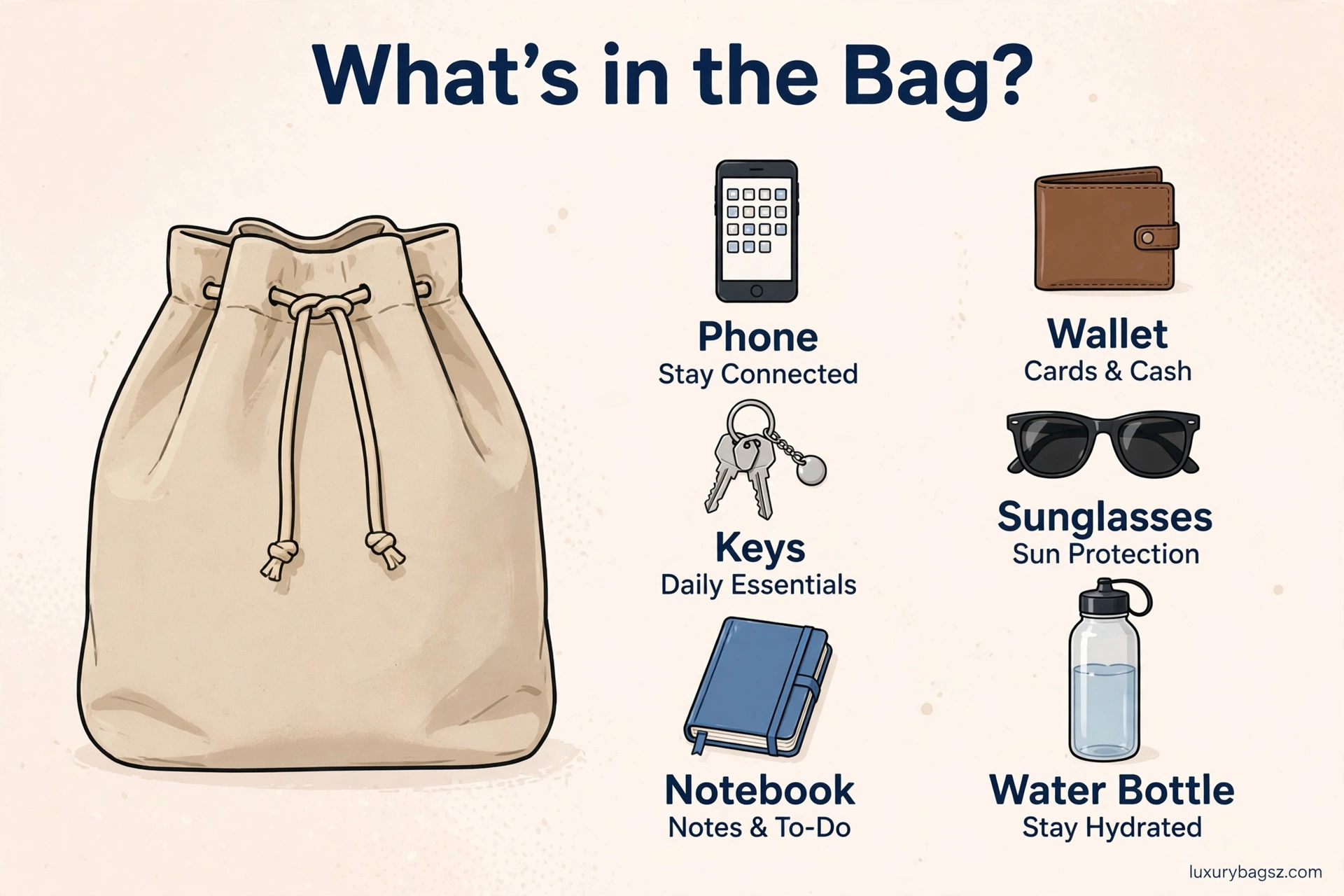
The Néonoé MM is a genuine everyday bag. It fits a phone, wallet, keys, sunglasses, cosmetic pouch, small notebook, and a water bottle, with the central zip pocket holding a passport or cards. The BB fits the same essentials minus the notebook and bottle.
The classic Petit Noé holds a similar load to the Néonoé MM, while the BB suits lighter days. The large Noé goes further, fitting a small laptop, a book, and a cosmetic case, though its soft shape means heavy loads can pull the drawstring open if not cinched well.
Pack heavier items at the bottom and keep valuables in the Néonoé's zip pocket or a separate pouch in the classic Noé. A bag organiser helps both shapes hold their form and stops small items disappearing into the bucket.
Care by Material
Canvas Noé and Néonoé bags are easy to maintain. Wipe coated canvas with a soft, damp cloth, dry away from heat, and keep the cowhide trim and leather drawstring dry, since water spots them. Our guide to clean LV canvas covers the method.
Epi and Empreinte leather versions need a soft cloth wipe and occasional conditioner, tested on a hidden spot first. Keep the drawstring cords clean and dry, and replace a frayed cord through a specialist rather than a general cobbler, since the eyelets and cord thickness matter.
Store either bag stuffed lightly to hold its shape, in its dust bag, away from sun. For leather care basics, see our guide to leather bag care. Never soak, machine wash, or heat-dry a Noé, and take serious stains to a specialist.
Buying Pre-Owned: Checks That Matter
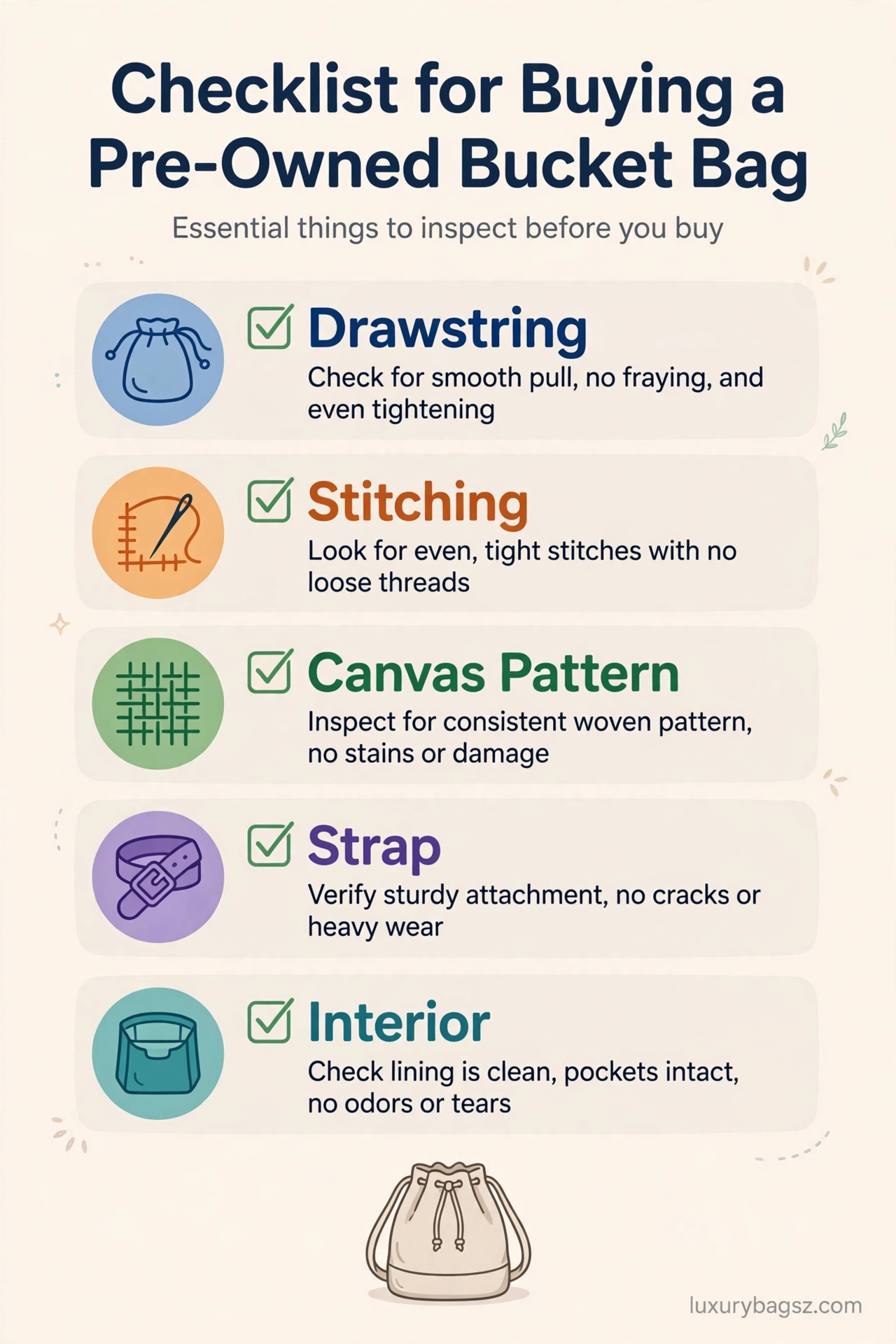
Pre-owned Noé bags are among the most common Louis Vuitton bags on resale, which is good for choice but demands care. Ask for photos of the drawstring, eyelets, canvas pattern alignment, strap attachments, corners, and interior.
Check that the drawstring pulls smoothly and evenly, and that the canvas pattern lines up at the seams. Inspect the strap for cracking, especially at the attachments, and check the interior for stains and odour. Verify the date code on older bags, or the microchip on newer ones, using our guide to LV date codes.
Run through the full fake checks before paying, and follow our guide to buying pre-owned safely. If the price is far below comparable listings, or photos are missing, walk away and wait for a better one.
Frequently Asked Questions
What is a Louis Vuitton Noé bag?
A bucket-shaped bag with a drawstring top and a shoulder strap, created in 1932. It was the luxury industry's first bucket bag and the template for the style.
Why is it called the Noé?
Noé is the French form of Noah, linked to the biblical story of Noah as the first winemaker. The bag was designed to carry champagne bottles.
What is the difference between the Noé and the Néonoé?
The classic Noé is soft and slouchy with one open compartment. The 2017 Néonoé is structured, with a top handle, contrasting lining, and a zipped central pocket.
What sizes does the Noé come in?
Noé Purse, Nano Noé, Noé BB, Petit Noé, and the large Noé. The Néonoé comes in BB and MM only.
Which Néonoé size should I buy?
The MM suits everyday carry including a notebook and water bottle. The BB suits lighter days with a phone, wallet, keys, and sunglasses.
Is the Noé a good everyday bag?
Yes, especially the Petit Noé and Néonoé MM, which hold a full day's essentials. The drawstring is less secure than a zip, so use the inner pocket for valuables.
How much does a Néonoé cost?
Retail prices move with regular increases, with canvas MM versions historically around $1,780 and Epi higher. Check the current boutique price before buying.
Are pre-owned Noé bags a good buy?
Often yes, since vintage Noé bags are plentiful and affordable. Check the drawstring, canvas, strap, and date code, and authenticate before paying.
How do I clean a Louis Vuitton Noé?
Wipe canvas with a soft, damp cloth and keep leather trim dry. Condition leather versions sparingly, and never soak or heat-dry the bag.
What is the history of the Noé in brief?
Created in 1932 by Gaston-Louis Vuitton for champagne, adopted as a handbag, then redesigned as the structured Néonoé in 2017. Our Louis Vuitton brand guide covers the wider house history.
Conclusion
The Noé is a rare thing: a bag designed for a practical job that became a fashion icon without losing its usefulness. The classic version offers vintage charm and soft, easy carry, while the Néonoé adds the structure and organisation modern life demands.
Pick the Petit Noé or Néonoé MM for everyday use, verify size and price before you buy, and authenticate carefully pre-owned. Either bucket will carry you, quite literally, for decades.






