

What Is a Louis Vuitton Alma Bag: History, Sizes, Prices and Buying Guide
The Alma at a Glance
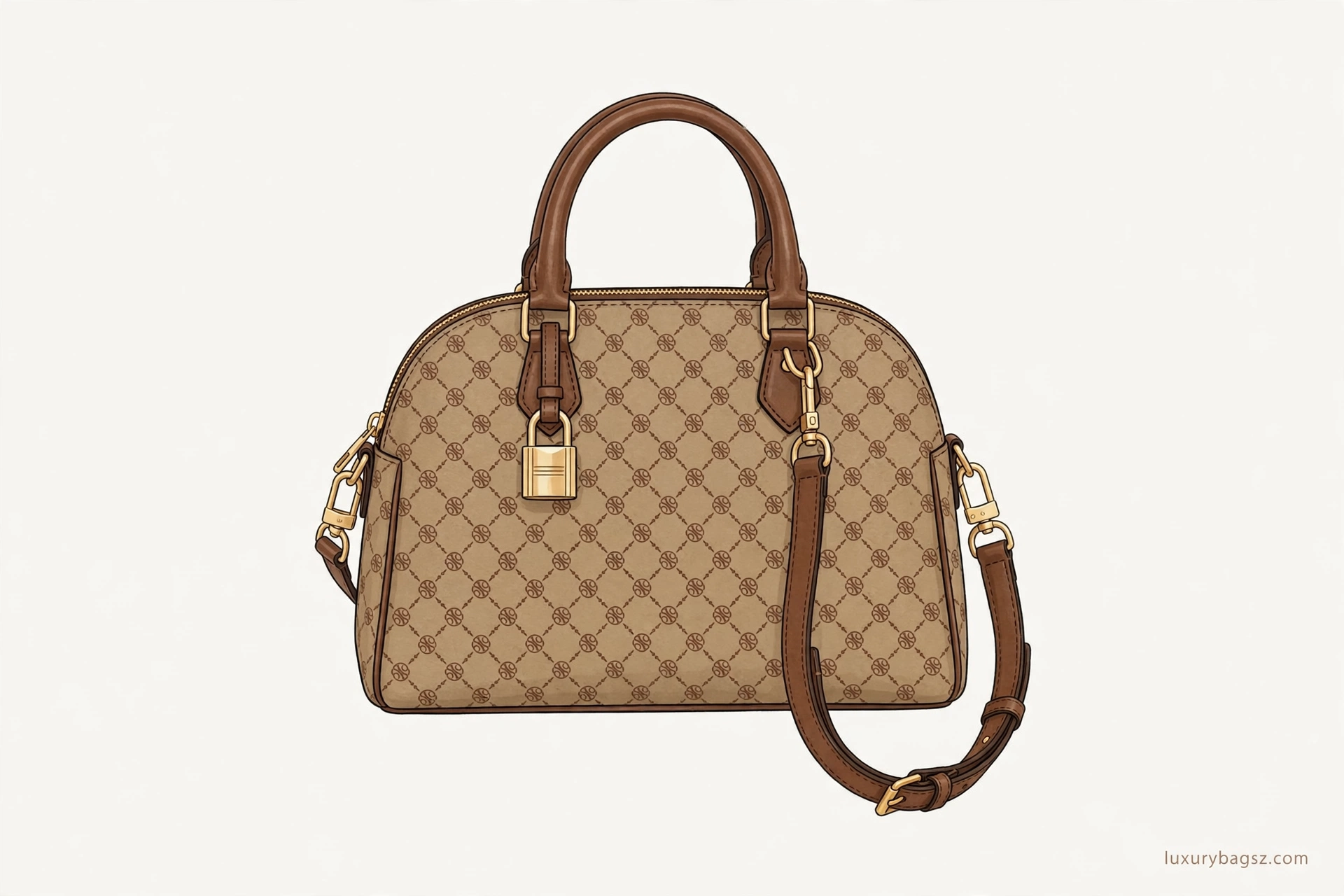
The Louis Vuitton Alma is a structured, dome-shaped handbag with twin top handles, a zip top, and a padlock charm. It is one of the house's oldest handbag designs, dating to the 1930s, and it remains in production today in sizes from Nano to MM.
The Alma suits buyers who want a polished, formal bag that still works every day. Smaller sizes cross over to evening use, while the PM and MM work as office bags. Its rigid shape holds its form beautifully, but it also means the bag does not squash into tight spaces.
Expect to pay a premium for leather versions over canvas, and expect prices to move with Louis Vuitton's regular increases. Pre-owned Almas are plentiful, which makes careful authentication more important than hunting for rarity. Check size, material, and condition before you commit.
Key Takeaways

- The Alma is a structured dome bag with twin handles, a zip closure, and a padlock.
- Its roots lie in a 1920s travel bag, with regular production starting in the 1930s.
- Current sizes are Nano, BB, PM, and MM; the larger GM appears on the pre-owned market.
- Canvas versions cost less than Epi or Vernis leather versions in the same size.
- Smaller sizes come with a strap; larger sizes are generally carried by hand.
- Sources disagree on exact measurements and prices, so verify at a boutique.
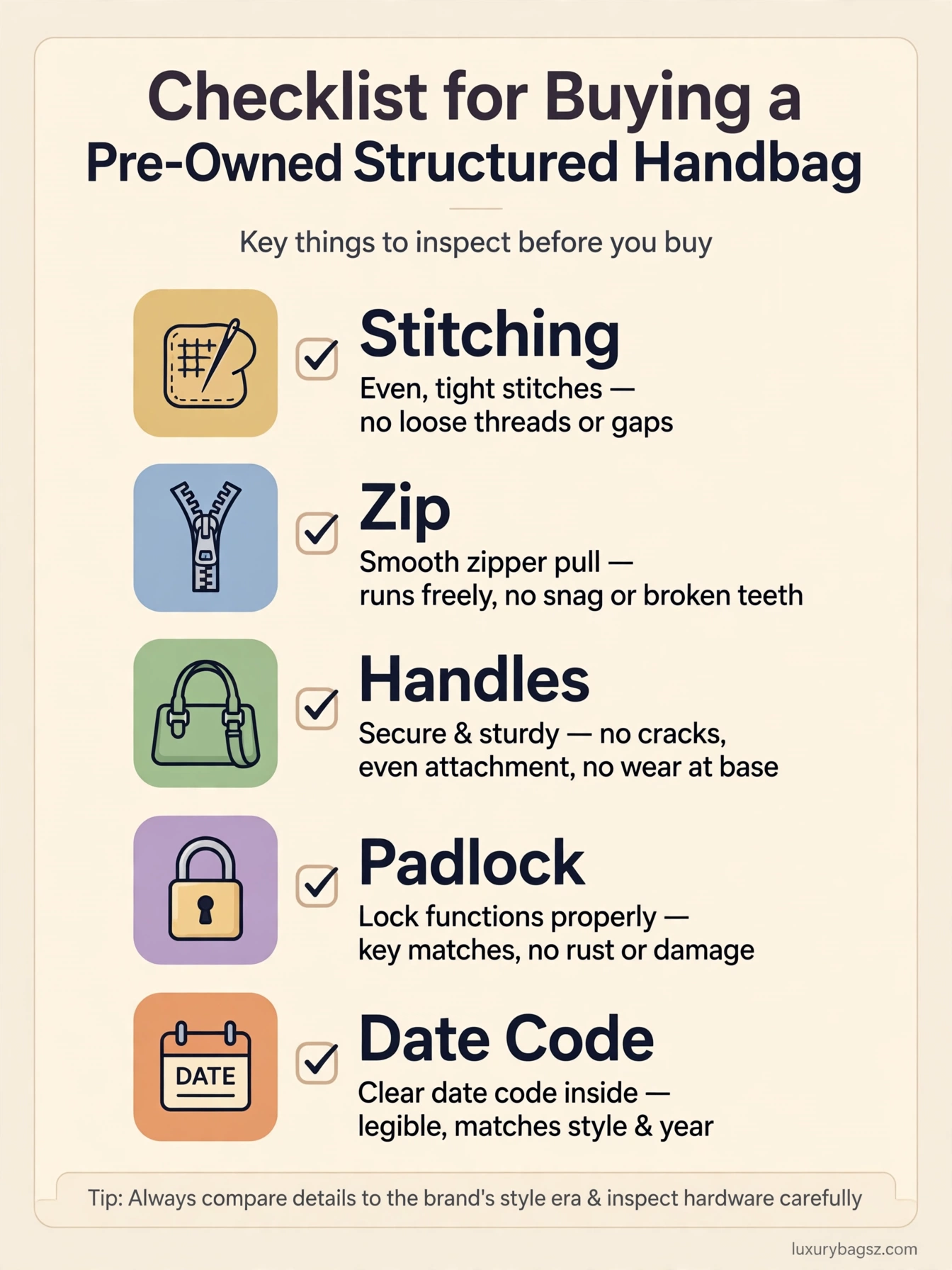
- Pre-owned checks should cover stitching, zip, handles, padlock, and date code or microchip.
The Alma’s dome is its promise, so I judge it standing empty on a table. A genuine Alma holds that structured arc without stuffing, its base flat and its corners clean; a tired or copied one leans, sags or shows its strain at the zip. Then the padlock charm and twin handles get their inspection, and I name the material — canvas, Epi or Vernis each age differently and each lies differently. Pre-owned Almas are plentiful, which is exactly why the shape test matters. After hundreds of bags, I trust posture first: a 1930s design that still stands properly has been made properly and kept properly.
What Exactly Is the Alma?
The Alma is defined by its shape: a rounded dome with a flat, structured base, two short top handles, and a full zip across the top. A small padlock and key bell hang from one handle, and most smaller sizes add a detachable shoulder strap.
Inside, the Alma is a single main compartment with a flat pocket, so organisation comes from pouches rather than built-in dividers. The structured walls protect contents well, but they also limit flexibility, since the bag will not expand to fit an awkward item.
Think of the Alma as the house's formal day bag. It pairs naturally with office clothing and smart outfits, while canvas versions dress down more easily. If you want a slouchy, throw-everything-in tote, our Neverfull sizes guide covers a softer alternative.
A History With Two Stories
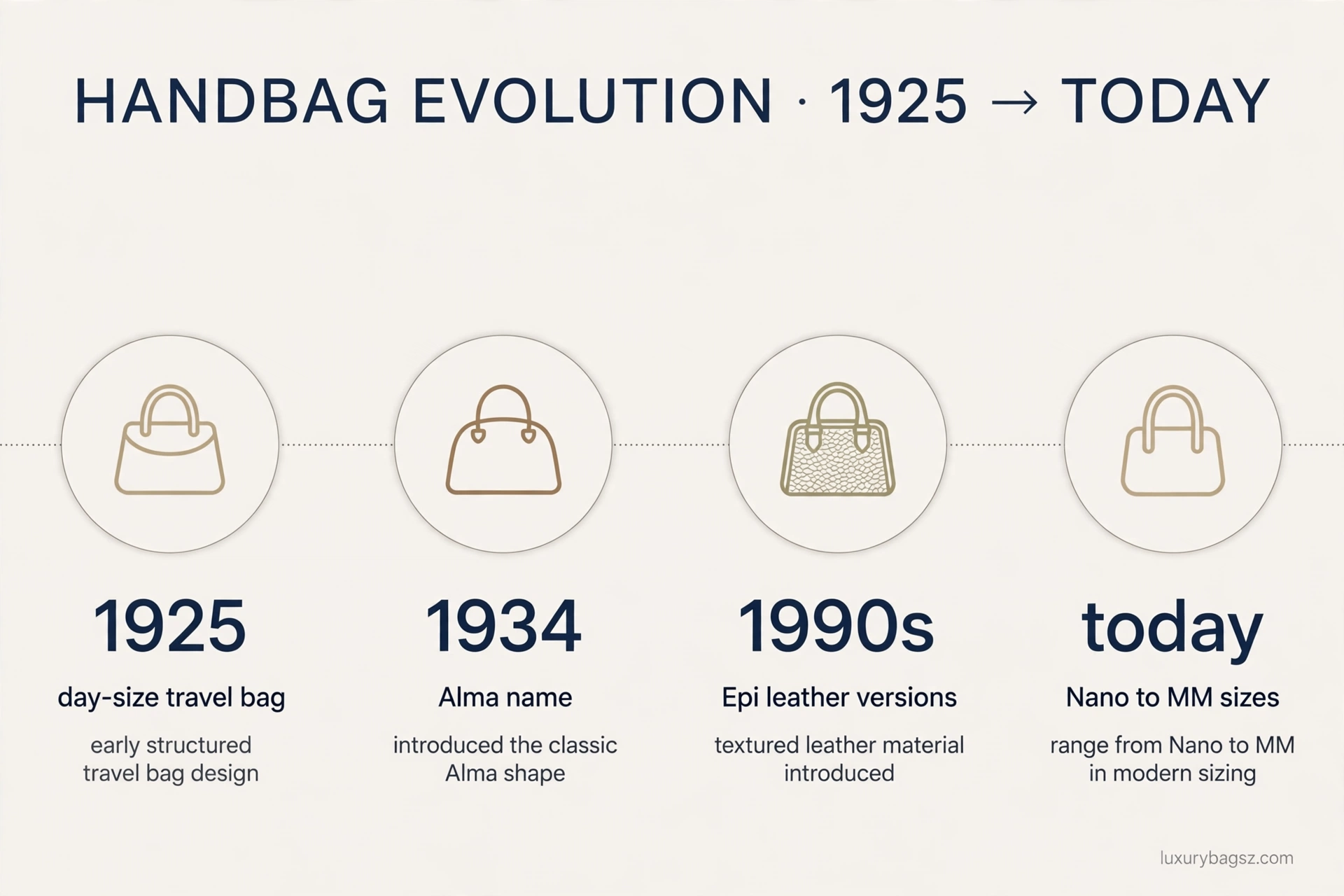
Sources tell the Alma's origin in two ways, and both are worth knowing. Rebag's history says the bag debuted in 1934, designed by Gaston-Louis Vuitton and named after the Alma Bridge in Paris, whose refined lines inspired it. It was first called the Squire before taking the Alma name.
PurseBlog and other guides tell a different version: Coco Chanel asked Louis Vuitton for a smaller, day-sized version of a larger travel bag for her own use in 1925, and the house later put that shape into regular production in the 1930s. The two stories agree on the essentials, a 1920s travel shape refined into a 1930s handbag, but they differ on who sparked it.
What is not disputed is the bag's staying power. It has been worn across eras, from Audrey Hepburn and Grace Kelly to modern celebrities, and it has been remade in countless materials and limited editions. That long, continuous production is why pre-owned Almas span so many eras, and why dating one matters.
The Alma also survived the shift from hand-carry to crossbody fashion. The addition of a detachable strap to smaller sizes kept it relevant as daily habits changed, while the structured shape kept it formal enough for work. Few 1930s designs have adapted that well without losing their identity.
Sizes: Nano, BB, PM, MM and GM
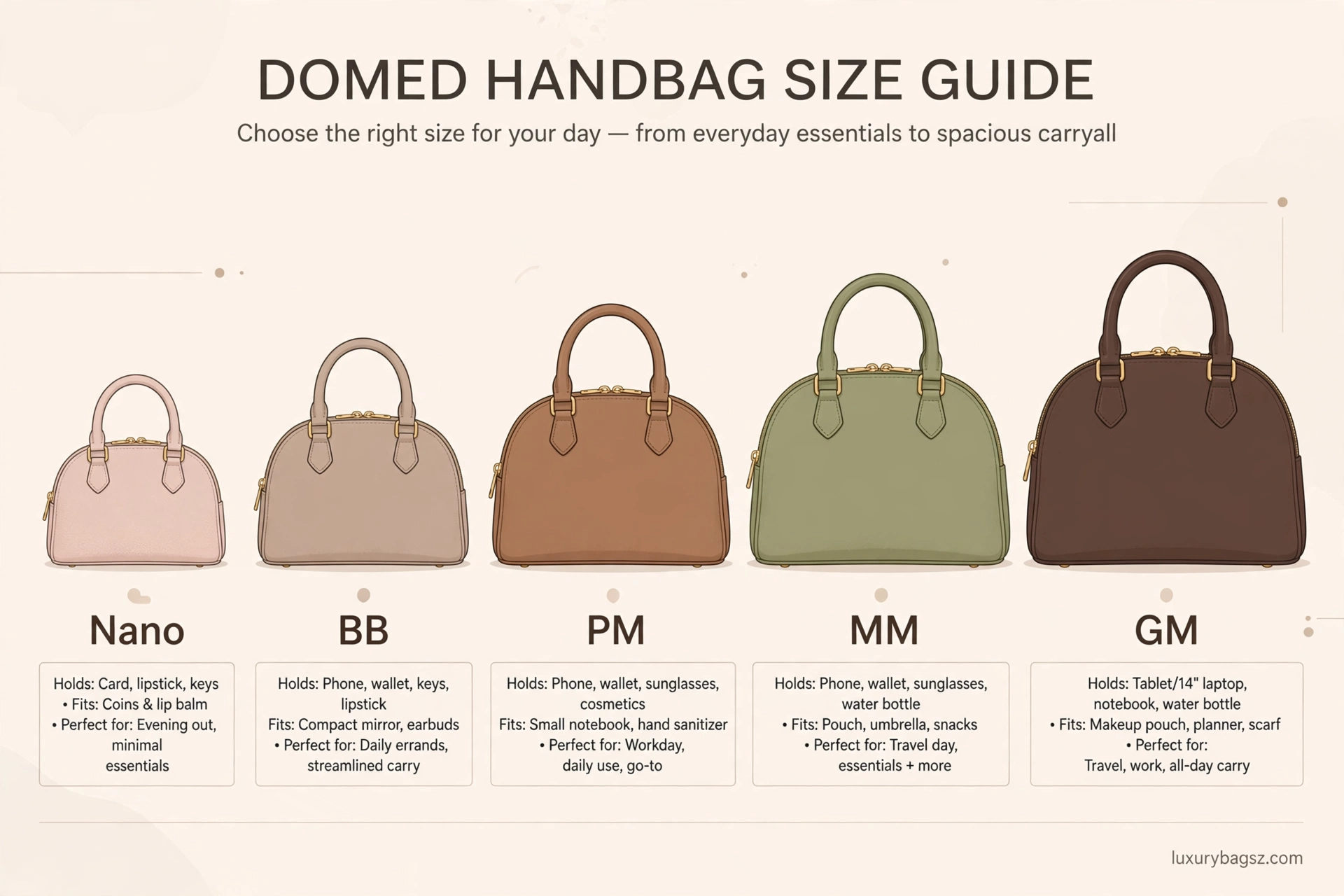
Five sizes exist across current and past production, though only Nano, BB, PM, and MM are currently produced. Measurements vary slightly between sources, so treat the figures below as a guide and measure any bag you plan to buy.
The Nano is the smallest, about 6.5 inches wide, 5 inches high, and 3 inches deep. It fits a phone, card holder, keys, and lip balm, and works as a crossbody or evening bag. The BB, about 9 to 9.8 inches wide and 7.5 inches high, adds room for a wallet, sunglasses, and a small cosmetic pouch.
The PM, about 12.6 inches wide and 9.4 to 9.8 inches high, is the classic everyday size. It holds a small notebook, wallet, phone, keys, and makeup bag. The MM, about 13.5 to 14.2 inches wide and 10 to 11 inches high, fits a tablet and a book, but usually has no strap. The GM, about 15 inches wide, is the largest and appears mainly pre-owned.
Size names can confuse first-time buyers, since BB, PM, and MM are French size codes rather than plain words. BB means a small, crossbody-friendly size, PM means a medium handbag, and MM means a larger medium. If you are between sizes, the BB suits a light day, while the PM suits a full day, and the MM suits work.
Try the bag in a boutique if you can, since the Alma's rigid shape makes size feel different from softer bags. A PM that looks modest on a shelf can feel substantial in the hand once loaded, and the MM's weight grows fast with a tablet and book inside. Check the strap length too, since shorter buyers sometimes find the BB strap sits high as a crossbody.
Materials: Canvas, Epi, Vernis and More
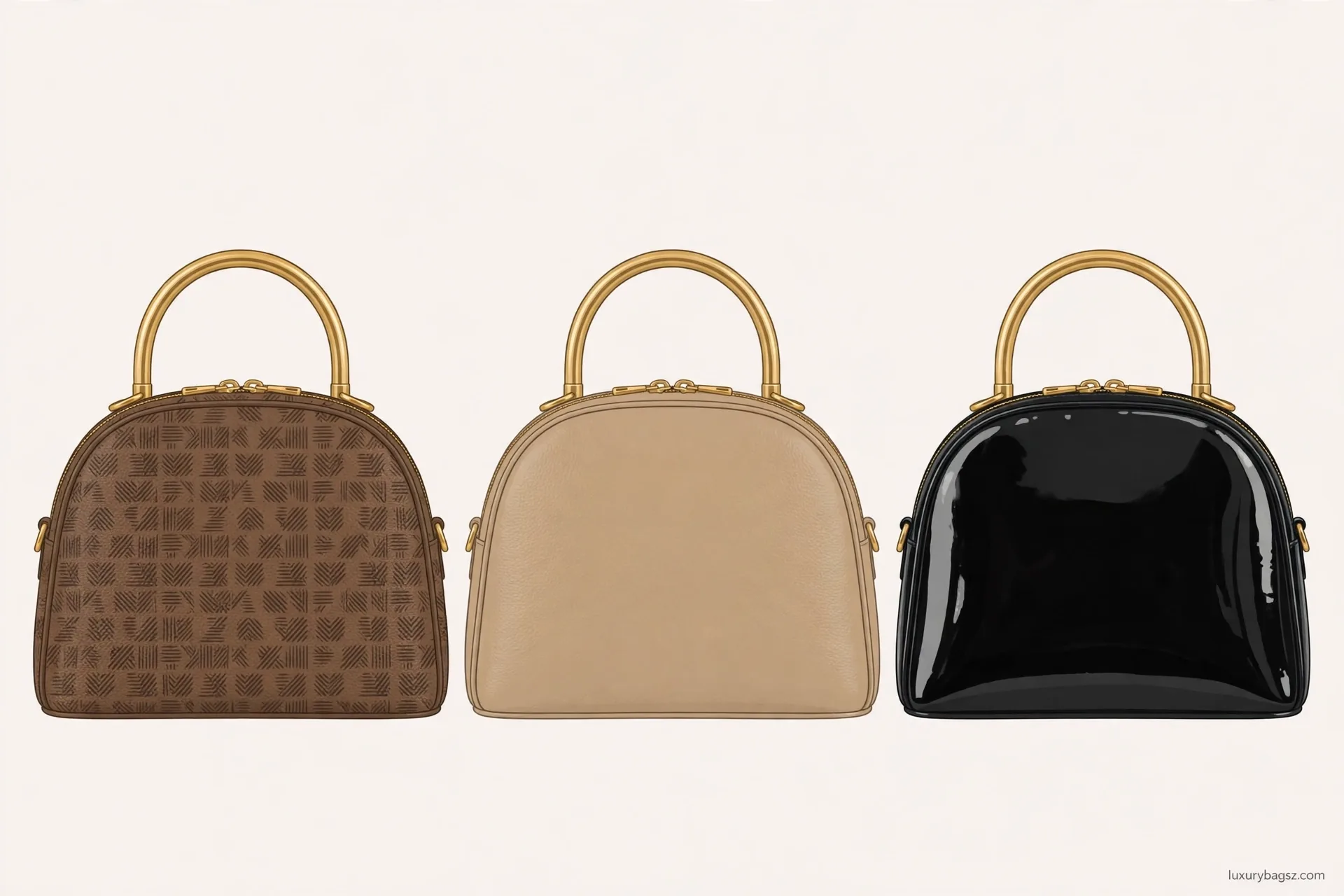
Monogram canvas is the most recognisable Alma, and also the most practical: coated canvas resists rain and scuffs better than leather. Damier Ebene canvas offers the same practicality with a quieter checked pattern, and both pair with natural cowhide trim that darkens with age.
Epi leather is textured, structured, and understated, with no visible monogram. It suits office wear and buyers who want luxury without a logo print. Vernis is glossy patent leather in bright colours, best for evenings and special occasions, though it can show marks and colour transfer more readily.
Other versions include Monogram Empreinte, soft embossed leather, and exotic leathers such as ostrich on rare editions. Exotic and limited versions command far higher prices pre-owned, and they need specialist care. For most buyers, canvas or Epi gives the best balance of durability and price.
Empreinte deserves a closer look, since it confuses buyers. It is cowhide leather embossed with the monogram pattern, so it feels like soft leather while still showing the house motif. It costs more than canvas, scuffs less obviously than Vernis, and suits buyers who want leather without a loud print.
Limited editions and artist collaborations appear regularly, from bright Vernis colours to patterned canvas runs. These can be beautiful, but they are harder to price and authenticate, and bold colours limit resale demand. A classic colour in canvas or Epi is the safer first Alma, and a limited edition is better as a second purchase.
How to Carry and Style It
Smaller Almas are the most flexible. The Nano and BB come with detachable straps, so they work crossbody by day and in hand by evening. Their compact size suits weddings, dinners, and travel days when you want to carry little.
The PM is the sweet spot for daily use. It works in hand, on the elbow, or on the shoulder with its strap, and it fits office and smart-casual outfits alike. The MM is a hand-carry bag, best for work, since its size and weight sit better in the hand than on a short strap.
Style-wise, the Alma leans formal, so it elevates simple outfits fast. Canvas versions pair well with denim and smart daywear, while Epi and Vernis suit tailoring and evening looks. If you need a more casual crossbody shape, our Pochette Metis guide covers a softer everyday option.
For travel, the BB is the better Alma, since it fits under an arm and inside a larger tote as an evening bag. The PM works as a personal item on flights, but its rigid dome means it will not compress under a seat, so measure your carry-on space before relying on it.

Prices: What to Expect, and Why Figures Differ
Louis Vuitton prices rise regularly, and published guides go out of date fast, so treat every figure below as a snapshot, not a quote. PurseBlog's 2026 guide lists the Nano from about $1,200 in Epi leather, the BB from about $1,200 in canvas and $1,590 to $2,000 in Epi, and the PM from about $1,500 in canvas and $2,120 to $2,350 in Epi.
Other sources disagree. A 2026 review lists the Epi Alma BB at $2,210, well above PurseBlog's Epi BB range, which shows how quickly prices move and how listings differ by region and date. Vernis versions sit higher again, and exotic leathers can run into five figures.
Pre-owned prices depend on size, material, colour, condition, and whether the strap, padlock, keys, and dust bag are included. A complete set usually sells for more than a bag alone. Always check the current boutique price before judging whether a pre-owned deal is genuinely good value.
Condition matters more than age for the Alma. A well-kept ten-year-old Epi BB with its full set can sell for more than a newer canvas PM with worn corners and a missing strap. Corner wear, handle darkening, and interior marks are the three deductions buyers apply first, so photograph and price around them honestly if you ever resell.
Colour also moves the price. Classic Monogram, Damier Ebene, and black Epi sell fastest, while bright Vernis colours and seasonal shades appeal to fewer buyers. If you buy a bold colour, buy it because you love it, not because you expect it to appreciate.
Care by Material
Canvas Almas are the easiest to live with. Wipe the coated canvas with a soft, damp cloth and dry it away from heat, and keep the cowhide trim dry, since it stains and darkens with water. Our guide to clean LV canvas covers the method in full.
Epi leather needs a soft cloth wipe and occasional leather conditioner, tested on a hidden spot first. Vernis patent leather should be kept away from dark fabrics and printed materials, which can transfer colour onto the glossy surface, and stored separately from other bags.
Store any Alma stuffed lightly to hold its dome shape, in its dust bag, away from direct sun. Keep the padlock and keys in a pouch so they do not scratch the leather. Never machine wash, soak, or heat-dry the bag, and take serious stains to a specialist rather than scrubbing them.
Look after the zip too, since it is the Alma's most-used moving part. Keep it free of grit, close it gently rather than forcing it over an overfilled bag, and have a stiff zip serviced before it strains the surrounding leather. A smooth zip is also one of the first things a pre-owned buyer checks.
Buying Pre-Owned: Checks That Matter
Start with the seller's reputation and demand clear photos of every angle, including the base, corners, handles, zip, and interior. Check that the stitching is even, the zip runs smoothly, and the handles show no cracking at the attachments, which is a common wear point.
Verify the date code on older bags, or the microchip on newer ones, and make sure the code matches the bag's era and materials. Our guide to LV date codes explains how to read them, and our fake-spotting guide lists the full fake checks.
Compare the padlock, key bell, and hardware tone against authentic examples, and be wary of prices far below comparable listings. A missing strap, padlock, or dust bag is not a deal-breaker, but it should lower the price. If anything feels off, get an independent authentication before paying.
Frequently Asked Questions
What is a Louis Vuitton Alma bag?
A structured, dome-shaped handbag with twin top handles, a zip top, and a padlock. It dates to the 1930s and is one of Louis Vuitton's most enduring designs.
When was the Alma first made?
Regular production began in the 1930s, evolving from a larger 1920s travel shape. Rebag dates the Alma name to 1934, while other guides credit a 1925 special order for Coco Chanel.
What sizes does the Alma come in?
Nano, BB, PM, and MM are currently produced, while the larger GM appears on the pre-owned market. The BB and PM are the most popular everyday sizes.
Which Alma size is best for everyday use?
The PM, at about 12.6 inches wide, fits a notebook, wallet, phone, and makeup bag. The BB suits lighter days, and the MM suits work bags and tablets.
Does the Alma come with a strap?
The Nano, BB, and PM come with a detachable, adjustable strap for shoulder or crossbody wear. The MM and GM are generally carried by hand.
How much does a Louis Vuitton Alma cost?
Prices vary by size, material, and date, with canvas from roughly $1,200 to $1,800 and Epi leather higher. Check the current boutique price, since guides go out of date fast.
Is the Alma a good investment?
The Alma holds value better than most fashion bags, especially in classic canvas and Epi, but it is not a guaranteed investment. Buy it to wear, and treat resale as a bonus.
How do I clean a Louis Vuitton Alma?
Wipe canvas with a soft, damp cloth and keep cowhide trim dry. Condition Epi leather sparingly, keep Vernis away from dark fabrics, and never soak or heat-dry the bag.
How can I tell a fake Alma?
Check stitching, zip action, handle attachments, hardware tone, and the date code or microchip. Our brand guide to Louis Vuitton links to the full authentication checks.
Is the Alma better than the Speedy?
The Alma is more structured and formal, while the Speedy is softer and more casual. Compare sizes in our Speedy sizes guide before choosing between them.
The Alma: A Classic That Earns It
The Alma earns its classic status. Its dome shape is instantly recognisable, its structure protects what you carry, and its range of sizes covers evenings, office days, and everything between.
Buy the PM in canvas or Epi if you want one Alma for daily life, or the BB if you travel light. Verify size and price at a boutique, authenticate carefully pre-owned, and you will own a bag that still looks right decades from now.
The Alma is the Louis Vuitton I recommend most often to first-time buyers who ask me, because its structure forgives daily life. Judge it the way I judge any pre-owned piece — canvas, vachetta, hardware and date code in agreement — and a good Alma will outlast several trend bags bought in the same years.






