

How to Clean a Louis Vuitton Canvas Bag Safely
Cleaning LV Canvas at a Glance
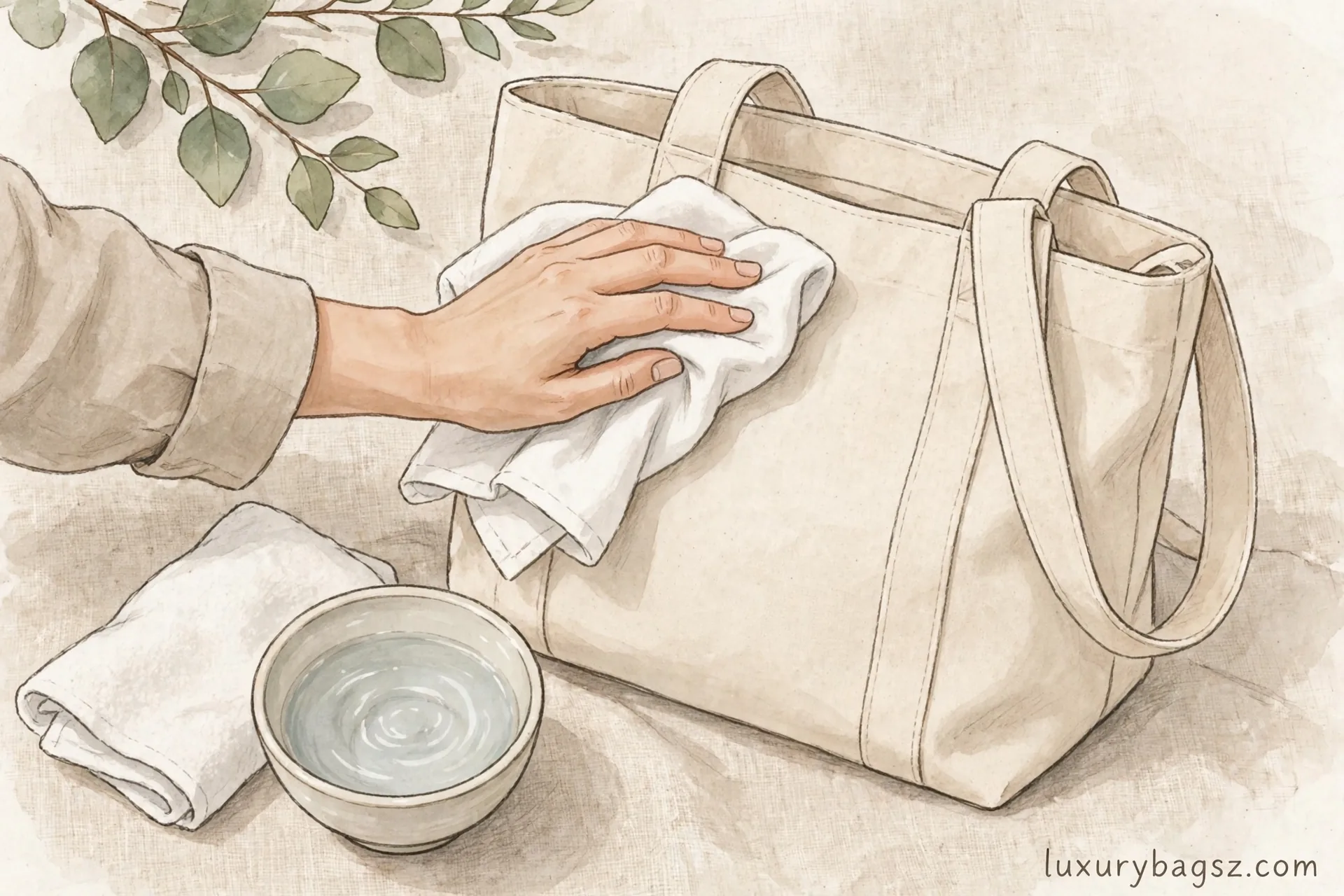
Louis Vuitton coated canvas is durable and forgiving, but it is not indestructible. For most marks, a soft, barely damp cloth, used gently in circles, followed by a dry cloth, is the whole routine. Add only a tiny amount of mild, pH-neutral soap, such as baby shampoo diluted in water, for stubborn marks, and always wipe away every trace of soap.
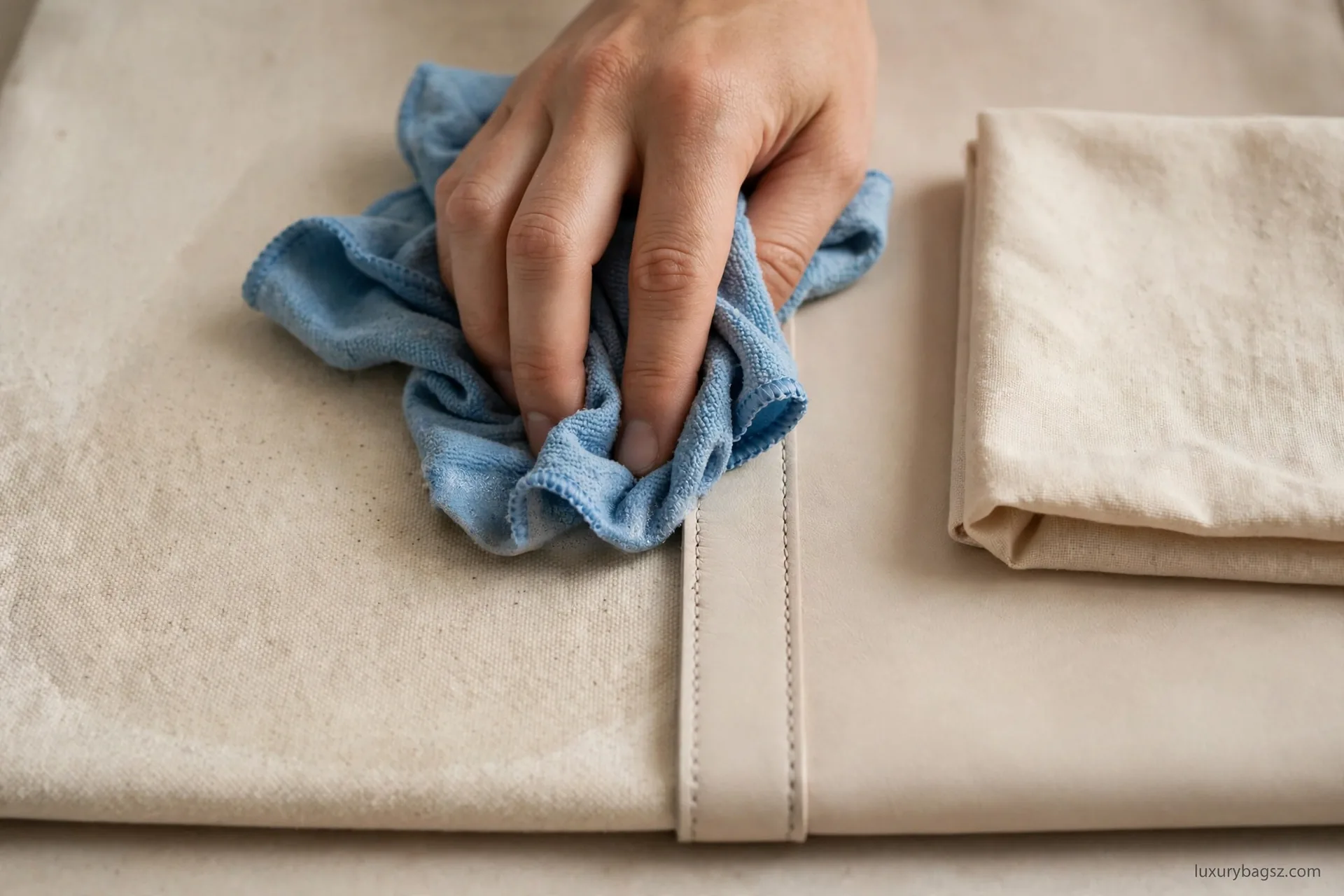
The golden rule is to protect the trim while you clean the canvas. Vachetta leather, the pale untreated cowhide on Monogram and Azur bags, water-spots easily, so keep water off it, work with a light-coloured cloth, and stop at the trim line rather than scrubbing across it.
Louis Vuitton canvas is where my materials knowledge earns its keep in daily care. That coated canvas is a PVC coating over cotton — I spend much of my authentication work telling genuine coated fabrics from PU imitations — and it cleans the way this guide says: a barely damp cloth, gentle circles, every trace of soap wiped away. The discipline is at the edges. Vachetta trim water-spots if you so much as look at it wetly, so I work to the trim line and stop. Clean the canvas like canvas and protect the leather like leather, and an LV stays young for decades.
What Louis Vuitton Canvas Actually Is
Louis Vuitton canvas is not leather. It is a cotton base treated with polyvinylchloride, PVC, to make coated canvas, which is why it resists water, heat and most chemicals far better than leather, while still not being indestructible. Handles and trim, by contrast, are leather, and they need entirely different care.
That construction explains both the bag's reputation and its limits. Coated canvas survives daily use, light rain and wiping in ways full leather does not, but folding it for long periods, baking it in sunlight, overloading it or scrubbing it harshly can still crack, dull or tear it.
Price confusion follows from the materials: canvas bags use relatively inexpensive cotton and PVC, yet they command luxury prices because buyers pay for craftsmanship, quality checks and the brand. Within Louis Vuitton's own range, canvas bags are actually among the cheapest bags, with full-leather styles costing several times more.
Monogram, Damier Ebene and Damier Azur Are Not Identical
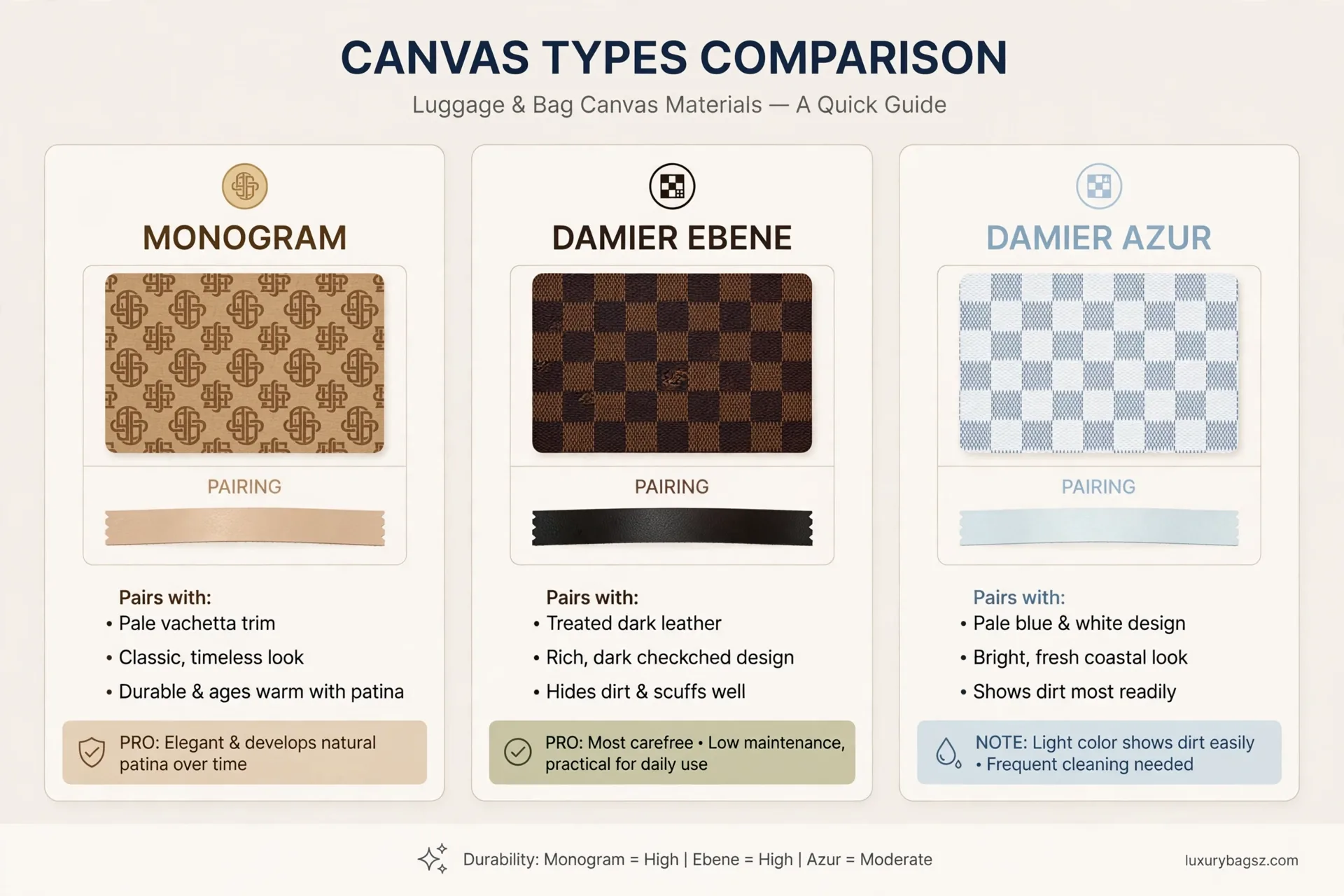
Monogram canvas, the brown LV print, pairs with vachetta trim. It is durable and wipes clean, but every cleaning session must work around the pale trim, and colour transfer from dark clothing shows on its tan background more than on darker canvases.
Damier Ebene, the dark brown checkerboard, pairs with treated dark leather that does not water-mark or darken like vachetta. Handbagholic calls it the most carefree canvas choice, though its treated coating can peel on well-used handles. It hides marks best and needs the least fuss.
Damier Azur, the pale ivory and grey-blue checkerboard, is just as strong as the other canvases but shows dirt, stains and dye transfer far more readily. It needs more frequent wiping if used heavily, and any spill should be dealt with immediately.
A different brand's canvas care does not transfer directly here: the live guide on how to clean a Hermes canvas bag covers a different brand and material system, so this guide's LV coated-canvas routine stands on its own evidence.
The Safe Basic Routine, Step by Step
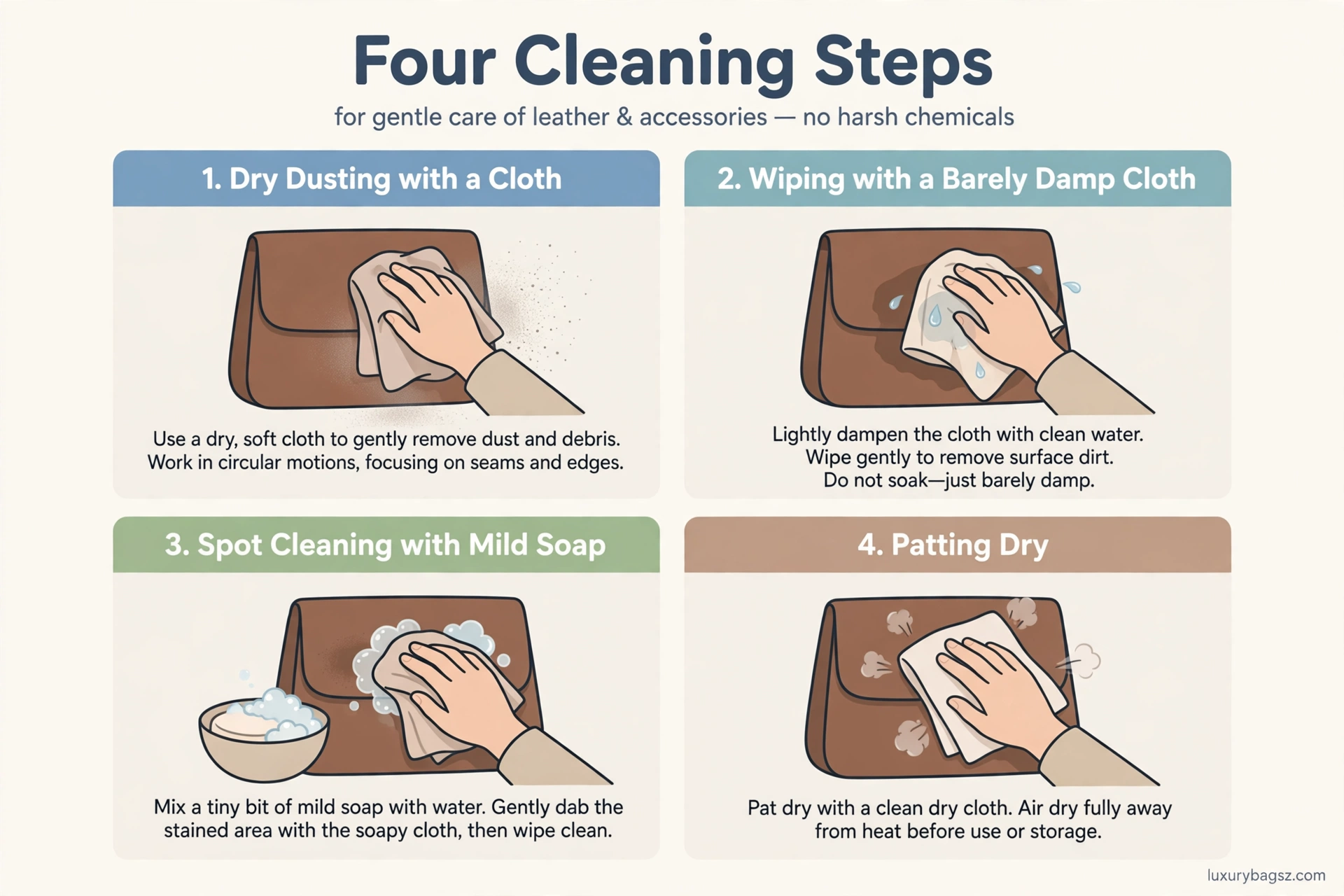
Start dry. Wipe the whole bag with a clean, dry, soft microfibre or lint-free cloth to remove dust and surface dirt, since grit dragged across canvas during wet cleaning causes fine scratches. Use a white or light-coloured cloth, so dye from the cloth cannot transfer to the canvas.
Next, barely dampen a clean cloth with lukewarm water, wringing it until it is damp, not wet, and wipe the canvas gently in circular motions. Work one panel at a time, avoiding the vachetta trim, and follow immediately with a dry cloth so no moisture sits on the surface.
For a stubborn mark, add a tiny amount of mild, pH-neutral soap or baby shampoo diluted in water to the damp cloth, rub gently, then wipe with a clean damp cloth until no soap residue remains, and pat dry. Let the bag air-dry completely away from direct sunlight and heat, never with a hairdryer, and never put it away damp.

Daily, Weekly and Seasonal Care
Daily, if you use the bag every day, give it a quick wipe with a clean, dry cloth when you get home, and place it on a clean surface rather than dragging it across floors or counters. Corners and bases scratch first, especially on Neverfull and Speedy styles, so where you set the bag down matters as much as how you clean it.
Weekly, dust the canvas and hardware with a dry microfibre cloth, check corners and handles for new marks, and empty the bag so crumbs and pen caps do not work into the lining. A weekly wipe-down with a barely damp cloth suits daily-use bags, while occasional-use bags need only dusting.
Seasonally, deep-clean and condition the leather trim every 6 to 12 months depending on use, following the trim guidance in the vachetta section, and inspect the canvas for early cracking, especially at folds and openings. Handbagholic advises cleaning and conditioning canvas and leather at least once a year on older bags, since restored moisture makes cracking less likely.
Stain by Stain: What to Try First, and When to Stop
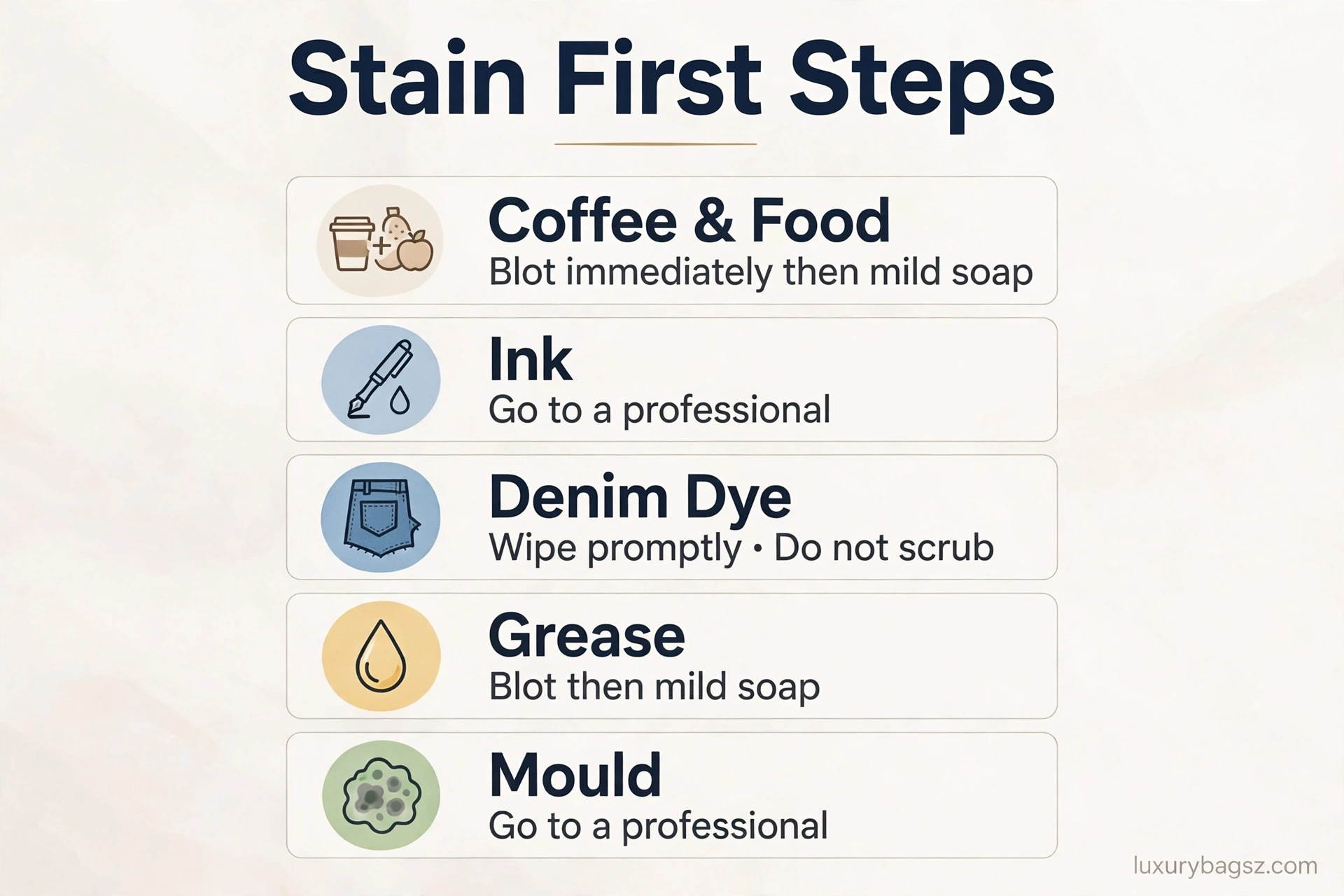
Coffee and food spills: act immediately with a clean cloth and water, blotting rather than rubbing, then follow the basic routine with diluted mild soap if a mark remains. Fresh spills on coated canvas usually lift; dried, set spills may not, and forcing them with scrubbing damages the coating.
Ink and pen: this is the hardest common stain, and honesty matters. One guide suggests a very gentle cotton-swab application of rubbing alcohol on canvas only, with extreme caution and a spot test, while others advise going straight to a professional. This guide's ladder is: try nothing beyond the basic routine at home, and take ink to a professional, since alcohol can dull or damage the coating.
Denim dye transfer: wipe promptly with a barely damp cloth and diluted mild soap, and do not scrub, since scrubbing drives dye deeper and abrades the coating. On pale Azur, dye transfer is often the stain that will not fully lift, and accepting a faint shadow beats damaging the canvas chasing perfection.
More Stains: Grease, Makeup, Water Marks and Mould
Grease and makeup: blot immediately without spreading, then use the basic routine with diluted mild soap, working from the outside of the mark inward. Grease on coated canvas often lifts better than expected, but makeup with strong pigment, especially long-wear foundation, may leave a faint trace that professional cleaning can reduce but not always erase.
Water marks on canvas itself are uncommon, since the coating resists water, but water marks on vachetta trim are common and are covered in the vachetta section. If canvas looks marked after rain, it is usually dirt the rain carried, not water damage, and the basic routine removes it.
Mould and mildew: do not attempt aggressive home cleaning. Wipe loose growth outdoors with a dry cloth, keep the bag away from other bags, air it in shade, and take it to a professional cleaner, since mould can return from spores inside the lining and home chemicals can damage canvas and trim together.
Yellowing on Azur: pale canvas yellows with sun, age and storage in plastic, and home whitening attempts usually make it worse. Prevention, shade storage and no plastic bags, beats any cure, and a professional assessment is the honest next step for a yellowed Azur.
Scuffs, Scratches and the Magic Eraser Disagreement
Light scuffs on coated canvas can sometimes be softened with a white eraser or melamine sponge used very gently, with a spot test first and minimal pressure, according to GBTimes and Handbagholic-adjacent sources. The risk, stated as caution rather than quantified, is that melamine abrasion dulls the PVC coating.
Other guides flatly warn against magic erasers, with one stating they are abrasive and can damage coated canvas and should be avoided at all costs. This guide does not resolve that conflict: the safest position is to try the basic routine first, use an eraser only on a hidden scuff after a spot test, with the lightest possible touch, and stop immediately if the surface looks duller.
Scratches that cut through the print cannot be cleaned away. A gentle leather cleanser can remove dirt and colour from a scratch to make it less visible, according to Handbagholic, but the scratch itself remains, and restoration specialists, not home cleaning, are the next step for visible damage.
Interior, Lining and Odour
Textile and microfibre linings need their own routine, which the canvas pages themselves largely omit. Turn the bag inside out where possible, vacuum with a brush attachment to remove loose dirt, then wipe stains with a barely damp cloth and diluted mild soap, without saturating the lining, and blot dry.
Pocket interiors deserve the same treatment, since pens, coins and crumbs collect there. Keep uncapped pens out of the bag entirely, since ink on light microfibre lining is one of the hardest marks to live with, and it shows every time the bag is opened.
For musty odour, air the bag in a well-ventilated shaded area, and place an open box of baking soda or a charcoal purifier bag inside for a few days to absorb odour. Avoid perfumes and air fresheners, which mask smell without removing it, and never store a damp bag in a closed dust bag, since trapped moisture breeds mildew.
Vachetta: The Boundary Technique
Vachetta is untreated, vegetable-tanned cowhide that starts pale, darkens to honey with sun and handling, and water-spots at the slightest dampness. Prevention beats cleaning: handle trim with clean, dry hands, keep it out of rain where possible, and store the bag in its dust bag.
To clean canvas right up to the trim, use a barely damp white cloth, work toward the trim but not across it, and finish by wiping the trim itself only with a dry cloth. If the trim does get wet, blot immediately with a dry cloth and let it dry naturally; do not use heat, and do not try to even out a water mark by wetting the whole trim, since that usually makes the mark larger.
Conditioning vachetta is debated: some guides recommend a vachetta-specific conditioner every 3 to 6 months, others warn against conditioner on untreated leather. This guide's position is conservative: a dry cloth and a vachetta-specific protector spray, tested first on a hidden area, are the safe home steps, and anything stronger belongs to a professional.
Hardware, Zips and Edge Trim
Polish brass zips and clasps with a soft jewellery polishing cloth, never with liquid metal cleaner, which can strip plating and damage surrounding leather. Work the zip gently after cleaning, since grit in zip teeth causes stiffness that owners mistake for zip failure.
Edge trim and glazing, the coating along canvas edges, should be wiped only with a dry or barely damp cloth. Peeling or cracked glazing is a repair issue, not a cleaning issue, and home glues or paints make professional repair harder, so leave damaged glazing alone and seek a restorer.
Damier Ebene's treated leather trim needs a different note: its coating can peel on well-used handles, and peeling trim should not be scrubbed or conditioned aggressively. A dry wipe and professional advice protect a peeling handle better than any home product.
Storage That Prevents the Next Clean
Store the bag in its dust bag, not its box, so it can breathe, stuffed with acid-free tissue or a soft cotton insert to hold its shape, upright on a shelf away from direct sunlight. Never hang a bag by its handles or straps for months, since hanging stretches leather and distorts shape.
Avoid plastic bags and plastic stuffing, which trap moisture and encourage mildew, and avoid attics and basements, where humidity and temperature swings damage canvas and leather together. A handbag liner or organiser also protects the lining from dirt and spills while helping the bag hold its shape in use and storage.
Colour transfer prevention belongs in storage too: keep pale bags away from dark denim, new leather jackets and coloured scarves, or use a light scarf as a barrier. A protector spray made for luxury handbags, tested first on a hidden area, adds a barrier for Azur and vachetta owners who use their bags daily.
Products: What Helps, What Harms, What Is Disputed
Helpful at home: soft white microfibre or lint-free cloths, lukewarm water, a tiny amount of mild pH-neutral soap or baby shampoo, a jewellery polishing cloth for hardware, and acid-free tissue for storage. Those five cover nearly every safe home clean.
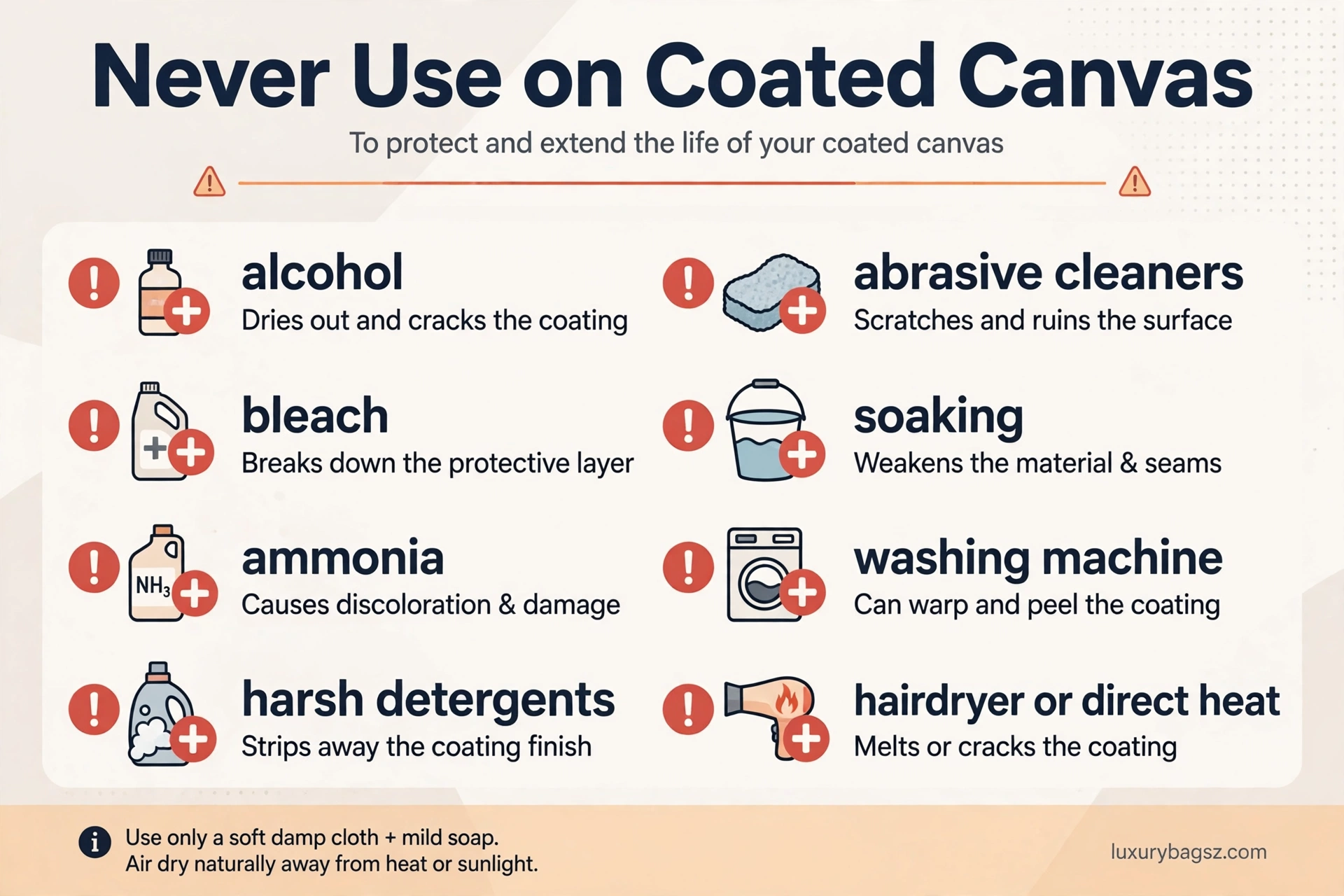
Harmful, by consistent agreement: alcohol, bleach, ammonia, harsh detergents, abrasive cleaners, household cleaners, soaking the bag, washing machines, hairdryers and direct heat. Never put a Louis Vuitton bag in a washing machine; guides agree that will almost certainly damage it beyond repair.
Disputed, so flagged rather than settled: baby wipes, where one GBTimes page calls them generally mild but risky and Relux says flatly to avoid them; magic erasers, covered in the scuffs and scratches section; and leather deep cleansers on canvas, where Handbagholic recommends a leather cleanser and conditioner for canvas while GBTimes and Relux reserve conditioner for leather trim only. For disputed products, the basic routine is the safe default.
When DIY Stops: Professional Cleaning and Repair
Stop home cleaning and seek a professional for cracking or peeling coating, deep or set stains, ink, mould, torn canvas, broken zips or hardware, and damaged stitching. Those are restoration jobs, and home attempts usually make them worse and more expensive to fix.
Louis Vuitton itself, according to Handbagholic, often refuses daily wear and tear repairs, including canvas tears and cracks, though it may repair craftsmanship issues such as glazing or stitching, and it can replace leather handles and trims at high cost, sometimes about half the bag's price, provided the canvas is in perfect condition. A reputable third-party restoration specialist is therefore the realistic route for most canvas damage.
Choose a restorer who can show previous work on similar bags, ask what the repair will involve, and get the cost and turnaround in writing before leaving the bag. Professional cleaning also pays for itself at resale: a well-kept bag with even patina, intact hardware and minimal interior wear commands a significantly higher price than a neglected one.
Limited Editions, Printed Canvas and Colour Care
Limited-edition and printed canvases follow the same basic routine, according to Handbagholic, since the print does not change the underlying coated canvas. Lighter-coloured prints deserve extra care, since they show marks like Azur, and Handbagholic advises a cleaner and conditioner every 6 to 12 months for such bags.
Colour care is mostly about prevention: keep light canvas away from dye sources, wipe spills immediately, and store away from sunlight, which fades prints and yellows pale canvas alike. A printed canvas that has faded from sun cannot be cleaned back to its original colour, so shade storage is worth more than any product.
Finally, condition is cumulative. A bag wiped weekly, stored stuffed and shaded, and taken promptly to a professional for serious marks will look better at ten years old than a bag cleaned aggressively twice a year and stored badly. Gentle consistency, as Relux puts it, always outperforms aggressive scrubbing.
Frequently Asked Questions
Can I use a damp cloth on Louis Vuitton canvas?
Yes, barely damp, not wet, with a soft white cloth, followed by a dry cloth, and kept off the vachetta trim.
What soap is safe for LV canvas?
A tiny amount of mild, pH-neutral soap or baby shampoo diluted in water, fully wiped away afterwards.
Can I use baby wipes on my LV bag?
Disputed: one guide calls alcohol-free, fragrance-free wipes usable very gently with a spot test, while another says to avoid them outright. The basic routine is the safe default.
Can I use a magic eraser on canvas scuffs?
Only very gently after a spot test, according to some guides, while others warn against them entirely. Try the basic routine first and stop if the surface dulls.
How do I clean Damier Azur without yellowing it?
Wipe promptly, store shaded and never in plastic, and accept that sun yellowing cannot be cleaned away at home.
How do I clean canvas next to vachetta trim?
Work toward the trim with a barely damp cloth, never across it, and wipe the trim itself only with a dry cloth.
Can I wash a Louis Vuitton bag in a washing machine?
No. Guides agree that will almost certainly damage the bag beyond repair.
How do I clean the inside of my LV bag?
Vacuum with a brush attachment, then wipe stains with a barely damp cloth and diluted mild soap, without saturating the lining.
How do I remove odour from my LV bag?
Air it in shade and place baking soda or a charcoal purifier inside for a few days; avoid perfumes that only mask smell.
When should I take my LV canvas bag to a professional?
For cracking or peeling coating, deep stains, ink, mould, tears, broken hardware or damaged stitching.
Final Verdict
Coated canvas rewards gentle, consistent care and punishes aggressive cleaning. Master the barely-damp routine, respect the vachetta boundary, learn the stain ladder, and let professionals handle cracking, ink and mould.
A Louis Vuitton canvas bag treated that way stays cleaner, holds its shape, and keeps its resale value for years, while a bag scrubbed with harsh products or soaked in pursuit of perfection usually ends up worse than the mark it started with.






