

What to Know About Louis Vuitton: History, Bags, Prices and Buying Guide
Louis Vuitton at a Glance
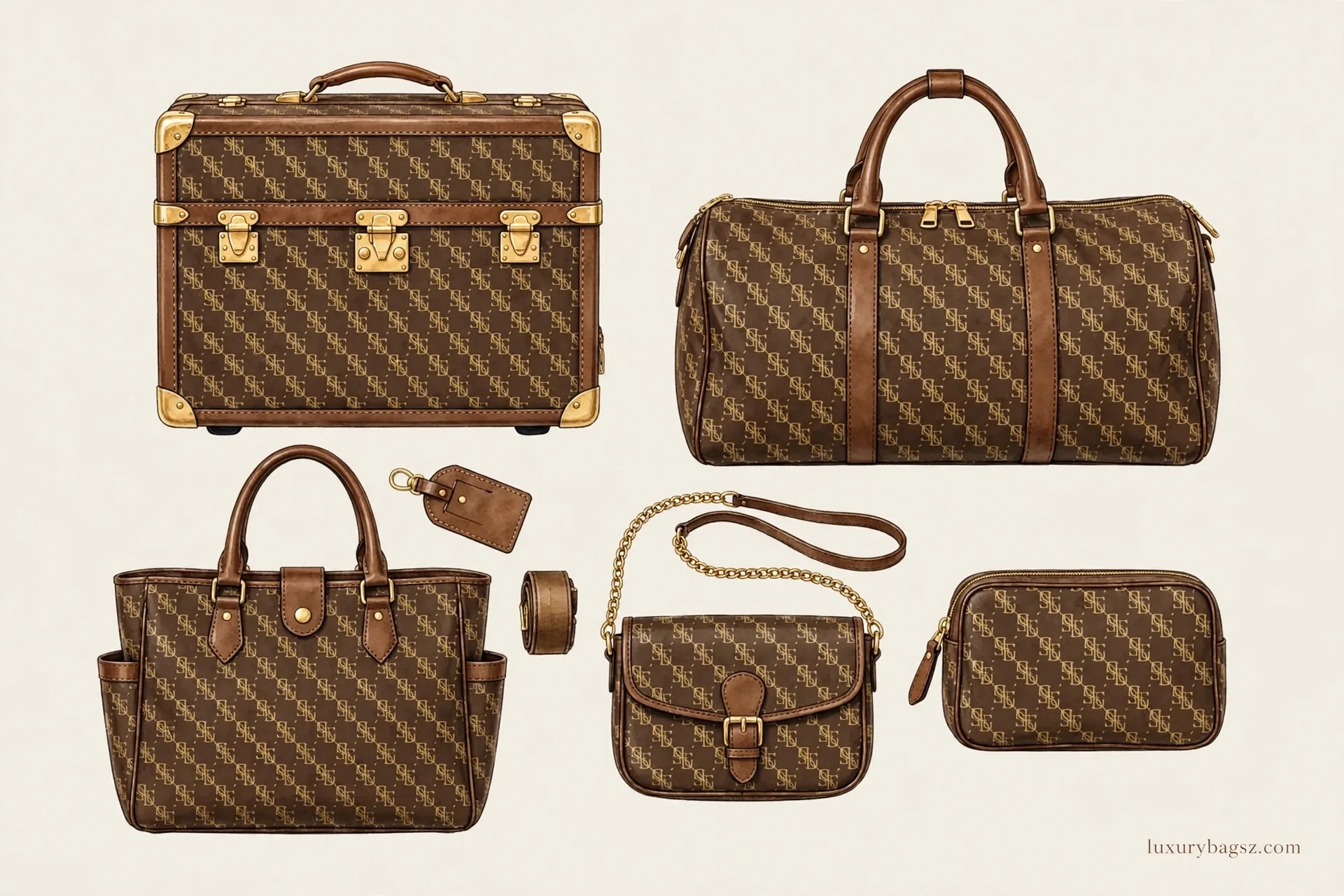
Louis Vuitton is the world's most recognisable luxury brand: a Paris trunk-maker founded in 1854 that turned travel luggage into a global empire of bags, shoes, clothing, jewellery, and watches. Its Monogram canvas is arguably the most copied pattern in fashion history, which tells you both how desirable and how faked it is.
The house built its name on practical innovation. The flat-top trunk stacked better than domed trunks, the coated canvas resisted water and wear, and the interlocking monogram, created in 1896, was an early anti-counterfeit measure. Practicality, not decoration, made Louis Vuitton famous.
Today Louis Vuitton sells through its own boutiques and online shop, never holds sales on core bags, and raises prices regularly. For buyers, that means a clear but expensive new market and a huge pre-owned market where knowledge of date codes, canvas, and hardware pays for itself many times over.
Key Takeaways
- Louis Vuitton was founded in Paris in 1854 by Louis Vuitton, a trunk-maker and packer.
- The flat-top trunk, grey Trianon canvas, Damier check, and 1896 Monogram canvas built the house.
- Iconic bags include the Speedy, Neverfull, Alma, Noe, Pochette Metis, and Capucines.
- Monogram and Damier canvases are coated and durable; leather lines include Epi, Empreinte, and Taurillon.
- Louis Vuitton does not discount core bags and rarely offers promotions on leather goods.
- Date codes, and microchips on newer pieces, help date a bag but do not prove authenticity alone.
- Vachetta leather trim darkens with sun and handling, which is normal patina, not damage.
- Classic canvas bags in good condition resell well; seasonal colours and prints vary more.
A Packer's Son Who Reinvented the Trunk
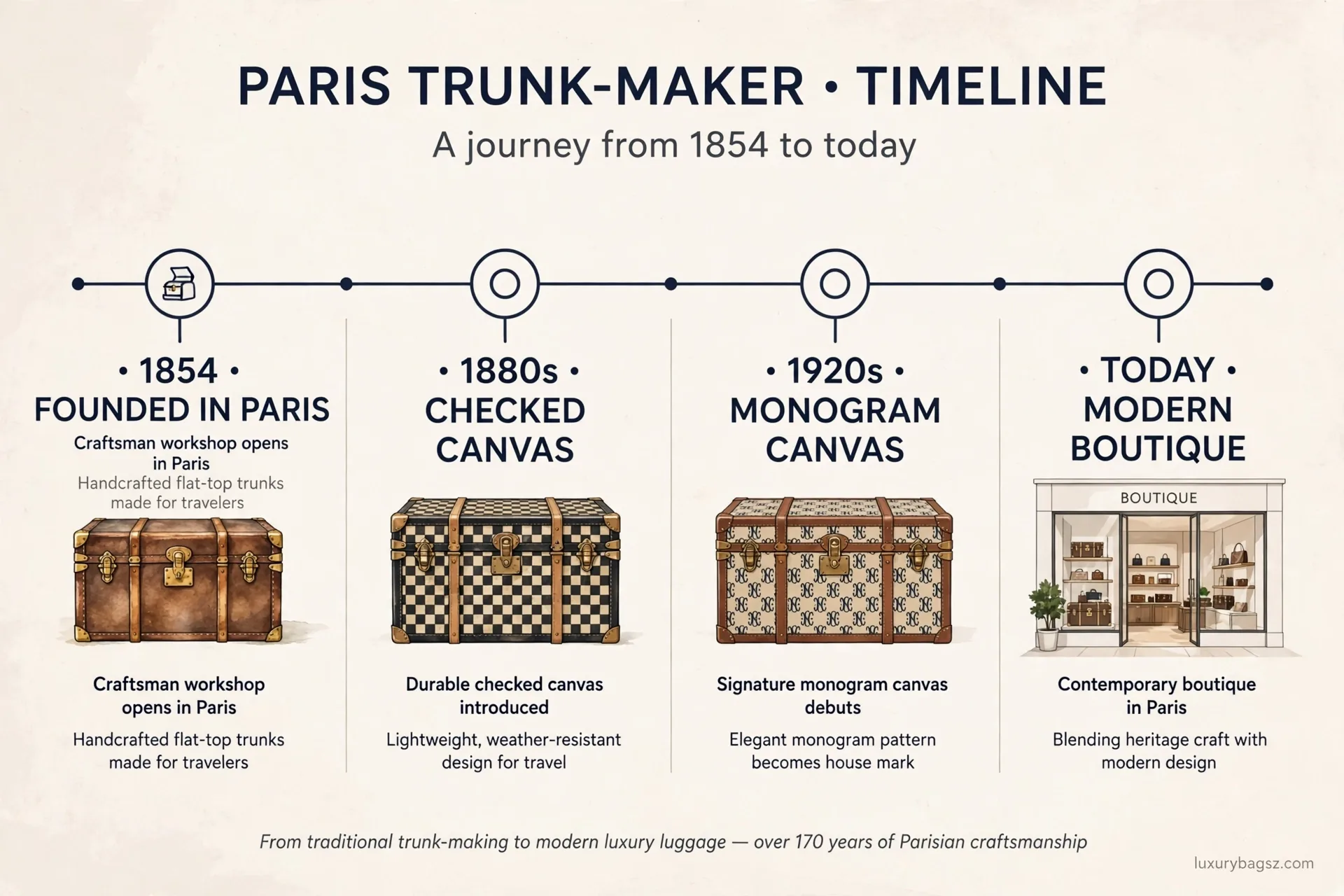
Louis Vuitton was born in 1821 in Anchay, France, and arrived in Paris as a teenager, where he apprenticed with a trunk-maker and packer named Monsieur Marechal. Packing was a skilled trade in an age of long train and ship journeys, and Vuitton learned how to protect fragile goods across rough travel.
He founded his own workshop in 1854, near the Place Vendome, and quickly won clients among Parisian aristocrats and travellers. His insight was simple: trunks should be practical first. Domed tops shed water on carriage roofs but wasted space when stacked, while flat tops stacked neatly in trains and ship cabins.
Vuitton's flat-top trunk, covered in grey Trianon canvas, answered that need. It was lighter than wooden chests, more water-resistant, and easier to stack and store. Travellers noticed, orders grew, and the workshop expanded into a business that would outlive its founder by more than a century.
The house stayed family-run for generations. Louis's son Georges took over after his father's death in 1892, and later generations expanded the brand internationally, turning a Paris workshop into a luxury institution with stores across Europe, America, and Asia.
Canvas, Checks, and the Monogram That Fought Fakes
Canvas is the foundation of Louis Vuitton, and its history explains the patterns you see today. The original grey Trianon canvas gave way to a striped canvas, then to the Damier check in 1888, a brown and beige checkerboard designed to be distinctive and hard to copy.
When copies of Damier appeared, Georges Vuitton created the Monogram canvas in 1896, combining interlocking LV initials with flowers, stars, and a diamond motif inspired by Japanese art and by his father's initials. It was one of fashion's first branded patterns, and it worked: the Monogram became instantly recognisable.
Ironically, the Monogram's success made it the most counterfeited pattern in the world. That is why modern buyers must look beyond the pattern itself to stitching, hardware, date codes, and materials. A correct-looking monogram proves nothing on its own, because copiers reproduce it well.
Later canvases expanded the range. Damier Ebene offers a dark brown check for buyers who want discretion, Damier Azur offers a pale blue and white check for summer, and Monogram Eclipse and Empreinte leathers offer darker, more masculine or more textured alternatives to the classic brown.
From Trunks to Handbags: How the Icons Were Born
Many Louis Vuitton handbags began as travel pieces adapted for daily life. The Speedy, introduced in 1930 as the Express and later renamed, shrank a travel duffel into a handbag that Audrey Hepburn famously asked to be made smaller still. It remains the house's most enduring everyday bag.
The Noe, from 1932, was designed to carry champagne bottles, with a drawstring top and a bucket shape that later became a fashion bag in its own right. The Alma, with its domed shape and double handles, traces its roots to the 1930s and became a structured classic for formal days.
The Keepall duffel, the Steamer, and the Pegaso luggage line kept the travel heritage alive, while the Neverfull, launched in 2007 as a shopping tote, became the modern entry point for a generation of buyers. Its light weight, large capacity, and relatively accessible price made it a first luxury bag for millions.
Newer icons followed the same logic of adapting travel and heritage shapes. The Pochette Metis, the Capucines, the Twist, and the OnTheGo tote each reinterpret a house code, from the S-lock to the Monogram, for contemporary life. Heritage, at Louis Vuitton, is a living design library, not a museum.

Materials: Canvas, Vachetta, and Leather Lines
Monogram and Damier canvases are coated cotton canvas, not leather. The coating gives water resistance, scratch resistance, and light weight, which is why canvas bags suit daily use and travel. The trade-off is that canvas will not develop a leather patina, and deep scratches or peeling coating are hard to repair invisibly.
Vachetta is the untreated cowhide used for handles, trim, and straps on many canvas bags. It starts pale and darkens to a honey or caramel tone with sun, handling, and time. That patina is expected and even prized, but water spots, dirt, and uneven darkening can occur, so new owners should protect vachetta from rain and stains early.
Epi leather is a grained, dyed leather with a distinctive texture, used for structured bags such as the Alma. It resists scratches and water better than smooth leather and holds its shape well, making it a good choice for formal bags that must stay crisp.
Empreinte leather is embossed with the Monogram pattern, giving a soft, textured leather for bags such as the Pochette Metis and Neverfull in leather. Taurillon, a grained calfskin, appears in men's and women's leather goods, while exotic leathers sit at the top of the range for Capucines and special pieces.
How Louis Vuitton Is Made, and Where
Louis Vuitton bags are made in workshops in France, Spain, Italy, and the United States, among other locations, with each workshop specialising in particular products. A "Made in" stamp reflects where a bag was finished, not a quality ranking, and genuine bags come from several countries.
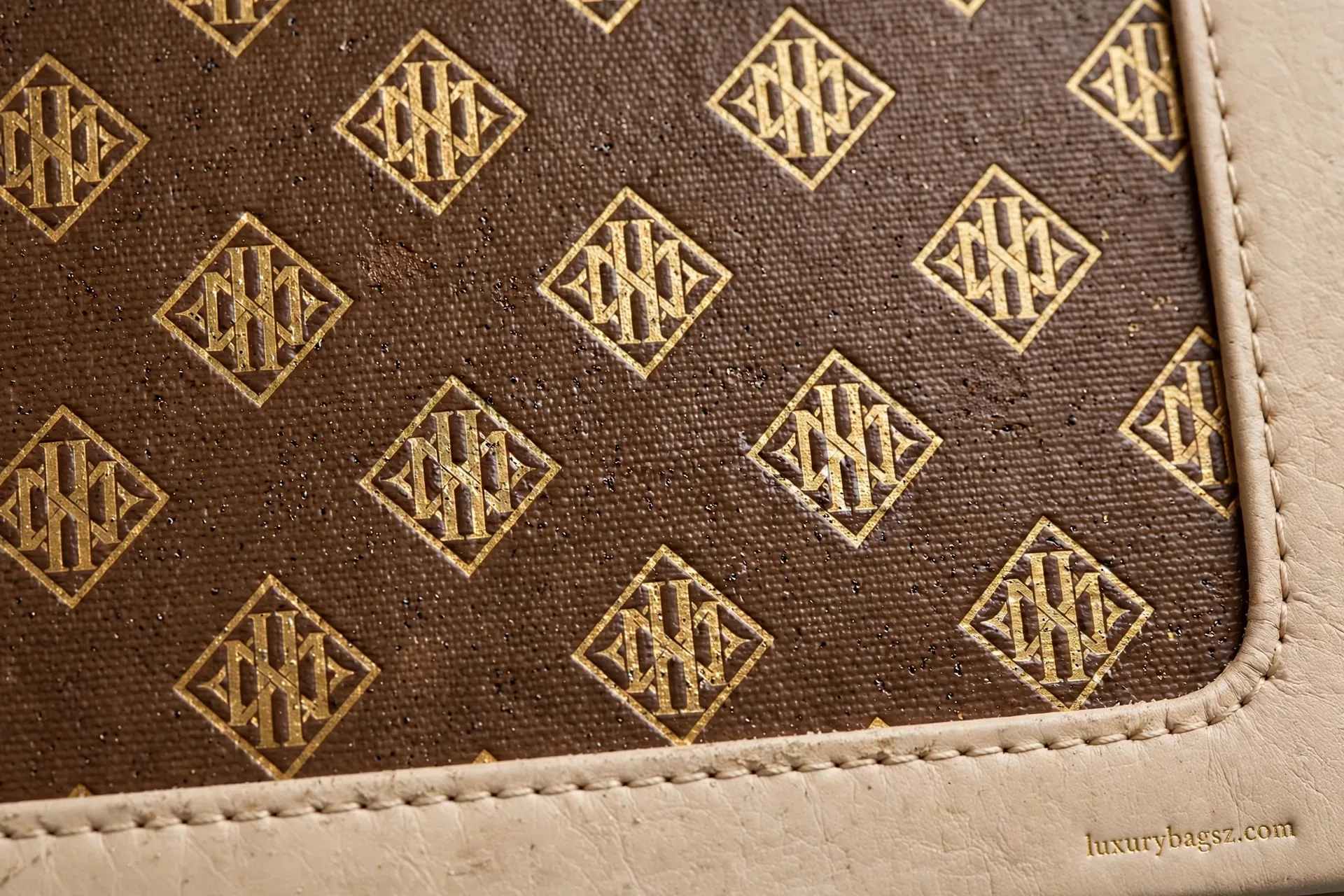
Craftsmanship follows a workshop model: trained artisans cut, assemble, stitch, and finish bags by hand with machine assistance, and pieces pass through quality checks before leaving. Canvas bags involve precise pattern alignment, especially on Monogram, where the motif should sit sensibly across panels and seams.
Leather bags demand more handwork, from cutting and edge-painting to hardware fitting and lining. The Capucines, the house's top leather bag, involves hundreds of steps and a long making time, which helps explain its price compared with a canvas tote.
Buyers sometimes overvalue the country stamp. A bag made in the USA or Spain is not inferior to one made in France, and date codes and microchips record production details that matter more for dating than for judging quality. Judge the bag in your hands, not the stamp alone.
The Iconic Bags, and Which One Suits You
The Neverfull is the default first Louis Vuitton bag: a light, roomy tote in Monogram, Damier Ebene, or Damier Azur, with a detachable pouch and cinch sides. It suits commuters, travellers, and parents who need capacity without weight. Our Neverfull sizes guide compares PM, MM, and GM.
The Speedy is the classic handbag: a compact, curved duffel shape with double handles, available in several sizes and in canvas or leather. It suits buyers who want a structured everyday bag with history. Our Speedy sizes guide covers the 25, 30, and larger options.
The Pochette Metis is a structured crossbody with an S-lock, a front pocket, and a Monogram Empreinte or canvas body. It suits buyers who want hands-free elegance for days and evenings. Our Pochette Metis guide details its sizes, compartments, and wear.
The Alma, Noe, Capucines, Twist, and OnTheGo cover the rest of the range, from formal top-handles to bucket bags to large work totes. Start with the shape that matches your daily carry, then choose canvas or leather based on budget, weight, and care tolerance.
Shoes, Clothing, Jewellery, and Watches
Louis Vuitton shoes span loafers, sneakers, boots, and heels, with men's sneakers under recent creative direction attracting particular attention. Sizing varies by style and country of manufacture, so try in store or buy from a retailer with easy returns, especially for sneakers.
Ready-to-wear, led for women by Nicolas Ghesquiere since 2013 and for men by Pharrell Williams since 2023, ranges from sharp tailoring to street-influenced casual wear. Quality is generally high, but prices are too, and seasonal pieces date faster than classic tailoring or knitwear.
Jewellery and watches use house codes in metal and leather, from Monogram pendants to Tambour watches. These lines suit buyers who want Louis Vuitton beyond bags, and they hold value unevenly: classic jewellery holds better than highly seasonal fashion jewellery.
Fragrance, launched as a modern line in 2016, offers another entry point, with perfumes sold in boutiques and online. A fragrance is a low-risk way to experience the brand, though it tells you little about bag quality or fit.
Creative Directors, and Why Eras Matter
Marc Jacobs, creative director for women's wear from 1997 to 2013, transformed Louis Vuitton from a luggage house into a fashion house. His collaborations with artists such as Takashi Murakami, Stephen Sprouse, and Richard Prince produced the Multicolore, Graffiti, and Watercolor lines that now command collector premiums.
Nicolas Ghesquiere, who followed Jacobs, brought a sharper, more architectural women's vision, with bags such as the Petite Malle and Twist reflecting his structured aesthetic. His era suits buyers who prefer modern, graphic design over vintage-inspired prints.
For men, Virgil Abloh (2018 to 2021) brought streetwear energy, vivid colour, and cultural reach, followed by Pharrell Williams from 2023 with a similarly broad, music-inflected vision. Men's bags, sneakers, and accessories from these eras attract younger collectors.
Era matters pre-owned because materials, date-code formats, and construction changed over time. A Multicolore bag from 2003 differs from a Monogram bag from 2023 in canvas, lining, and hardware, and knowing the era helps you judge condition and authenticity.
Prices, and the No-Discount Rule
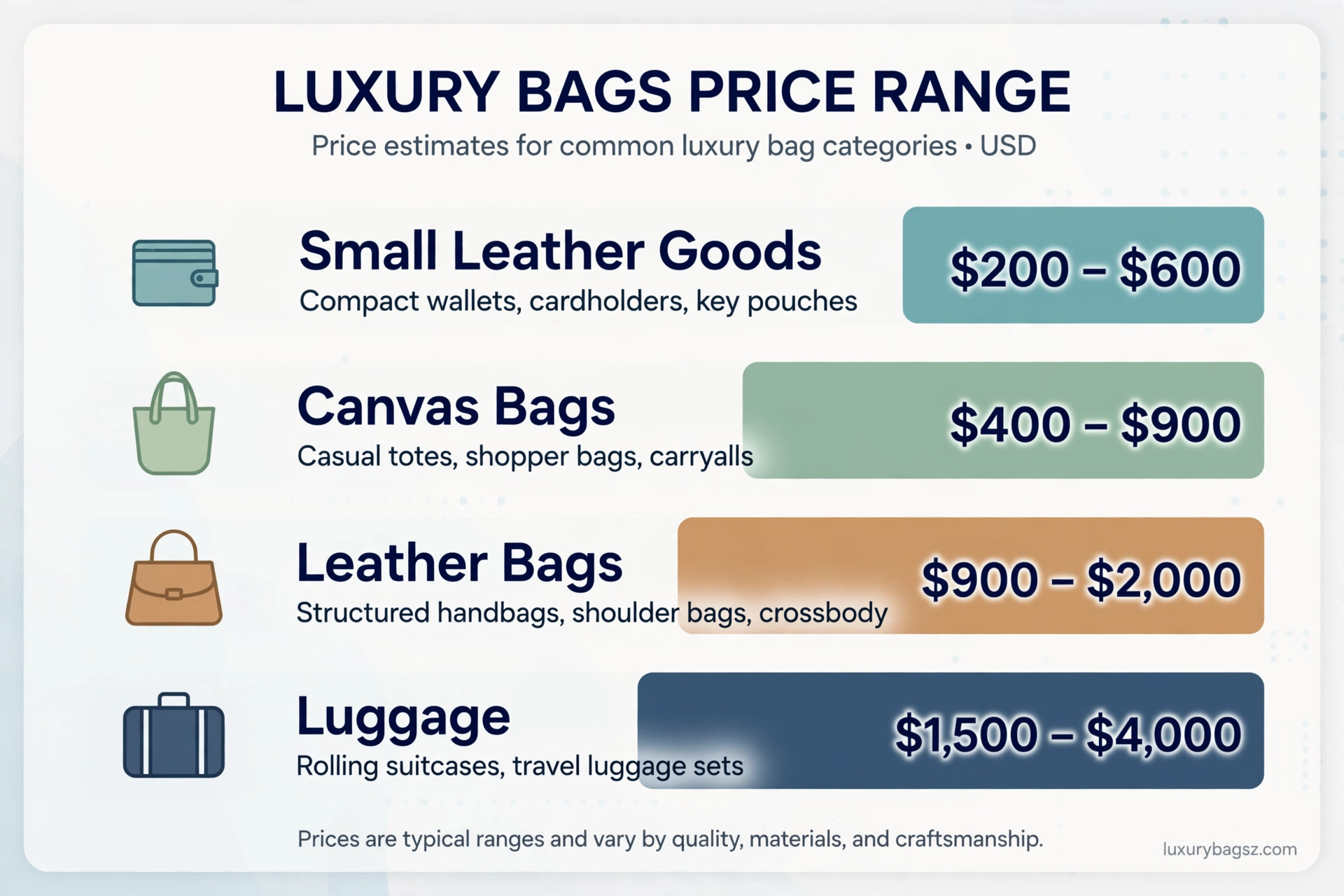
Louis Vuitton prices have risen steadily, with canvas bags now in four figures in most currencies and leather bags, especially Capucines, climbing far higher. Small leather goods start lower, but even a card holder or key pouch sits in the low hundreds.
The house does not hold sales on core leather goods and rarely discounts bags at all. That policy protects resale values for existing owners, but it also means new buyers should budget at full price and be sceptical of any retailer offering a large discount on a current bag.
Price increases are announced periodically and apply across the range, which sometimes drives buyers to purchase before a rise. If you know you want a classic bag, buying before an increase saves money, but do not rush a size or colour decision solely to beat a rise.
Resale values for classic canvas bags are strong, especially Neverfull, Speedy, and Pochette Metis in Monogram and Damier Ebene. Seasonal prints and colours vary: a beloved collaboration may command a premium, while a loud seasonal colour may sell slowly.
Where to Buy, and the Boutique Experience
Louis Vuitton sells through its own boutiques and its official online shop, with department-store presence varying by market. Boutiques offer the fullest range, personal service, and access to special orders and repairs, while online suits buyers who know exactly what they want.
Boutique stock for popular bags is usually good, though specific sizes, colours, and leather lines may need ordering. Unlike some houses, Louis Vuitton does not generally operate waiting lists for canvas bags, which makes buying more straightforward than the appointment culture at Hermes.
Service in boutiques is professional and product-focused. Staff can explain canvas versus leather, compare sizes with your daily items, and advise on vachetta care. Ask to see the bag in daylight, check the pouch and straps, and confirm what is included before paying.
For buyers far from a boutique, the online shop offers delivery and returns, but inspecting canvas alignment and vachetta tone in person remains valuable for a first purchase. If you buy online, inspect promptly on arrival and keep packaging until you are sure.
Sizing: Choosing Between PM, MM, GM, and More
Louis Vuitton sizing uses French abbreviations: BB and PM for small, MM for medium, GM for large, plus numeric sizes for Speedy and Keepall. Always check official dimensions, because the same letters mean different capacities across bag shapes.
For the Neverfull, PM suits light daily loads, MM suits most commuters and travellers, and GM suits heavy carriers and parents who need maximum capacity. The MM is the most popular for a reason: it balances capacity with a manageable size on most frames.
For the Speedy, 25 suits evenings and light days, 30 suits everyday use, and 35 and 40 suit travel or heavy loads. Try the bag loaded, because an empty Speedy feels very different from a full one, and handle drop matters for shoulder versus hand carry.
For crossbody bags such as the Pochette Metis, check strap drop and capacity together. A bag that fits your phone, wallet, keys, and sunglasses is enough for most days, and a larger bag may defeat the purpose of travelling light.
Buying Pre-Owned Without Getting Caught Out
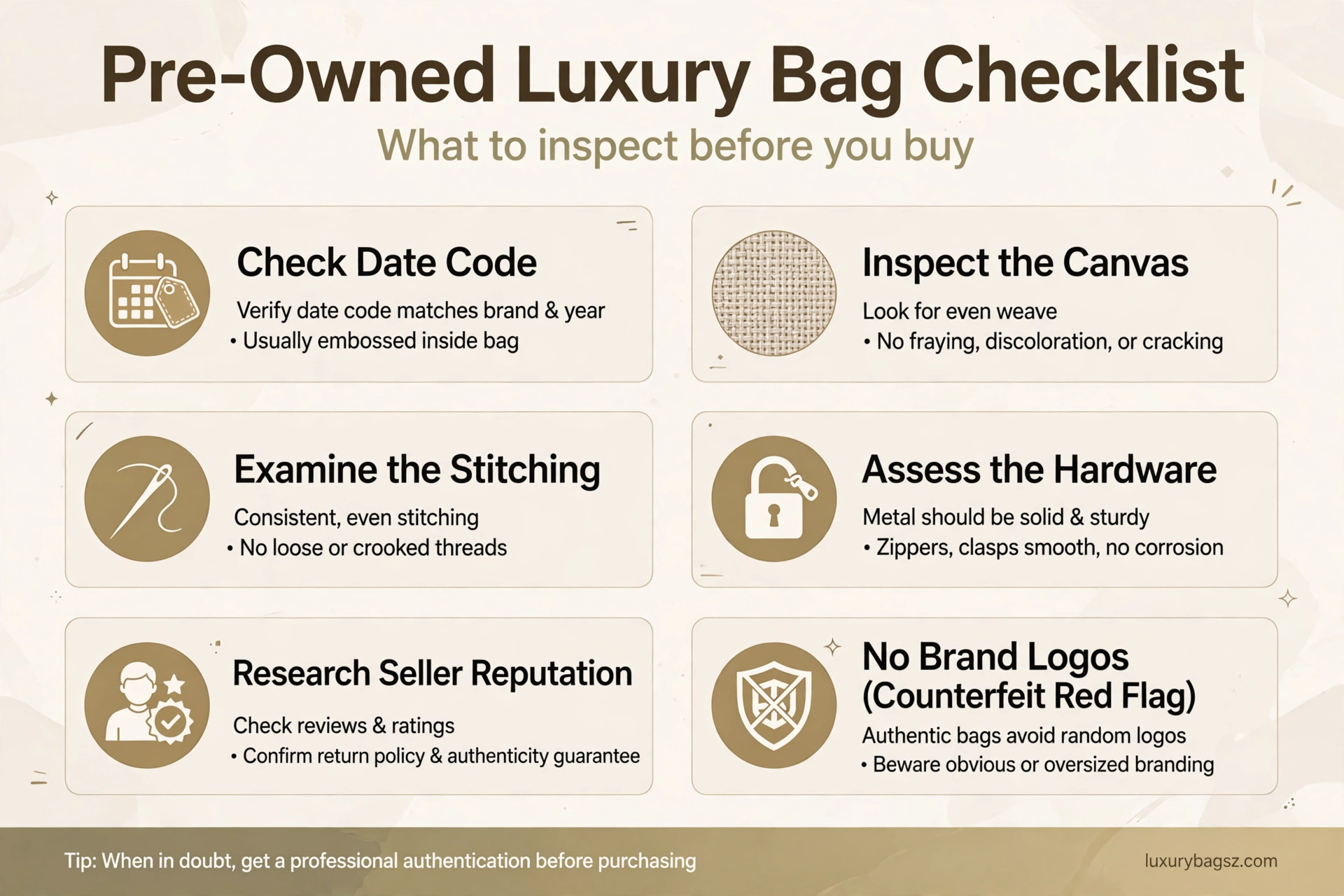
Pre-owned Louis Vuitton is the largest luxury resale market in the world, which means choice, competitive prices, and many fakes. Start with our guides on date codes and microchips, which explain how to read the codes that date a bag, and remember that a code alone never proves authenticity.
Canvas checks come next. Monogram alignment should be sensible, coating should feel smooth, and stitching should be even with a consistent mustard-yellow thread on many canvas bags. Hardware should feel weighty, with clean engraving, and zips should run smoothly.
Vachetta tells a story: even patina suggests normal use, while water spots, dark stains, or cracked handles suggest hard use or poor storage. Price repairs into your offer, and ask for close photos of handles, corners, base, and interior before committing.
Our guides on how to spot a fake Louis Vuitton bag and on buying pre-owned safely walk through seller checks and model-specific tells. Use them together, buy from vetted dealers, and get an independent opinion for expensive or rare pieces.
Caring for Canvas, Vachetta, and Leather
Canvas care is simple, and our dedicated guide to cleaning a Louis Vuitton canvas bag covers it in detail. In short: wipe with a soft, dry cloth, blot spills promptly, avoid harsh cleaners, and keep the bag out of prolonged sun and damp.
Vachetta needs early protection. Keep new vachetta away from rain, water, and dye-transfer risks, and accept that it will darken. Some owners use a vachetta protector, but test any product carefully, because protectors can change tone unevenly if applied poorly.
Leather bags need wiping, stuffing to hold shape, and dust-bag storage. Avoid overloading, which strains handles and distorts structured shapes such as the Alma and Capucines. For Epi and Empreinte leathers, gentle wiping usually suffices, with conditioner used sparingly.
Repairs through Louis Vuitton boutiques cover handles, zips, edges, and vachetta replacement for many models, subject to assessment and cost. For pre-owned bags, factor likely repairs into the purchase price rather than discovering them afterwards.
Louis Vuitton Versus Gucci, Chanel, and Hermes
Against Gucci, Louis Vuitton offers a tighter, more uniform canvas system and stronger resale for classic totes, while Gucci offers more fashion variety and a broader shoe and clothing range. Canvas buyers who want consistency lean Louis Vuitton; buyers who want variety lean Gucci.
Against Chanel, Louis Vuitton offers lighter, more practical daily bags at generally lower prices, while Chanel offers quilted leather glamour and a more formal handbag identity. A Neverfull and a Classic Flap serve different lives, and many collectors own both for different occasions.
Against Hermes, Louis Vuitton offers accessibility: boutiques, online shopping, and no waiting-list culture for most bags. Hermes offers rarer leather, higher craftsmanship prices, and a more exclusive buying experience. Louis Vuitton is the practical luxury choice; Hermes is the aspirational one.
Choose Louis Vuitton if you want durable, recognisable, practical luxury with strong resale. Choose a rival if you want quieter branding, softer leather, or a more fashion-forward seasonal range.
Collecting Louis Vuitton: Collaborations and Vintage
Collaborations drive Louis Vuitton collecting. Murakami Multicolore, Sprouse Graffiti, Richard Prince Watercolor, and later artist and designer collaborations all command attention, with condition and completeness deciding value. A complete set with dust bag and receipt sells faster than a bare bag.
Vintage canvas bags from the 1980s and 1990s offer history at accessible prices, but they need careful checks for canvas cracking, vachetta wear, and interior condition. Older bags used different linings and hardware, so compare with known examples for the era.
Limited editions and runway pieces attract collectors who follow creative directors closely. These pieces can appreciate, but they can also fall out of favour as tastes change, so buy them for love first and investment second.
A sensible collection starts with one classic canvas bag, adds a leather piece or a collaboration second, and only then chases rarities. Condition, completeness, and personal enjoyment matter more than chasing every release.
Common Mistakes, and How to Avoid Them
The first mistake is buying the wrong size, especially a Neverfull GM when an MM would do, or a Speedy 25 when a 30 is needed. Measure your daily carry, try loaded in store, and remember that a bag that is too big tempts overloading.
The second mistake is neglecting vachetta. New owners who carry a pale-handled bag in rain or place it on wet surfaces soon face water spots that are hard to remove. Protect vachetta early, and accept patina as part of ownership.
The third mistake is trusting a bargain. Louis Vuitton's no-discount policy means a new bag at a large discount from an unknown seller is almost certainly not genuine or not new. Pay for a vetted seller, not for a fantasy price.
The fourth mistake is ignoring interior and base wear pre-owned. Corners, base, zips, and lining wear first, and repairs cost money. Ask for photos of each area, and price the bag honestly.
The fifth mistake is buying a seasonal print as a first bag. Prints date, colours fade in popularity, and resale varies. Start with Monogram or Damier Ebene, and add prints once the classics are covered.
Louis Vuitton for Travel, Work, and Family Life
For travel, Louis Vuitton's heritage shows at its best. A Keepall duffel remains one of the most practical luxury travel bags ever made: light for its size, tough in coated canvas, and easy to carry by hand or over the shoulder. Pair it with a Neverfull as a personal item, and you have a cabin set that covers a long weekend without checked luggage.
For work, a structured tote or a Pochette Metis covers most professional days. The OnTheGo tote, with its larger capacity and upright shape, suits buyers who carry a laptop, documents, and a water bottle, while the Neverfull MM suits lighter workdays. Choose based on your heaviest normal day, not your lightest.
For family life, canvas is forgiving in a way that light leather is not. A Neverfull survives school runs, shopping, and travel with children better than a delicate leather bag, and its wipe-clean canvas handles spills that would stain suede or light calfskin. Dark Damier Ebene hides wear best for this kind of daily use.
For formal occasions, switch to a smaller leather piece: an Alma in Epi, a Capucines, or a Pochette Metis in Empreinte leather. These bags look sharper with evening wear and tailoring, and their structured shapes hold up through a long event. Keeping one formal bag separate from your daily tote extends the life of both.
Special Orders, Personalisation, and the Mon Monogram Service
Louis Vuitton offers personalisation through services such as Mon Monogram, which lets buyers add initials and stripes to selected canvas pieces. Personalised pieces make distinctive gifts and mark a bag as your own, but they also narrow resale, because the next buyer must like your initials and colours.
Special orders for luggage and trunks continue the house's bespoke heritage, with clients choosing canvas, trim, hardware, and interiors. These commissions cost far more than ready-made pieces and take months, but they produce one-of-a-kind luggage that reflects the original trunk-making tradition.
Hot stamping of initials is available in many boutiques for small leather goods and some bags, usually while you wait or within a short time. It is a popular gift personalisation, and it is reversible only by replacing the stamped area, so choose initials carefully.
Before personalising a first bag, consider keeping it classic. A Monogram Neverfull without personalisation resells more easily and suits more occasions, while a personalised second piece can carry the fun. Personalisation rewards certainty, not impulse.
A First-Time Buyer's Checklist for Louis Vuitton
Start by listing your daily carry and measuring it, because size mistakes cause most regrets. A bag that looks right in a boutique photo may hold too little or too much once your laptop, bottle, and pouch go inside, and returning a used bag is rarely simple.
Visit a boutique if you can, even if you later buy pre-owned. Handling Monogram, Damier Ebene, and Damier Azur side by side, feeling vachetta, and trying sizes loaded will sharpen every later decision, including how to judge pre-owned photos.
Set a budget that includes care and possible repairs, especially pre-owned. A cheaper bag with worn handles, a damaged base, or a tired interior can cost more after repairs than a better example bought at a higher price. Price the whole ownership, not just the listing.
Finally, verify before you pay pre-owned: date code or microchip format, canvas alignment, stitching, hardware, vachetta, and seller reputation. Use our dedicated guides, ask for extra photos when unsure, and walk away from any listing that resists scrutiny. A genuine Louis Vuitton bag is worth waiting for.
Louis Vuitton in 2026: What Buyers Should Expect
Louis Vuitton enters the current period as the largest luxury brand in the world, with a range that keeps expanding into new categories while its classic bags remain the core business. Buyers should expect continued price rises, regular new colours and limited editions, and steady availability of classic canvas bags in boutiques and online.
Creative direction continues to shape the brand's image, with women's and men's collections offering distinct visions that share the same house codes. Runway pieces will keep attracting attention, but the bags that sell in volume remain the Neverfull, Speedy, Pochette Metis, and their leather counterparts, because they solve everyday problems.
Pre-owned supply will stay plentiful, which is good news for value buyers, but authentication will keep mattering more as fakes improve. Microchips on newer pieces help dating, yet they do not replace hands-on checks of canvas, stitching, and hardware, and buyers should keep using independent opinions for expensive pieces.
For a first-time buyer, the message is reassuring: the classic Louis Vuitton bag you buy today will still be recognisable, repairable, and resellable in years to come. Choose a classic shape, a practical canvas or leather, and a size that fits your life, and the house's long history will work in your favour.
Frequently Asked Questions
When was Louis Vuitton founded?
Louis Vuitton was founded in Paris in 1854 by Louis Vuitton, a trunk-maker and packer. The house grew from flat-top trunks into a global luxury brand.
What is Louis Vuitton famous for?
Louis Vuitton is famous for its Monogram and Damier canvases, its trunk-making heritage, and iconic bags including the Speedy, Neverfull, Alma, Noe, and Pochette Metis.
Is Louis Vuitton canvas real leather?
No, Monogram and Damier canvases are coated cotton canvas, not leather. Leather appears as trim, handles, and in full leather lines such as Epi, Empreinte, and Taurillon.
Why does Louis Vuitton leather trim darken?
Vachetta, the untreated leather trim, darkens naturally with sun and handling into a honey or caramel patina. This is normal and expected, not damage.
Does Louis Vuitton ever go on sale?
Louis Vuitton does not hold sales on core leather goods and rarely discounts bags. Large discounts on new bags from unknown sellers should be treated with scepticism.
How can you tell if a Louis Vuitton bag is real?
Check date codes or microchips for era, canvas alignment, even stitching, weighty hardware, and vachetta quality, and buy from a vetted seller. No single check proves authenticity alone.
What is the most popular Louis Vuitton bag?
The Neverfull, Speedy, and Pochette Metis are among the most popular, each serving a different need. The Neverfull is the most common first purchase.
Is Louis Vuitton worth the price?
For classic canvas bags in good condition, Louis Vuitton offers durability, practicality, and strong resale. Leather and limited pieces should be judged on personal use as well as value.
How do you clean a Louis Vuitton canvas bag?
Wipe with a soft, dry cloth, blot spills promptly, and avoid harsh cleaners and prolonged sun. Protect vachetta from water early, and use specialist care for leather lines.
Does Louis Vuitton repair bags?
Yes, Louis Vuitton boutiques offer repairs for many issues, including handles, zips, edges, and vachetta, subject to assessment, cost, and availability. Older pieces may need specialist work.
Summary
Louis Vuitton suits buyers who want practical, recognisable luxury with history: a house that solved travel problems in 1854 and still solves daily-carry problems today. Start with a Neverfull or Speedy in Monogram or Damier Ebene, protect the vachetta early, and verify date codes and hardware if buying pre-owned. Keep receipts, store the bag properly, and choose size by your real daily load rather than a photo.
A classic Louis Vuitton bag, bought carefully and cared for simply, will serve you for many years. If you want quiet, logo-free luxury, look elsewhere. If you want a durable classic with strong resale, Louis Vuitton is hard to beat.






