

Louis Vuitton Keepall Guide: Sizes, History and How to Choose
The Keepall in One Page
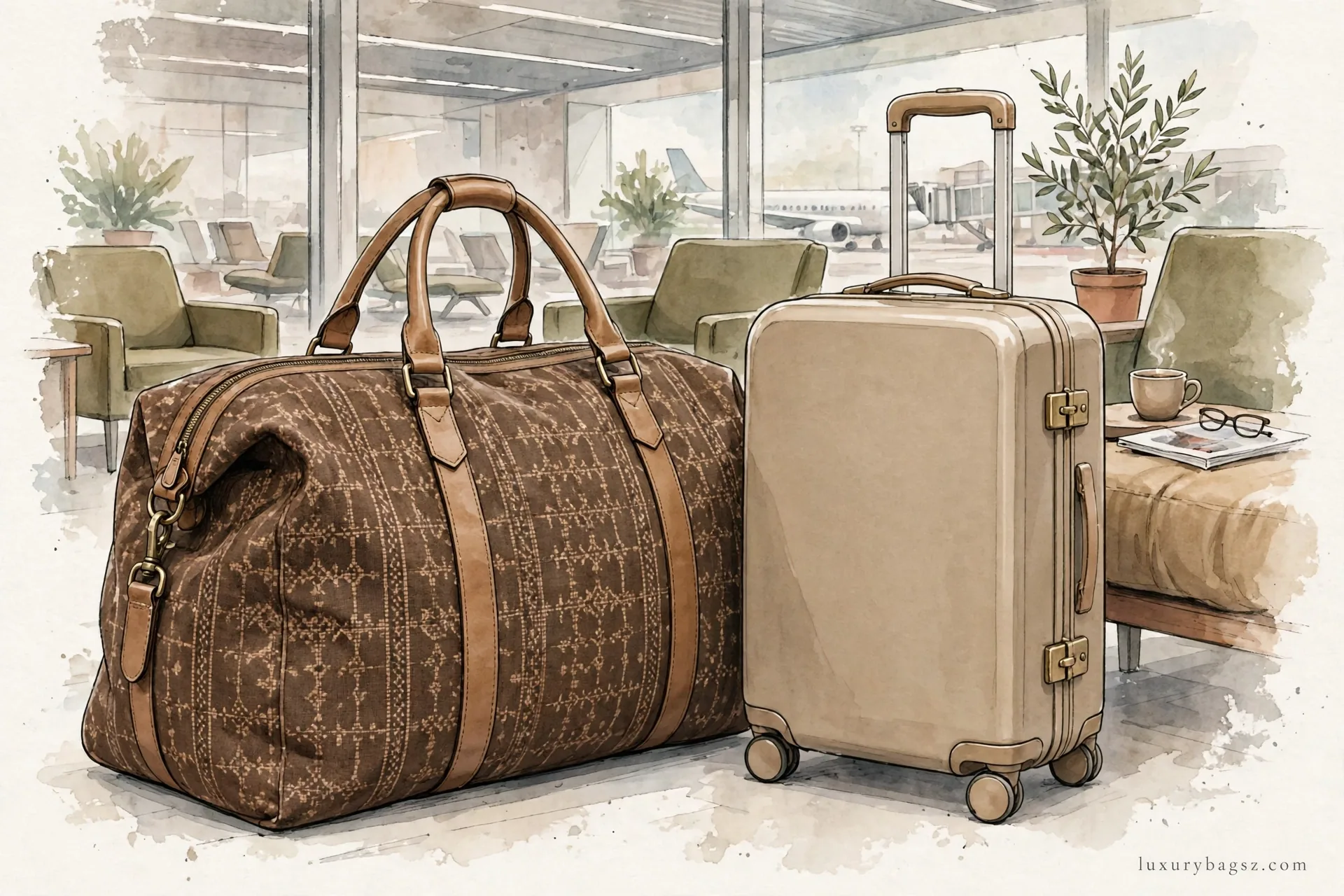
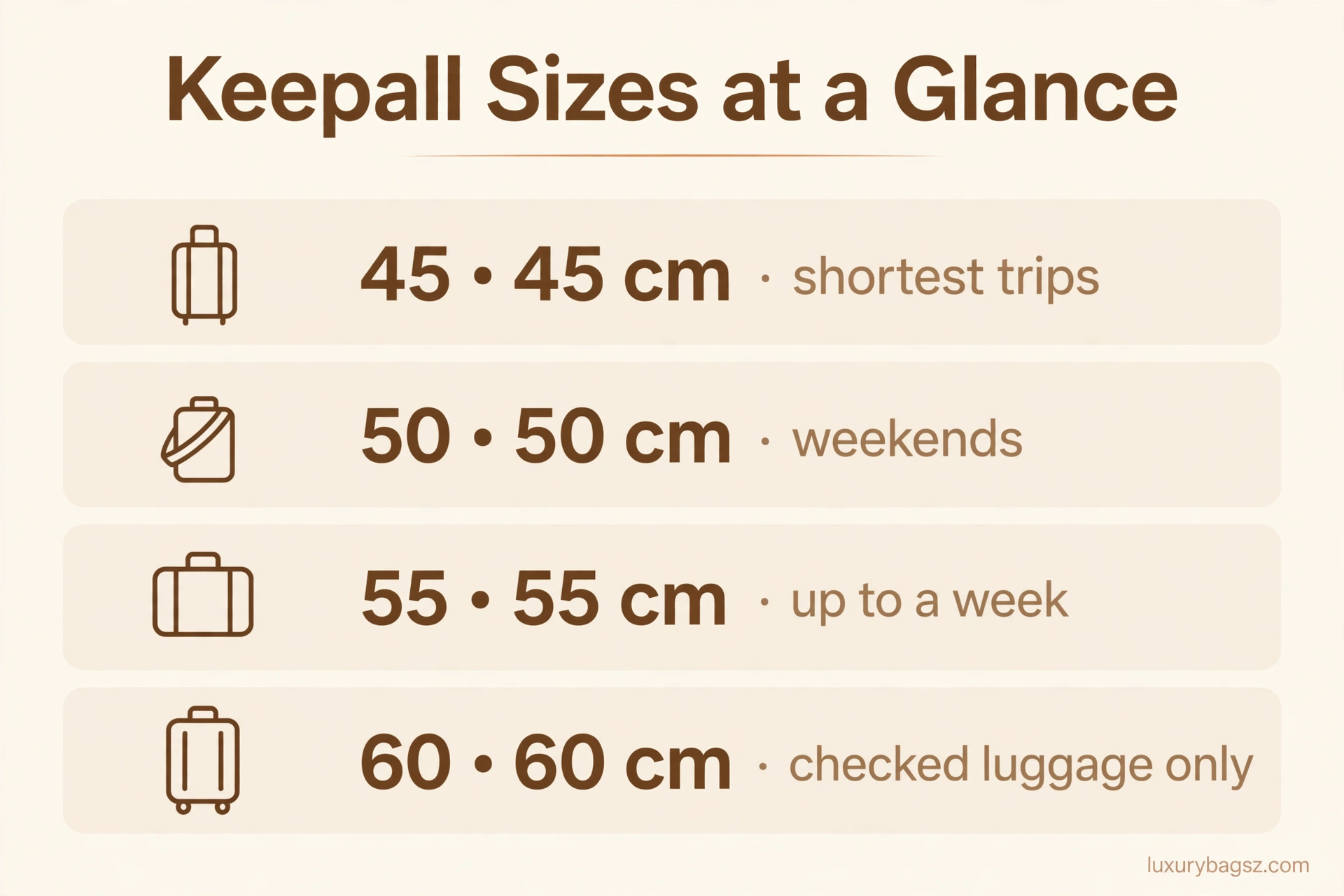
The Louis Vuitton Keepall is the original luxury weekender: a soft, light duffel that has carried travellers since 1930. It comes in four sizes — 45, 50, 55 and 60 — where the number is the length in centimetres. The 45 suits a night or two, the 50 suits a weekend, the 55 suits up to a week, and the 60 is a checked-luggage piece for longer trips and road journeys.
Most buyers should start with the 50 or the 55. The 50 is the classic weekend size, roomy without being bulky, while the 55 is the largest size that still works as cabin luggage on most airlines. The 45 suits light packers and gym use, and the 60 suits travellers who pack generously and never mind checking a bag.
Choose the Bandoulière version if you want a detachable shoulder strap, and choose coated canvas for hard wear or leather for a smarter, heavier feel. Buy new for current stock and full packaging, or buy pre-owned for older colourways and lower prices — but authenticate carefully either way.
Key Takeaways
- The Keepall dates to 1930 and remains Louis Vuitton's defining travel duffel.
- Sizes 45, 50, 55 and 60 refer to length in centimetres.
- The 50 suits weekends; the 55 is the largest usual cabin size.
- The 60 is too large for most airline cabins and suits checked luggage.
- Bandoulière versions add a detachable, adjustable shoulder strap.
- Coated canvas is lightest and hardiest; leather is smarter and heavier.
A Duffel That Changed Travel
The Keepall appeared in 1930, under Georges Vuitton and his son Gaston-Louis, at a moment when travel itself was changing. Trains were faster, cars were more common, and travellers wanted luggage that was light and flexible rather than heavy and boxy. The Keepall answered directly: one large compartment, soft sides, and a shape that could fold flat into the bottom of a suitcase when empty.
That simplicity is why it survived. Where hard-sided trunks belonged to porters and long voyages, the Keepall belonged to the traveller personally — carried by hand, slipped into an overhead rack, and packed for a weekend away. It quickly became the most coveted weekender of its era, and later creative directors, from Marc Jacobs to Virgil Abloh, returned to it again and again.
The house behind it began in 1854, when Louis Vuitton opened his first workshop in Paris, and its travel heritage runs through every Keepall. For the fuller story, the Louis Vuitton history traces the journey from trunks to the modern travel collection. The Keepall sits at the centre of that story, not at its edge.

Sizes 45, 50, 55 and 60 Explained
The size number is the length in centimetres, which makes comparison simple. The Keepall 45 measures about 45 x 27 x 20 cm (17.8 x 10.7 x 7.9 inches) and suits a night away, a gym bag or a very light weekend. It fits under many airline seats and in overhead bins with room to spare, which is why light packers love it.
The Keepall 50 measures about 50 x 29 x 22 cm (19.7 x 11.4 x 8.7 inches) and is the classic weekend size. It holds two to three days of clothes comfortably, plus shoes and a wash bag, without becoming unwieldy. For most buyers, the 50 is the safest first Keepall and the easiest to carry through airports and stations.
The Keepall 55 measures about 55 x 31 x 24 cm (21.7 x 12.2 x 9.4 inches) and suits up to a week, especially for travellers who pack efficiently. It is the largest size that meets cabin requirements on most major airlines, though you should always check your airline's current limits before flying. The Keepall 60, at about 60 x 33 x 26 cm, is a checked-luggage piece, best for long trips and road travel.
If you are torn between the Keepall and a smaller everyday bag, the guide to which Louis Vuitton handbag is right for you helps place the duffel in the wider range. The Speedy sizes guide is also useful, since the Speedy began life as a smaller, city version of the same travel idea.
Bandoulière or Classic, and How to Carry It
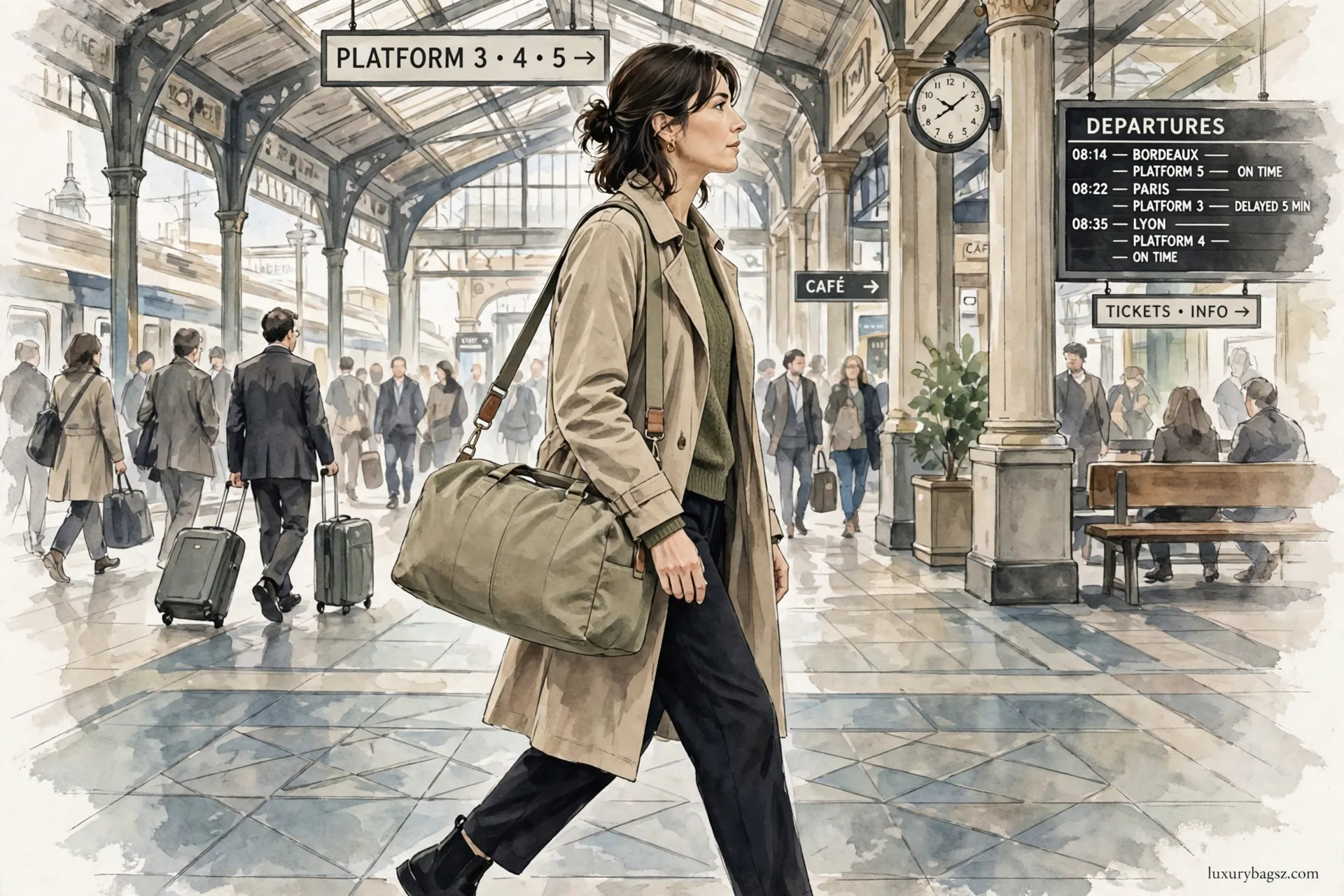
The classic Keepall has two top handles and a zip top, carried by hand or in the crook of the arm. The Bandoulière adds a detachable, adjustable shoulder strap with a comfortable pad, which transforms the bag on long walks through airports and stations. Most current Keepalls sold directly by the house are Bandoulière versions, with the 55 also available as a classic in some lines.
Carrying style should drive the choice. If you travel mainly by car or taxi and carry the bag short distances, the classic handles feel elegant and sufficient. If you walk through terminals, change trains or carry the bag for hours, the shoulder strap is worth every penny. A padded strap also balances a heavy load better than handles alone.
Try the loaded weight before you commit, if you can. A Keepall 55 packed for a week is heavy, and a shoulder strap that feels fine empty can dig in when full. Pack it at home with your usual weekend load and walk around the house for ten minutes. That simple test prevents more regret than any review can.
Materials: Canvas, Damier and Leather
Monogram coated canvas is the classic Keepall material and the hardest wearing. It resists water, scuffs and stains far better than plain leather, weighs less, and develops an attractive patina on its natural cowhide trim over time. For a bag that will be thrown into overhead bins and car boots, Monogram canvas is the practical default.
Damier Ebene, the brown chequered canvas, offers a quieter look with the same practical benefits, while Damier Graphite, in grey and black, suits travellers who prefer a more understated pattern. Monogram Eclipse, in black and grey, is the most discreet of all and popular for business travel. All coated canvases share the same easy-care character.
Leather Keepalls, including Epi leather and Taurillon leather versions, feel smarter and more luxurious but cost more and weigh more. Epi's textured grain resists scratches well, while smooth leathers mark more easily. A leather Keepall suits shorter, smarter trips and careful owners; a canvas Keepall suits hard, frequent travel. Neither is wrong, but they serve different travelling lives.
Spotting a Genuine Keepall
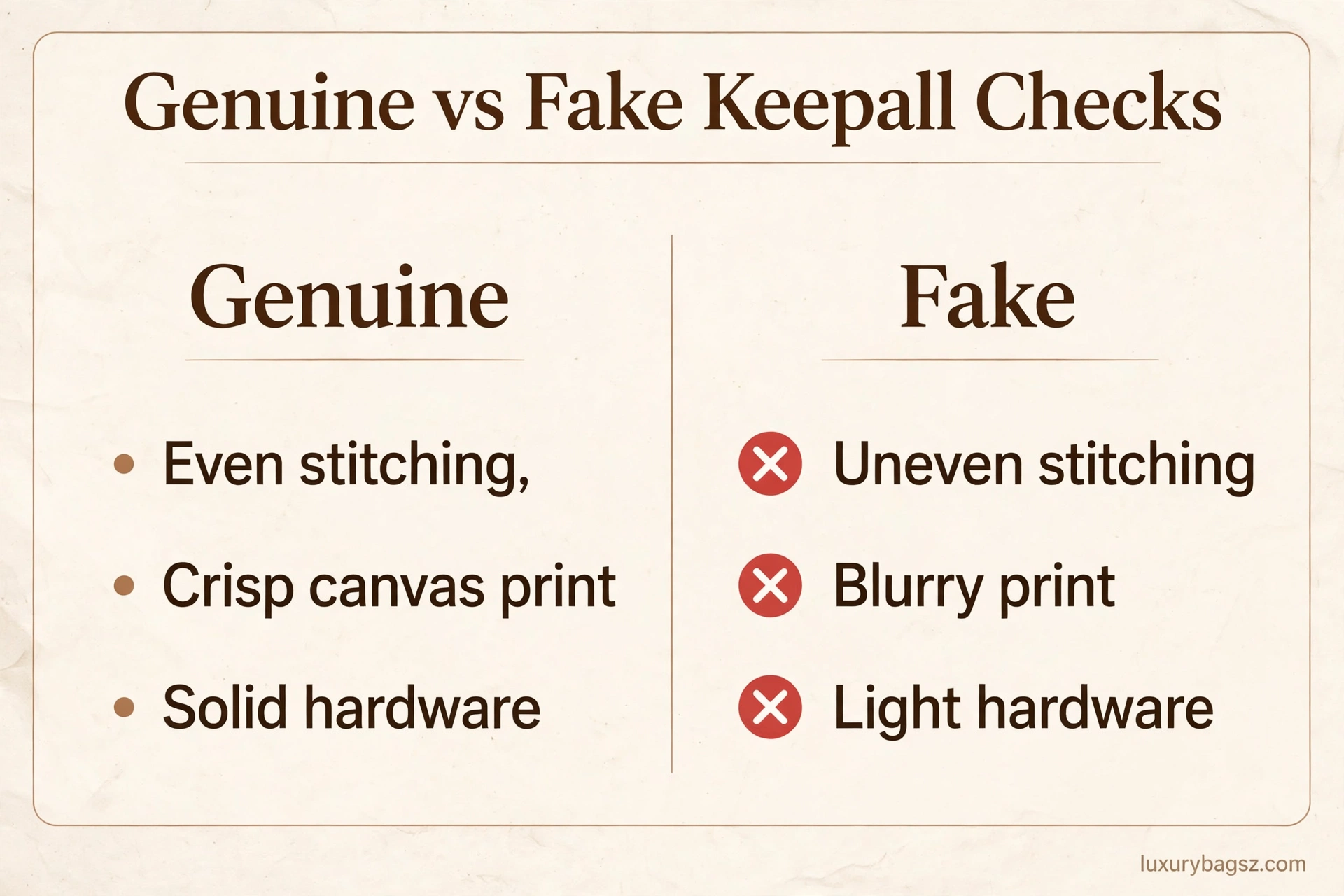
Keepalls are widely faked, so authentication matters, especially pre-owned. Start with the canvas print: genuine Monogram canvas is crisp and evenly printed, with motifs that align sensibly across seams. Blurry printing, uneven spacing or a plastic-feeling coating are warning signs, though print alone never proves or disproves a bag.
Check stitching, hardware and details next. Genuine stitching is even, tight and consistent in colour, while fakes often show uneven lengths or loose threads. Hardware should feel solid and weighty, with clean engraving, and the size number on the leather tab should sit centred. Zips should run smoothly, and the interior should match the expected lining for the model and era.
Date codes on older bags and microchips on newer ones help place a bag in time, but they can be faked too, so treat them as one clue among many. For a full checklist, read how to spot a fake Louis Vuitton bag before buying. When in doubt, use a reputable authentication service or buy from a seller with a clear returns policy.
Packing and Caring for Your Keepall
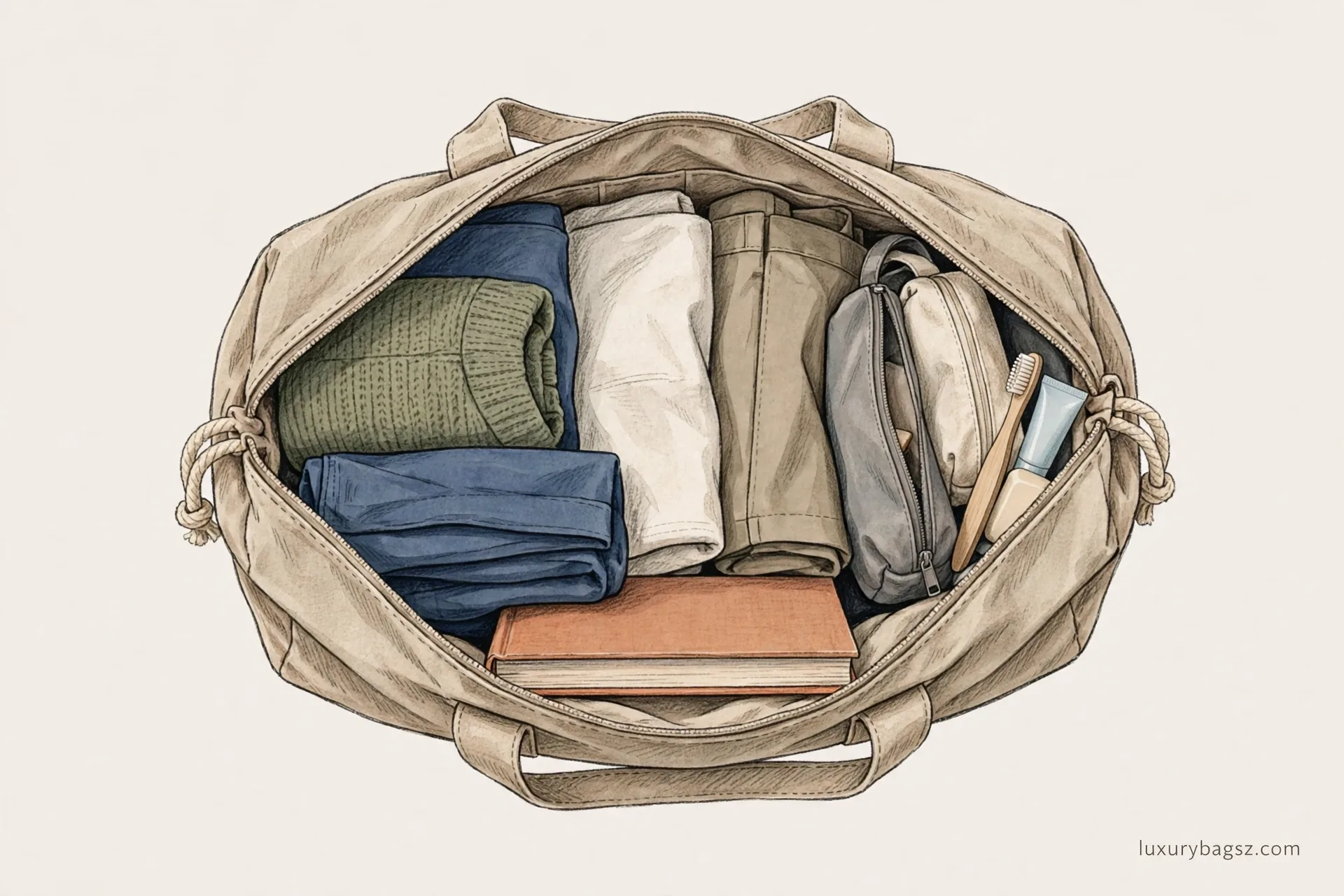
Pack a Keepall by rolling soft clothes and placing heavier items at the bottom, near the base, so the bag balances when carried. Shoes go in dust bags at the ends, toiletries in a separate pouch near the top, and a book or tablet flat against one side. The single-compartment design rewards a little organisation: packing cubes or small pouches keep the interior usable rather than chaotic.
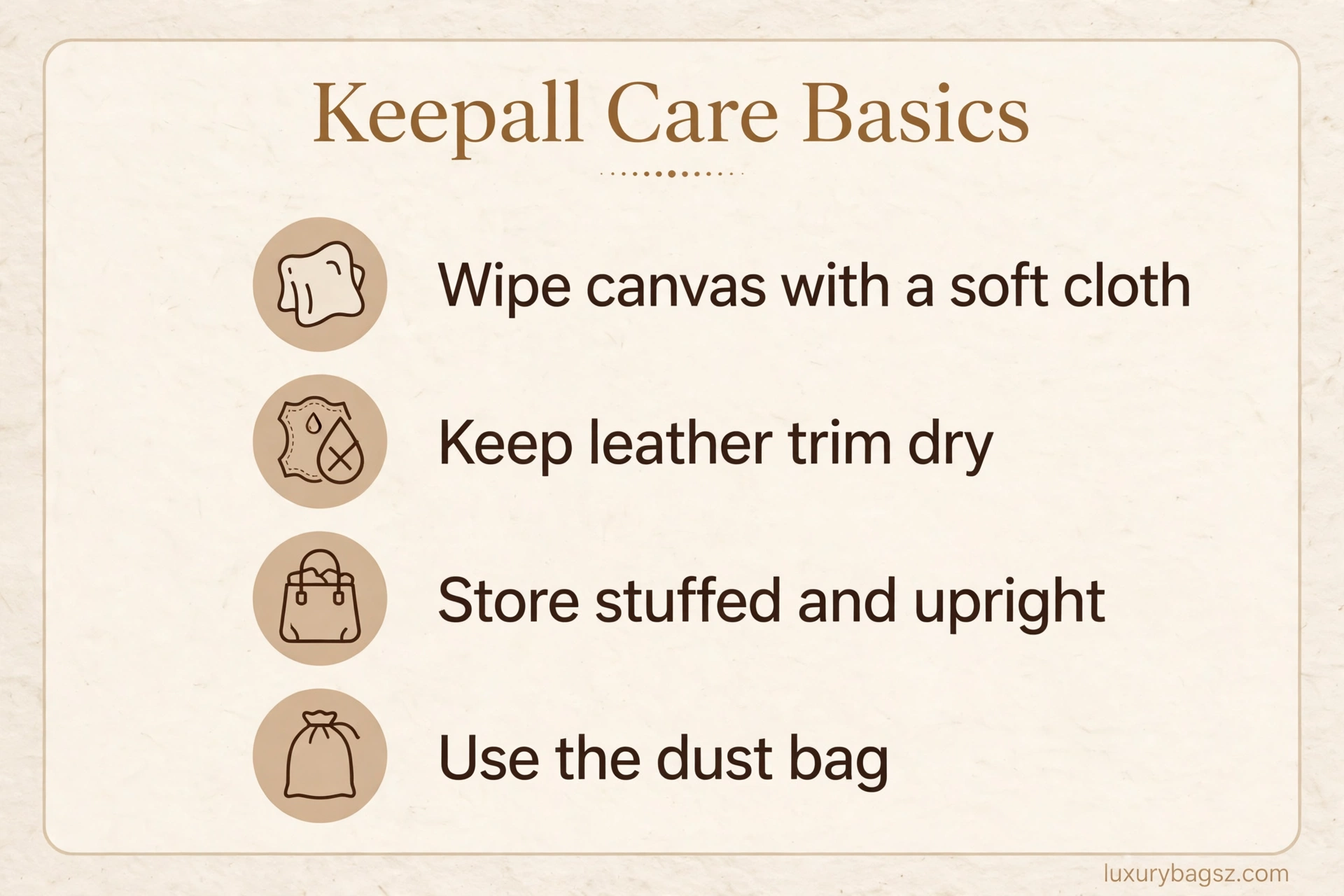
The Keepall folds flat when empty, which is a genuine advantage at home. Store it stuffed with tissue or a soft organiser, upright, inside its dust bag, away from direct sunlight and damp. Never hang a loaded Keepall by its handles for long periods, since the weight stretches the handles and distorts the shape over time.
Cleaning is simple. Wipe coated canvas with a soft, slightly damp cloth and let it dry naturally, and keep the natural cowhide trim dry, since water marks it easily. For step-by-step care, see how to clean a Louis Vuitton canvas bag. Avoid harsh cleaners, and let the vachetta trim darken naturally into its honey patina rather than forcing the process.
Buying New or Pre-Owned
Buying new gives you current stock, full packaging, a fresh dust bag, lock and luggage tag, and the reassurance of a boutique receipt. Prices vary by material and size, and they change over time, so confirm the current boutique price for your chosen combination. New Bandoulière versions in Monogram canvas are the most widely available starting point.
Pre-owned Keepalls offer older colourways, discontinued canvases and lower prices, and a well-kept canvas Keepall ages gracefully. Inspect the trim patina, corner wear, zip function and strap condition closely, and ask for photographs of the interior, the date code area and any wear points. A heavily worn trim or a replaced strap should reduce the price significantly.
Whichever route you choose, buy the size for the trips you actually take, not the trips you imagine. A 60 bought for weekends will sit unused, while a 45 bought for week-long trips will frustrate you every time you pack. The right Keepall disappears into your travelling life — and that is exactly the point of a bag designed in 1930 that still works today.
Frequently Asked Questions
What size Keepall should I buy for a weekend?
The Keepall 50 is the classic weekend size, holding two to three days comfortably. Light packers can manage with a 45, while generous packers should consider the 55.
Is the Keepall 55 cabin approved?
The 55 is the largest Keepall that meets cabin requirements on most major airlines, but limits vary by airline and route. Always check your airline's current size and weight limits before flying.
What is the difference between a Keepall and a Keepall Bandoulière?
The Bandoulière adds a detachable, adjustable shoulder strap. The classic has top handles only. Most current Keepalls sold by the house are Bandoulière versions.
When was the Keepall first made?
The Keepall appeared in 1930, designed as a light, soft alternative to heavy trunks and boxy luggage. It was created under Georges Vuitton and his son Gaston-Louis.
What do the numbers 45, 50, 55 and 60 mean?
They are the bag's length in centimetres. The 45 is about 45 cm long, the 50 about 50 cm, and so on, with height and depth growing alongside length.
Is Monogram canvas or leather better for a Keepall?
Coated canvas is lighter, hardier and easier to care for, making it best for frequent travel. Leather feels smarter but costs and weighs more, and suits shorter, careful trips.
Can a Keepall be folded flat?
Yes. The soft construction folds flat when empty, which makes storage easy. Store it stuffed and upright in its dust bag to keep its shape between trips.
How do I clean a Keepall?
Wipe coated canvas with a soft, slightly damp cloth and let it dry naturally. Keep natural cowhide trim dry, avoid harsh cleaners, and let the trim's patina develop naturally.
How can I tell if a pre-owned Keepall is genuine?
Check print crispness, stitching evenness, hardware weight, zip smoothness and the centred size number, alongside date codes or microchips. Use a reputable authentication service when in doubt.
Is the Keepall 60 too big for a weekend?
For most travellers, yes. The 60 suits week-long trips, checked luggage and road travel. Weekend travellers are better served by the 45, 50 or 55.
Final Verdict: Buy the 50 or 55 in Canvas, With the Strap
The Keepall has lasted since 1930 because it does one job perfectly: it carries a weekend, or a week, without fuss. Buy the 50 for weekends or the 55 for longer trips, choose coated canvas for hard wear, and get the Bandoulière strap if you walk far with your luggage. Pack it well, store it stuffed, and it will travel with you for decades.






