

Louis Vuitton Limited Edition Noé Spotlight: The Bucket Bag That Became a Collector Piece
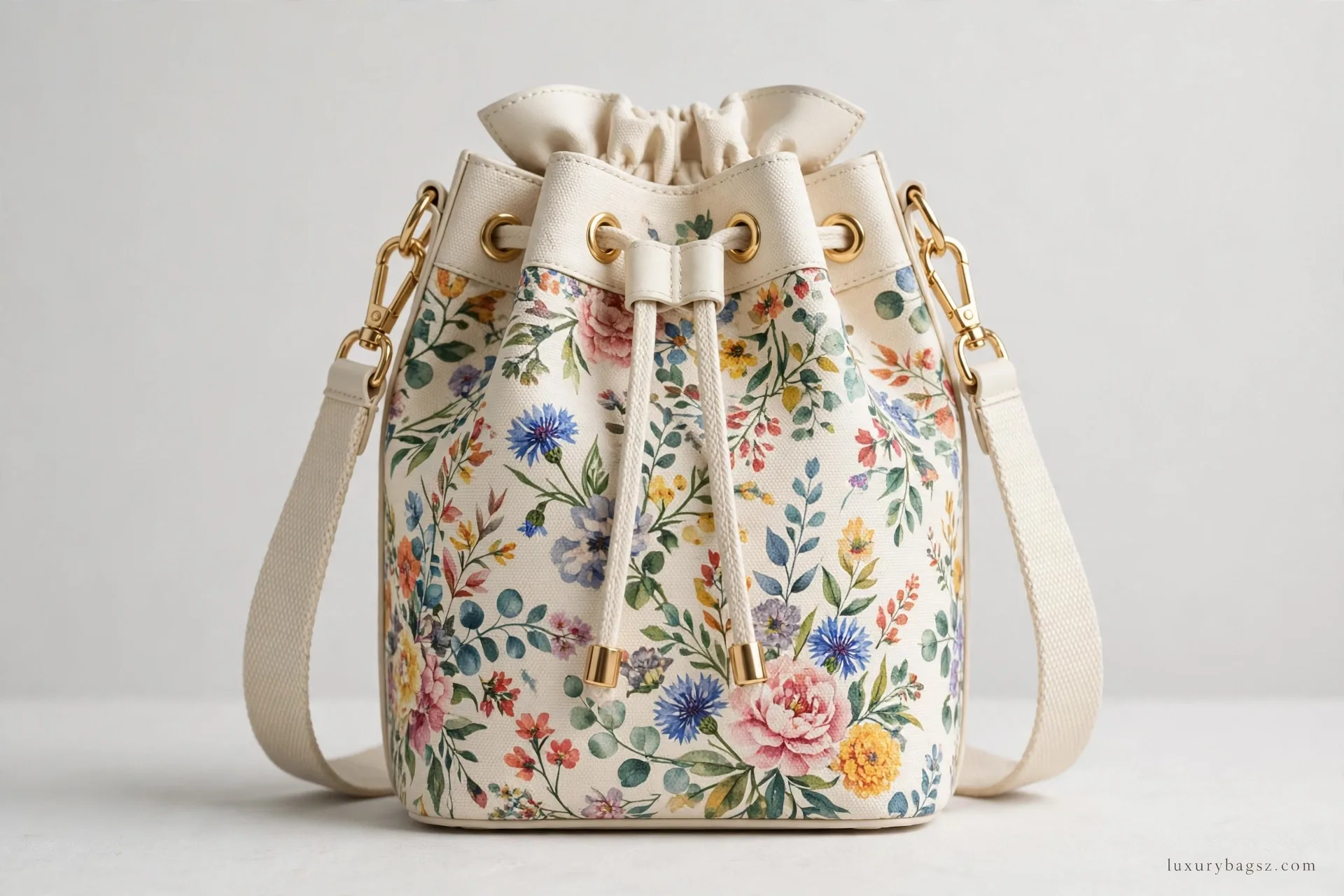
The Limited Edition Noé in Brief
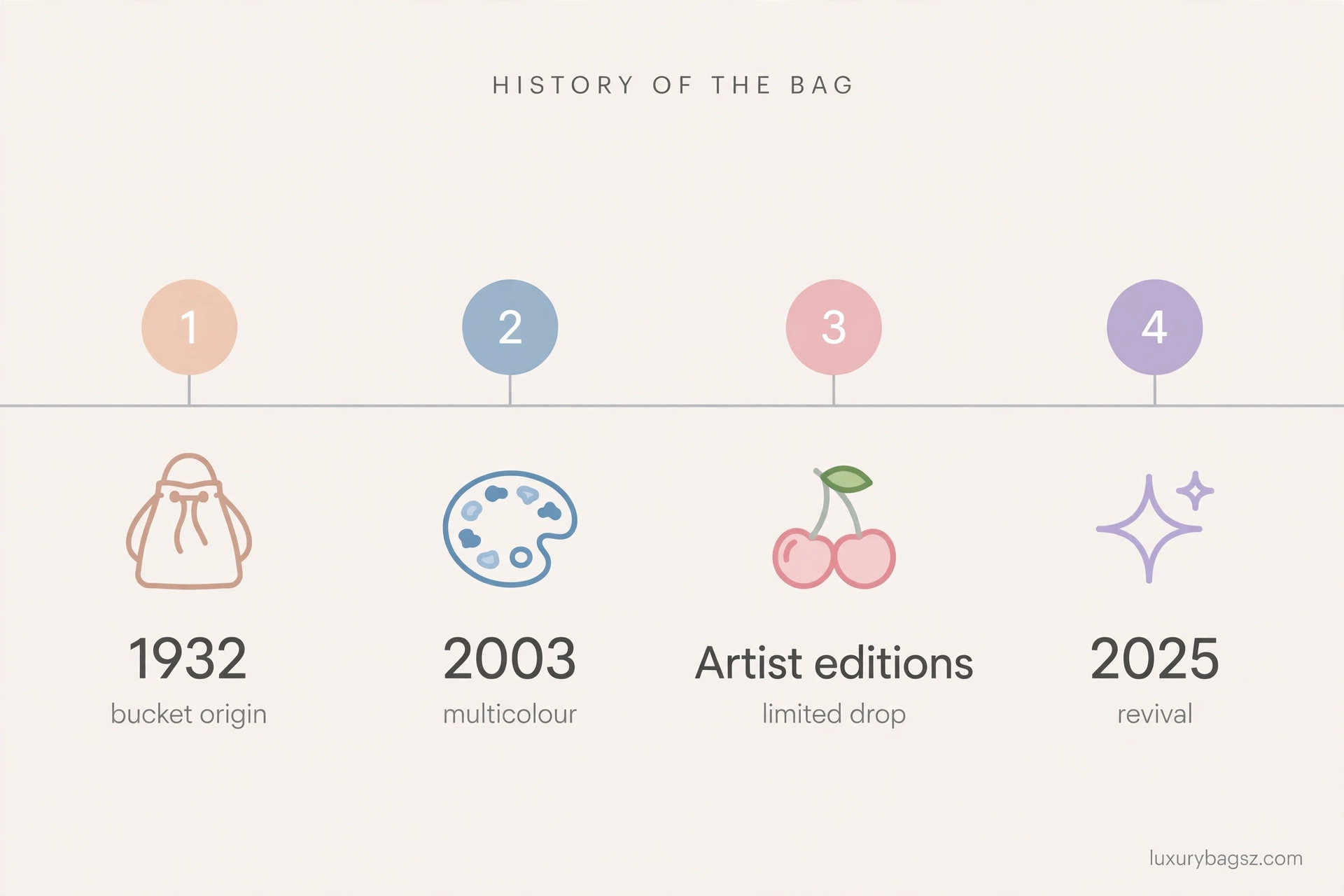
The limited edition Noé is a drawstring bucket bag with a story that starts in 1932 and keeps being retold by artists.
Its shape was made to carry champagne bottles, and its later editions turned that practical shape into a canvas for colour and art.
If you want one, focus on the edition first and the condition second, because the edition decides how rare the bag is and how hard it is to find again.
The illustrations in this article are generic AI illustrations. They show the style of the bag, not photographs of a real Louis Vuitton piece.
Key Takeaways
- The Noé began in 1932 as a sturdy bag for carrying five champagne bottles.
- The most famous limited editions come from the Takashi Murakami collaboration, first seen in 2003.
- Multicolore Noé bags exist on black and white backgrounds, with a 33-colour print.
- Artist, seasonal and revival editions vary widely, so always check the exact edition name.
- Condition, drawstring, trim and date code matter more than a bargain price.
Where the Noé Began
The Noé story starts with a request from a champagne producer, who wanted a bag that could carry five bottles safely.
Gaston-Louis Vuitton answered with a drawstring bucket shape that was sturdy, simple and easy to carry.
That origin still shapes the bag today. The round base sits well, the drawstring closes the top, and the shape holds its form without stiff walls.
Later versions kept those ideas but changed the scale. The Petit Noé is the smaller, everyday version, while larger Noé bags suit travel and heavier loads.
If you are new to the shape, read our Noé and Néonoé guide for the full family, including the modern Néonoé.
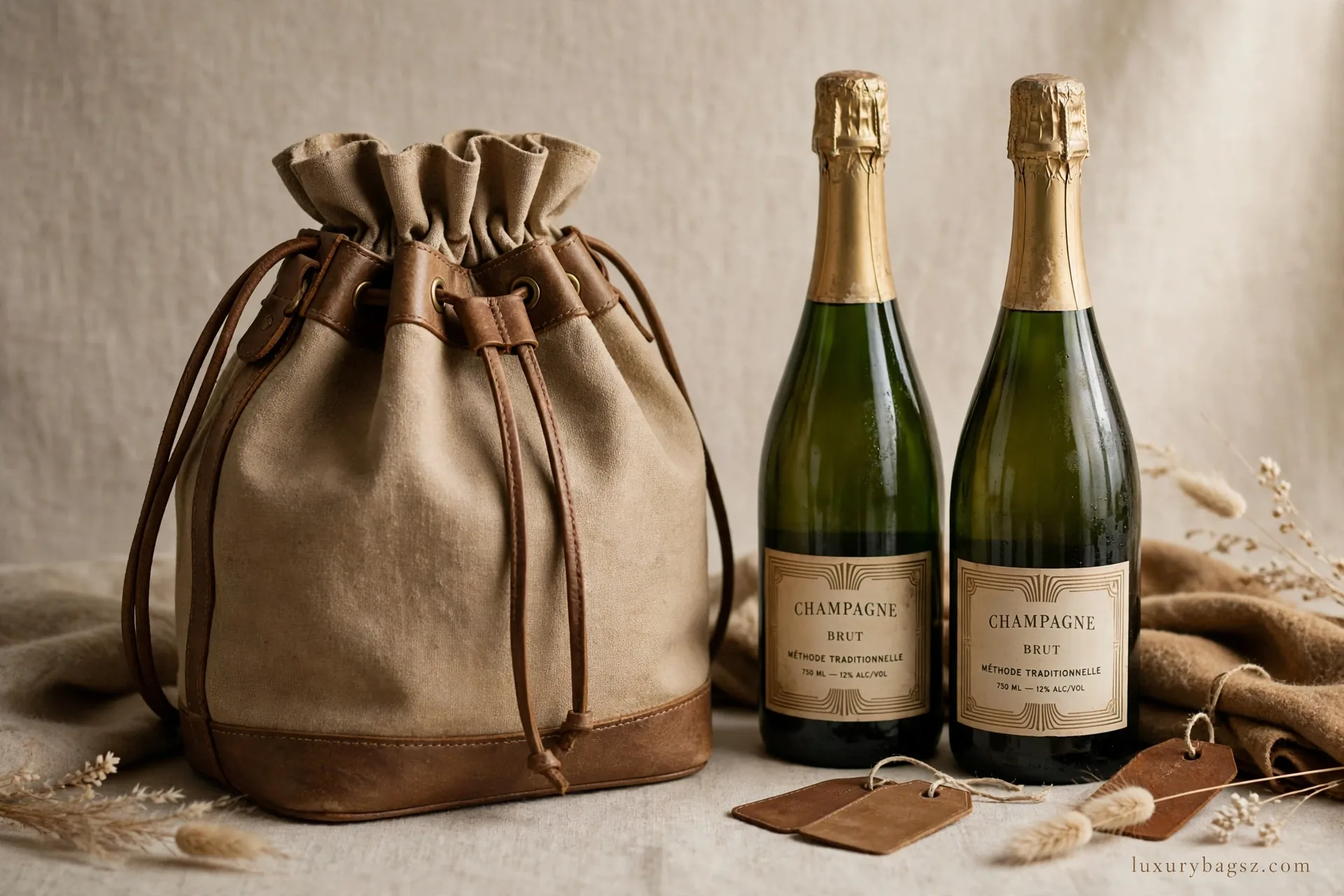
The drawstring is also the part to inspect first on a pre-owned bag. It should pull smoothly, sit evenly and show no fraying at the eyelets.
Leather trim darkens with age on many versions. That change is normal on natural cowhide trim, but it should look even rather than blotchy.
A bag that still draws closed neatly and stands upright is usually a better buy than a cheaper bag with a tired cord.
The Murakami Multicolore Editions
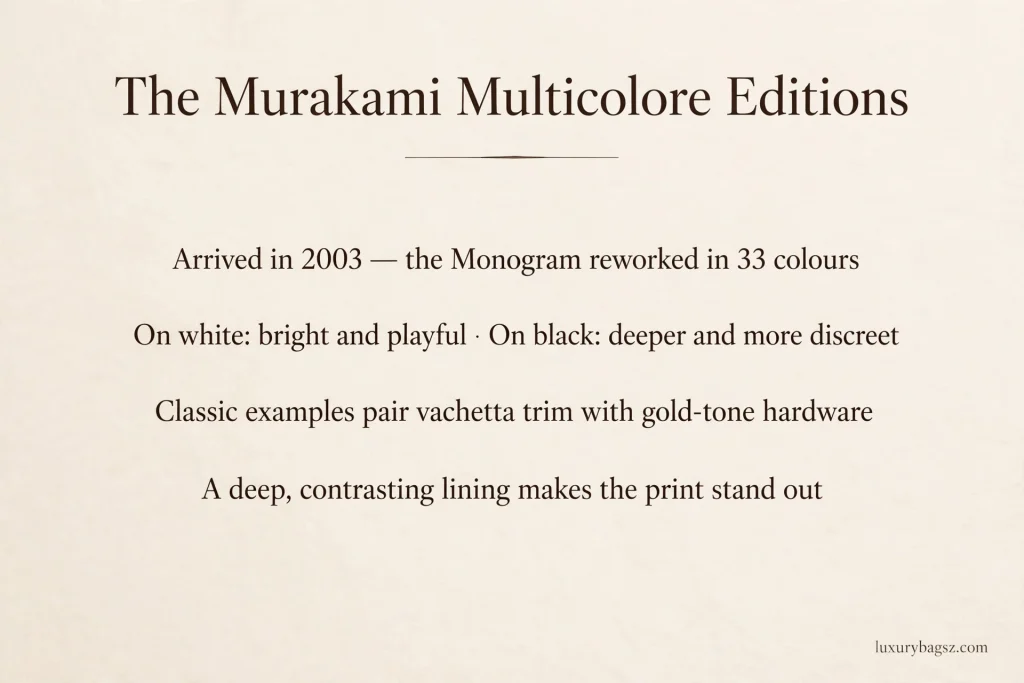
The Murakami Multicolore Noé is the edition most collectors picture first. It arrived in 2003, when Takashi Murakami reworked the Monogram in 33 colours.
On a white background, the colours look bright and playful. On a black background, the same print looks deeper and slightly more discreet.
Both versions use vachetta leather trim and gold-tone hardware in the classic examples. The lining is often a deep, contrasting shade that makes the print stand out.
Our Murakami Multicolore collection guide explains how the wider collection grew, from handbags to small leather goods.
The Petit Noé in Multicolore is a good example of scale. One published example measures about 25 by 27 by 18 cm, which suits daily essentials without feeling bulky.
That size works for a phone, a small wallet, keys and a few extras. It is not a work tote, and it should not be bought as one.
Revival releases in 2025 and 2026 brought the Multicolore story back into focus, including a Nano Noé. Revival pieces are new-season items, not vintage, so check which release your bag came from.
Also note the background colour carefully in photos. White Multicolore can look cream in warm light, while black Multicolore can look brown under strong lamps.
Ask for daylight photos before you commit. A seller who shares clear, unedited shots is usually easier to trust than one who relies on filtered images alone.
Other Artist and Seasonal Editions
Murakami was not the only artist to reshape Louis Vuitton. Stephen Sprouse, Richard Prince and Yayoi Kusama each left a mark on the house during the Marc Jacobs years.
Their work did not always centre on the Noé, but it shaped how collectors think about limited editions. A print-led bag is judged by its artist, its season and its scarcity.
Seasonal Noé versions also appear in Epi leather, Damier canvas and special prints. The jungle print Néonoé is one of the best-known print-led bucket bags from recent years.
Cherry and blossom motifs return regularly in Murakami work. The cherry motif in particular suits the bucket shape, because the print reads clearly on a curved body.
When a seller calls a bag "limited edition", ask which edition they mean. A true artist edition, a seasonal colour and a boutique special release are three different things.
Ask for the season, the colour name and clear photos of the print. If the seller cannot name the edition, treat the claim with care.
A named edition with matching hardware, lining and trim is far easier to verify than a vague "rare" label.

How to Check a Pre-Owned Noé
Start with the print. On a Multicolore bag, the colours should look crisp, with clean edges and no bleeding between shades.
Next, check the canvas feel. Genuine coated canvas feels firm and smooth, while many copies feel plastic-like or overly stiff.
Look at the stitching next. It should be even, with a consistent colour and no loose threads along the seams or the base.
The date code or microchip is useful, but it never proves a bag alone. Read it alongside the print, hardware and overall finish.
For a wider set of checks, use our guide on how to spot a fake Louis Vuitton bag before you pay.
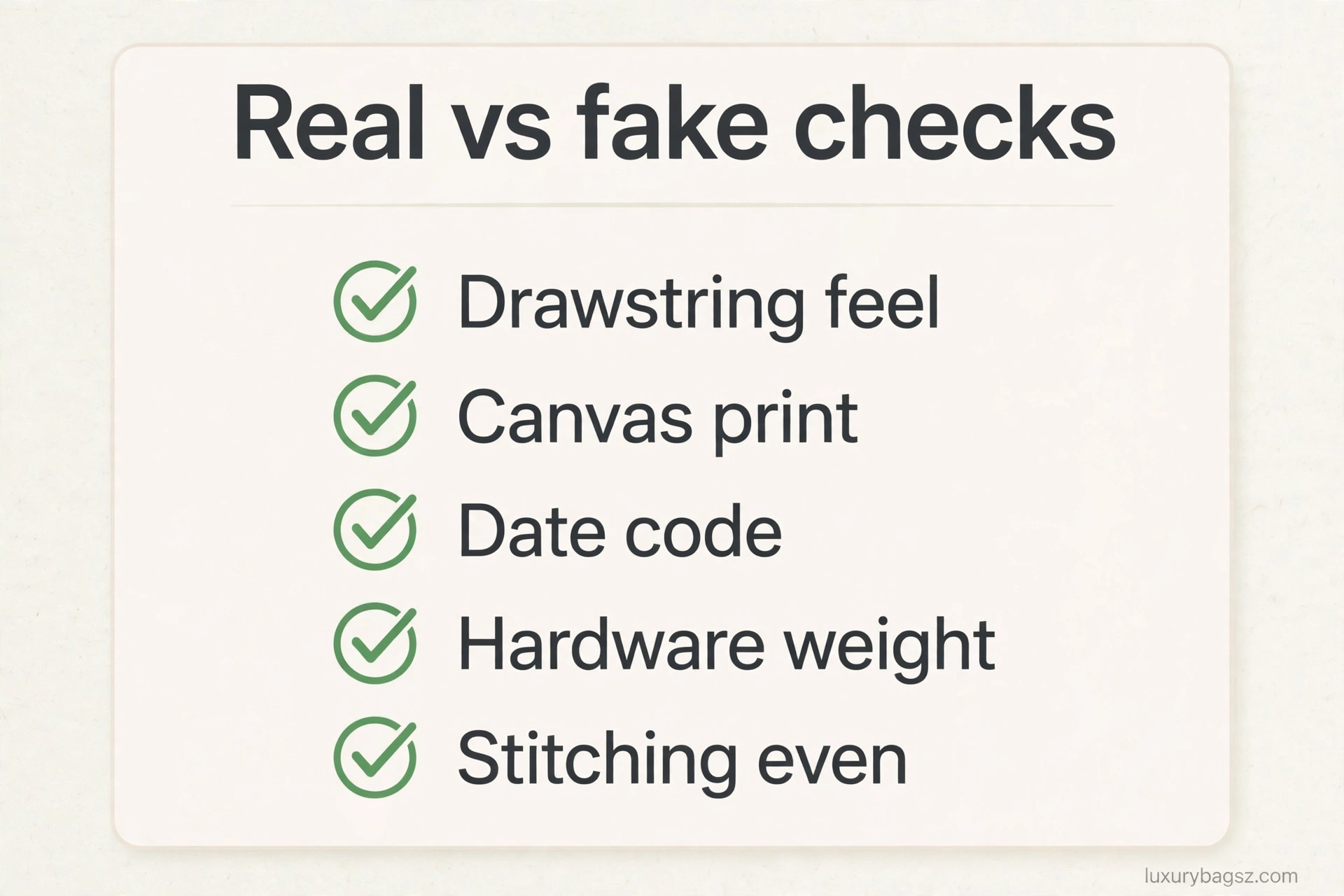
Hardware is another telling detail. It should feel weighty, with clean engraving and a finish that matches the edition.
Drawstring eyelets should sit flat, with no rough edges or uneven spacing. Worn eyelets can hint at heavy use or a poor repair.
Finally, check the interior. Staining, odour and loose lining are common on older bags, and they affect value more than small marks outside.
Buying, Pricing and Care
Prices for limited edition Noé bags vary enormously. Edition, colour, condition and completeness all move the figure, so no single price fits every bag.
A bag with its dust bag, strap and paperwork usually commands more than the same bag without them. That is not a rule, but it is a strong pattern in pre-owned sales.
Compare sold listings for the exact edition, not just for "Noé" in general. A common Monogram Petit Noé and a Multicolore version live in different price worlds.
The Louis Vuitton Monogram history helps here, because it explains why some prints hold attention for decades.
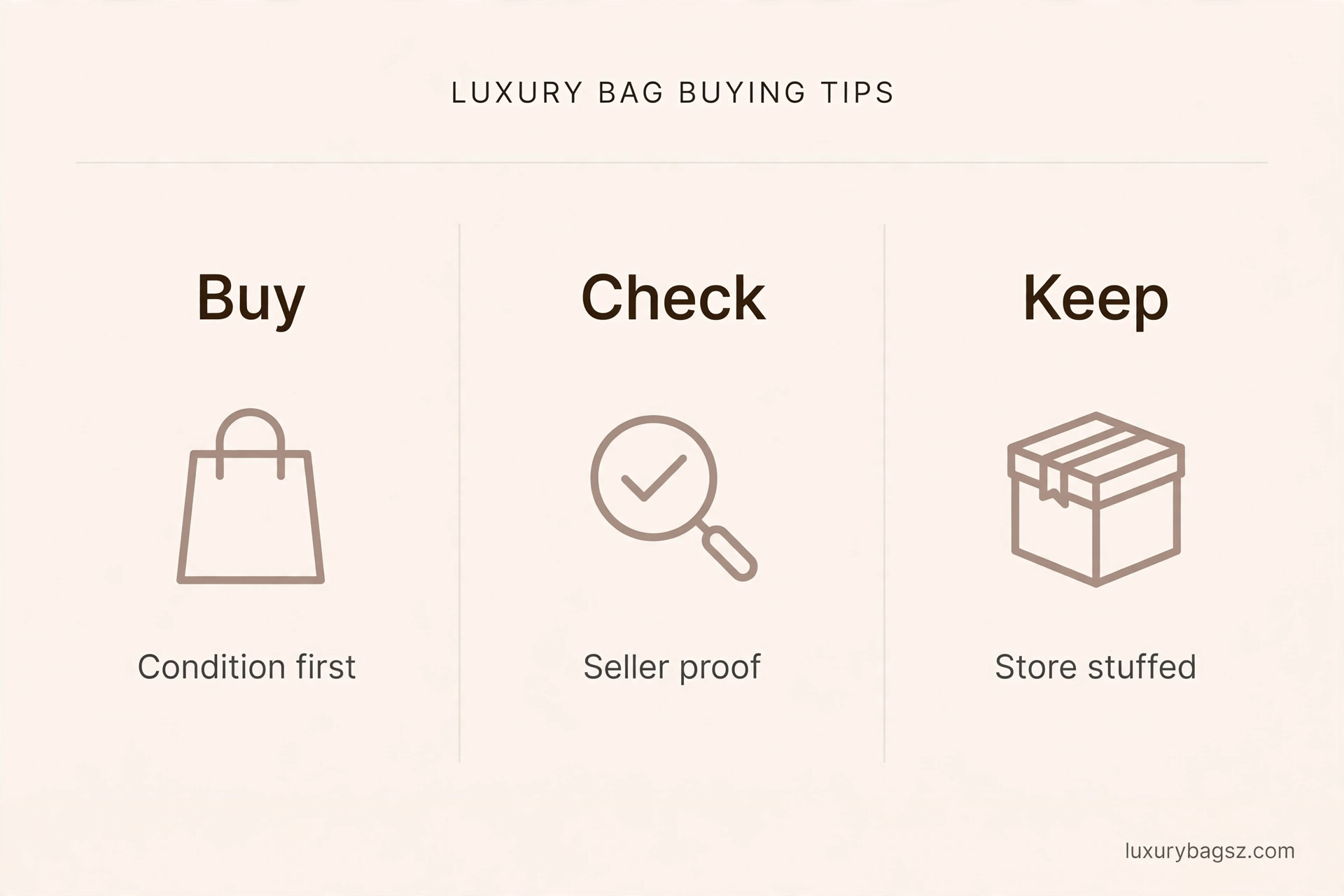
For care, keep the bag stuffed when stored, so the bucket shape does not slump. A soft insert works better than crumpled paper that leaves creases.
Wipe coated canvas gently with a soft, dry cloth. Keep the bag away from direct sunlight, rain and handbag hooks that strain the drawstring.
Vachetta trim needs extra care. Water spots show easily, so keep the bag dry and handle it with clean hands where possible.
If the drawstring frays or the trim cracks, ask a specialist repairer rather than trying a home fix. A poor repair can hurt value more than honest wear.
Also think about insurance for a rare edition. A named edition with a clear record is easier to value, and photographs of the print, hardware and interior help if you ever need to make a claim.
Keep those photographs with your receipt and any authentication report. Together they form a simple record that also helps a future buyer trust the bag.
Which Noé Edition Suits You
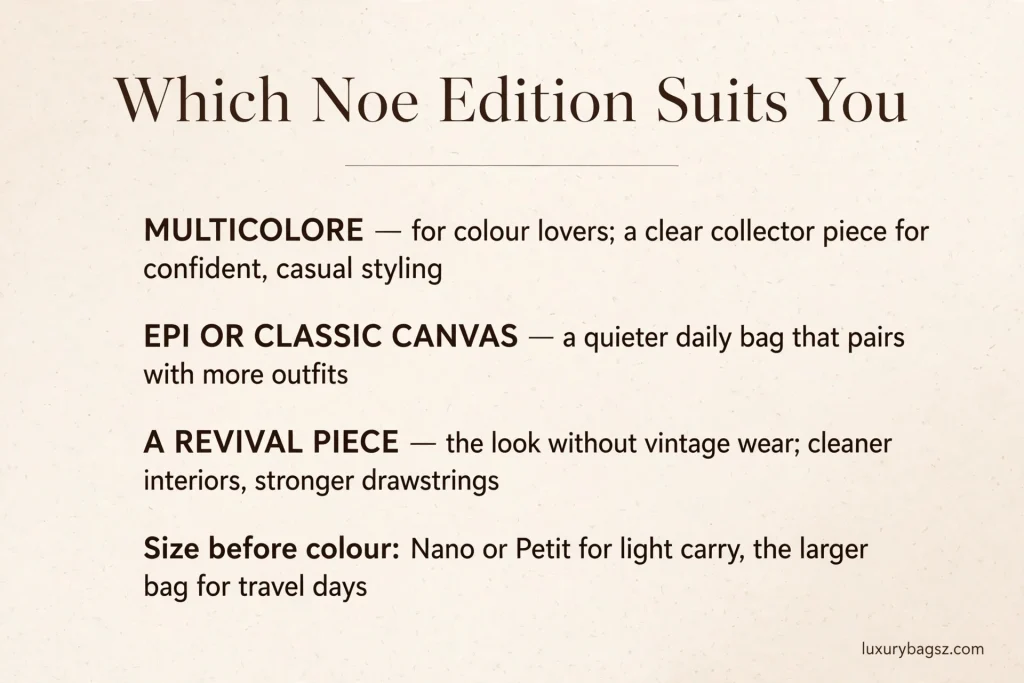
Choose a Multicolore Noé if you love colour and want a clear collector piece. It draws attention, so it suits confident, casual styling best.
Choose an Epi or classic canvas version if you want a quieter daily bag. These versions wear more discreetly and pair with more outfits.
Choose a revival piece if you want the look without vintage wear. Newer bags often have cleaner interiors and stronger drawstrings.
Think about size before colour. A Nano or Petit Noé suits light carry, while a larger Noé suits travel or days when you carry more.
Try the bag on if you can. The bucket shape sits differently from a tote, and the strap drop matters more than it looks in photos.
Frequently Asked Questions
1. When was the Noé first made? The Noé dates to 1932, when it was designed to carry five champagne bottles for a champagne producer.
2. What is the Louis Vuitton Multicolore Noé? It is a Noé in Takashi Murakami's 33-colour Monogram print, first introduced in 2003 on black and white backgrounds.
3. Is the Petit Noé the same as the Noé? No. The Petit Noé is the smaller version of the bucket shape, while larger Noé bags offer more room for travel or heavier loads.
4. What is the difference between the Noé and the Néonoé? The Néonoé is the modern reworking of the shape, with a removable top handle and an adjustable strap for hand, shoulder or cross-body wear.
5. Are limited edition Noé bags still made? Some editions return in revivals, such as the recent Multicolore releases, but individual artist editions are usually produced for a limited time only.
6. How can I tell a genuine Multicolore Noé? Check the print sharpness, canvas feel, stitching, hardware weight and date code or microchip together, never one detail alone.
7. Does vachetta trim darken on the Noé? Yes. Natural cowhide trim darkens with age and light, and an even honey tone is normal on older bags.
8. What fits inside a Petit Noé? A phone, a small wallet, keys, sunglasses and a few small extras fit comfortably, but it is not a laptop or large tote replacement.
9. How should I store a Noé? Store it stuffed, upright and in its dust bag, away from sunlight, damp and heat, so the bucket shape keeps its form.
10. Should I buy a Noé without paperwork? You can, but only after careful checks. Missing paperwork should lower the price and raise the need for a trusted seller or authentication.
Final Verdict: A Bucket Bag Worth Choosing Carefully
The limited edition Noé earns its spotlight because it pairs a practical 1932 shape with some of the boldest prints Louis Vuitton has ever released.
Buy the edition you truly love, verify it as a whole, and pay for condition rather than for a label alone.
Done well, a Noé is not just a vintage find. It is a daily bag with a story, and one that still turns heads decades after it first appeared.






