

How Louis Vuitton Became an Iconic Watch Designer: Tambour, Spin Time and Geneva Craft
Louis Vuitton as a Watch Designer at a Glance
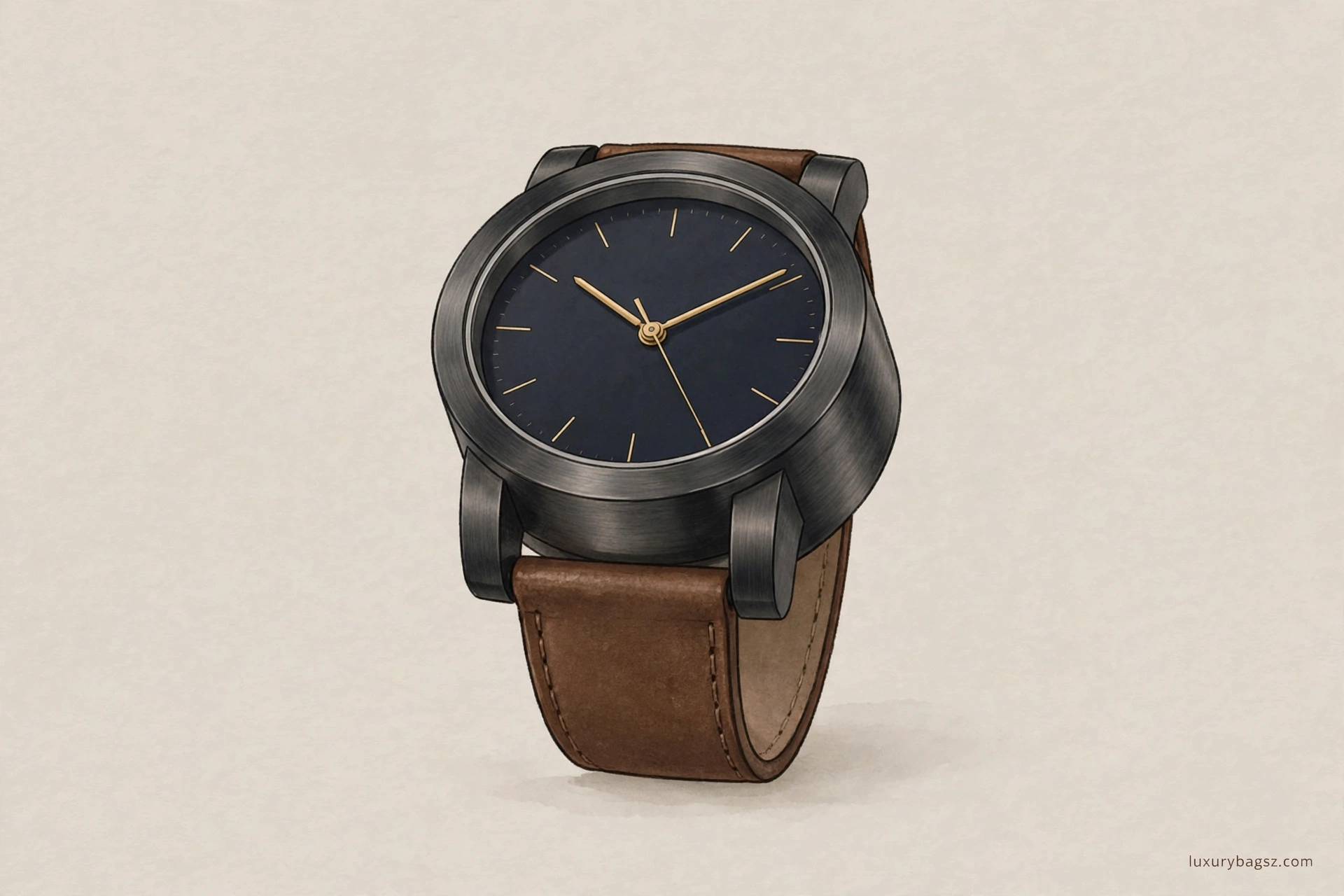
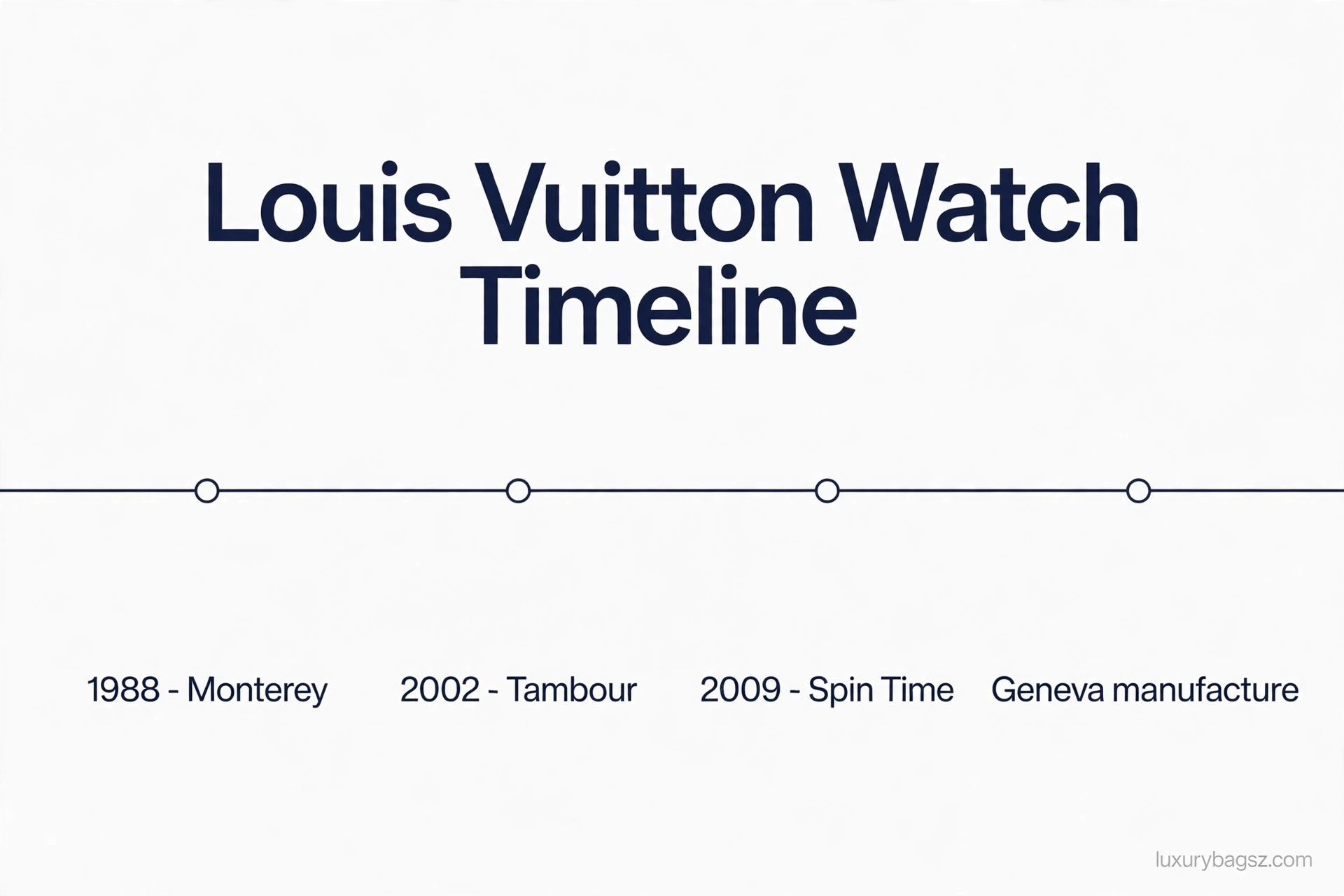
Louis Vuitton became an iconic watch designer by buying craft, not just borrowing a name. It started with a quartz experiment in 1988, launched the Tambour in 2002, and built a Geneva manufacture that now makes complex movements in house.
That path is unusual for a fashion house. Many luxury brands simply badge outside movements, while Louis Vuitton invested in workshops, dial makers and master watchmakers. The result is a watch range with its own shapes, complications and awards.
This guide traces that journey step by step. It covers the early Monterey, the Tambour, Spin Time, La Fabrique du Temps and the modern pillars. It also explains what to check before buying, and where hype ends and craft begins.
Key Takeaways

- Louis Vuitton's first watch, the Monterey, appeared in 1988, designed by Gae Aulenti.
- The Tambour, launched in 2002, became the house's signature watch with a drum-shaped case.
- Spin Time, launched in 2009, uses rotating cubes to show the hour in a unique way.
- Louis Vuitton acquired La Fabrique du Temps in Geneva in 2011, securing in-house movement making.
- The Voyager Flying Tourbillon earned the Geneva Seal in 2016, a major mark of Swiss craft.
From Trunks to Time
Louis Vuitton was founded in 1854 as a trunk and travel house. Timekeeping fitted that travel story, since journeys need reliable schedules. Yet the house waited more than a century before making a serious watch move.
Early travel goods already showed precision thinking. Trunks were measured, fitted and built to protect contents on long trips. That care for detail later transferred to cases, dials and movements, though the skills were very different.
The history of Louis Vuitton guide covers the trunk years in full. For watches, the key idea is continuity: travel, craft and bold design run through both trunks and timepieces.
The Monterey Experiment of 1988
In 1988, architect Gae Aulenti designed the Monterey I and II for Louis Vuitton. These pebble-shaped, lugless quartz watches were made with IWC and offered world-time and related functions. They were elegant, unusual and ahead of their time.
The Monterey did not become a mass success, and Louis Vuitton did not yet have its own manufacture. Still, the project proved that the house could think about watches as design objects, not only as branded accessories.
A revived Monterey appeared in 2025, returning to the pebble case with modern craft. That revival shows how early experiments can gain value once a house has the workshop power to execute them properly.
The Tambour Arrives in 2002
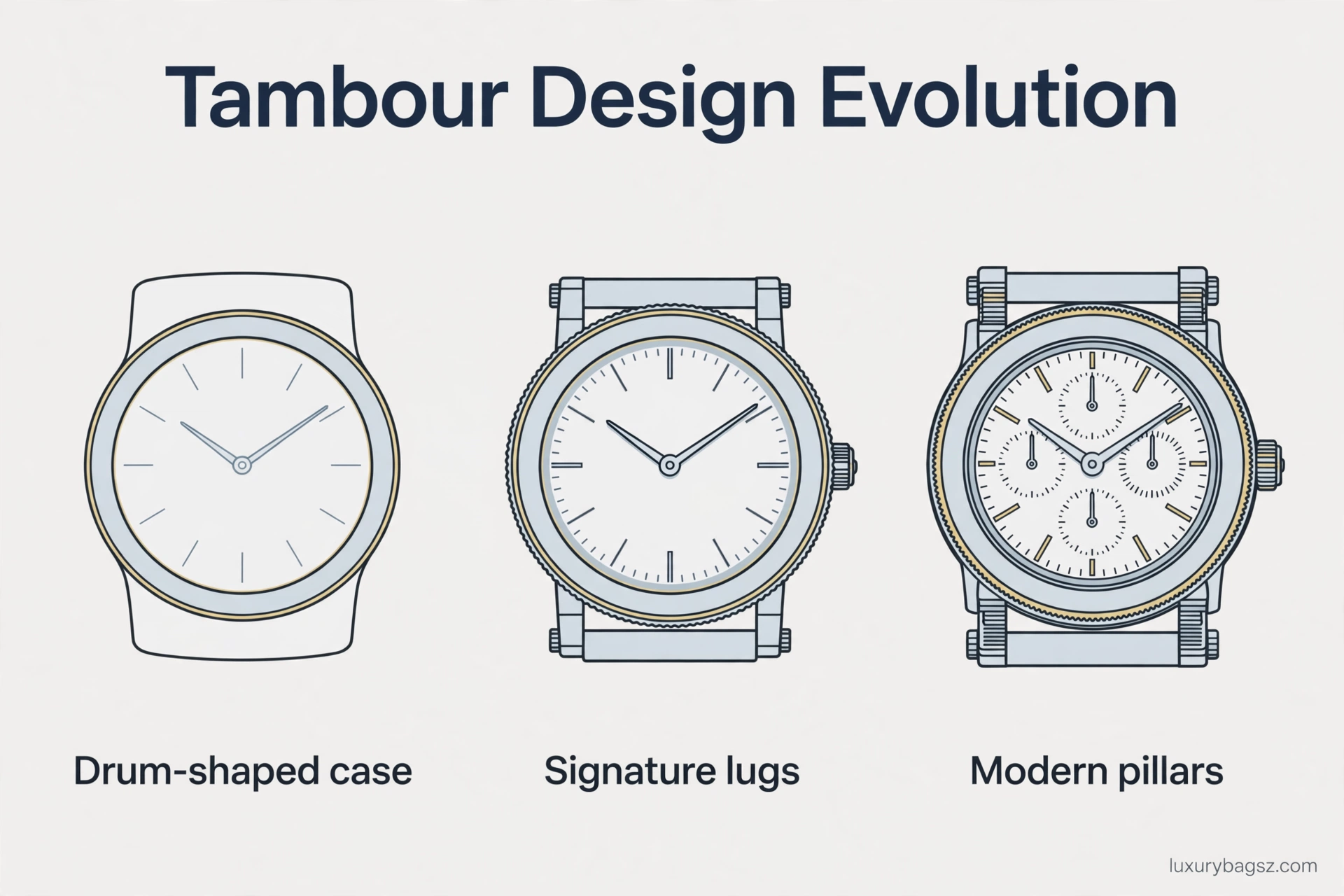
The Tambour, launched in 2002, marked Louis Vuitton's full entry into watchmaking. Its name means drum in French, and its case is wider at the base than at the dial, like a drum in profile. The shape was bold, large and instantly recognisable.
Early Tambour models included time-only watches, GMT models and chronographs. A 2003 chronograph used a respected outside movement, showing that the house first relied on partners while it built skill. The case design, however, was already its own.
The Tambour was reworked in 2023 into a slimmer, integrated-bracelet form. That update aimed at collectors who want daily wear, not only statement pieces. It marked a shift from fashion-adjacent watches to serious, collector-grade design.
Spin Time and a Signature Complication
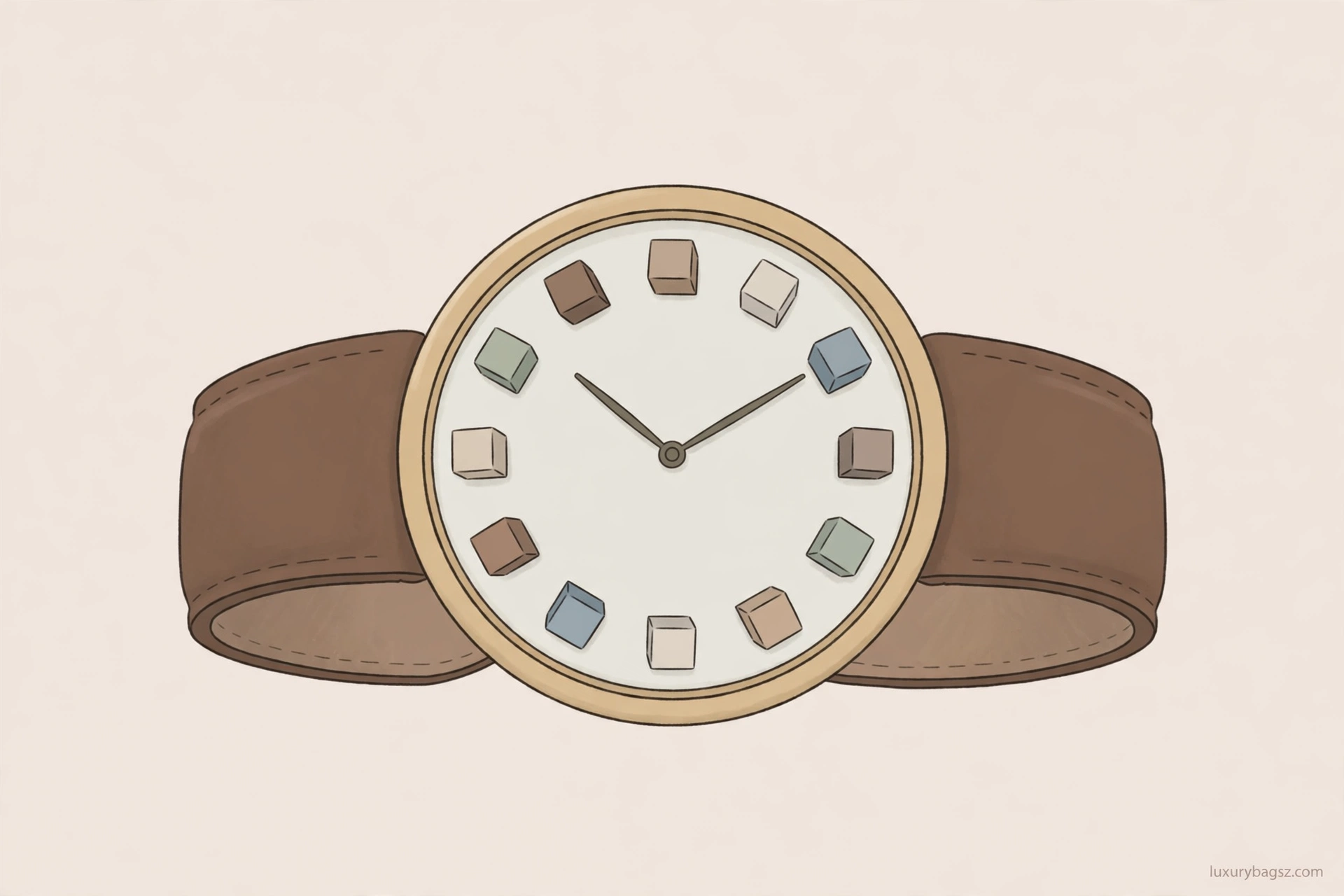
Spin Time, launched in 2009, gave Louis Vuitton a true signature complication. Twelve rotating cubes around the dial show the hour, with the current hour cube turned to face the wearer. The display was inspired by airport and station departure boards.
The movement was developed by La Fabrique du Temps for Louis Vuitton, before the workshop was fully acquired. That link proved vital: a unique complication needs a workshop that can design, test and service it over years.
Later versions, including Spin Time Air in 2019, opened the dial to show cubes floating around the movement. Limited editions in 2025 took the idea further, with in-house cases, dials and movements. Spin Time remains the clearest proof that Louis Vuitton designs, not merely decorates, watches.
La Fabrique du Temps and the Geneva Seal
La Fabrique du Temps was founded in Geneva by master watchmakers Michel Navas and Enrico Barbasini. Louis Vuitton invested in 2007 and acquired the workshop in 2011, renaming it La Fabrique du Temps Louis Vuitton. A Meyrin manufacture followed, covering research, movement making and dial craft.
This investment changed the house's status. High-end movements could now be developed and assembled in Geneva, with dials made in house. The workshop also supports related LVMH watch names, showing its wider value.
In 2016, the Voyager Flying Tourbillon earned the Geneva Seal, known as the Poinçon de Genève. That seal sets strict rules on origin, finishing and testing. Earning it placed Louis Vuitton among elite Swiss makers, at least for that high-end tier. Entry Tambour models, by contrast, use different movements, so buyers should check each reference.
For context on Swiss rivals, the Rolex brand guide and Cartier Tank watch guide show how heritage watch houses position craft and design differently.
The Modern Pillars: Tambour, Escale, Monterey, Voyager
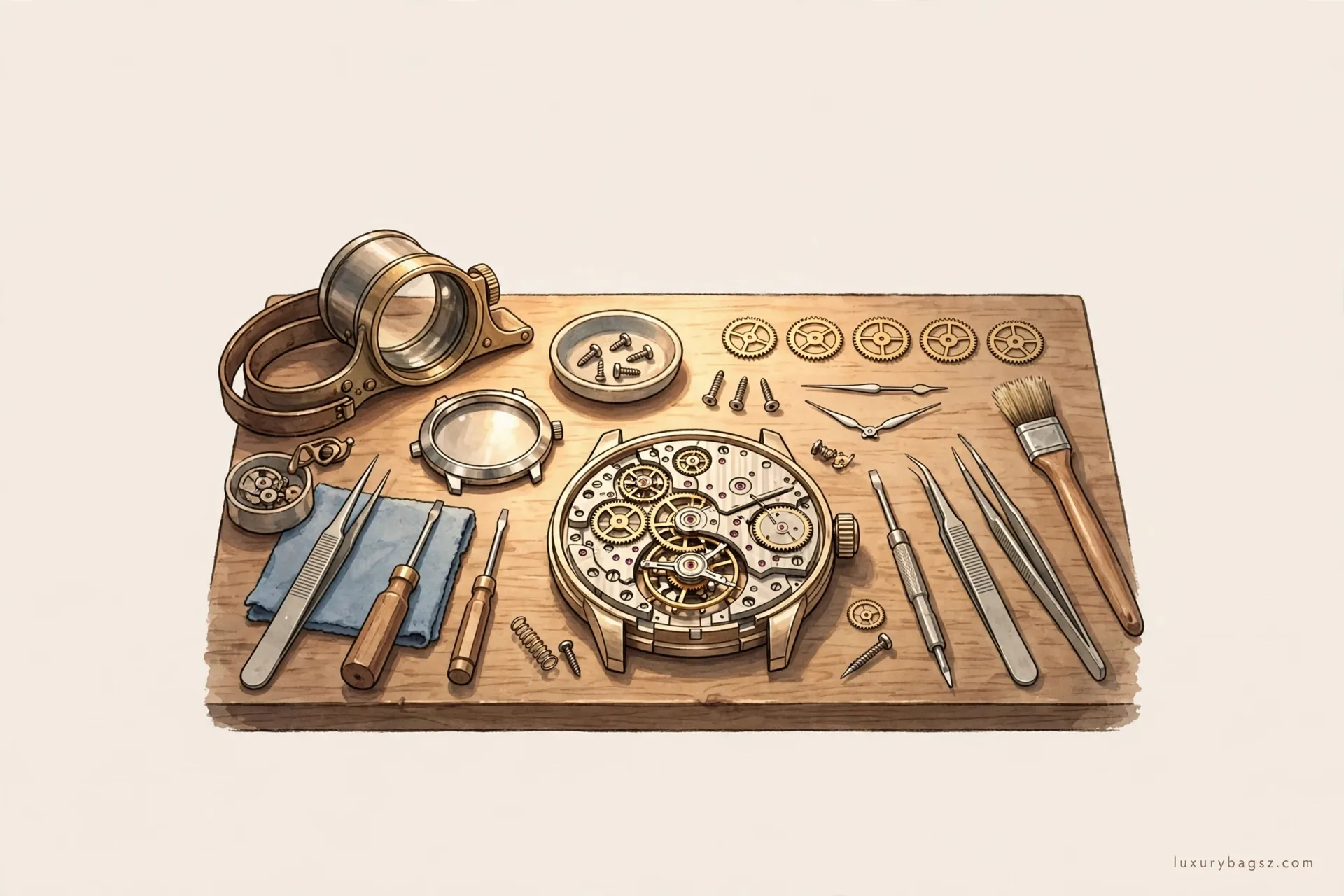
Louis Vuitton now describes its watch range through four pillars: Tambour, Escale, Monterey and Voyager. Tambour remains the flagship, with time-only, chronograph and high-complication versions. Escale offers world-time and artistic dials, often with travel themes.
Monterey, revived in 2025, brings back the 1988 pebble case with enamel dials and in-house craft. Voyager covers high watchmaking, including tourbillons and flying tourbillons with Geneva Seal ambition. Automata pieces, such as the Tambour Carpe Diem and later Opera and Bushido models, show métiers d'art skill.
This pillar structure helps buyers navigate the range. Tambour suits daily icons, Escale suits travellers, Monterey suits design lovers, and Voyager suits collectors seeking complications. Prices vary widely, so pillar alone does not predict cost.
Buying and Caring for a Louis Vuitton Watch
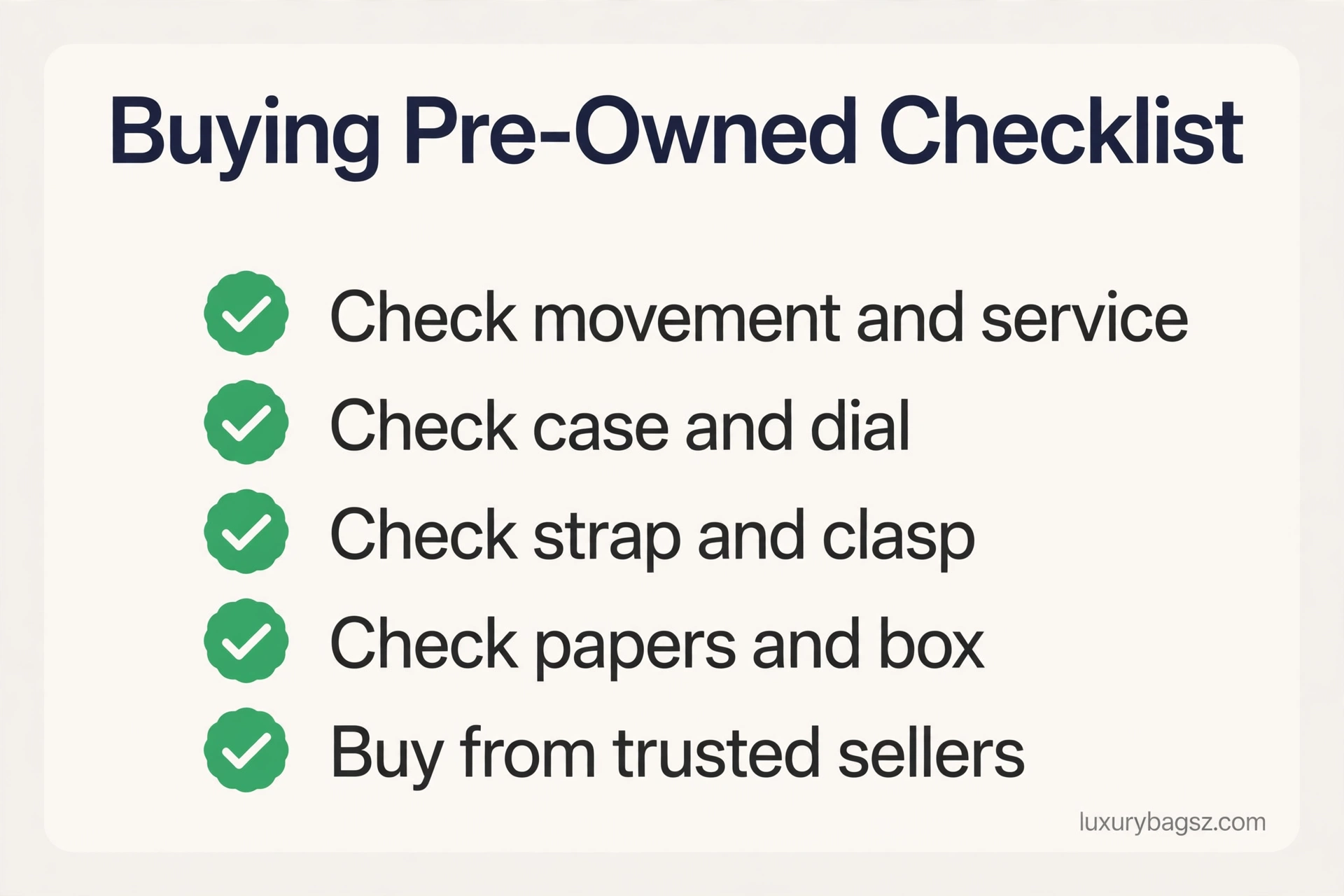
Buy from official stores or trusted pre-owned dealers with full papers, box and service history. Check the reference, case size and movement type, since Tambour alone spans many price tiers. A seller who cannot name the movement should be treated with caution.
Check condition with care: case edges, bracelet stretch, dial printing and crown action all matter. For high complications, ask for a recent service record from a qualified watchmaker. Automata and minute repeaters need specialist care, not general servicing.
Daily care is simple: keep the watch clean, dry and away from strong magnets, and service it on the maker's schedule. The how to clean a watch guide covers cases, crystals, bracelets and water resistance in practical detail.
Frequently Asked Questions
1. When did Louis Vuitton start making watches? Its first watch, the Monterey, appeared in 1988. Its full-scale entry came in 2002 with the Tambour, which became its signature watch collection.
2. What does Tambour mean? Tambour is French for drum. The case shape is wider at the base than near the dial, echoing a drum, and the name also nods to travel-trunk design.
3. What is Spin Time? Spin Time is a complication launched in 2009 that shows the hour with rotating cubes. The cube for the current hour turns to face the wearer, while other cubes show numbers on their sides.
4. Where are Louis Vuitton watches made? High-end movements and dials are made at La Fabrique du Temps Louis Vuitton in Geneva, acquired in 2011. Other models may use different movements, so check each reference.
5. What is the Geneva Seal? The Geneva Seal, or Poinçon de Genève, is a strict Swiss quality mark for movements made in Geneva. Louis Vuitton earned it in 2016 for the Voyager Flying Tourbillon.
6. Are Louis Vuitton watches good investments? Some limited and high-complication pieces hold value well, but most watches should be bought to wear, not as guaranteed investments. Condition, rarity and service history matter most.
7. How much does a Tambour cost? Prices vary widely by material, movement and edition, from entry steel models to high-complication pieces. Check current official listings, since prices change and pre-owned prices differ.
8. Is the Tambour a fashion watch? Early critics used that label, but in-house movements, Geneva Seal work and complex automata now support a stronger claim. Entry models still differ from high-end pieces, so judge by reference.
9. What is La Fabrique du Temps? It is Louis Vuitton's Geneva watch manufacture, founded by Michel Navas and Enrico Barbasini. It designs and makes movements, cases and dials for the house's high-end watches.
10. Should I buy new or pre-owned? New gives warranty and certainty, while pre-owned can offer better value on classic references. Either route needs a trusted seller, full papers and a condition check.
Final Verdict: A Fashion House That Earned Watch Credibility
Louis Vuitton became an iconic watch designer by investing in people and workshops, not by relying on a logo. The Tambour gave it shape, Spin Time gave it invention, and La Fabrique du Temps gave it craft.
For buyers, the lesson is to judge each reference on its own merits. A high-end Tambour or Voyager can stand with serious Swiss watches, while an entry model is best judged as a stylish daily watch. Choose the tier that fits your wrist, budget and taste.






