Chanel J12 Watch Guide: Ceramic, Sizes, Movements and Buying Checks
The J12 at a Glance: The Ceramic Watch That Changed the Rules
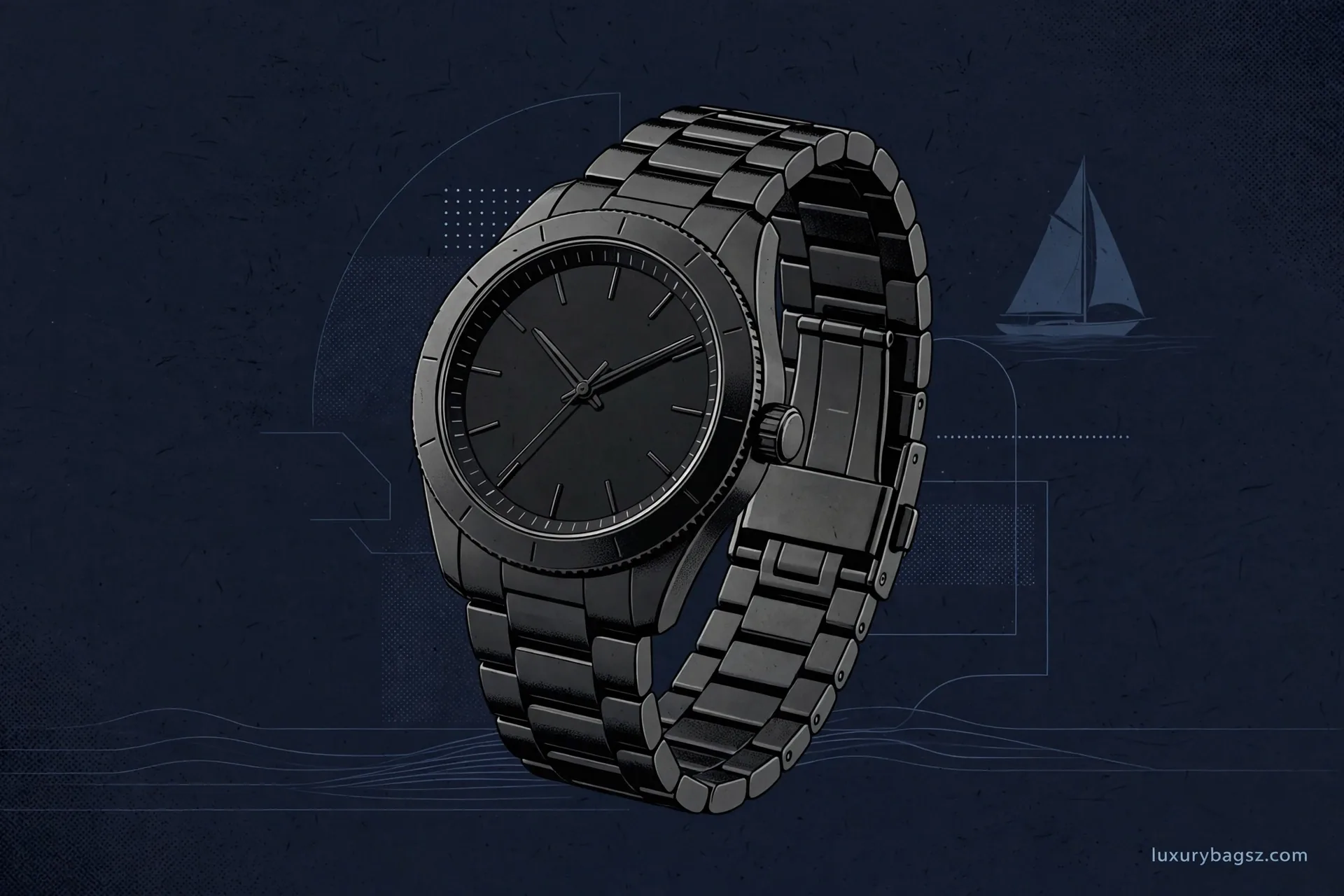
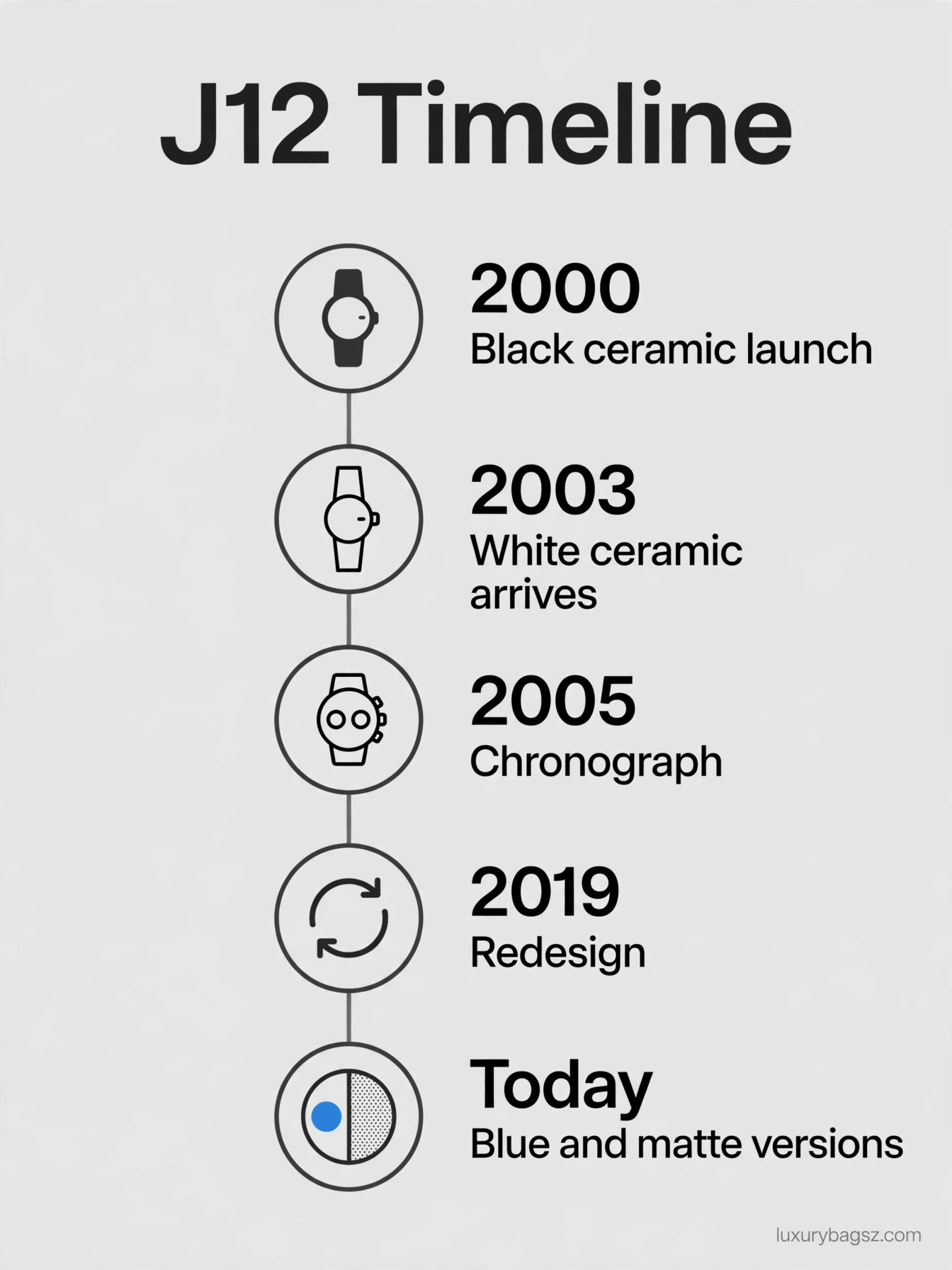
The Chanel J12 is the most important sports watch Chanel has ever made. Launched in 2000, it took high-tech ceramic, a material then associated with industry rather than luxury, and turned it into a black or white watch that looked like nothing else on the market. It was designed by Jacques Helleu, the same artistic director behind the Première, but its spirit is entirely different: sporty, monochrome and unisex.
The J12 matters because it made Chanel a serious watchmaker in the eyes of collectors. Before it, Chanel watches were jewellery pieces; after it, the house had a sports icon with real horological ambition. If you want one Chanel watch to wear every day, in almost any setting, the J12 is where most buyers should start.
Key Takeaways
- Launched in 2000 in black ceramic, designed by Jacques Helleu.
- The name and sporty character draw on J-class racing yachts.
- White ceramic followed in 2003; black and white remain the core colours.
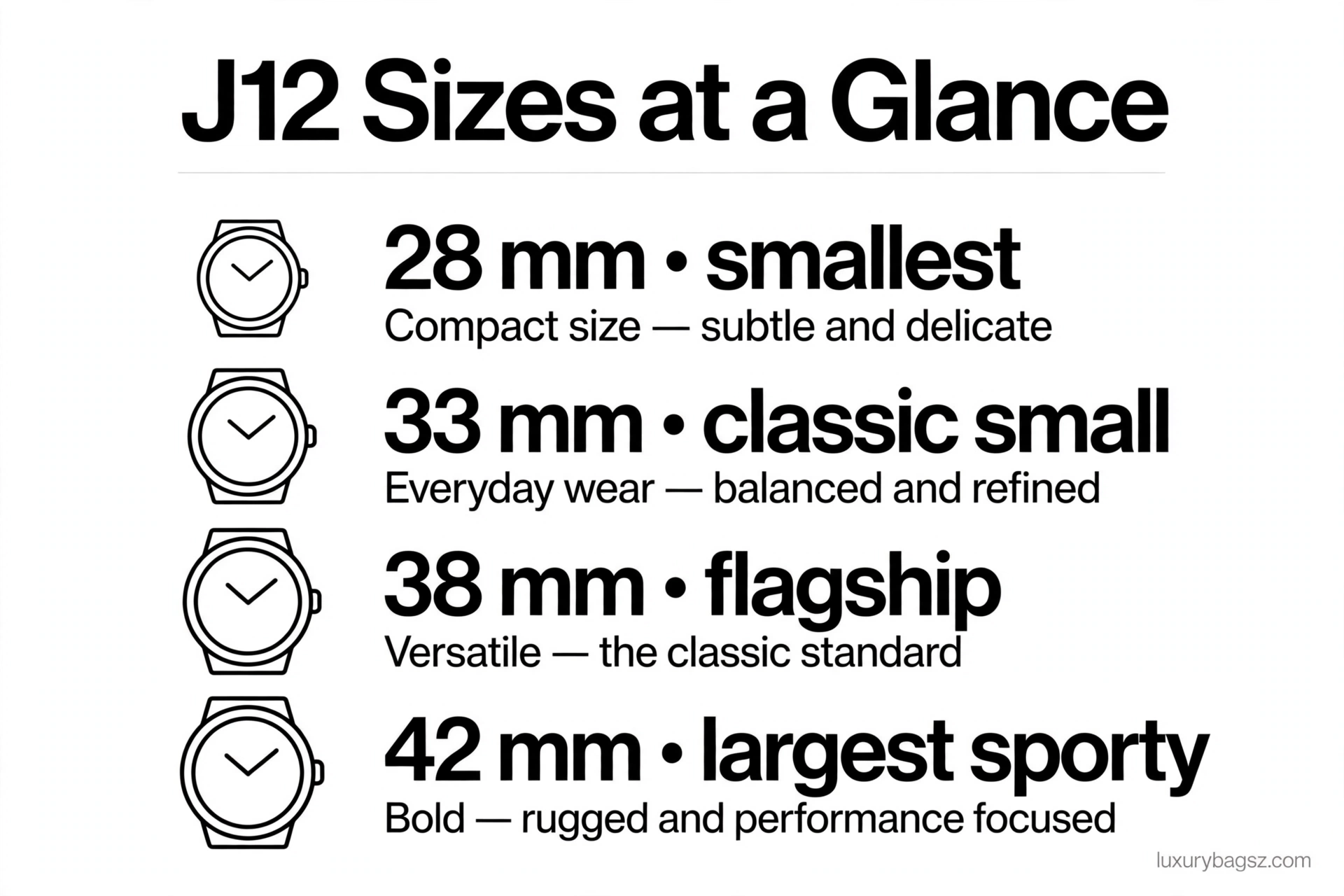
- Core sizes are 33 mm and 38 mm, with 28 mm and 42 mm joining the range later.
- The 2019 redesign refined the watch without changing its look.
- Calibre 12.1 in 38 mm models offers a 70-hour power reserve; Calibre 12.2 in 33 mm models offers 50 hours.
- Ceramic resists scratches but can chip on hard impact, so pre-owned checks matter.
Sailing Inspiration: Why a Fashion House Made a Sports Watch
Helleu designed the J12 with himself in mind, drawing on two passions: motor racing and sailing. The name comes from the J-class yachts that raced in the America's Cup, large and elegant racing boats whose hulls suggested speed without fuss. That inspiration explains the watch's clean lines: it was meant to look fast standing still.
The design brief was radical for 2000. Instead of decorating a watch with many colours and materials, Helleu built it around one material and one colour. Case, dial and bracelet would all be black ceramic, so shape and surface became the whole expression. The result looked both sporty and couture, a combination no other house was offering at the time.
That single-material idea also explains the J12's staying power. Fashion changes quickly, but a monochrome ceramic watch does not date the way a trend-led design does. It works with a suit, with swimwear and with evening clothes, because it adds no colour clash and no visual noise to any of them.
Ceramic: The Material That Made the J12 Famous
Ceramic was a bold choice in 2000 because it is famously hard to shape. Its extreme hardness makes it resistant to scratches and to the small marks that age steel watches, but it demands specialist tooling and long production times. Chanel's decision to build an entire watch from it, rather than using it as a bezel accent, was genuinely pioneering.
The practical benefit for owners is real. A black ceramic J12 keeps its deep, even colour and glossy surface far longer than a coated or painted watch would. White ceramic offers the same advantage in reverse: a bright, clean look that does not yellow or fade the way some white materials can. Both colours are signature Chanel colours, which ties the watch back to the house.
There is a trade-off to understand. Ceramic's hardness comes with brittleness, so a sharp knock on a hard surface can chip or crack a case or bracelet link, where steel would dent. That does not make the J12 fragile for normal wear, but it does mean owners should avoid treating it as indestructible, and buyers should inspect edges and links carefully.
Black and White: The Two Pillars of the Collection
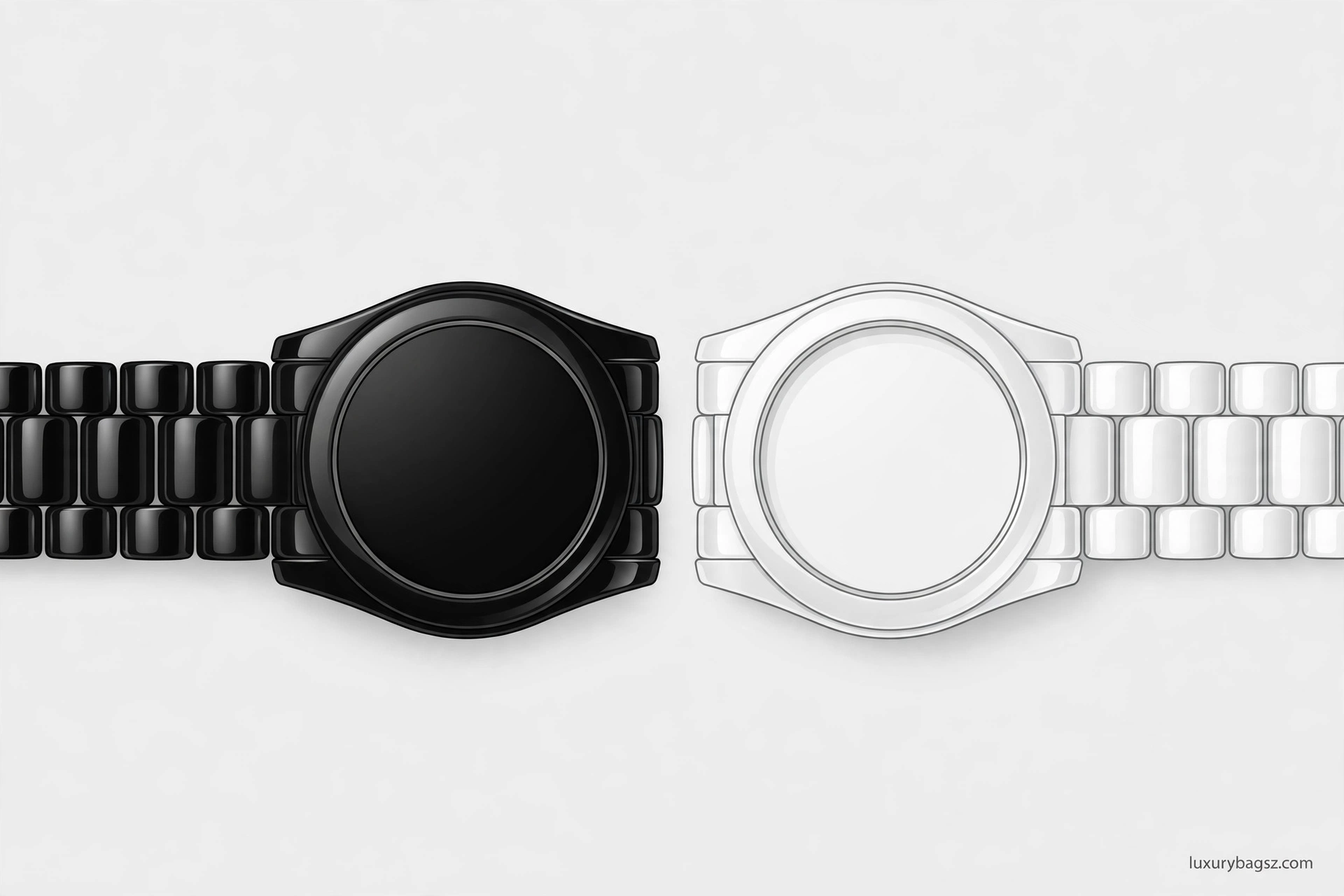
Black came first, in 2000, and it remains the defining J12. An all-black ceramic watch with a matching bracelet was startling at launch, and it still reads as the most versatile version today. It suits every wardrobe, hides wear well, and pairs with both gold and silver jewellery without argument.
White followed in 2003, in 38 mm and 33 mm versions, and it proved the design worked in a second monochrome. White ceramic is brighter and more summery, and it stands out more on the wrist. It also shows dirt and marks more readily than black, so it rewards owners who clean it regularly and store it away from dye-transfer risks like dark denim.
Later colours and finishes, including blue and matte versions, have broadened the range without displacing the core pair. Collectors still treat black and white as the essential J12s, and first-time buyers are rarely wrong to choose one of them. Limited colours can be beautiful, but they are harder to match and harder to resell.

A Short History: From Launch to Redesign
The J12 grew quickly after its 2000 launch. A chronograph arrived in the early years of the collection, proving the design could carry a complication without losing its balance. A tourbillon followed, then a GMT with a second time zone, and in 2008 a high-end calibre developed with Audemars Piguet's Renaud & Papi team took the watch further into haute horology.
Special editions kept the story moving. The 2009 Noir Intense cut a block of ceramic into 724 baguettes and set them around the watch, a feat no other maker had attempted with ceramic. The 2010 Marine added 300-metre water resistance and a rubber strap for a true diving character. Later came the Paradoxe, fusing black and white ceramic on one watch, and the sapphire-crystal X-Ray, which exposed the movement entirely.
The most important change for ordinary buyers came in 2019. Chanel redesigned around 70 per cent of the watch, refining the crown, the ceramic indices and the movement, while keeping the look essentially unchanged. That is why a 2019-onwards J12 feels more refined without looking different, and why the redesign year is worth noting when comparing pre-owned examples.
Sizes: From 28 mm to 42 mm
Size choice is the most personal J12 decision, and the range now covers most wrists. The 38 mm model has long been the flagship: large enough to read as a sports watch, small enough for most wrists, and available with the strongest movement options. If you are unsure, 38 mm is the safest starting point for trying the design on.
The 33 mm model is the classic smaller option, suited to slimmer wrists and to buyers who want the J12 look without a large presence. It runs on Calibre 12.2, with a 50-hour power reserve, against the 38 mm model's Calibre 12.1 and 70 hours. Both are automatic movements, and both are chronometer-grade in current core models, so the choice is about wrist presence rather than quality.
At the ends of the range sit the 28 mm, the smallest J12, and the 42 mm, the largest and sportiest, including Superleggera editions. The 28 mm suits very small wrists or a jewellery-like fit, while the 42 mm suits larger wrists and buyers who want a bold sports presence. Try both extremes on before deciding, since ceramic wears slightly larger than its measurements suggest.
Movements and Complications Explained Simply
Current core J12 models use in-house automatic calibres from the Kenissi manufacture, in which Chanel holds a stake. Calibre 12.1 powers the 38 mm watches, and Calibre 12.2 powers the 33 mm watches. Both carry COSC chronometer certification, which means their timekeeping has been independently tested to a published standard.
Beyond the core three-hand models, the J12 family includes chronographs, GMTs, moonphases and tourbillons, plus playful editions such as the Mademoiselle J12, whose dial shows a silhouette of Coco Chanel with her arms as the hands. These complications add cost and servicing complexity, and they suit collectors rather than first-time buyers. A standard automatic J12 is the sensible entry point.
Quartz versions exist in smaller sizes and in some diamond-set models. Quartz suits buyers who wear the watch occasionally and do not want to reset it after a few days unworn. Always confirm the movement for the exact reference, since similar-looking J12s can differ underneath the dial, and the difference affects both price and care.

Living With Ceramic: Care and Honest Limits
Daily care for a J12 is simple. Wash the bracelet with lukewarm water and mild soap, dry it with a soft cloth, and wipe the case and crystal the same way. Our watch cleaning guide covers the details, including what to avoid around water resistance and straps. Ceramic does not need polishing the way steel does, and it should never be buffed with abrasives.
Water resistance varies by model, so check your reference rather than assuming a rating. Some J12 models are built for swimming, while others, especially diamond-set or smaller quartz versions, are better kept away from water. When in doubt, treat the watch as splash-resistant and have its seals checked at service.
The honest limit is impact. Ceramic shrugs off scratches but not sharp knocks, so avoid wearing the watch for contact sport or heavy manual work. A chipped link can often be replaced, but it is a specialist repair with a real cost. Insurance for a high-value J12 is worth considering, and a service history from an authorised centre supports both condition and resale.
Buying Pre-Owned: Checks Before You Pay
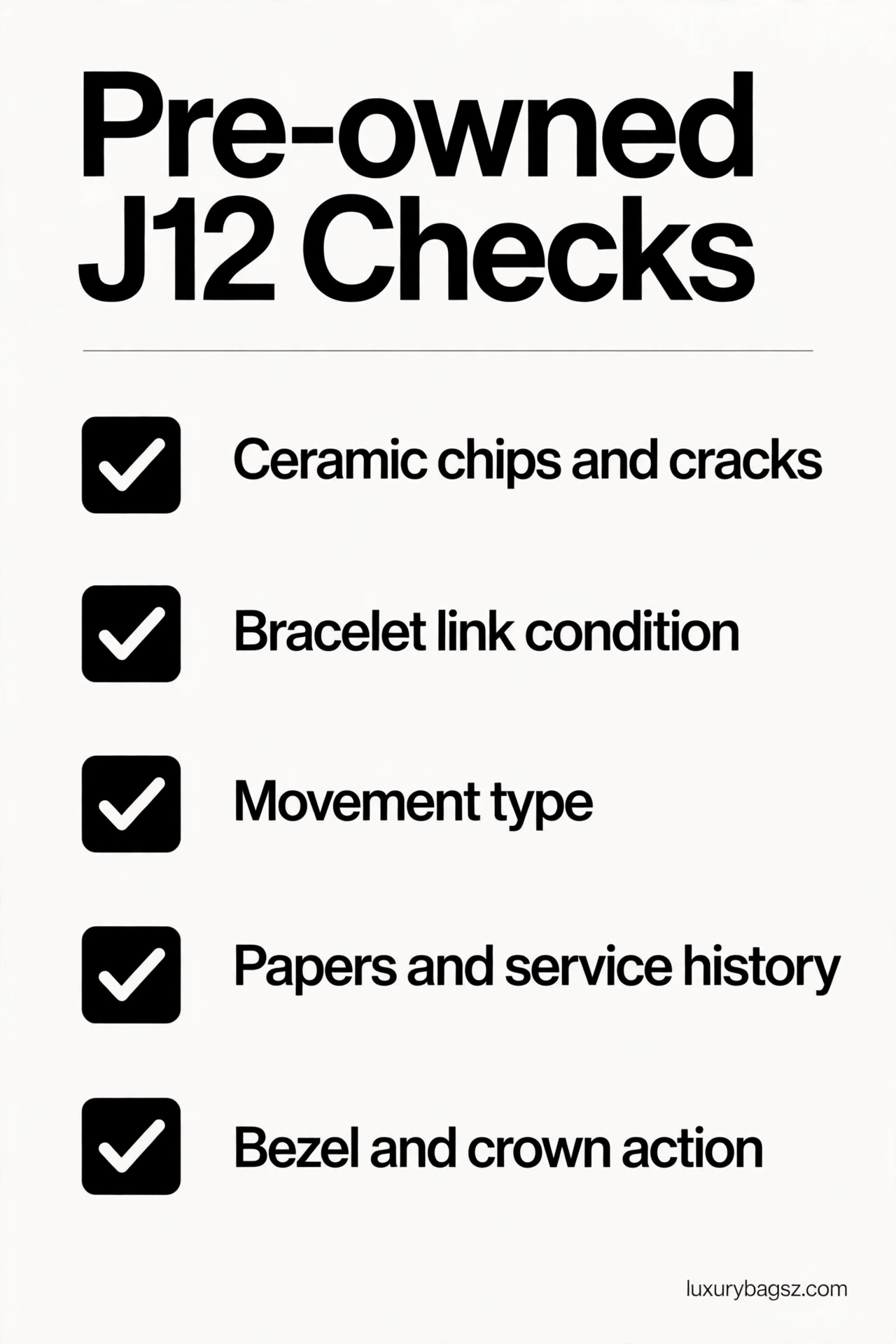
Inspect the ceramic first, in bright light and from every angle. Look for chips on case edges, bezel rims and bracelet links, and run a finger gently along the bracelet to feel for rough spots. Even small chips matter, because they cannot be polished out the way steel marks can, and they should be reflected in the price.
Next, confirm the reference and movement. Ask for the reference number, check it against the seller's description, and confirm whether the watch is automatic or quartz. Papers, box and service history add confidence, and a recent service from an authorised centre is a genuine plus. Be wary of listings that mix a special-edition dial with a standard bracelet, or that cannot explain a replaced link.
Finally, compare the J12 with its natural rivals before committing. Our Rolex Submariner guide and Rolex guide cover the steel sports-watch alternative.
Our Cartier Tank guide covers the dress-watch alternative, and our Omega watches guide covers another ceramic-friendly sports range. Choose the J12 if monochrome ceramic and Chanel design matter most to you.
Frequently Asked Questions
When was the Chanel J12 launched?
The J12 was launched in 2000 in black ceramic, designed by Jacques Helleu. White ceramic followed in 2003, and the watch has been in continuous production since.
What is the J12 made from?
The core J12 is made from high-tech ceramic for the case, dial and bracelet. Ceramic is extremely hard and scratch-resistant, which is why the watch keeps its colour and surface so well, though it can chip on sharp impact.
Why is it called the J12?
The name draws on J-class racing yachts from the America's Cup, reflecting Helleu's love of sailing and motor racing. The watch was designed as a sporty, unisex piece with a nautical and motorsport character.
What sizes does the J12 come in?
Core sizes are 33 mm and 38 mm, with 28 mm as the smallest and 42 mm as the largest joining the range later. The 38 mm remains the flagship size, while 33 mm suits slimmer wrists.
What movements power the current J12?
Current core 38 mm models use Calibre 12.1, with a 70-hour power reserve, and 33 mm models use Calibre 12.2, with a 50-hour reserve. Both are automatic and COSC chronometer-certified, while some smaller and diamond-set models use quartz.
What changed in the 2019 J12 redesign?
Chanel refined around 70 per cent of the watch in 2019, including the crown, ceramic indices and movement, while keeping the outward look essentially unchanged. A post-2019 J12 therefore feels more refined without looking different.
Is the J12 scratch-proof?
Ceramic is highly scratch-resistant, but it is not indestructible. It resists everyday marks far better than steel, yet a sharp knock on a hard surface can chip or crack it, so it should not be worn for contact sport or heavy manual work.
Can you swim with a J12?
It depends on the model, since water resistance varies across the range. Some J12 models are built for swimming, while diamond-set and smaller quartz versions are better kept dry. Always check the rating for your exact reference.
Is the J12 a good first luxury watch?
For many buyers, yes. It is versatile, durable in normal wear, easy to read and hard to date, and it works across casual and formal settings. Buyers who want a dress watch or a steel sports watch should also compare the alternatives linked in the pre-owned section.
What should I check on a pre-owned J12?
Check ceramic edges and bracelet links for chips, confirm the reference and movement type, and ask for box, papers and service history. Chips cannot be polished out, so they should be reflected in the price, and mixed special-edition parts deserve a second look.
Final Verdict: The Everyday Chanel Watch
The J12 succeeds because it solved a problem no other watch had solved: how to make a fashion house's sports watch feel both luxurious and genuinely tough. Ceramic gave it a look and a durability that steel could not match, and the monochrome design has kept it current for over two decades.
Buy the 38 mm in black or white if you want the essential J12, or the 33 mm if you prefer a smaller fit. Check the ceramic carefully pre-owned, confirm the movement, and wear it as the everyday watch it was designed to be. It is the Chanel watch most people will reach for most often.