Stylish Ways to Wear Boots: Outfit Formulas for Every Style
Boots, Styled: The Formulas That Always Work
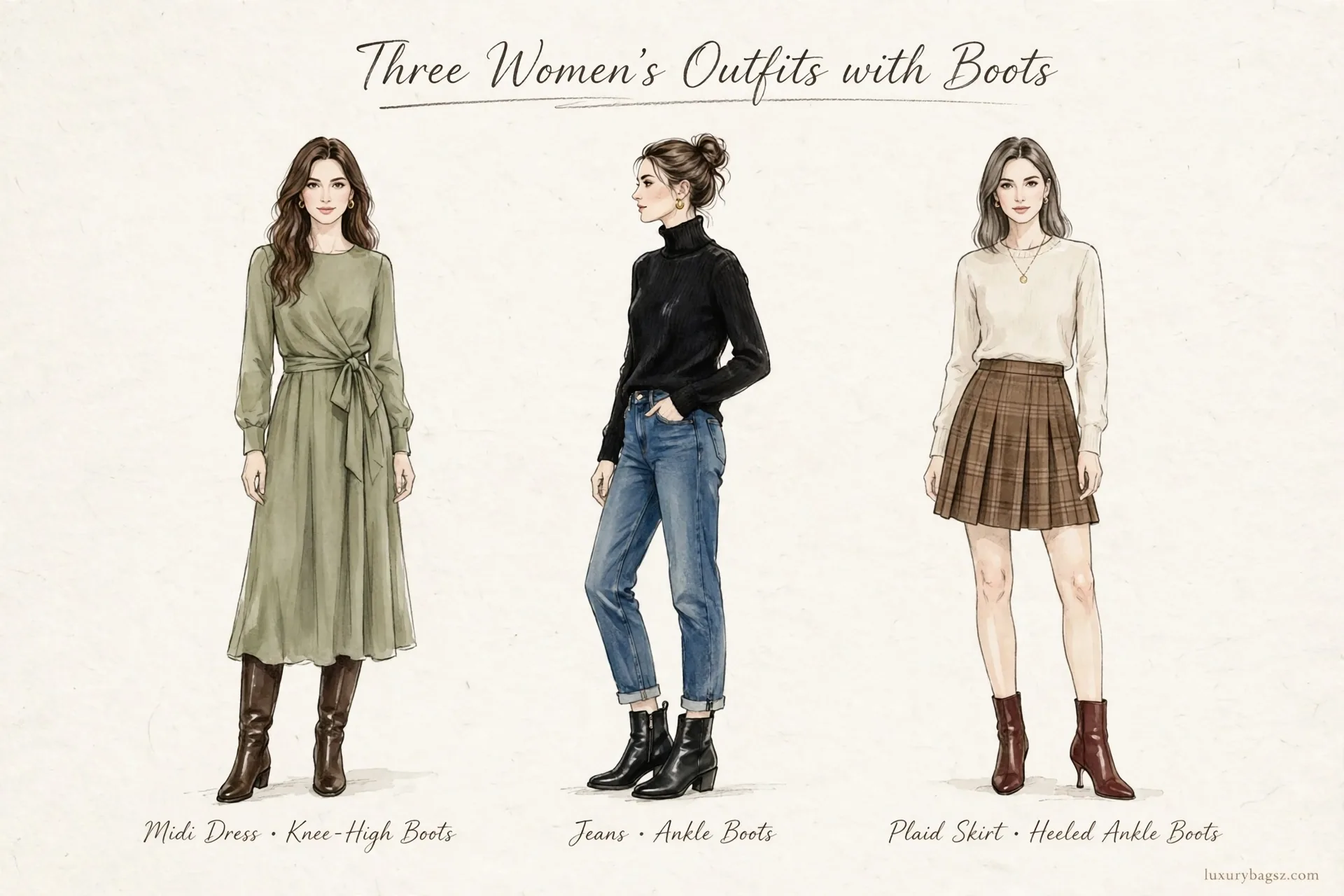
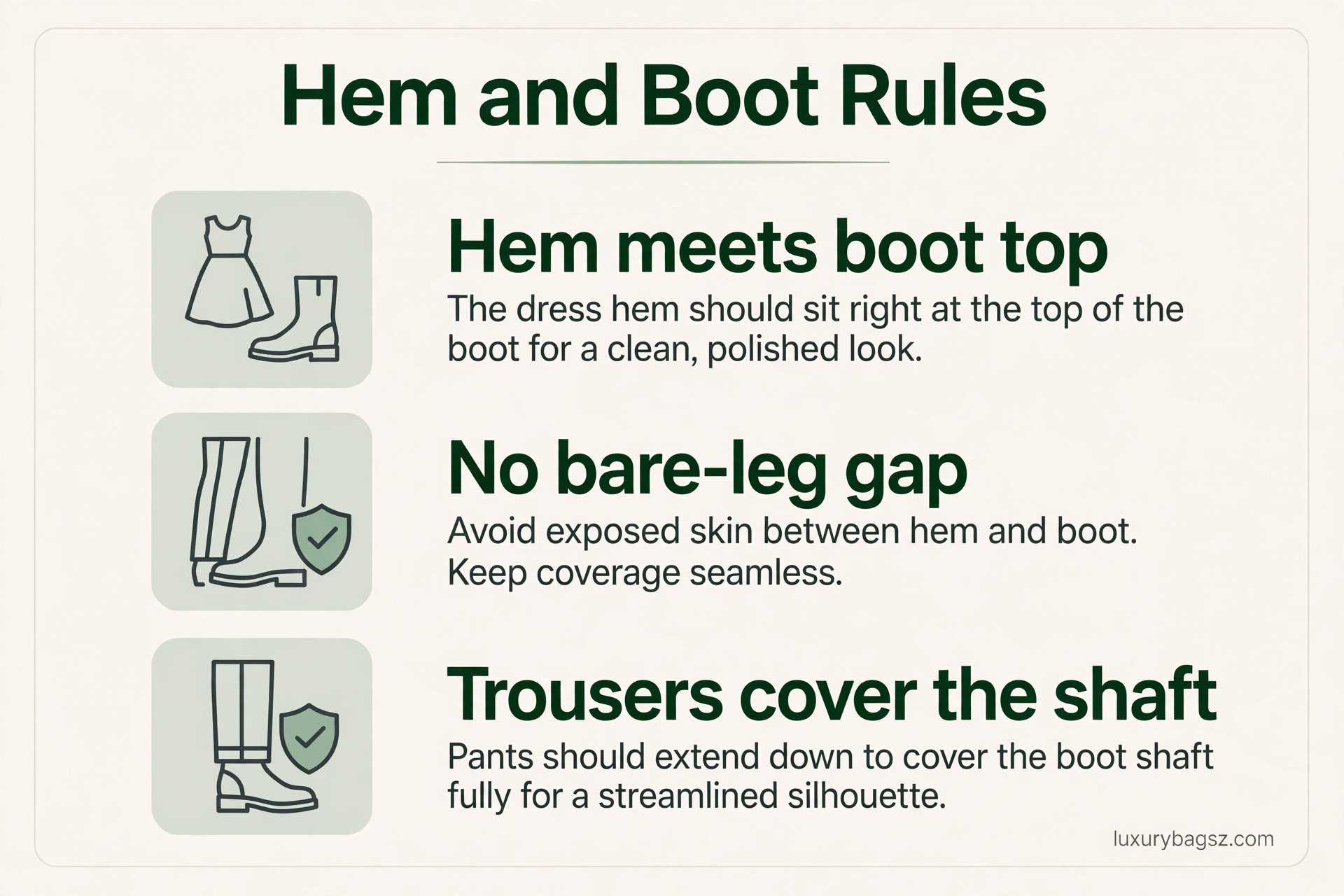
The most stylish way to wear boots is to let one proportion rule lead: either the hem meets the boot, or it clears it with a deliberate gap. Knee-high boots want hems that end just above the shaft; ankle boots want cropped or full-length trousers, never a hem that stops awkwardly at the boot's top edge.
Start from the five styles in a complete boot wardrobe, then apply the formulas below by outfit. When in doubt, black boots, a hem that sits clean, and one clear gap of leg or none at all will carry the look.
Key Takeaways
- Let hems either meet the boot top or clear it; the awkward middle length is the main mistake.
- Knee-high boots pair best with midi and mini hems that end just above the shaft.
- Cropped jeans should show a small gap of ankle above ankle boots; full-length trousers should cover the shaft.
- Skinny jeans tuck in; straight and wide legs sit over the boot.
- Match boot formality to the outfit: sleek boots dress up, chunky boots dress down.
- One colour story, boot to hem, lengthens the whole look.
Start From the Five Boot Styles
Styling gets easier when the wardrobe holds the right shapes: ankle, Chelsea, knee-high, heeled and chunky. Our guide to boots every woman needs lays out the set and the order to buy them in.
Each style has a natural partner. Sleek ankle and heeled boots belong with tailoring and dresses; chunky boots belong with denim, knits and casual layers.
If an outfit feels wrong, it is usually a style mismatch rather than a colour problem. Swap the boot's character before you change the clothes.
Boots With Dresses and Skirts
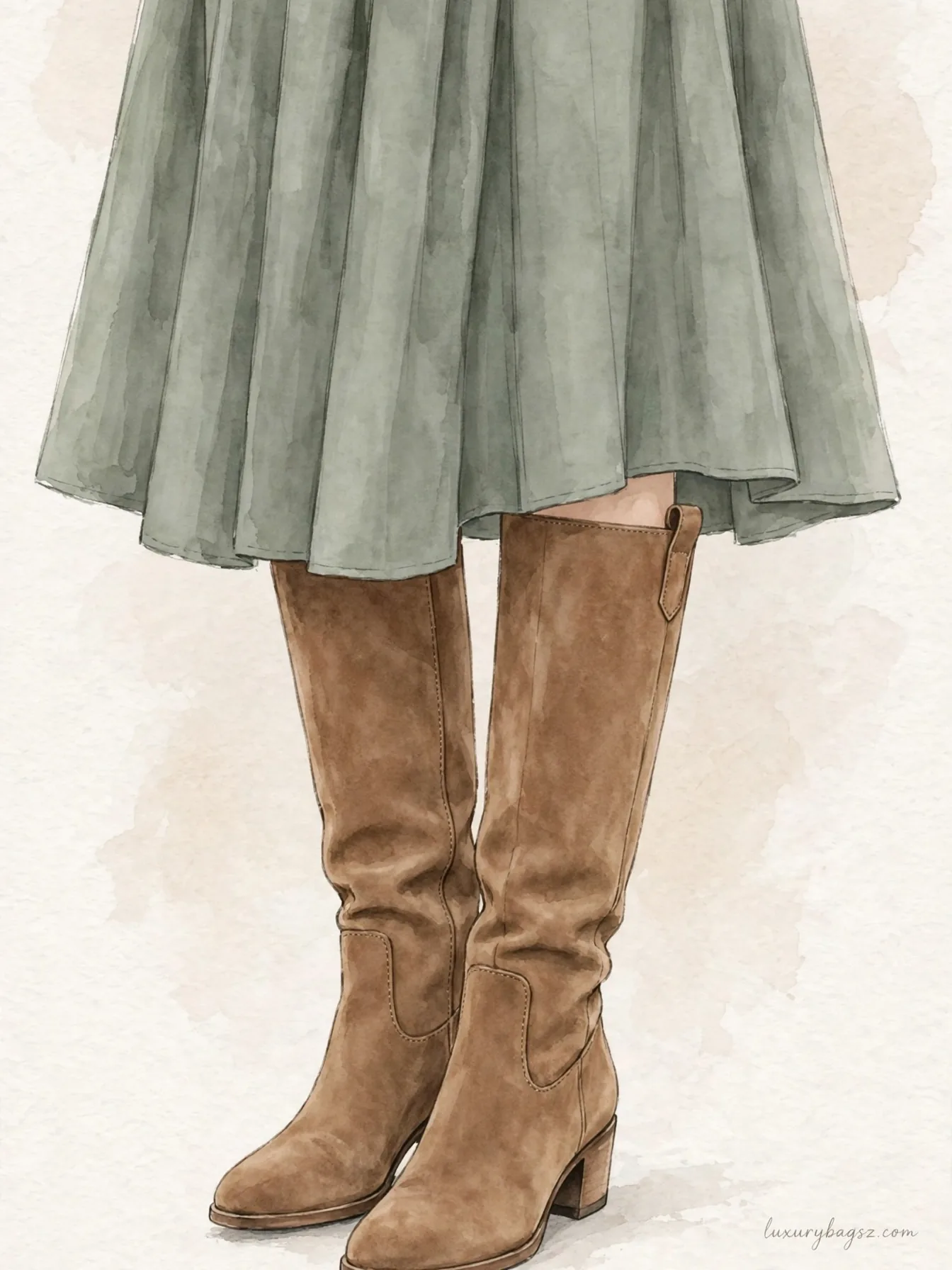
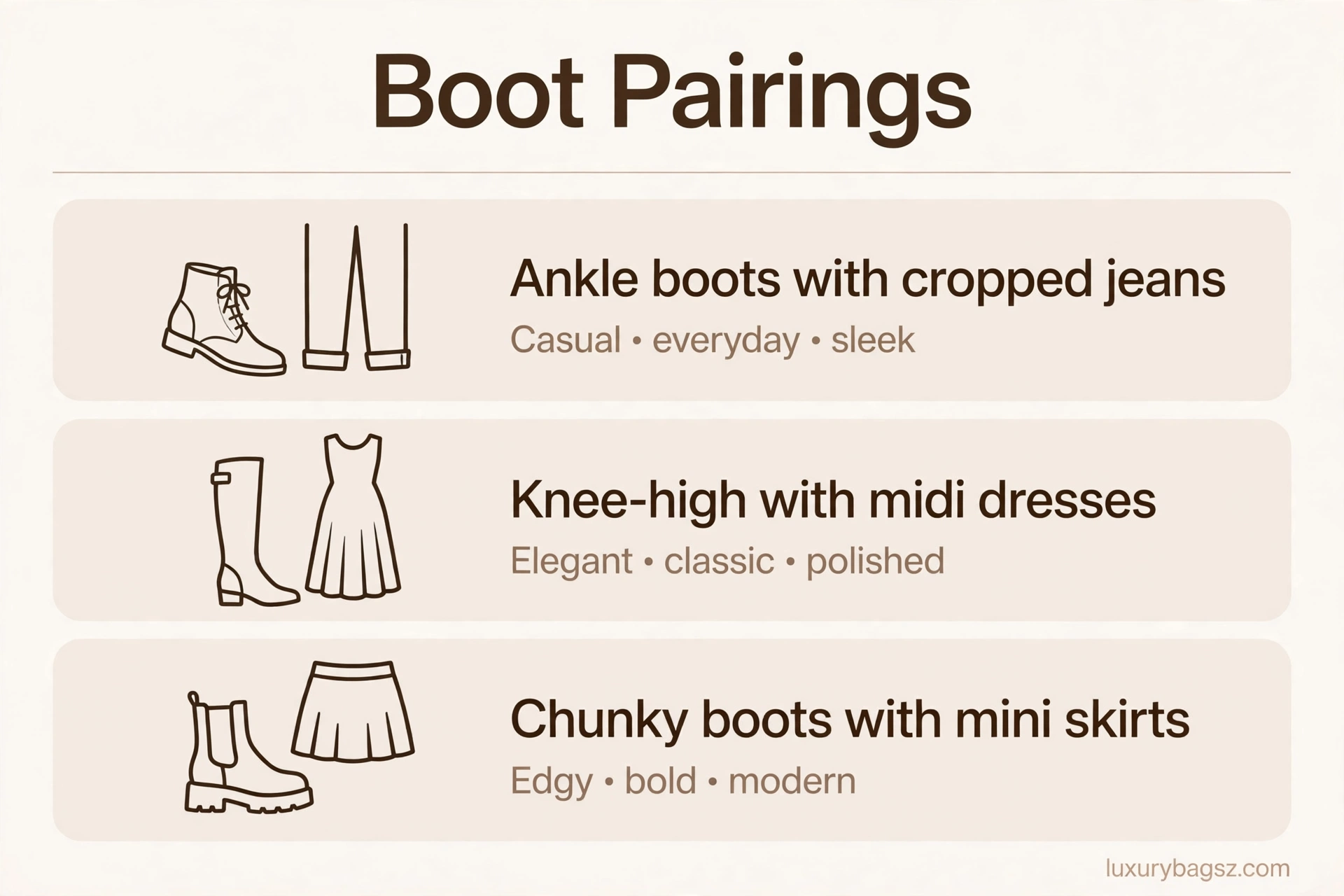
Knee-high boots with a midi dress is the most reliable formula: the hem ends just above the shaft, so the lines meet with no skin gap and no bunching. It works in suede, leather and heeled versions.
Mini dresses and skirts take knee-highs too, leaving a clear band of leg. Ankle boots with minis is the sharper, younger pairing, especially in a matching colour.
Maxi dresses need a slit or a boot slim enough to hide beneath the hem without bumps. A heeled ankle boot under a long dress gives lift without showing the shoe at all.
The Hem Rules, Style by Style
With ankle boots, trousers and jeans should either end an inch or two above the boot, showing ankle, or fall full length over the shaft. The in-between graze looks accidental.
With knee-highs, hems stop above the top of the boot. A hem that ends mid-shaft, folding over the boot, is the one proportion to avoid with any boot style.
With chunky boots, give the silhouette room: wider hems, longer dresses and bigger knits balance the weight at the ground. Slim hems over chunky boots can look top-heavy in reverse.
Jeans: Tuck, Cuff or Cover
Skinny and slim jeans tuck into knee-high and Chelsea boots cleanly; this is the classic cold-weather line and it keeps hems dry. Straight-leg jeans usually sit better over ankle boots, with the hem resting on the shaft.
Cuffing works with lace-up and chunky boots, showing a neat fold above the boot. The rugged end of this styling is covered in our notes on how to style red wing iron ranger boots, and biker shapes follow the same logic as our guide on how to wear engineer boots.
Wide-leg jeans should fall over the boot entirely. Choose a heeled ankle boot underneath so the hem clears the ground and the leg line stays long.

Boots at Work
Sleek ankle boots under tailored trousers are the office standard: the trouser should fall clean over the shaft with no break bunching at the front. Black on black is the safest version.
Knee-high boots with midi skirts and dresses work in most offices when the boot is plain leather and the heel moderate. Avoid heavy treads and tall platforms in formal settings.
Keep one polished pair for work only, if you can. Boots that commute through winter weather rarely look meeting-sharp by Friday.

Colour and Texture Pairings
One-colour dressing is the easiest lengthener: black boots under a black hem, brown boots with warm neutrals and denim. Contrast works when it is deliberate, such as white boots with dark dresses.
Suede softens sharp tailoring and pairs naturally with knits and wool. Smooth polished leather sharpens casual clothes and lifts denim into evening territory.
Comfort still rules quietly underneath the styling. A new pair worn for a long day should be broken in first, following the gradual method in our guide on how to break in boots.
Mistakes That Spoil the Look
The commonest is the hem that stops at the boot's top edge, neither meeting nor clearing it. Move the hem up, or change the boot; the middle length always looks like an accident.
Next is mixing formalities: delicate dresses with heavy tread boots can work, but only when the rest of the outfit supports the contrast. If nothing else echoes the boot's weight, swap it.
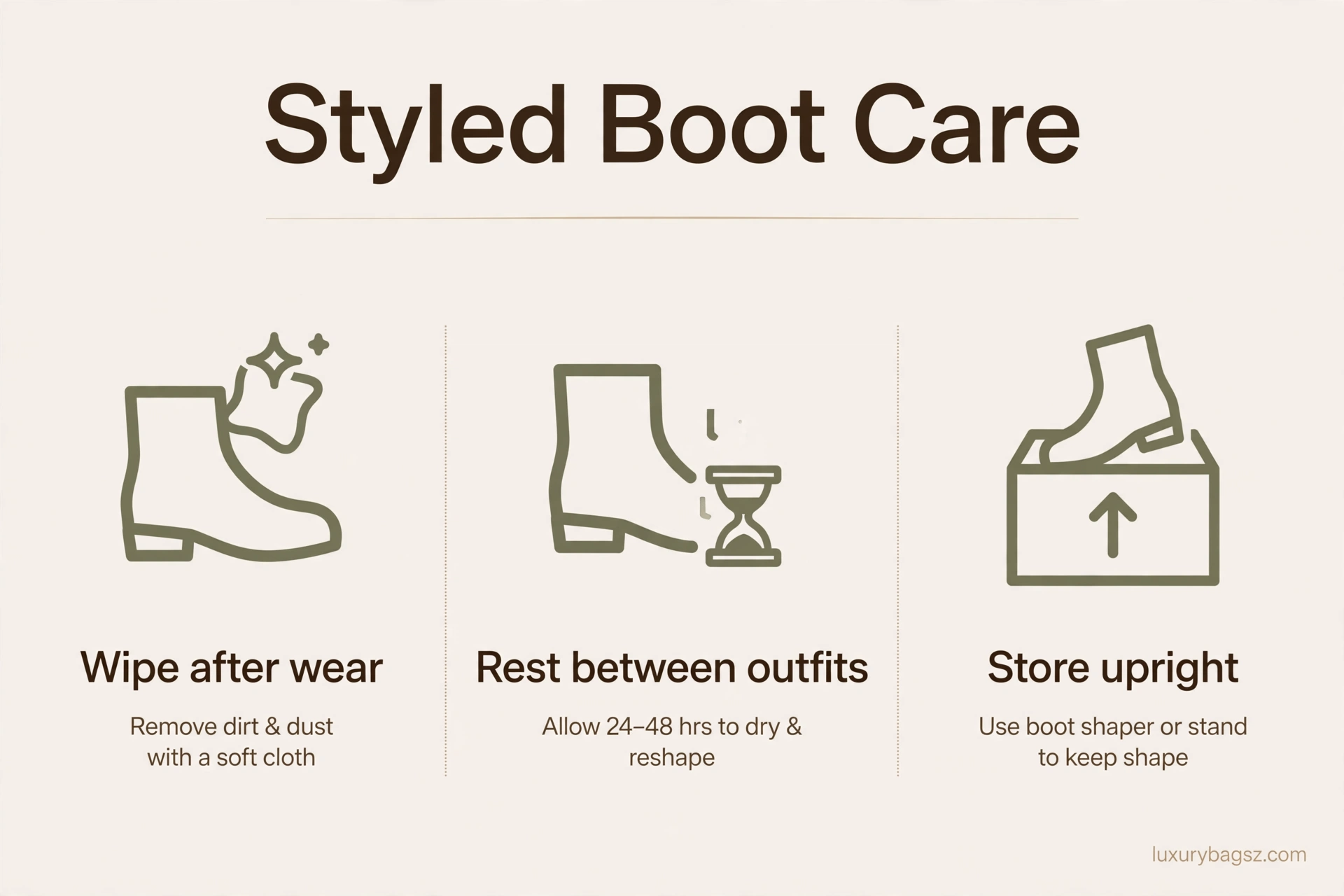
Scuffed, salty boots undo good styling faster than any proportion error. Keep the work pair polished, let suede dry fully before brushing, and hem trousers to the boots you actually wear.
When Boots Are Not the Answer
Some outfits still belong to shoes: floor-length evening gowns, very light summer dresses and formal courts dress codes among them. Forcing boots there reads costumey rather than stylish.
In warm weather, a heeled sandal or a sleek pump often serves a dress better than any boot. Our designer heels guide covers the shoe side of the wardrobe for those days.
Knowing when not to wear them is part of wearing boots well. The goal is a wardrobe where boots are the obvious answer most of the time, not every time.
Tights and Hosiery: The Quiet Layer That Decides the Line
Tights are the invisible half of most boot outfits, and three rules govern them. Match tights to the boot, not the skirt, when you want length: black tights running into black boots make one unbroken line from hip to toe, and the leg reads as long as it can possibly look.
Opacity sets the register. Sheer tights with heeled boots read evening and delicate; opaque tights with flat knee-highs read daytime, practical and modern; a visible contrast, burgundy tights with black boots, for instance, is a deliberate style choice that needs the rest of the outfit kept simple.
Bare legs have their own season and rules, working with ankle boots and lighter dresses in the shoulder months when the boot is suede or a pale leather rather than heavy black. The transition test is the outfit’s overall weight: if the clothes say spring, the boots must agree in colour and finish, whatever the calendar says.
Socks deserve one sentence of respect: with cropped trousers and ankle boots, a glimpse of considered sock, fine ribbed wool in a matching tone, looks intentional, while a sports sock in the same gap undoes an otherwise careful outfit silently.
Coats and Outerwear: Dressing the Whole Silhouette
Boots are styled twice: once with the outfit, once with the coat that covers it for half the journey. Long coats pair naturally with knee-high boots because the lines agree, both long, both unbroken; the coat’s hem should clear the boot top or overlap it fully as you walk, not flap against it at mid-shaft.
Cropped jackets and shorter coats give chunky and ankle boots their stage, leaving the whole boot visible and balancing a heavier shoe with a lighter top half. The awkward pairing is the mid-thigh coat with mid-calf boots, where two medium lengths argue; change one of them.
Open coats change the equation in your favour: worn open over a dress, a long coat frames the boots rather than competing with them, and the outfit reads as layers of one idea. Belted coats over knee-high boots with a midi dress beneath is the winter formula stylists return to because every line in it agrees.
Consider the commute reality inside the styling: if the coat will be carried over an arm indoors, style the outfit for its indoor life and let the coat be a frame, not a component.
Boots After Dark: Evening and Occasion Styling
Evening boots succeed on finish rather than height alone. A heeled knee-high in polished leather or suede under a cocktail dress is a complete cold-weather evening look, warmer and often more elegant than a strappy sandal in January, provided the heel is fine, the boot is plain and the dress’s hem obeys this guide’s meeting rule.
Patent and satin-finish boots carry black-tie-adjacent dressing further than matte ones, and a pointed heeled ankle boot under wide-leg evening trousers gives the pointed-toe glimpse of a court shoe with a boot’s confidence on wet pavements.
What evening boots should not do is shout: heavy tread, platform soles and biker hardware belong to the deliberate contrast outfits discussed in the mistakes advice, worn with full intention and nothing else competing. For weddings in winter, a sleek heeled boot under a long dress is now entirely respectable guest dressing in cold climates.
Jewellery and bags should follow the boot’s formality, not the season’s: evening boots take evening bags, and the daytime tote stays home regardless of how practical it felt at noon.
Boots Beyond Winter: The Warm-Weather Formulas
Boots no longer retire in April. The ankle boot with a summer dress is the established warm-weather formula: a light-coloured or suede boot, bare legs, and a dress with enough movement to keep the pairing breezy rather than heavy. Our summer dresses guide shows the cotton and linen dresses these boots ground best.
White and cream boots are the summer specialists, lifting pale outfits and denim without the visual weight of black. They ask for cleaner hems and simpler styling, because a bright boot is the outfit’s loudest voice and everything else should speak more quietly.
Western boots own the festival end of summer, worn with shorts, minis and floaty dresses, and their styling rule is commitment: one western note beyond the boots at most, a belt or a hat, never the full costume unless the occasion is fancy dress.
Heat honesty closes the advice: tall leather boots in high summer are a short-evening pleasure, not an all-day plan, whatever the photographs suggest. Choose the boot the day’s temperature can support and the style will never look like it is suffering for fashion.
Frequently Asked Questions
Can I wear ankle boots with a midi dress?
Yes, if the hem clears the boot with a deliberate gap of leg showing, or the dress is long enough to fall past the boot top. Avoid hems that graze the boot's edge.
Should jeans go over or under knee-high boots?
Slim and skinny jeans tuck inside knee-high boots. Straight and wide legs should not be forced into the shaft; wear those over ankle boots instead.
Do chunky boots work with dresses?
Yes, especially with midi and knitted dresses where the weight of the boot balances the outfit. Keep the pairing casual; chunky boots rarely suit formal dresses.
What colour boots go with a black dress?
Black boots give a long, single line. Deliberate contrast also works: white, tan or burgundy boots against black read as a styling choice rather than a mismatch.
Are boots appropriate for the office?
Sleek ankle boots and plain knee-highs in leather are appropriate in most offices. Keep treads light and heels moderate, and keep the pair polished.
How much ankle should show above ankle boots?
A small, clear gap of about one to two inches between hem and boot looks intentional. Less than that reads as a trouser that is simply too short.
Can I wear boots in summer?
Light ankle boots and open styles appear in summer styling, but sandals usually serve warm-weather outfits better. Boots earn their keep from autumn through spring.
Do white boots go with everything?
They pair well with dark dresses, denim and pale summer outfits, but they show marks quickly and read as a statement. Treat them as an accent, not a neutral workhorse.
Should tights match my boots?
Matching tights to boots lengthens the leg and simplifies the outfit. Contrasting tights can work with minis, but keep the rest of the look quiet when you do it.
How do I wear boots with wide-leg trousers?
Let the trouser fall full length over the boot, and choose a heeled ankle boot underneath so the hem clears the floor and keeps its line.
Summary: One Rule, Many Outfits
Meet the boot or clear it, match the boot's character to the outfit's, and keep the pairs polished. With those habits, dresses, jeans and tailoring all fall into place around the boots you already own.