How to Style Luxury Accessories: One Hero Piece, Balance, Colour and Texture Rules
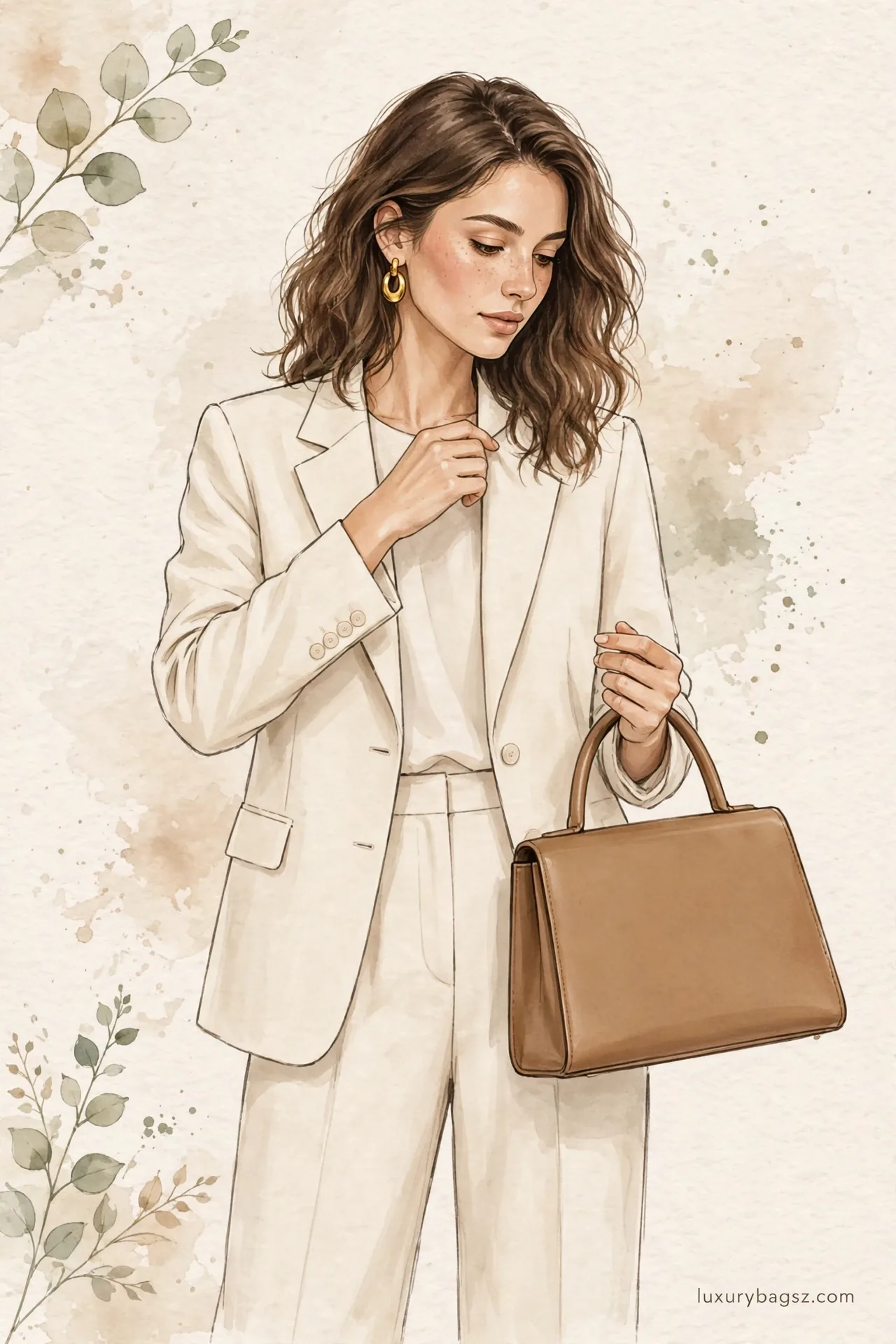
One Hero Piece, Everything Else Quiet
Style luxury accessories by choosing one hero piece per outfit — the bag, the earrings, the scarf or the shoes — and keeping every other accessory quieter in scale and shine. Balance comes next: bold at the ears means plain at the neck, a large bag means smaller jewellery, and a richly textured outfit takes smooth, simple finishing pieces. Work in a palette of two or three colours, agree your metals, and stop one accessory earlier than feels natural. Luxury reads as ease, never as effort.
Key Takeaways
- One hero piece per outfit; everything else supports and never competes.
- Balance bold with plain — scale, shine and texture take turns.
- Keep the palette to two or three colours including the accessories.
- Metals should agree, or be mixed deliberately in one repeated pairing.
- Plain outfits carry statement pieces; busy outfits need quiet ones.
- The fastest luxury switch is accessories: bag, shoes, earrings, lipstick.
Dress First, Accessorise Last
Put the outfit on before you open a jewellery box or choose a bag. Accessories answer the clothes; they should never be chosen in a vacuum. Look at the outfit's neckline, sleeve length, fabric and pattern first. Each one opens some accessory doors and closes others. A high neckline closes the necklace door and opens the earring one. Long sleeves hide bracelets; short sleeves invite them. Decide the occasion and the message before the pieces. The same black dress needs different finishing for a gallery evening and a work dinner.
Stand back from a full-length mirror, not a bathroom close-up. Accessories are read at conversational distance, and balance is judged there. Photograph the outfit if you are unsure. A phone picture shows clutter and colour clashes that your eye edits out in the mirror. Remove the last accessory you added, then judge again. This old stylist's habit is right more often than it is wrong.
The Hero Piece Rule in Practice
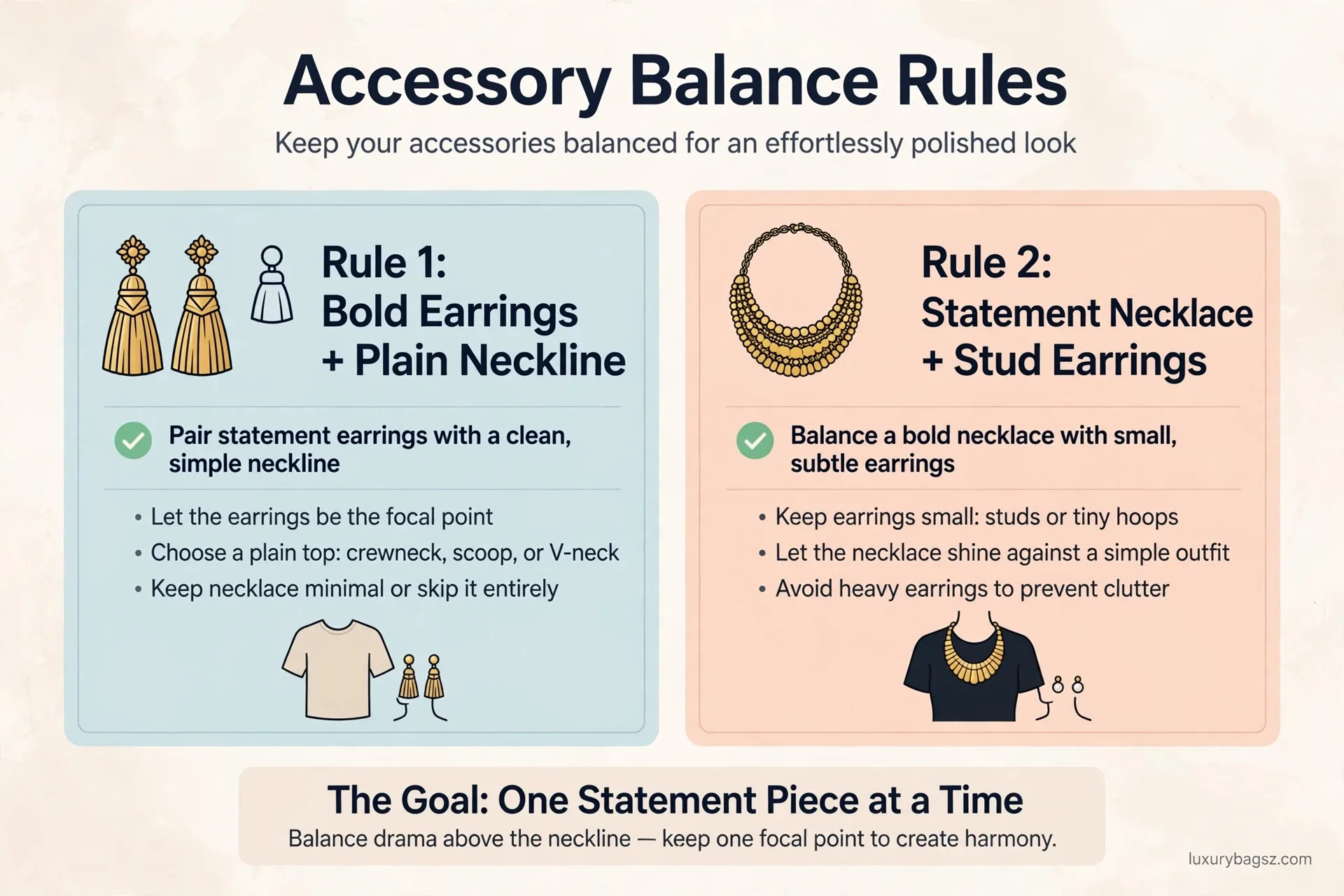
Choose the piece you most want seen and build around it. A sculptural earring, a vivid bag or an heirloom necklace can each lead an outfit. Everything else then drops a level: stud earrings with a statement necklace, a plain clutch with dramatic shoes, a quiet watch with a bold scarf. Our statement jewellery styling guide goes deeper on dosing bold jewellery against necklines and hairstyles. Two heroes can work only when they are far apart on the body and related in colour or metal — bold earrings with a statement shoe, for instance.
Three heroes never work. The eye stops travelling and the luxury effect collapses into costume, however fine each piece is alone. Let the hero agree with the day's reality. A delicate clutch cannot hero a day that involves a laptop, a toddler and a train journey. If nothing in your collection wants to lead, that is information too. A plain outfit with one missing focal point is a shopping list of exactly one item.
Colour, Metal and Proportion Rules
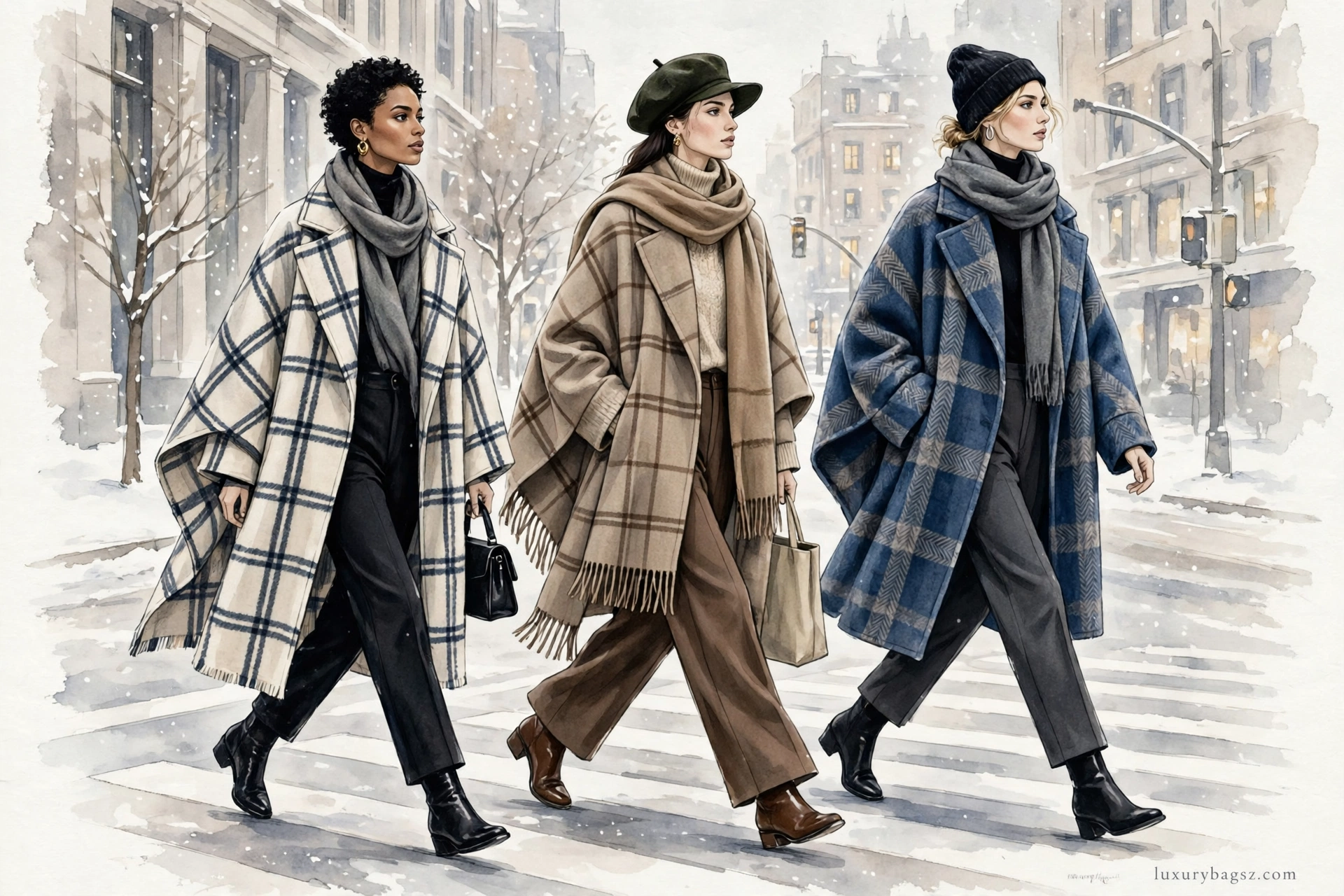
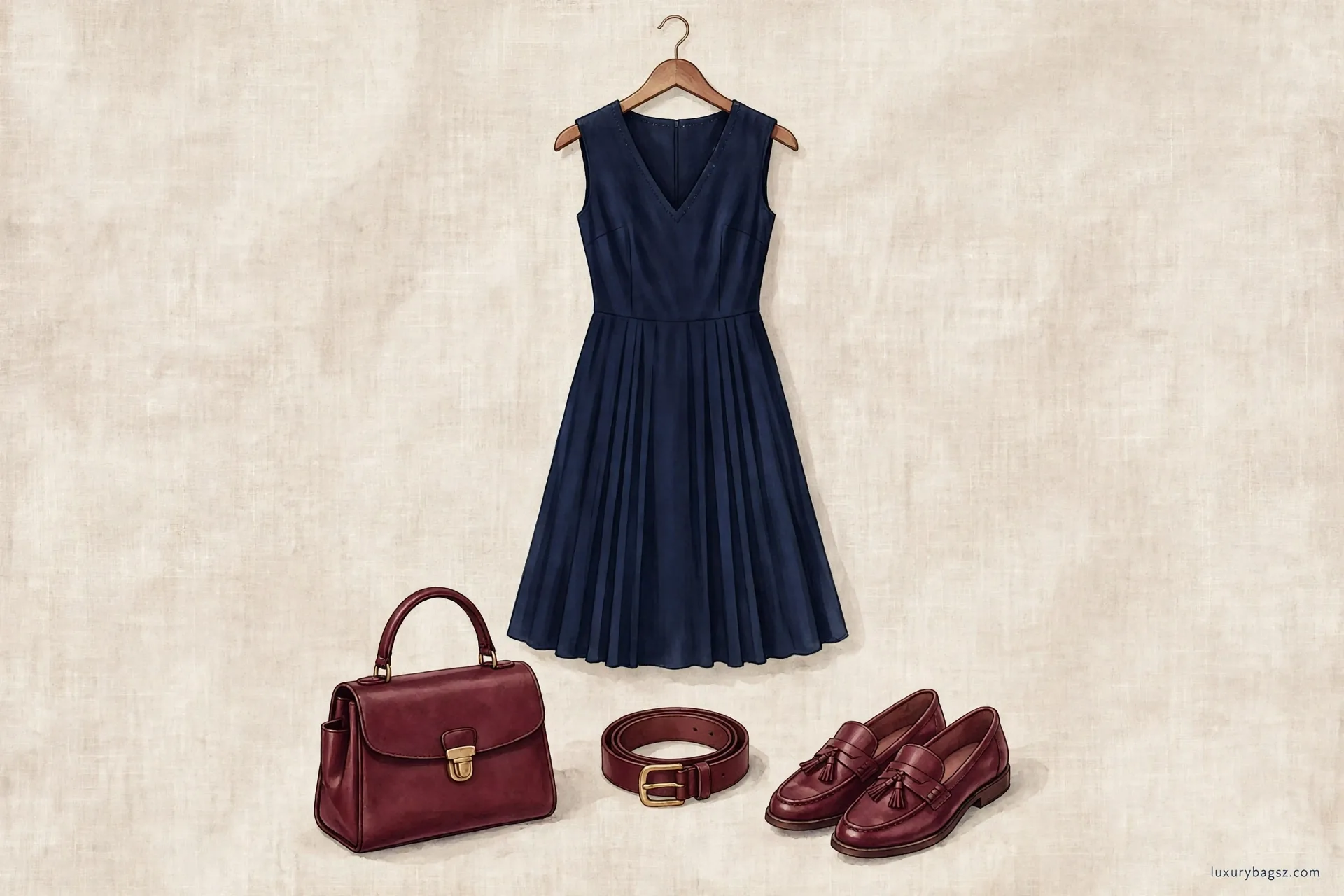
Keep the whole look, clothes and accessories together, inside two or three colours. Neutrals plus one colour is the most reliable luxury formula. Metals should agree across bag hardware, jewellery and belt buckles. If you mix gold and silver, repeat the mix twice so it reads as a choice. Proportion links accessory scale to your frame and the outfit's volume. A wide-leg trouser carries a larger bag; a slim dress drowns under one. Texture takes turns like colour does. Pair a woven or embossed bag with smooth clothes, and a patent shoe with matte fabrics, never shine on shine everywhere.
Black accessories with a black outfit need a texture break — suede against crepe, patent against wool — or the look flattens into a uniform. White and cream accessories lighten dark outfits and look expensive when immaculate. Scuffed white leather does the opposite, instantly. Tan and cognac are the bridge colours. They warm navy, soften black and pair with almost every metal, which is why stylists reach for them first.

Bags as the Outfit's Full Stop
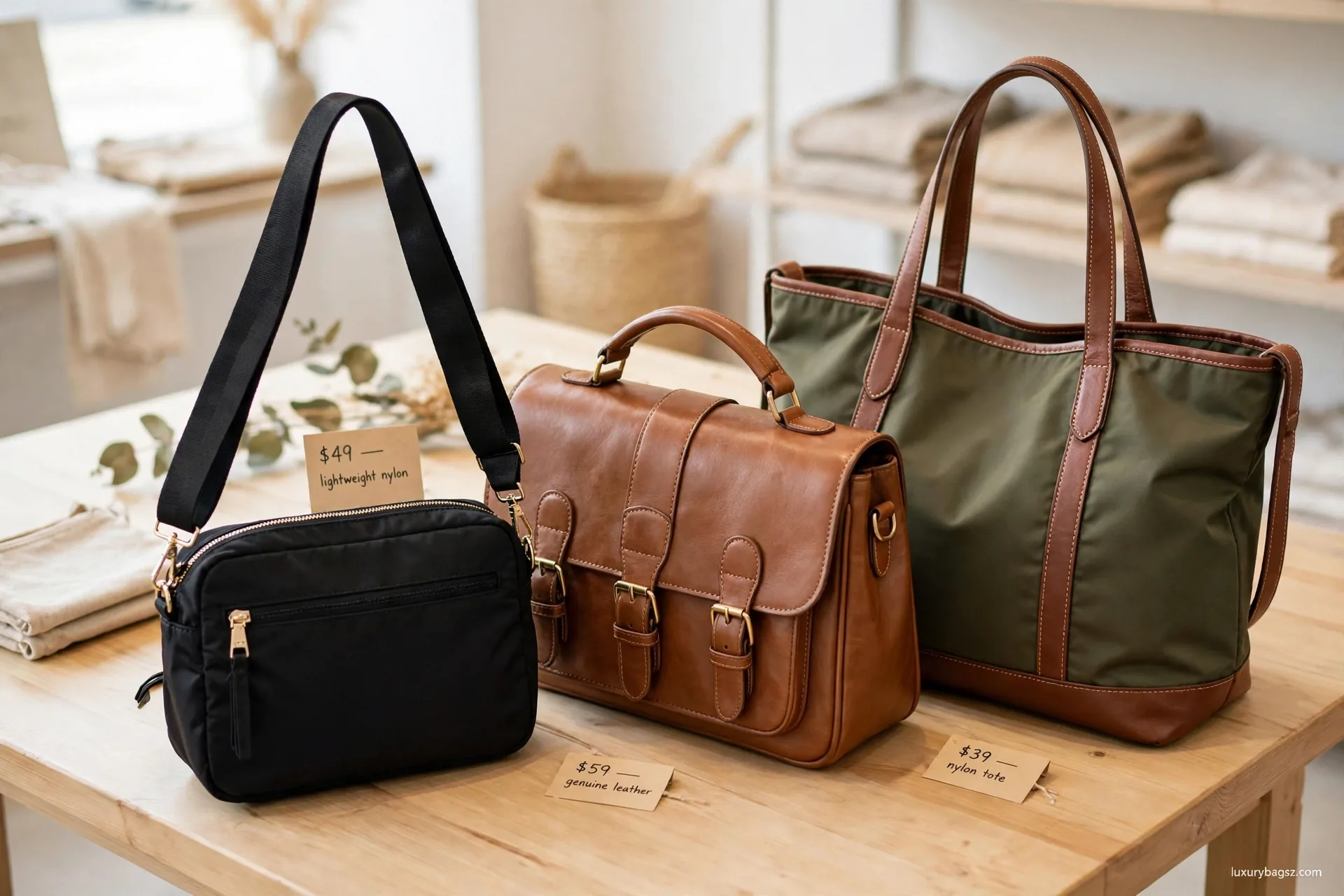
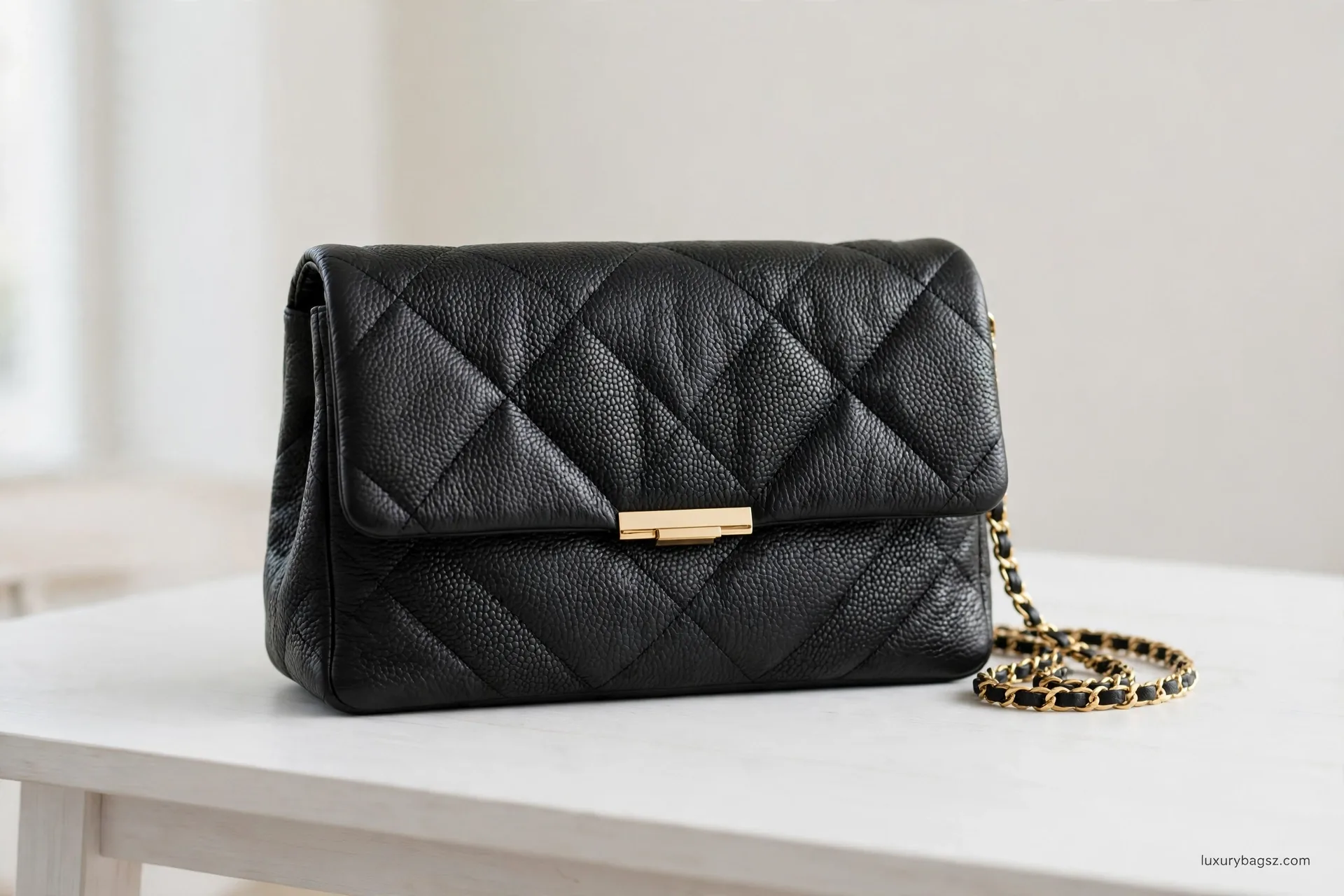
The bag is usually the largest accessory you carry, so it often becomes the hero by default. When it does, keep shoes and jewellery one level quieter. Scale the bag to the job and the frame. Our add-on guide for luxury accessories for handbag lovers covers straps and charms that change a bag's read without a new purchase. Carry style changes the message: a tote carried in the hand reads formal, the same tote on the shoulder reads relaxed, crossbody reads purposeful. Evening bags should hold less and shine slightly more. A clutch or small chain bag in satin, metallic leather or a jewel colour finishes most evening dresses.
Never let the bag be the only considered item. A fine bag with neglected shoes and creased clothes reads as borrowed, not styled. Match bag formality to shoe formality first; jewellery can bridge a gap, but bag and shoes set the outfit's register together. If you own one excellent bag, style around its colour family for a season. A wardrobe that agrees with your best bag always looks deliberate.
Scarves, Belts and Sunglasses: The Flexible Three
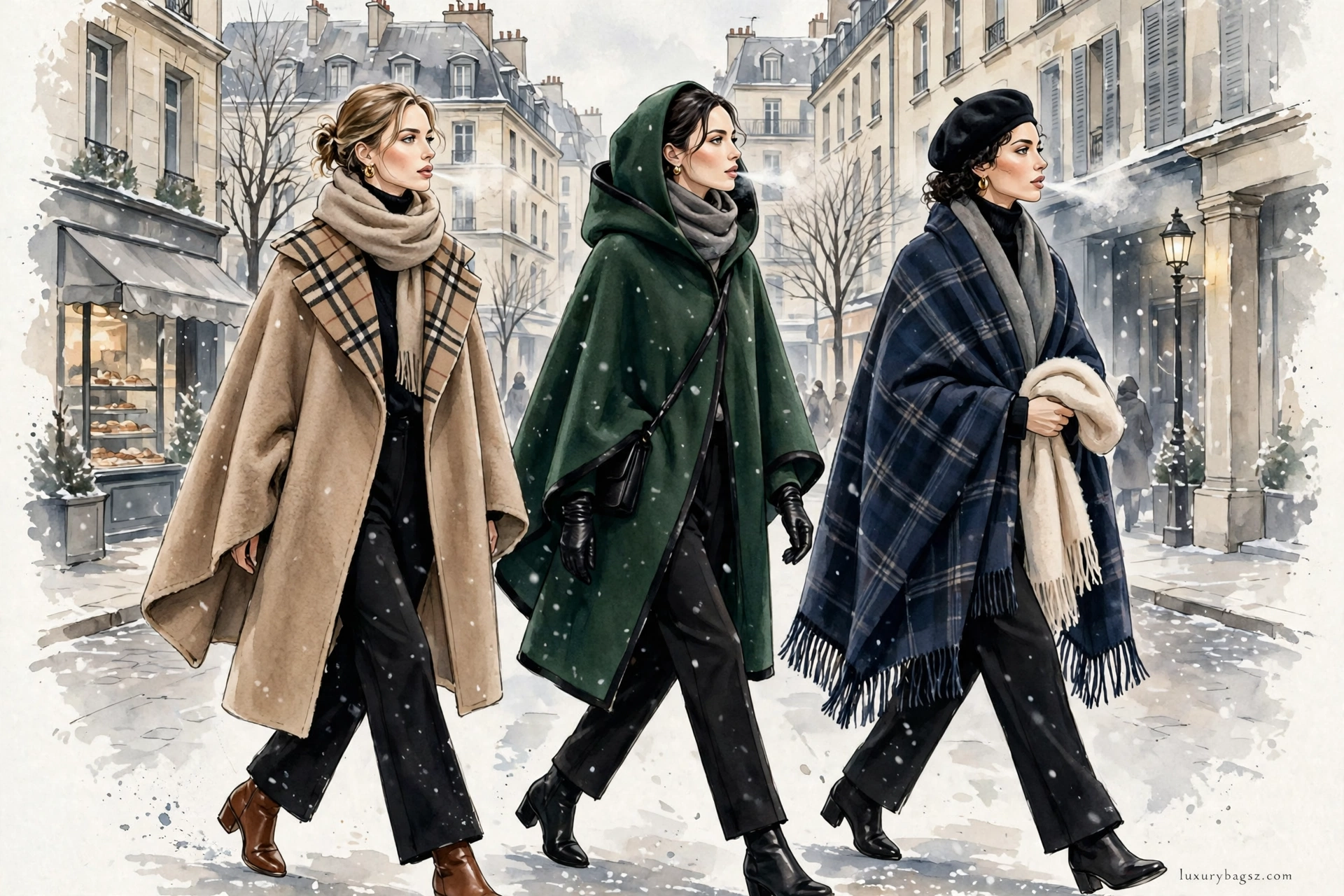
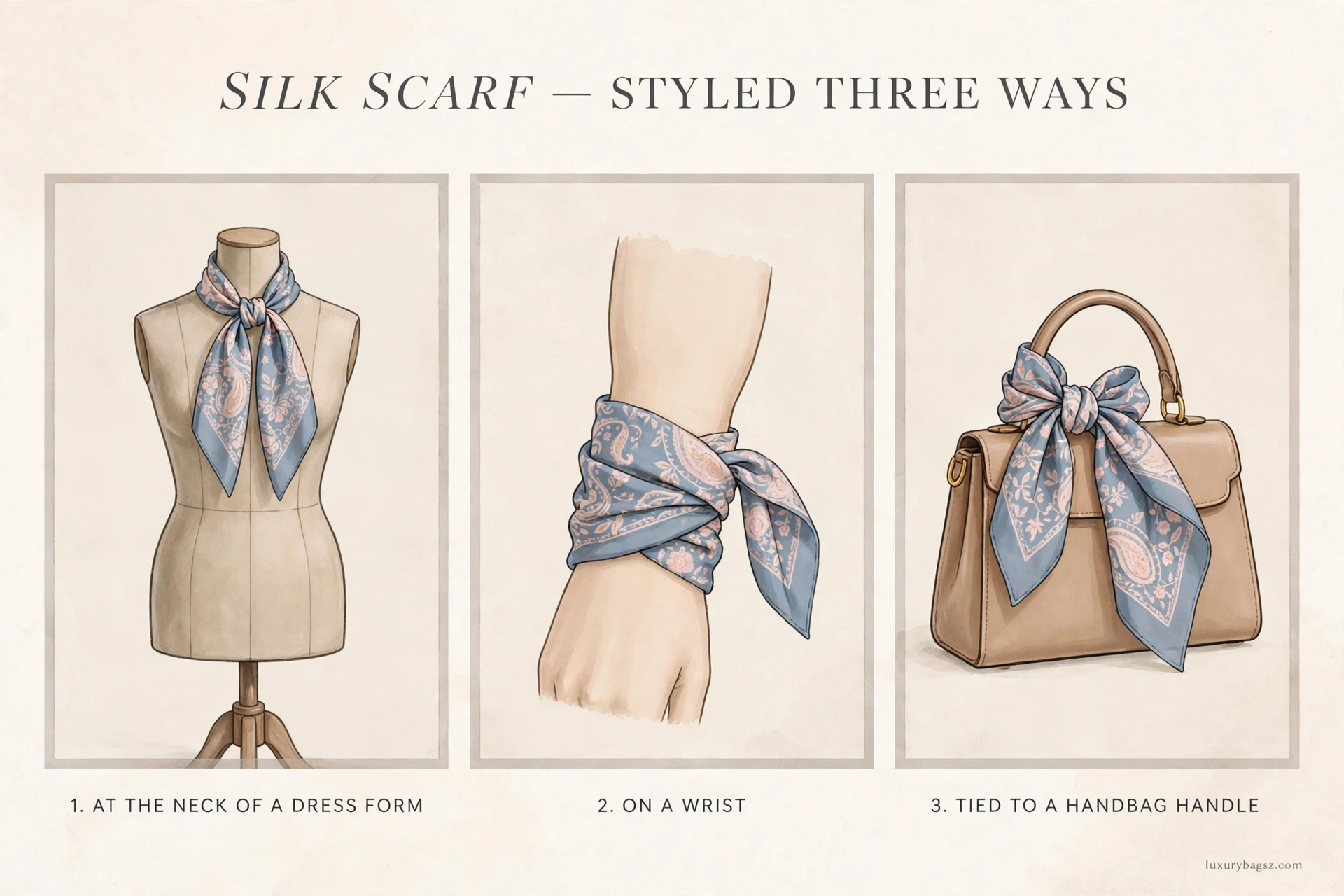
A silk scarf is three accessories in one: at the neck for colour, on the wrist as a soft bracelet, or on a bag handle for pattern. Our scarf styling tips collect the knots and placements that work beyond the classic neck tie. For cooler months, our buying guide to designer scarves for fall compares weights and weaves worth paying for. Belts create the waist an outfit forgot. A slim leather belt over a dress or blazer, in the shoe's colour family, is the quickest polish in styling.
Sunglasses finish daytime looks and should suit your face shape before any trend. One classic pair in tortoiseshell or black outperforms a drawer of novelties. Use one flexible piece to rescue a plain outfit rather than adding all three. Scarf, belt and sunglasses together can tip into trying too hard. In photographs, sunglasses and scarves dominate. If the day will be photographed, style those two pieces with extra care and keep the rest plain.
Three Formulas That Always Work
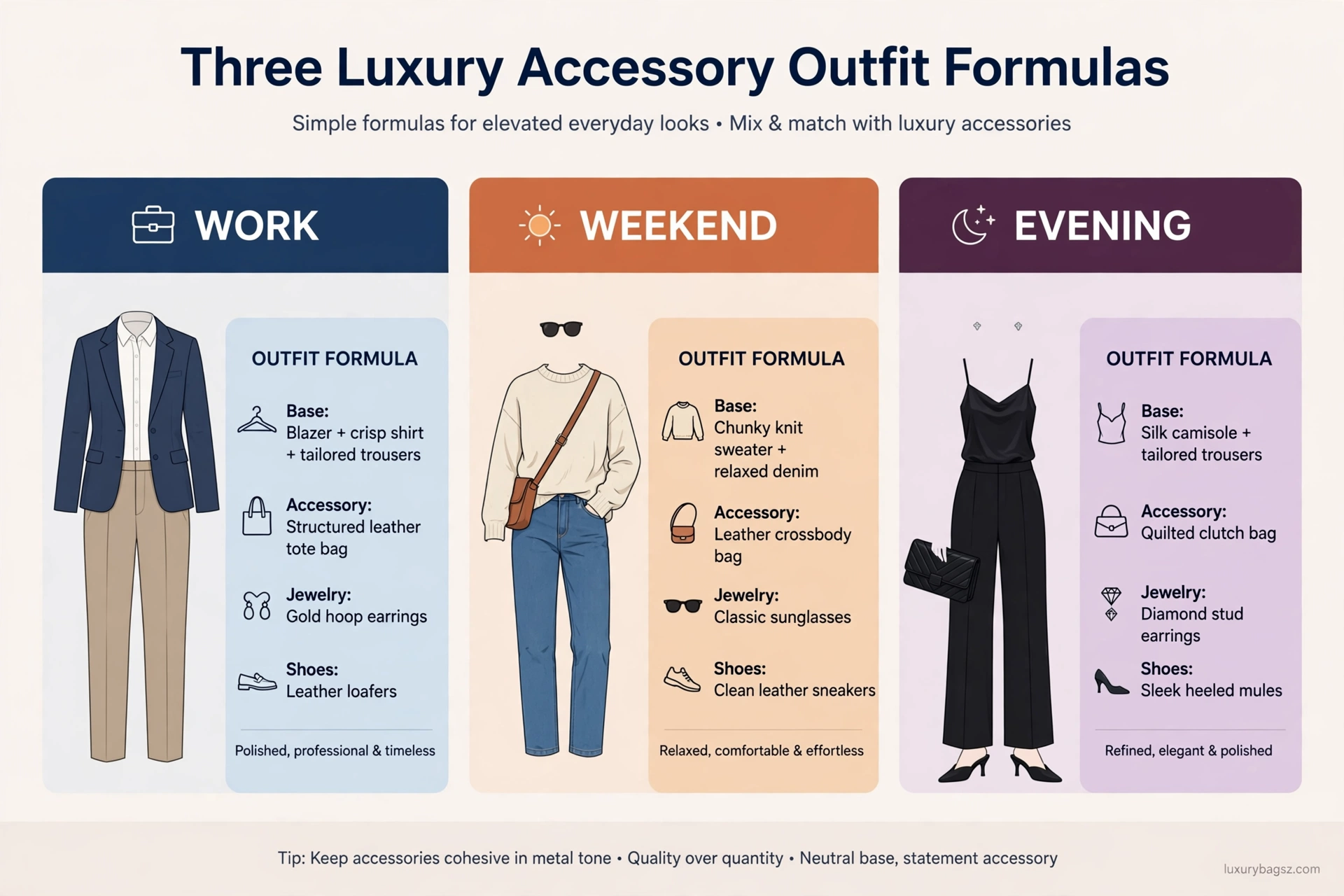
Work formula: tailored outfit, structured tote, court shoes or loafers, one piece of jewellery with presence and a watch. Nothing jangles, nothing competes. Weekend formula: denim or knitwear, crossbody bag, clean trainers or loafers, a scarf or sunglasses as the single styled note and simple studs. Evening formula: plain dress in a rich colour, clutch, one hero jewel, a heeled shoe in a related tone and hair that shows the earrings if they lead. Each formula has exactly one flexible slot. Change that slot — the scarf, the jewel, the bag colour — and the same clothes produce a new outfit.
Keep a phone album of your proven combinations. On rushed mornings, choosing from photographs of yourself beats inventing under time pressure. Notice which formula your life uses most and invest there. Most women need the work or weekend formula perfected long before the evening one. When a formula fails, change one element only. Styling improves by editing, and single changes teach you which piece was wrong.
Day to Evening: The Five-Minute Switch
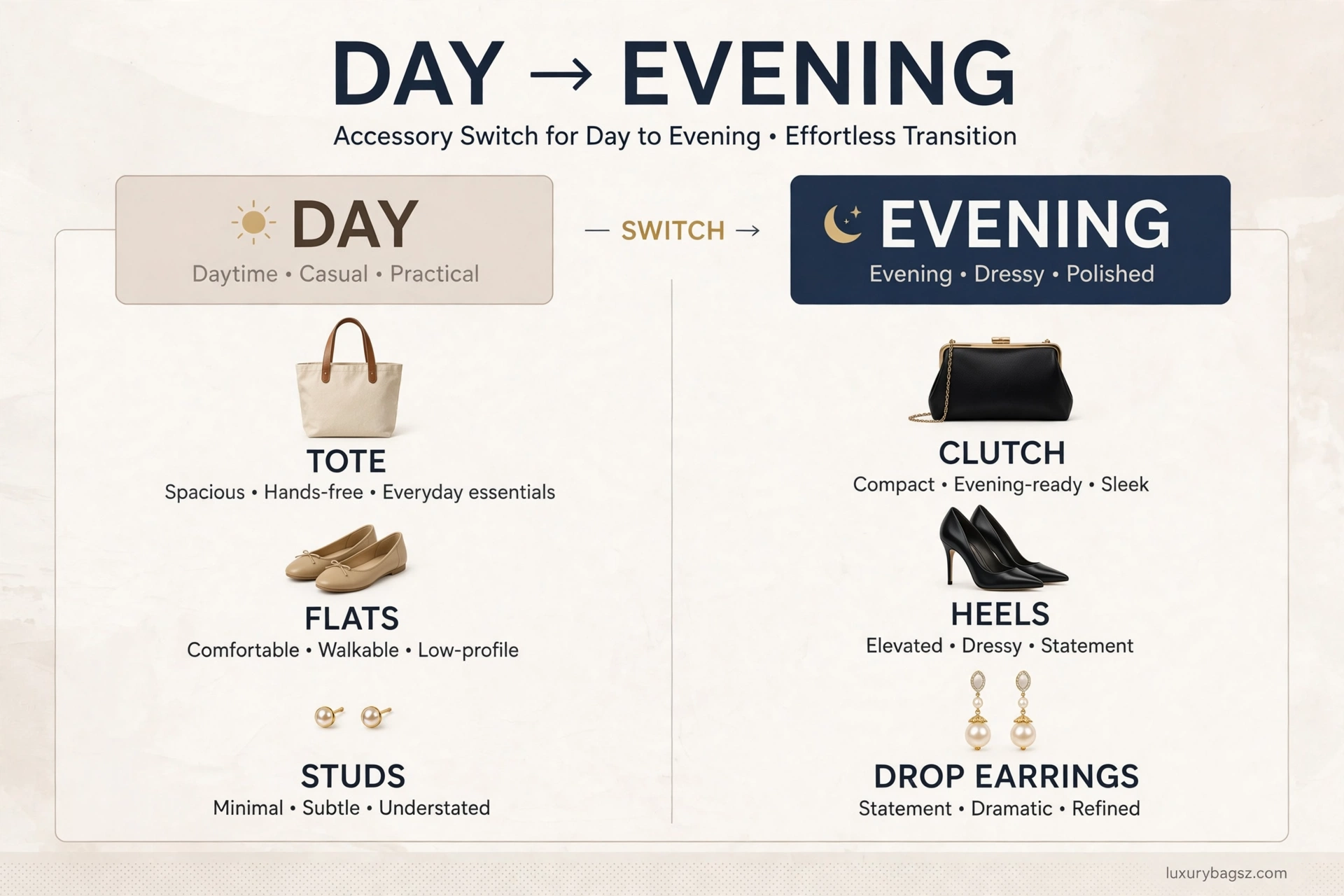
Keep a small evening kit where you change: drop earrings, a clutch, a lipstick and, if your day shoes were flats, a heeled pair. Swap the tote for the clutch, the studs for the drops and the scarf from your neck to your bag or off entirely. The dress or suit beneath need not change. Fragrance and hair finish the switch. A scent change and hair let down or smoothed up signals evening more clearly than new clothes would. This works because accessories carry formality. The same black outfit is office-plain at noon and dinner-ready at seven with three swaps.
Plan the switch when you dress in the morning. Wearing a base outfit that can rise in formality is the whole trick, and it costs nothing. If you commute, choose the day bag with room for the clutch inside it. The tote-to-clutch swap then takes seconds at a desk or in a taxi. Jewellery carried loose in a bag gets damaged. Use a small soft pouch for the evening pieces and keep it in the same place every time.
Mistakes That Cheapen Good Pieces
Too many logos at once is the first. One visible monogram is a choice; four competing ones read as insecurity, whatever they cost. Worn condition is the second. Chipped nail polish, scuffed bags and tarnished metal undo luxury faster than any styling choice can repair it. Mismatched formality is the third: a gala clutch with trainers, or gym jewellery with an evening dress. Keep every piece in the same register. The fourth is wearing everything you love at once. A collection is for a season of outfits, not for a single afternoon.
Copied looks are the fifth. An outfit assembled from a photograph of someone else rarely survives your body, your day and your light. The sixth is ignoring comfort. Shoes you cannot walk in and earrings that pull change your posture and expression, and the styling fails with them. Edit in the mirror, photograph the result and trust the photograph. It shows the outfit the world will see, which is the one worth perfecting.
Frequently Asked Questions
How many accessories should I wear at once?
As a guide, three visible pieces plus a bag is plenty — for example earrings, a watch and a scarf. Count the bag in your total and edit once in the mirror.
Can I mix gold and silver jewellery?
Yes, if you do it deliberately and repeat the mix. Wear each metal at least twice in the outfit so the combination reads as styling, not accident.
What is the hero piece rule?
One accessory leads each outfit — the boldest in scale, colour or shine. Everything else is chosen a level quieter so the leader stays clear.
How do I style accessories with a patterned outfit?
Treat the pattern as already busy. Choose plain accessories in one colour pulled from the print, with smooth textures and minimal jewellery.
Should my bag match my shoes?
They should agree in formality and sit in the same colour family, not match exactly. A tonal difference looks modern and is easier to maintain.
What accessories make a plain outfit look expensive?
One excellent bag, clean polished shoes and a single piece of real jewellery. Condition matters most — everything must look cared for.
How do I choose earrings for my neckline?
High necklines suit longer earrings with no necklace. Open necklines take necklaces well, with studs or small hoops at the ears for balance.
Can I wear a scarf and a necklace together?
Rarely well. A scarf at the neck already fills that space; move the jewellery to the ears or wrist instead, or wear the scarf on your bag.
What is the quickest day-to-evening change?
Swap to a clutch, change studs for drop earrings and refresh lipstick. Three changes, under five minutes, and the outfit reads as evening.
How do I stop accessories looking cluttered?
Limit colours to two or three, keep metals in agreement and leave clear space — bare skin at the neck or wrist is part of the styling.
Conclusion: Style Is Editing, Not Adding
Luxury accessories style best under restraint: one hero, balanced scale, an agreed palette and every piece in beautiful condition. Learn the three formulas, keep an evening kit ready and photograph what works. Your collection will look larger, because every piece finally gets worn well.