Designer Scarves for Fall: Wool, Cashmere and Silk Picks, Sizes and Prices
The Fall Scarf Shortlist: Warmth First, Then Silk
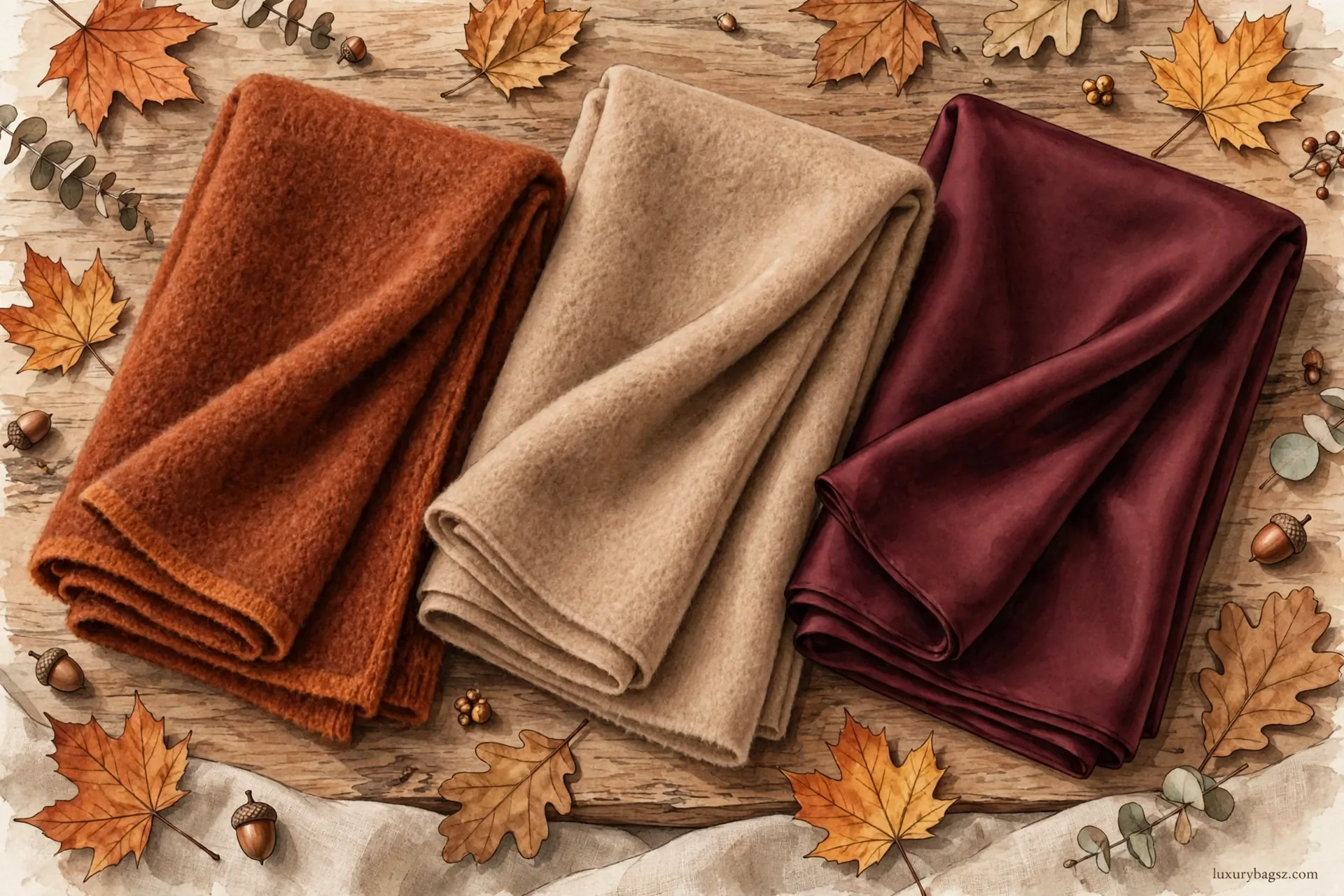
For fall, buy warmth first: a wool or cashmere oblong scarf in a neutral or autumn shade is the piece you will wear daily, while a silk square is a lighter layer for milder days and indoor polish.
Typical designer prices run from around $120 for wool blends to $900 or more for large cashmere. Size decides how a scarf can be worn, so check measurements before patterns.
This is a buying guide: fabrics, sizes, colours and prices. If you already own scarves and want ways to wear them, the styling guide linked below is the companion piece.
Key Takeaways
- Wool and cashmere oblongs give real warmth; silk squares give polish, not heat.
- An oblong around 180 cm long wraps twice and still leaves ends to style.
- Autumn shades — rust, camel, burgundy, cream, navy — mix with most coats.
- Hand-rolled edges and natural fibres explain most of the price gap.
- Check pre-owned scarves for pulls, holes and faded patches in bright light.
- Buy one warm neutral first, then add one printed silk for variety.
Start With the Job: Warmth, Polish or Both
Decide what the scarf must do. A commuter in a cold city needs insulation; a mild-climate dresser may only need colour at the neck.
Warmth comes from wool, cashmere and their blends in an oblong or blanket shape. Polish comes from silk twill squares worn close to the neck.
Many wardrobes need one of each. The warm oblong lives by the door; the silk square lives with jackets and knitwear.
The classic silk square has its own sizing language, and our guide to what is a Hermes carre scarf 90 explains the best-known format in detail.
Think in outfits, not scarves. Count how many of your coats are black, grey or camel, and buy the scarf that lifts the majority of them.
A scarf bought for one coat only will spend the season in the drawer. The daily-wear test — does it suit three coats — filters most mistakes.
A scarf is also the cheapest way to test a new colour near your face before committing to a coat or dress in it.
Fabrics Compared: Wool, Cashmere, Silk and Blends
Wool is warm, resilient and the best value for daily wear. A fine merino scarf resists pilling better than a loose, chunky knit.
Cashmere is softer and warmer for its weight, but costs more and pills sooner. A cashmere and wool blend often balances softness, strength and price best.
Silk twill adds sheen and print clarity, not warmth. Silk and cashmere blends feel luxurious and drape well, at the top of the price range.
Avoid high synthetic content in a designer purchase. A little added fibre can help durability, but the hand feel should still read natural.
Modal and viscose blends deserve a mention: they drape like silk at a fraction of the price, but they pill and thin faster than natural fibres.
Fringe quality tells the truth about a wool scarf. Even, dense fringing stays tidy; sparse, uneven fringe sheds and tangles within a season.
Cashmere grades differ. Longer fibres pill less and feel smoother, which is why two scarves labelled cashmere can wear very differently after a year.
Sizes That Work: Squares, Oblongs and Blanket Scarves
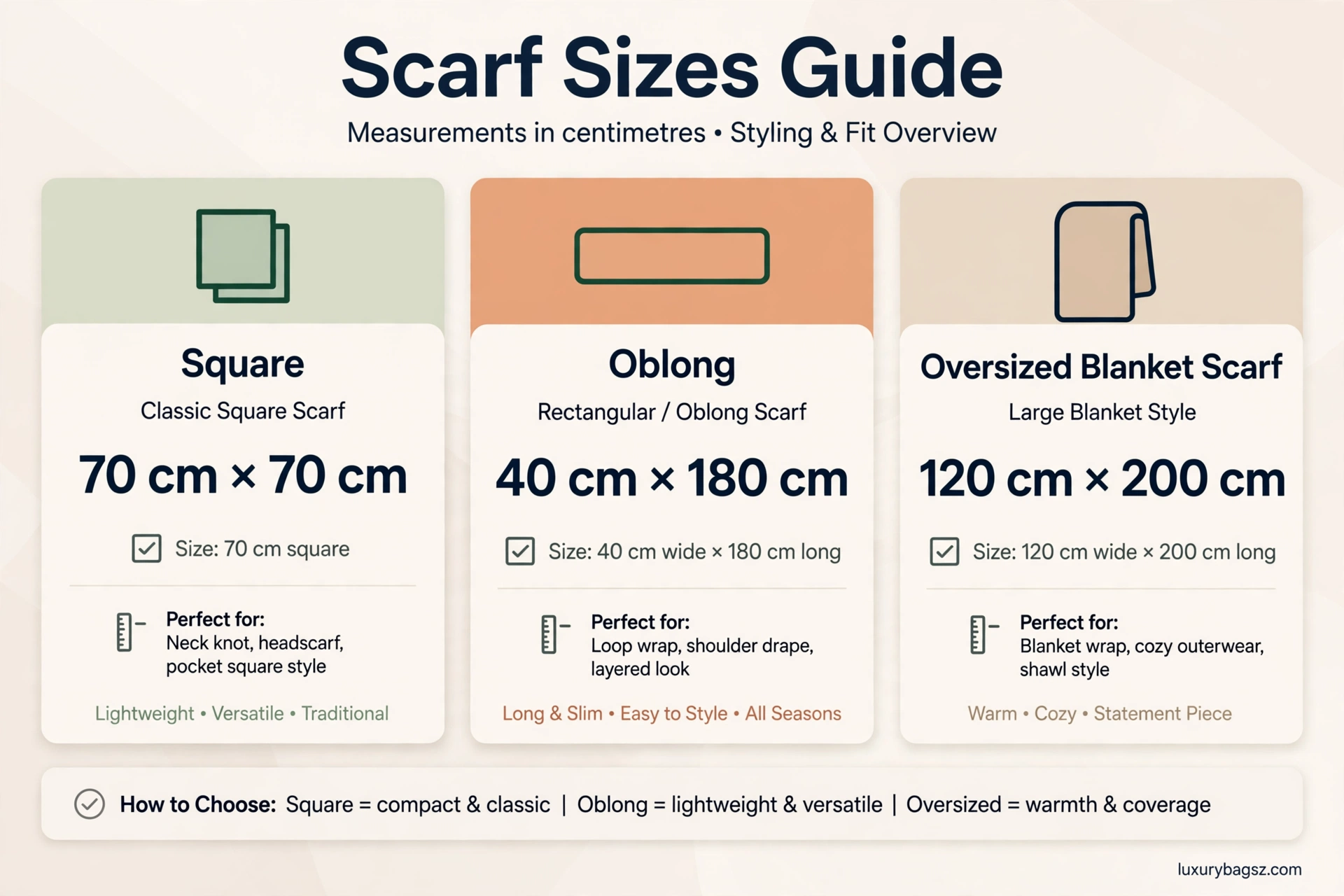
Square scarves around 70 to 90 cm fold into neckerchiefs, headscarves and bag ties. They are the most versatile format per gram.
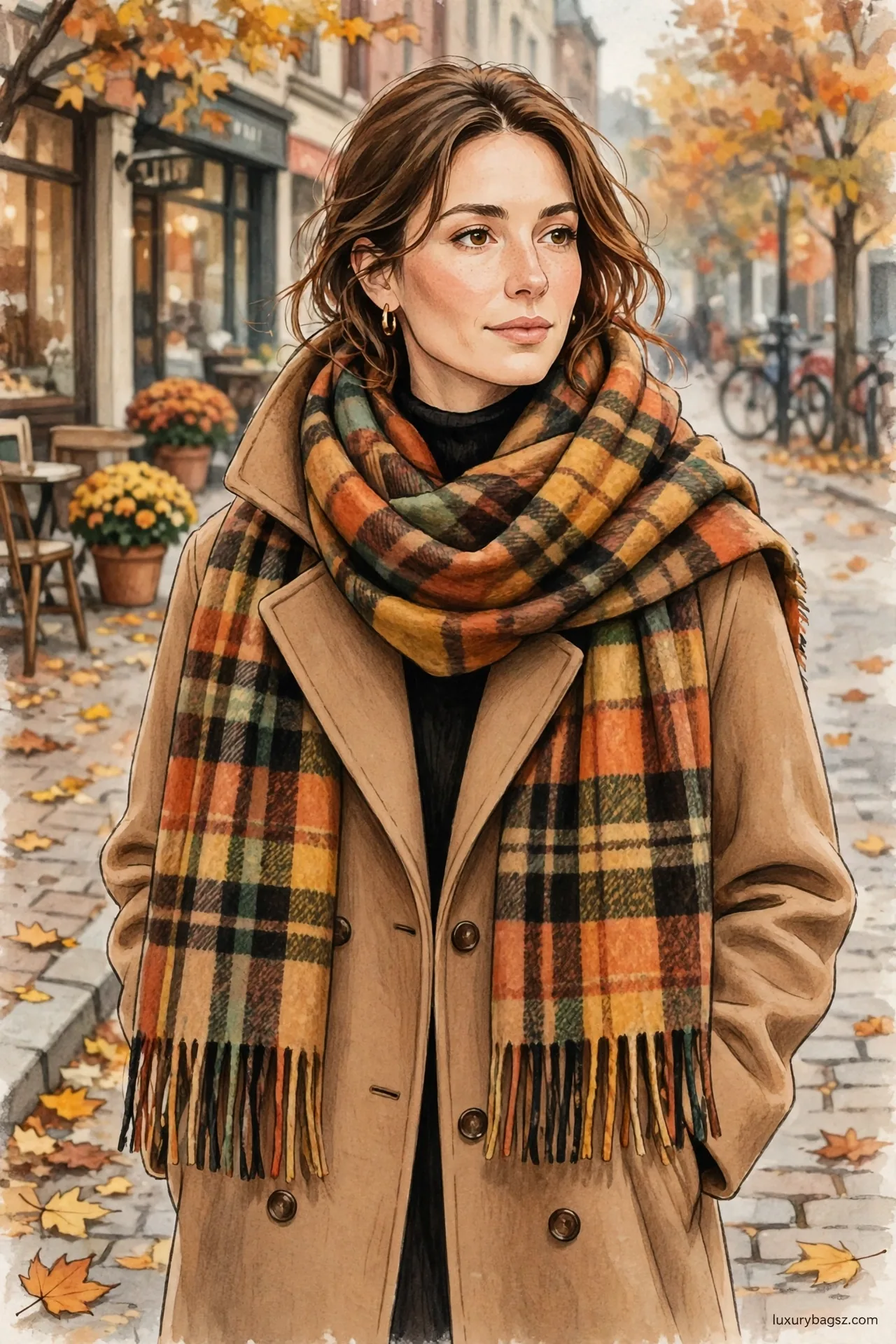
Oblong scarves around 40 by 180 cm are the fall default. That length wraps twice, knots neatly, or hangs long over a coat.
Oversized blanket scarves, roughly 120 by 200 cm, double as travel wraps. They overwhelm petite frames if worn bunched, so fold them slim.
Measure a scarf you already love and shop near those numbers. Familiar dimensions remove most buying mistakes.
Weight matters inside a size. Two oblongs of the same length can differ hugely in warmth depending on weave density and fibre.
Try the wrap test in the shop: wind the scarf twice around your neck. If the ends vanish entirely, it is too short for layered styling.
Squares above 90 cm fold into shawl-like wraps as well as knots. That dual use is why the largest silk squares hold their value so well.
For gifting, the oblong in a mid tone is the safest size and colour of all: it wraps every neck and suits every coat.
Autumn Colours and Prints That Earn Their Keep
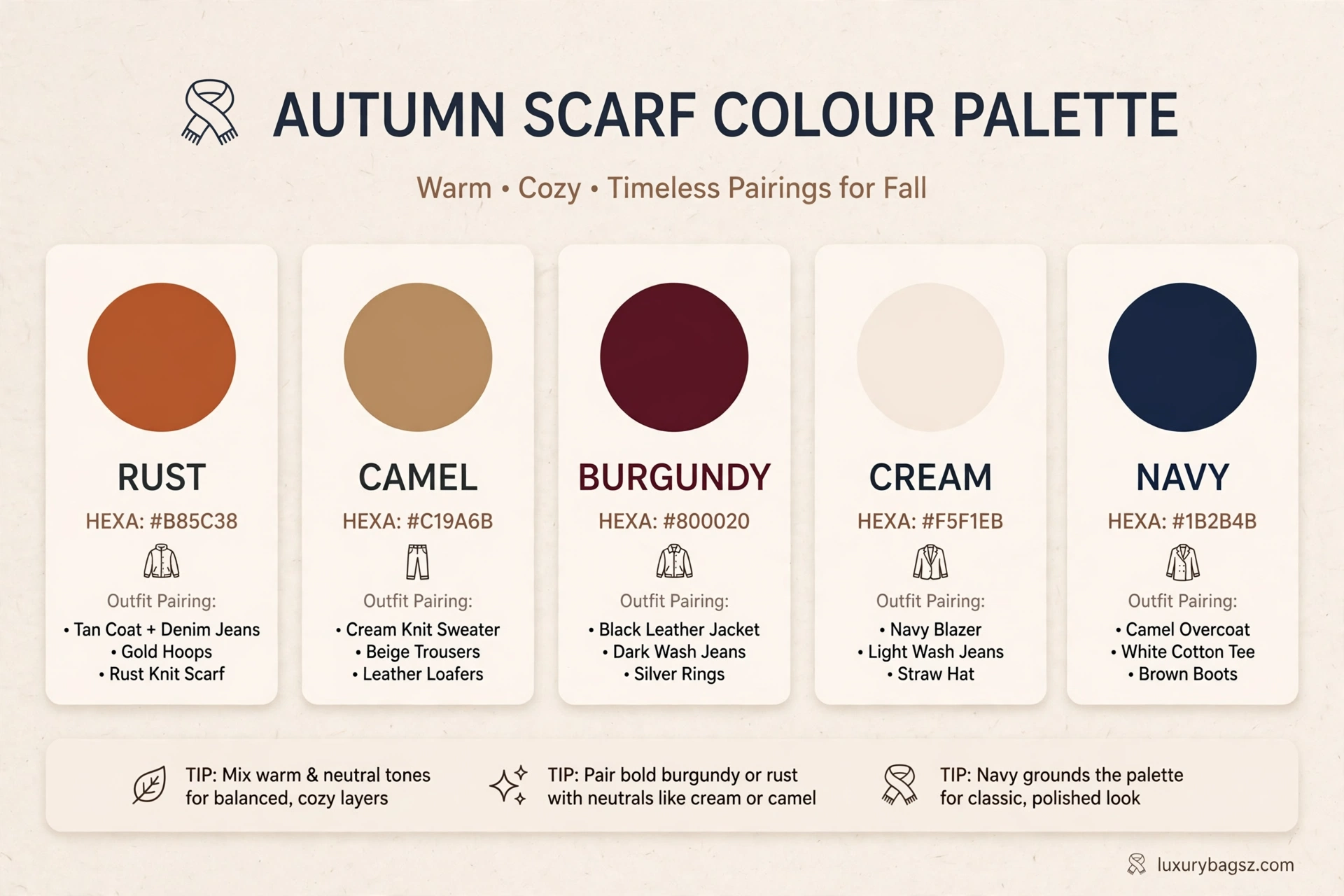
Rust, camel, burgundy, cream and navy anchor an autumn wardrobe. They sit happily with black, grey, denim and brown coats.
Plaid and check are the season's natural prints in wool. Keep the check scale medium; very large checks are harder to knot neatly.
Printed silk works best when one colour in the print matches your coat. That single echo makes the outfit look planned.
If you wear mostly plain coats, a printed scarf is your easiest pattern. If your coats are patterned, reverse it and buy plain scarves.
Skin tone decides more than trends do. Warm rusts and camels flatter warm colouring; burgundy and navy sharpen cooler skin.
Hold the scarf beside your face in daylight before buying. Shop lighting flatters almost everything, including colours that drain you.
If your coats are navy and black, one rust or burgundy scarf will do more for your autumn outfits than any other single purchase.

How to Wear Them Over Coats and Knitwear
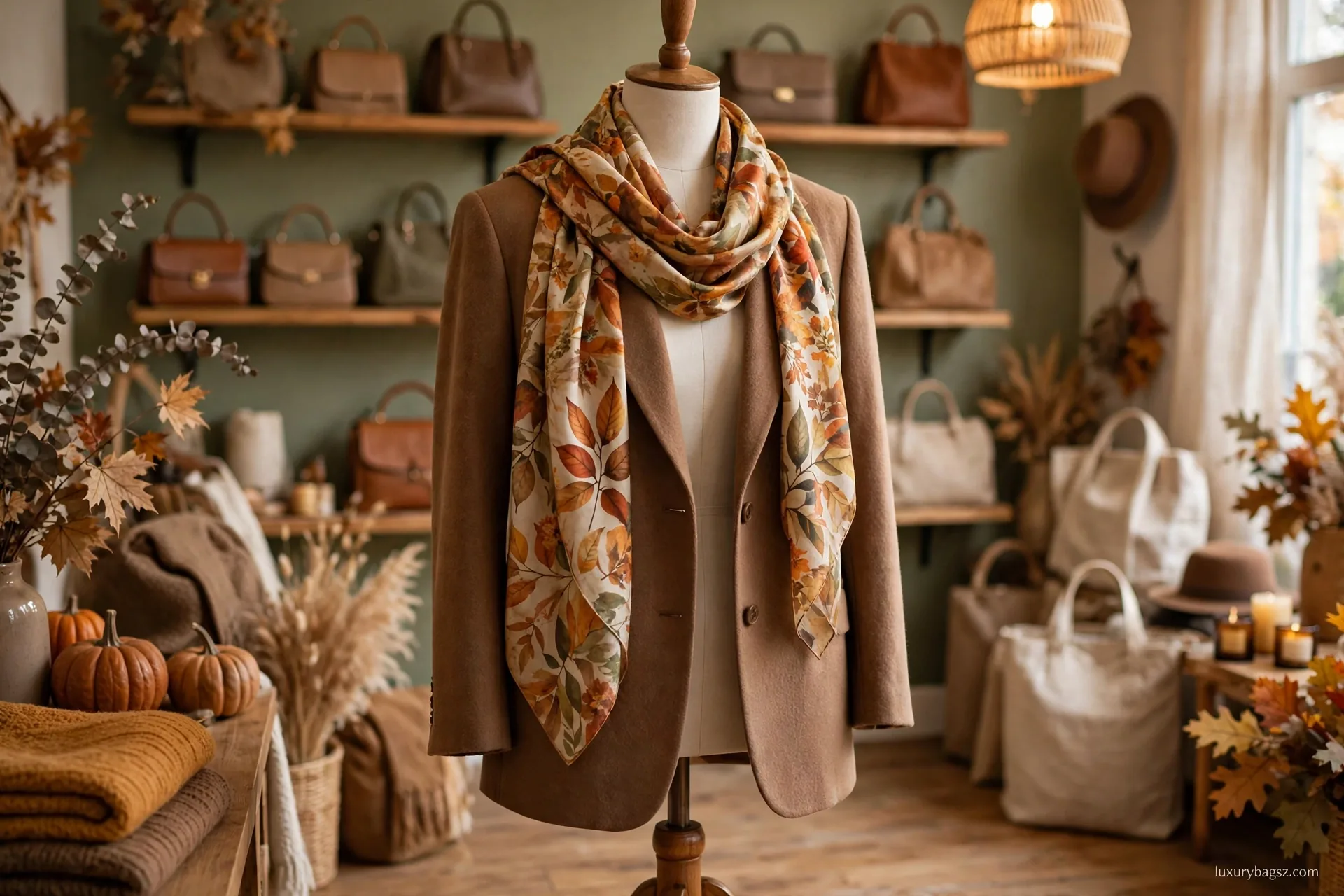
Over a coat, let an oblong hang long in front or loop it once with the ends even. Both keep the neck warm without bulk at the throat.
With knitwear, a silk square folded into a triangle softens a plain crew neck and adds colour near the face.
Tuck scarf ends inside a coat on windy days. A scarf that keeps escaping will end up carried, not worn.
For knots and folds step by step, our how to tie a Hermes silk scarf guide shows the classic techniques on the best-known silk format.
Under a coat, keep bulk outside the collar line where possible. A scarf stuffed inside a fastened coat shortens the neck and spoils the lapel line.
With a V-neck jumper, fill the V with a folded silk triangle. It reads as part of the outfit rather than an added layer.
Boots and scarf in the same colour family bookend an outfit neatly. That echo is a stylist trick that costs nothing extra.
A scarf worn as a shawl over a dress bridges the gap between day and evening without a jacket change.
Prices: What You Pay at Each Tier
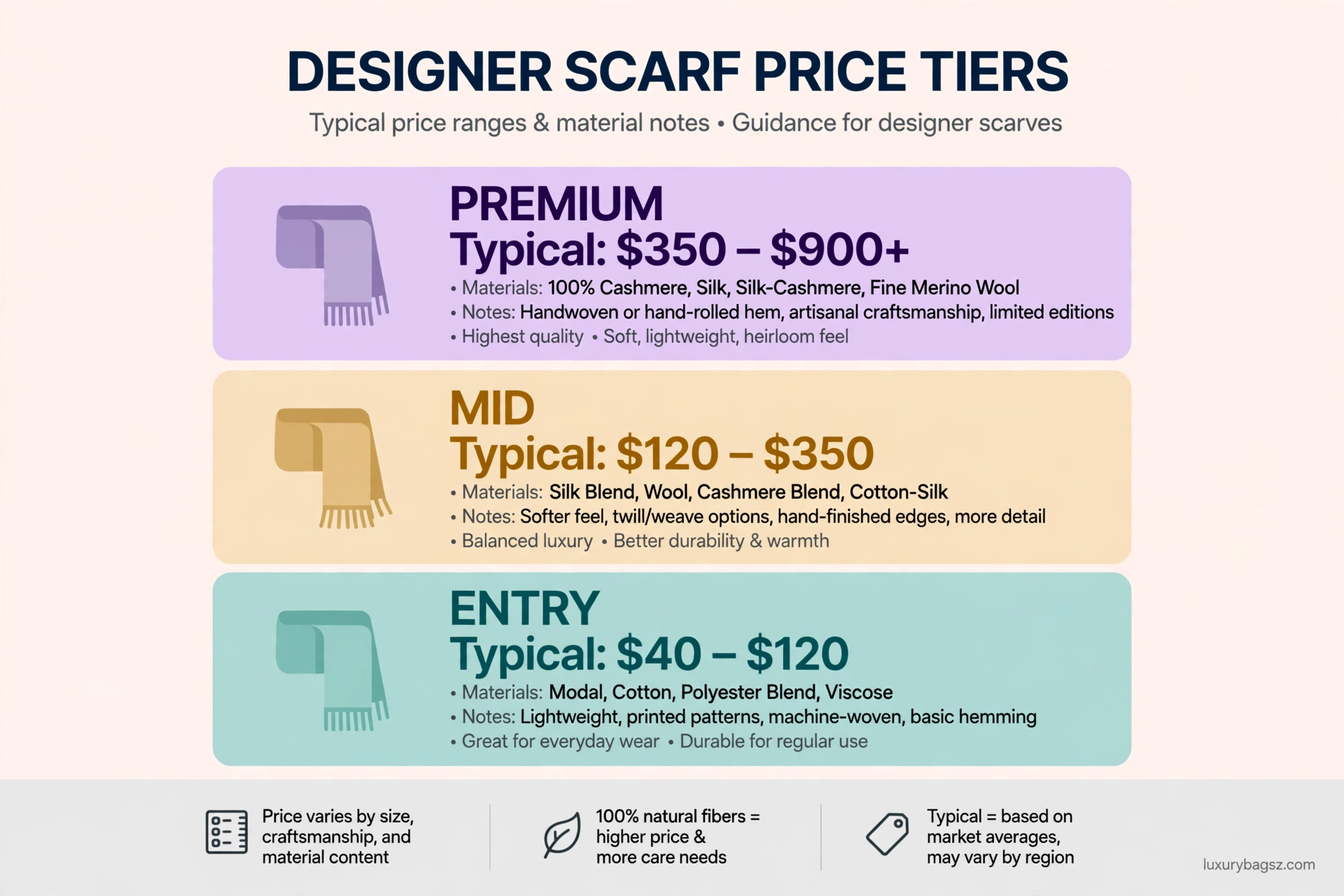
Entry designer scarves in wool blends and printed modal typically sit around $40 to $120. Edges are machine finished and fibres are mixed.
Mid-tier wool, silk blend and cashmere blend scarves run roughly $120 to $350, with better fibre content and hand-finished hems appearing here.
Premium cashmere and silk cashmere pieces reach $350 to $900 and beyond, especially in large shawl sizes or limited prints.
Price follows fibre, size and finishing, in that order. A huge scarf in fine cashmere will always cost more than a small silk square.
Hand-rolled hems, natural fibres and large formats explain nearly all premium pricing. If none of the three is present, a high price is branding, not craft.
Sales timing helps: fall scarves discount hardest in January. Buying next season's cashmere then can halve the premium tier's cost.
Gift pricing is its own tier: a mid-tier silk square in a classic print is the safest designer gift in this whole category.
Watch for end-of-line premium pieces in January and July: the same cashmere shawl can drop a full tier in price.
Pre-Owned Checks and Authenticity
Hold silk scarves to the light to find pulls, pin holes and thin patches. Check corners and hems, where damage starts.
Wool and cashmere need a moth check: tiny holes along folds are the classic sign. Ask for close photographs of folded areas.
Hand-rolled edges on silk should feel plump and slightly uneven. Flat, machine-stitched edges on a claimed premium piece are a warning.
Our how to spot a fake Hermes silk scarf checks apply to printed silk generally: print sharpness, hem style and label detail.
On pre-owned silk, run a fingernail gently along the hem. Crackling or stiff patches suggest old starch or damage rather than good silk weight.
Ask about smoke and perfume exposure for vintage pieces. Scarves worn at the neck absorb both, and dry cleaning does not always clear them.
Photographs taken in flat daylight show true colour. Listing photos under warm lamps can make a faded burgundy look rich and even.
Care and Storage Through the Season
Wool and cashmere scarves prefer gentle hand washing or dry cleaning, then drying flat. Hanging a wet knit scarf stretches it.
Silk squares should be rolled or stored flat, away from direct light, which fades one exposed fold line first.
Keep a small fabric shaver for cashmere pills. Five minutes each month keeps a good scarf looking new.
Store fall scarves clean at season's end. Moths target worn, unwashed natural fibres far more than clean ones.
Rotate two warm scarves rather than wearing one daily. Natural fibres recover their loft when rested, and both will look better in February.
Keep a lint roller by the door in scarf season. Wool coats shed onto silk and silk sheds nothing back — a ten-second roll keeps the pairing sharp.
Cedar blocks or a lavender sachet in the scarf drawer discourage moths between seasons without scenting the fibres themselves.
Frequently Asked Questions
What is the warmest scarf fabric for fall?
Cashmere, followed closely by fine wool. Cashmere feels softer and warmer for its weight, while wool is harder wearing and usually better value.
What size scarf is most versatile?
An oblong around 40 by 180 cm. It wraps, loops and drapes over coats, and still folds small enough for a tote bag.
Are silk scarves warm enough for autumn?
For mild days and indoor wear, yes. For cold wind, silk alone is not insulation — layer it under a coat collar or choose wool or cashmere.
Which autumn colours go with everything?
Camel, cream and navy are the safest. Rust and burgundy add seasonal colour while still pairing with black, grey and brown coats.
How can you tell a quality scarf hem?
On silk, look for plump hand-rolled edges. On wool and cashmere, look for neat, even fringing or hems with no loose threads at the corners.
Do designer scarves hold their value?
Classic colours and well-kept natural fibre pieces resell best. Condition matters most: holes, pulls and fading cut value sharply.
How do you stop cashmere pilling?
Rest the scarf between wears, avoid rough bag straps over it, and use a fabric shaver or cashmere comb gently when pills appear.
Blanket scarf or regular oblong for travel?
A blanket scarf doubles as a wrap or pillow on journeys, but a regular oblong is easier for daily commuting. Frequent flyers get more from the blanket size.
Can men wear these fall scarves too?
Yes. Plain wool and cashmere oblongs in navy, grey and camel are unisex staples, and the same fabric and size guidance applies.
How many fall scarves do you actually need?
Two covers most wardrobes: one warm neutral oblong for daily wear and one printed silk square for polish. Add a blanket scarf only if you travel often.
Conclusion: One Warm, One Printed
Build the fall scarf wardrobe in order: a warm wool or cashmere oblong in a coat-friendly colour first, then a printed silk square for milder days.
Check size before print, fibre before brand, and condition before price on pre-owned pieces, and both scarves will work hard for years.