Luxury Accessories for Handbag Lovers: Straps, Charms, Organisers and Care Add-Ons
The Add-Ons That Earn Their Place
The handbag accessories worth owning are the ones that change how a bag works: a strap that gives a new carry, a twilly that protects a handle, an organiser that ends the daily rummage. Charms and chains are the pleasure layer — one at a time, in proportion to the bag. Protection pieces, from base shapers to rain covers, quietly guard resale value. Buy add-ons sized to your actual bags, in hardware that matches, and skip anything that scratches, overloads or needs the bag to perform tricks it was not designed for.
Key Takeaways
- A swap strap is the hardest-working add-on — one bag becomes three carries.
- Twillies protect pale handles from hand cream, dye and daily darkening.
- One charm at a time, sized to the bag, looks chic; a cluster looks cluttered.
- Felt organisers add pockets and shape, but weigh the bag before you commit.
- Base shapers suit soft totes; they can stress the corners of structured bags.
- Match hardware colour and check clasp sizes before you order anything.
Start With the Bags You Own, Not the Ones You Want
List the bags you carry most and what annoys you about each. Too short a strap, no pockets, a darkening handle — every good add-on answers a named annoyance. Measure before you shop: strap drop, clasp ring size, interior width and handle circumference. Add-ons fail on millimetres, not on taste. Check hardware colour in daylight. Gold, pale gold, silver and ruthenium tones differ, and a mismatched clasp is visible at conversational distance. If a bag is perfect as designed, leave it alone. The best collectors edit their add-ons as firmly as they edit their bags.
Keep a small notebook or phone note per bag with its measurements. Strap and organiser shopping becomes a two-minute job instead of a guessing game. Consider weight honestly. A bag that is already heavy empty will not be improved by a chain strap, a full organiser and three charms at once. Think about resale as you add. Non-damaging, removable add-ons protect value; glued, pierced or dyed alterations reduce it sharply.
Swap Straps: One Bag, Three Carries
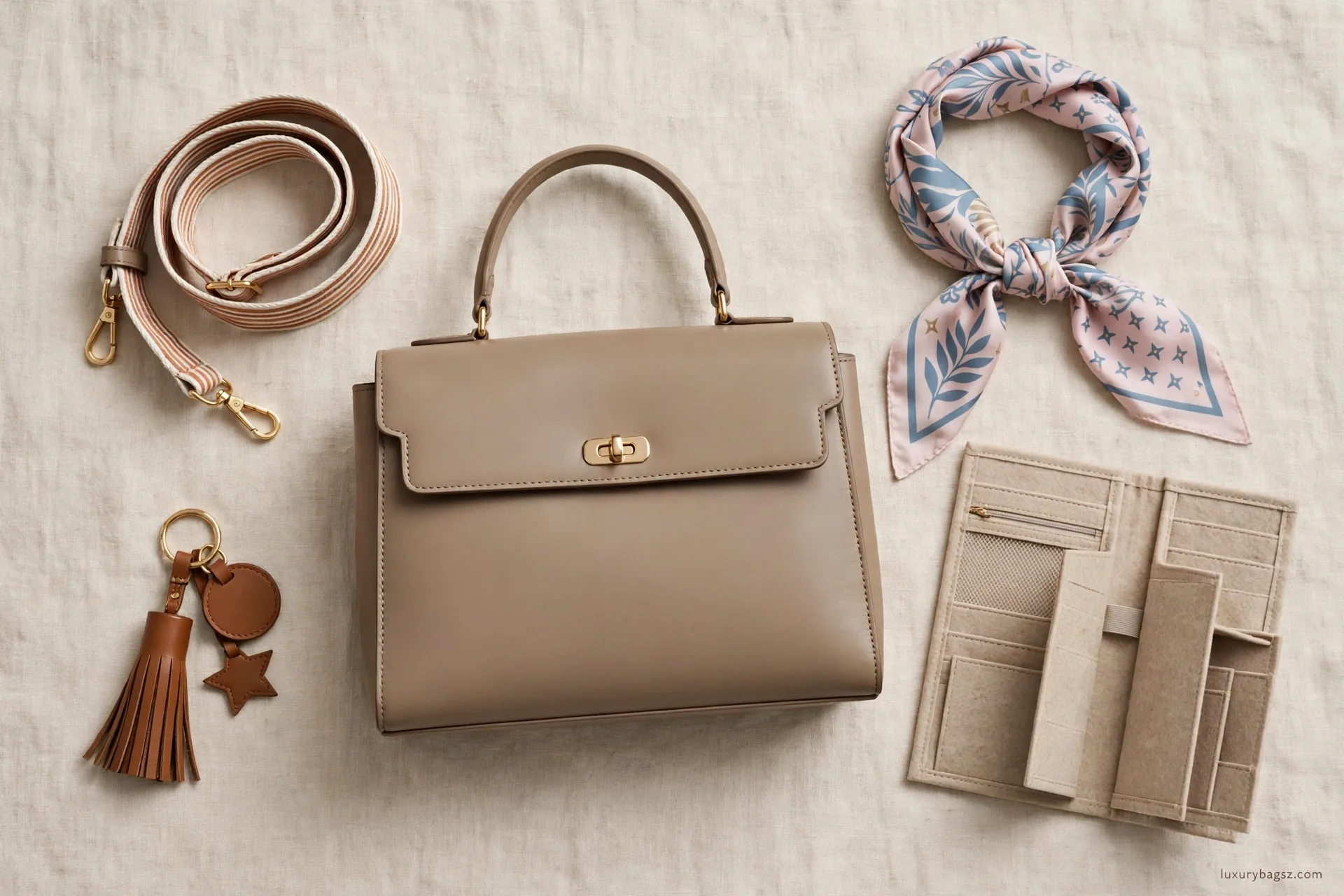
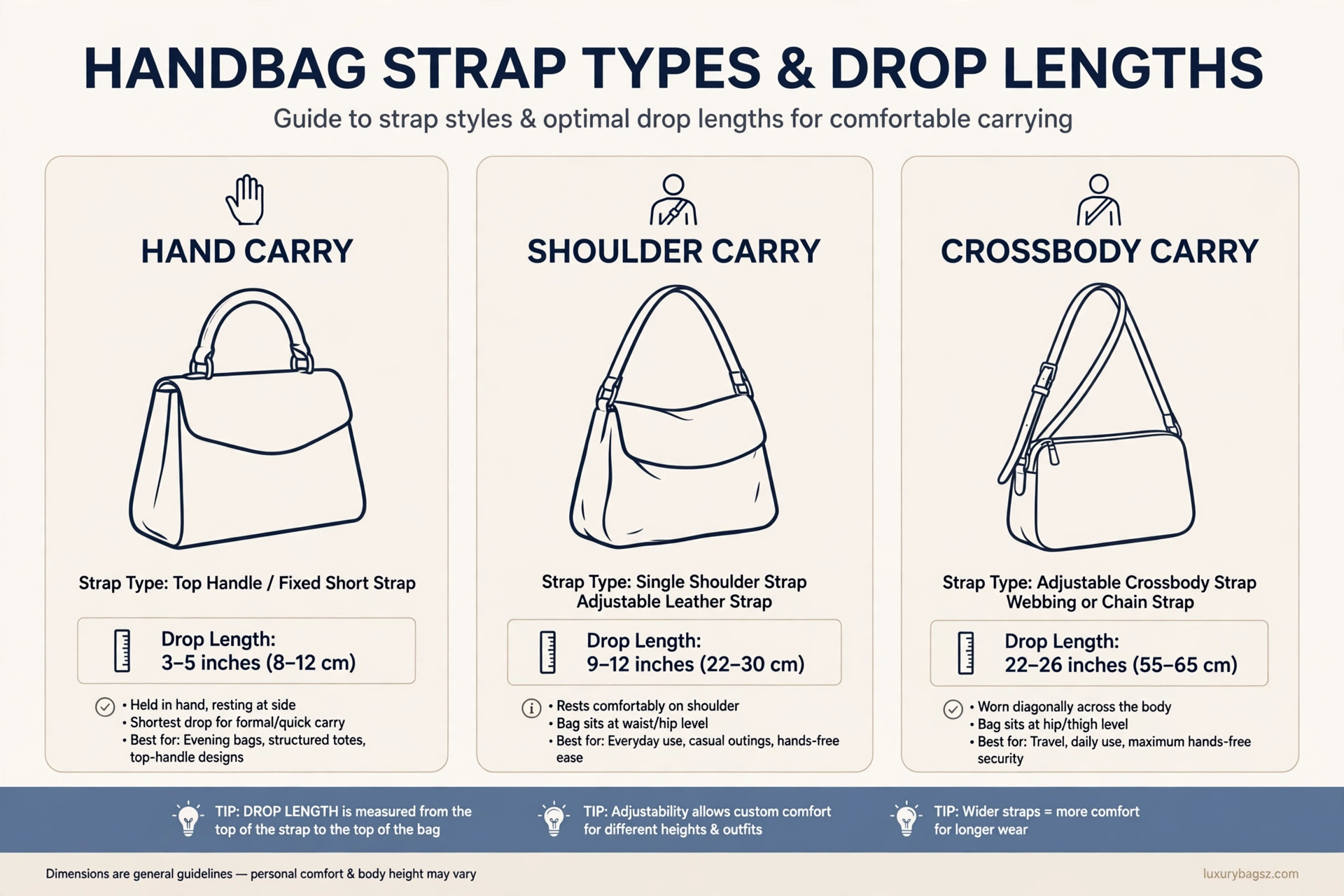
A longer strap turns a shoulder bag into a crossbody and frees your hands. A shorter, wider strap makes a heavy tote kinder on the shoulder. Webbing straps give a sporty read and spread weight well. Leather straps match formal bags; chain straps add evening polish and noticeable weight. Our strap chart below sets out typical drops: hand carry sits shortest, shoulder carry in the middle and crossbody longest, adjusted to your height. Clasp size must match the bag's rings. A clasp that is forced onto a small ring will chew the metal and can spring open under load.
Test a new strap at home loaded as you would carry it. Walk, climb stairs and sit — a strap that twists or digs will not improve with optimism. Third-party straps in good leather can be excellent value. State the bag they are for when ordering so the clasp and width are made to match. Keep the original strap stored with the bag. Future buyers want it, and some bags look best exactly as the house designed them.
Twillies, Scarves and Handle Wraps
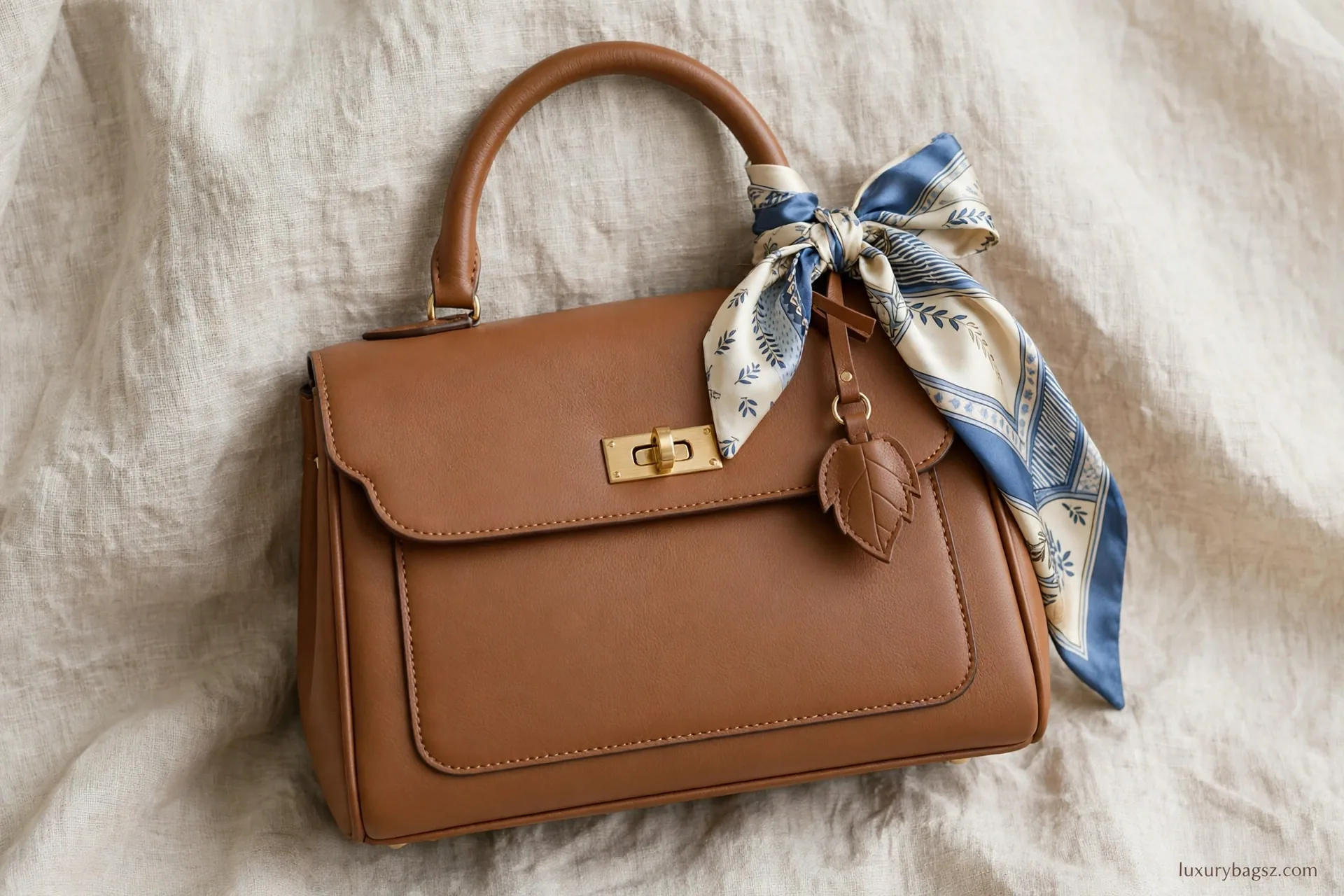
A silk twilly wound around a handle protects pale leather from hand cream, sunscreen and the natural oils that darken vachetta and light calfskin. It also adds colour to a plain bag in seconds. Our step guide on how to wear a Hermès twilly on a bag handle shows the classic wrap and bow finishes. For knots, bows and strap wraps beyond handles, our tutorial on how to tie a Hermès silk scarf covers the transferable techniques. Change twillies with the season and wash or dry clean them away from the bag. A grubby twilly defeats its own protective purpose.
Choose prints that contain the bag's colour plus one accent. A twilly that matches nothing you own will spend its life in a drawer. Leather handle wraps and covers suit bags carried daily in all weathers. Fit them snugly; a loose wrap twists and rubs the handle beneath. Remove wraps monthly to check the handle underneath. Trapped moisture and grit can mark leather if a wrap is left unmoved for a season.
Charms, Chains and the One-at-a-Time Rule
A leather charm — a horse, a fruit, a tiny bag — gives a plain bag a signature. Choose one, sized in proportion: small charms on small bags, bolder on totes. Metal charms and chains should be light. Heavy hardware swinging against soft leather leaves dents and scratches that do not polish out. Attach charms to a ring or handle base, never through stitched leather. A charm torn through a handle loop is a repair bill, not a style note. Bag chains dress up pouches and evening bags and can convert a clutch to a shoulder bag with converter rings — test the clutch's frame strength first.
Retire charms that have scratched one bag already. Sentiment is not a reason to mark a second bag the same way. Seasonal charms are the fun exception to slow buying. One playful piece for summer or the festive weeks keeps the habit joyful and cheap. Store charms separately in soft pouches. Loose metal in a drawer full of leather goods is how scratches happen off the bag as well as on it.

Organisers, Inserts and Base Shapers
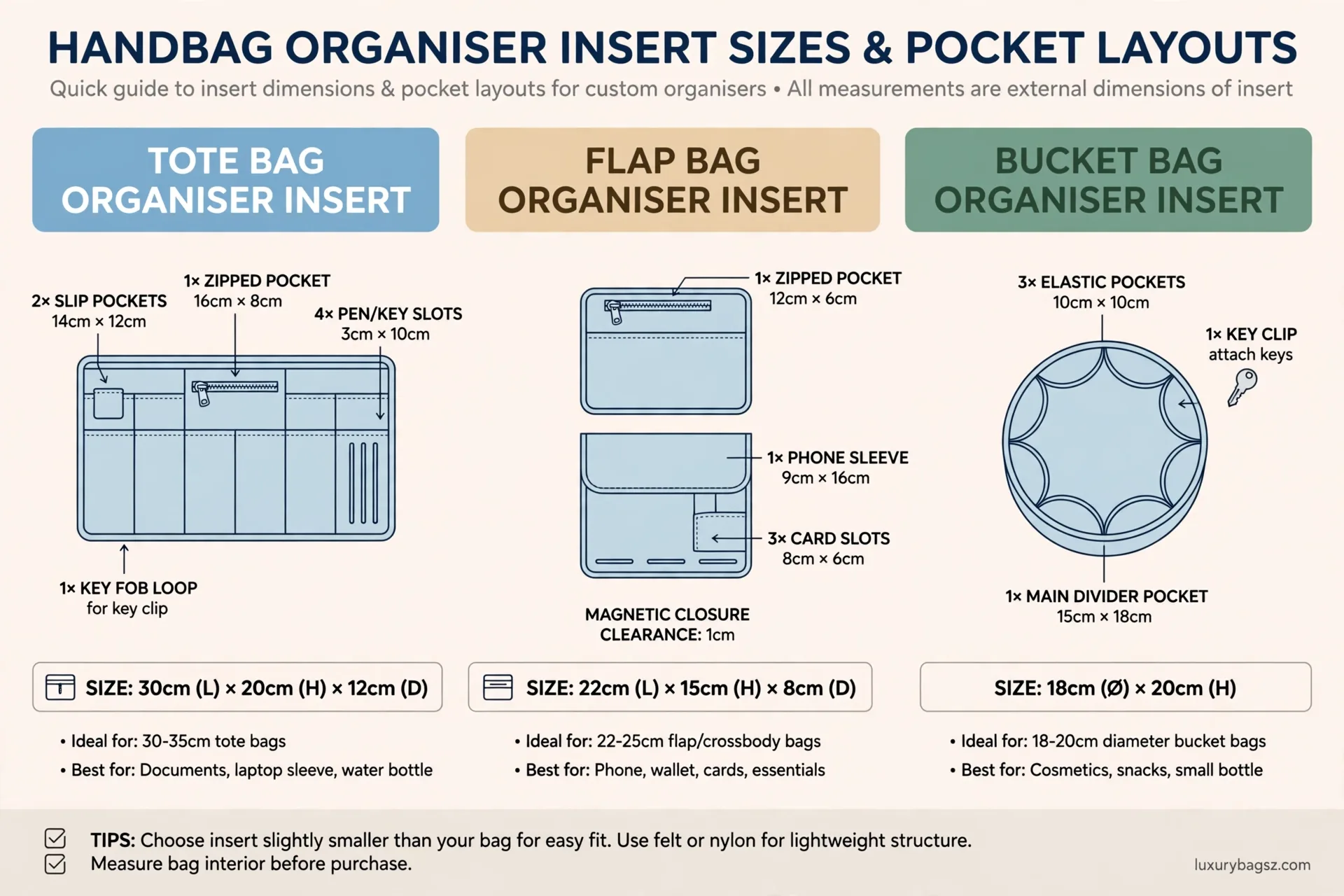
A felt organiser adds pockets to a cavernous tote and lets you swap bags in a minute by lifting the whole insert out. Choose the insert a fraction smaller than the interior. A forced fit bows the bag's walls and stresses the corners and stitching. Pocket layout matters more than pocket count. You need a phone slot, a zipped pocket for valuables and space for a purse and keys that stay findable. Base shapers help soft totes that sag. In structured bags, a rigid shaper can push at the corners, so use pliable inserts there instead.
Weigh the organiser empty. Thick felt and many pockets can add surprising grams to a bag you chose partly for its lightness. Light-coloured linings inside the insert help you see contents. A black insert in a black-lined bag is a cave in which keys go to hide. Wash or air inserts regularly. They collect crumbs, pen dust and make-up, and a clean insert protects the bag's own lining from all three.
Protection: Rain Covers, Dust Bags and Storage
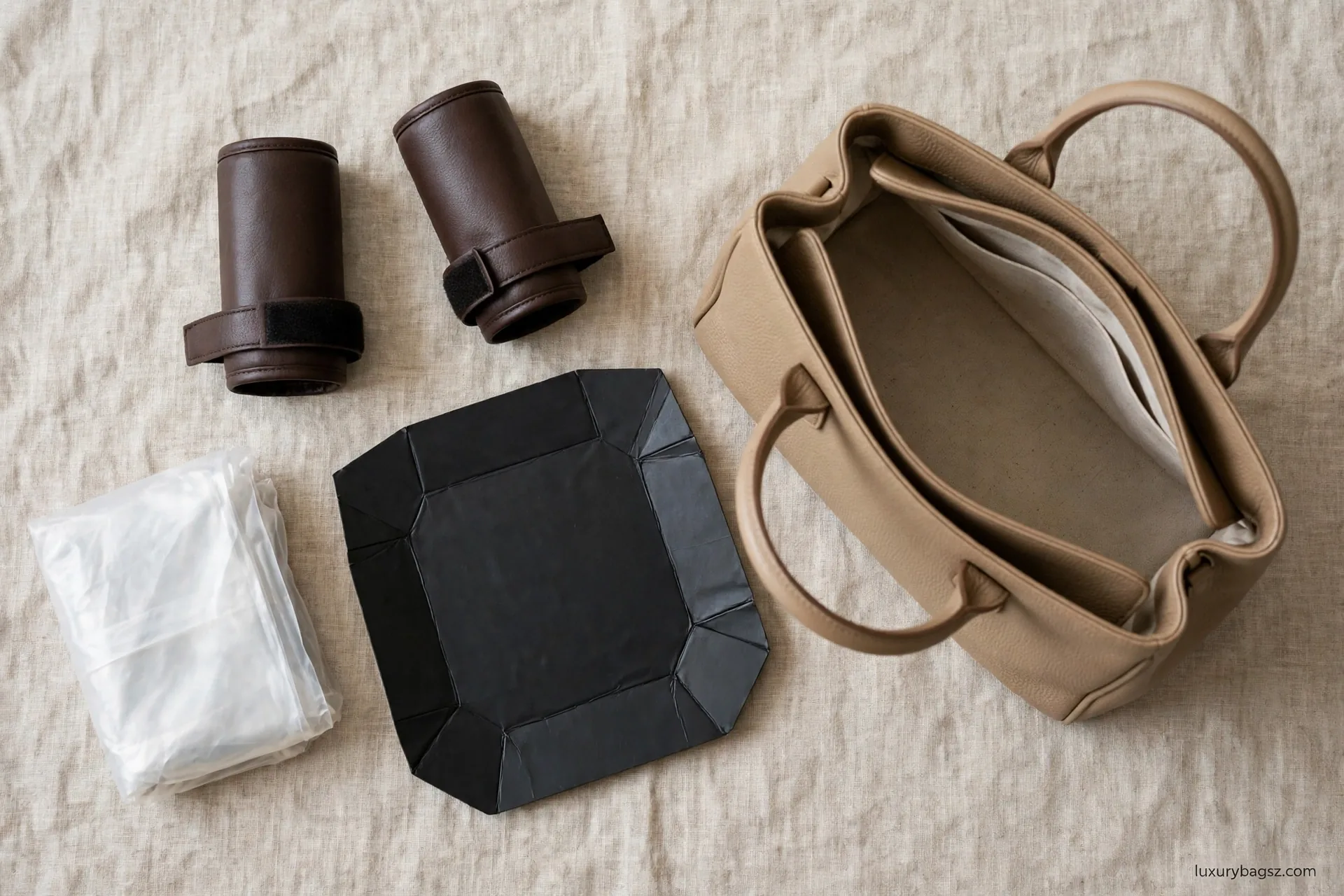
A foldable rain cover in your bag saves leather in a sudden shower. Choose one that fits your largest daily bag and keep it in an inside pocket. Dust bags are for storage, not decoration. Store each bag stuffed lightly, unfastened if the design allows, inside its dust bag and away from sunlight. Our storage guide on how to store luxury clothing and accessories sets out the full routine for shelves, shapes and rotation. Handle covers, corner guards and hardware film exist for the most anxious first months of a pale bag. Use them lightly; adhesive films can lift delicate finishes.
Never store a bag hanging by its handles for months. The weight stretches the attachments and can crack the edge paint at the stress points. Keep white and pale bags away from dark denim in the wardrobe as well as on the body. Colour transfer happens in storage, silently and thoroughly. Photograph each bag yearly for your records. Dated photos help with insurance, resale listings and noticing slow changes like darkening or sagging.
Care Kits and What to Pay
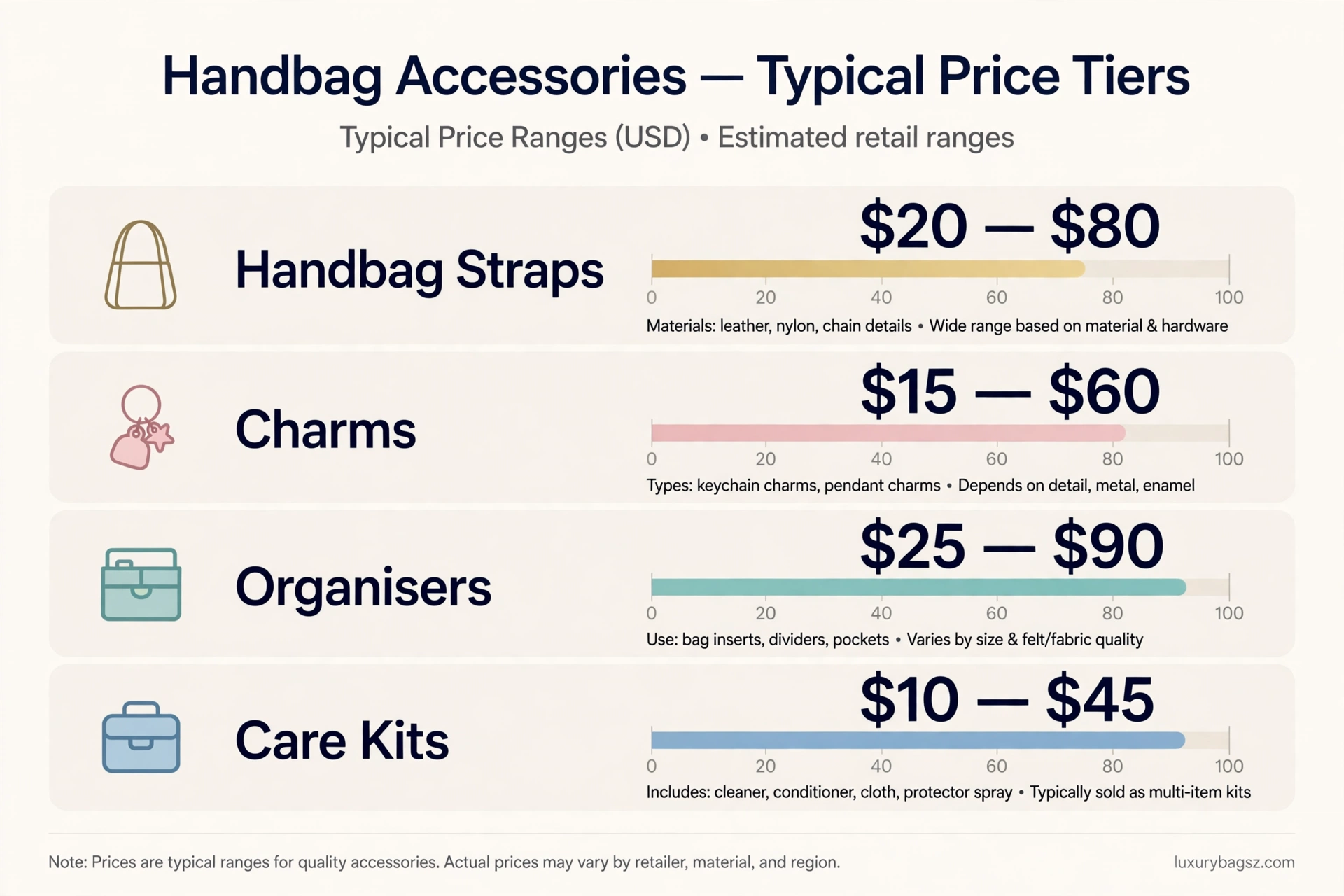
A simple care kit covers most leather bags: a soft cloth, a neutral cream for smooth leather, a suede brush if you own suede and a waterproofing spray used with care. Test every product on a hidden patch first and wait a day. Care advice that suits calfskin can darken vachetta or strip a delicate finish. Straps and organisers are the best value add-ons, typically in the tens to low hundreds. House-made charms and twillies cost more, largely for design and silk or leather quality. Pay for fit and material, not for a name on a felt insert. The reverse is true for twillies and charms, where the house design is the point of the piece.
Avoid care kits with long lists of miracle claims. Leather care is simple chemistry: clean gently, condition sparingly, protect from water and light. Replace cloths and brushes when they are dirty. A gritty cloth used with good cream will still scratch like sandpaper. Keep care products away from bag storage shelves. A leaking bottle inside a cupboard of leather goods is a preventable disaster.
Building a Small Add-On Wardrobe
A complete add-on set for most collectors is short: one webbing strap, one leather strap, two twillies, one charm, one organiser per daily bag and a rain cover. That set covers work, weekends and evenings across a typical rotation without a drawer of forgotten experiments. Men who carry luxury bags use the same logic with quieter pieces — our companion guide to luxury accessories for men covers that carry style in full. Buy add-ons after living with a new bag for a month. Early annoyances often vanish, and the real one reveals itself clearly by week four.
Keep a one-in, one-out habit for charms and straps. Add-on drawers grow faster than bag shelves and quietly cost as much as a small bag. Gift add-ons carefully: a twilly in the recipient's colours delights, while an organiser in the wrong size is a well-meant paperweight. Review the set yearly with the bags themselves. When a bag leaves the collection, its sized add-ons should leave or be rehomed with it.
Frequently Asked Questions
Will a non-branded strap hurt my bag's value?
A removable strap does not affect the bag itself. Keep the original strap safely stored and include it if you ever sell the bag.
Do organisers damage handbags?
Not when sized correctly. Choose an insert slightly smaller than the interior, with soft felt that cannot bow the walls or stress the corners.
How do I stop a twilly slipping on a handle?
Wind it tightly with even overlaps and finish with a firm knot or bow at the handle base. A clean, dry handle grips silk better than a conditioned one.
Can a chain strap scratch my bag?
Yes, if it is heavy or swings freely. Choose light chains, attach them securely and remove them for storage so links cannot press into soft leather.
Are base shapers a good idea?
For soft totes that sag, yes. For structured bags, prefer a pliable organiser — a rigid shaper can push against corners and stitching over time.
How many charms should I wear on one bag?
One. A single charm reads as a signature; several read as clutter and add swinging weight that marks leather and tires handle attachments.
What size organiser should I order?
Measure the interior base length and width, then order around a centimetre smaller in each direction. Height should sit below the bag's closure.
Do I need a rain cover for every bag?
One cover sized for your largest daily bag is enough for most people. Keep it folded in whichever bag you carry, or carry it in your coat pocket in wet weeks.
Can handle wraps trap moisture?
They can if left unmoved for months. Remove wraps monthly, let the handle air, and check for grit or damp before refitting them.
What add-on should I buy first?
A strap that fixes your most-carried bag's biggest annoyance — usually extra length for crossbody wear. It changes daily use more than any charm.
Summary: Add-Ons Should Solve, Sparkle, Then Protect
Buy handbag accessories in that order: straps and organisers that solve a daily problem, one charm or twilly for pleasure, and simple protection for storage and weather. Measured, matched to your hardware and sized to your bags, a small add-on set makes every bag you own more useful — and keeps it that way for years.