

How to Mix Gold and Silver Jewellery: Bridge Pieces, Ratios and Styling Rules That Always Work
Yes, You Can: The Rule Is Repetition, Not Matching
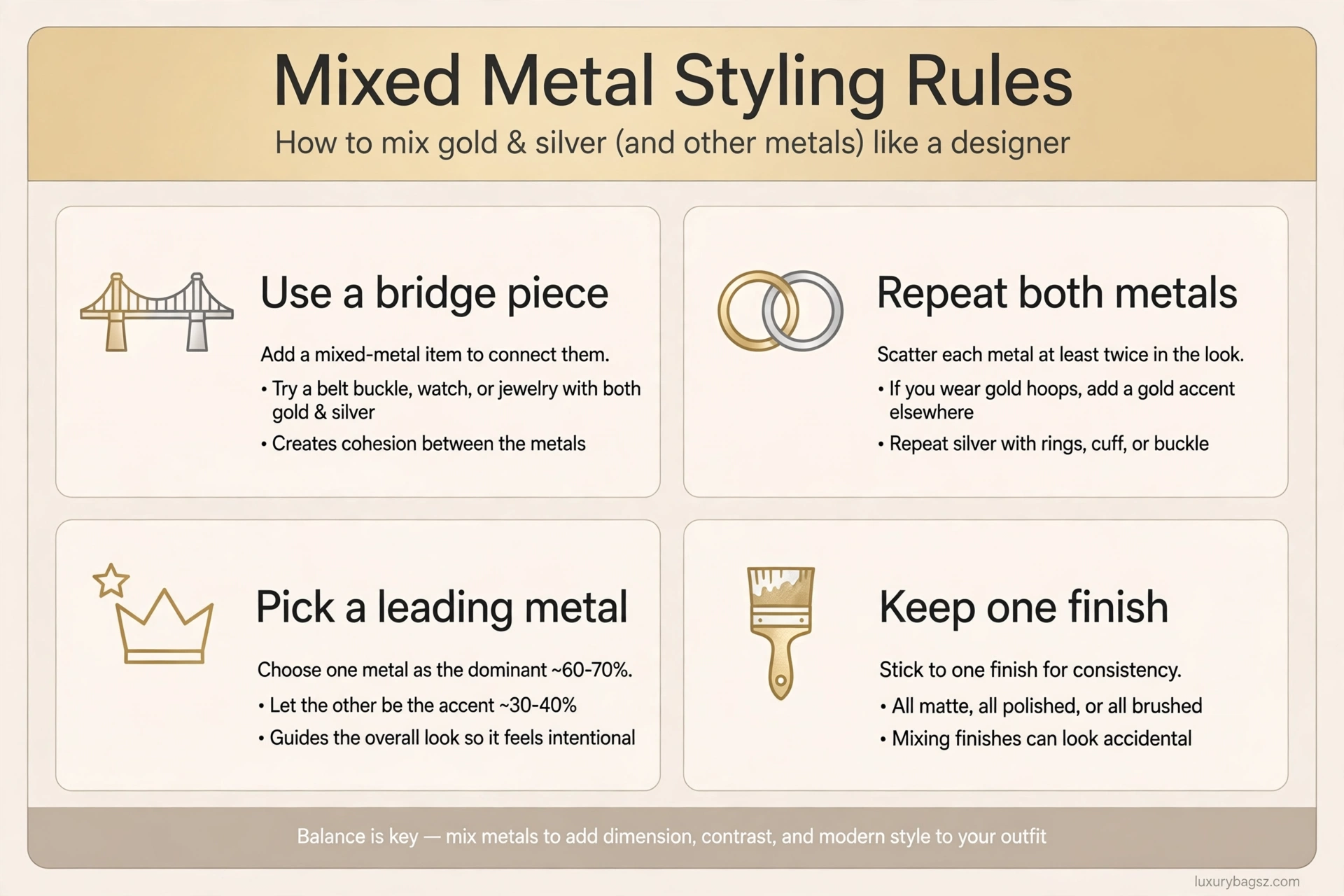
Gold and silver jewellery mix beautifully when the mix looks deliberate: wear each metal at least twice, or join them with one two-tone bridge piece. That single habit separates a styled look from an accident. One lone silver ring among gold pieces looks forgotten; the same ring with silver earrings looks chosen. Choose a leading metal, keep one finish family, and let the second metal play its supporting part with confidence. The old one-metal rule is simply over.
Key Takeaways
- Repeat each metal at least twice, or use a two-tone bridge piece.
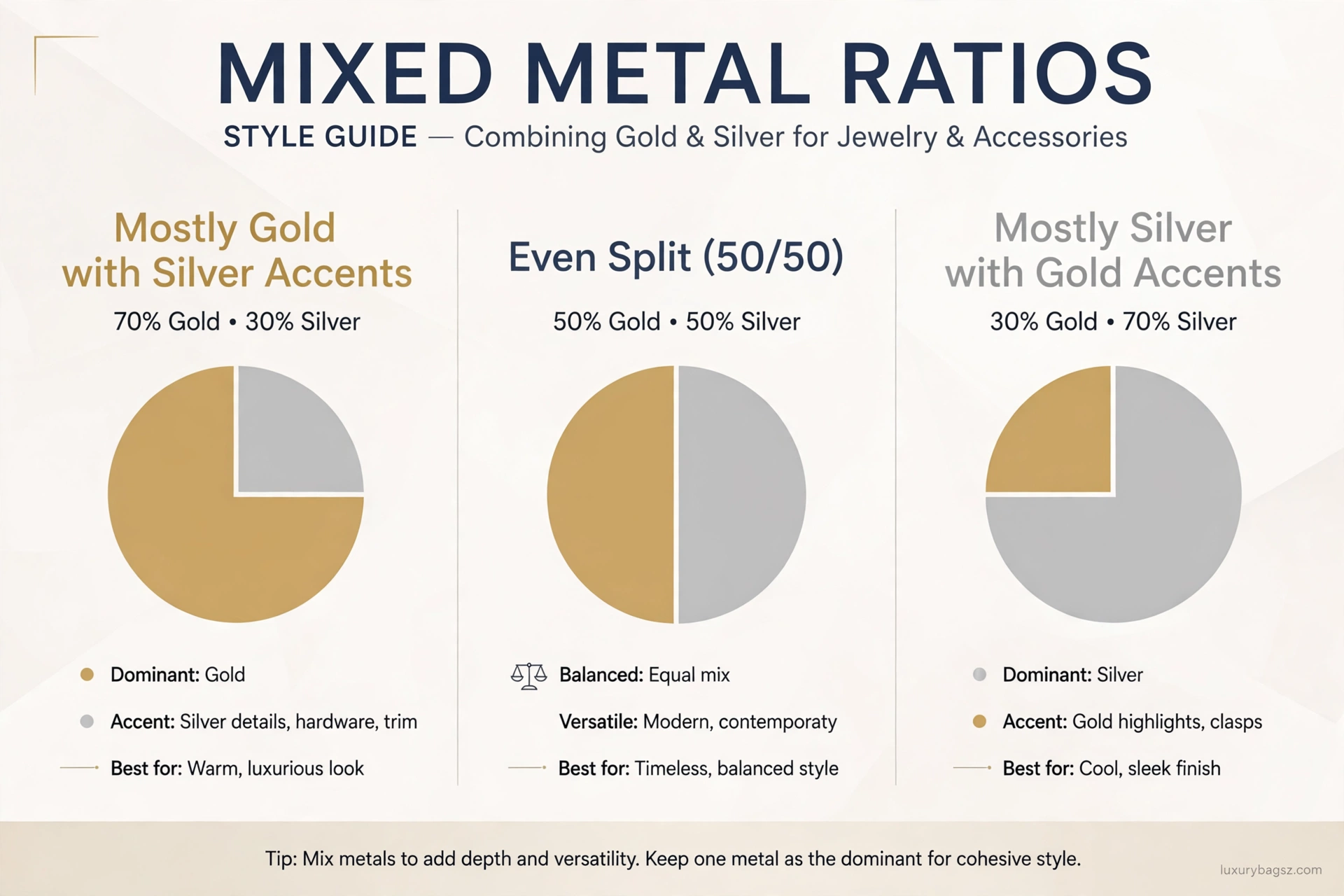
- Let one metal lead: roughly 70/30 looks calmer than an even tug of war.
- Keep finishes consistent — all polished or all matte reads intentional.
- Layer necklaces by length so both metals stay visible, not tangled.
- Stones like diamond and pearl bridge metals naturally in any piece.
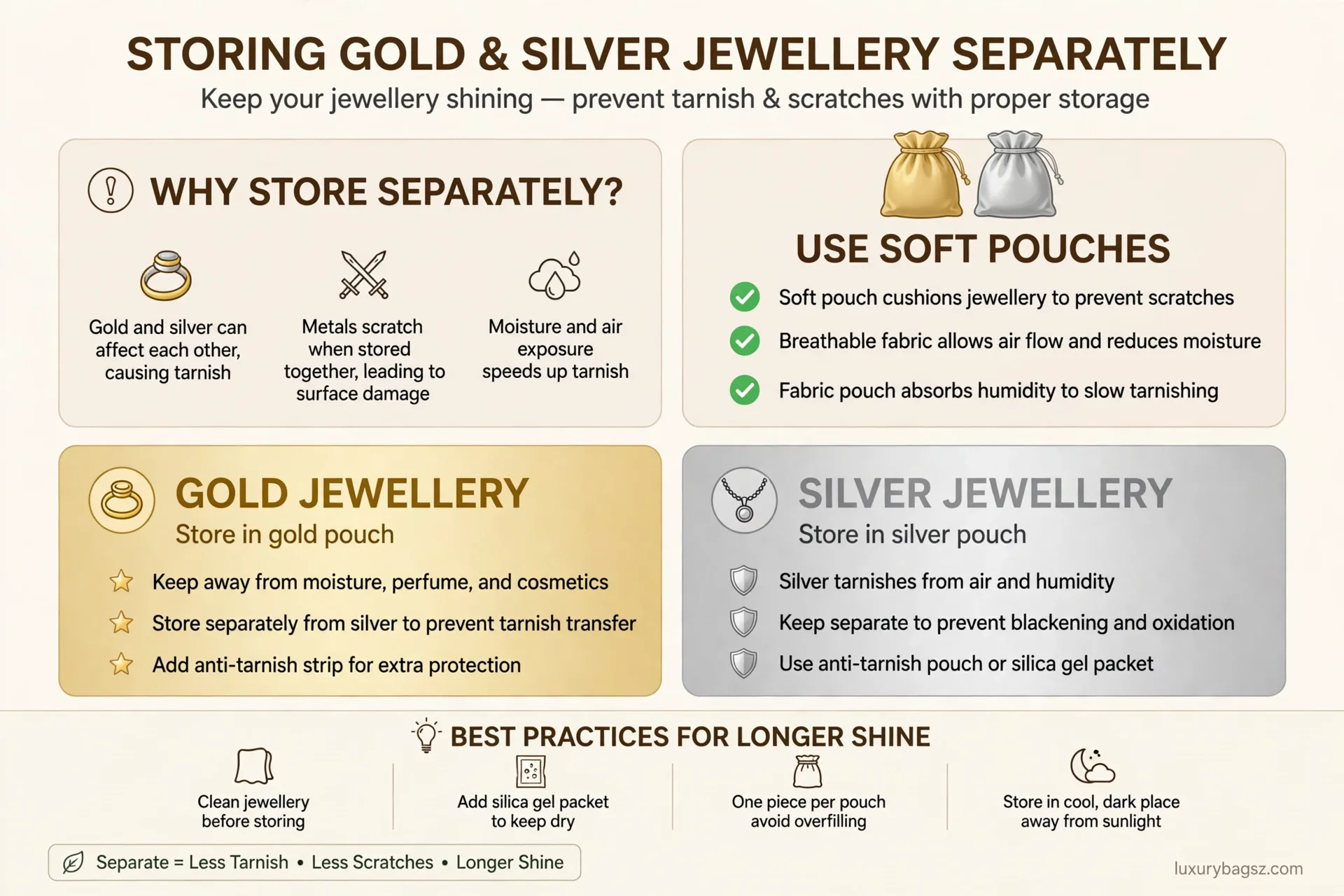
- Store gold and silver separately; silver tarnish transfers in a shared box.
Why the Old Rule Died
The one-metal rule came from an era of matching sets, when jewellery arrived in suites and mixing marked a piece as borrowed. Modern jewellery is designed across metals. Two-tone watches, mixed chains and tricolour classics have been made by great houses for generations. The metal families themselves invite mixing, as our types of gold guide shows — white gold already sits close to silver in tone. What replaced the rule is judgement: balance, repetition and proportion, which the next parts turn into a routine you can copy.
The Bridge Piece Method
Start with one piece that already contains both metals: a two-tone ring, a reversible pendant, a watch with a gold bezel on a steel bracelet. That piece is the bridge. Everything gold connects to one side of it, everything silver to the other, and the whole look reads as one idea. No bridge piece? Make one virtually by stacking a gold and silver ring together, or layering a gold pendant on a silver chain. Once the bridge exists, adding pieces stops being risky. Each new item only has to agree with its neighbour, not with the whole outfit.
Ratios: Let One Metal Lead
A leading metal keeps a mixed look calm. Roughly seventy per cent gold with thirty per cent silver accents is the easiest formula to wear. An even split looks bold and modern, and suits graphic pieces: chunky chains, wide cuffs and strong rings in both metals. Mostly silver with gold accents is the quietest version, and a good route for cooler wardrobes and white-metal lovers. Whichever ratio you pick, distribute both metals around the body — ears, neck and wrist — rather than concentrating one metal in one place.

Bracelets and Rings: Where Mixing Is Easiest
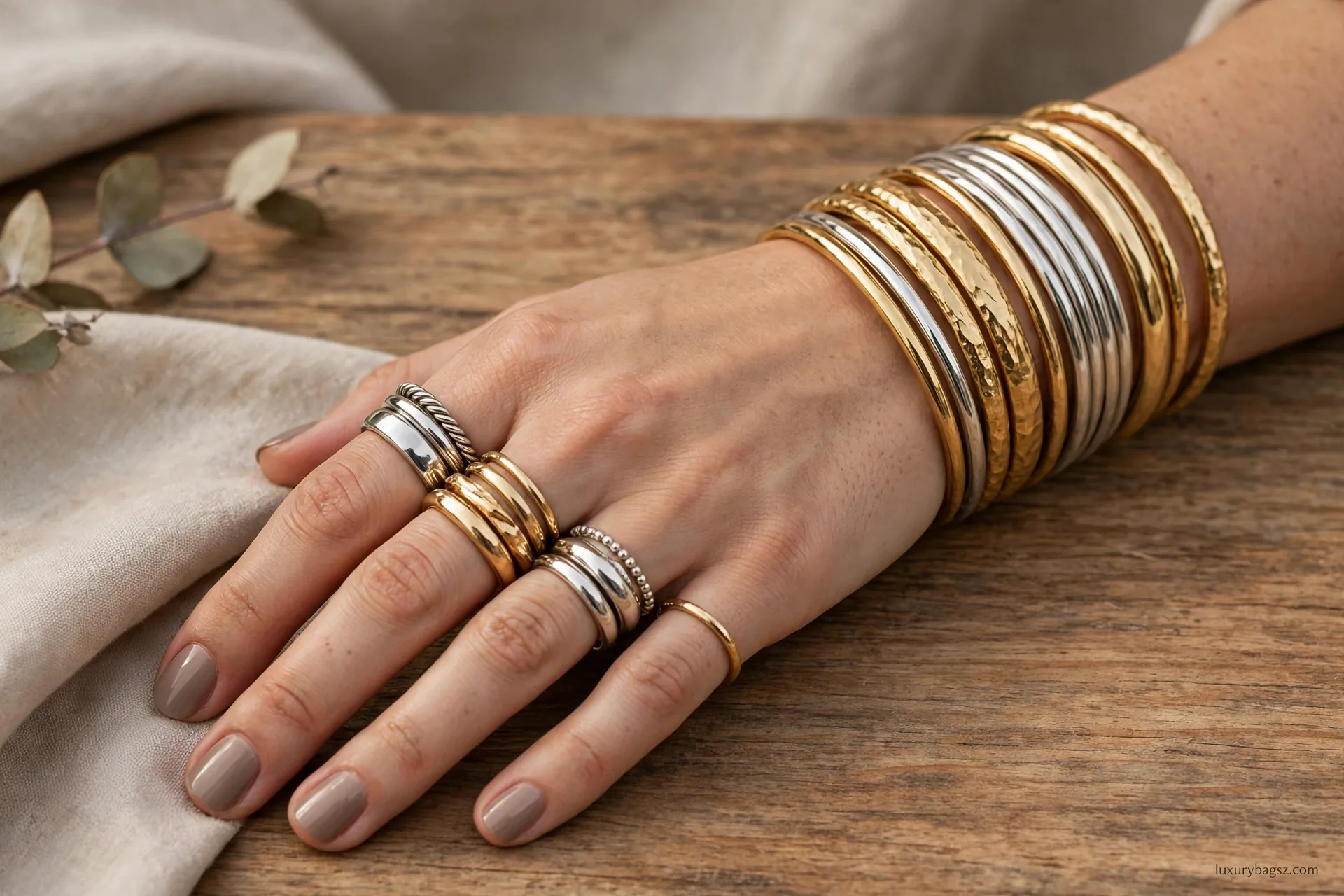
The wrist forgives everything. A gold bangle beside a silver cuff, with a two-tone watch or a mixed chain bracelet, is the classic starting stack. Ring stacking is the other easy win: alternate metals band by band, or bookend a silver set with one gold ring on each side. Mixed-metal design is a house speciality for some makers; the David Yurman brand guide shows cable designs built on exactly this contrast. Keep widths in conversation with each other. A very fine band vanishes beside a wide cuff, whatever its metal.
Earrings and the Face
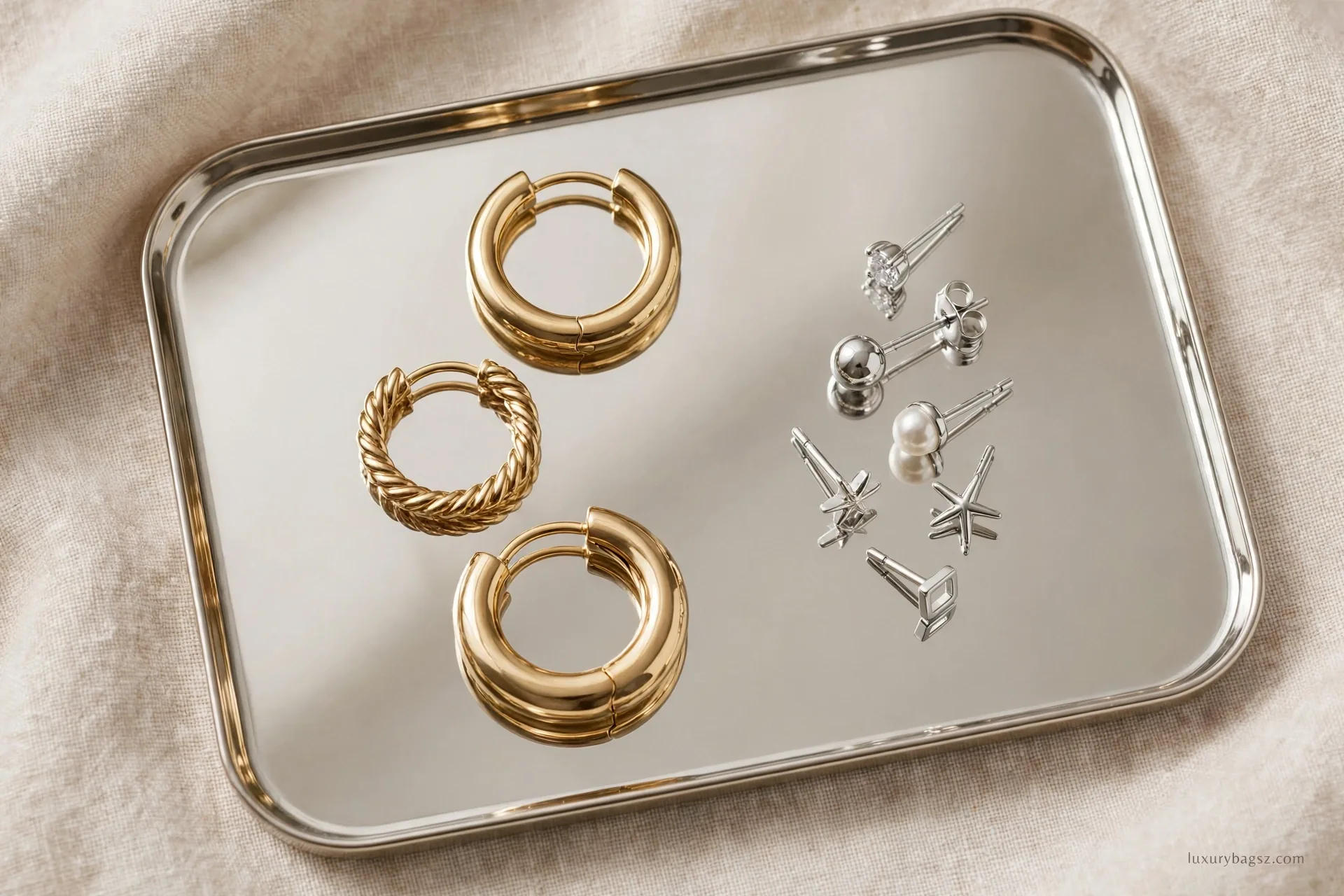
Mixed earrings frame the face, so balance matters more here. Gold hoops with small silver studs in second piercings is the reliable formula. Mismatched single earrings — one gold, one silver — work when their shape or size matches, giving the eye a pattern to read. Two-tone earrings exist precisely for this job and pair with everything else you own in either metal. If your hair carries jewellery colours too, warm metals near warm-toned hair and cool near cool reads harmonious without any effort.
Necklaces: Layering Without Tangles
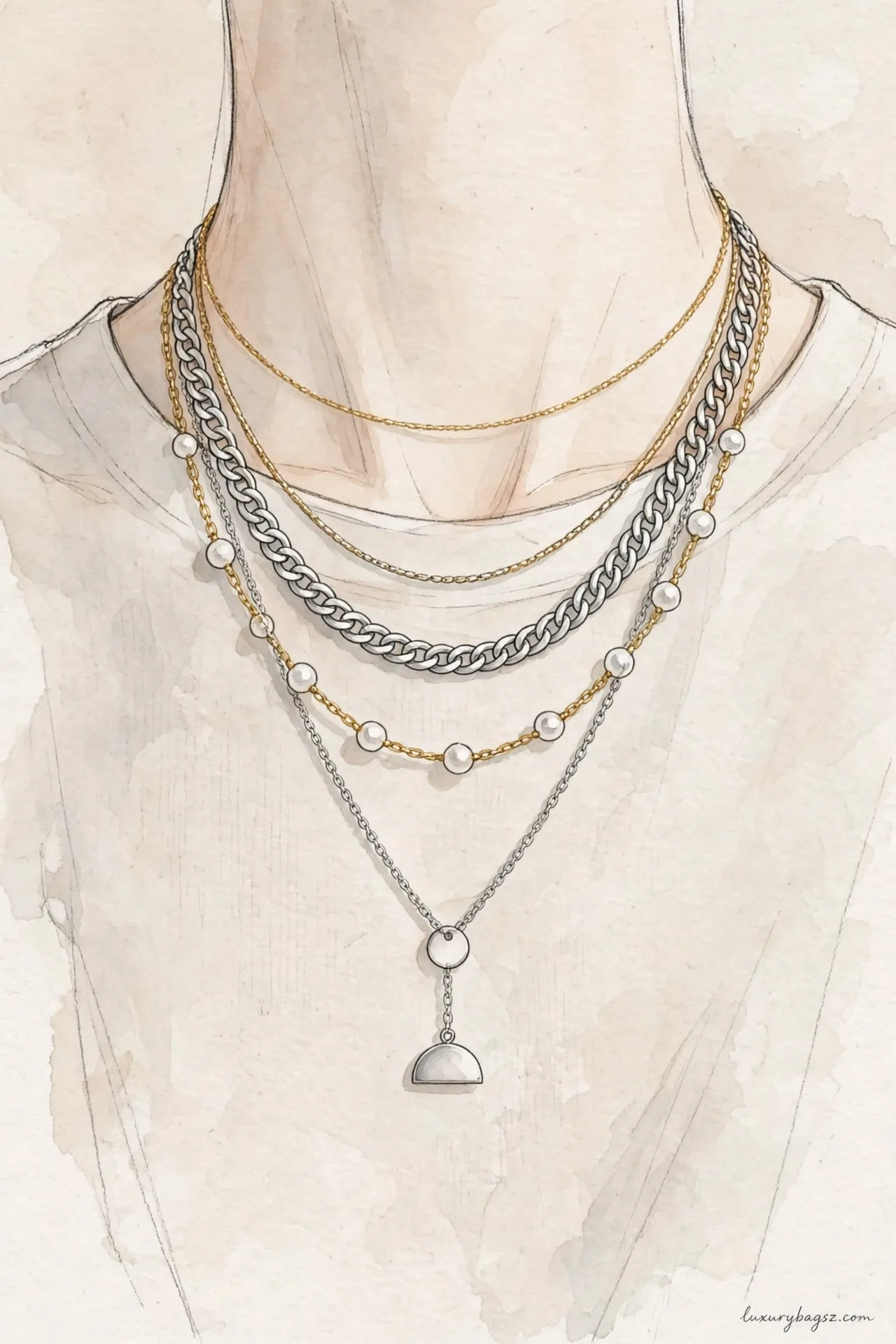
Layer by length: a short silver chain, a mid-length gold pendant, a longer mixed or beaded chain gives each metal its own visible line. Keep one detail shared — the same chain style, the same pendant shape family, or matching polished finishes — so layers feel related. A single two-tone pendant on either chain colour is the fastest necklace bridge, and the piece most worth buying if you mix often. Necklines decide lengths. Crews take shorter stacks, open necklines take longer ones, and turtlenecks take one long mixed chain over everything.
Care for Mixed Metals
Worn together happily, gold and silver still prefer separate storage. Silver tarnish can dull neighbours in a closed box over time. Polish silver pieces before storing, keep gold in its own soft pouch, and let the two meet on you rather than in the drawer. Our how to clean jewellery guide covers both metals' routines, including silver's polishing cloth method. Avoid stacking soft gold directly against harder pieces for long wear days; a bridge piece between them doubles as a buffer.
Troubleshooting a Mix That Looks Wrong
If a mix looks accidental, add repetition first: one more piece in the minority metal usually fixes it in seconds. If it looks chaotic, remove the piece whose finish disagrees. Polished and brushed metals fight more often than gold and silver do. If it looks flat, add a bridge stone: diamond, pearl or clear crystal pieces calm contrast and connect both metals visually. The current fashion wind is at your back, as our fine jewellery trends guide notes — mixed metals are a direction, not a dilemma.
The Third Metal: Rose Gold and White Gold
Once two metals behave, the family invites its other members. Rose gold is the natural diplomat of the group: its pink warmth sits between yellow gold and silver, so a single rose piece can soften a gold-and-silver contrast that feels too stark.
Use rose as the transition in a stack, yellow gold, then rose, then silver, and the eye travels instead of jumping. In necklaces the same gradient works down the lengths, warmest at the shortest chain.
White gold plays the opposite trick: it is nearly silver’s twin in colour, so it lets a gold collection wear a cool face. A white gold piece beside silver reads as one family, and beside yellow gold as a deliberate two-tone, which makes it the hardest-working quiet piece in a mixing wardrobe.
Platinum behaves like white gold’s heavier sibling in these combinations, with the same cool neutrality. The practical limit is budget, not styling: three-metal mixing succeeds by the same repetition and ratio rules as two.
The Watch: Anchor or Exception
A watch is the largest piece of metal most people wear, so it cannot sit outside the mix pretending not to count. The good news is that watches were mixing metals before jewellery dared: two-tone bracelets and gold-bezel steel cases have been classics for decades.
Treat a steel watch as your silver anchor and let gold jewellery play the accent, or treat a gold watch as the lead and keep silver to earrings and one ring. Either way the watch sets the ratio, because its visual weight outweighs two or three smaller pieces.
A leather-strapped watch is the neutral referee: its metal case still counts, but at a fraction of a full bracelet’s presence. When an outfit’s jewellery mix feels unresolved, swapping to a strap watch quietly removes the loudest contradiction.
Vintage watches in worn gold sit happily in mixed company; their softened finish matches the lived-in logic of a mixed stack better than a mirror-polished new case does.
Mixing Metals at Formal and Bridal Moments
Engagement and wedding rings raise the question in its sharpest form, because the two rings may be different metals and are worn together for life. The honest answer is that they touch each other, not the rulebook: a platinum engagement ring with a gold band is worn by thousands and reads as a couple’s history, not a styling error.
If the contrast bothers you, the bridge method from this guide applies at ring scale: a two-tone wedding band, or a slim eternity band in the second metal worn between the two, marries the pair visually.
Formal dressing asks for a quieter mix rather than no mix. Reduce the piece count, keep finishes polished and consistent, and let one metal take a clear eighty per cent. A black-tie outfit with gold studs, a silver bracelet and nothing else mixed is more elegant than a full two-metal production.
Heirloom pieces get diplomatic immunity at formal moments. Grandmother’s silver brooch on a gold-chain outfit needs no apology and no bridge; provenance outranks proportion, and guests read sentiment correctly every time.
Choosing the Lead by Skin and Wardrobe
The ratio advice earlier in this guide needs a chooser, and two honest tests provide one. First, your wardrobe’s palette: clothes in warm colours, cream, camel, olive and rust, ask gold to lead; clothes in black, white, grey and blue usually let silver or white metals lead beautifully.
Second, the pieces you already own and love. Most collections lean one way by accident of gifts and history, and the cheaper, happier strategy is to crown the metal you already own more of, then buy the minority metal as accents and bridges.
Skin undertone is the third voice, not the first. Warm undertones glow with gold leading, cool undertones with silver, but a beloved piece in the “wrong” metal, worn with confidence and repeated properly, beats a theoretically correct metal worn apologetically.
When all three tests disagree, follow the wardrobe. Jewellery is seen against clothes far more than against skin, and the outfit is the photograph the room actually takes.
The Starter Five: Buying Your Way Into Mixing
If your box is currently one metal, five purchases, or five rescues from the back of the drawer, unlock almost every combination. First, one genuine two-tone piece, the bridge: a pendant or ring designed in both metals, bought for this job.
Second, a pair of hoops or studs in your minority metal, because earrings are where a lone foreign piece looks most accidental and where repetition pays fastest. Third, a chain in the minority metal that your existing pendants can ride on; pendants are citizens of both metals when the chain changes.
Fourth, one minority-metal ring for the ring stack, where mixing is easiest and cheapest to practise. Fifth, only if you wear them, a minority-metal cuff or bangle to complete the wrist triangle with your watch.
Bought in that order, each piece multiplies the outfits the box can produce, which is the economic case for mixing in the first place: two metals do not double a collection’s cost, but they come close to doubling its combinations.
Stones, Pearls and the Neutral Players
Some pieces belong to neither army. Diamonds, white sapphires, clear crystal and pearls are optically neutral, which makes them the peacekeepers of a mixed collection: a diamond tennis bracelet reads as a line of light, and the eye barely registers the metal holding it.
Use a neutral piece where a mix feels stuck. If gold earrings and a silver necklace refuse to agree, a pearl or diamond piece at either point gives the eye a resting place and the two metals a shared friend.
Coloured stones take sides, so place them deliberately. A warm stone, citrine, garnet or amber-toned gems, strengthens the gold side wherever it sits; cool stones, blue sapphire, aquamarine, iolite, pull towards silver. One coloured piece can therefore set the ratio by itself.
Black is the other neutral with authority: onyx, black enamel and blackened metal finishes sit calmly against both gold and silver, and a single black element often organises a mix that colour could not.
Three Formulas to Copy Exactly
The office formula: gold hoops, a silver pendant on a fine chain, your steel or two-tone watch, and one gold ring. Gold leads at the face, silver answers at the neck, and the wrist repeats both. It works with tailoring in any colour and asks for no thought after the first week.
The evening formula: let the dress choose. With a black dress, silver leads, diamond or crystal studs, a silver cuff, one slim gold bangle beside it, and a gold clutch doing the repetition work from the hand. The mix reads as light and shade rather than two metals.
The weekend formula: stack without ceremony. Mixed ring bands on one hand, a gold chain and a silver chain at two lengths over a plain top, and whichever earrings come to hand in either metal, provided each metal appears twice somewhere in the whole picture.
Copy the formulas until the judgements inside them, repetition, ratio, one shared finish, become reflexes. After that the formulas are training wheels, and your own combinations will start outnumbering them.
How Mixing Reads on Camera
Modern jewellery is judged on screens before it is judged in rooms, and cameras change the mix. On a video call the frame holds only face, neck and shoulders, so the wrist half of your repetition plan is invisible; if your mix depends on a bracelet to repeat the minority metal, the call sees an accident instead of a design.
For calls and photographs, complete the repetition inside the frame: minority metal at the ears if it leads at the neck, or the bridge piece positioned where the camera crops. It takes ten seconds to check and it is how your jewellery now gives most of its first impressions.
Flash photography warms silver and cools nothing; silver pieces flare brightly and can dominate a picture in which gold looked equal in the mirror. At photographed events, let gold lead a little more than your daylight ratio, or accept silver as the star and dress it properly.
Daylight phone photographs, the ones friends actually take, are the honest test of any mix. If the combination reads deliberate in an unposed garden photograph, it is deliberate. The mirror flatters; the phone reports.
Frequently Asked Questions
Is it OK to wear gold and silver jewellery together?
Yes, completely. The old rule has gone. Mixed metals look right when each metal appears at least twice, or when a two-tone bridge piece joins them.
What is a bridge piece?
A single item made with both metals, such as a two-tone ring or a gold-and-steel watch. It connects gold and silver pieces into one deliberate look.
What ratio of gold to silver looks best?
Around 70/30 in either direction is easiest to wear. An even split looks bolder and suits chunkier pieces. Any ratio works if both metals repeat.
Can I mix rose gold with silver too?
Yes. Rose gold's warmth contrasts prettily with silver's coolness. Keep to one gold shade in a single look so the palette stays calm.
Does mixing metals damage jewellery?
Wearing them together does not. Store them separately, because silver tarnish can transfer in a closed box, and softer gold prefers its own pouch.
How do I mix metals at the neck without tangling?
Layer by length with clear gaps between chains, keep one shared detail such as finish or chain style, and let a two-tone pendant bridge the colours.
Can I wear a gold engagement ring with silver jewellery?
Of course. Repeat the silver elsewhere — earrings and a bracelet, say — or add a silver-toned band beside the ring so neither metal stands alone.
Which stones help bridge gold and silver?
Diamonds, pearls and clear crystals. Their neutrality softens the warm-cool contrast and makes mixed settings look intentional in any combination.
Should finishes match when mixing metals?
Ideally, yes. All polished or all matte pieces read as one family even across metals, while clashing finishes are the commonest cause of a messy mix.
What should I buy first to start mixing?
A two-tone piece you love: a ring, pendant or watch that already contains both metals. It instantly makes your existing gold and silver wearable together.
Conclusion: Repeat, Bridge, and Wear Both
Mixing gold and silver needs no permission and little equipment: a bridge piece, repetition of each metal, one leading ratio and consistent finishes. Apply those four ideas and your whole jewellery box becomes one wardrobe instead of two, doubling the combinations you already own.






