Scarf Styling Tips: Ways to Tie, Drape and Wear a Scarf Well
Scarf Styling, Sorted: Start With the Fold
The fastest way to style a scarf well is to match the fold to the format: long oblongs take loops and drapes, silk squares take knots, headbands and bag ties, and large shawls can be belted as tops.
Most styling failures are simple — the wrong fold for the fabric, or a knot fighting the neckline. Fix those two things and the same scarf suddenly works.
Below are the core techniques in the order most people use them, from the two-minute loop to polished evening drapes.
Key Takeaways
- Fold first: the format of the scarf decides which styles will hold.
- The loop and the drape cover most days; learn those two before fancy knots.
- Silk squares earn their keep in hair, on bags and at the wrist, not just necks.
- Belt a large scarf or shawl to turn it into a top or light layer.
- If a scarf slips, change the fold or add texture beneath — not a tighter knot.
- Roll scarves to store them; sharp folds leave lines in silk.
Choose the Fold for the Format
Oblong scarves fold lengthways and style with loops, wraps and long drapes. Their length is the whole point, so avoid folds that shorten them.
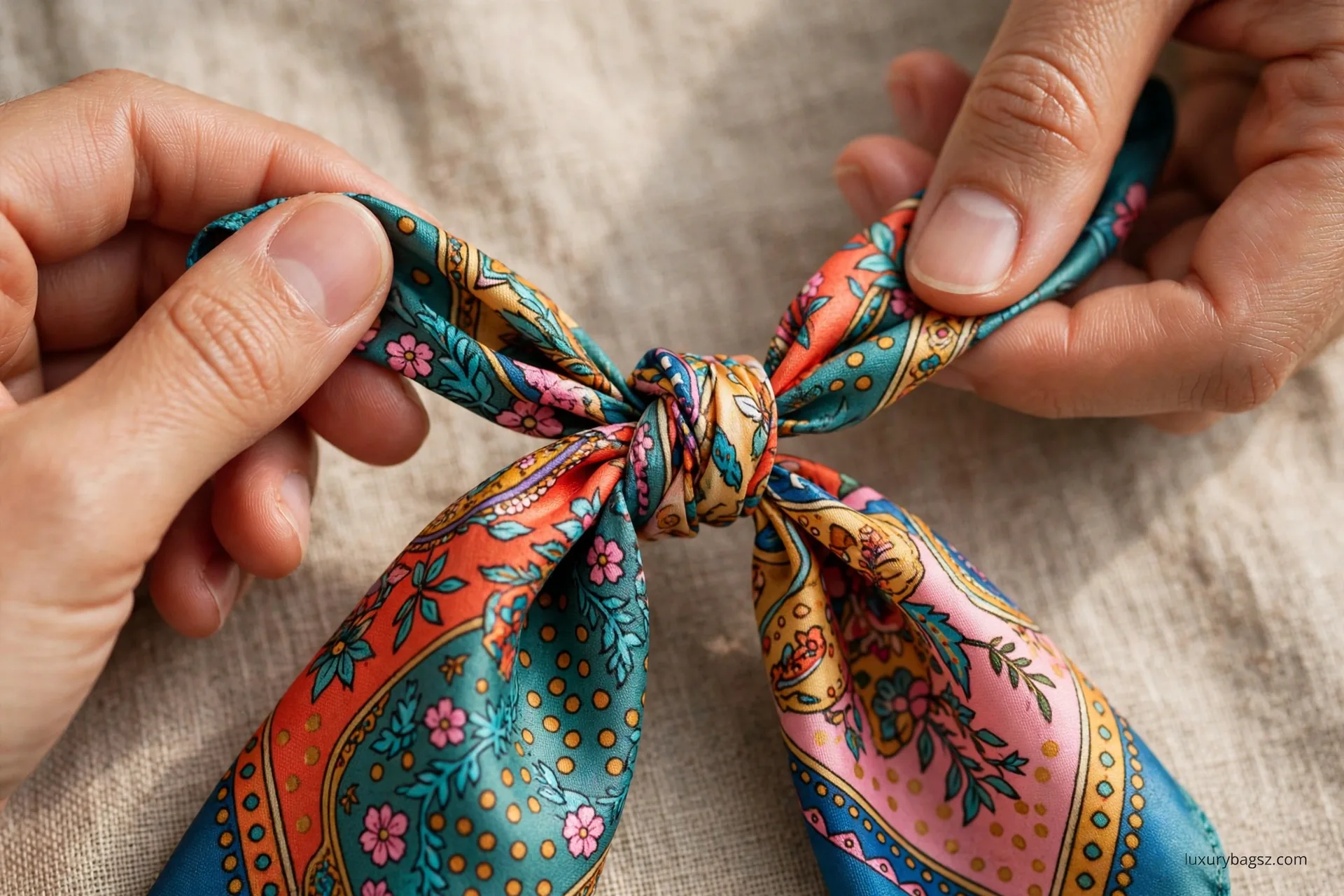
Square scarves fold on the diagonal into triangles or bands. That fold creates the classic neckerchief, headband and bag tie shapes.
If you are still shopping, our designer scarves for fall buying guide covers the fabrics and sizes behind each format.
Silk slides; wool grips. Expect to re-tie silk during the day, and choose grippier fabrics when you need a knot to stay put for hours.
Temperature should guide format too. A heavy wool square folded small becomes a dense pad of heat; the same weight as an oblong spreads warmth evenly.
When in doubt, copy a fold you have seen on someone whose style you admire, then adjust its height and looseness to your own neck length.
The Loop and the Drape: Your Two Defaults
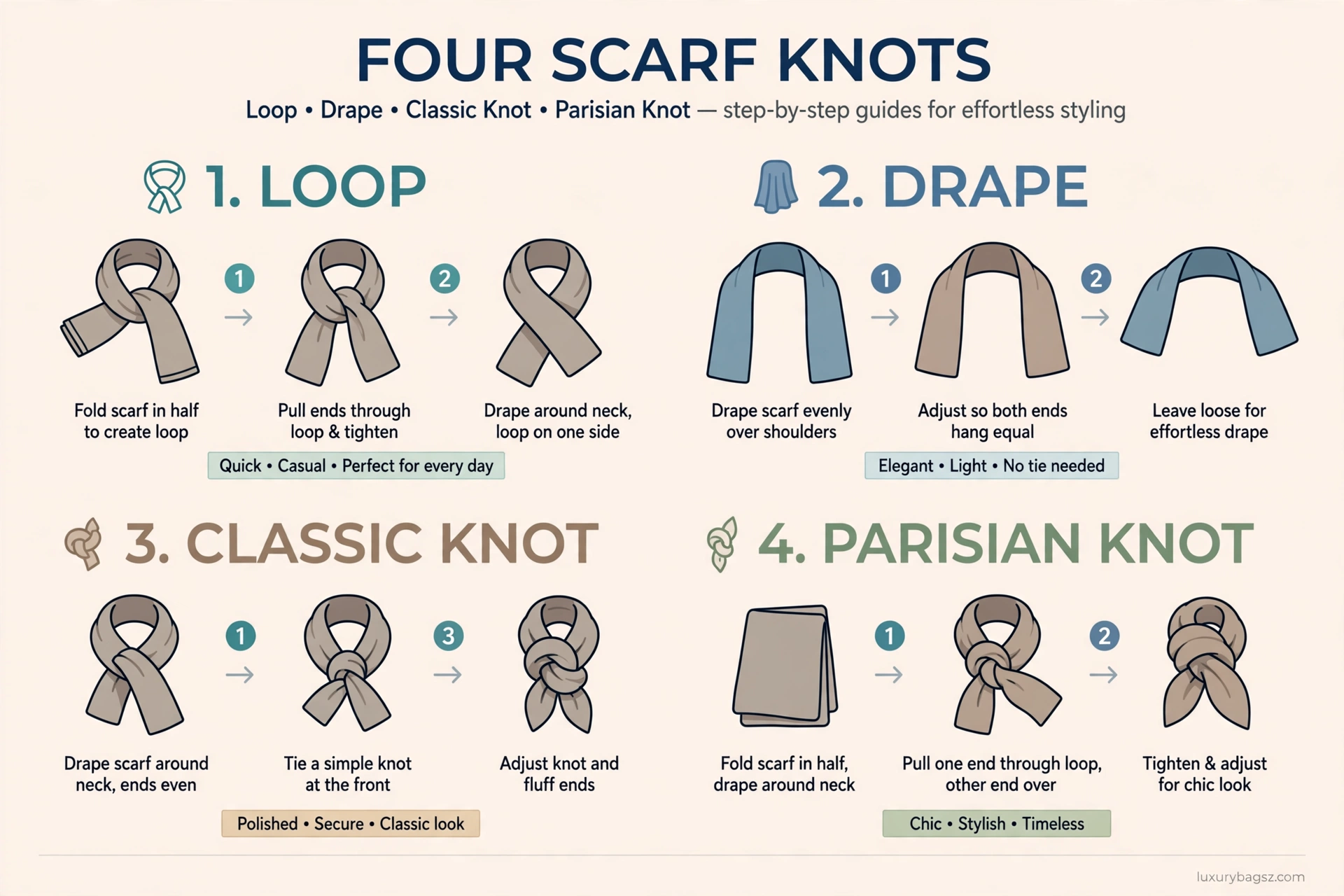
For the loop, fold an oblong in half, place it around your neck, and pull both ends through the fold. Settle it at the throat for warmth or lower for a softer look.
For the drape, simply hang the scarf around your neck with ends even, inside or outside a coat. It adds a vertical line and colour with zero effort.
The classic silk methods are demonstrated in our how to tie a Hermes silk scarf guide, which covers the foundational folds on a square.
Uneven ends look relaxed; even ends look deliberate. Choose based on the outfit, not habit.
The drape works under a blazer as well as over a coat. Tuck the ends inside the jacket for a clean, scarf-as-shirt-front effect.
For a warmer drape, cross the ends behind your neck and bring them forward. It looks like a simple hang but locks warmth at the throat.
Knots That Stay Put: Parisian, Classic and Side
The Parisian knot is the loop pulled snug and centred. It suits coats and keeps the chest warm on cold, windy days.
A classic front knot on a folded silk band gives a neat, jewellery-like finish with a blouse or plain knit. Keep the knot small and the ends short.
A side knot, worn just off centre, softens the look and works with asymmetric necklines and one-shoulder tops.
If knots migrate, your scarf is too silky or too short for the style. Swap to a loop, which locks fabric against itself.
A knot sits best where a necklace pendant would fall. If yours lands higher, lengthen the tails; lower, and the scarf is probably folded too wide.
Cotton and linen scarves hold knots that silk will not. Save the fancy knots for grippy fabrics and save silk for loops and drapes.
Silk Squares at the Neck: Neckerchief and Choker Styles
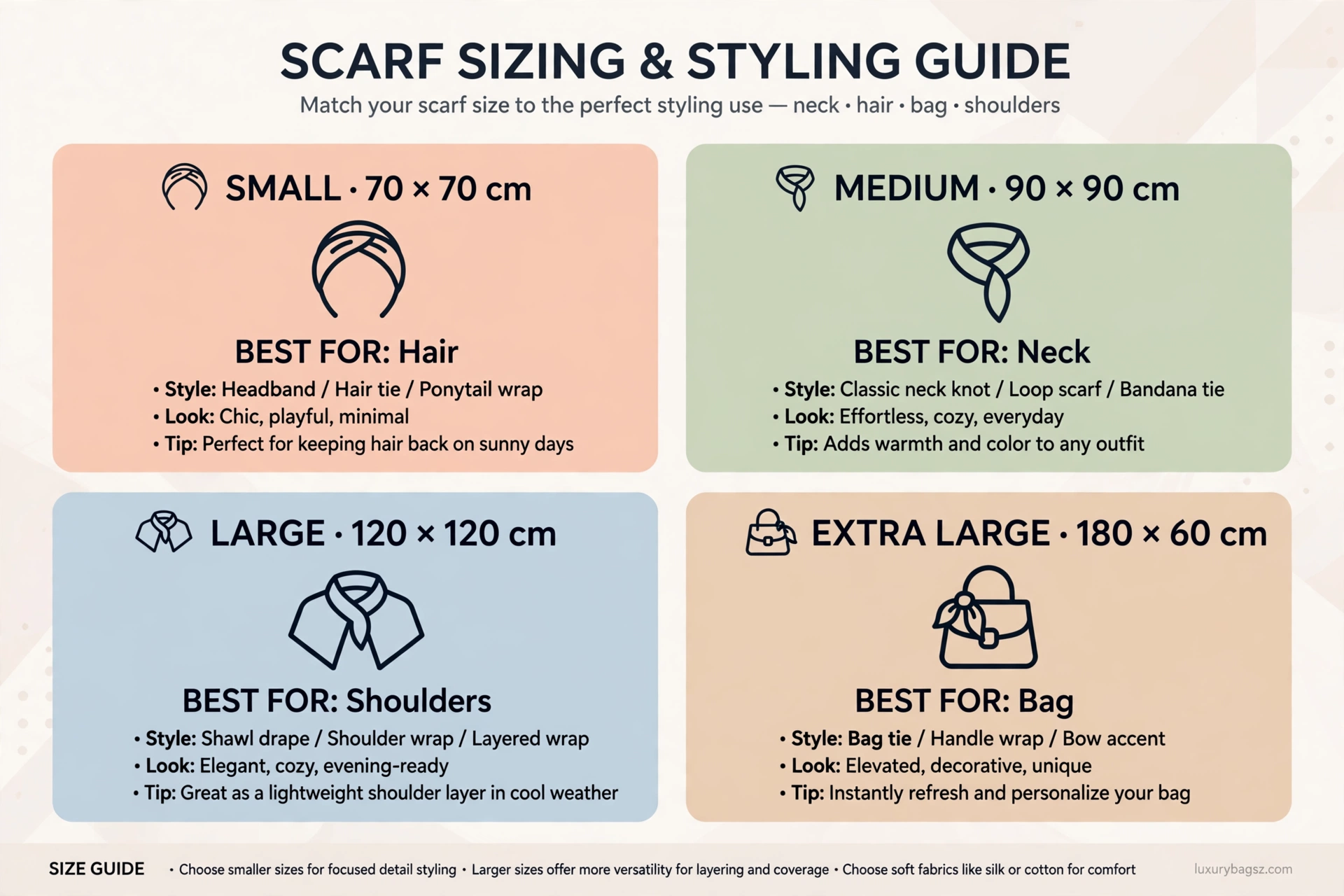
Fold a square into a narrow band, wrap it once or twice, and knot it small at the front or side. This is the chicest use of a 70 cm square.
Leave longer tails for a softer, bohemian feel with denim and plain tees. Short tails read polished and suit shirts and blazers.
A triangle fold with the point at the front gives more coverage and a vintage mood. It flatters V and scoop necklines most.
Keep necklaces off when the scarf sits high. One focal point at the neck is enough, and metal catches on silk.
The choker wrap — band wrapped twice, knot hidden at the back — is the sleekest evening version. It suits bare necklines and plain dresses.
Leave one tail deliberately longer for an asymmetric finish. Perfect symmetry is what makes scarf styling look dated.

Hair Styling: Headbands, Ponytails and Wraps
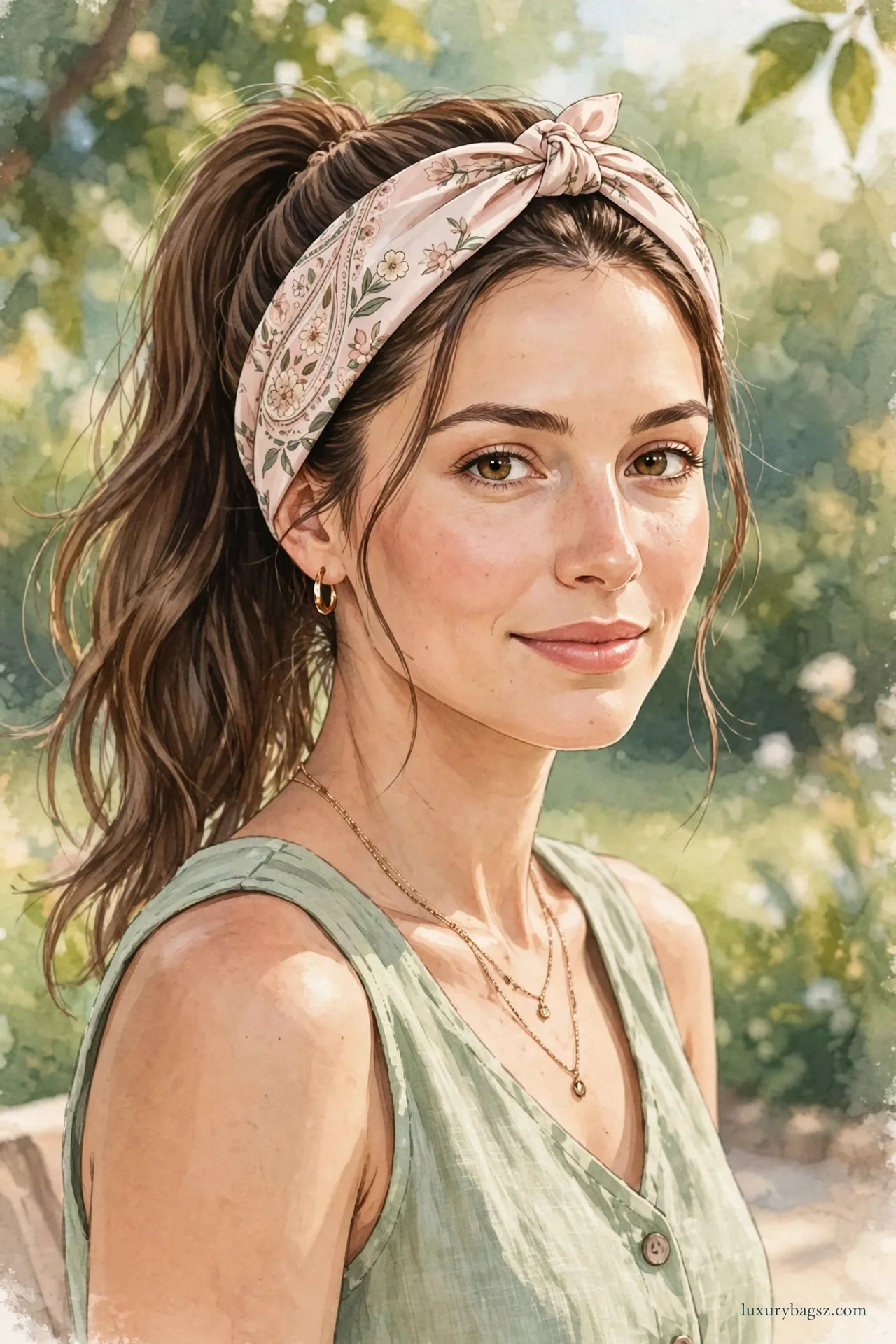
Fold a scarf into a band and tie it as a headband, knot on top for a playful look or underneath for a clean line.
Thread a narrow scarf through a ponytail or plait for instant polish on plain hair days. Silk is kind to hair and adds no snagging.
A full head wrap in a large square protects hair in sun and wind and makes a strong holiday look with sunglasses.
Slipping is the usual problem. Place the band over slightly textured or day-old hair, and cross two grips at the nape if needed.
For fine hair, place the band over a low ponytail rather than loose hair. The tie point stops the slide that loose silk-on-silk contact causes.
A scarf in the hair also rescues a grown-out colour or a bad hair day, which is half of why stylists reach for it so often.
On the Bag, Wrist and Waist
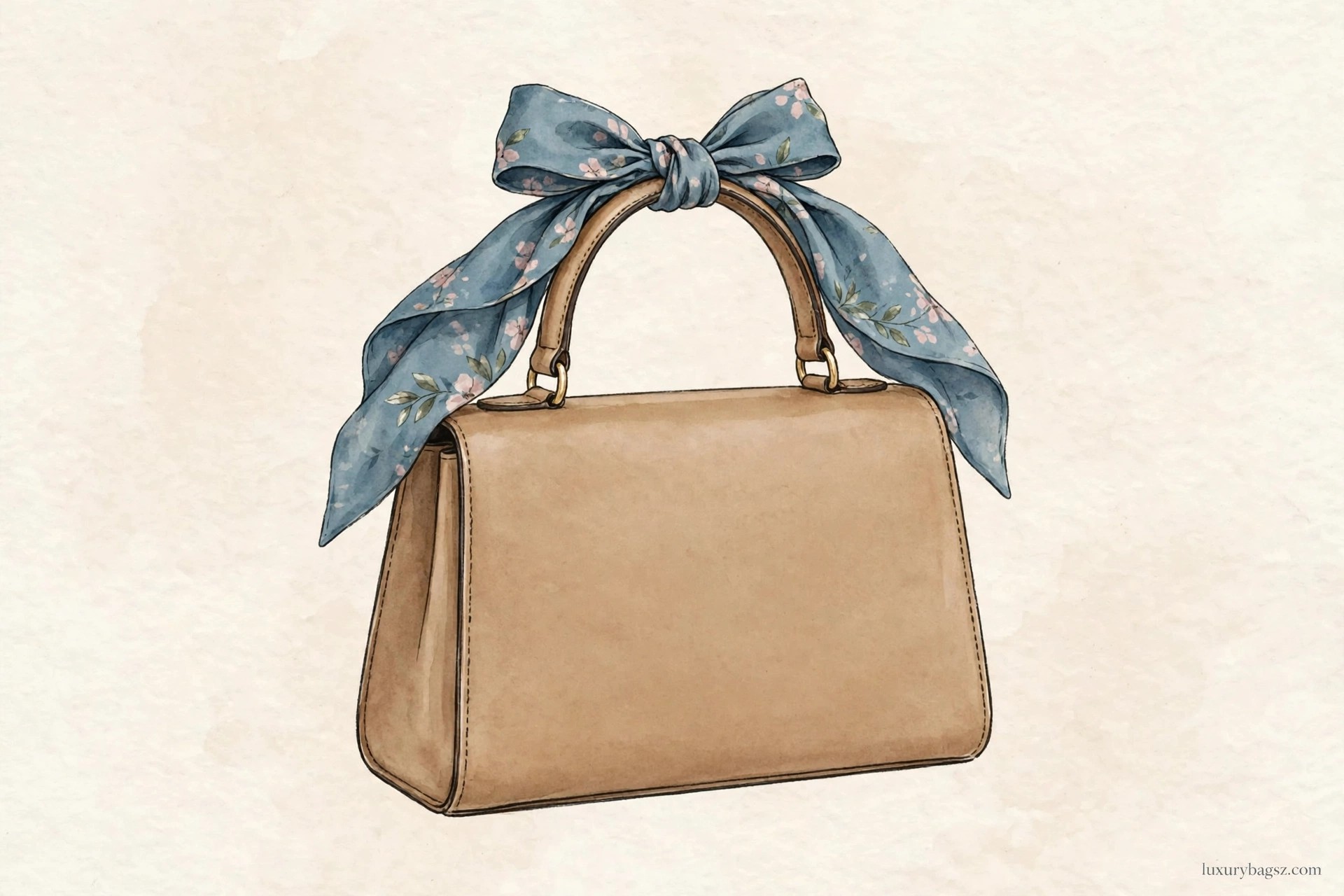
Tie a small silk scarf in a bow at a bag handle, or wrap the handle fully for colour and grip. Our how to wear a Hermes twilly on a bag handle walkthrough shows the wrap method step by step.
A narrow scarf knotted at the wrist works like a soft bracelet and rescues a plain sleeveless outfit.
Thread a long scarf through belt loops or knot it over a dress as a sash. This is the easiest way to add a waist to loose summer dresses.
Keep bag scarves away from rough hardware. Snags on zips and clasps are the main way silk scarves get damaged.
Match the bag scarf's scale to the bag. A tiny bow on a huge tote disappears; a full handle wrap on a mini bag overwhelms it.
Remove bag scarves before rain. Wet silk on leather handles can transfer dye in both directions.
Belted Shawls and Evening Drapes
Drape a large square or shawl over your shoulders and belt it at the waist. The result reads as a styled layer, not a blanket.
For evenings, drape silk over one shoulder of a plain dress and secure it with a brooch or a hidden knot at the back.
A shawl worn loose over both shoulders suits seated events. Standing and walking events call for the belted version, which stays in place.
Choose matte fabrics by day and silk or subtle sheen after dark. Shine plus a large area of cloth can overwhelm a simple dress.
Evening shawls benefit from one anchoring point — a brooch, a belt or a knot — because seated events involve leaning, hugging and photographs.
Carry a spare fold in mind for temperature drops: the same shawl worn loose at dinner becomes a warm wrap for the walk home.
Fixes, Care and Storage
Scarf bunching at the neck usually means too much fabric for the neckline. Fold the scarf narrower, or wear it outside the coat instead of under the collar.
Static makes light scarves cling. A quick pass with a barely damp hand or an anti-static spray on the coat lining helps.
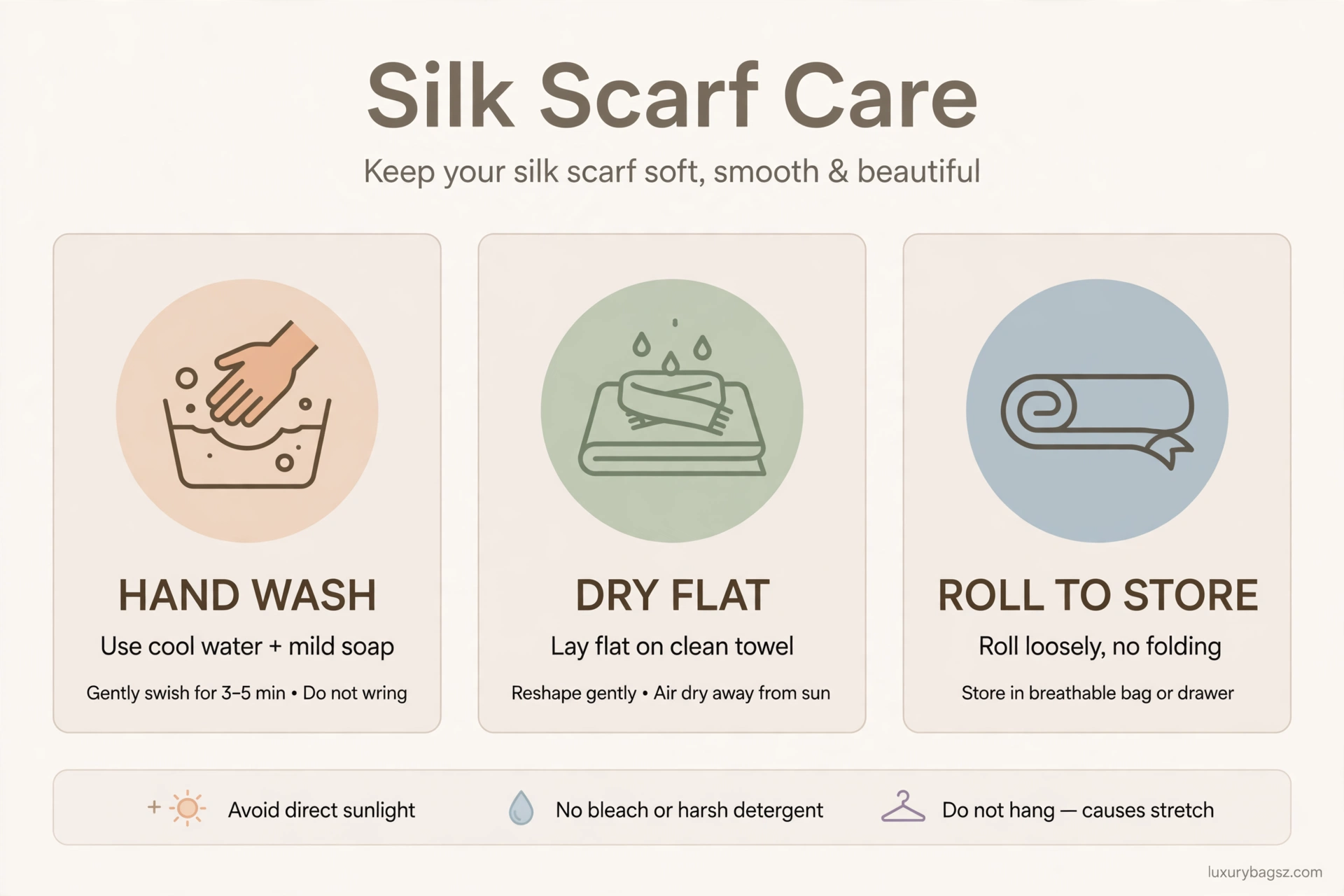
Roll scarves for storage to avoid fold lines, and keep silk away from direct light. Our how to store a Hermes silk scarf without creases guide details the roll method.
Hand wash silk in cool water with mild soap only when needed. Most scarves need airing, not washing, after each wear.
Iron silk only on the lowest setting, from the reverse side, and never over a knot crease you want to keep soft.
Rest a scarf a day between wears when you can. Silk and wool both recover their drape when aired, and need washing less often as a result.
Frequently Asked Questions
What is the easiest scarf style for beginners?
The drape: hang an oblong scarf around your neck with the ends even. There is nothing to tie, and it works over almost any coat or jacket.
How do you keep a silk headband from slipping?
Wear it over textured or unwashed hair, position it slightly back from the hairline, and add two crossed grips underneath at the nape if it still moves.
Which knot suits a coat best?
The Parisian knot — the loop pulled snug at the throat. It fills the coat opening, stays centred and keeps the chest warm.
Can you wear a scarf with a blazer?
Yes. A silk band knotted small at the neck, or an oblong draped inside the blazer opening, both work. Keep bulk low so lapels sit flat.
How do you style a scarf as a belt?
Thread a long scarf through belt loops, or knot it over a loose dress at the natural waist. Match one scarf colour to your shoes or bag for a planned look.
What scarf size is best for bag tying?
A narrow band format, roughly 86 by 5 cm for a twilly style, or a 45 to 70 cm square folded into a band. Both bow and wrap neatly on handles.
How do you stop a scarf looking bulky?
Fold it narrower, choose one wrap instead of two, and let the ends hang rather than bunching them at the throat.
Can you wear a scarf in summer?
Yes — silk or cotton in a neckerchief, headband or bag tie adds style without warmth. Save wool and cashmere for cooler months.
How should you store silk scarves?
Rolled loosely in a drawer or box, away from direct light. Rolling avoids the sharp fold lines that hanging and tight folding leave in silk.
Do scarves suit short necks?
Yes, worn the right way: narrow folds, V shapes and drapes that sit lower on the chest. Avoid thick wraps piled high at the throat.
Summary: Two Folds Cover Most Days
Master the loop and the drape first, then add the neckerchief, headband and bag tie as your scarf wardrobe grows.
Match each fold to the fabric in your hand, keep knots small and deliberate, and the scarves you already own will work noticeably harder.