

Statement Jewellery Styling Guide: One Bold Piece, Balanced Outfits and No Clashing
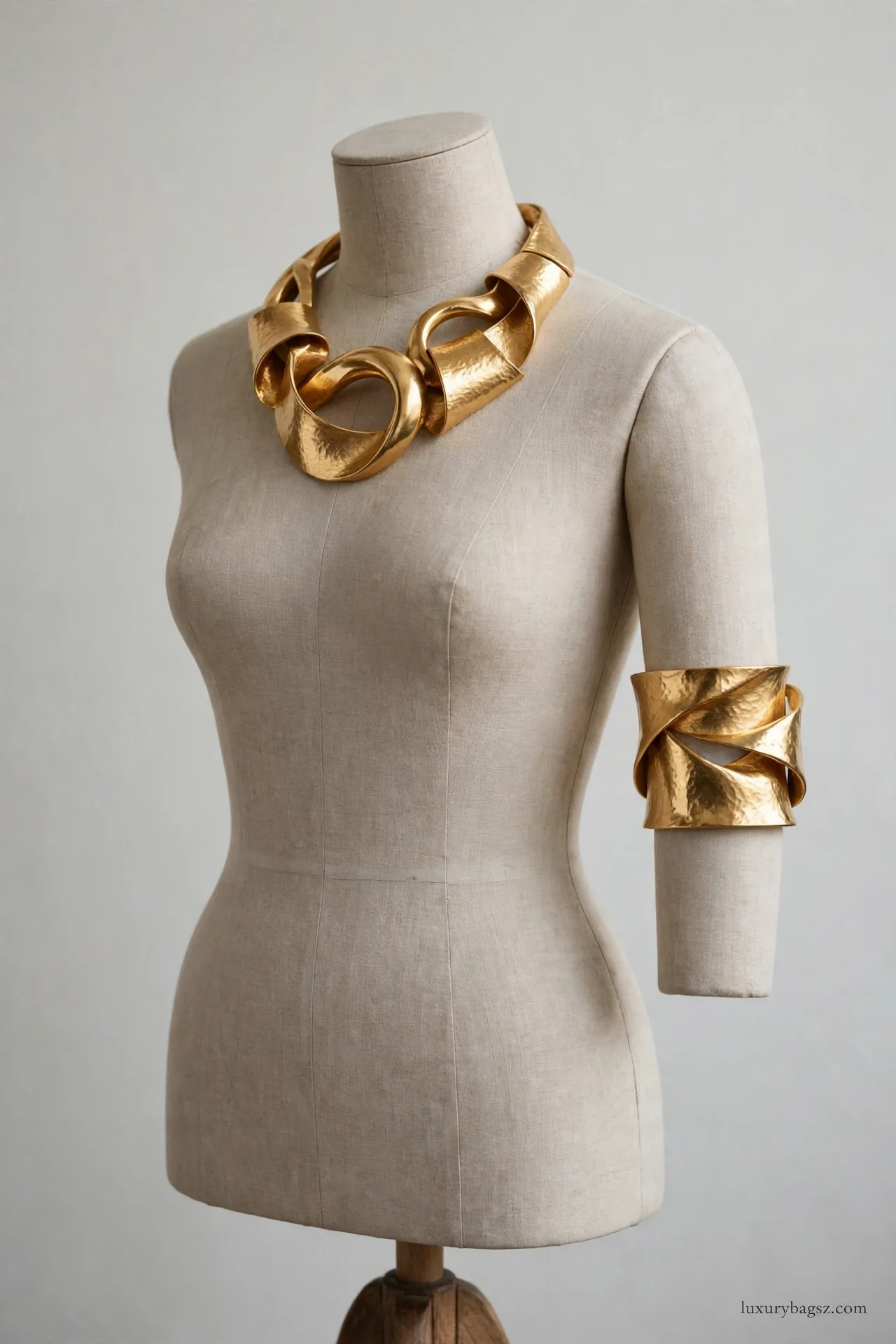
Statement Jewellery, Styled Simply: One Piece Leads
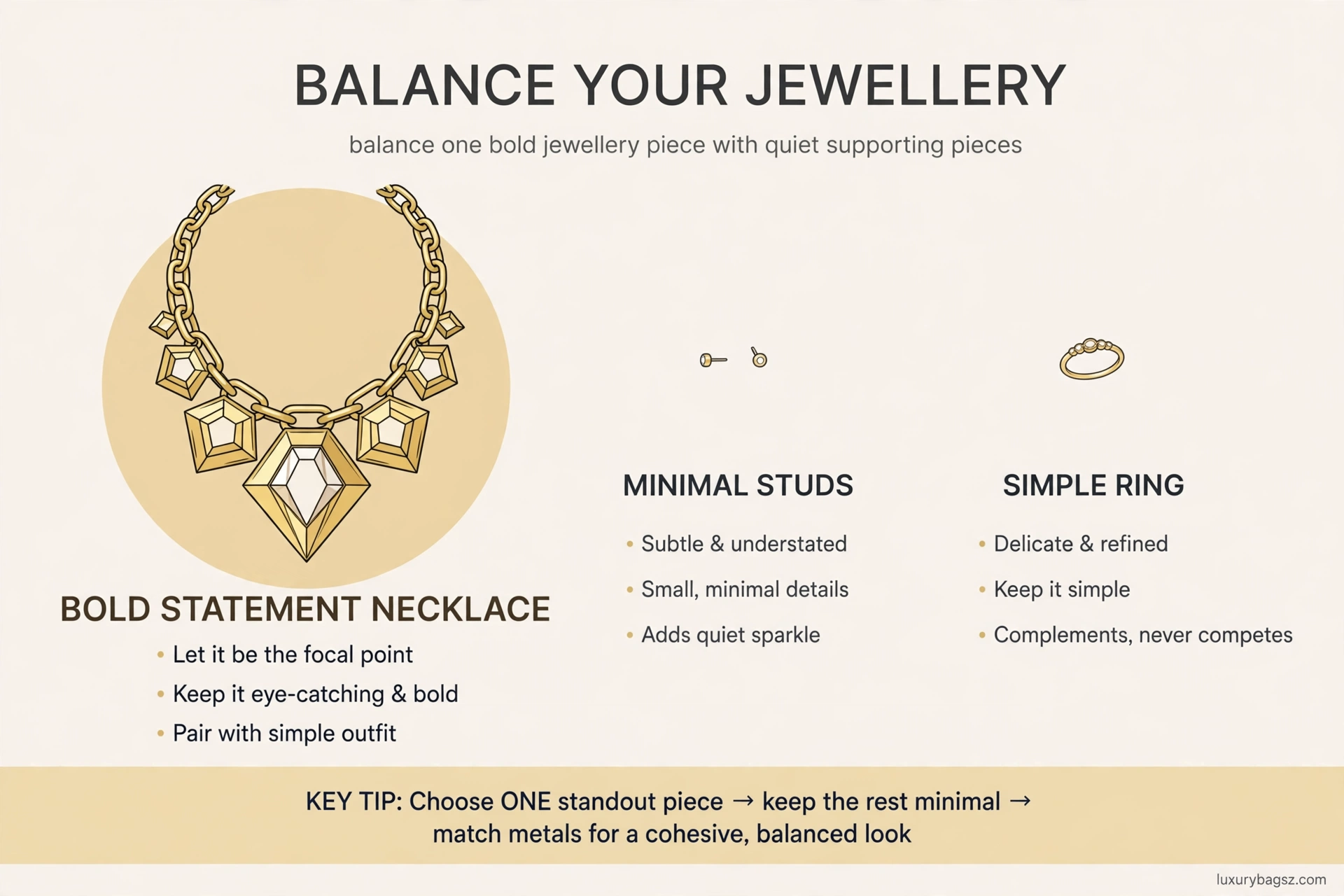
The rule that makes statement jewellery work is simple: one piece leads, and everything else supports it. A bold necklace, oversized earrings or a wide cuff should be the single loudest thing in the outfit. Choose that lead piece first, then build a quiet outfit around it. Plain fabrics, clean necklines and restrained other jewellery let the statement piece look deliberate rather than accidental.
Key Takeaways
- One statement piece per outfit is the reliable rule; two competing pieces cancel out.
- Match the piece to the neckline: open necklines take necklaces, covered ones take earrings or cuffs.
- Keep clothing simple in colour and texture so the jewellery carries the interest.
- Balance scale with your frame and the occasion, not just with the outfit.
- Mixed metals work when one metal clearly dominates.
- Store statement pieces separately; large stones and settings scratch easily.
Start With the One-Piece Rule
Statement jewellery fails most often through generosity: bold earrings plus a bold necklace plus stacked cuffs, all competing. The eye lands nowhere, and expensive pieces read as costume clutter. Pick the hero before you dress. If the necklace is the hero, earrings shrink to studs. If earrings lead, the neck stays bare. Our fine jewellery trends guide shows how current styling keeps one clear focal point. The rule also saves money. One genuinely good statement piece, worn often and well, outperforms a drawer of loud pieces that can never be worn together.
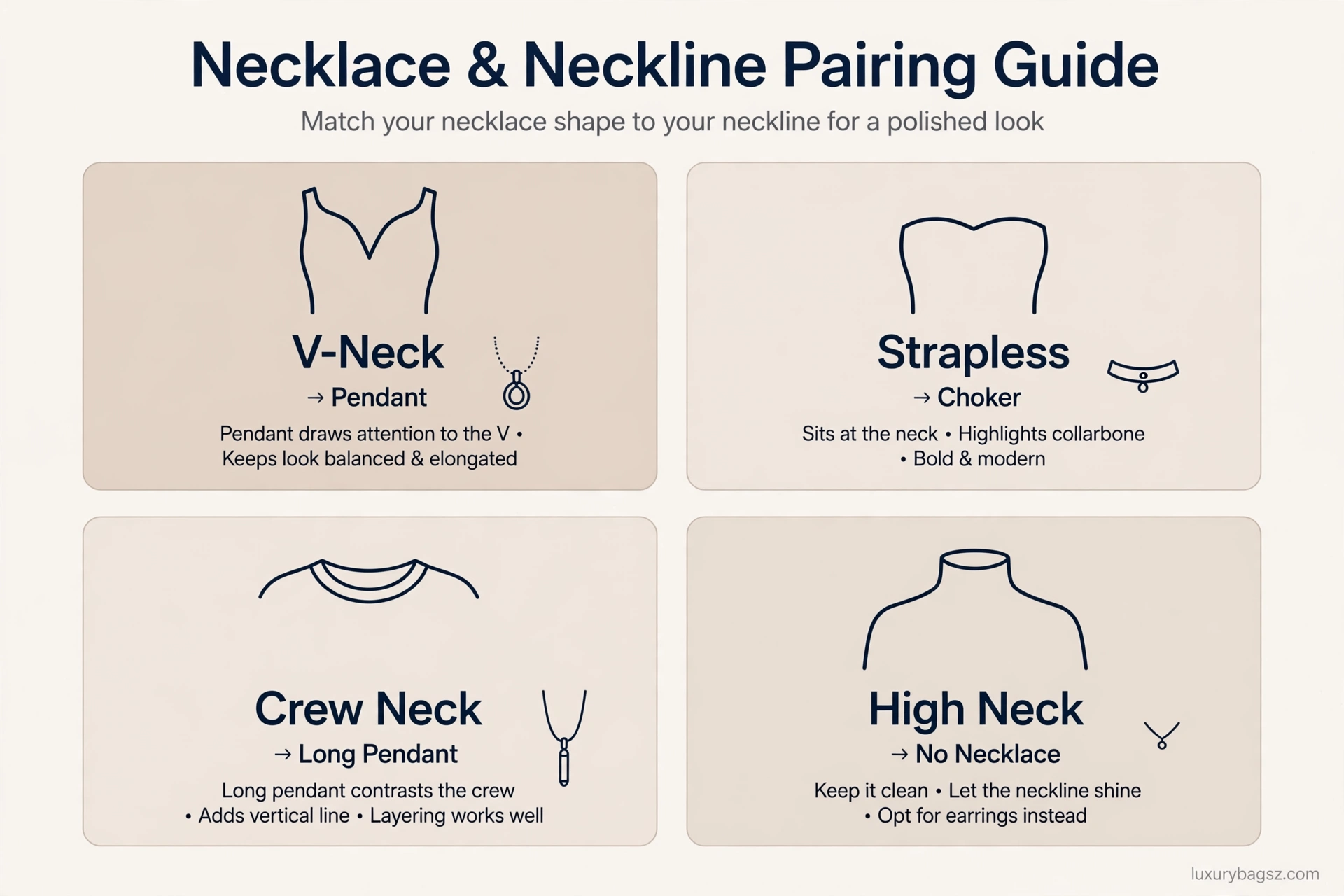
Match the Piece to the Neckline
Necklines decide where jewellery can sit. A V-neck welcomes a pendant or a shaped collar necklace that follows the V. A strapless or sweetheart neckline suits a choker or short bold necklace. High and covered necklines leave no room for necklaces. Move the statement to the ears or the wrist instead, where it frames the face or punctuates a sleeve. Boat necks and crew necks take long pendants or layered chains worn over the fabric. Keep the fabric plain; a busy print under a bold necklace fights for the same attention.
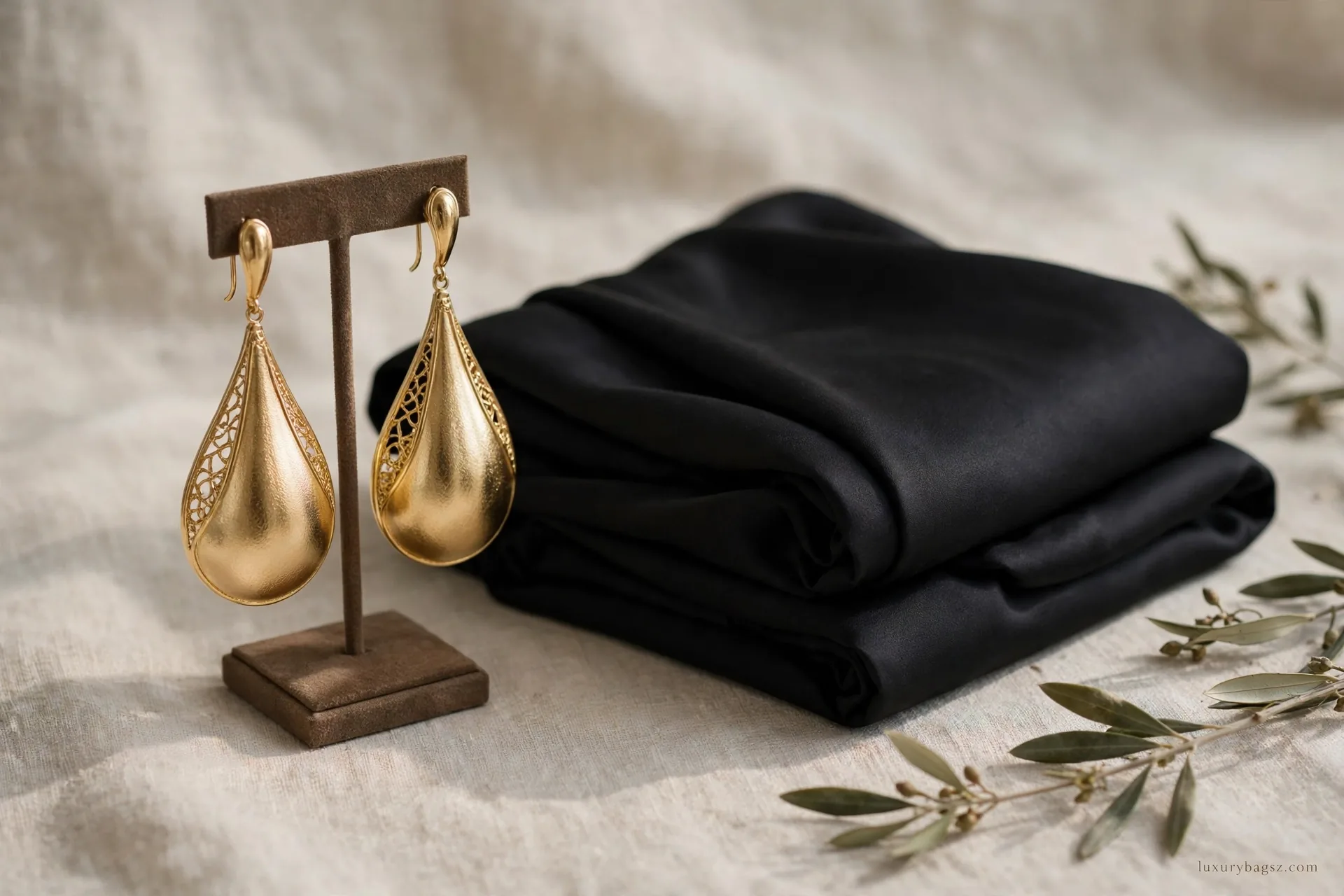
Statement Earrings: Frame, Do Not Fight
Earrings are the easiest statement to wear because they sit near the face and need no neckline space. Long drops lengthen the face; wide chandeliers add presence at evening events. Hair decides how much earring shows. Worn up, even large earrings read cleanly. Worn down, choose pieces with movement or shine that catch light through the hair. For daily wear, scale down to the bold end of our everyday fine jewellery guide: a sculptural hoop or a single striking stud gives the effect without the weight.
Necklaces and Cuffs: The Other Heroes
A statement necklace needs a calm canvas: a plain dress, a simple knit, an open shirt. Texture in the clothing, such as lace or heavy embroidery, competes directly with texture in the necklace. Cuffs and wide bangles work hardest with bare or three-quarter sleeves. A single wide cuff reads stronger than a stack of thin bangles when the aim is a statement. Rings can lead too. One large cocktail ring with plain nails and no other hand jewellery is a complete statement, and it suits outfits where necklaces and earrings feel wrong.
Consider the photograph test too. Statement pieces are bought to be seen, and phones now see them first. A piece that reads clearly at arm's length in a photograph, without blurring into the outfit, has the right visual weight for modern wear.

Scale, Proportion and the Mirror Test
Scale the piece to your frame and the room. Petite wearers can carry bold pieces, but very long necklaces may overwhelm; shorter, wider shapes often balance better. Use the full-length mirror test. Step back: if your eye goes to the jewellery first and the outfit second, the balance is right. If you see only jewellery, scale down one level. Sculptural modern pieces follow the same logic as traditional ones, as our sculptural gold jewellery guide shows: form leads, decoration follows.
Colour and Mixed Metals
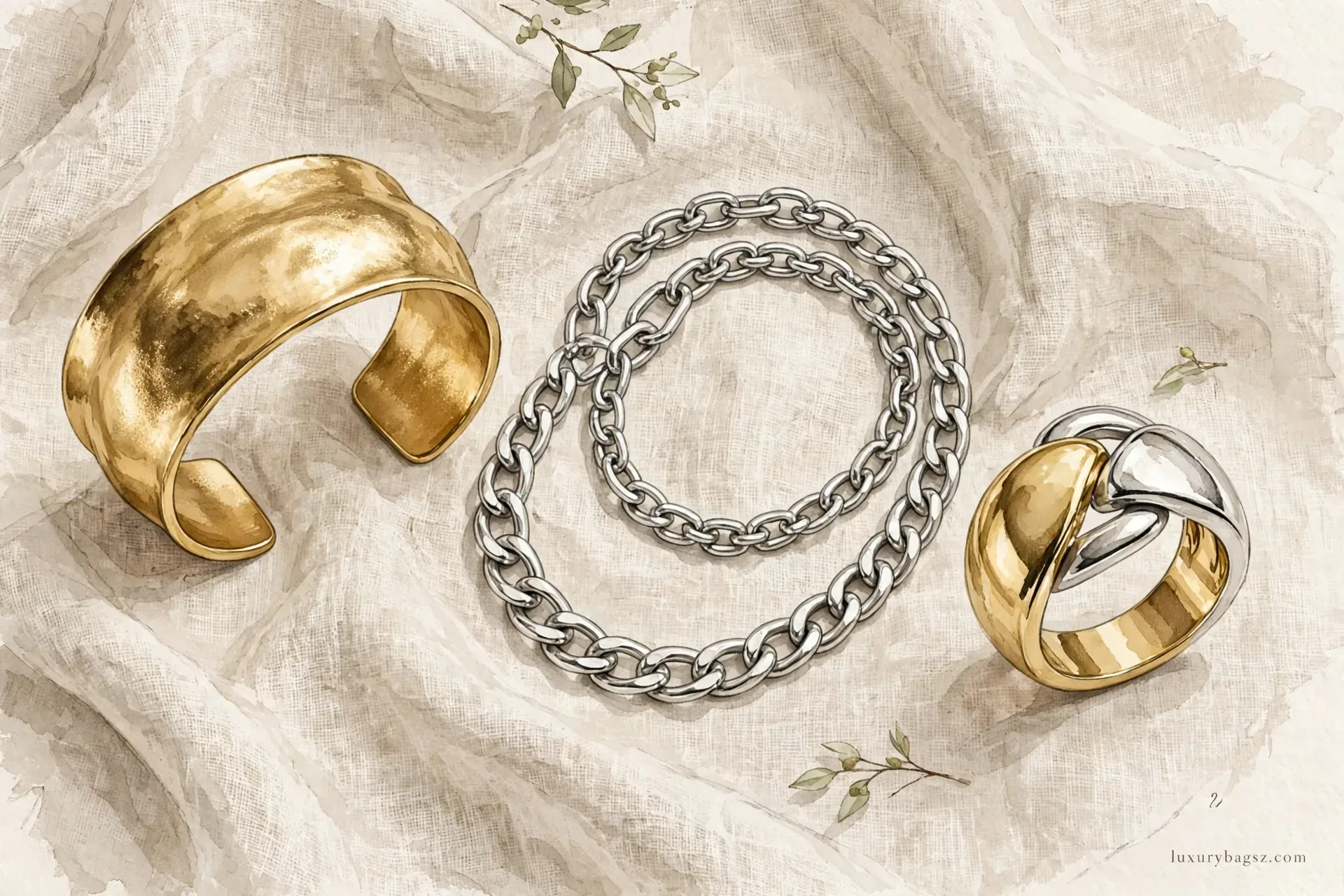
Coloured stones make the boldest statements and the narrowest wardrobes. A red stone necklace needs neutral clothing around it, so buy colour only if your wardrobe offers those neutrals. Mixed metals are now normal rather than daring. The method in our guide to how to mix gold and silver jewellery applies doubly to statement pieces: let one metal dominate clearly. Warm metals flatter warm-toned clothing; cool silver and white gold sharpen black, white and grey. Match the statement piece to the outfit's temperature first.
Care for Large and Delicate Pieces
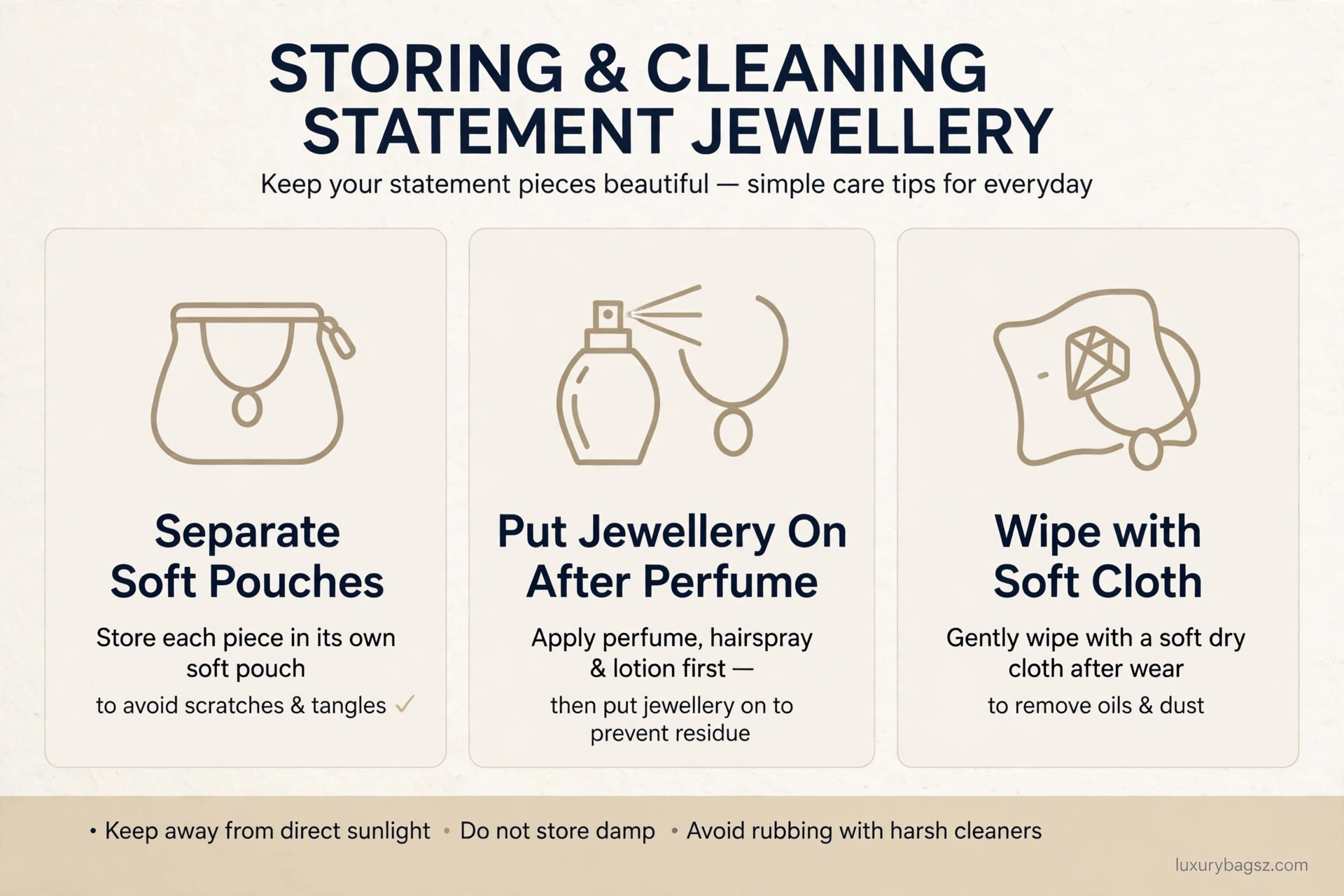
Statement pieces are often the most fragile in a collection: large stones, exposed settings, enamel and articulated parts. Put them on last, after perfume and hairspray have dried. Store each piece alone in a soft pouch. Chains tangle around stone settings in a shared box, and one hard stone can scratch every softer neighbour overnight. Clean gently with a soft cloth. Enamel, pearls and glued stones should never be soaked; if a piece needs more than a wipe, a jeweller's gentle clean is the safer spend.
Building a Small Statement Rotation
Three pieces cover most wardrobes: one bold necklace, one pair of statement earrings and one cuff or cocktail ring. Bought slowly and worn on rotation, they transform plain outfits for years. Choose them against your real wardrobe, not an imagined one. If you live in black dresses, buy the pieces that light up black. Our list of must-have jewellery pieces for women helps place statement pieces inside a complete collection. Buy the best construction you can afford in the piece you will wear most. A statement piece earns its place through repetition, not rarity.
The Exception: Matched Sets Count as One
Every rule in this guide has one designed exception. A necklace and earrings made as a set, sharing the same stones, shapes and metal, read to the eye as a single coordinated idea rather than two competing statements.
That is why bridal and formal sets work where random bold pieces fail: the eye reads the repetition as intention. The test is strict, though. Same family, same scale logic, genuinely designed together; two loud pieces that merely share a colour are still two statements.
Sets also solve the photograph problem for formal events, where the jewellery is seen as a whole across the room. If your life includes many photographed occasions, one excellent set may serve you better than either of its pieces bought separately.
Wearing half a set is equally valid. The earrings alone with a bare neck, or the necklace alone with studs, stretches one purchase across three levels of formality.
Statement Jewellery at Work
The office does not ban statements; it reprices them. In a professional setting the bold piece should sit inside the silhouette of the outfit rather than swinging outside it: a sculptural cuff under a sleeve’s edge, a bold ring, a structured pendant at a collar.
Sound matters at work in a way it never does at parties. Jangling bangle stacks announce you in meetings and on calls, so the working statement is visual only. One wide cuff beats five thin ones twice over, in impact and in silence.
Scale to the room’s formality rather than your taste alone. A creative studio tolerates chandelier earrings at noon; a courtroom or a boardroom reads the same earrings as a costume choice. The piece has not changed; the reading has.
The safest professional statement is the one in a precious material at moderate size: solid metal carries authority that oversized costume pieces cannot, and it survives the working week physically as well as socially.
Earring Shapes and Face Shapes
Statement earrings frame the face, so their geometry should argue with your face’s geometry as little as possible. Long, narrow drops lengthen a round face; wide chandeliers add the width a long face can use.
A square or angular jaw softens under curves: hoops, teardrops and rounded drops. A heart-shaped face, wider at the forehead, balances with earrings wider at their bottom, such as teardrops and triangles pointing down.
Short necks want earrings that stop above the shoulder, because a drop that lands on the shoulder visually shortens the neck further. Long necks carry the full shoulder-grazer drama that stylists photograph.
None of this is law; it is the physics of attention. Try the bold pair against your face in daylight before buying, because earrings are the one statement piece that cannot be judged on a table.
Daytime Statements: Turning the Volume Down
A statement piece for daylight differs from an evening one mainly in material. Sparkle reads as evening almost regardless of size, while enamel, resin, wood, horn and matte metal read as daytime at impressive sizes.
That is the daytime shortcut: go bigger in a matte or natural material instead of smaller in a glittering one. A large wooden cuff or enamel collar at lunch looks intentional; the same size in crystals looks like last night continued.
Daylight also audits quality more harshly. Glue lines, plating wear and lightweight construction that candlelight forgives are plain in noon sun, so daytime statement pieces deserve the same construction checks as fine ones.
Sunglasses and hats join the equation outdoors. Choose either the big earring or the big frame, not both at full volume, and the one-piece rule survives the summer intact.
Wearing Big Pieces Comfortably All Evening
Weight is the hidden price of statement earrings. A heavy pair pulls the lobe, aches by the second hour and can stretch piercings over time, so judge a bold earring by the hand as well as the mirror: if it feels heavy between your fingers, it will feel heavier at midnight.
Support backs, the wide discs that spread an earring’s weight across the lobe, transform wearability and cost almost nothing. Adhesive lobe-support patches do the same job invisibly for one-off events.
Clip converters and magnetic options serve unpierced ears and rescue vintage statement pieces, which are often clips already. Many of the best mid-century statement earrings were made as clips, which is one more reason the vintage route in our earlier advice works.
For necklaces, distribute weight across the collarbone rather than the back of the neck: a collar shape that sits on the bone tires you less than a heavy pendant hanging from a fine chain. Comfort is a styling feature, because a piece you keep touching never looks at ease.
Hair and Make-Up: The Frame Around the Piece
Statement earrings are worn with hairstyles, not just outfits. Hair worn up shows the full piece and suits formal statements; hair worn down filters the earring through movement, which suits drops and anything designed to catch light as you turn.
A centre parting with hair tucked behind both ears is the modern compromise: the earrings show, the hair still frames, and long drops keep their line. One-sided hair with a single visible statement earring is a deliberate editorial look that works best kept exactly that deliberate.
Make-up follows the one-piece rule in miniature. A bold lip and a bold earring compete across a short distance, so choose which one the room meets first. Bold eyes argue with chandelier earrings in photographs even when they survive the mirror.
Nails complete the circuit for hand statements: a cocktail ring wants either a perfect manicure or clean bare nails. Chipped polish next to the outfit’s hero piece quietly demotes it, the same way scuffed shoes undo a formal dress.
Frequently Asked Questions
Can I wear statement earrings and a statement necklace together?
Rarely well. The two compete at the same visual height. Choose one as the hero and keep the other minimal, such as plain studs with a bold necklace.
What neckline suits a bold necklace best?
Open necklines such as V-necks, scoop necks and strapless styles give a necklace clean space. High necklines suit earrings or cuffs instead.
Is statement jewellery suitable for work?
Yes, at a smaller scale. A sculptural cuff, bold studs or one striking ring reads professional; chandelier earrings and layered bold necklaces usually read evening.
How do I stop statement pieces looking like costume jewellery?
Fewer pieces, better materials and plain clothing around them. Real metal weight, clean settings and one focal point separate fine statement pieces from costume clutter.
Can petite women wear large statement jewellery?
Yes, with proportion in mind. Shorter, wider necklaces and mid-size earrings usually balance a small frame better than very long or oversized pieces.
Should statement jewellery match my outfit's colour?
It should harmonise, not match exactly. Coloured stones work best against neutral clothing; metal pieces should follow the warm or cool temperature of the outfit.
How do I wear a statement piece with a printed dress?
Let the print decide. If the print is busy, move the statement to earrings or a cuff away from the print, or choose a metal piece in one of the print's quieter colours.
Are mixed-metal statement pieces a good buy?
Yes, because a two-tone piece bridges the rest of your collection. It lets gold and silver pieces you already own join the same outfit without clashing.
How should I store statement necklaces?
Flat, alone, in a soft pouch or lined box, fastened to prevent tangling. Never hang heavy stone necklaces for long periods; the weight strains the chain.
What is the best first statement piece to buy?
A pair of bold earrings for most people. They need no neckline planning, suit day and evening, and transform simple outfits immediately.
Final Verdict: Let One Piece Speak
Statement jewellery is not about size; it is about focus. One well-chosen piece, given space by a quiet outfit and supported by minimal companions, looks confident and expensive. Build a small rotation of three heroes, care for them gently, and let each take its turn in the lead.






