

How to Spot Fake Balmain Biker Jeans: Ribs, Labels, Zips and Denim Checks
Fake Balmain Biker Jeans, Spotted by Hand: Feel the Weight First
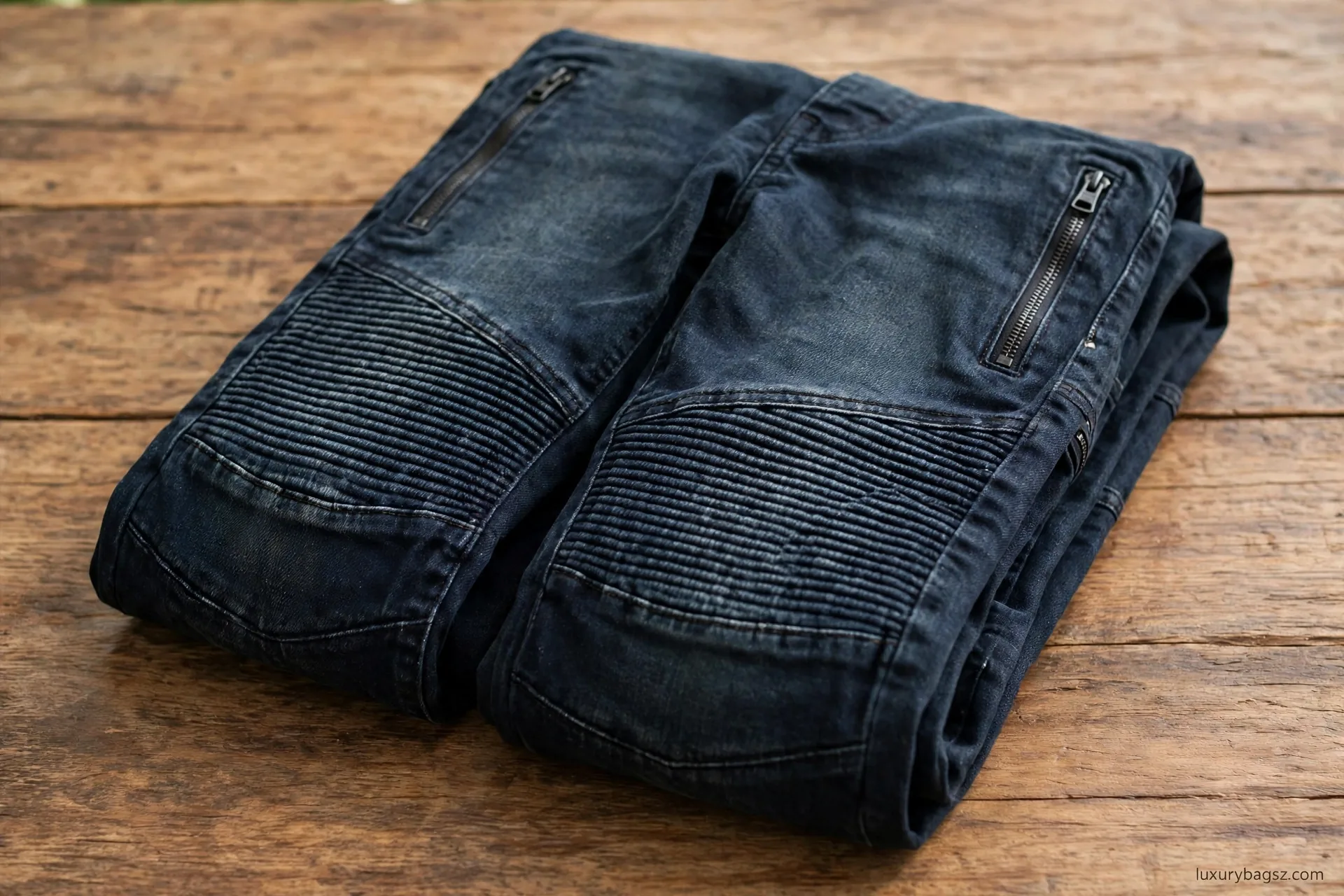
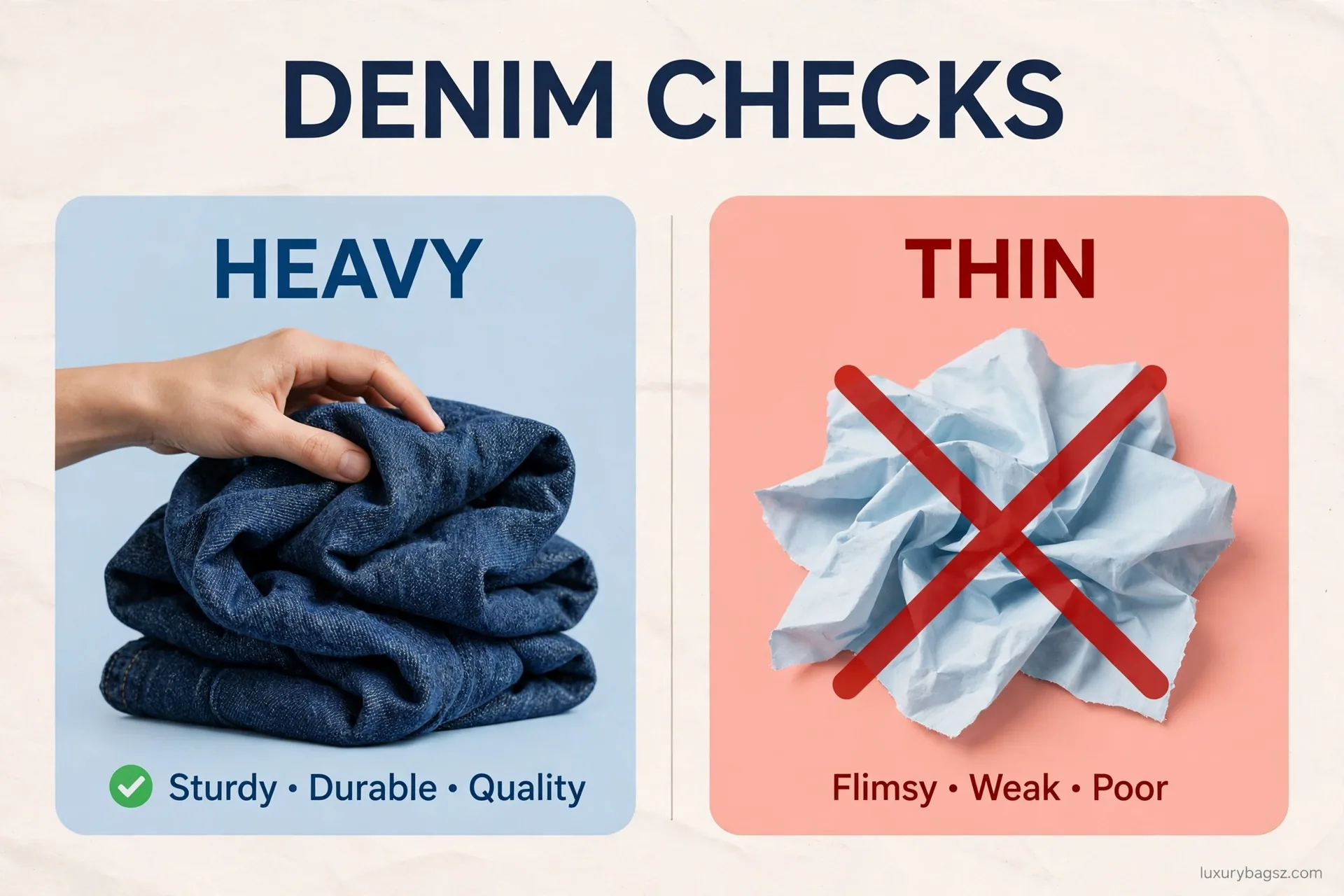
Pick the jeans up. A genuine Balmain biker pair feels heavy for denim, thanks to dense fabric, ribbed panels and serious metal hardware throughout. Fakes feel light and papery by comparison. The ribs look printed on rather than built in, and the zips feel like toys. Weight is your first honest witness. Then read the labels, count the ribs and test the zips. Biker jeans are heavily copied, but the copies save money exactly where your hands can find it.
Key Takeaways

- Genuine biker jeans feel notably heavy, with dense denim and metal.
- Ribbed knee panels are broad, even and aligned in a straight fall.
- Back and inner labels sit flat, stitched evenly with crisp print.
- Quality zips carry maker markings on the back of the slider.
- The wash should match a real style from a real season.
- Stitching is straight and calm, even on distressed styles.
Know the Real Biker Build
The Balmain biker is a tailored jean, not a decorated skinny. Expect ribbed panels above and at the knees, zip pockets and a close, structured fit. Details vary by season and wash, for men and women, so find the exact style in archived retailer photographs before judging a pair. Styling context helps you spot wrong proportions. Our are jeans business casual guide shows how a genuine tailored jean should sit and fall. Fakes often pile on every biker cue at once: too many zips, ribs in the wrong places and logos where the real style keeps things plain.
Ribbed Panels: Breadth, Count and Alignment
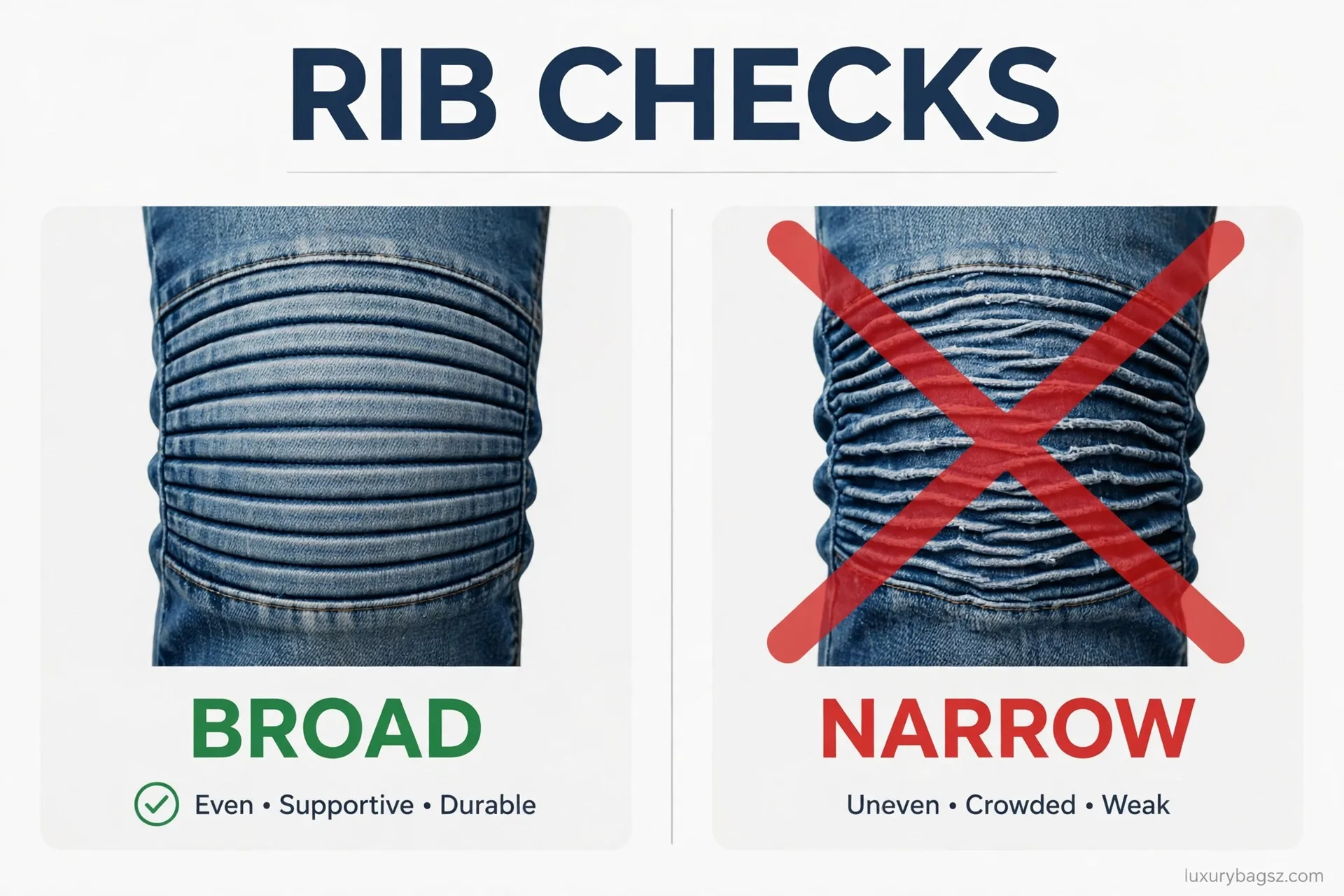
Study the famous ribs. On a genuine pair the ribbed panel is generous, and the ridges fall in one straight, even rhythm down the leg. Copies shrink the panel. Their ridges are narrower, more numerous and often angle off rather than falling in line, because small ribs are cheaper to sew. Run your hand across the panel. Real ribbing is padded and structured, holding its shape when the leg is laid flat on a table. Compare both legs side by side. Asymmetry between legs, puckering at the panel edges or ribs that wander are all signs of rushed making.
Back Label and Inner Waistband Label
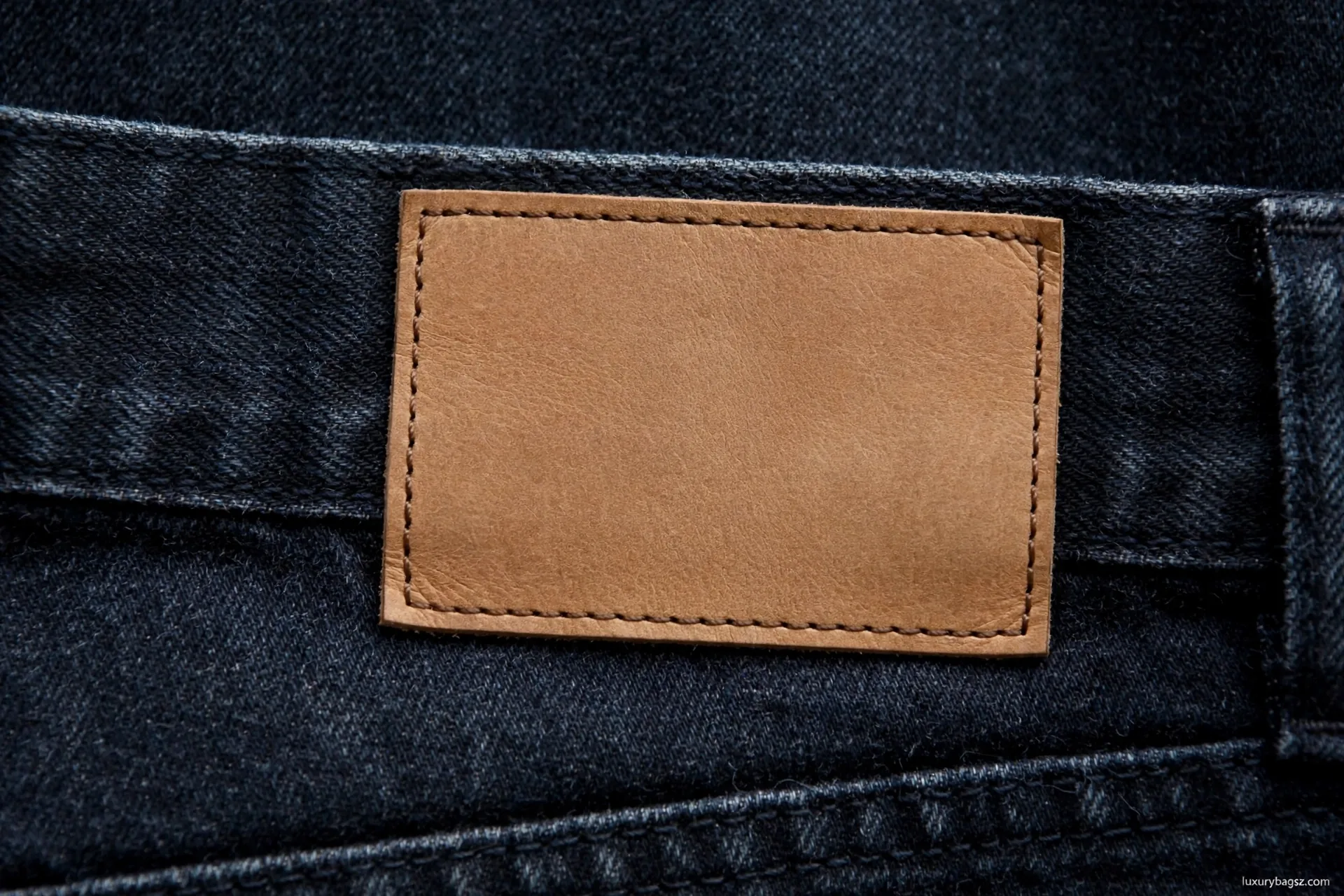
Turn to the back. The rear label should sit flat on the right side of the waistband, stitched with even stitches set close to the label's edges. There should be no unravelling, no lifting corners and no label sewn at a drunken angle. Sloppy placement here is a classic fake habit. Inside, a main label is stitched at the centre of the inner waistband toward the back. Its print should be crisp, level and fully legible. Blurry lettering, bleeding print or a label that peels like a sticker does not belong on a pair at this price, in any season.
Care Labels, Size Tags and Style Codes
Find the care labels and read them properly. Genuine labels list composition, care symbols and country of making in clean, clear type across tidy pages. The size tag pairing is a known tell on this style: a white size label printed on black material, with characters that stay sharp rather than smudging. Style codes should be legible enough to search. A code that dissolves into blur, or numbers that no listing has ever carried, undermines the pair. One missing label on a well-worn pair can happen. Several vague, flimsy labels on a pair sold as barely worn is a different and louder story.
Zips, Fasteners and Hardware Weight
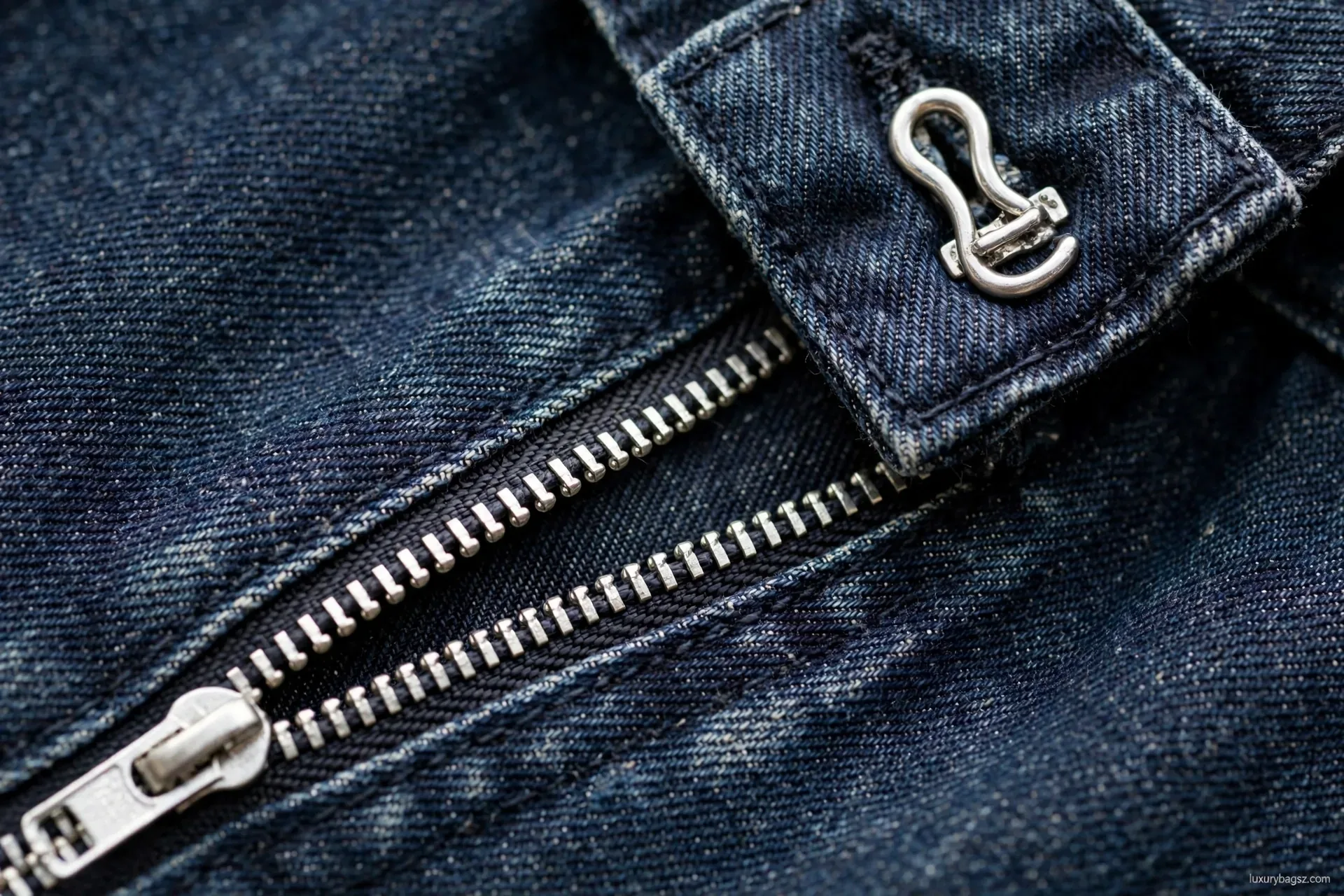
Work every zip. Genuine zips use fine, closely set teeth, run smoothly and are sewn in with even stitches that finish neatly at both ends. Balmain has used quality Italian zip making on these jeans. Turn a slider over: maker markings on the back of the zip body are a strong genuine sign. Check the waistband fastener as well. On genuine pairs the hook and eye hardware carries fine engraved detail that copies usually leave blank. Weigh the hardware in your hand as you go. Light, hollow-feeling metal that bends or rattles cheaply is exactly what a copy spends less on.
Denim Weight, Wash and Distressing
Feel the denim between finger and thumb. Genuine biker denim is heavy-duty, with body and a slight firmness even in stretch blends. Our how distressed denim is made guide explains how real fading and wear effects are built into cloth. The wash should match a genuine style. Each season's washes are specific, and copies often invent shades or place fading where thighs never rub. Distressing on a real pair looks controlled: whiskers and worn areas sit in natural places. Sandpapered rectangles and harsh white patches look staged.
Stitching, Tailoring and Fit as Checks
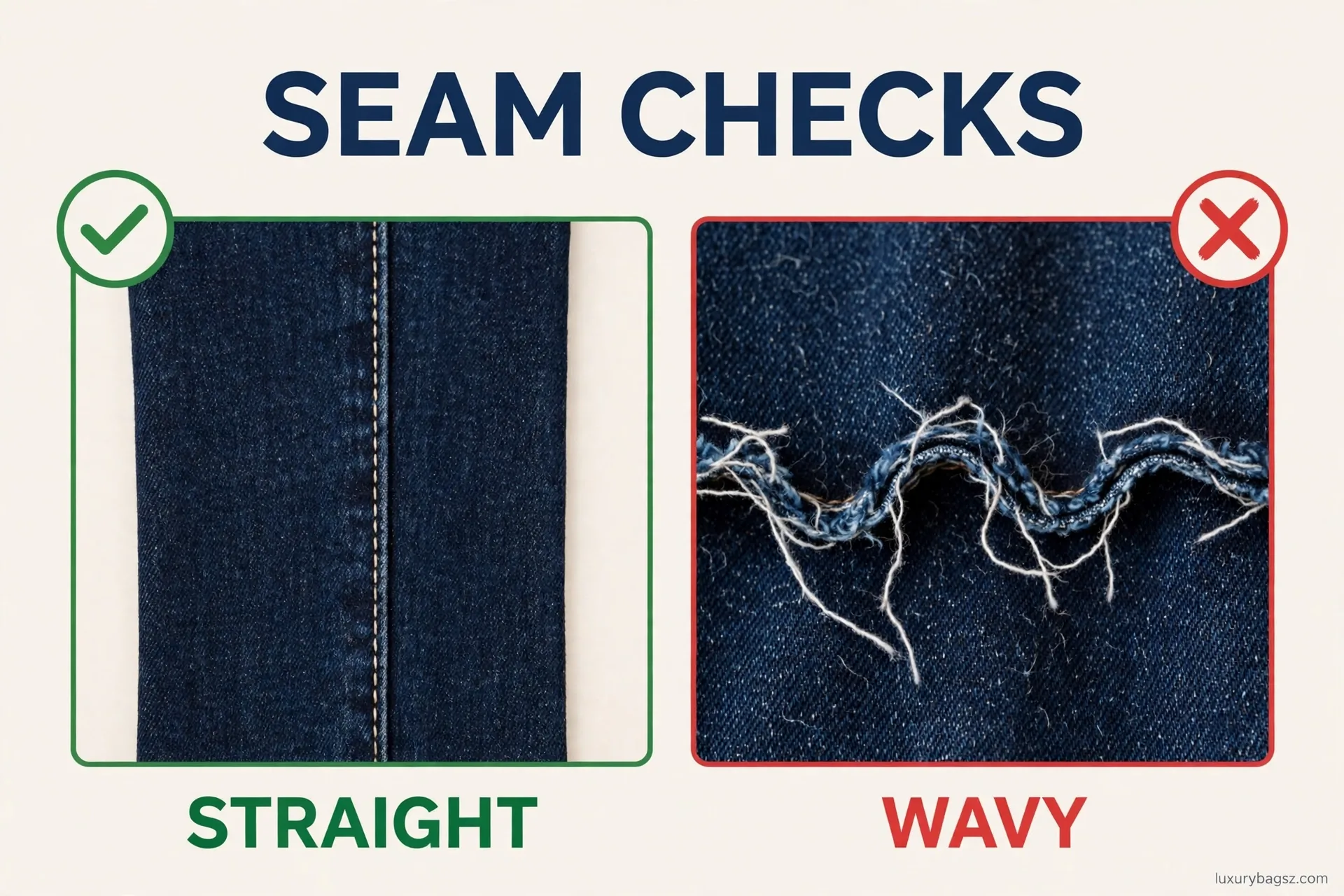
Hold the jeans up and follow the seams. Genuine stitching runs straight and even, without bumps, waves or loose ends, even across the ribbed panels. Our how to spot quality craftsmanship in designer clothing guide gives the wider tailoring checklist behind this check. Fit is evidence too. A genuine biker is close but structured, with room engineered at the knee. Baggy copies in a skinny label size have the pattern wrong. Once a genuine pair passes, our how to break in jeans fast guide helps the dense denim settle to your shape.
Price, Sellers and Buying Safely
Price the exact style before you buy. New Balmain biker jeans are a serious spend, and pre-owned prices follow condition, wash and rarity of the size. A current-season wash at a fraction of retail, in a full size run, from a seller with stock photographs only, is the standard fake pattern. Ask for photographs of the back label, care labels, zip backs and both ribbed panels. Sellers of genuine pairs expect exactly these requests. Keep a genuine pair looking right with our how to care for denim and wash jeans guide, and buy through platforms with returns.
Two Design Eras: Decarnin Drama and Rousteing Polish
The biker jean became a Balmain signature under Christophe Decarnin in the late 2000s, when the house’s rock-inflected collections made ribbed, zip-covered denim a uniform far beyond fashion’s inner circle. Decarnin-era pairs are the most collected and the most copied, because their washes and details are the reference images every replica factory works from.
Olivier Rousteing, who succeeded Decarnin in 2011, kept the biker in the line while polishing the house around it: cleaner washes joined the distressed ones, fits evolved with the seasons, and the style settled into a permanent Balmain category rather than a moment.
Era matters to authentication for the usual reason: details are only wrong when they are wrong for their period. A pair claiming Decarnin years should match archived photographs from those collections, in wash, rib scale and hardware finish, while a recent pair should match current retailer imagery instead.
Sellers who cannot say which era a pair belongs to, and price a vague story at the top of the market, are asking you to fund their uncertainty. Era knowledge is free; spend a few minutes on archived listings before spending anything else.
Buttons, Pockets and the Fly: The Small Hardware Map
Beyond the zips in this guide’s earlier checks, walk the rest of the hardware slowly. The waistband button and any rivets should be solid, evenly finished metal with clean engraving where the style carries it, seated firmly without wobble or sharp edges. Painted-on logos, thin stamped shells and hardware that twists in its setting are copy economics in miniature.
Pocket architecture repeats the tailored story: zip pockets should sit at the style’s documented angles, open onto properly finished pocket bags rather than raw holes, and mirror each other across the fly. Asymmetry that the product photographs do not show is a pattern fault, not a design quirk.
The fly itself deserves a test: it should lie flat when closed, with no gape or twist, because the biker’s close fit shows every construction shortcut at the front. On a genuine tailored jean the whole front reads calm even under movement; on copies the fly is often where the calm ends.
Finish at the hems. Genuine hems are even, properly weighted and consistent with the style’s intended length and stacking. Re-hemmed pairs exist honestly in the pre-owned market, but a seller should say so, and the price should know it.
Honest Wear Versus Manufactured Distress
Pre-owned buying adds a judgement new pairs never ask for: separating wear the jeans earned from distressing a factory faked. Honest wear fades where bodies actually rub and bend: seat, thighs, knees behind the ribbing, pocket edges where hands enter, and hems that met the ground.
It also softens the denim overall and relaxes the stretch, so a genuinely worn pair feels uniformly lived-in rather than new in most places and destroyed in a few dramatic ones. Ribbed panels on honest pairs keep their structure while taking a slight personal set; on fakes the ribbing is usually the first construction to collapse, whenever it was made.
Manufactured distressing betrays itself by placement and repetition, as this guide’s wash advice noted: identical whisker patterns across sizes, sandpapered patches with hard edges, and fading that ignores the jeans’ own seams and panels.
Price the wear you find rather than fearing it. A genuine pair with honest fading and sound construction is a better buy than a suspiciously perfect pair at the same money, because the biker’s whole aesthetic was built on looking lived in by someone with excellent taste.
Pierre Balmain and the Diffusion Confusion
One honest category confuses buyers constantly: Pierre Balmain, the house’s former diffusion line, produced under licence by the Italian manufacturer Ittierre until that partnership ended in 2013. Pierre Balmain jeans are genuine products of their line, sold at lower prices with simpler construction, and they are not mainline Balmain bikers however a listing describes them.
Read the labels with this distinction in hand. A pair labelled Pierre Balmain should be priced as diffusion denim and judged by its own standard; a pair labelled mainline must survive every check in this guide. Sellers who blur the two names are selling the blur, and the discount for it should be total: walk away.
Newer mainline pieces may also carry modern traceability touches such as QR codes or digital authentication markers, reflecting the brand’s recent anti-counterfeit efforts. Their presence supports a recent pair; their absence on an older pair means nothing, because the eras in this guide predate them.
The rule that survives every line and era is the one this guide opened with: hands first, labels second, story last. Weight, ribs, hardware and stitching cannot be talked into quality they do not have.
Frequently Asked Questions
What is the fastest way to spot fake Balmain biker jeans?
Weigh them and study the ribs. Genuine pairs feel heavy, with broad, even ribbing that falls straight. Light denim with narrow, wandering ribs is the classic copy.
How should the ribbed knee panels look?
Generous and even, with ridges falling in one straight rhythm and both legs matching. Small, crowded or angled ribs point to a fake.
Where are the labels on genuine biker jeans?
A rear label stitched flat on the back waistband, a main label inside at the centre back waist, and care labels with composition, sizing and style codes.
What should I look for on the zips?
Fine, closely set teeth, smooth travel and neat sewing. Turn the slider over: markings from a quality zip maker on the back are a strong genuine sign.
Can the care label really expose a fake?
Yes. Genuine labels are crisp and complete, with legible style codes. Blurry print, smudged codes and flimsy single tags are common counterfeit failures.
Is heavy denim always a genuine sign?
It supports the case but proves nothing alone. Combine weight with the ribs, labels, zip backs and stitching before deciding either way.
How can I check the wash is correct?
Search the style code and compare with archived retailer photographs of that season's wash. Invented shades and oddly placed fading are warning signs.
Do all genuine pairs use the same zip brand?
No, suppliers can vary by season and style. Judge the zip quality and markings that are present rather than demanding one maker name on every pair.
What photographs should I ask a seller for?
Ask for the back label, inner labels, care label pages, zip backs, both ribbed panels and a full front and back view in plain light.
Where is the safest place to buy pre-owned?
From established resale platforms that authenticate denim, show label close-ups and accept returns. Avoid full size runs at bargain prices from unknown sellers.
Final Verdict: Hands First, Labels Second
Your hands catch a fake Balmain biker fastest: light cloth, small ribs and toy-like zips cannot imitate the genuine article's weight and structure. Confirm with the labels, codes and wash, and the verdict usually writes itself. When the pair feels right and reads right, buy it and wear it hard.






