How to Care for Denim and Wash Jeans: Washing, Drying, Fading and Repair for Every Jean
Denim Care in Brief
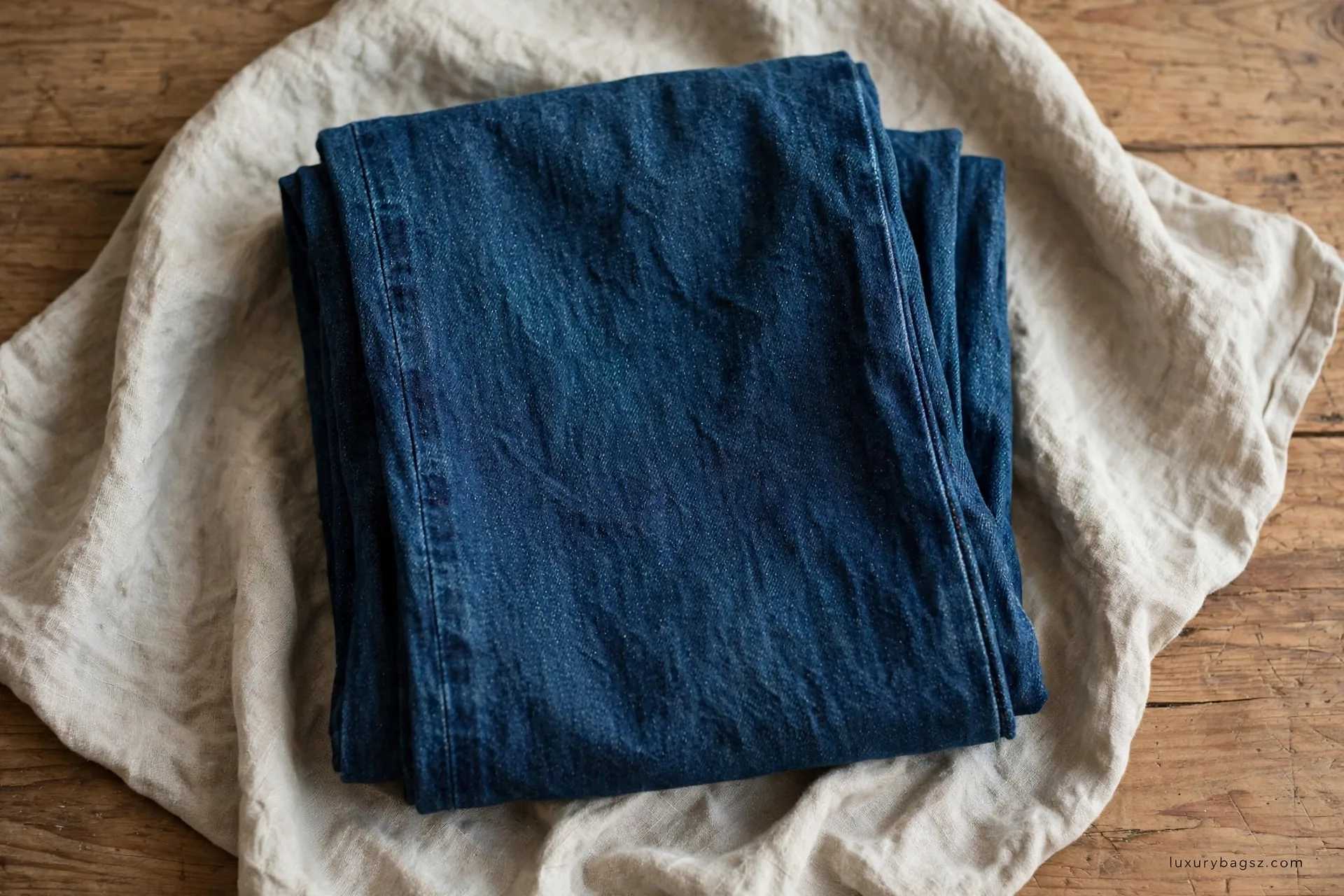
Good denim does not need constant washing. In fact, the less you wash jeans, the longer their colour, shape and fabric last, provided you air them, spot-clean marks and rotate pairs. Denim is sturdy cotton twill, dyed mostly with indigo that fades with wear and washing, and every wash trades a little colour and softness for cleanliness.
This guide covers general denim care for all jeans: rigid, stretch, selvedge, washed and coloured denim alike. It is not a raw-denim-only guide. Raw and selvedge denim have their own first-wash rituals and quirks, and those are covered in the dedicated guides linked below. Here you get the routine that works for the jeans most people actually own and wear daily.
The routine is short. Wear jeans several times between washes, air them after wear, spot-clean marks promptly, wash inside out in cold water on a gentle cycle, and dry on a line in shade. Avoid hot water, bleach, fabric softener and tumble drying, all of which age denim faster than wear alone.
Fading is part of denim's character, not a defect to eliminate. How fast jeans fade depends on dye, wash frequency, water temperature and sun, and you can slow it or embrace it, but you cannot wash jeans often and keep them dark. Choose your approach, then wash accordingly.
Key Takeaways
- Wash jeans far less often than other clothing: airing and spot cleaning cover most wears.
- Wash inside out in cold water on a gentle cycle with a gentle detergent, and skip bleach and softener.
- Line-dry in shade; tumble drying shrinks, fades and wears denim faster than any other habit.
- Indigo fades with every wash, so fewer, colder washes keep dark jeans dark longer.
- Stretch denim needs cold water and no heat to protect its elastic; heat kills stretch.
- Rotate pairs, air after wear, and store jeans folded or hung with space, never crammed damp.
- Repair small holes, loose hems and worn pockets early, before they become large tears.
- Raw and selvedge denim follow stricter first-wash rules, covered in the dedicated guides linked in the raw and selvedge section.
Know Your Denim Before You Wash It
Denim varies more than its blue colour suggests. Rigid denim contains no stretch, feels firm when new, and softens and moulds with wear. Stretch denim contains elastane or a similar fibre, feels softer at once, and needs protection from heat to keep its recovery. Selvedge denim is woven on old-style looms with a finished edge, and it is often rigid and slow to soften.
Washed denim has already been softened, faded or distressed at the factory, so its colour and hand feel are closer to its long-term state. Raw denim is unwashed and stiff, and it will shrink, fade and mould dramatically in its first months. Coloured and black denim use different dyes from indigo, and they fade and bleed differently, often faster in hot water.
Weight matters too. Lightweight denim, under about 12 ounces, drapes and washes more easily, while heavyweight denim, above 14 ounces, is stiffer, slower to dry and more prone to creasing. Heavy denim rewards airing and patience, since it holds moisture and shape longer than light denim.
Read the label for fibre content and care guidance, and note the stretch percentage if listed. A jean with 1 to 2 percent elastane behaves differently from a rigid jean, and a jean with a high stretch percentage needs the gentlest routine of all. When the label is missing, treat the jean as stretch if it springs back when pulled, and as rigid if it does not.
How Often Should You Wash Jeans?
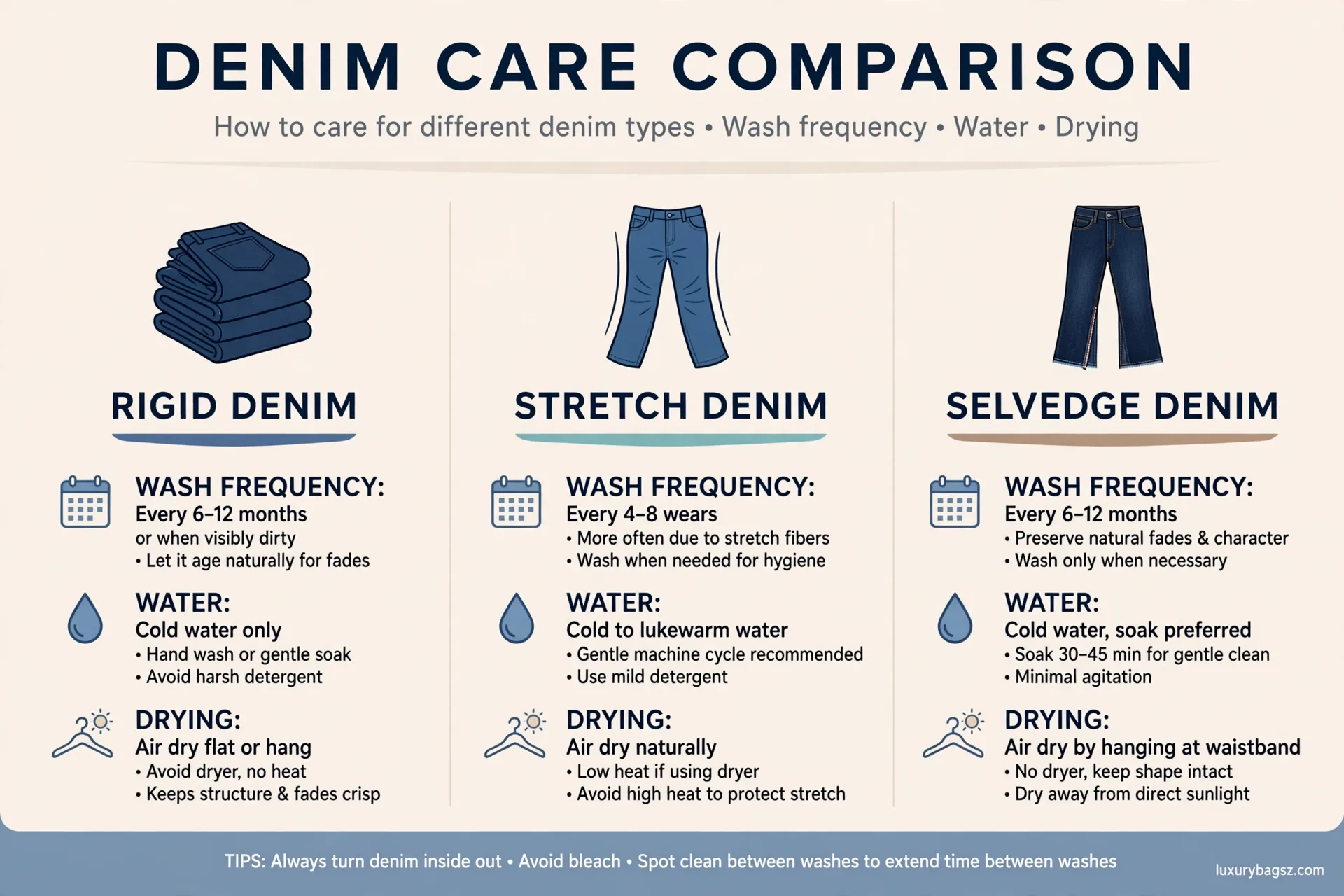
The honest answer is: much less often than you think, and less often than any other garment you own. Many denim makers and enthusiasts suggest washing jeans after every four to ten wears, or only when they are visibly dirty or smell after airing. That range is wide because it depends on wear, climate, activity and personal comfort, but the direction is clear: fewer washes, longer life.
Airing is the alternative to washing. After wear, hang jeans in fresh air for a few hours, or overnight, before returning them to a wardrobe. Airing removes odour and surface moisture, and most jeans smell fresh after airing even after several wears. A jean that smells fresh does not need washing, whatever a calendar says.
Spot cleaning covers the gap between washes. A food mark, a splash or a dusty cuff can be blotted and cleaned locally without a full wash, preserving colour and shape. Full washing should be reserved for jeans that are dirty overall, sweaty after heavy activity, or stale after airing fails to refresh them.
Hygiene concerns are understandable, but denim's thick twill and regular airing keep it reasonable between washes for most everyday wear. If you work physically, cycle, or wear jeans in heat, wash more often, since sweat and grime damage fabric if left. For desk wear in a cool climate, longer intervals are perfectly sensible, and your jeans will thank you with slower fading and better shape.
Washing Jeans Step by Step
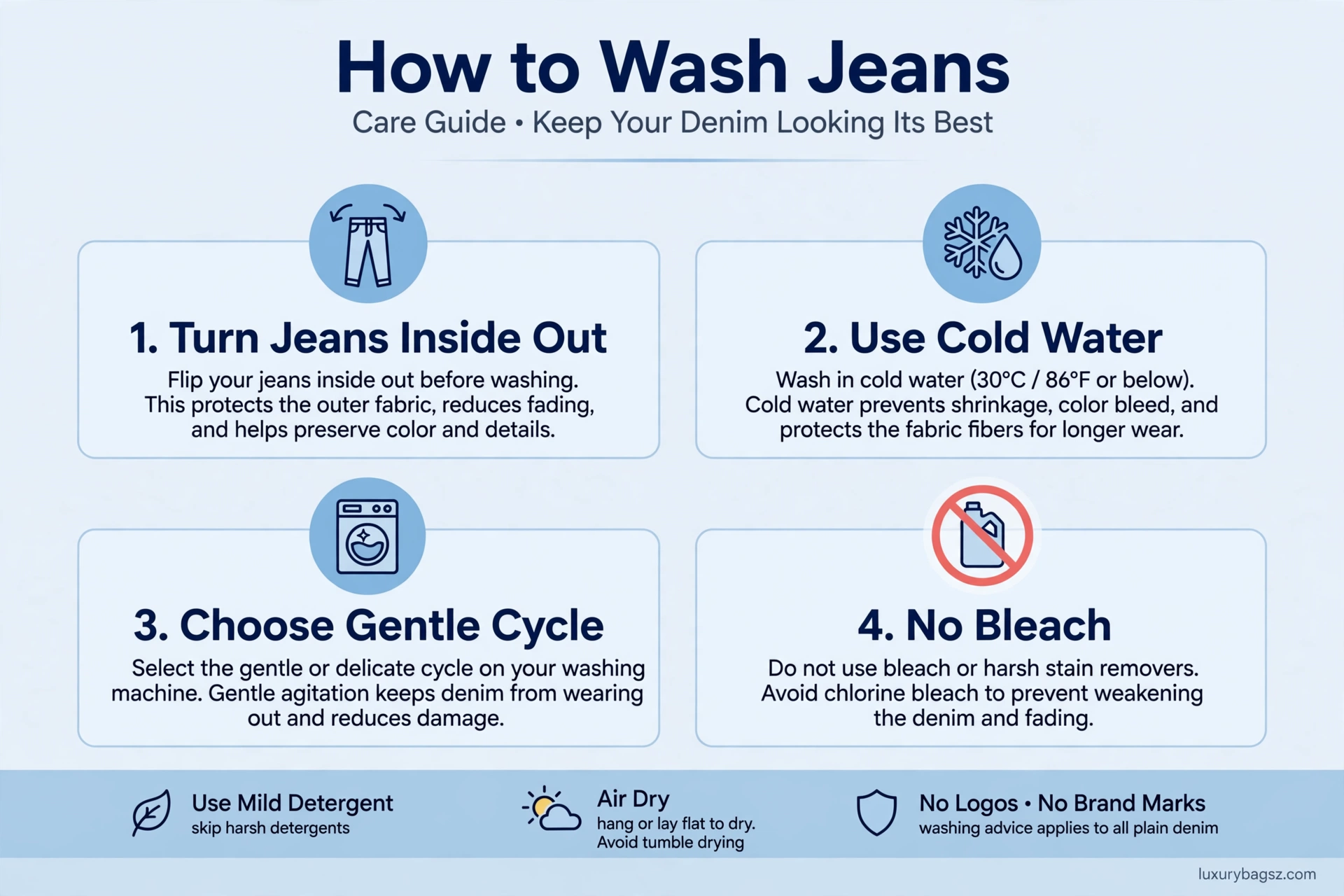
When jeans do need washing, follow a gentle routine. Empty pockets, close zips and buttons, and turn jeans inside out. Inside-out washing protects the outer surface, reduces fading and friction, and keeps hardware from snagging other garments. Wash jeans with similar colours, and wash new, dark jeans separately for their first few washes, since indigo bleeds heavily at first.
Use cold water, around 30 degrees, and a gentle liquid detergent, measured carefully. Cold water limits fading, shrinkage and dye bleeding, while hot water accelerates all three. Avoid bleach, including oxygen bleach on dark denim unless the label allows it, and avoid fabric softener, which coats fibres and reduces denim's texture and breathability.
Choose a gentle or normal cycle with moderate spin, and do not overload the machine. Jeans need room to move, or they crease, rub and clean unevenly. If you machine-wash, a mesh bag is unnecessary for sturdy jeans, but it helps for jeans with delicate trims, embroidery or hardware that could catch.
Hand washing suits special jeans: raw, selvedge, heavily embellished or very dark pairs. Soak briefly in cool water with gentle detergent, agitate lightly, rinse thoroughly, and press water out without wringing. Hand washing takes longer, but it gives you control over temperature, agitation and fading that a machine cannot match.
Detergent, Bleach, Softener and Additives
Detergent for denim should be gentle and liquid, made for colours or delicates, and used sparingly. Excess detergent leaves residue that stiffens denim, dulls colour and attracts dirt, while too little detergent leaves grime behind. A normal dose for the load size, dissolved in water, is enough for most jeans.
Bleach is the fastest way to ruin dark jeans. Chlorine bleach strips indigo unevenly, weakens cotton and leaves blotchy fading that cannot be reversed. Oxygen-based brighteners are gentler, but they still fade dark denim over time, so reserve them for white or very light jeans, and only where the label allows.
Fabric softener harms denim in two ways: it coats fibres, reducing absorbency and texture, and it can weaken elastic in stretch denim over time. Skip softener entirely for jeans, and rely on line drying and wear to soften them naturally. Vinegar rinses are sometimes suggested to set dye or soften denim, but evidence is mixed, and vinegar is an acid that can affect dyes and elastic, so do not rely on it as a routine fix.
Additives that do help are simple: a colour-protecting detergent for dark jeans, a mesh bag for delicate trims, and a pre-treatment of gentle detergent on marks before washing. Keep the routine simple, and jeans stay cleaner, darker and softer for longer than any additive-heavy routine achieves.
Drying Jeans Without Shrinking or Fading Them
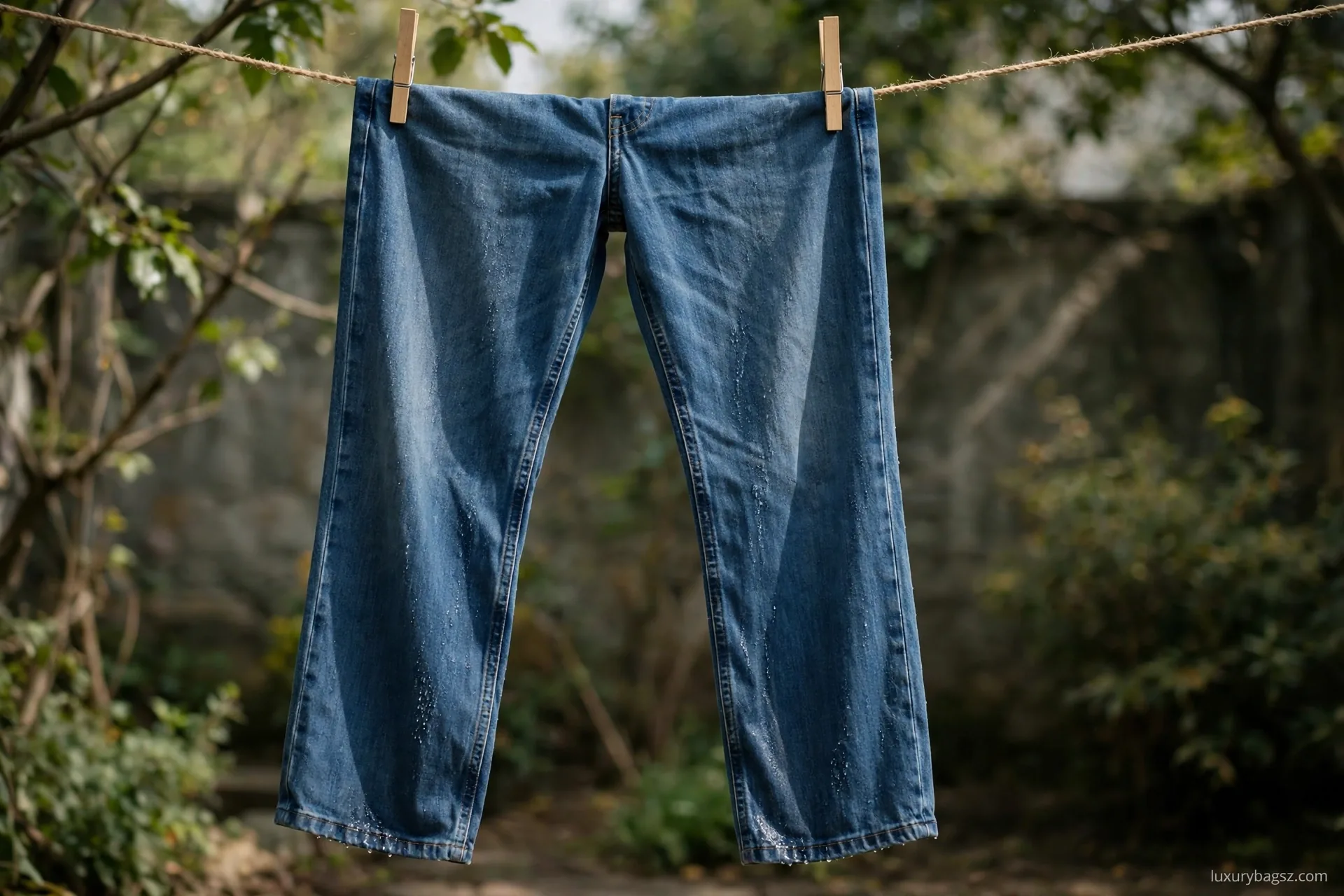
Drying is where many jeans lose size and colour. Line drying in shade is the best method for all denim: it preserves size, colour and shape, and it costs nothing. Hang jeans by the waistband or drape them over a line, smooth out creases, and let air do the work. Shade matters, since direct sun fades indigo quickly and stiffens cotton.
Tumble drying is the habit to break. High heat shrinks cotton, fades indigo, wears fabric at folds and hems, and damages elastic in stretch jeans. Even a low-heat tumble cycle risks shrinkage on a jean you value, so reserve tumble drying for sturdy, everyday jeans you can afford to shrink slightly, and line-dry everything else.
Drying time varies with weight. Lightweight jeans dry in a few hours in good air, while heavyweight denim can take a full day, especially in damp weather. Do not wear jeans while still damp to force them to shape, since damp denim stretches unevenly and can set baggy knees and seats. Let jeans dry fully, then wear them, and they will mould to you through wear, not through damp stretching.
If jeans feel stiff after line drying, that stiffness is normal for cotton and softens within an hour of wear. Shaking jeans out before hanging, smoothing them while damp, and avoiding over-drying in sun all reduce stiffness. A jean that dries stiff and softens on wear is a jean that has been dried well.
Ironing, Steaming and Smoothing Denim
Denim rarely needs ironing, and when it does, the rules are simple. Iron inside out on a medium heat where the label allows, with steam for stubborn creases, and avoid pressing over rivets, buttons and embellishments, which can melt, mark or dent fabric. Press from the inside to protect the outer surface and any fading pattern.
Steaming suits denim well for refreshing wrinkles between washes. Hold a steamer away from the fabric, keep it moving, and let jeans dry before wearing. Steaming freshens without a full wash, which is why it pairs so well with a low-wash routine: it removes creases and odour while preserving colour.
Creases in denim are partly character. Whiskers at the hips, honeycombs behind the knees and stacking at the ankle develop with wear, and they are prized on raw and selvedge denim. Pressing those areas flat erases the very fading pattern denim lovers value, so press only where a garment needs to look smart, such as a dark jean for a formal setting, and leave everyday jeans softly creased.
For dark jeans worn smartly, a light press along the front crease and a steam to remove bagging gives a clean look without a full wash. That combination, airing plus steaming plus occasional pressing, keeps dark jeans presentable for many wears between washes.
Fading, Whiskers and Honeycombs: Managing the Look
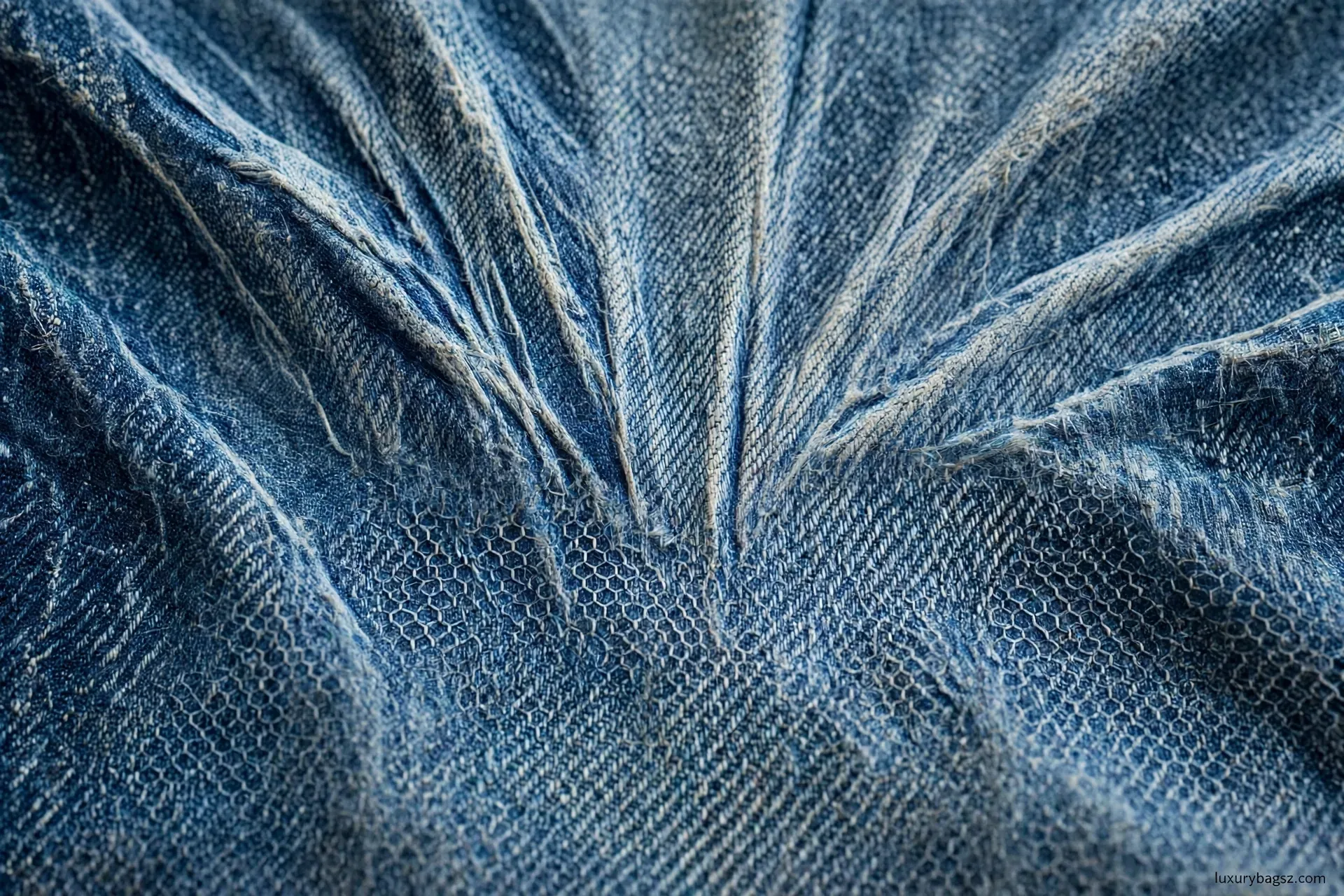
Indigo dye sits mostly on the surface of cotton yarn, which is why denim fades where it bends, rubs and washes. Whiskers form at the hips and crotch, honeycombs behind the knees, and stacking marks at the ankle, all from repeated folding at the same points. These patterns are the record of how you wear your jeans, and they develop faster with wear and slower with washing.
To slow fading, wash less often, wash cold and inside out, dry in shade, and avoid sun, bleach and hot water. To encourage fading, wear jeans often, wash a little more often, and let sun and wear do their work. Neither approach is right for everyone; a dark, uniform jean suits a smart wardrobe, while a faded, patterned jean suits a casual one.
Uneven fading usually comes from uneven habits: a wallet that fades one pocket, a phone that fades one thigh, or a belt that fades one waistband area. Rotate pocket contents, vary your carry, and accept that some fading reflects real use. A jean that fades evenly looks intentional, while a jean with one stark phone outline looks accidental, so small rotations help.
Factory fading, such as stonewashing, laser fading and distressing, is different from wear fading, and it weakens fabric at faded points by design. A heavily distressed jean will wear through at thin spots sooner than a rigid jean, whatever your care routine, so inspect distressed areas regularly and repair thinning before it becomes a tear.
Stains on Denim: Spot Cleaning First
Spot cleaning is denim care's best tool, because it avoids a full wash for a local problem. Blot a fresh mark at once with a clean cloth, working from the outside inward, without rubbing. Rinse with cool water from the back of the fabric where you can, apply a small amount of gentle detergent, and blot again before letting the area dry.
Grease, food and drink marks usually lift with gentle detergent and cool water, provided they have not been heated. Mud should be left to dry, then brushed off, then spot-cleaned, since wet mud spreads and stains more than dry mud. Ink, dye transfer and oil-based paint are harder, and they may need professional help, especially on light or white denim.
Never use bleach on a dark jean to remove a stain, since bleach creates a light blotch worse than the original mark. Never put a stained jean in a dryer before the stain is gone, since heat sets most stains permanently. Check in good light after spot cleaning, and repeat gently or seek help if the mark remains.
For jeans with special finishes, such as coated, waxed or heavily distressed denim, spot cleaning needs extra caution, since finishes react to water and detergent. Test any treatment on a hidden area first, such as an inside hem, and stop if the finish changes colour or texture.
Raw, Selvedge and Stretch Denim: Special Notes
Raw denim deserves a note, even in a general guide, because its first months differ so much from washed denim. Raw jeans shrink, bleed dye and mould to your body, and their first wash is a decision, not a routine. The first raw denim guide covers sizing, soaking and first washing in detail, and it is worth reading before you wash a raw pair for the first time.
Selvedge denim shares many raw-denim traits, plus its own vocabulary: selvedge edges, shuttle looms, sanforized and unsanforized finishes, and one-wash treatments. The selvedge, sanforized and one-wash denim guide explains those terms and how they change washing and shrinkage, so you can judge whether a selvedge pair needs soaking, a first wash or simply wear.
Stretch denim is the opposite of raw in one respect: its enemy is heat, not washing frequency. Elastic fibres lose recovery with hot water, tumble drying and ironing at high heat, leaving jeans baggy at knees and waist. Wash stretch jeans cold, dry them on a line, and never iron them hot.
The stretch selvedge jeans guide explains how stretch yarns are made and why heat harms them, which helps you understand the rule rather than just follow it.

Storage, Rotation and Everyday Wear
Rotation extends denim life as surely as gentle washing. Two or three pairs rotated through a week last far longer than one pair worn daily, since each pair gets rest days to air, dry and recover shape. Rotation also spreads fading and wear, so no single pair carries a whole season's stress.
Store jeans folded on a shelf or hung by the waistband, with space for air. Avoid cramming damp jeans into a drawer or a bag, since damp denim mildews and stiffens, and avoid hanging wet jeans by clips on a delicate hem, which stretches it. Keep dark jeans away from pale garments in storage, since indigo transfers, especially when damp or in heat.
Everyday habits matter. Empty pockets before sitting for long periods, since a wallet or phone wears one pocket and fades one thigh. Avoid kneeling on rough surfaces in good jeans, and be careful with light jeans around dark, newly dyed fabrics, since dye transfer works both ways. Small habits, repeated daily, shape how jeans age more than any single wash.
Travel with denim is forgiving: jeans pack well, resist creasing better than most fabrics, and refresh with airing and steaming. Pack dark jeans inside out or in a laundry bag to protect other clothes from indigo transfer, unpack promptly, and hang them to air before wearing.
On longer trips, one or two pairs of jeans can carry a whole week when rotated with other trousers and refreshed by nightly airing. Hang jeans in a bathroom after a shower for gentle steam, or use a travel steamer where you have one, and spot-clean marks promptly rather than letting them set through days of wear.
A travel routine built on airing, steaming and spot cleaning keeps jeans presentable without a hotel laundry, and it protects dark colour that frequent hotel washing would fade quickly.
Repairs: Hemming, Patching and Reinforcing
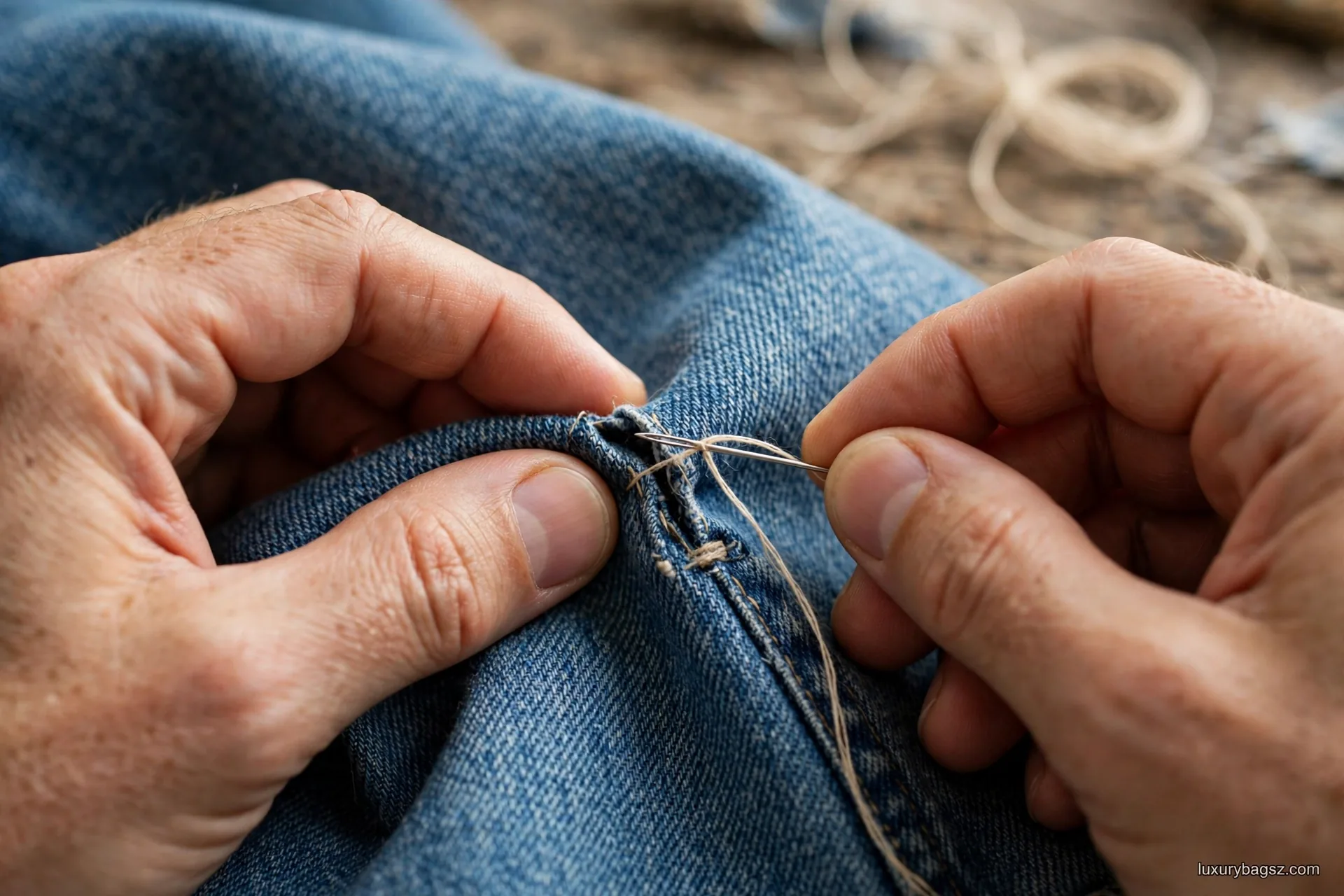
Denim repairs are common, cheap and worth doing early. A small hole at a pocket corner, a thinning crotch, a loose hem or a worn belt loop are all easier to fix when small. A tailor or denim repair specialist can darn, patch or reinforce these areas invisibly or decoratively, depending on your preference.
Crotch wear is the most common denim failure, caused by friction between thighs. Reinforce thinning areas before they tear, with a patch on the inside or a darn that matches the weave. Once a crotch tears fully, repair is still possible, but it is more visible and more expensive, and it may change how the jean fits.
Hemming needs care with selvedge and tapered jeans, since a standard hem can remove the selvedge edge or change the taper. Ask a repairer about chain-stitching and original-hem preservation before hemming a selvedge pair, and keep the removed fabric in case a future repair needs it.
Pocket repairs, button replacements and rivet fixes are quick jobs for a tailor or cobbler with denim experience. Keep spare buttons and rivets where a maker supplies them, and note the jean's brand and style for matching hardware. A repair record, like a care record, helps future repairs and future buyers judge the jean's history.
Black, White and Coloured Denim
Black denim fades fastest in perception, since any loss of black reads as grey. Wash black jeans cold, inside out, with a colour-protecting detergent, dry in shade, and wash them as rarely as comfort allows. Some fading is inevitable, and a black jean that has faded evenly to charcoal can still look good, but hot water and sun accelerate the change dramatically.
White and light denim need the opposite care: they show dirt readily, so they need washing more often, but they tolerate warmer water and, where the label allows, gentle oxygen-based brightening. Keep white denim away from dark garments in the wash and in storage, since dye transfer onto white is immediate and obvious.
Coloured denim, such as red, green or pastel jeans, bleeds and fades unpredictably by dye. Wash coloured jeans separately, cold and inside out, for their first few washes, and check rinse water for dye before mixing them with other colours. A coloured jean that bleeds heavily when new will usually settle after a few washes, but it should never share a load with whites until it does.
For all non-indigo denim, the label's dye guidance matters more than any general rule, since dyes vary by maker and colour. When a coloured jean's care is uncertain, wash it alone, cold, by hand, and judge its bleeding before trusting it in a machine load.
Denim Jackets, Shirts and Other Denim Pieces
Denim care applies beyond jeans. Denim jackets share jeans' fading and washing rules, with added attention to buttons, collars and linings. Wash jackets inside out, fasten buttons, and dry them on a sturdy hanger or flat, so shoulders do not stretch. A jacket's collar and cuffs soil first, so pre-treat those areas before washing.
Denim shirts are usually lighter weight and softer than jeans, so they need a gentler cycle and a mesh bag where they have delicate buttons or trims. They also wrinkle more readily, so shake them out, smooth them while damp, and press lightly while damp for a smart finish.
Denim accessories, such as bags and caps, often combine denim with leather, metal or canvas, and those combinations need the most delicate component's routine. Spot-clean denim accessories where you can, keep leather trims dry, and avoid machine washing a mixed-material piece unless the maker allows it.
Children's denim, work denim and fashion denim all follow the same principles, with wear level deciding wash frequency. Work denim worn in dirt and grease needs washing more often, and that is fine, since work denim is made for it. Fashion denim with distressing, coating or embellishment needs the gentlest routine, since its finishes are its most fragile part.
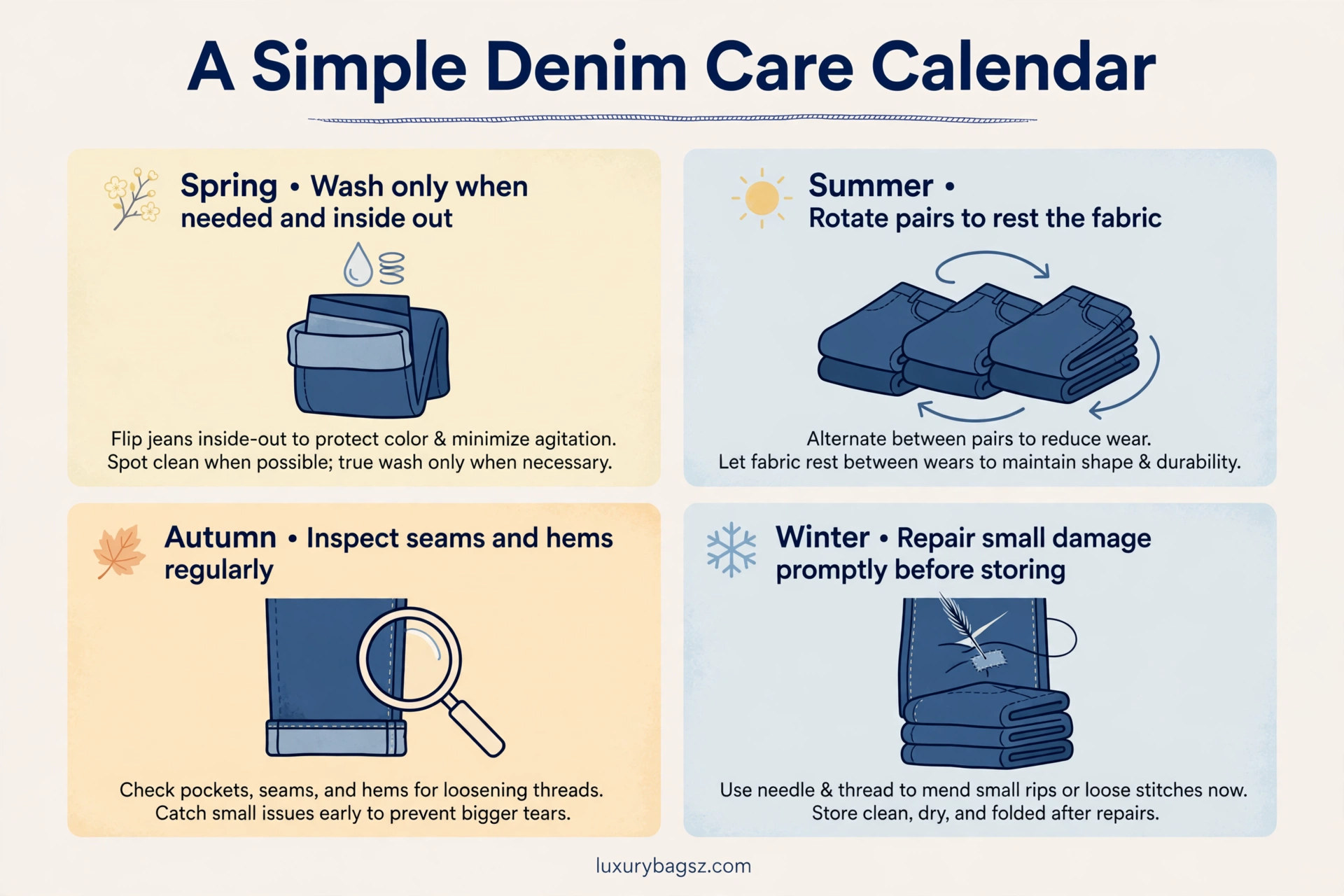
A Simple Denim Care Calendar
Daily: air jeans after wear, empty pockets, and spot-clean any fresh marks. Weekly: rotate pairs, check for thinning, loose hems and pocket wear, and steam or press dark jeans that need refreshing without washing.
Monthly: wash the pairs that need it, cold and inside out, and line-dry in shade. Inspect faded areas, crotch and hems after washing, and book repairs for anything thinning or loose. Quarterly: review your whole denim collection, wash or clean stored pairs, check for mildew or fading in storage, and retire or repair pairs that no longer hold shape.
Twice a year: consider a professional clean or repair for special pairs, such as selvedge, raw or heavily embellished jeans, and update your records of washes, repairs and fading. Yearly: judge each pair honestly, whether it still fits, holds colour and serves your wardrobe, or whether it should be repaired, restyled or replaced.
This calendar bends with wear. A daily-worn work pair needs monthly washing and quarterly repairs, while a special-occasion dark pair may need only a few washes a year. Let the jean tell you: fresh after airing means wait, dirty or stale after airing means wash, and thinning or loose means repair.
Seasonal change is a good moment for a denim review. At the start of a new season, check every pair for fit, fading, thinning and loose stitching, wash the pairs that need it, and store the pairs you will not wear for months clean and dry. A pair stored dirty or damp deteriorates in storage, while a pair stored clean and dry emerges ready to wear.
Seasonal review also reveals duplication: two nearly identical pairs means one can rest longer, rotate less, or move on, freeing space and attention for the pairs you truly wear.
Frequently Asked Questions
How often should I wash my jeans?
After every four to ten wears for most everyday jeans, or only when they are visibly dirty or smell after airing. Airing and spot cleaning cover most wears, and fewer, colder washes preserve colour, shape and fabric far longer than frequent hot washing.
What is the best way to wash jeans in a machine?
Turn them inside out, close zips and buttons, wash with similar colours in cold water on a gentle cycle with a gentle liquid detergent, and skip bleach and fabric softener. Wash new, dark jeans separately for their first few washes, since indigo bleeds heavily at first.
Should I wash jeans in cold or warm water?
Cold water, around 30 degrees, is best for colour, size and fabric, especially for dark, stretch and selvedge jeans. Warm water suits sturdy white cotton jeans and heavily soiled work jeans, but it accelerates fading and shrinkage on every other denim.
Can I put jeans in the tumble dryer?
Avoid it where you can. Tumble drying shrinks cotton, fades indigo, wears folds and hems, and damages elastic in stretch jeans. Line drying in shade preserves size, colour and shape, and it is the single best drying habit for denim.
How do I keep dark jeans from fading?
Wash them rarely, cold and inside out, with a colour-protecting detergent, dry them in shade, and avoid sun, bleach and hot water. Some fading is inevitable, since indigo sits on the yarn surface, but a gentle routine keeps dark jeans dark for many more wears.
How do I wash stretch jeans without ruining the stretch?
Wash cold, skip the tumble dryer and high iron heat, and line-dry in shade. Heat is elastic's enemy: hot water, dryer heat and hot ironing all reduce recovery, leaving jeans baggy at knees and waist, so cold and air are the rule for stretch denim.
What should I do about a stain on jeans?
Blot at once without rubbing, rinse with cool water from the back of the fabric where you can, apply gentle detergent, and blot again before drying. Never bleach a dark jean to remove a stain, and never tumble-dry a stained jean before the mark is gone, since heat sets stains permanently.
Do raw and selvedge jeans need different care?
Yes. Raw jeans shrink, bleed and mould in their first months, and selvedge jeans carry their own terms for finishes and shrinkage, so their first wash is a decision covered in the dedicated guides linked in the raw and selvedge section. General denim care still applies after that first phase, with extra attention to cold water and shade drying.
How can I repair thinning jeans before they tear?
Reinforce thinning areas early, especially at the crotch, pockets and hems, with an inside patch or a darn from a tailor or denim repair specialist. A small reinforcement is cheap and nearly invisible, while a full tear is more visible, more expensive and can change how the jean fits.
Is it unhygienic to wash jeans rarely?
For most everyday wear, no, provided you air jeans after wear, spot-clean marks and wash them when they are dirty or stale after airing. Denim's thick twill and regular airing keep it reasonable between washes, but jeans worn for physical work, cycling or in heat should be washed more often, since sweat and grime damage fabric if left.
Summary
Denim care is refreshingly simple: wear jeans often, wash them rarely, wash cold and inside out when you do, and dry them on a line in shade. That short routine, repeated patiently, is what separates jeans that look tired in a year from jeans that look better in year three than they did when new.
It costs nothing extra, takes less time than frequent washing, and rewards you every time you pull on a pair that still fits, still holds colour, and still feels like yours. That feeling is the whole point of good denim care, and it is available to every pair you own. Keep the routine simple, repeat it patiently, and your jeans will repay you with years of comfortable, good-looking wear.
Airing and spot cleaning do most of the work, gentle washing preserves colour and shape, and early repairs keep good jeans going for years. Raw, selvedge and stretch denim add their own notes, covered in the guides linked above, but the core routine never changes. Follow it, and your jeans will fade gracefully, fit better with wear, and last far longer than a hot, frequent washing routine would ever allow.