

How to Spot High-Quality Craftsmanship in Designer Clothing: Seams, Fabric and Finishing
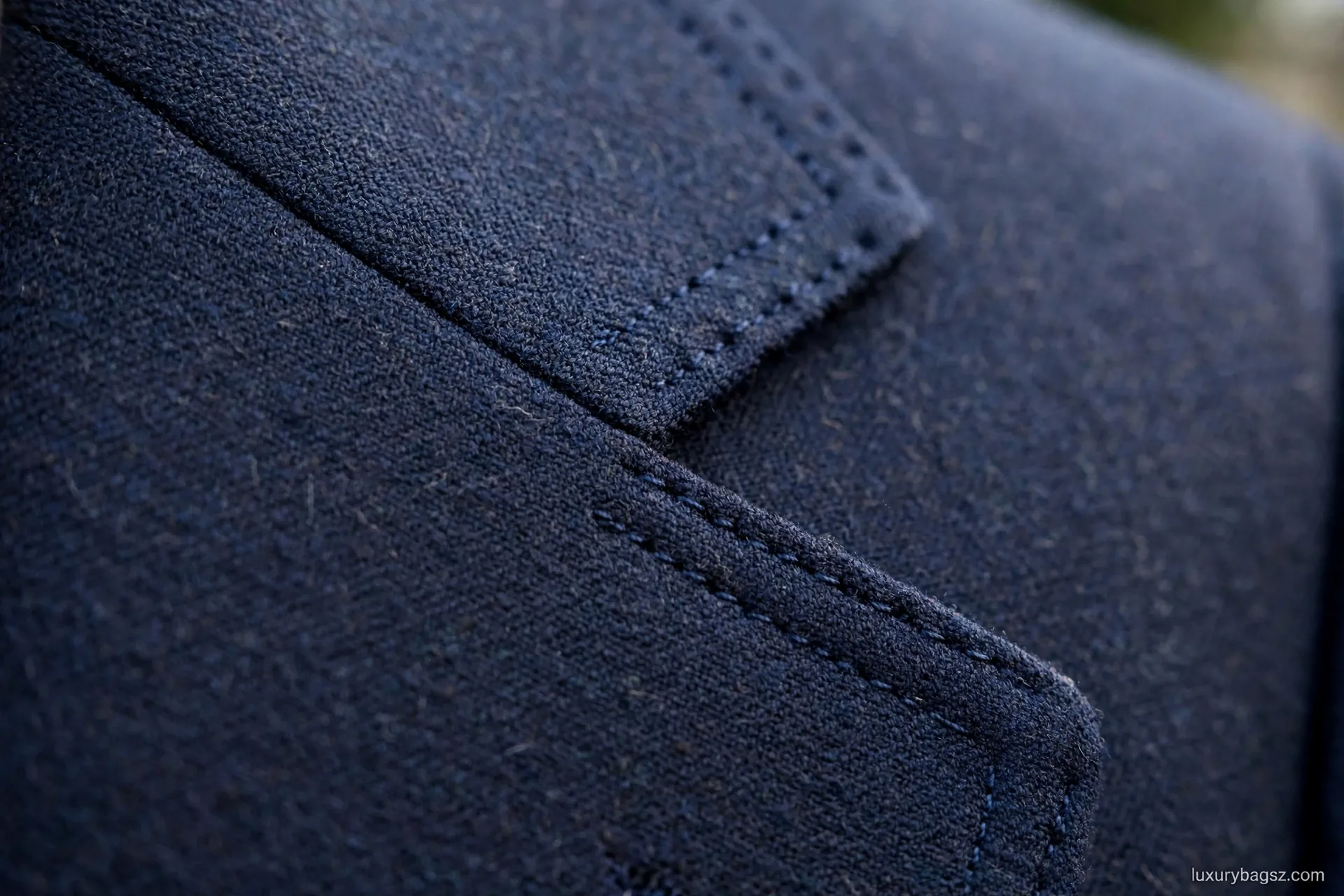
Spotting Quality at a Glance
High-quality craftsmanship is visible if you know where to look, and it is visible before you check a price tag or a label. Seams lie flat and even. Fabric feels dense and recovers when pinched. Patterns meet at seams and pockets. Linings are clean, buttons are solid, and hems hang without twisting. None of these details is decorative. Each one is evidence of time, skill and material spent on the garment.
This guide teaches you to spot quality, not to explain how a garment factory works step by step. That is a different question, and it belongs in a separate guide about how luxury goods are made. Here the question is practical: standing in a shop or opening a parcel, how do you tell a well-made garment from an expensive-looking one?
The answer is a short inspection you can do in minutes, with no tools and no expertise. Look at the outside, turn the garment inside out, check the fabric, the pattern, the buttons and the hem, and try it on with movement. A garment that passes all of those checks is usually worth its price. A garment that fails several is not, whatever the label says.
Price alone is a poor guide. A high price can reflect marketing, rent and brand, not construction, and a moderate price can hide excellent making. Craftsmanship is the part of value you can verify with your own eyes and hands, and this guide shows you how.
Key Takeaways
- Even, consistent stitching with no puckering, skipped stitches or loose ends is the first sign of quality.
- Dense, resilient fabric that recovers from a pinch usually outlasts thin, limp fabric.
- Pattern matching at seams, pockets and across a closure shows care in cutting, not just sewing.
- Clean finished seam edges inside the garment signal time spent where most buyers never look.
- Real horn, mother-of-pearl, corozo or well-made metal buttons beat thin plastic, especially when securely sewn.
- A lined, clean interior with neat hems and no raw edges indicates a maker who finished the job.
- Fit in movement matters: a garment should move without pulling, gaping or twisting.
- Several small flaws together matter more than any single flaw alone.
Start Outside: The First Thirty Seconds
Begin with the garment on a hanger or laid flat, before you try it on. Step back and look at the overall shape. A well-cut jacket or dress holds its intended line without twisting, and one side mirrors the other. Lapels match in width and roll, collars sit evenly, and pockets sit at the same height on both sides.
Look for puckering along seams, especially at shoulders, armholes and waistbands. Puckering means the fabric was fed unevenly or the tension was wrong, and it rarely improves with wear or pressing. A slight ripple on a very soft fabric can be normal, but visible gathering along a straight seam is a flaw.
Check the fabric surface for flaws: thin patches, slubs that look like faults rather than texture, pulled threads, or colour that varies across panels. Natural fabrics have character, and a slub in linen or a variation in tweed is not a defect. What matters is whether the variation looks intentional and even, or like a fault that slipped through checking.
Finally, look at the hem from a distance. A good hem hangs level, without one side drooping or the fabric twisting around the body. A twisting hem often means the fabric was cut off-grain, and that problem cannot be pressed away.
Also notice symmetry in small things: collar points, pocket flaps, belt loops and sleeve lengths should match on both sides. Tiny differences can be normal in handmade garments, where a millimetre of variation is part of the character, but visible asymmetry in a machine-made garment suggests poor cutting or poor checking. Symmetry is easy to check and hard to excuse, so it belongs in the first thirty seconds of every inspection.
Seams: The Clearest Single Indicator
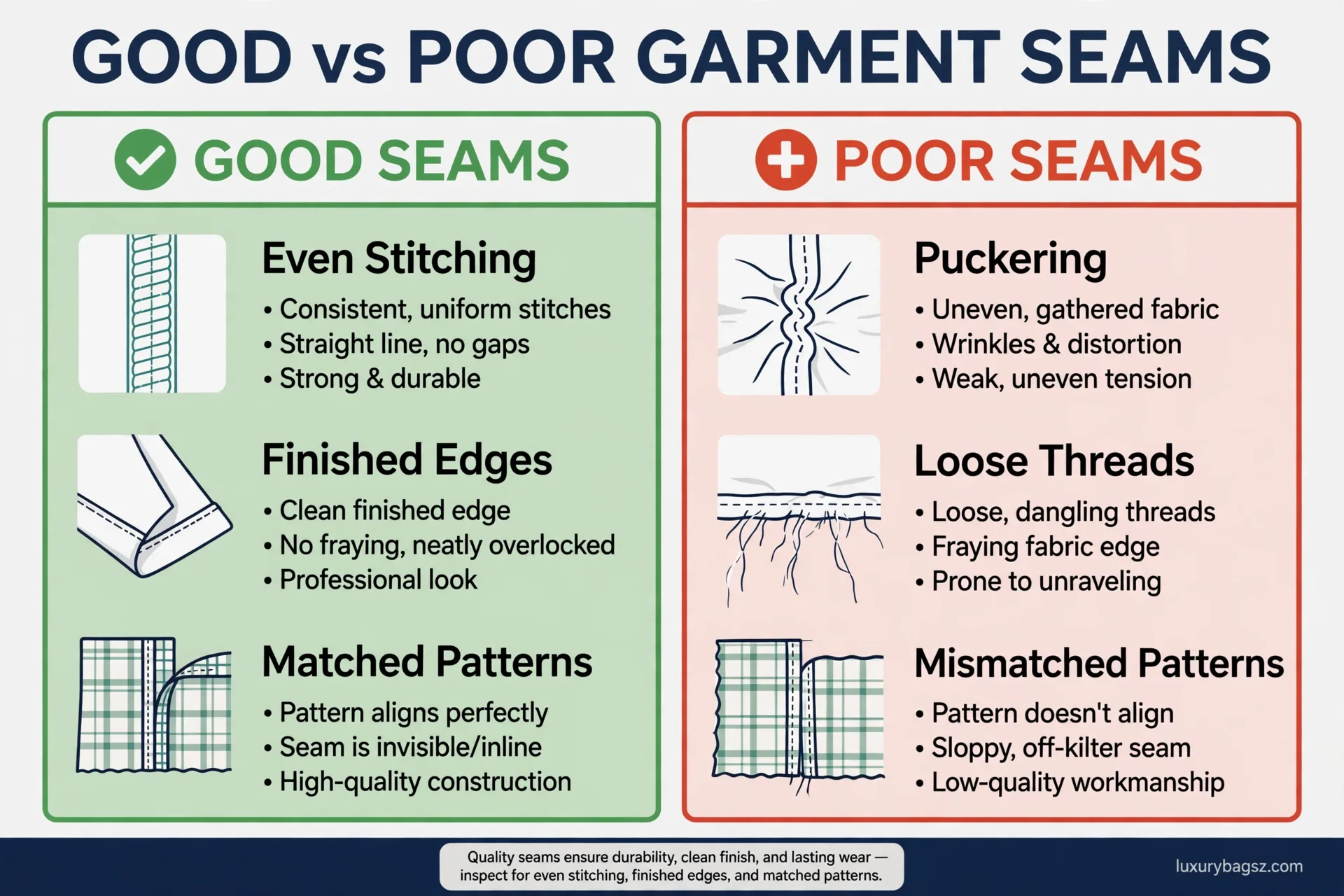
Seams tell you more about craftsmanship than any other detail, because they cannot be faked quickly. Look for stitches that are even in length, straight in line, and consistent in tension. On a quality garment, a seam looks like a calm, regular line, not a wavy or hurried one.
Count the stitch density where you can see it. Finer, denser stitching generally holds better and looks neater, especially on stress points such as armholes, pockets and waistbands. Very long, sparse stitches on a garment sold at designer prices suggest speed over care, particularly if the thread looks thin or the seam already gaps when you pull it gently.
Pull a seam very gently, without forcing it, and watch whether the fabric gaps or the thread shows strain. A well-sewn seam holds its line under light tension. A seam that opens or shows loops under a gentle pull will not survive real wear, washing or movement.
Check seam allowances where they are visible, and notice whether they are finished. On a quality garment, inside seams are bound, overlocked neatly, or finished with a French seam or a bias binding, so raw edges do not fray. Raw, fraying edges inside a designer garment are a sign that finishing was skipped to save time.
How a Garment Should Sit When You Move
A garment that looks perfect on a hanger can fail on a body, so try it on and move. Raise your arms, sit down, walk a few steps, and bend slightly. A well-made garment moves with you without pulling across the chest, gaping at buttons, or riding up sharply.
Watch the buttons on a shirt, jacket or dress. If buttons gape when you sit or breathe normally, the cut is wrong for your body or the button placement is off, and no amount of quality stitching fixes a poor fit. The same applies to a jacket that pulls into an X shape at the closure: the garment is too tight or cut for a different shape.
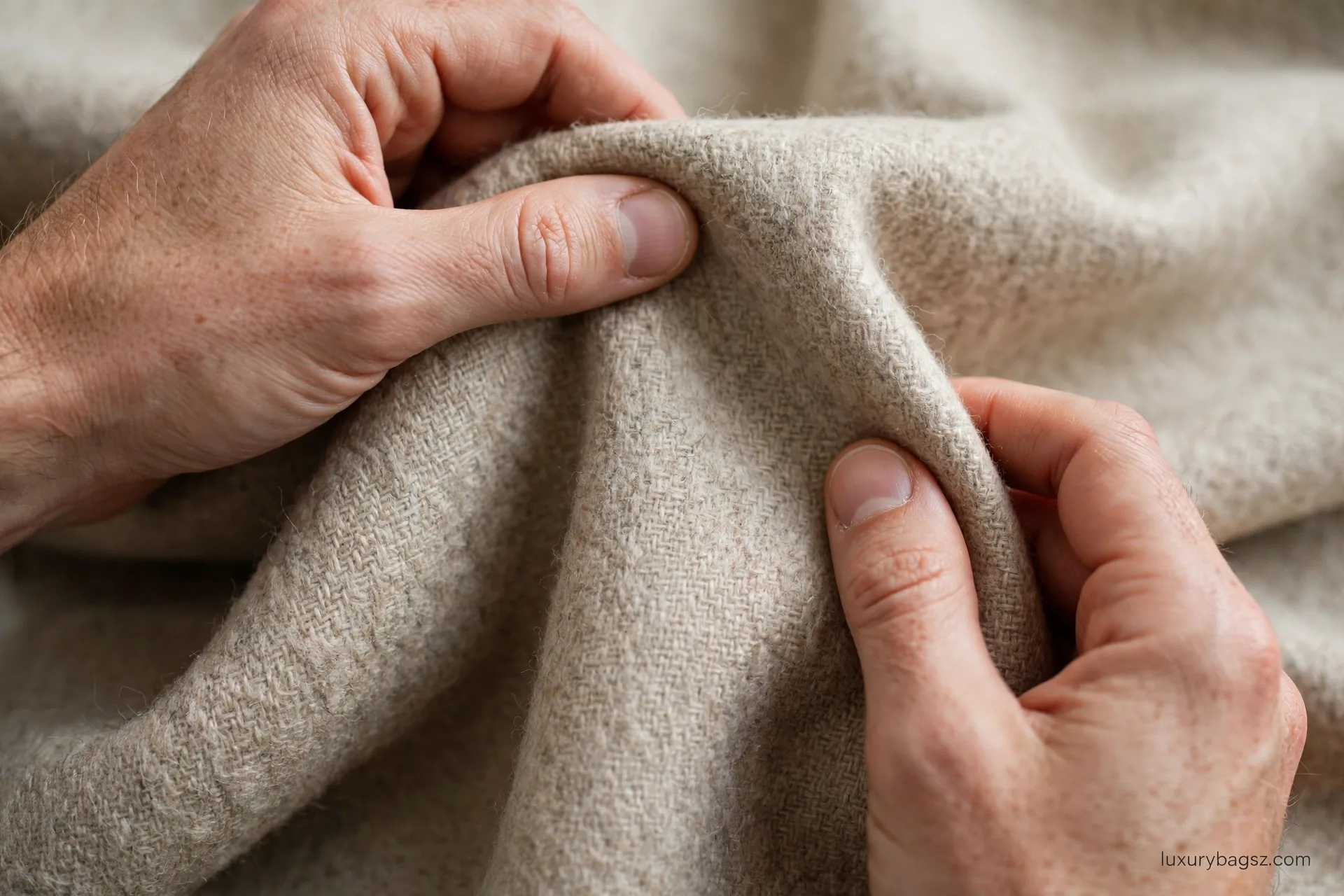
Check that the garment returns to shape after movement. Creases from sitting are normal, especially in linen and cotton, but the garment should not stay twisted, and seams should not shift out of place. A garment that needs constant adjusting is telling you its balance is off.
Fit is personal, and a garment can be beautifully made yet wrong for you. Quality and fit are separate judgements, and a good purchase needs both. Do not let excellent stitching persuade you to keep a garment that pulls, gaps or restricts you.
Fabric: Density, Recovery and Honest Content
Fabric quality starts with feel, but feel alone misleads. A fabric can feel soft because it is thin, not because it is good. Instead, test density and recovery together. Hold the fabric up to light: a dense, well-made cloth blocks more light and feels substantial, while a thin cloth looks flimsy even if it feels soft.
Pinch a small fold and release it. Good wool, cotton and many quality blends spring back with only light creasing, while poor fabric stays crushed or feels limp. Linen is the exception: it creases by nature, and heavy creasing does not mean poor linen. Judge linen by its weight, evenness and softness, not by whether it creases.
Read the fibre content honestly. A label that lists a high percentage of natural fibre is not automatically better than a well-chosen blend, since blends can add durability, stretch or wrinkle resistance. What matters is whether the blend serves the garment: wool with a little stretch for trousers, cotton with structure for a shirt, or a lining that breathes rather than traps heat.
Be wary of fabric that feels coated or papery, sheds excessively when new, or pills after a few touches. Light pilling on a soft knit can be normal, but heavy pilling on a new garment, or shedding that leaves your hands covered, suggests short fibres or a loose construction that will not age well.
For leather details, the nappa leather guide explains how one soft, fine leather should look and feel, which helps you judge leather trims on clothing too.
Pattern Matching: The Detail Cheap Making Skips
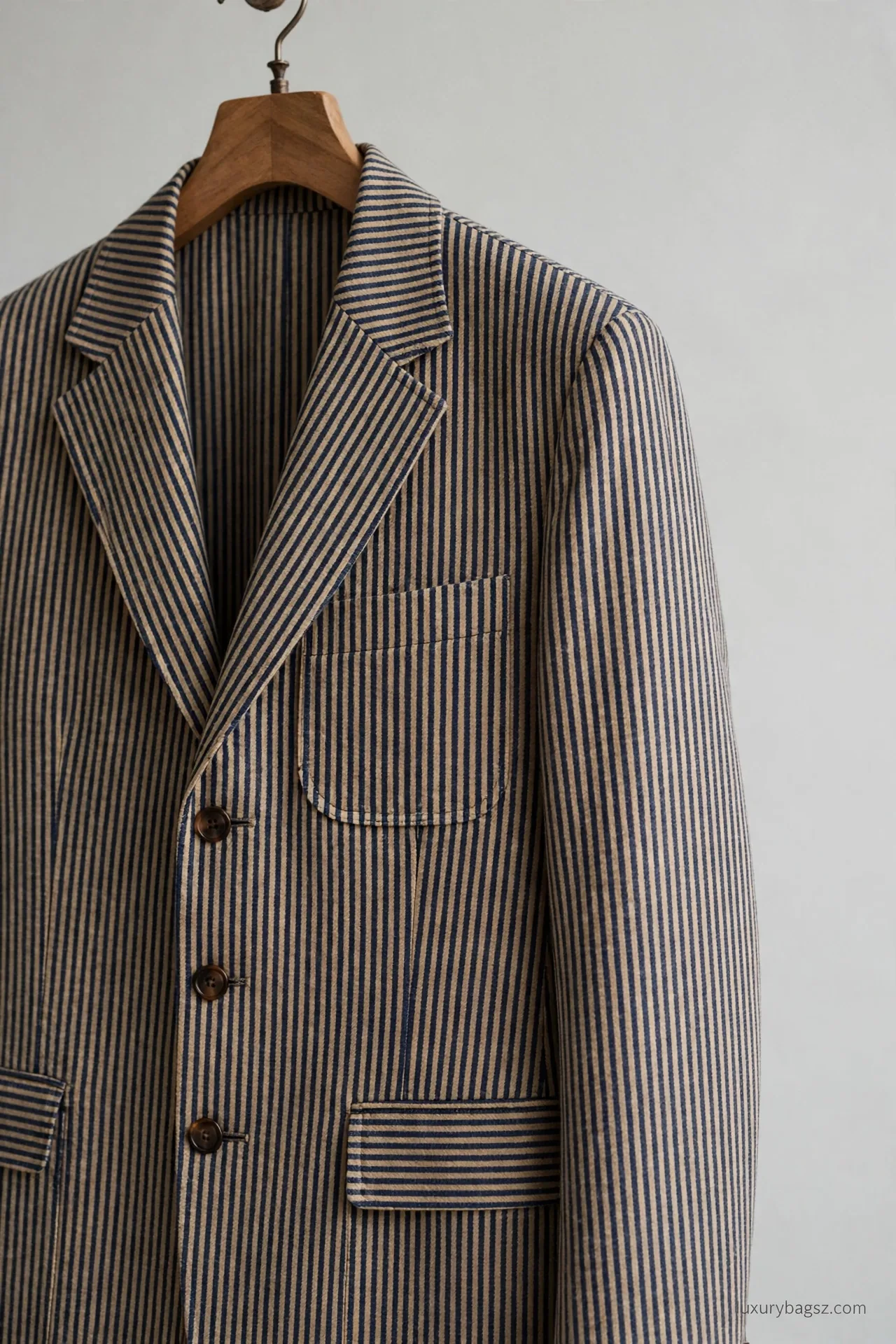
Pattern matching is where cutting skill shows. On stripes, checks and large prints, a careful maker aligns the pattern across seams, pockets and closures, so the design flows rather than jumping. This takes extra fabric and extra time, which is why cheap making skips it.
Check the most visible joins first: the centre front closure, the pocket against the body, and the sleeve against the shoulder on a striped or checked garment. On a well-matched garment, stripes continue across the join with only a small, deliberate break. On a poorly matched garment, stripes jump by a wide margin or meet at an angle.
Pockets deserve special attention. A matched pocket on a striped jacket is a strong sign of care, because the pocket was cut from the same part of the pattern as the body. An unmatched pocket is not always a defect on a bold print, where matching every element is impractical, but on regular stripes and checks it is a clear shortcut.
Pattern matching also applies to plain fabrics in a subtler way: nap direction and sheen. Velvet, corduroy and brushed fabrics have a direction, and panels cut in different directions catch light differently. A quality garment keeps nap direction consistent, so the colour looks even across the whole piece.
Linings: What the Maker Does When No One Is Watching
Turn the garment inside out. This is the step most buyers skip, and it is where quality differences become obvious. A good lining is clean, smooth and securely attached, with no loose threads, raw edges or puckering. It should move with the garment, not pull or bunch when you move.
Check how the lining is finished at hems, armholes and closures. On a quality jacket, the lining is hand-finished or neatly machine-finished at key points, and it does not show at the hem or the front edge. A lining that peeks out, twists or hangs below the outer fabric suggests rushed finishing.
Look at the lining fabric itself. A breathable lining, such as a quality cupro or cotton blend, feels smooth and cool, while a cheap, papery polyester lining traps heat and crackles. The lining does not need to be luxurious, but it should suit the garment: a winter coat needs a sturdy lining, a summer jacket needs a light one.
Also check for a floating canvas or structure in tailored jackets, where you can feel it. A jacket with a canvassed or half-canvassed front feels flexible and moulds to the body, while a fully fused jacket feels stiff and papery, and can bubble after cleaning. You cannot always tell by feel alone, but a lapel that rolls softly rather than creasing sharply is a good sign.
Buttons, Buttonholes and Fastenings
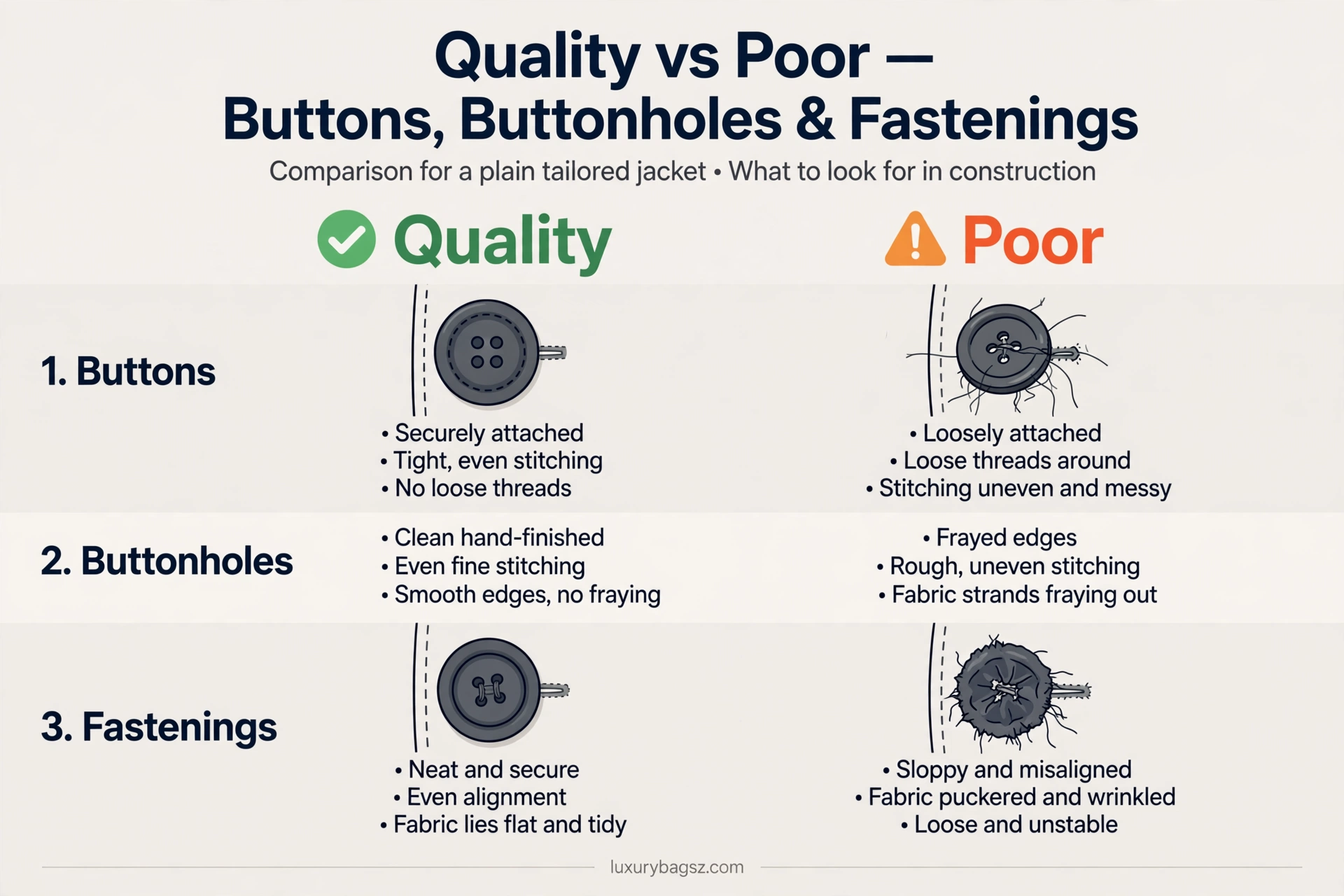
Buttons are small, but they reveal a maker's priorities. Quality buttons are made from horn, mother-of-pearl, corozo nut, wood or solid metal, and they feel cool, dense and substantial. Thin, light plastic buttons with visible mould lines suggest cost-cutting, especially on a garment sold at designer prices.
Check how buttons are sewn. A well-sewn button has a thread shank that lets it sit slightly proud of the fabric, so it fastens without straining, and the thread is tight and even. A button sewn flat and tight against thick fabric will strain and eventually tear, while a button with loose, looping thread will fall off soon.
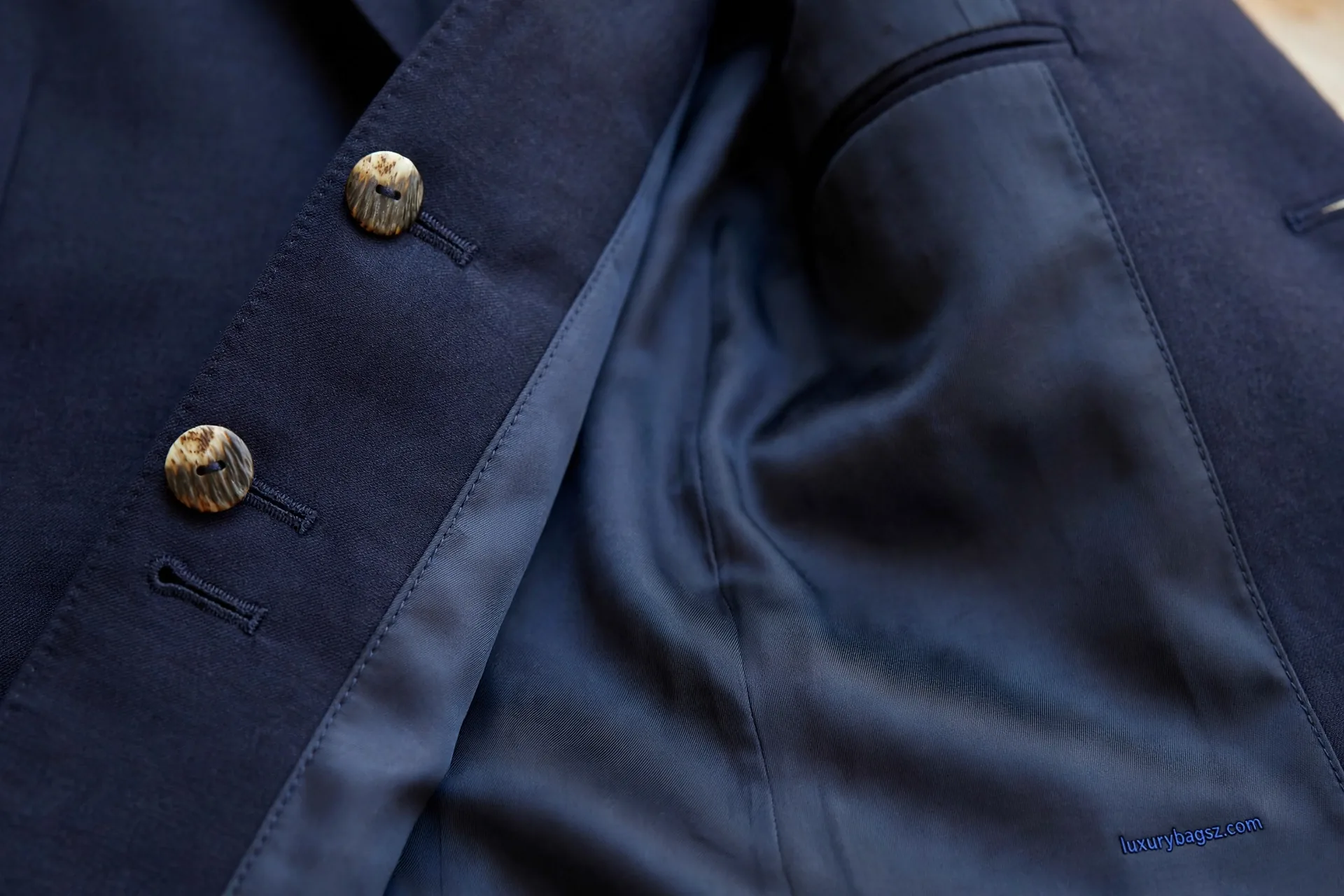
Buttonholes matter as much as buttons. On a quality garment, buttonholes are clean, dense and evenly sized, with no fraying or loose threads. Hand-finished buttonholes, common on high-end tailoring, look slightly irregular in a beautiful way, with dense stitching that holds its shape. Machine buttonholes can also be excellent, provided they are dense and clean.
Test zips, hooks, clasps and drawstrings too. A zip should run smoothly without catching, a hook should close firmly, and a drawstring should be finished at the ends, not raw and fraying. Fastenings are used every wear, so a flaw here becomes an annoyance fast, and a broken fastening often needs a professional repair.
Hems, Edges and Hand Finishing
Hems show whether a maker finished the job or rushed the end. A good hem is even in width, invisible or nearly invisible from the outside, and secure without puckering. On trousers and skirts, check that the hem does not show stitching dots across the outside, and that the fabric does not ripple where the hem is attached.
Look for hand finishing where it matters. Hand-stitched hems, hand-rolled edges on scarves and shawls, and hand-finished linings are signs of time spent, and they often last longer than a purely machine finish because they flex with the fabric. Not every garment needs hand finishing, but its presence on a designer piece is a positive sign, especially on visible edges.
Edges should be clean, not raw or fraying. On an unlined jacket or a summer garment, check that seam edges are bound or finished, and that facing edges lie flat. A raw edge that already frays when new will only worsen, and it suggests the maker expected the buyer not to look inside.
Also notice topstitching, the visible stitching on pockets, collars and edges. Good topstitching is straight, even and parallel to the edge, with consistent distance from it. Wandering topstitching, uneven spacing or thread that changes colour between panels suggests rushed work or a repair.
Hardware, Trims and Embellishment
Trims and hardware should feel as considered as the fabric. Metal hardware should feel solid, with a clean finish and no sharp edges, flaking plating or rough joins. Plastic hardware that looks like metal, or metal so light it feels hollow, is a warning sign on a designer garment.
Check that trims are attached securely. Beading, sequins, studs and embroidery should sit flat and firm, with no loose elements when you run a hand lightly over them. A few loose beads on a heavily embellished garment can be normal, but widespread looseness means the embellishment will shed with wear.
Embroidery should be dense, even and clean on the reverse side too, without long loose threads or puckering around the design. Printed designs should be sharp, with no cracking, fading or misalignment when new. A print that already cracks when the fabric flexes will not survive many wears.
Leather trims, belts and patches should be real leather where the price implies it, with clean edges and secure stitching. Faux leather that peels or feels papery, or leather trim stitched with loose, uneven thread, undermines an otherwise good garment, and it is often the first part to fail.
Handwork Versus Machine Work: What Actually Matters
Handwork is often treated as proof of quality, but the truth is more balanced. Excellent machine work beats sloppy handwork, and many superb garments combine both: machine sewing for strength, hand finishing for flexibility and appearance. What matters is the result, not the method alone.
Hand finishing shines in specific places: buttonholes, hems, linings, lapel rolls and edge stitching, where a hand stitch flexes better and looks softer than a machine stitch. If you see neat hand stitches in those places, it is a genuine positive sign, since handwork costs time and skill.
Machine work shines in long, straight seams and stress points, where consistent tension and density matter most. A well-made machine seam on a designer garment is not a compromise; it is the right tool for the job, and it should look even and secure.
The same balance appears in footwear and accessories, where handwork and machine work each have a role. The bespoke shoes guide explains how fully handmade shoemaking differs from factory making, and the lesson transfers: judge the finish and the durability, not the romance of a single word like handmade.
Be sceptical of handmade claims without evidence. A label that says handmade but shows uneven, loose or hurried stitching is not describing quality; it is describing marketing. Trust your eyes over the label, every time.
In-Shop Checks: A Five-Minute Routine
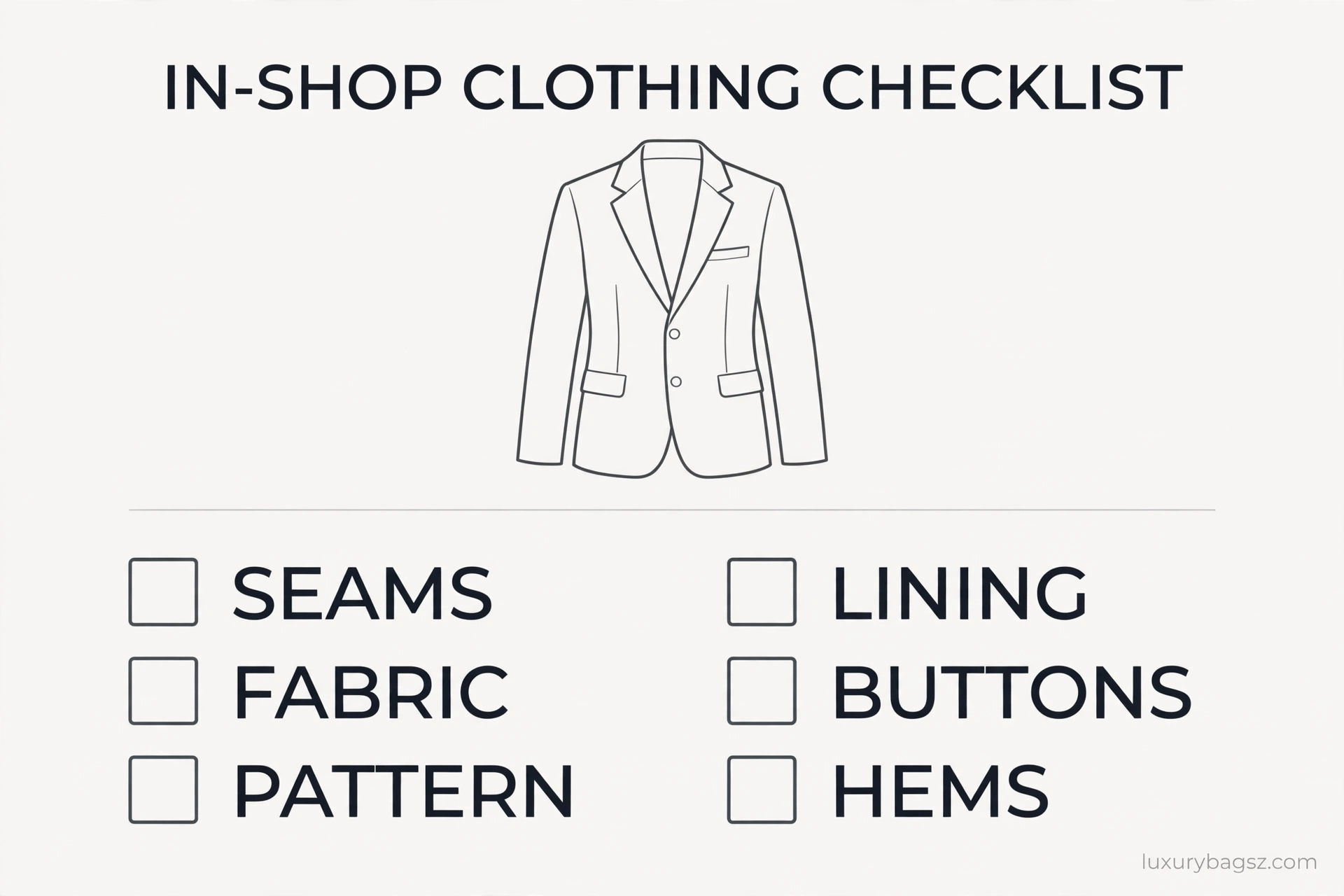
Use a simple routine so you check the same things every time. First, look at the garment flat or on a hanger for shape, symmetry and hem level. Second, check seams for even stitching, finished edges and no puckering. Third, turn it inside out and inspect the lining, seam finishes and hems.
Fourth, check fabric by holding it to light, pinching for recovery, and reading the fibre content. Fifth, check pattern matching at closures and pockets, then buttons, buttonholes and fastenings. Sixth, try it on and move, watching for pulling, gaping and twisting.
Seventh, check the care label and any spare buttons or thread included with the garment. Spare buttons and a clean, detailed label suggest a maker who expects the garment to be kept and repaired, not discarded. Eighth, consider the price against what you found: several small flaws on an expensive garment should make you pause, while a clean inspection on a moderate garment is a strong buy signal.
This routine takes about five minutes once it becomes habit, and it works for online purchases too, if you repeat it the moment a parcel arrives, before you remove tags. A garment that fails in your home fails just as surely as one that fails in a shop, and returning it promptly protects you.

Red Flags That Should Make You Pause
Some flaws are minor on their own, but together they form a pattern worth heeding. Puckered seams, raw inside edges, thin plastic buttons, a papery lining and unmatched stripes on one garment almost certainly mean the price is paying for branding, not making.
Other red flags are single and serious. A twisted hem from off-grain cutting, a fused jacket front that already bubbles, a zip that catches when new, or a lining that hangs below the hem are all problems that worsen with wear and cleaning, not problems that settle.
Watch for inconsistencies between garments of the same style. If one size or colour is well finished and another is not, quality control is uneven, and the piece in your hands may not match the piece you saw reviewed or recommended. Check the actual garment you will buy, not a display sample.
Finally, beware of quality language without quality evidence. Words like premium, luxury and artisanal on a label or a listing prove nothing. Seams, fabric, lining and finishing prove a great deal, and they are all in front of you. When the evidence and the language disagree, believe the evidence.
A related trap is the single impressive detail. A garment can carry beautiful buttons, a lovely fabric or a hand-finished hem while failing everywhere else, and the impressive detail distracts from the rest. Quality is a pattern across the whole garment, not one feature.
If a jacket has superb lapels but raw inside seams, puckered shoulders and thin buttons, the lapels do not rescue it; they show what the maker could do when they chose to spend time, and chose not to elsewhere.
The same logic applies to brand reputation. A house known for excellent tailoring can still produce a weak season, a diffusion line or a poorly finished style, and a lesser-known maker can produce an outstanding garment. Judge the piece in your hands, not the reputation of the house, and let the inspection routine do the work that reputation cannot.
Quality Across Categories: Tailoring, Knits, Dresses and Outerwear
Different categories hide quality in different places, so adjust your inspection to the garment in front of you. For tailored jackets and suits, focus on the lapel roll, the shoulder line and the canvas. A lapel that rolls softly to the button, without a hard crease, suggests a canvassed or well-finished front, while a lapel that folds sharply or bubbles suggests fusing that may not age well.
Shoulders should sit at your natural shoulder point, with no divots or overhang, and the jacket should close without strain.
For knitwear, focus on gauge, recovery and finishing. A good knit feels even in tension, with no thin patches or loose loops, and it springs back when stretched gently. Check the seams and joins: fully fashioned knits, shaped during knitting rather than cut and sewn, fit better and last longer than cut-and-sewn knits, which often show bulky seams at the armhole.
Look at the cuffs and hem ribbing, which should be firm and even, not stretched or wavy when new.
For dresses, focus on the waist, the zip and the hem. A well-made dress balances on the body, with the waist seam sitting level and the skirt hanging evenly. The zip should be invisible or neatly finished, without puckering along its length, and the hem should be level all around, which is harder to achieve on a bias-cut or flared skirt and therefore a good test of care.
For outerwear, focus on weatherproofing details and weight distribution. Seams on a raincoat should be sealed or well finished, closures should overlap properly, and a heavy coat should hang from strong, well-attached hangers loops and reinforced shoulders rather than pulling at one seam. Pockets on outerwear should be deep, secure and lined, since a shallow or unlined pocket on a winter coat is a daily annoyance and a sign of saved cost.
Pre-Owned Quality: Judging a Garment Second Hand
Pre-owned garments need the same inspection, plus a judgement about remaining life. Start with the usual checks, then look for wear that matters: thinning at elbows, cuffs, collars and seats, fading that is uneven rather than an even patina, and repairs that are visible, bulky or poorly matched. A well-executed invisible repair is a positive sign, while a bulky patch or mismatched thread suggests a quick fix.
Check areas that new garments hide: underarms for staining and thinning, linings for tears and odour, and hems for previous alterations. A hem that has been let down or taken up may show old stitch holes or a faded line, which tells you the garment's history and whether further alteration is possible. Ask the seller about cleaning history, repairs and storage, and weigh honest answers as a good sign.
Smell and feel matter second hand in a way they rarely do when new. Mustiness can indicate damp storage, and a garment that feels stiff, sticky or coated may have been treated with a product to hide wear. Neither problem is always fatal, but both should lower the price or prompt a professional clean before you commit.
Finally, compare the pre-owned price against the quality you found, not against the original retail price. A beautifully made garment with light, even wear can be a better buy than a new garment of poorer construction, while a heavily worn designer label with thin fabric and loose seams is not a bargain at any discount. Craftsmanship, not the label, decides second-hand value.
Frequently Asked Questions
What is the single best sign of quality in clothing?
Even, consistent seams with finished inside edges. Seams cannot be faked quickly, and they reveal whether a maker spent time on structure, not just appearance. Combine seam quality with fabric density for a reliable first judgement.
Does a high price guarantee good craftsmanship?
No. Price reflects brand, marketing, rent and distribution as well as making. Some expensive garments are beautifully made, and some are not, so inspect seams, fabric, lining and finishing on the actual garment before you pay.
Is handmade always better than machine-made?
No. Excellent machine work beats sloppy handwork, and most good garments combine both. Hand finishing matters most on buttonholes, hems, linings and lapel rolls, while machine sewing suits long seams and stress points.
How can I tell good fabric from poor fabric?
Test density and recovery: hold it to light, pinch and release, and read the fibre content. Dense cloth that springs back usually lasts longer than thin, limp cloth, except for linen, which creases naturally and should be judged on weight and evenness.
Should patterns match on a striped or checked garment?
Yes, at visible joins such as the front closure, pockets and sleeve joins. Matching takes extra fabric and time, so it is a strong sign of care. Bold, irregular prints are an exception, where perfect matching is impractical.
What should I look for inside a jacket?
A clean, smooth lining that moves with the garment, finished seam edges, neat hems, and no raw or fraying edges. A lining that peeks out, twists or hangs below the hem suggests rushed finishing.
Are plastic buttons always a sign of poor quality?
Not always, since some good garments use well-made resin buttons, but thin, light plastic with visible mould lines on a designer garment is a warning sign. Horn, mother-of-pearl, corozo and solid metal buttons are stronger quality signals.
How do I check fit for quality, not just size?
Try the garment on and move: raise your arms, sit, walk and bend. Watch for pulling across the chest, gaping buttons, twisting hems and seams that shift. A garment that needs constant adjusting has a balance problem, whatever its size label says.
Can I spot quality when buying online?
Yes, by repeating the same inspection the moment the parcel arrives, before removing tags. Check seams, lining, fabric, pattern matching and fastenings, try it on and move, and return promptly anything that fails, since a flaw found at home counts just as much as one found in a shop.
What flaws should make me return a designer garment?
Several small flaws together, or any serious single flaw such as a twisted hem, a bubbling fused front, a catching zip, or a lining that hangs below the hem. These problems worsen with wear and cleaning, and they mean the price is not matched by the making.
Final Verdict
Spotting quality is a habit, not a talent. Look at seams first, then fabric, pattern, lining, buttons and hems, and finish by moving in the garment. A piece that passes those checks is worth considering at its price, and a piece that fails several is not, whatever the label promises.
Keep the five-minute routine, trust the evidence in front of you over the language on the label, and you will buy fewer, better garments that last longer and feel better every time you wear them. The routine also protects you second hand, where a label means even less and the garment's own condition means even more, so use it on every purchase, new or pre-owned, without exception.
Over time the routine becomes fast, almost automatic, and that speed is the real reward: better purchases made with confidence, in minutes, for years. Teach the routine to anyone who shops with you, since a second pair of eyes catches a twisted hem or a loose button you might miss, and shared knowledge makes every shopping trip sharper.
The money you save by avoiding one poorly made designer purchase will more than repay the minutes this inspection takes, many times over.






