

How to Spot a Fake Jimmy Choo Handbag: Label, Font and Hologram Checks
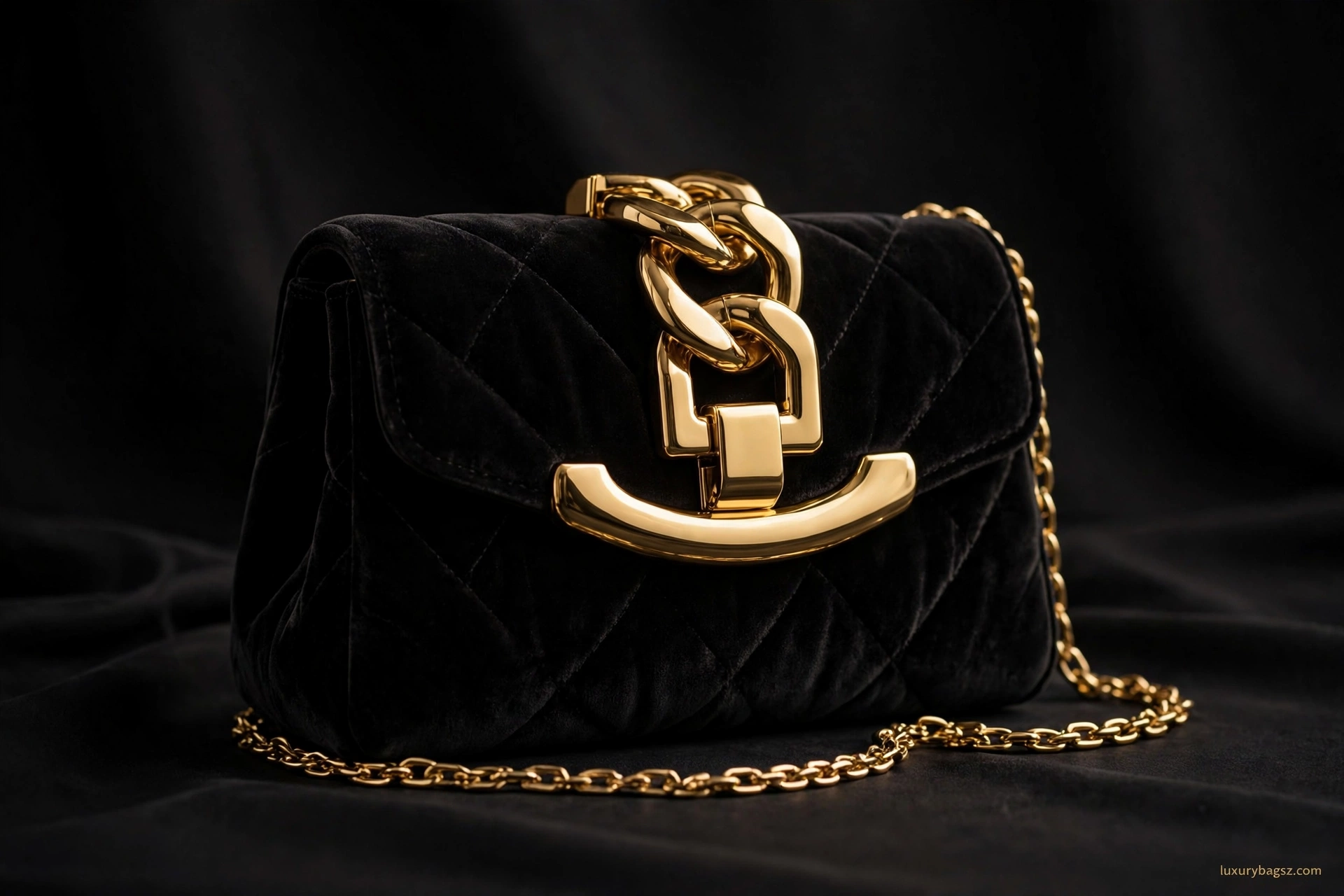
Fake Jimmy Choo Handbag, Spotted Inside First: Find the Label
Start inside the bag. A genuine Jimmy Choo handbag carries a metal interior label in a soft lilac tone, backed with leather and lettered in gold or silver. Fakes get that label wrong first: the colour drifts pink or grey, the lettering looks stamped cheaply, or the plate feels thin and tinny. Then work outward to the lining, hardware and screws. Jimmy Choo bags were never the most copied line, so the copies tend to fail on basics rather than fine detail.
Key Takeaways
- The interior metal label should be lilac, leather-backed and crisp.
- Lettering has quirks: thin first strokes on the M letters, oval O shapes.
- Classic linings are camel-toned moleskin, not shiny satin.
- Hardware screws are flat-head only, never cross-head.
- Hologram tags came and went by era, so absence is not automatic proof.
- Solid hardware weight and clean zips separate real bags from copies.
I authenticate a Jimmy Choo from the inside out. The first thing I look for is the interior metal label: on a genuine bag it is a soft lilac plate, backed with leather, with crisp gold or silver lettering. Copies drift pink or grey, feel thin and tinny, or carry lettering that looks cheaply stamped. From there I work outward to the moleskin lining, the hardware screws and the zip pulls. After more than a decade in the bag trade, I find Choo fakes rarely survive that inside-first order, because the label is the detail copyists budget least on.
The Models Fakers Copy, and the Ones They Skip
Counterfeiters follow fame. The Ramona and its smaller sister the Riki, the house's slouchy hobos from its peak bag years, are the classic copied styles. Our Jimmy Choo brand history explains how the bag line grew from the shoe business that made the name. Evening clutches and seasonal styles are copied less, but crystal and exotic-look finishes attract imitations because photographs hide weak making. Brand knowledge helps with shoes as well as bags. Our how to size Jimmy Choo shoes guide shows the house's consistent finishing standard.
The Interior Metal Label
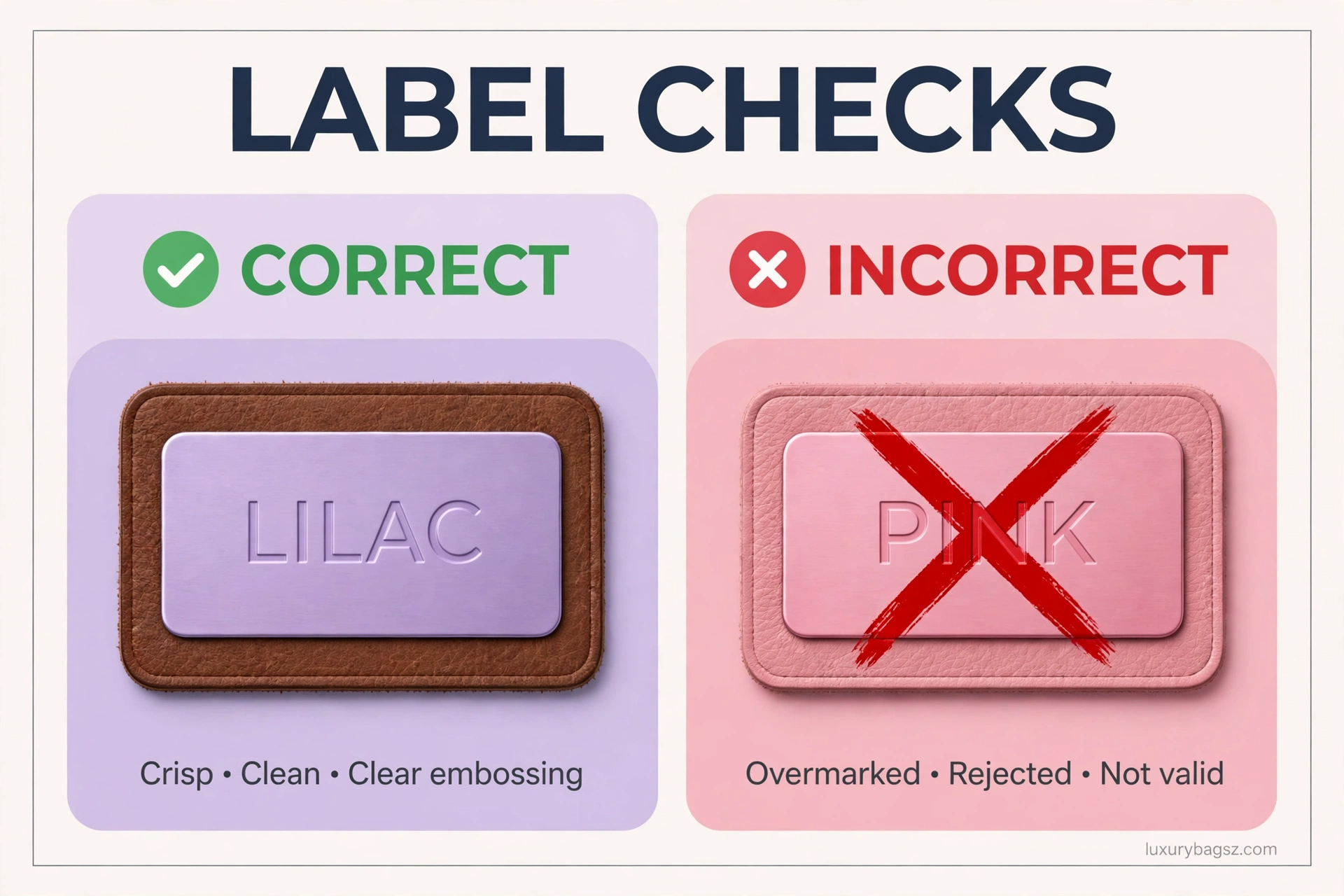
Find the label inside the bag. On a genuine piece it is metal with a lilac finish, set on a leather backing and stitched or fixed neatly in place. The colour is specific: a soft lilac, not pink, not purple, not silver-grey. Copies frequently miss the tone, and the miss is visible at a glance once you know it. Lettering on the plate should be gold or silver, sharp and easy to read, sitting level on the plate rather than drifting. Feel the plate's weight and edges. A genuine label feels like a fitted component. A thin, sharp-edged or loosely glued plate belongs to a copy.
Lettering, Letter by Letter
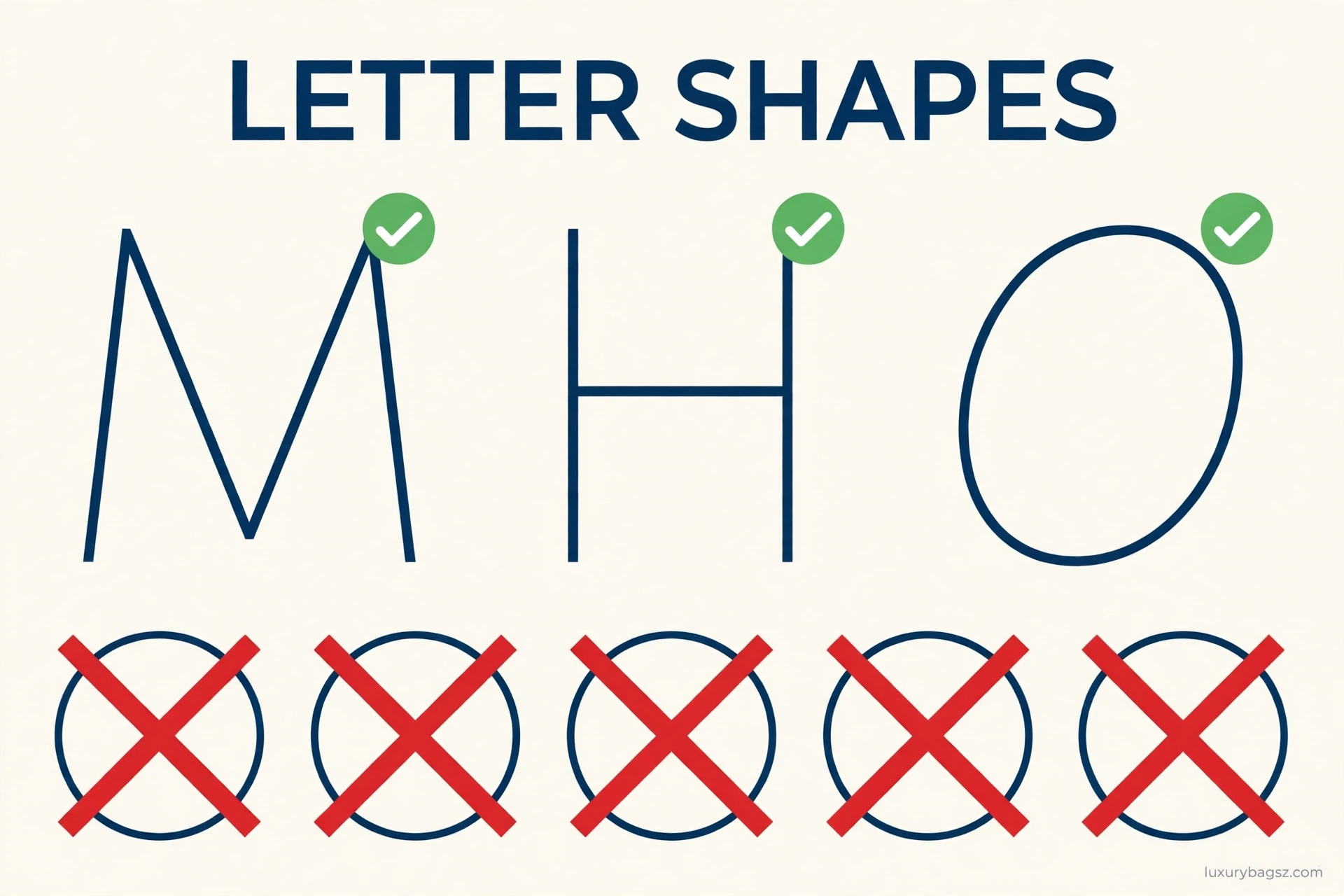
Jimmy Choo lettering has tells that authenticators love. In the two M letters of JIMMY, the first stroke of each M is notably thin. The crossbar of the H in CHOO sits high, toward the top of the letter rather than across the middle where a standard font would put it. The O letters are slightly oval, even faintly dented in feel, rather than perfect round circles. Copies using an off-the-shelf font get all three points wrong. Compare any suspect bag against a boutique photograph at full zoom. Lettering is cheap to copy badly and costly to copy well, so it fails early.
Lining: Moleskin, Not Satin
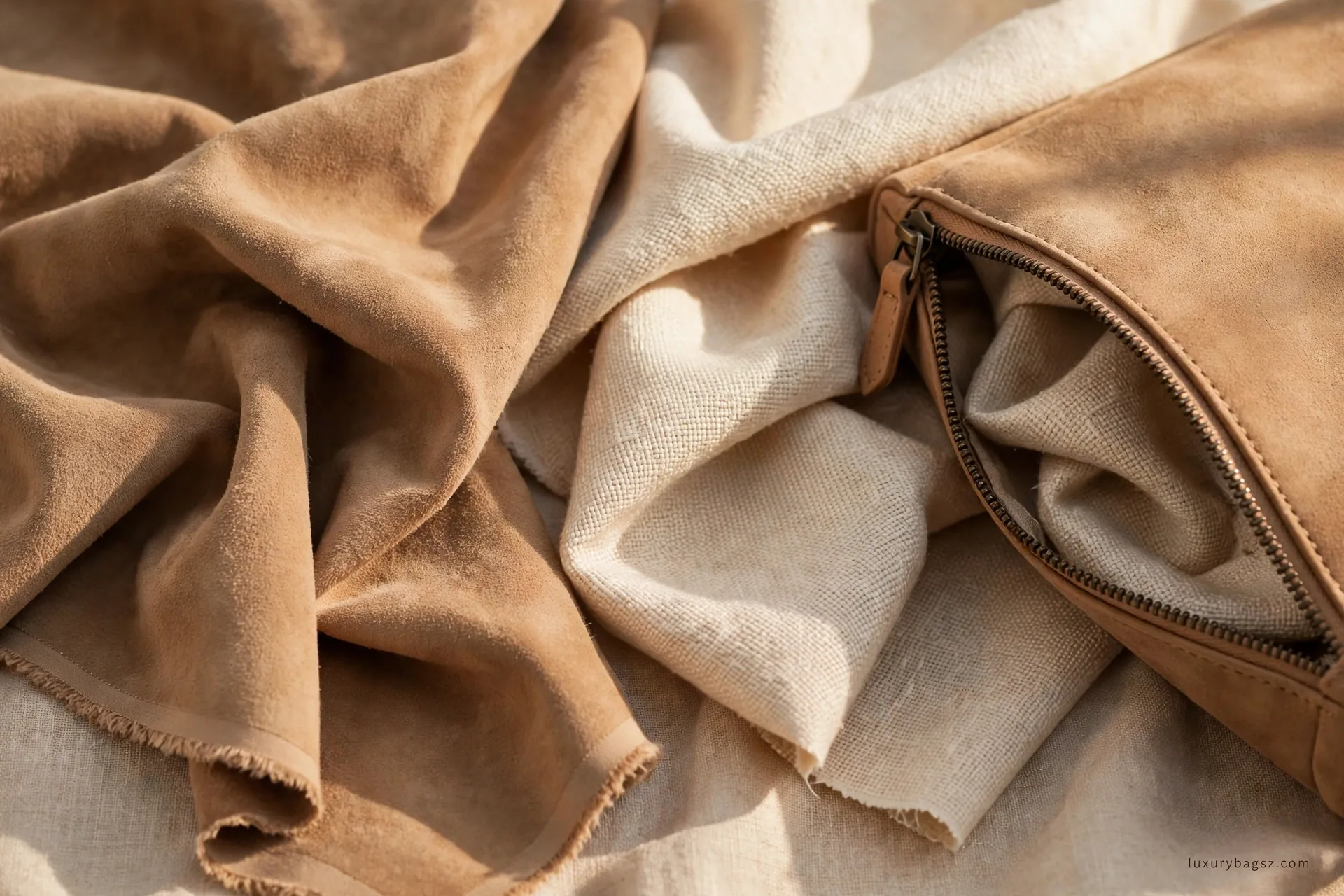
Open the bag and feel the lining. Classic genuine models such as the Ramona use a camel-toned moleskin lining with a soft, suede-like nap. Woven cotton linings appear on other genuine styles. What you should not find on the classic bags is shiny satin or thin suede in the wrong colour. Fakes substitute whatever fabric is cheap. A lining that feels papery, pills easily or sits loose and baggy inside the shell is a strong warning. Check the inside pocket too. Its zip should match the bag's colour scheme and run smoothly, with tidy stitching around the opening.
Hardware, Locks and the Screw Test
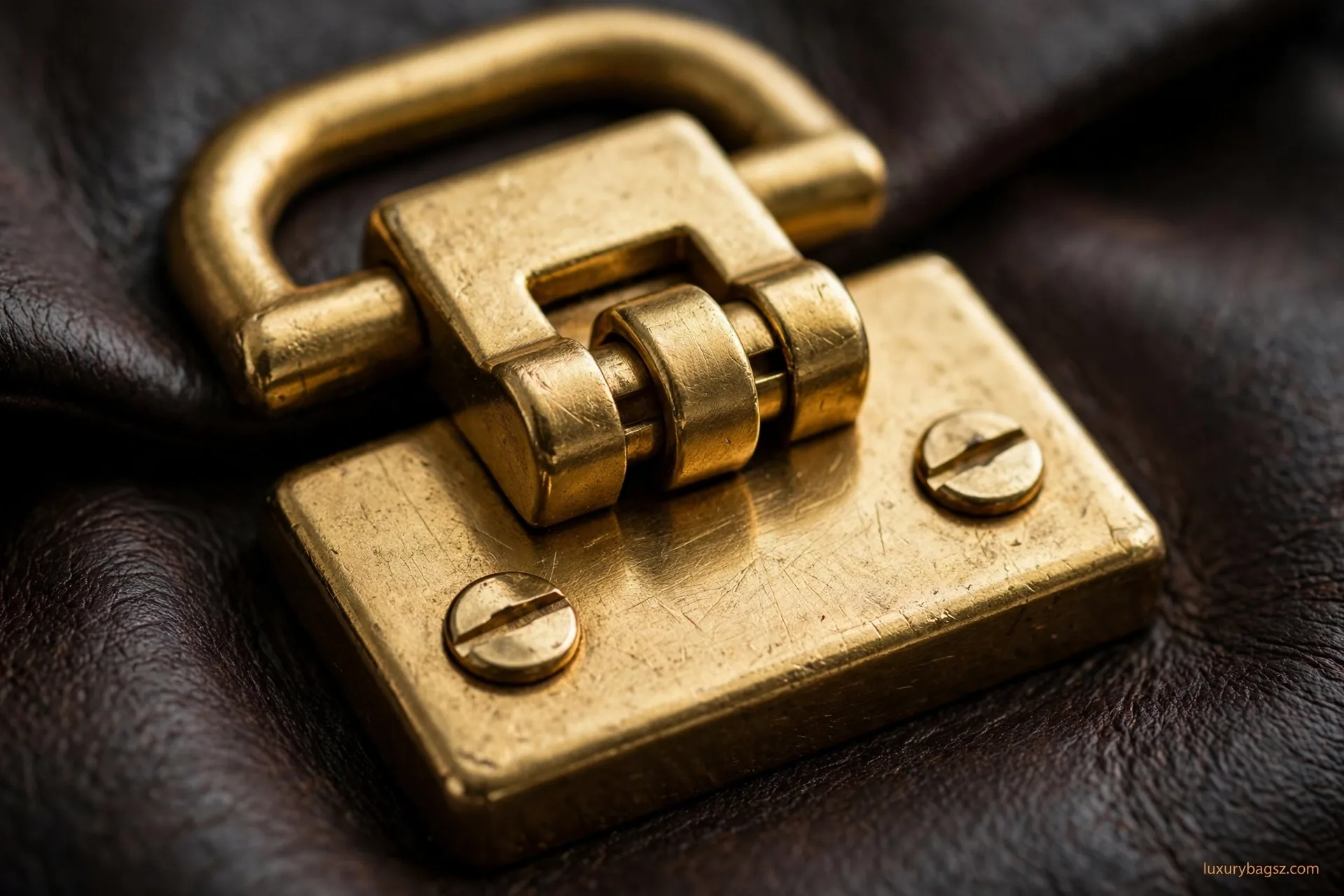
Genuine Jimmy Choo hardware is large, distinctive and weighty. Locks should close with a solid, substantial feel, not a hollow click. Here is the screw test authenticators rely on: screws on genuine hardware are flat-head, every time. A cross-head screw is a copy's signature. The engraved name on a clasp should sit centred between its screw heads, horizontally and vertically, in clean and even lettering. For the house's wider design language, our Jimmy Choo shoe styles guide shows the same bold hardware thinking on footwear.

Zips and Engraved Pulls
Run the main and pocket zips. Genuine zips move smoothly and feel engineered, with pulls that carry the designer's name in clear, precise engraving. The interior pocket zip on classic models matches the bag's colour. A random silver zip inside a gold-hardware bag deserves a hard second look. Fakes often fit generic zips with blank or crudely marked pulls. Engraving that is shallow, uneven or misspelt settles the matter quickly. Test the zip ten times, not once. Copies frequently jam or split under light repetition, while a genuine fitting keeps its temper.
Hologram Tags, Cards and Era Honesty
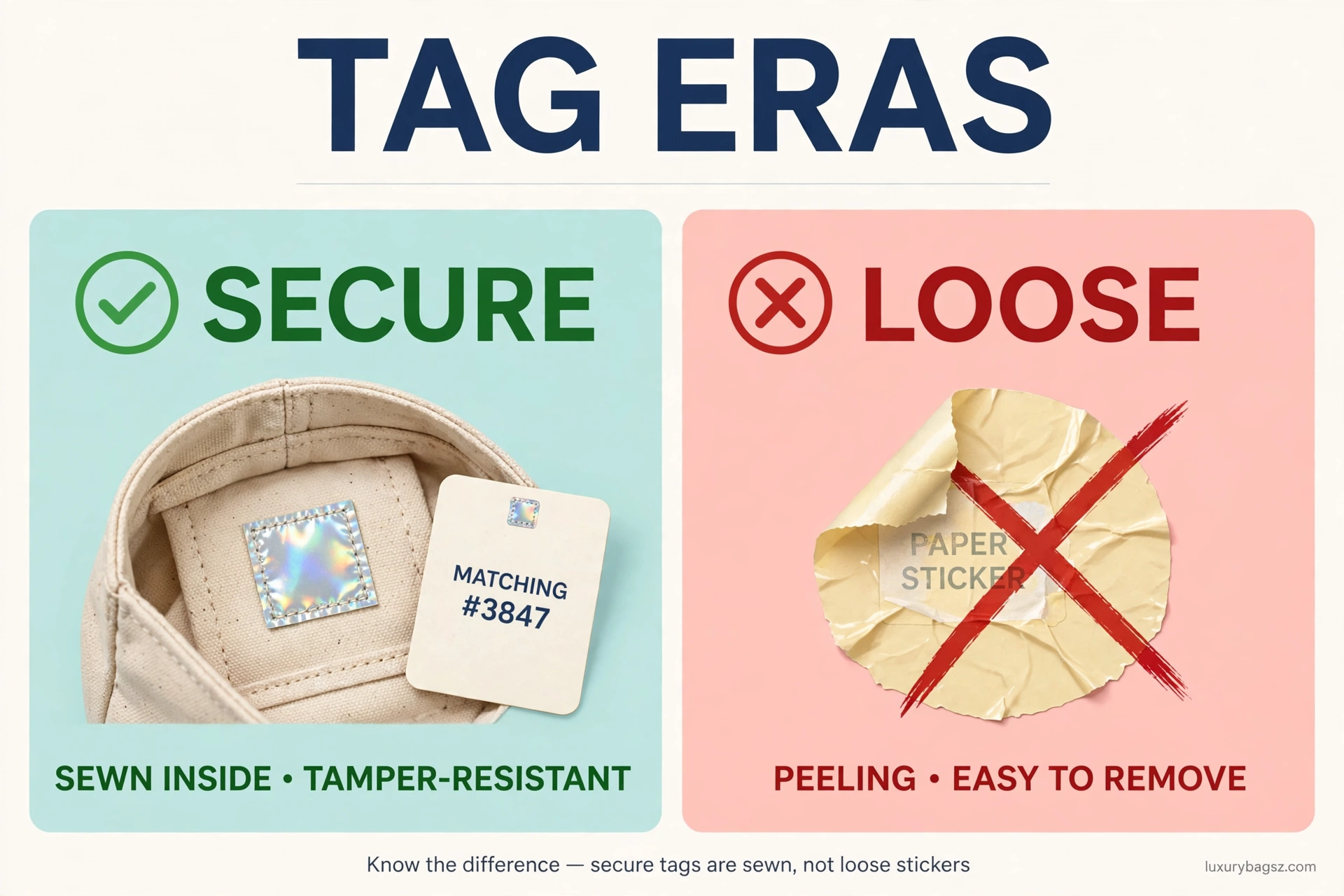
From around autumn 2008 the house began phasing in a numbered hologram patch inside bags, with a matching numbered card. Numbers should agree exactly. Be era-honest, though. Collector guidance records a gap around 2009 to 2010 when bags shipped without the hologram tag for a period, before it returned. That means a missing hologram on a bag from those seasons is not automatic proof of a fake, and a present hologram is not proof of a real one either. Judge the tag's quality: it should be fused neatly in place, with a clean number. A peeling sticker or a number that matches nothing is a warning.
Leather, Stitching, Price and Safe Buying
Feel the leather last. Genuine bags use supple, substantial skins with a natural grain, and the stitching is even, tight and free of loose ends. Our how to authenticate a pre-owned designer bag guide gives the calm order of checks to run on any house. Price the model honestly. Classic Ramona-style bags carry modest pre-owned prices today, so a very high ask needs rarity, and a very low one needs luck. Finish with our how to buy a pre-owned designer bag safely guide, and insist on label and lining close-ups before paying. Every check in this guide follows the Luxury Bagsz authentication process.
The Newer Bags: Judging Post-Ramona Eras Fairly
The checks above were built on the classic era, and applying them blindly to recent bags creates false verdicts. The house’s modern handbag business looks different: bucket styles such as the Bon Bon, the Cheri family and newer logo-forward designs carry exterior branding, different linings and hardware languages the Ramona never used.
Judge a newer bag by its own generation’s references. Find the exact style on the brand’s current or archived retail pages and compare lining, label format and hardware against that model, not against a 2006 hobo. The lettering discipline from this guide still applies wherever the name appears, because house typography changes far more slowly than silhouettes.
What does not change across eras is the manufacturing standard: weighty hardware, finished interiors, even stitching and leather with substance. A recent bag that feels light, plasticky and loosely finished fails for the same reasons a classic one does, whatever its paperwork says.
Era honesty, which the hologram advice in this guide demanded, is the whole skill here: name the bag’s period first, then apply that period’s tests.
Dust Bag, Box and Packaging
Jimmy Choo packaging follows the house’s lilac-grey colour story, and the dust bag should feel like a proper cotton bag with clean, correctly spelled lettering, neatly finished seams and a drawstring that works. A shiny synthetic pouch with blurred printing belongs to the same family of shortcuts as the pink-toned label.
Boxes, where a set includes one, should be sturdy with crisp lettering and a product label whose model, colour and size describe the bag inside. Packaging that describes a different bag is a common marriage of a real box and a wrong bag, and the mismatch deserves more suspicion than missing packaging ever does.
Receipts from boutiques or authorised department stores strengthen a set when their details agree with the bag; a generic till roll or a receipt for another item is decoration. Keep the hierarchy from this guide’s buying advice: the bag first, its documents as witnesses, never as the verdict itself.
Pre-owned classics frequently lost their packaging across two decades of owners, and an honest bag in a plain box outranks a doubtful bag in a beautiful one every time.
Straps, Feet and the Base: Where Copies Save Money
Turn the bag over and look at its working underside. Genuine bags finish the base properly: even stitching, clean corners and, on styles that carry them, protective feet that sit level, match the hardware finish and are firmly fixed rather than glued ornaments.
A bag that rocks on its feet, or whose feet differ subtly in size or finish, has been assembled without the house’s discipline. Run a finger along the base seam: it should be as neat as anything on the front, because genuine finishing does not relax where cameras rarely go.
Straps and their attachments take the bag’s working loads, so examine the joins: stitching should be reinforced and even, rings and clips should be solid with smooth action, and detachable straps should carry the same hardware quality as the body. A strap that feels like an afterthought usually is one, added by a seller to complete an incomplete bag.
These areas decide daily durability as much as authenticity. A genuine Jimmy Choo bag was built to be carried for years; a copy was built to be photographed once, and the base, feet and straps are where that difference in intention becomes impossible to hide.
Crystal, Satin and Evening Finishes
Evening bags ask for their own inspection because their materials forgive nothing. Crystal embellishment on a genuine piece is set or sewn with discipline: stones of matched size in even rows, secure enough that a fingertip run across them finds no wobble, and no threads of glue stringing between settings.
Copies glue crystals onto satin and rely on dim restaurant lighting. In daylight, look for stones that sit at uneven heights, gaps where crystals have already shed, and adhesive shine around the settings. A clutch shedding stones in the listing photographs will not improve at your event.
Satin itself testifies: genuine evening satin has depth and an even weave, holds its shape around the frame and meets the clasp line cleanly. Thin, shiny satin stretched over a hard frame, puckering at corners and gaps, belongs to the party-goods trade rather than this house.
Frames and clasps on evening pieces follow the hardware rules from earlier in this guide, weight, centred engraving and flat-head screws included. An evening bag is small enough that every shortcut is a large share of the object, which is why the copies fail here most charmingly and most completely.
Frequently Asked Questions
What is the quickest way to spot a fake Jimmy Choo handbag, and why do the screws matter?
Look inside for the metal label. It should be lilac, leather-backed and crisply lettered. A pink or grey plate with cheap-looking lettering is the fastest tell.
Because genuine hardware uses flat-head screws throughout. A single cross-head screw on a clasp or fitting is a reliable sign of a copy.
What should the inside of a classic Jimmy Choo bag look like — label and lining?
A soft lilac, with gold or silver lettering on a leather backing. Copies commonly drift pink, purple or grey, and the plate itself feels thin and tinny.
Camel-toned moleskin on classic styles such as the Ramona, with woven cotton on some other lines. Shiny satin or thin, loose fabric is a warning sign.
What is special about the Jimmy Choo lettering?
The first stroke of each M is thin, the H crossbar sits high, and the O letters are slightly oval rather than round. Standard fonts on fakes miss all three.
Does every genuine bag have a hologram tag, and should the number match a card?
No. The system began around autumn 2008 and had a gap around 2009 to 2010. Judge a bag from those seasons on label, lining and hardware instead.
Where both were supplied, yes, the numbers should agree exactly. A mismatch is a warning, though a missing card on an old bag is common and not proof alone.
Which Jimmy Choo bags are faked most?
The famous slouchy styles, above all the Ramona and the smaller Riki, plus eye-catching evening pieces whose photographs hide weak making.
What photographs should I ask a seller for?
Ask for the interior label straight on, the lining, clasp engraving and screws, zip pulls and any hologram tag. These views cover every major check in this guide.
Where is the safest place to buy pre-owned?
From sellers or marketplaces that authenticate, show interior close-ups and accept returns. The label checks in this guide are hard to run from listing photos alone.
Final Verdict: Inside First, Outside Second
A fake Jimmy Choo handbag usually betrays itself indoors: a wrong-coloured label, a satin lining, a cross-head screw where a flat-head belongs. Confirm with the lettering quirks, the zip engraving and the era story of its hologram. When inside and outside agree, you can buy with a quiet mind.






